Introduction
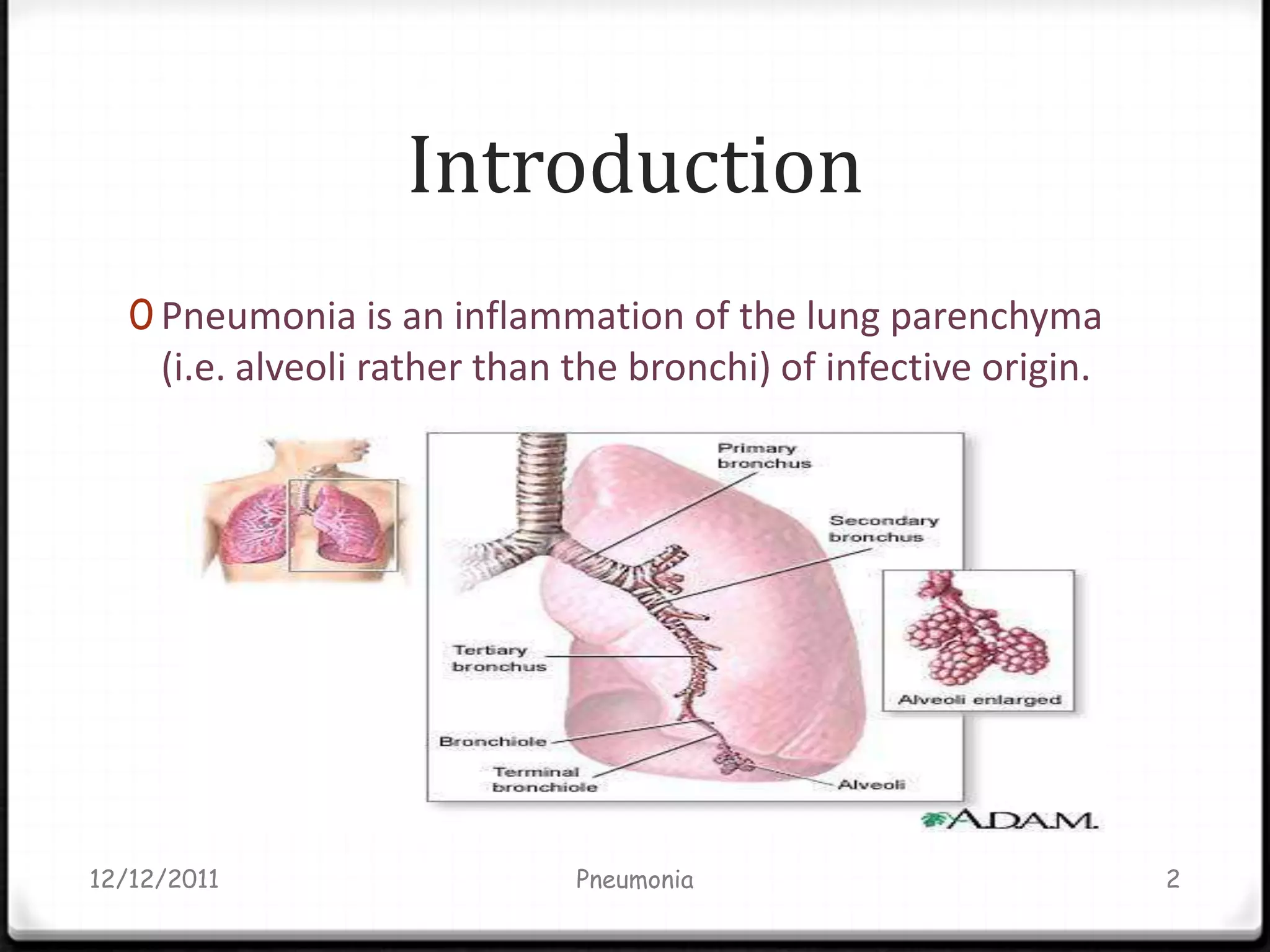
   0 Pneumonia is an inflammation of the lung parenchyma
     (i.e. alveoli rather than the bronchi) of infective origin.


12/12/2011                     Pneumonia                           2
0 It is the most common infectious cause of death.


   0 It is usually characterized by consolidation.


   0 Consolidation is a pathological process in which the
     alveoli are filled with a mixture of inflammatory exudate,
     bacteria & WBC


12/12/2011                    Pneumonia                           3
EPIDEMIOLOGY


      0Occurs throughout the year
      0Results from different etiological agents
       varying with the seasons
      0Occurs in persons of all ages
      0Clinical manifestations severe in very
       young, elderly & in chronically ill patients

12/12/2011               Pneumonia                    4
CLASSIFICATION
  Classified based on two types

  1. Type 1
  0 Lobar pneumonia
  0 Bronchopneumonia

  2. Type 2
  0 Community- acquired pneumonia (CAP)
  0 Hospital-acquired pneumonia (HAP)


12/12/2011                 Pneumonia      5
Lobar pneumonia
   0 Lobar pneumonia is acute bacterial infection of a part of
     lobe the entire lobe, or even two lobes of one or both
     the lungs.


12/12/2011                   Pneumonia                           6
Bronchopneumonia

   0 Bronchopneumonia is infection of the terminal
     bronchioles that extends into the surrounding alveoli
     resulting in patchy consolidation of the lung.


12/12/2011                   Pneumonia                       7
Community Acquired
              Pneumonia (CAP)
   Pneumonia which develops in an otherwise healthy
    person outside of hospital or have been in hospital for
    less than 48hrs


12/12/2011                  Pneumonia                         8
Nosocomial pneumonia
                    (HAP)
   Pneumonia that was not incubating upon admission
    developing in a patient hospitalized for greater than
    48 hrs.


12/12/2011                  Pneumonia                       9
PATHOPHYSIOLOGY
   Microbial invasion of the normally sterile lower respiratory
    tract

   Three routes-
   0 Inhaled as aerosolized particles

   0 Haematogenous spread from an extrapulmonary site of
     infection

   0 Aspiration of oropharyngeal contents

12/12/2011                   Pneumonia                            10
Various defence mechanisms
      that protects lung from
             infection
   0 Anatomic barriers –epiglottis, larynx
   0 Cough reflexes
   0 Tracheobronchial secretions
   0 Mucocilliary lining
   0 Cell & humoral mediated immunity
   0 Dual phagocytic system-alveolar macrophages &
     neutrophils


12/12/2011                   Pneumonia               11
Invasion occurs as a result of
         0   Defect in host defence mechanism
         0 Overwhelming inocculum
   0 Lung infection with viruses suppress the
     antibacterial activity of the lung by impairing
     alveolar macrophage function & mucocilliary
     clearance thus setting the stage for secondary
     bacterial pneumonia.


12/12/2011                   Pneumonia                 12
Clinical Manifestations
   0 Indolent to fulminant in presentation
   0 Mild to fatal in severity
   0 Typical symptoms –
   •                     Fever
   •                     Chills
   •                     Cough
   •                      Rust coloured sputum
   •                      Mucopurulent sputum
   •                      Dyspnea ( shortness of breath)
   •                      Pleuritic chest pain
   0 Elevated WBC
   0 Bacteraemic


12/12/2011                      Pneumonia                  13
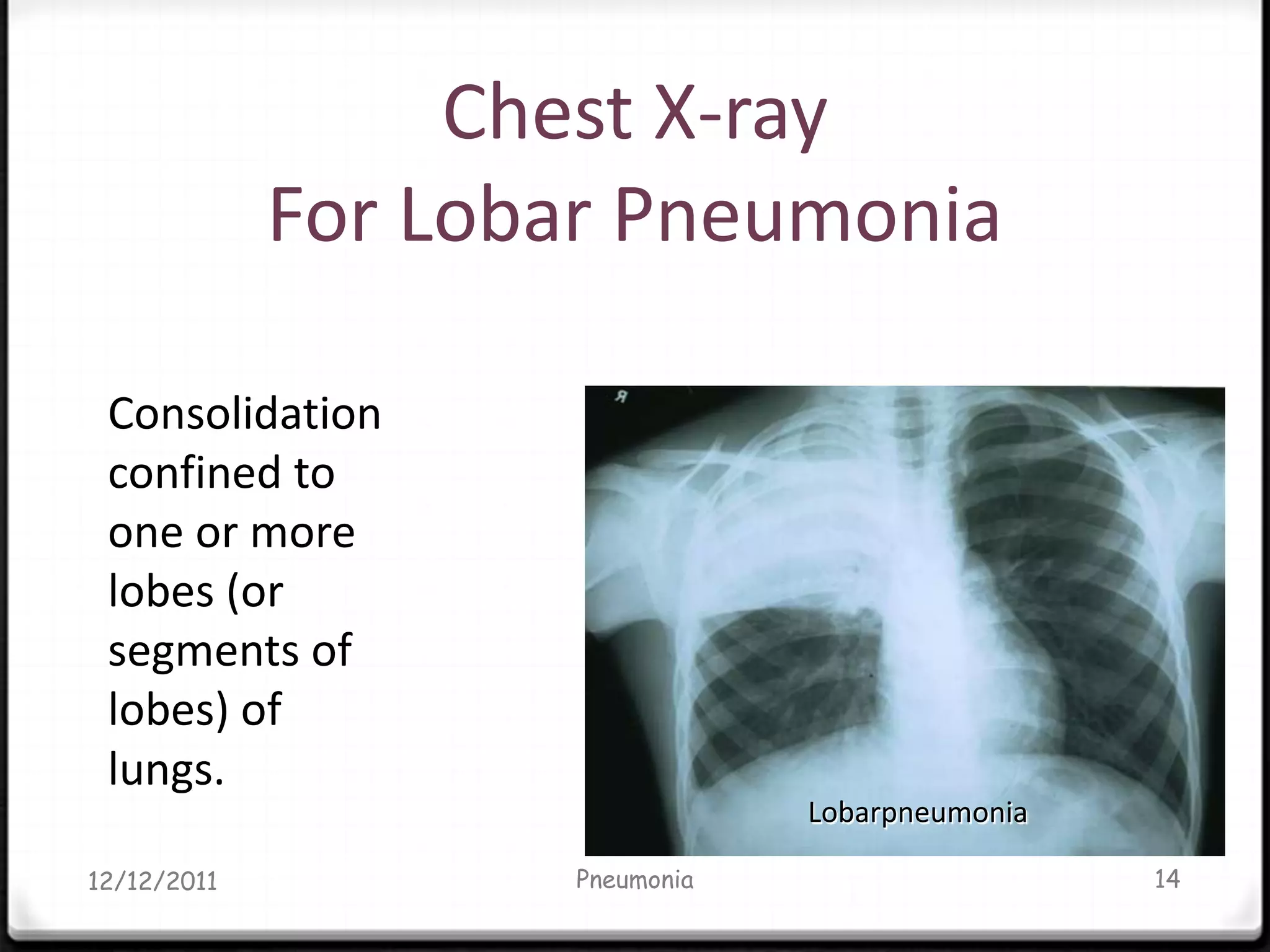
Chest X-ray
             For Lobar Pneumonia

 Consolidation
 confined to
 one or more
 lobes (or
 segments of
 lobes) of
 lungs.
                                Lobarpneumonia

12/12/2011          Pneumonia                    14
Chest X-ray
             For Bronchopneumonia

             •Patchy
             consolidation
             usually in the
             bases of both
             lungs.

                              Bronchopneumonia


12/12/2011                    Pneumonia          15
Diagnosis
   Clinical diagnosis
   0                History
   0                Signs & symptoms
   0                Chest x-ray
   0                CT


12/12/2011                 Pneumonia   16
Diagnosis
   Etiological diagnosis
   0              Gram's Stain and Culture of Sputum
   0              Blood Cultures
   0              Antigen Tests
   0              Polymerase Chain Reaction
   0              Serology
   0              Bronchoalveolar lavage
   0              Bronchoscopy


12/12/2011                  Pneumonia                  17
Complications

   Possible complications include:
   0 Acute respiratory distress syndrome (ARDS)
   0 Fluid around the lung (pleural effusion)
   0 Lung abscesses
   0 Respiratory failure (which requires a breathing
     machine or ventilator)
   0 Sepsis, which may lead to organ failure


12/12/2011                 Pneumonia                   18
COMMUNITY ACQUIRED
            PNEUMONIA
   Pneumonia is most common in winter because of seasonal
    increase in viral infections

   Mortality
    1%- Non hospitalized patients
    13.7%-Hospiatalized patients
    19.6%-Bacteremic patients
    <36.5%- Intensive care unit


12/12/2011                Pneumonia                         19
Risk factors

   1.    Comorbidity- Neoplastic disease, neurological
         problem
   2.    Alcoholism
   3.    Advanced age
   4.    Asthma
   5.    Immunosuppression


12/12/2011                   Pneumonia                   20
Etiology
   Potential etiologic agents in CAP - Bacteria
                                       Viruses
                                        Fungi
                                        Protozoa

   Potential bacteriologic causes can be divided into two
    types
             0 Typical bacterial pathogens
             0 Atypical bacterial pathogens
12/12/2011                   Pneumonia                      21
Typical bacterial pathogens

   0 Streptococcus pneumoniae – 30% to 60% ,Severe
     illness, death
   0 Haemophilus influenzae - 10%
   0 S. aureus (in selected patients)
   0 gram-negative bacilli –
       Klebsiella pneumoniae
     Pseudomonas aeruginosa


12/12/2011                  Pneumonia                22
Atypical bacterial pathogens

   0 Mycoplasma pneumoniae
   0 Chlamydophila pneumoniae
   0 Legionella pneumophillia
   0 These organisms are intrinsically resistant to all - B
     lactam agents macrolide, a fluoroquinolone, or a
     tetracycline.
   0 Poor dental hygiene-anaerobes
   0 HIV- p.carnii
   0 Birds- Chlamydia psittaci
   0 Cattle or parturient cat-Coxiella burnetti
12/12/2011                    Pneumonia                       23
HOSPITAL ACQUIRED
                PNEUMONIA
   0 Pneumonia that was not incubating upon admission
     developing in a patient hospitalized for greater than 48
     hrs

   0 10-15% of all hospital acquired pneumonia, usually
     presenting with sepsis or&/or respiratory failure

   0 50% acquired on ICU


12/12/2011                   Pneumonia                          24
Predisposing features
   Reduced host defence against bacteria
   0 Reduced immune defences (Corticosteroid treatment,
     diabetes, malignancy)
   0    Reduced cough reflux (Post operative)
   0   Disordered mucocilliary clearance (Anaesthetic agents)
   Aspiration of nasopharyngeal or gastric secretions
   0 Immobility or reduced conscious level
   0 Vomiting, Dysphagia,
   0 Nasogastric intubation

12/12/2011                     Pneumonia                        25
0 Most bacterial nosocomial infection occur by
     microaspiration of bacteria colonizing the patients
     oropharynx or upper GI tract
   0 Most common pathogen – Aerobic gram negative bacilli
   0 Most commonly exposed to multiresistant hospital
     pathogen
   0 86% nosocomial infection-mechanical ventilation
   0 Mortality-0 to 50%


12/12/2011                   Pneumonia                      26
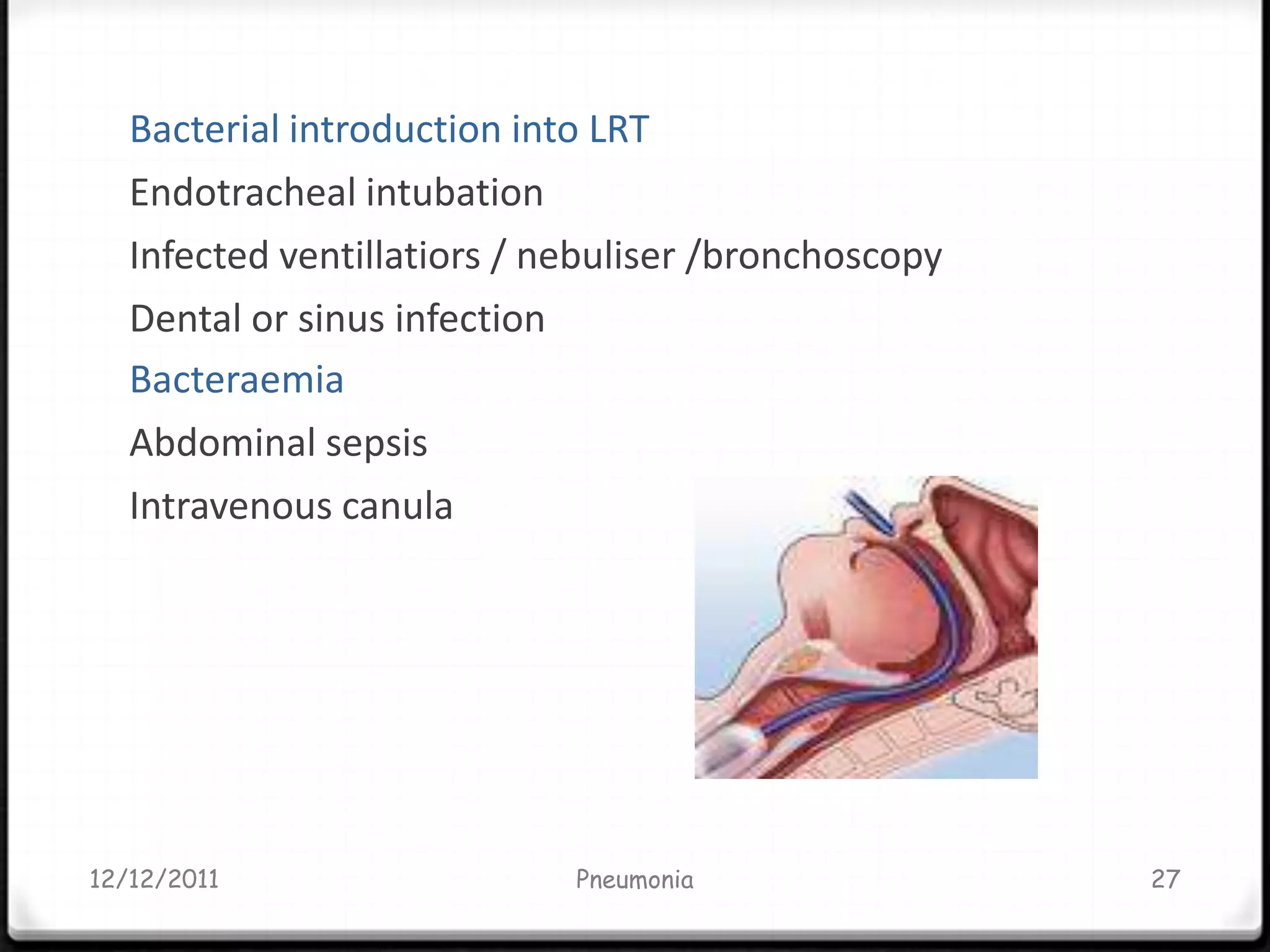
Bacterial introduction into LRT
   Endotracheal intubation
   Infected ventillatiors / nebuliser /bronchoscopy
   Dental or sinus infection
   Bacteraemia
   Abdominal sepsis
   Intravenous canula


12/12/2011                   Pneumonia                27
Causative organisms
   Common organisms
   Gram negative bacteria-
   0        Escherichia coli
   0          Klebsiella sp.
   0          Pseudomonas aeruginosa
   Gram positive bacteria-
   0             Streptococcus pneumoniae
   0            Staphylococcus aureus

12/12/2011                Pneumonia         28
Less common organisms
   1.     Gram negative bacilli
        other coliforms:Enterobacter sp.
   0                        Proteus sp.
   0                        Seratia marcescens
   0                        Citrobacter sp.
   0                        Acinobacter sp.
   0                        Legionella pneumophillia
   2.     Anaerobic bacteria
   3.    Fungi- Candida albicans Aspergillus fumigatus
   4.     Viruses- Cytomegalovirus (CMV), Herpes simplex

12/12/2011                   Pneumonia                     29
Treatment
   Goals of therapy-


   0         Eradication of the offending organism.

   0         Selection of an appropriate antibiotic.

   0         To minimize associated morbidity.


12/12/2011                     Pneumonia               30
General approach to treatment
   0 Adequacy of respiratory function
   0 Humidified oxygen for hypoxemia
   0 Bronchodilators (albuterol)
   0 Chest physiotherapy with postural drainage
   0 Adequate hydration if necessary
   0 Expectorants such as guaifenesin
   0 Chest pain- analgesics


12/12/2011                    Pneumonia           31
Selection of an antimicrobial
                agent
   0 Empirical use of relatively broad spectrum antibiotic
   0 Narrow spectrum antibiotics to cover specific
     pathogen
   0 Potential pathogens involved
             0 Age
             0 Previous &current medication history
             0 Underlying disease
             0 Present clinical status

12/12/2011                    Pneumonia                      32
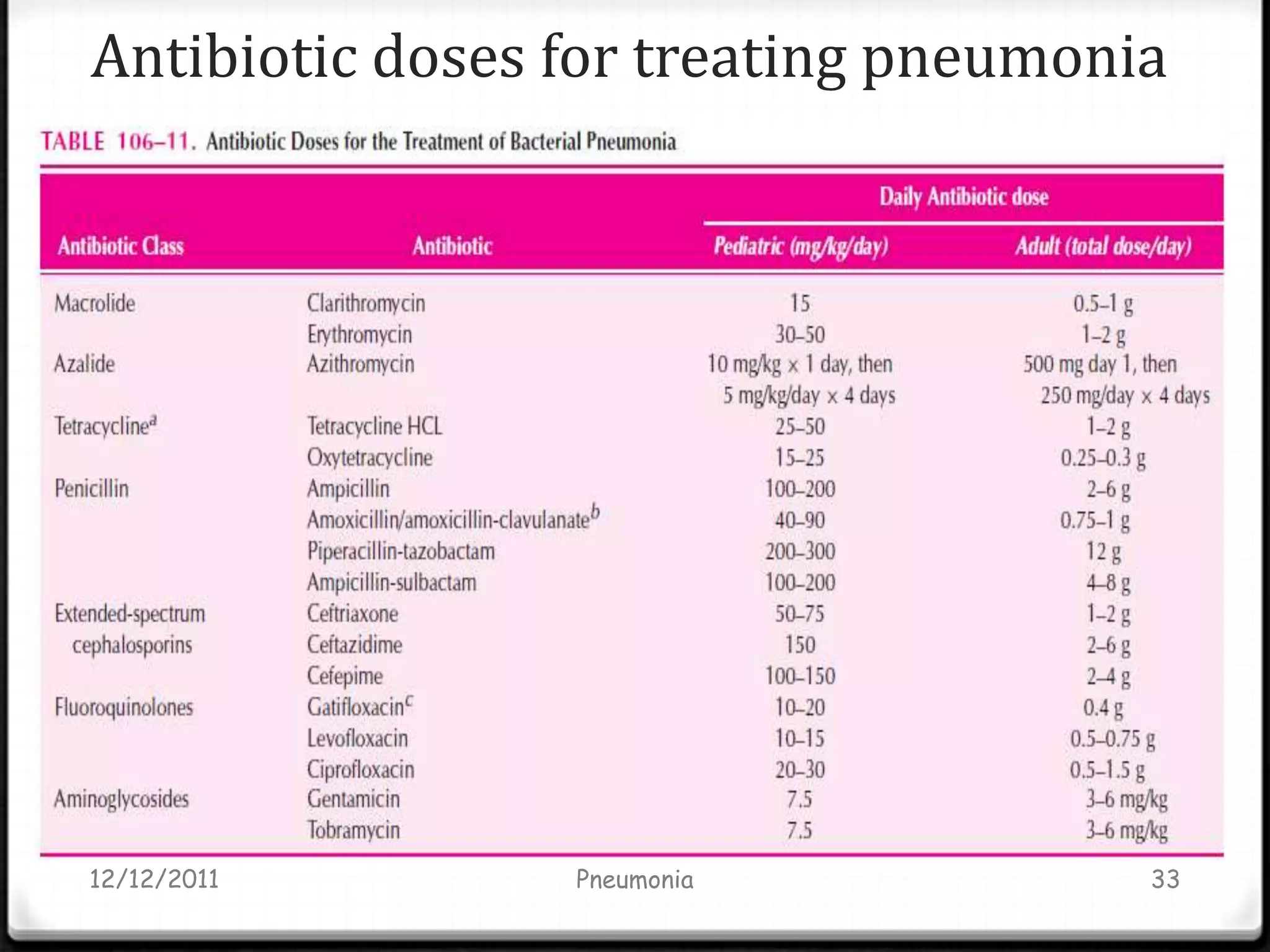
Antibiotic doses for treating pneumonia


12/12/2011       Pneumonia            33
Treatment for special cases
   1. Patient less than 60 years & without comorbidities:-
    Azithromycine ( 500mg OD) *1day
                    ( 250mg OD) *4days
    Norfloxacin/Levofloxacin (400mg OD) *7days

   2. Outpatient greater than 65 years:-
    Norfloxacin (400mg OD) *7days or
    Ceftriaxon (1-2 g/day) / Cifixim (2-4 g/day) 3rd gen
     cefalosporins         +
12/12/2011                  Pneumonia                        34
Macrolides like Azithromycin ( 500mg OD) *1day
                                   ( 250mg OD) *4days
3. Patient is hospitalised but not severely ill:-
    Combination of 3rd gen cefalosporins + Macrolides
         Ceftriaxone + Azithromycin
                         OR
         Norfloxacin/Levofloxacin (400mg OD)
4. If the patient is hospitalised but not severely ill:-
    Combination of 3rd gen cefalosporins + Macrolides
         Ceftriaxone + Azithromycin
             and newer fluroquinolones (Gatifloxacin)


12/12/2011                  Pneumonia                      35
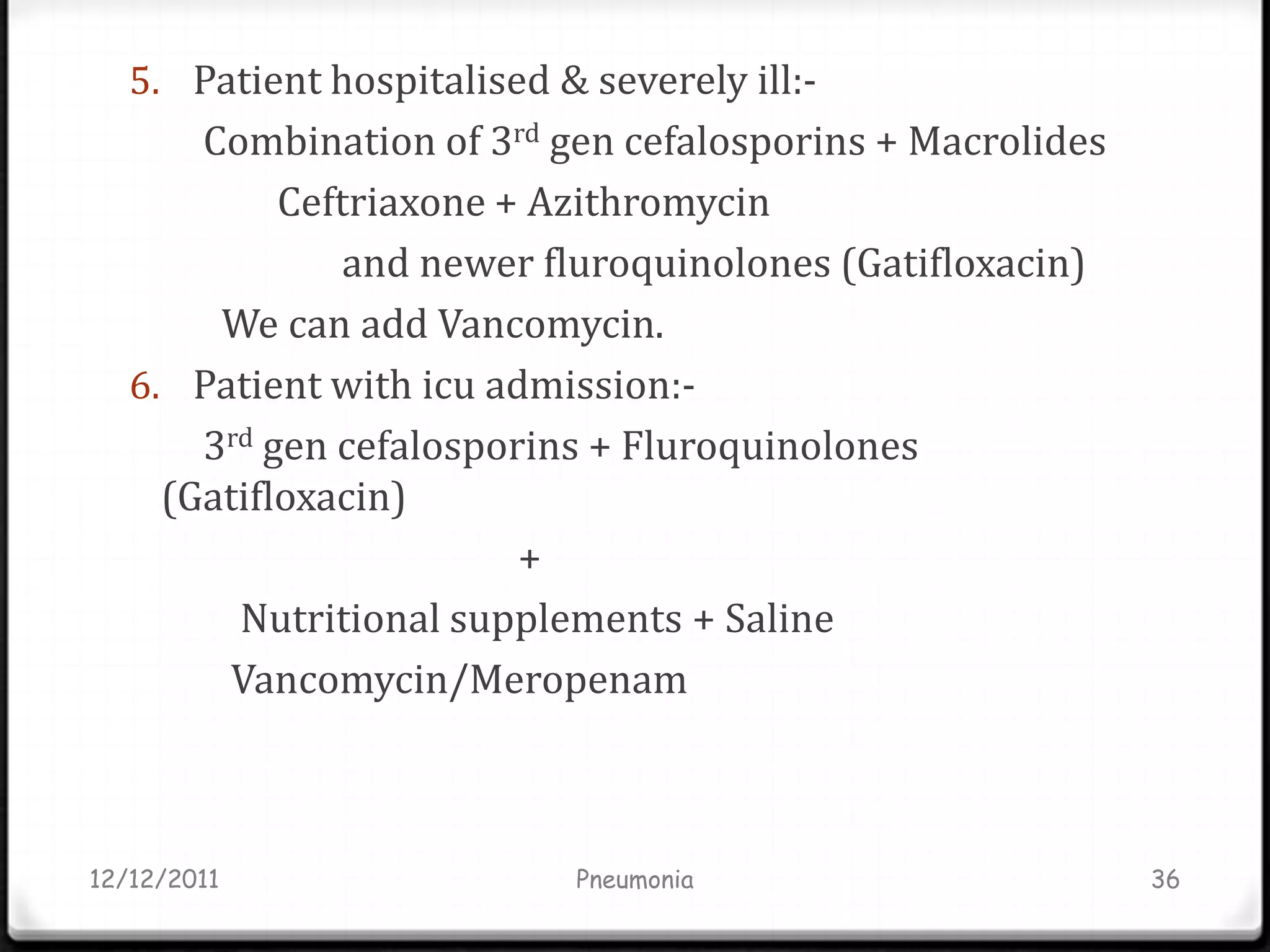
5. Patient hospitalised & severely ill:-
       Combination of 3rd gen cefalosporins + Macrolides
            Ceftriaxone + Azithromycin
                and newer fluroquinolones (Gatifloxacin)
        We can add Vancomycin.
   6. Patient with icu admission:-
       3rd gen cefalosporins + Fluroquinolones
     (Gatifloxacin)
                         +
         Nutritional supplements + Saline
         Vancomycin/Meropenam


12/12/2011                   Pneumonia                     36
7. For HAP:-
         Cephalosporins + Aminoglycocides

   8. For antipseudomons cephalosporins:-
        Ceftazidime + Cefexime


12/12/2011                 Pneumonia        37
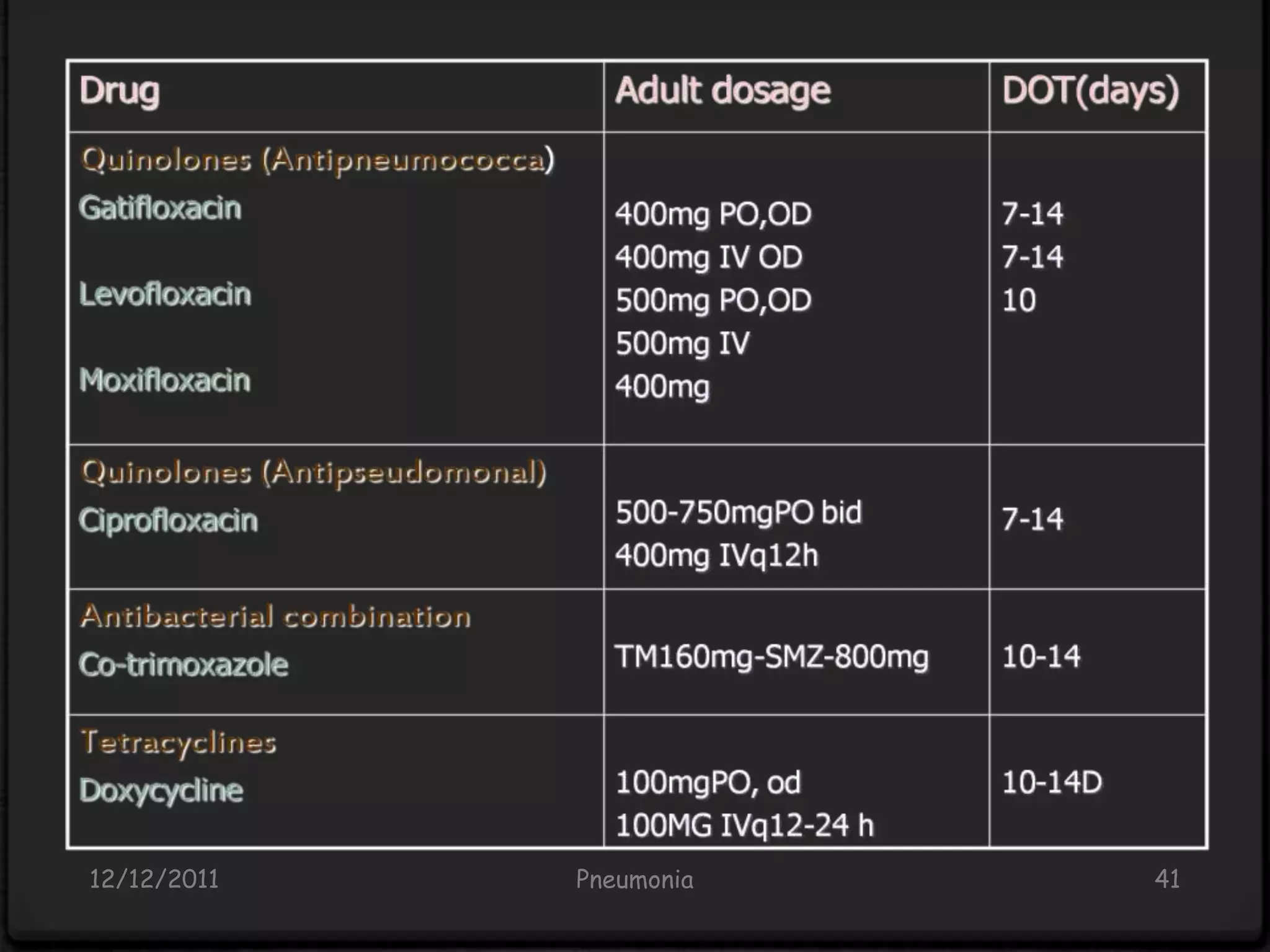
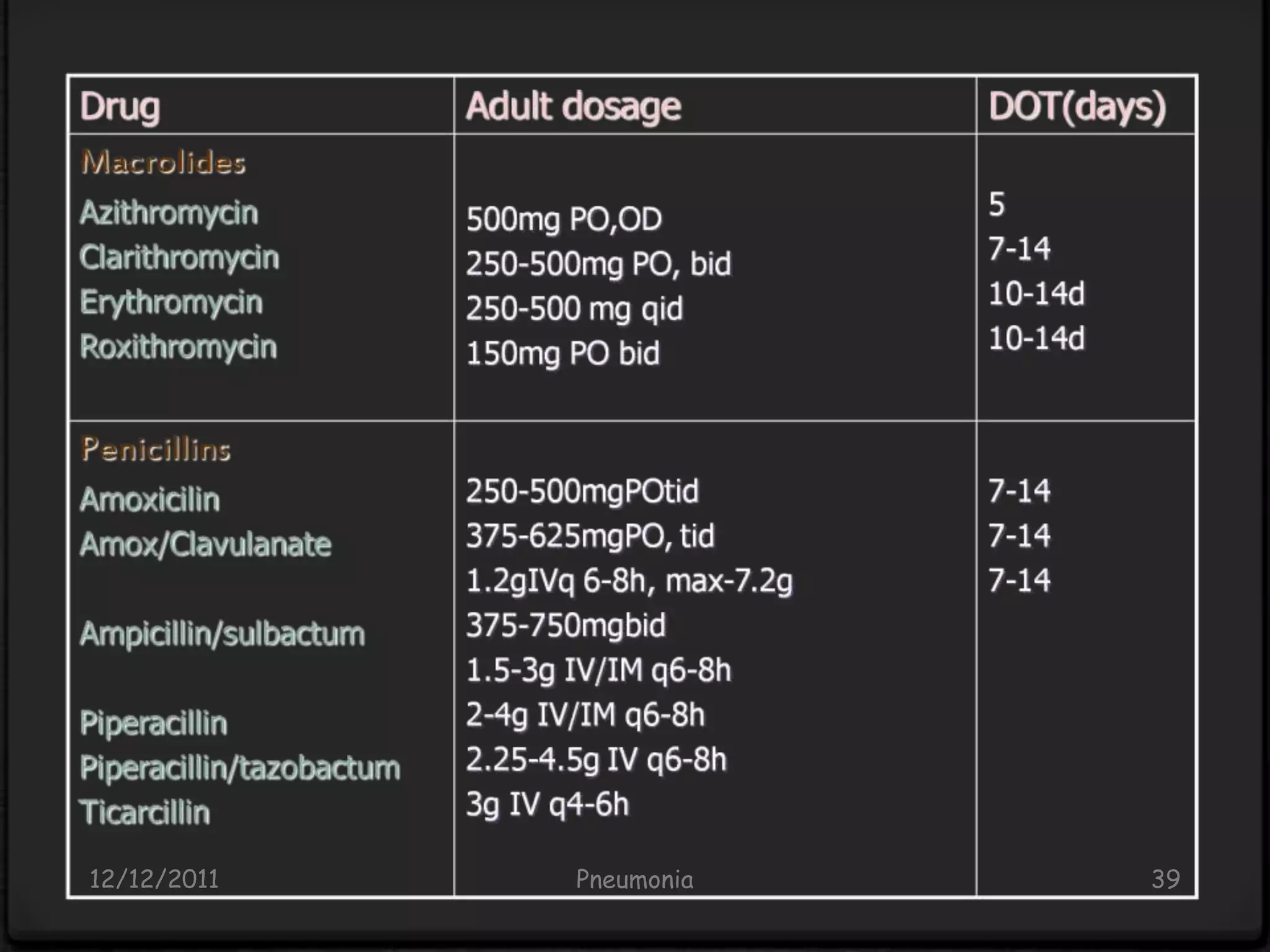
Drugs with usual doses


12/12/2011        Pneumonia       38
12/12/2011   Pneumonia   39
12/12/2011   Pneumonia   40
12/12/2011   Pneumonia   41

Pneumonia Diagnosis and treatment

  • 2.
    Introduction 0 Pneumonia is an inflammation of the lung parenchyma (i.e. alveoli rather than the bronchi) of infective origin. 12/12/2011 Pneumonia 2
  • 3.
    0 It isthe most common infectious cause of death. 0 It is usually characterized by consolidation. 0 Consolidation is a pathological process in which the alveoli are filled with a mixture of inflammatory exudate, bacteria & WBC 12/12/2011 Pneumonia 3
  • 4.
    EPIDEMIOLOGY 0Occurs throughout the year 0Results from different etiological agents varying with the seasons 0Occurs in persons of all ages 0Clinical manifestations severe in very young, elderly & in chronically ill patients 12/12/2011 Pneumonia 4
  • 5.
    CLASSIFICATION Classifiedbased on two types 1. Type 1 0 Lobar pneumonia 0 Bronchopneumonia 2. Type 2 0 Community- acquired pneumonia (CAP) 0 Hospital-acquired pneumonia (HAP) 12/12/2011 Pneumonia 5
  • 6.
    Lobar pneumonia 0 Lobar pneumonia is acute bacterial infection of a part of lobe the entire lobe, or even two lobes of one or both the lungs. 12/12/2011 Pneumonia 6
  • 7.
    Bronchopneumonia 0 Bronchopneumonia is infection of the terminal bronchioles that extends into the surrounding alveoli resulting in patchy consolidation of the lung. 12/12/2011 Pneumonia 7
  • 8.
    Community Acquired Pneumonia (CAP) Pneumonia which develops in an otherwise healthy person outside of hospital or have been in hospital for less than 48hrs 12/12/2011 Pneumonia 8
  • 9.
    Nosocomial pneumonia (HAP) Pneumonia that was not incubating upon admission developing in a patient hospitalized for greater than 48 hrs. 12/12/2011 Pneumonia 9
  • 10.
    PATHOPHYSIOLOGY Microbial invasion of the normally sterile lower respiratory tract Three routes- 0 Inhaled as aerosolized particles 0 Haematogenous spread from an extrapulmonary site of infection 0 Aspiration of oropharyngeal contents 12/12/2011 Pneumonia 10
  • 11.
    Various defence mechanisms that protects lung from infection 0 Anatomic barriers –epiglottis, larynx 0 Cough reflexes 0 Tracheobronchial secretions 0 Mucocilliary lining 0 Cell & humoral mediated immunity 0 Dual phagocytic system-alveolar macrophages & neutrophils 12/12/2011 Pneumonia 11
  • 12.
    Invasion occurs asa result of 0 Defect in host defence mechanism 0 Overwhelming inocculum 0 Lung infection with viruses suppress the antibacterial activity of the lung by impairing alveolar macrophage function & mucocilliary clearance thus setting the stage for secondary bacterial pneumonia. 12/12/2011 Pneumonia 12
  • 13.
    Clinical Manifestations 0 Indolent to fulminant in presentation 0 Mild to fatal in severity 0 Typical symptoms – • Fever • Chills • Cough • Rust coloured sputum • Mucopurulent sputum • Dyspnea ( shortness of breath) • Pleuritic chest pain 0 Elevated WBC 0 Bacteraemic 12/12/2011 Pneumonia 13
  • 14.
    Chest X-ray For Lobar Pneumonia Consolidation confined to one or more lobes (or segments of lobes) of lungs. Lobarpneumonia 12/12/2011 Pneumonia 14
  • 15.
    Chest X-ray For Bronchopneumonia •Patchy consolidation usually in the bases of both lungs. Bronchopneumonia 12/12/2011 Pneumonia 15
  • 16.
    Diagnosis Clinical diagnosis 0 History 0 Signs & symptoms 0 Chest x-ray 0 CT 12/12/2011 Pneumonia 16
  • 17.
    Diagnosis Etiological diagnosis 0 Gram's Stain and Culture of Sputum 0 Blood Cultures 0 Antigen Tests 0 Polymerase Chain Reaction 0 Serology 0 Bronchoalveolar lavage 0 Bronchoscopy 12/12/2011 Pneumonia 17
  • 18.
    Complications Possible complications include: 0 Acute respiratory distress syndrome (ARDS) 0 Fluid around the lung (pleural effusion) 0 Lung abscesses 0 Respiratory failure (which requires a breathing machine or ventilator) 0 Sepsis, which may lead to organ failure 12/12/2011 Pneumonia 18
  • 19.
    COMMUNITY ACQUIRED PNEUMONIA Pneumonia is most common in winter because of seasonal increase in viral infections Mortality 1%- Non hospitalized patients 13.7%-Hospiatalized patients 19.6%-Bacteremic patients <36.5%- Intensive care unit 12/12/2011 Pneumonia 19
  • 20.
    Risk factors 1. Comorbidity- Neoplastic disease, neurological problem 2. Alcoholism 3. Advanced age 4. Asthma 5. Immunosuppression 12/12/2011 Pneumonia 20
  • 21.
    Etiology Potential etiologic agents in CAP - Bacteria Viruses Fungi Protozoa Potential bacteriologic causes can be divided into two types 0 Typical bacterial pathogens 0 Atypical bacterial pathogens 12/12/2011 Pneumonia 21
  • 22.
    Typical bacterial pathogens 0 Streptococcus pneumoniae – 30% to 60% ,Severe illness, death 0 Haemophilus influenzae - 10% 0 S. aureus (in selected patients) 0 gram-negative bacilli – Klebsiella pneumoniae Pseudomonas aeruginosa 12/12/2011 Pneumonia 22
  • 23.
    Atypical bacterial pathogens 0 Mycoplasma pneumoniae 0 Chlamydophila pneumoniae 0 Legionella pneumophillia 0 These organisms are intrinsically resistant to all - B lactam agents macrolide, a fluoroquinolone, or a tetracycline. 0 Poor dental hygiene-anaerobes 0 HIV- p.carnii 0 Birds- Chlamydia psittaci 0 Cattle or parturient cat-Coxiella burnetti 12/12/2011 Pneumonia 23
  • 24.
    HOSPITAL ACQUIRED PNEUMONIA 0 Pneumonia that was not incubating upon admission developing in a patient hospitalized for greater than 48 hrs 0 10-15% of all hospital acquired pneumonia, usually presenting with sepsis or&/or respiratory failure 0 50% acquired on ICU 12/12/2011 Pneumonia 24
  • 25.
    Predisposing features Reduced host defence against bacteria 0 Reduced immune defences (Corticosteroid treatment, diabetes, malignancy) 0 Reduced cough reflux (Post operative) 0 Disordered mucocilliary clearance (Anaesthetic agents) Aspiration of nasopharyngeal or gastric secretions 0 Immobility or reduced conscious level 0 Vomiting, Dysphagia, 0 Nasogastric intubation 12/12/2011 Pneumonia 25
  • 26.
    0 Most bacterialnosocomial infection occur by microaspiration of bacteria colonizing the patients oropharynx or upper GI tract 0 Most common pathogen – Aerobic gram negative bacilli 0 Most commonly exposed to multiresistant hospital pathogen 0 86% nosocomial infection-mechanical ventilation 0 Mortality-0 to 50% 12/12/2011 Pneumonia 26
  • 27.
    Bacterial introduction intoLRT Endotracheal intubation Infected ventillatiors / nebuliser /bronchoscopy Dental or sinus infection Bacteraemia Abdominal sepsis Intravenous canula 12/12/2011 Pneumonia 27
  • 28.
    Causative organisms Common organisms Gram negative bacteria- 0 Escherichia coli 0 Klebsiella sp. 0 Pseudomonas aeruginosa Gram positive bacteria- 0 Streptococcus pneumoniae 0 Staphylococcus aureus 12/12/2011 Pneumonia 28
  • 29.
    Less common organisms 1. Gram negative bacilli other coliforms:Enterobacter sp. 0 Proteus sp. 0 Seratia marcescens 0 Citrobacter sp. 0 Acinobacter sp. 0 Legionella pneumophillia 2. Anaerobic bacteria 3. Fungi- Candida albicans Aspergillus fumigatus 4. Viruses- Cytomegalovirus (CMV), Herpes simplex 12/12/2011 Pneumonia 29
  • 30.
    Treatment Goals of therapy- 0 Eradication of the offending organism. 0 Selection of an appropriate antibiotic. 0 To minimize associated morbidity. 12/12/2011 Pneumonia 30
  • 31.
    General approach totreatment 0 Adequacy of respiratory function 0 Humidified oxygen for hypoxemia 0 Bronchodilators (albuterol) 0 Chest physiotherapy with postural drainage 0 Adequate hydration if necessary 0 Expectorants such as guaifenesin 0 Chest pain- analgesics 12/12/2011 Pneumonia 31
  • 32.
    Selection of anantimicrobial agent 0 Empirical use of relatively broad spectrum antibiotic 0 Narrow spectrum antibiotics to cover specific pathogen 0 Potential pathogens involved 0 Age 0 Previous &current medication history 0 Underlying disease 0 Present clinical status 12/12/2011 Pneumonia 32
  • 33.
    Antibiotic doses fortreating pneumonia 12/12/2011 Pneumonia 33
  • 34.
    Treatment for specialcases 1. Patient less than 60 years & without comorbidities:- Azithromycine ( 500mg OD) *1day ( 250mg OD) *4days Norfloxacin/Levofloxacin (400mg OD) *7days 2. Outpatient greater than 65 years:- Norfloxacin (400mg OD) *7days or Ceftriaxon (1-2 g/day) / Cifixim (2-4 g/day) 3rd gen cefalosporins + 12/12/2011 Pneumonia 34
  • 35.
    Macrolides like Azithromycin( 500mg OD) *1day ( 250mg OD) *4days 3. Patient is hospitalised but not severely ill:- Combination of 3rd gen cefalosporins + Macrolides Ceftriaxone + Azithromycin OR Norfloxacin/Levofloxacin (400mg OD) 4. If the patient is hospitalised but not severely ill:- Combination of 3rd gen cefalosporins + Macrolides Ceftriaxone + Azithromycin and newer fluroquinolones (Gatifloxacin) 12/12/2011 Pneumonia 35
  • 36.
    5. Patient hospitalised& severely ill:- Combination of 3rd gen cefalosporins + Macrolides Ceftriaxone + Azithromycin and newer fluroquinolones (Gatifloxacin) We can add Vancomycin. 6. Patient with icu admission:- 3rd gen cefalosporins + Fluroquinolones (Gatifloxacin) + Nutritional supplements + Saline Vancomycin/Meropenam 12/12/2011 Pneumonia 36
  • 37.
    7. For HAP:- Cephalosporins + Aminoglycocides 8. For antipseudomons cephalosporins:- Ceftazidime + Cefexime 12/12/2011 Pneumonia 37
  • 38.
    Drugs with usualdoses 12/12/2011 Pneumonia 38
  • 39.
    12/12/2011 Pneumonia 39
  • 40.
    12/12/2011 Pneumonia 40
  • 41.
    12/12/2011 Pneumonia 41