RESTRICTIVE VS. OBSTRUCTIVE
LUNG DISEASES
Fatima AlAwadh
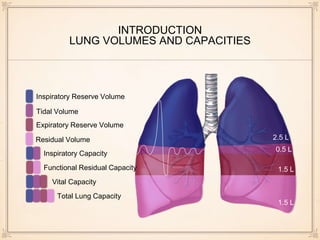
INTRODUCTION
LUNG VOLUMES AND CAPACITIES
2.5 L
0.5 L
1.5 L
1.5 L
Inspiratory Reserve Volume
Tidal Volume
Residual Volume
Expiratory Reserve Volume
Inspiratory Capacity
Functional Residual Capacity
Vital Capacity
Total Lung Capacity
2.5 L
0.5 L
1.5 L
1.5 L
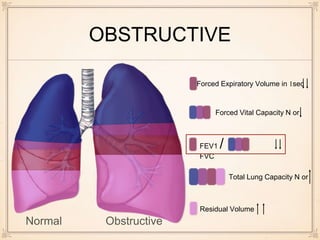
OBSTRUCTIVE
Normal Obstructive
Forced Vital Capacity N or
Forced Expiratory Volume in 1sec
Total Lung Capacity N or
Residual Volume
FEV1 /
FVC
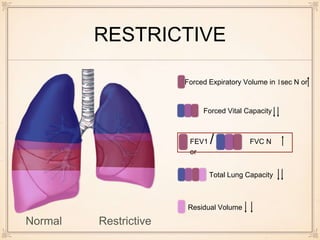
RESTRICTIVE
Normal Restrictive
Forced Expiratory Volume in 1sec N or
FEV1 / FVC N
or
Residual Volume
Forced Vital Capacity
Total Lung Capacity
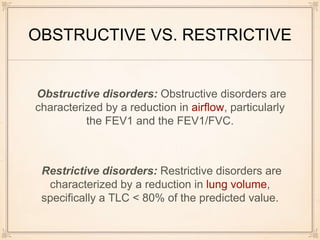
OBSTRUCTIVE VS. RESTRICTIVE
Obstructive disorders: Obstructive disorders are
characterized by a reduction in airflow, particularly
the FEV1 and the FEV1/FVC.
Restrictive disorders: Restrictive disorders are
characterized by a reduction in lung volume,
specifically a TLC < 80% of the predicted value.
“Thank You”

Obstructive vs. Restrictive Lung disease

  • 1.
    RESTRICTIVE VS. OBSTRUCTIVE LUNGDISEASES Fatima AlAwadh
  • 2.
    INTRODUCTION LUNG VOLUMES ANDCAPACITIES 2.5 L 0.5 L 1.5 L 1.5 L Inspiratory Reserve Volume Tidal Volume Residual Volume Expiratory Reserve Volume Inspiratory Capacity Functional Residual Capacity Vital Capacity Total Lung Capacity
  • 3.
    2.5 L 0.5 L 1.5L 1.5 L OBSTRUCTIVE Normal Obstructive Forced Vital Capacity N or Forced Expiratory Volume in 1sec Total Lung Capacity N or Residual Volume FEV1 / FVC
  • 4.
    RESTRICTIVE Normal Restrictive Forced ExpiratoryVolume in 1sec N or FEV1 / FVC N or Residual Volume Forced Vital Capacity Total Lung Capacity
  • 5.
    OBSTRUCTIVE VS. RESTRICTIVE Obstructivedisorders: Obstructive disorders are characterized by a reduction in airflow, particularly the FEV1 and the FEV1/FVC. Restrictive disorders: Restrictive disorders are characterized by a reduction in lung volume, specifically a TLC < 80% of the predicted value.
  • 6.