Sharq Elneil College
  School of Medical Laboratory Sciences
      Department of Microbiology
     Medical Bacteriology course


Streptococcus pneumoniae
      (Pneumococci)
     Dr.Mahadi Hassan Mahmoud
            mahadi2010sd@yahoo.com
           Bsc, Msc, MIBMS Microbiology
The natural habitat

 pneumococci is provided by the
 mucosa of the upper respiratory
 tract.
About 40–70 % of healthy adults are
 carriers. Pneumococcal infections .
Usually arise from this normal flora
 (endogenous infections).
Morphology
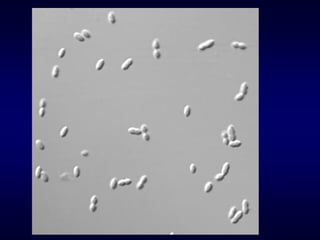
 Gram-positive, oval to lancet-
shaped cocci (0.5 and 1.25
micrometers in diameter)

usually occur in pairs or short
chains

 surrounded by a thick capsule.
Culture &chaacteristics:
on blood agar,
 Alpha -hemolytic colonies

 Mucoid (smooth, shiny) appearance

Mutants without capsules produce
colonies with a rough surface (“R” form-
maintain integrity of nucleic acid target
streptococcus pneumoniae is a very
fragile bacterium

 contains within itself the enzymatic
ability to disrupt and to disintegrate the
cells. autolysin.

The physiological role of this autolysin is
to cause the culture to undergo a
characteristic autolysis that kills the entire
culture when grown to stationary phase.
Virtually all clinical isolates of
pneumococci harbor this autolysin and
undergo lysis usually beginning between
18-24 hours after initiation of growth under
optimal conditions.

 Autolysis is consistent with changes in
colony morphology.

Colonies initially appear with a plateau-
type morphology, then start to collapse in
the centers when autolysis begins.
Streptococcus pneumoniae is a
fermentative aerotolerant anaerobe
Unlike other streptococci, they do
not display an M protein.
 they hydrolyze inulin, and their
cell wall composition is characteristic
both in terms of their peptidoglycan
and their teichoic acid.
Antigenic Structure
 Classified in 90 different serovars
based on the fine chemical structure of
the capsule polysaccharides acting as
anti- gens.

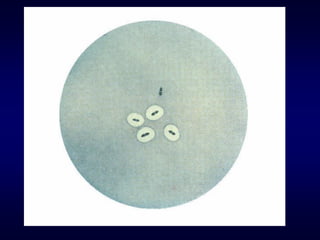
 This capsule antigen can be
identified using specific antisera in a
reaction known as capsular swelling
test ( Quelling reaction
Antiphagocytic.
Prevents the desposition of
complement and subsequent
phagocytosis (opsonisation) in the
absence of type-specific
antibodies.
These serotypes are number and
subdivided on the basis of
morphological similarity.
It was believed that most disease
is caused by the 23 serotype, this is
not the case locally. It causes:

otitis media, sinusitis, mastoiditis
and pneumonia ,joint infections,
endocarditis and meningitis.
Pathology:
 Capsule protects the pathogens from
phagocytosis and is the most important
determinant of pneumococcal viru-lence.

Unencapsulated variants are not
capable of causing disease. Other
potential virulence factors include :

                pneumolysin
                IgA protease.
.
Predisposing factors include :

 primary cardiopulmonary diseases,
previous infections
(e.g., influenza)

 extirpation of the spleen or
complement system defects.
important pneumococcal infections:
 Lobar pneumonia consolidated mass, in
contrast to the spongy texture of normal lung
tissue.

Bronchopneumonia.

 Acute exacerbation of chronic
bronchitis

 Otitis media

Sinusitis
Meningitis

corneal ulcer.

 Severe pneumococcal infections
frequently involve sepsis
Laboratory diagnosis
specimens:
Collection of Spacimen
Direct Exam
Culture
Identificaion
Serology
Molecular characterization
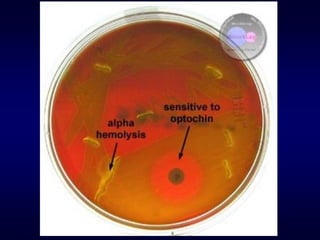
Optochin sensitivity
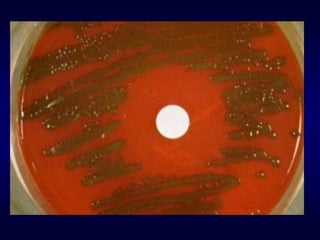
Pneumococci are sensitive to optochin
(ethylhydrocupreine hydrochloride).
    Method: Placing a disc (5 g) on a primary
sputum culture and culturing the plate aerobically
(not in CO2) can help to provide a rapid
    Result : The zone of inhibition should be at
least10 mm. Most viridans streptococci and other
alphahaemolytic streptococci are resistant to
optochin. If the zone of inhibition is less than 10
mm (6 mm disc) the colonies should be tested for
bile solubility
*Bile solubility test
 Method : a tube technique,
 the results of which are easy to read.
Some workers, however, prefer to test
suspect alpha-haemolytic colonies directly
on a culture plate by touching a colony with
a loopful of 2% sodium deoxycholate
Incubation at 35–37 ºC for 30 minutes.

Result: examining for lysis (disappearance
of the colony, indicating S. pneumoniae).
Agglutination Test

 Latex agglutination tests are widely used
 methods for identification and typing
  The speed of the observed
 agglutination reaction (positive
 reactionwithin 10 s) is a great advantage.
  The same is true for the ease of
 interpreting a reaction as positive
 compared to that in the normal capsular
 reaction test.
Treatments
 pencillins
high-frequency occurrence   of   strains
resistant to penicillin

 Cephalosporins
Cephalexin ceftriaxone

Macrolides
 Vancomycin

Erythromycin

 Cotrimoxazole ( trimethoprim
+sulphamexazole)
Antibiotic Resistant
 extreme genetic flexibility
enabling S. pneumoniae to
acquire antibiotic resistance

switch the capsular serotype is a
result of the unique pneumococcal
feature: natural competence for
genetic transformation.
Natural competence is a transient
physiological state enabling the
bacteria to acquire exogenous DNA.

 Competence is regulated by
quorum sensing system and thus
depends on cell density and many
other factors
pathogen reservoir.


      Epidemiology and prophylaxis.
      Pneumococcal infections are endemic
     and occur in all seasons, more frequently
     in the elderly. Humans are the natural
     pathogen reservoir

   The vaccine product Pneumovax is
  available for immunization purposes.
jugate vaccine that is effective in children under two years


          purified capsule polysaccharides
          (PPV )
                  seven-valent conjugate vaccine
                          a seven-valent con-

                  effective in children of less than 2
                  year (PCV)
Streptococcus Viridans

form part of the normal microbial
flora of the upper respiratory tract
(particularly oropharynx) and
gastrointestinal tract.

They may therefore be found with
S. pneumoniae in sputum (as
commensals)
Morphology

 Gram-positive cocci

usually occur in pairs or long chains
Culture:
on blood agar,
 Alpha -hemolytic colonies

the viridans group of streptococci can also
be nonhaemolytic and occasionally beta-
haemolytic.
A few species are pathogenic

.S. mutans,
S. sanguis,
S. mitior)

causing endocarditis, bacteraemia, and
dental caries.
S. anginosus group
(formerly S. milleri group)

 associated with deep
abscesses in various sites in the
body (abdomen, chest, brain)
often in association with other
bacteria.
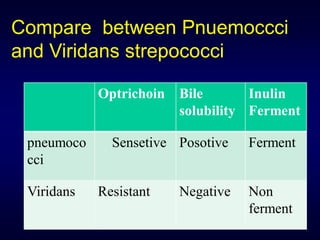
Compare between Pnuemoccci
and Viridans strepococci

            Optrichoin   Bile       Inulin
                         solubility Ferment

 pneumoco     Sensetive Posotive    Ferment
 cci

 Viridans   Resistant    Negative   Non
                                    ferment
THANKYOU FOR ATTENTION

Pneumococci ppt mahadi

  • 1.
    Sharq Elneil College School of Medical Laboratory Sciences Department of Microbiology Medical Bacteriology course Streptococcus pneumoniae (Pneumococci) Dr.Mahadi Hassan Mahmoud mahadi2010sd@yahoo.com Bsc, Msc, MIBMS Microbiology
  • 2.
    The natural habitat pneumococci is provided by the mucosa of the upper respiratory tract. About 40–70 % of healthy adults are carriers. Pneumococcal infections . Usually arise from this normal flora (endogenous infections).
  • 3.
    Morphology  Gram-positive, ovalto lancet- shaped cocci (0.5 and 1.25 micrometers in diameter) usually occur in pairs or short chains  surrounded by a thick capsule.
  • 7.
    Culture &chaacteristics: on bloodagar,  Alpha -hemolytic colonies  Mucoid (smooth, shiny) appearance Mutants without capsules produce colonies with a rough surface (“R” form- maintain integrity of nucleic acid target
  • 8.
    streptococcus pneumoniae isa very fragile bacterium  contains within itself the enzymatic ability to disrupt and to disintegrate the cells. autolysin. The physiological role of this autolysin is to cause the culture to undergo a characteristic autolysis that kills the entire culture when grown to stationary phase.
  • 9.
    Virtually all clinicalisolates of pneumococci harbor this autolysin and undergo lysis usually beginning between 18-24 hours after initiation of growth under optimal conditions.  Autolysis is consistent with changes in colony morphology. Colonies initially appear with a plateau- type morphology, then start to collapse in the centers when autolysis begins.
  • 10.
    Streptococcus pneumoniae isa fermentative aerotolerant anaerobe Unlike other streptococci, they do not display an M protein.  they hydrolyze inulin, and their cell wall composition is characteristic both in terms of their peptidoglycan and their teichoic acid.
  • 13.
    Antigenic Structure  Classifiedin 90 different serovars based on the fine chemical structure of the capsule polysaccharides acting as anti- gens.  This capsule antigen can be identified using specific antisera in a reaction known as capsular swelling test ( Quelling reaction
  • 14.
    Antiphagocytic. Prevents the despositionof complement and subsequent phagocytosis (opsonisation) in the absence of type-specific antibodies. These serotypes are number and subdivided on the basis of morphological similarity.
  • 15.
    It was believedthat most disease is caused by the 23 serotype, this is not the case locally. It causes: otitis media, sinusitis, mastoiditis and pneumonia ,joint infections, endocarditis and meningitis.
  • 18.
    Pathology:  Capsule protectsthe pathogens from phagocytosis and is the most important determinant of pneumococcal viru-lence. Unencapsulated variants are not capable of causing disease. Other potential virulence factors include : pneumolysin IgA protease. .
  • 19.
    Predisposing factors include:  primary cardiopulmonary diseases, previous infections (e.g., influenza)  extirpation of the spleen or complement system defects.
  • 20.
    important pneumococcal infections: Lobar pneumonia consolidated mass, in contrast to the spongy texture of normal lung tissue. Bronchopneumonia.  Acute exacerbation of chronic bronchitis  Otitis media Sinusitis
  • 21.
    Meningitis corneal ulcer.  Severepneumococcal infections frequently involve sepsis
  • 22.
    Laboratory diagnosis specimens: Collection ofSpacimen Direct Exam Culture Identificaion Serology Molecular characterization
  • 23.
    Optochin sensitivity Pneumococci aresensitive to optochin (ethylhydrocupreine hydrochloride). Method: Placing a disc (5 g) on a primary sputum culture and culturing the plate aerobically (not in CO2) can help to provide a rapid Result : The zone of inhibition should be at least10 mm. Most viridans streptococci and other alphahaemolytic streptococci are resistant to optochin. If the zone of inhibition is less than 10 mm (6 mm disc) the colonies should be tested for bile solubility
  • 25.
    *Bile solubility test Method : a tube technique, the results of which are easy to read. Some workers, however, prefer to test suspect alpha-haemolytic colonies directly on a culture plate by touching a colony with a loopful of 2% sodium deoxycholate Incubation at 35–37 ºC for 30 minutes. Result: examining for lysis (disappearance of the colony, indicating S. pneumoniae).
  • 26.
    Agglutination Test Latexagglutination tests are widely used methods for identification and typing  The speed of the observed agglutination reaction (positive reactionwithin 10 s) is a great advantage.  The same is true for the ease of interpreting a reaction as positive compared to that in the normal capsular reaction test.
  • 28.
    Treatments  pencillins high-frequency occurrence of strains resistant to penicillin  Cephalosporins Cephalexin ceftriaxone Macrolides
  • 29.
     Vancomycin Erythromycin  Cotrimoxazole( trimethoprim +sulphamexazole)
  • 30.
    Antibiotic Resistant  extremegenetic flexibility enabling S. pneumoniae to acquire antibiotic resistance switch the capsular serotype is a result of the unique pneumococcal feature: natural competence for genetic transformation.
  • 31.
    Natural competence isa transient physiological state enabling the bacteria to acquire exogenous DNA.  Competence is regulated by quorum sensing system and thus depends on cell density and many other factors
  • 32.
    pathogen reservoir. Epidemiology and prophylaxis.  Pneumococcal infections are endemic and occur in all seasons, more frequently in the elderly. Humans are the natural pathogen reservoir  The vaccine product Pneumovax is available for immunization purposes.
  • 33.
    jugate vaccine thatis effective in children under two years  purified capsule polysaccharides (PPV ) seven-valent conjugate vaccine a seven-valent con- effective in children of less than 2 year (PCV)
  • 35.
    Streptococcus Viridans form partof the normal microbial flora of the upper respiratory tract (particularly oropharynx) and gastrointestinal tract. They may therefore be found with S. pneumoniae in sputum (as commensals)
  • 36.
    Morphology  Gram-positive cocci usuallyoccur in pairs or long chains
  • 37.
    Culture: on blood agar, Alpha -hemolytic colonies the viridans group of streptococci can also be nonhaemolytic and occasionally beta- haemolytic.
  • 38.
    A few speciesare pathogenic .S. mutans, S. sanguis, S. mitior) causing endocarditis, bacteraemia, and dental caries.
  • 39.
    S. anginosus group (formerlyS. milleri group)  associated with deep abscesses in various sites in the body (abdomen, chest, brain) often in association with other bacteria.
  • 40.
    Compare between Pnuemoccci andViridans strepococci Optrichoin Bile Inulin solubility Ferment pneumoco Sensetive Posotive Ferment cci Viridans Resistant Negative Non ferment
  • 41.