DONE BY:
O MAHA HUSSIEN
O HALA YASSINE
O NOUR AL HOUDA DEEB
| Domain = Bacteria
| Phylum = Proteobacteria
| Class = Gammaproteobacteria
| Order = Enterobacteriales
| Family = Enterobacteriaceae
| Genus = Klebsiella
| Species =k.pneumonia , k.ozaenae
, k.rhinoscleromatis.
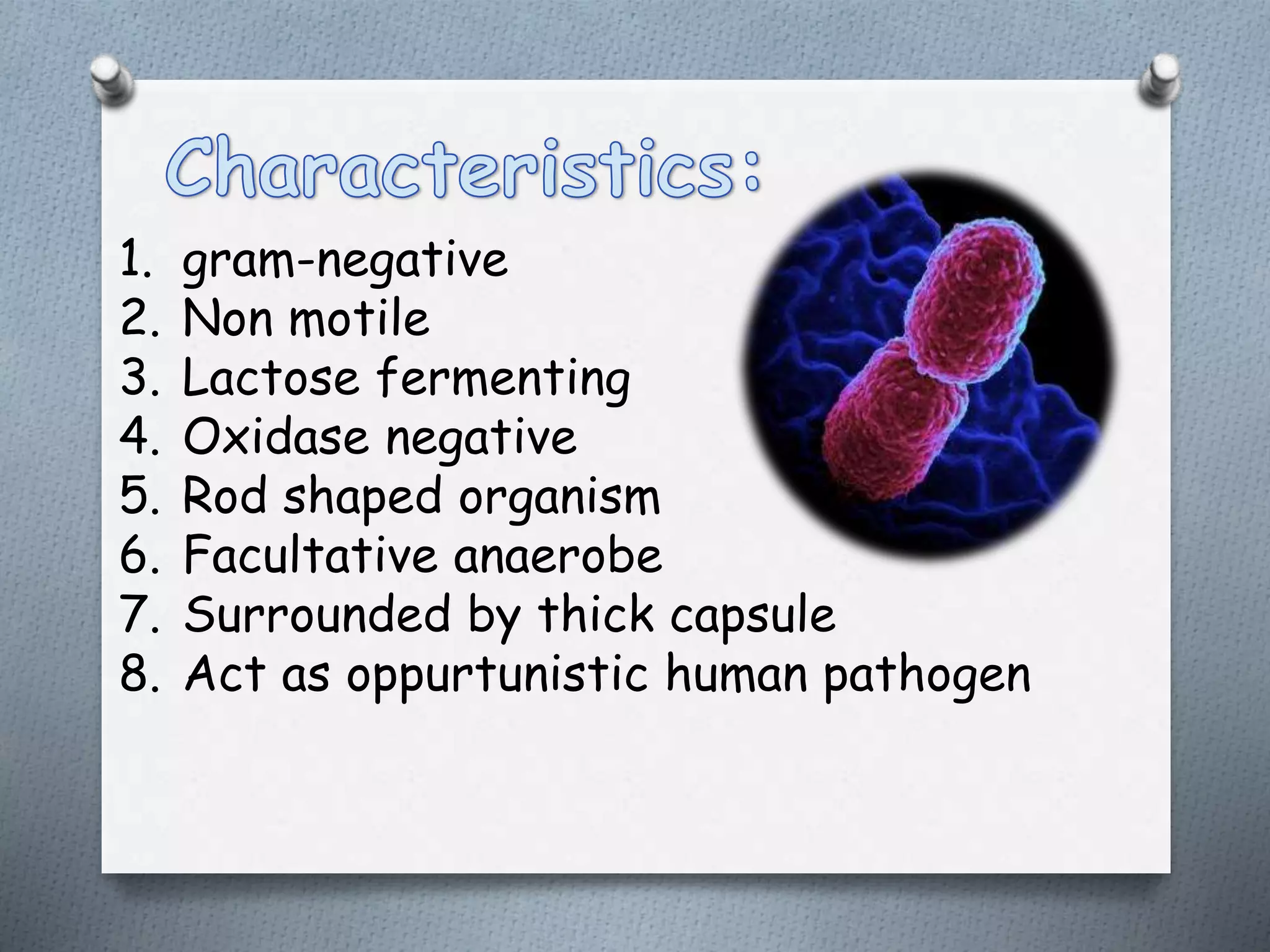
1. gram-negative
2. Non motile
3. Lactose fermenting
4. Oxidase negative
5. Rod shaped organism
6. Facultative anaerobe
7. Surrounded by thick capsule
8. Act as oppurtunistic human pathogen
1)Found in the normal flora of the
nose, mouth, skin, GI tract and
intestines.
2)It is also found in soil and water.
Generally, Klebsiella infections are
seen mostly in people with a
weakened immune system.
1) urinary tract infections
2)pneumonia
3) Specticaemia
4) nosocomial infections
5) soft tissue infections.
1) spread through exposure to the bacteria via
respiratory tract which causes pneumonia.
2) Enters the blood to cause an infection in the
bloodstream.
3) Most well-known in hospitals spread through
person-to-person contact by contaminated hands of
surrounded people in the hospitals, whether it be an
employee or a patient.
4) Klebsiella is spread very easily and rapidly, but
not through the air.
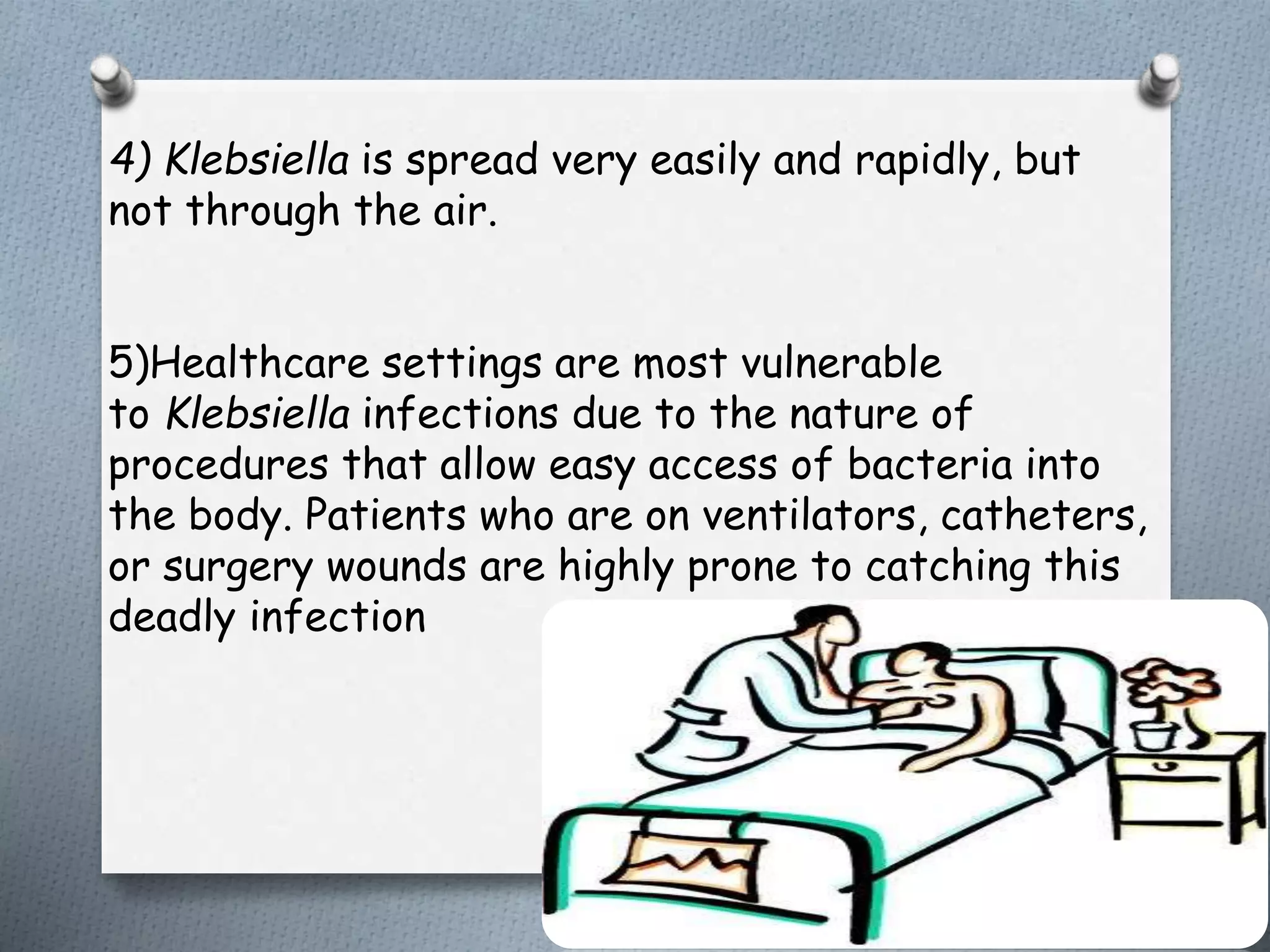
5)Healthcare settings are most vulnerable
to Klebsiella infections due to the nature of
procedures that allow easy access of bacteria into
the body. Patients who are on ventilators, catheters,
or surgery wounds are highly prone to catching this
deadly infection
The symptoms of a K. pneumoniae infection differ
depending on where the infection is located, and
are similar to symptoms of the same diseases
caused by other microbes.
For instance, meningitis from K. pneumoniae
produces the hallmark symptoms of bacterial
meningitis, including fever, confusion, neck
stiffness, and sensitivity to bright lights.
Bloodstream infections (bacteremia and sepsis)
from Klebsiella cause fever, chills, rash, light-
headedness, and altered mental states.
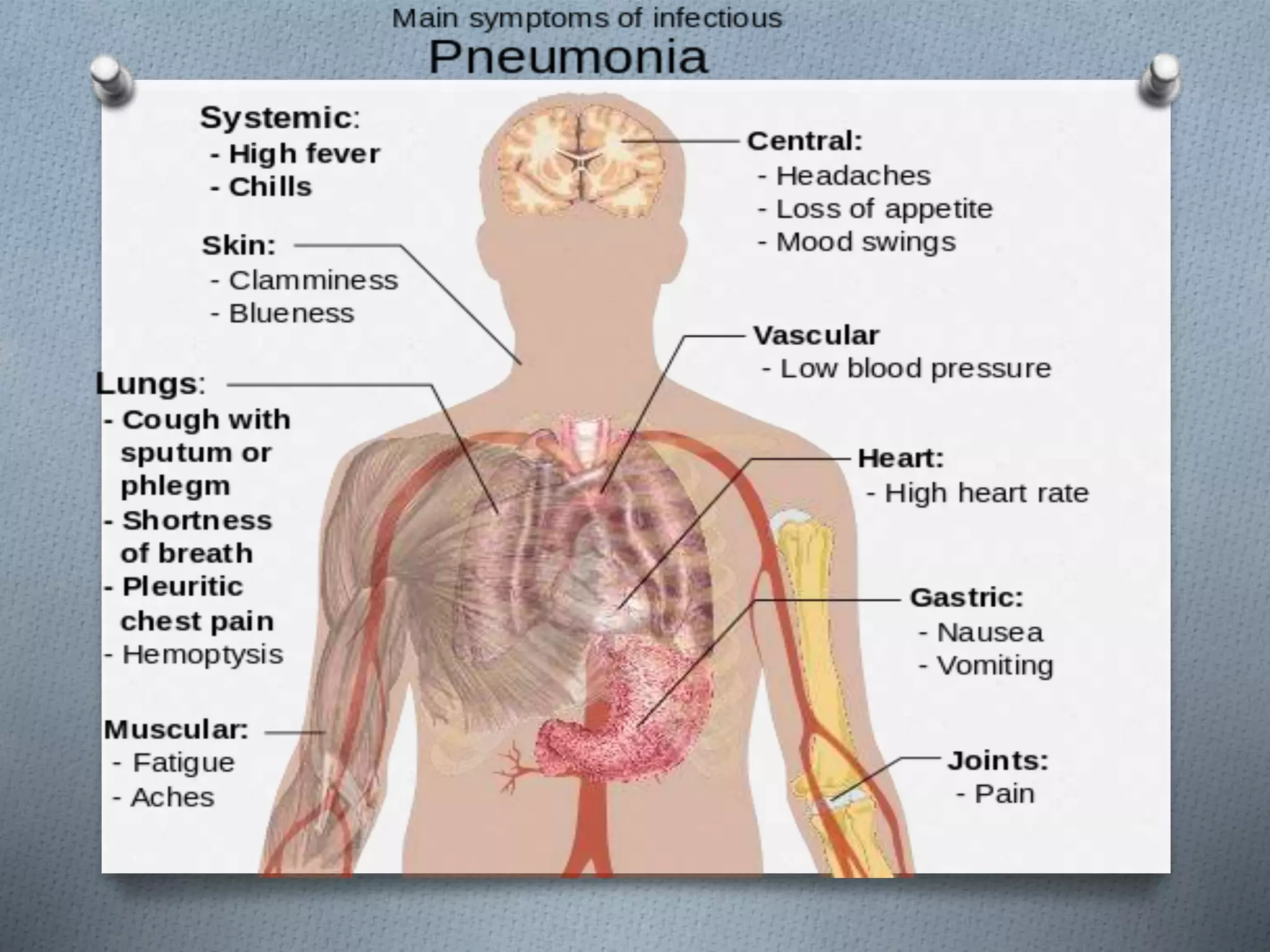
Pneumonia from K. pneumoniae can result in:
1)Fevers and chills
2) Flu-like symptoms
3)Cough, which may produce mucus that's yellow,
green, or bloody
4) breathing issues
O1) Adhesions
O2) Capsule
OIron Capturing capability
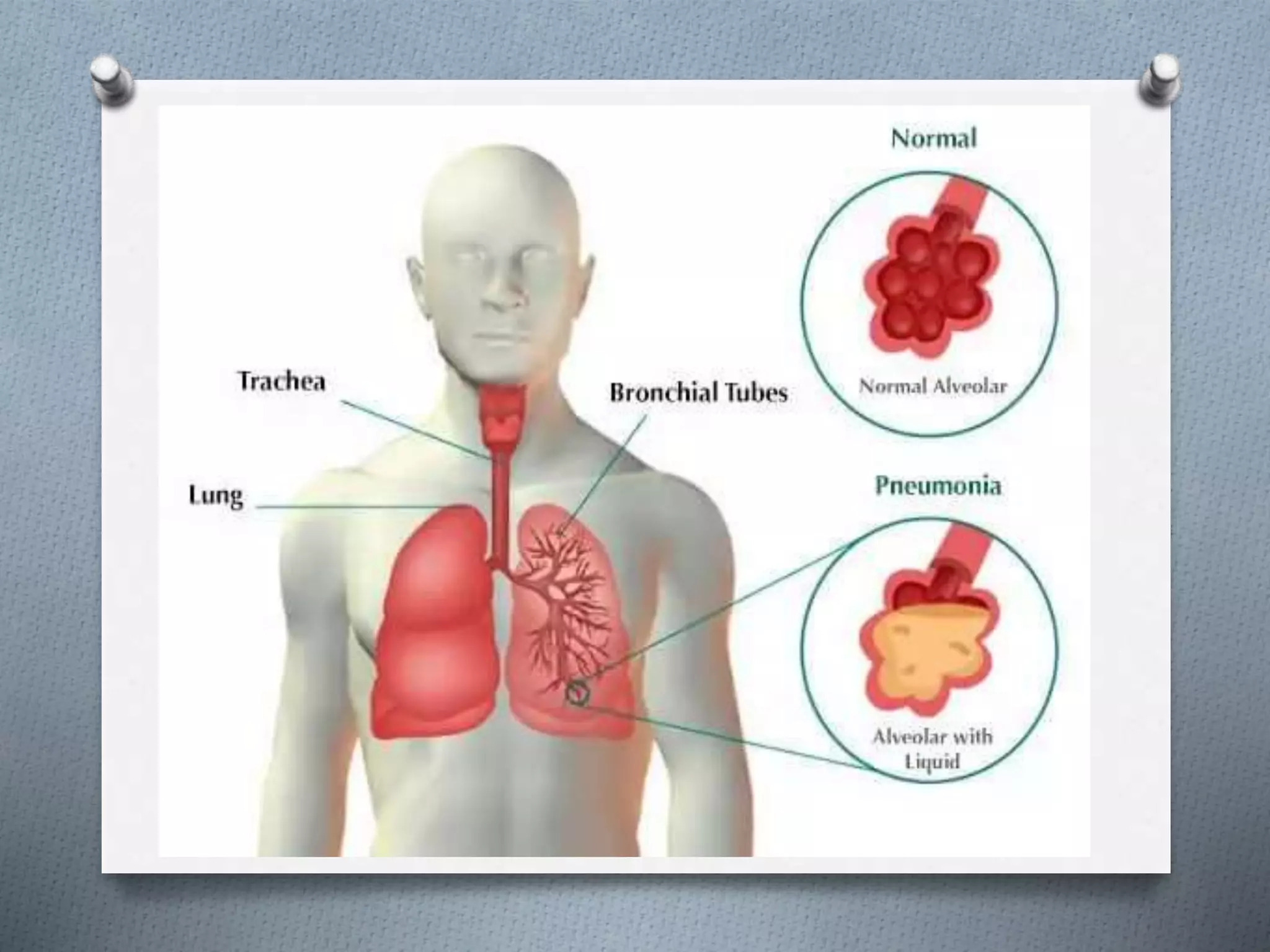
O When the defense mechanism in the
respiratoy system is abnormal either due
to illness , age or fatigue our body loses
fight against microbes then this microbes
will multiply rapidly & pass from the tube
into the alveoli .This will trigger an
inflammatory reaction which will generate a
lot of infectious fluid that is composed
from microbes , dead antibodies & fluids
from the edges in blood vessels . Then this
fluid will block the movement of gases
making it difficult to breath. This is mostly
caused by klebsiella that invaded the alveoli
causing klebseilla pneumonia .
Some Klebsiella bacteria have become highly
resistant to antibiotics.
Klebsiella pneumoniae produce an enzyme
known as a carbapenemase (referred to as
KPC-producing organisms).
then the class of antibiotics called carbapenems
will not work to kill the bacteria and treat the
infection.
Klebsiella species are examples of
Enterobacteriaceae, a normal part of the human
gut bacteria, that can become carbapenem-
resistant.
1) Klebsiella infections that are not drug-
resistant can be treated with antibiotics.
2) Infections caused by KPC-producing
bacteria can be difficult to treat because
fewer antibiotics are effective against them.
In such cases, a microbiology laboratory must
run tests to determine which antibiotics will
treat the infection
These drugs include:
Aminoglycosides,Polymyxins,Tigecycline,Fosfo
mycin,Temocillin.
KLEBSIELLA SLIDESHARE PRESENTATION

KLEBSIELLA SLIDESHARE PRESENTATION

  • 2.
    DONE BY: O MAHAHUSSIEN O HALA YASSINE O NOUR AL HOUDA DEEB
  • 3.
    | Domain =Bacteria | Phylum = Proteobacteria | Class = Gammaproteobacteria | Order = Enterobacteriales | Family = Enterobacteriaceae | Genus = Klebsiella | Species =k.pneumonia , k.ozaenae , k.rhinoscleromatis.
  • 4.
    1. gram-negative 2. Nonmotile 3. Lactose fermenting 4. Oxidase negative 5. Rod shaped organism 6. Facultative anaerobe 7. Surrounded by thick capsule 8. Act as oppurtunistic human pathogen
  • 5.
    1)Found in thenormal flora of the nose, mouth, skin, GI tract and intestines. 2)It is also found in soil and water. Generally, Klebsiella infections are seen mostly in people with a weakened immune system.
  • 6.
    1) urinary tractinfections 2)pneumonia 3) Specticaemia 4) nosocomial infections 5) soft tissue infections.
  • 7.
    1) spread throughexposure to the bacteria via respiratory tract which causes pneumonia. 2) Enters the blood to cause an infection in the bloodstream. 3) Most well-known in hospitals spread through person-to-person contact by contaminated hands of surrounded people in the hospitals, whether it be an employee or a patient.
  • 8.
    4) Klebsiella isspread very easily and rapidly, but not through the air. 5)Healthcare settings are most vulnerable to Klebsiella infections due to the nature of procedures that allow easy access of bacteria into the body. Patients who are on ventilators, catheters, or surgery wounds are highly prone to catching this deadly infection
  • 10.
    The symptoms ofa K. pneumoniae infection differ depending on where the infection is located, and are similar to symptoms of the same diseases caused by other microbes. For instance, meningitis from K. pneumoniae produces the hallmark symptoms of bacterial meningitis, including fever, confusion, neck stiffness, and sensitivity to bright lights.
  • 11.
    Bloodstream infections (bacteremiaand sepsis) from Klebsiella cause fever, chills, rash, light- headedness, and altered mental states. Pneumonia from K. pneumoniae can result in: 1)Fevers and chills 2) Flu-like symptoms 3)Cough, which may produce mucus that's yellow, green, or bloody 4) breathing issues
  • 13.
    O1) Adhesions O2) Capsule OIronCapturing capability
  • 14.
    O When thedefense mechanism in the respiratoy system is abnormal either due to illness , age or fatigue our body loses fight against microbes then this microbes will multiply rapidly & pass from the tube into the alveoli .This will trigger an inflammatory reaction which will generate a lot of infectious fluid that is composed from microbes , dead antibodies & fluids from the edges in blood vessels . Then this fluid will block the movement of gases making it difficult to breath. This is mostly caused by klebsiella that invaded the alveoli causing klebseilla pneumonia .
  • 17.
    Some Klebsiella bacteriahave become highly resistant to antibiotics. Klebsiella pneumoniae produce an enzyme known as a carbapenemase (referred to as KPC-producing organisms).
  • 18.
    then the classof antibiotics called carbapenems will not work to kill the bacteria and treat the infection. Klebsiella species are examples of Enterobacteriaceae, a normal part of the human gut bacteria, that can become carbapenem- resistant.
  • 20.
    1) Klebsiella infectionsthat are not drug- resistant can be treated with antibiotics. 2) Infections caused by KPC-producing bacteria can be difficult to treat because fewer antibiotics are effective against them. In such cases, a microbiology laboratory must run tests to determine which antibiotics will treat the infection These drugs include: Aminoglycosides,Polymyxins,Tigecycline,Fosfo mycin,Temocillin.