VIVEKANANDHA ARTS AND SCIENCE COLLEGE FOR WOMEN
Veerachipalayam – 637303, Sankagiri , Salem D.t , Tamilnadu, India.
Affiliated to periyar university, Salem; Recognised under section 2 (f), &
12(B) of the
UGC Act,1956.
SUBJECT INCHARGE :
Dr.R.MYTHILI RAVICHANDRAN,
HEAD OF THE DEPARTMENT,
DEPARTMENT OF MICROBIOLOGY.
SUBMITTED BY:
Ms.VIDHYA APPUSAMY,
III – B.SC , MICROBIOLOGY,
DEPARTMENT OF MICROBIOLOGY.
DEPARTMENT OF MICROBIOLOGY
SUBJECT : MEDICAL BACTERIOLOGY
TOPIC: STREPTOCOCCUS PNEUMONIAE
STREPTOCOCCUS
PNEUMONIAE
INTRODUCTION
 It was gram positive, lanceolate shaped diplococci
 Non – spore former ,non – acid fast
 Normal inhabitants Of the human upper respiratory
tract
 It also have a capsule , made up of polysaccharides
 It otherwise known as pneumococci
 It cause pneumonia & Otitis media in children
 Sinusitis, bronchitis, Bacteremia, meningitis
MORPHOLOGY
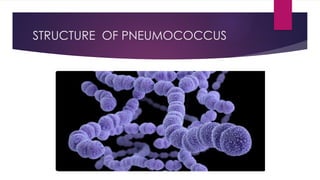
 Pneumococci are Gram positive, slightly elongated cocci
 It was capsulated and the capsule surrounds each pair
 It was non – mobile and non- sporing
 Capsule is best demonstrate in specimen as a clear halo in Indian
ink preparation
CULTURAL CHARACTERISTICS
 Pneumococci have complex nutritional requirements and grow only in
enriched media
 They are aerobic and facultative anaerobe
 Their growth is improved by an atmosphere of 5-10% CO2
 Optimum temperature of growth is 37 *c (7.8)(6.5 – 8.3)
 On blood agar colonies are small (0.5 – 1mm)
 It was appear in draughtsman or carrom coin
 In liquid media ,such as glucose broth, growth occurs as uniform
turbidity
 Pneumococci readily undergo autolysis in cultures because of the
activity of intracellular enzymes.
 Autolysis of cells is enhanced by surface active agents like bile salts,
sodium lauryl sulphate etc.. However , heat – killed cultures do not
undergo autolytic change
 Smooth (capsulated) ,rough (non capsulated)
STRUCTURE OF PNEUMOCOCCUS
BIOCHEMICAL REACTIONS
 Catalase and oxidase negative
 Hiss’s serum sugar
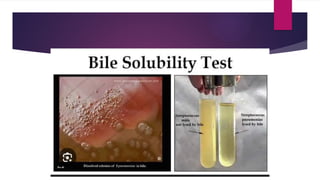
 Bile solubility and autolysis :
Bile solubility test is positive for all capsulate
PNEUMOCOCCI and some non-capsulated variants.
The enzyme N- acetylmuramyl-L-alanine amidase
(autolysin) produced by PNEUMOCOCCUS solubilises the peptidoglycan of
the cell wall.
RESISTANCE
 52o
Cfor 15 minutes
 The organism die on prolonged incubation in
cultures unless the source of catalase is provide in
the culture medium
 Beta – lactams (penicillin etc.,) were drug of choice
against pneumococcal infection.
ANTIGENIC STRUCTURE

There are three types
A . Capsular polysaccharide (sss):
Virulent strains of S.pneumoniae are covered with a complex
polysaccharide capsule.
Serological typing of PNEUMOCOCCUS is not performed routinely but
for epidermiological studies
B. Somatic M protein :
Both capsulated and non-capsulated pneumococci contain envelope
M protein
 C. Cell wall carbohydrate :
The peptidoglycan layer of Sreptococcus
pneumoniae is typical of Gram – positive cocci
Made up of alternating subunits of N –
acetyglucosamine and N- acetylmuramic acid cross- linked by
poptide bridges.
TOXINS AND VIRULENCE FACTORS
1. Pneumolysin
2. polysaccharide capsule
3. Autolysin
4. IgA protease and hyaluronidase
VARIATION
 On repeated subculture S. Pneumoniae undergoes a smooth to rough
variation
 Non-capsulated strains,the R form ,produce rough colonies and are
autoagglutinable and avirulent
 Spontaneous mutation
 In tissues R mutants are eliminated by phagocytosis
 Rough pneumoniae of one serotype maybe made to produce capsules
of or same or different Serotypes on treatment with DNA from the
respective serotypes . Is called transformation
ANIMAL PATHOGENICITY
 Pneumococci are highly pathogenic for mice and rabbits
 But less so for guinea pig
 Intraperitoneal inoculation of pneumococci in mice or rabbits leads to
fatal infection
 The animals die in 1-3 days and organisms can be found in peritoneal
exudate and heart blood in large numbers.
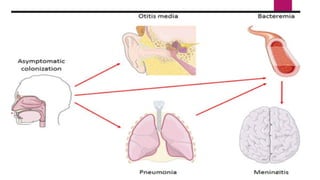
CLINICAL DISEASES
1. Pneumonia
2. Meningitis
3. Bacteremia and sepsis
4. Sinusitis and otitis media
5. Other suppurative lesions
LABORATORY DIAGNOSIS
 Specimen - sputum,csf, blood and urine
 Microscopy – Gram stain of rusty sputum
 Culture – blood agar
 Gentamycin
 Blood culture in glucose broth
 Mouse inoculation (negative type in 14 strain)
EPIDERMIOLOGY
 S.pneumoniae is a strict of human pathogen ,i.e, there is no animal
reservoir
 Pneumococcus is an obligate parasite of humans and a common
inhabitant of throat and nasopharynx of many healthy persons
 It can be either endogenous or exogenous
 In children 614,19 and 23 are frequent causes
 Serotypes 6,14,19f,and 23f, commonly present in west
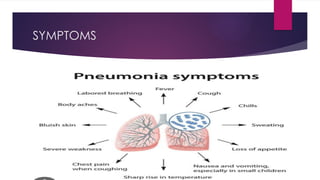
SYMPTOMS
TREATMENT
 Parental penipenicillin
 Amyoxycilin
 Alteration in penicilin binding protein
 Third generation cephalosporin
 Vancomycin
THANK YOU

streptococcus pneumoniae.Streptococcus.SlideShare

  • 1.
    VIVEKANANDHA ARTS ANDSCIENCE COLLEGE FOR WOMEN Veerachipalayam – 637303, Sankagiri , Salem D.t , Tamilnadu, India. Affiliated to periyar university, Salem; Recognised under section 2 (f), & 12(B) of the UGC Act,1956. SUBJECT INCHARGE : Dr.R.MYTHILI RAVICHANDRAN, HEAD OF THE DEPARTMENT, DEPARTMENT OF MICROBIOLOGY. SUBMITTED BY: Ms.VIDHYA APPUSAMY, III – B.SC , MICROBIOLOGY, DEPARTMENT OF MICROBIOLOGY. DEPARTMENT OF MICROBIOLOGY SUBJECT : MEDICAL BACTERIOLOGY TOPIC: STREPTOCOCCUS PNEUMONIAE
  • 2.
  • 3.
    INTRODUCTION  It wasgram positive, lanceolate shaped diplococci  Non – spore former ,non – acid fast  Normal inhabitants Of the human upper respiratory tract  It also have a capsule , made up of polysaccharides  It otherwise known as pneumococci  It cause pneumonia & Otitis media in children  Sinusitis, bronchitis, Bacteremia, meningitis
  • 4.
    MORPHOLOGY  Pneumococci areGram positive, slightly elongated cocci  It was capsulated and the capsule surrounds each pair  It was non – mobile and non- sporing  Capsule is best demonstrate in specimen as a clear halo in Indian ink preparation
  • 5.
    CULTURAL CHARACTERISTICS  Pneumococcihave complex nutritional requirements and grow only in enriched media  They are aerobic and facultative anaerobe  Their growth is improved by an atmosphere of 5-10% CO2  Optimum temperature of growth is 37 *c (7.8)(6.5 – 8.3)  On blood agar colonies are small (0.5 – 1mm)  It was appear in draughtsman or carrom coin
  • 6.
     In liquidmedia ,such as glucose broth, growth occurs as uniform turbidity  Pneumococci readily undergo autolysis in cultures because of the activity of intracellular enzymes.  Autolysis of cells is enhanced by surface active agents like bile salts, sodium lauryl sulphate etc.. However , heat – killed cultures do not undergo autolytic change  Smooth (capsulated) ,rough (non capsulated)
  • 7.
  • 8.
    BIOCHEMICAL REACTIONS  Catalaseand oxidase negative  Hiss’s serum sugar  Bile solubility and autolysis : Bile solubility test is positive for all capsulate PNEUMOCOCCI and some non-capsulated variants. The enzyme N- acetylmuramyl-L-alanine amidase (autolysin) produced by PNEUMOCOCCUS solubilises the peptidoglycan of the cell wall.
  • 10.
    RESISTANCE  52o Cfor 15minutes  The organism die on prolonged incubation in cultures unless the source of catalase is provide in the culture medium  Beta – lactams (penicillin etc.,) were drug of choice against pneumococcal infection.
  • 11.
    ANTIGENIC STRUCTURE  There arethree types A . Capsular polysaccharide (sss): Virulent strains of S.pneumoniae are covered with a complex polysaccharide capsule. Serological typing of PNEUMOCOCCUS is not performed routinely but for epidermiological studies B. Somatic M protein : Both capsulated and non-capsulated pneumococci contain envelope M protein
  • 12.
     C. Cellwall carbohydrate : The peptidoglycan layer of Sreptococcus pneumoniae is typical of Gram – positive cocci Made up of alternating subunits of N – acetyglucosamine and N- acetylmuramic acid cross- linked by poptide bridges.
  • 13.
    TOXINS AND VIRULENCEFACTORS 1. Pneumolysin 2. polysaccharide capsule 3. Autolysin 4. IgA protease and hyaluronidase
  • 14.
    VARIATION  On repeatedsubculture S. Pneumoniae undergoes a smooth to rough variation  Non-capsulated strains,the R form ,produce rough colonies and are autoagglutinable and avirulent  Spontaneous mutation  In tissues R mutants are eliminated by phagocytosis  Rough pneumoniae of one serotype maybe made to produce capsules of or same or different Serotypes on treatment with DNA from the respective serotypes . Is called transformation
  • 15.
    ANIMAL PATHOGENICITY  Pneumococciare highly pathogenic for mice and rabbits  But less so for guinea pig  Intraperitoneal inoculation of pneumococci in mice or rabbits leads to fatal infection  The animals die in 1-3 days and organisms can be found in peritoneal exudate and heart blood in large numbers.
  • 16.
    CLINICAL DISEASES 1. Pneumonia 2.Meningitis 3. Bacteremia and sepsis 4. Sinusitis and otitis media 5. Other suppurative lesions
  • 17.
    LABORATORY DIAGNOSIS  Specimen- sputum,csf, blood and urine  Microscopy – Gram stain of rusty sputum  Culture – blood agar  Gentamycin  Blood culture in glucose broth  Mouse inoculation (negative type in 14 strain)
  • 18.
    EPIDERMIOLOGY  S.pneumoniae isa strict of human pathogen ,i.e, there is no animal reservoir  Pneumococcus is an obligate parasite of humans and a common inhabitant of throat and nasopharynx of many healthy persons  It can be either endogenous or exogenous  In children 614,19 and 23 are frequent causes  Serotypes 6,14,19f,and 23f, commonly present in west
  • 19.
  • 20.
    TREATMENT  Parental penipenicillin Amyoxycilin  Alteration in penicilin binding protein  Third generation cephalosporin  Vancomycin
  • 22.