Arun Kumar P
Dept of Microbiology
SPIROCHAETES
 Elongated, motile, flexible bacteria twisted spirally along the long
axis
 Speira- coiled, chaite- hair
 Endoflagella- polar flagella wound along the helical protoplasmic
cylinder; situated between outer membrane and cell wall
 Aerobic, anaerobic or facultative, some are non-cultivable
 Reproduction by transverse fission
 Pathogenic Spirochaetes- Treponema, Borrelia, Leptospira
Periplasmic Flagella Diagram
Tightly Coiled Spirochete
AF
OS = outer sheath
AF = axial fibrils
Leptospira interrogans
Genus Species Disease
Treponema pallidum ssp. pallidum
pallidum ssp. endemicum
pallidum ssp. pertenue
carateum
Syphilis
Bejel
Yaws
Pinta
Borrelia burgdorferi
recurrentis
Many species
Lyme disease (borreliosis)
Epidemic relapsing fever
Endemic relapsing fever
Leptospira interrogans Leptospirosis
(Weil’s Disease)
Spirochaetales Associated Human Diseases
Morphology:-
10µm long and 0.1 to 0.2 µm wide
Ten regular spirals with sharp and angular at regular intervals
of about 1 µm
Actively motile, exhibiting rotation around the long axis,
backward and forward movements and flexion of whole body
During motion, secondary curves appear and disappear in
succession but the primary spirals are unchanged
Cannot seen under light microscope in wet films
Morphology and motility seen under dark ground or Phase
contrast microscope
It can be stained by SLIVER IMPREGNATION or
FONTANA staining methods
Levaditi’s method for tissue section
Treponema pallidum
Cultivation of Treponema
 Do not grow in artificial culture media
 Nichol’s strain- virulent strain of T.pallidum maintained by
serial passage in rabbits; isolated from a case of General
Paralysis of Insane in 1912.
 Reiter’s strain- T.phagedenis ( non-pathogenic) used for
group specific tests; grows well in thioglycollate medium with
serum
Resistance of Treponema
 Very delicate
 Readily inactivated by drying and heat
 Killed in 1-3 days at 0-4oC
 Remains viable for 10-15 years frozen at –70oC in 10% glycerol,
or in liquid nitrogen (– 130oC)
 Inactivated by contact with distilled water, oxygen, soap,
bismuth, mercurials, arsenicals, common antiseptic agents and
antibiotics
Antigenic Structure
 Complex antigenic structure
 3 types of antigens:
 Reagin antigen- hapten extracted from beef heart is used as antigen
to detect these antibodies; antigen is cardiolipin- chemically
diphosphatidyl glycerol
 Group antigen- found in T.pallidum and non-pathogenic strains e.g.
Reiter’s strain
 Species specific antigen- polysaccharide in nature; antibodies seen
only in sera of patients with pathogenic T.pallidum infection
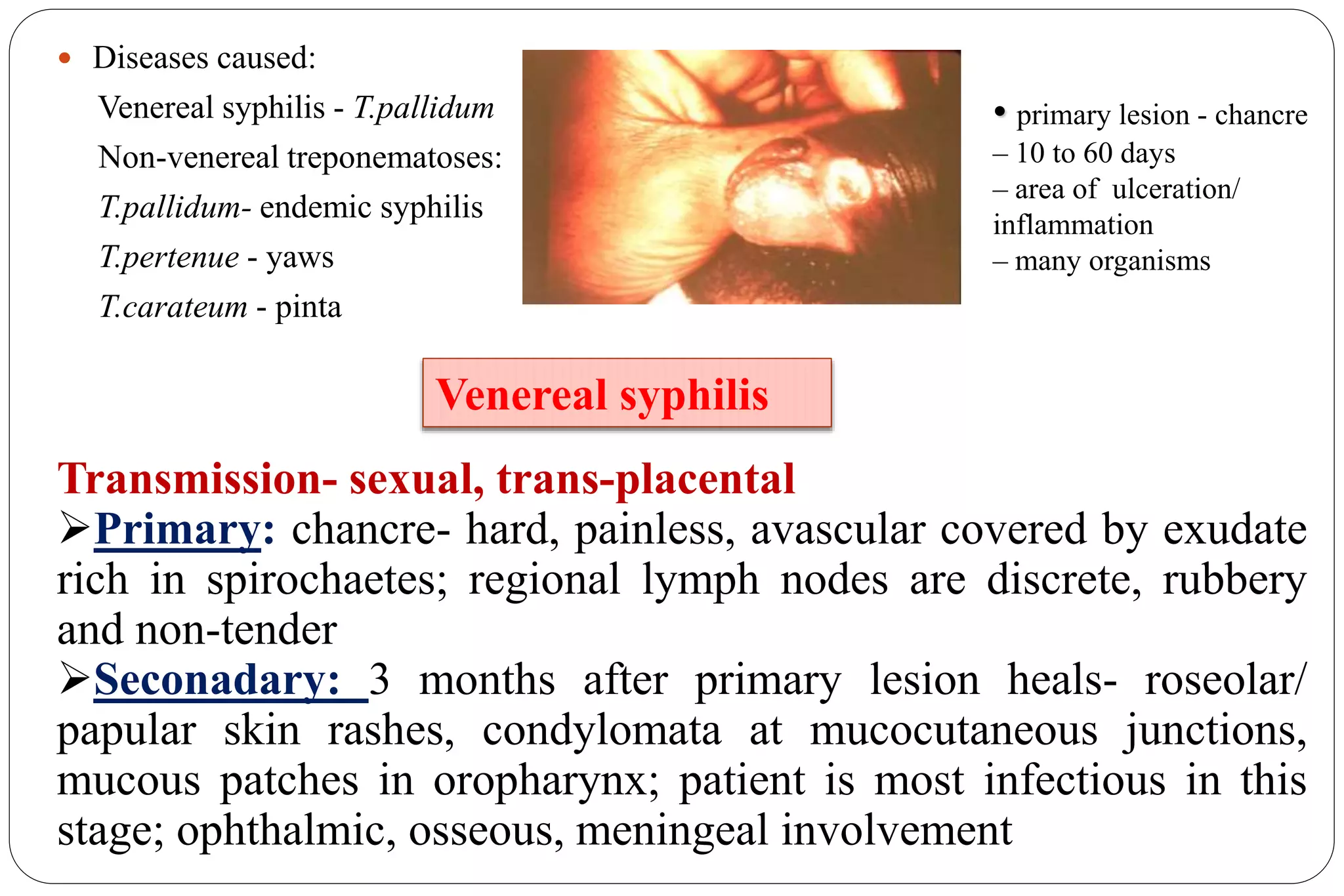
 Diseases caused:
Venereal syphilis - T.pallidum
Non-venereal treponematoses:
T.pallidum- endemic syphilis
T.pertenue - yaws
T.carateum - pinta
Transmission- sexual, trans-placental
Primary: chancre- hard, painless, avascular covered by exudate
rich in spirochaetes; regional lymph nodes are discrete, rubbery
and non-tender
Seconadary: 3 months after primary lesion heals- roseolar/
papular skin rashes, condylomata at mucocutaneous junctions,
mucous patches in oropharynx; patient is most infectious in this
stage; ophthalmic, osseous, meningeal involvement
Venereal syphilis
• primary lesion - chancre
– 10 to 60 days
– area of ulceration/
inflammation
– many organisms
 Latent: Period of quiescence for several years, can only be
diagnosed by serological tests
 Tertiary: Cardiovascular lesions- aneurysms, chronic
granulomata and meningovascular lesions; may represent
manifestations of delayed hypersensitivity
 Quarternary/ Late Tertiary: Tabes dorsalis or General Paralysis
of Insane
NON-VENEREAL SYPHILIS
 Congenital syphilis:
 Woman with early syphilis is more infective to her fetus
 Lesions usually develop after 4th month of gestation- suggests that
pathogenesis requires immune response from the fetus
 Can be treated if mother is treated adequately before 4th month of
pregnancy
 Occupational syphilis: primary chancre is absent or extragenital,
usually on fingers
LAB DIAGNOSIS OF SYPHILIS
Microscopy
 Applicable in primary and secondary syphilis,
and in congenital syphilis with superficial
lesions
 Serum exuding from base of lesion should be
collected
 Wet films examined under dark ground or
phase contrast microscopy
 Direct fluorescent antibody test( DFA-TP)-
better and safer than DGM
SEROLOGICAL TESTS
Standard tests for Syphilis/ reagin Ab tests (Non-specific)
Cardiolipin is purified extract of beef heart with lecithin and cholesterol
 Wasserman’s Complement Fixation Test- no longer in use
 Kahn Test- Tube flocculation test
 VDRL- Slide flocculation test, requires inactivated serum, seen under low
power lens of microscope
 Rapid Plasma Reagin test- Antigen contains fine carbon particles; so
reaction easily visible to naked eye, not suitable for testing CSF
 Reagin tests- negative 6-18 months after treatment
BIOLOGICAL FALSE POSITIVE (BFP) REACTIONS
 Positive reactions with cardiolipin tests, negative with specific
treponemal tests, in absence of present/ past infection, no technical
error
 Seen in 1% normal sera
 Acute BFP- acute infections, injury, inflammation
 Chronic BFP- relapsing fever, hepatitis, tropical eosinophilia
Specific T. pallidum Tests
 Strain used- virulent Nichol’s strain
 Treponema pallidum Immobilization (TPI)- positive when 50% organisms
immobilized; most specific but complex test
 Fluorescent Treponemal Antibody (FTA) test- Indirect immunofluorescent
test; Nichol’s strain used as smears on slides
 FTA-ABS - Test serum preabsorbed with sonicate of Reiter’s treponemes;
standard reference test
 Treponema pallidum haemagglutination (TPHA)- Antigen used: tanned
erythrocytes sensitized with sonicate of Reiter’s treponeme; simpler, more
economical than FTA-ABS, standard kits available; so standard confirmatory test
Nonvenereal Treponemal Diseases
 Bejel, Yaws & Pinta
 Primitive tropical and subtropical regions
 Primarily in impoverished children
Treponema pallidum ssp. endemicum
 Bejel (endemic syphilis)
• Initial lesions: nondescript oral lesions
• Secondary lesions: oral papules and mucosal patches
• Late: gummas (granulomas) of skin, bones & nasopharynx
 Transmitted person-to-person by contaminated eating utensils
 Primitive tropical/subtropical areas (Africa, Asia & Australia)
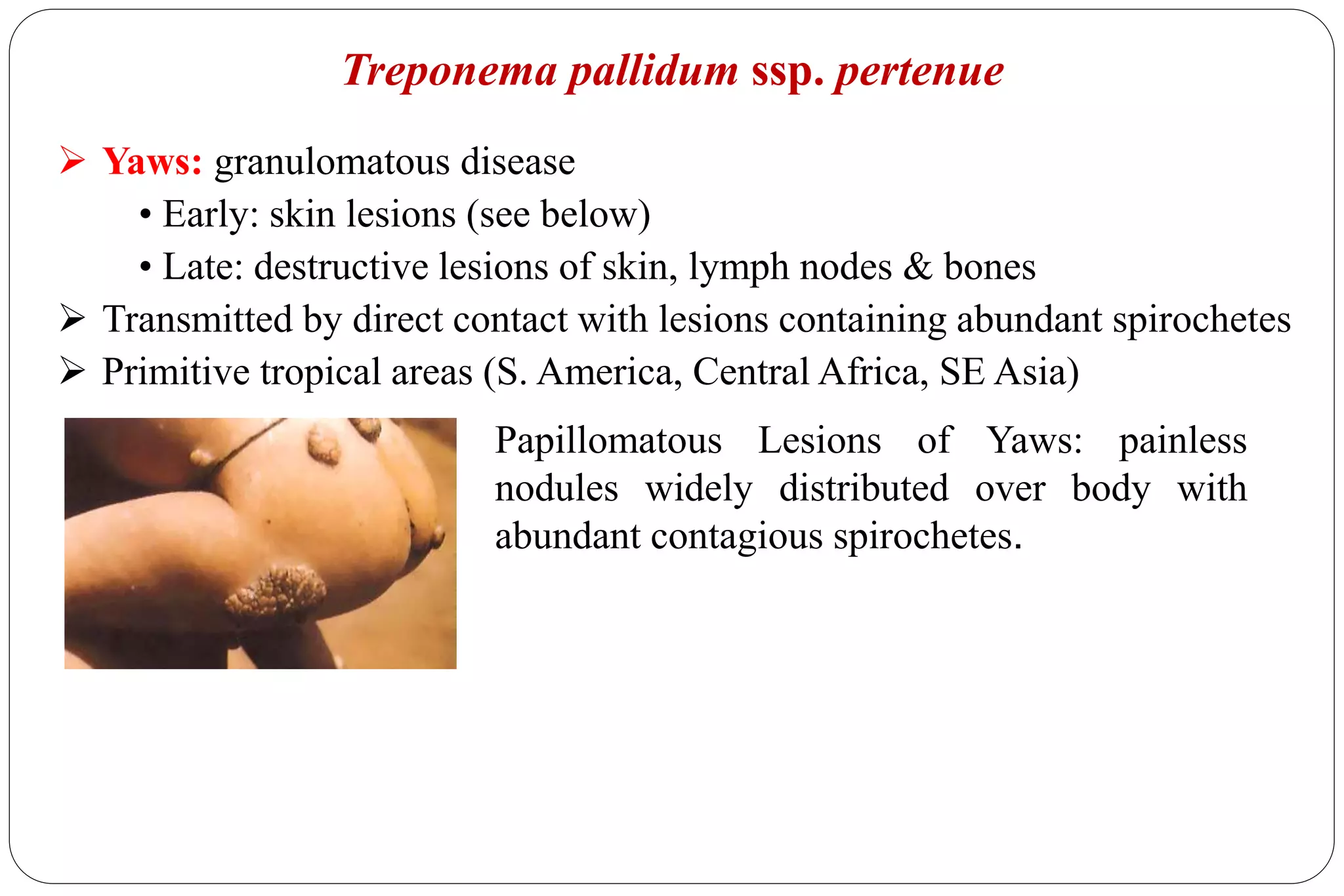
Treponema pallidum ssp. pertenue
Papillomatous Lesions of Yaws: painless
nodules widely distributed over body with
abundant contagious spirochetes.
 Yaws: granulomatous disease
• Early: skin lesions (see below)
• Late: destructive lesions of skin, lymph nodes & bones
 Transmitted by direct contact with lesions containing abundant spirochetes
 Primitive tropical areas (S. America, Central Africa, SE Asia)
Treponema carateum
Pinta: primarily restricted to skin
• 1-3 week incubation period
• Initial lesions: small pruritic
papules
• Secondary: enlarged plaques persist
for months to years
• Late: disseminated, recurrent
hypopigmentation or
depigmentation of skin lesions;
scarring & disfigurement
Transmitted by direct contact with
skin lesions
Primitive tropical areas
(Mexico, Central & South America)
Hypopigmented Skin
Lesions of Pinta:
depigmentation is commonly
seen as a late sequel with all
treponemal diseases
21
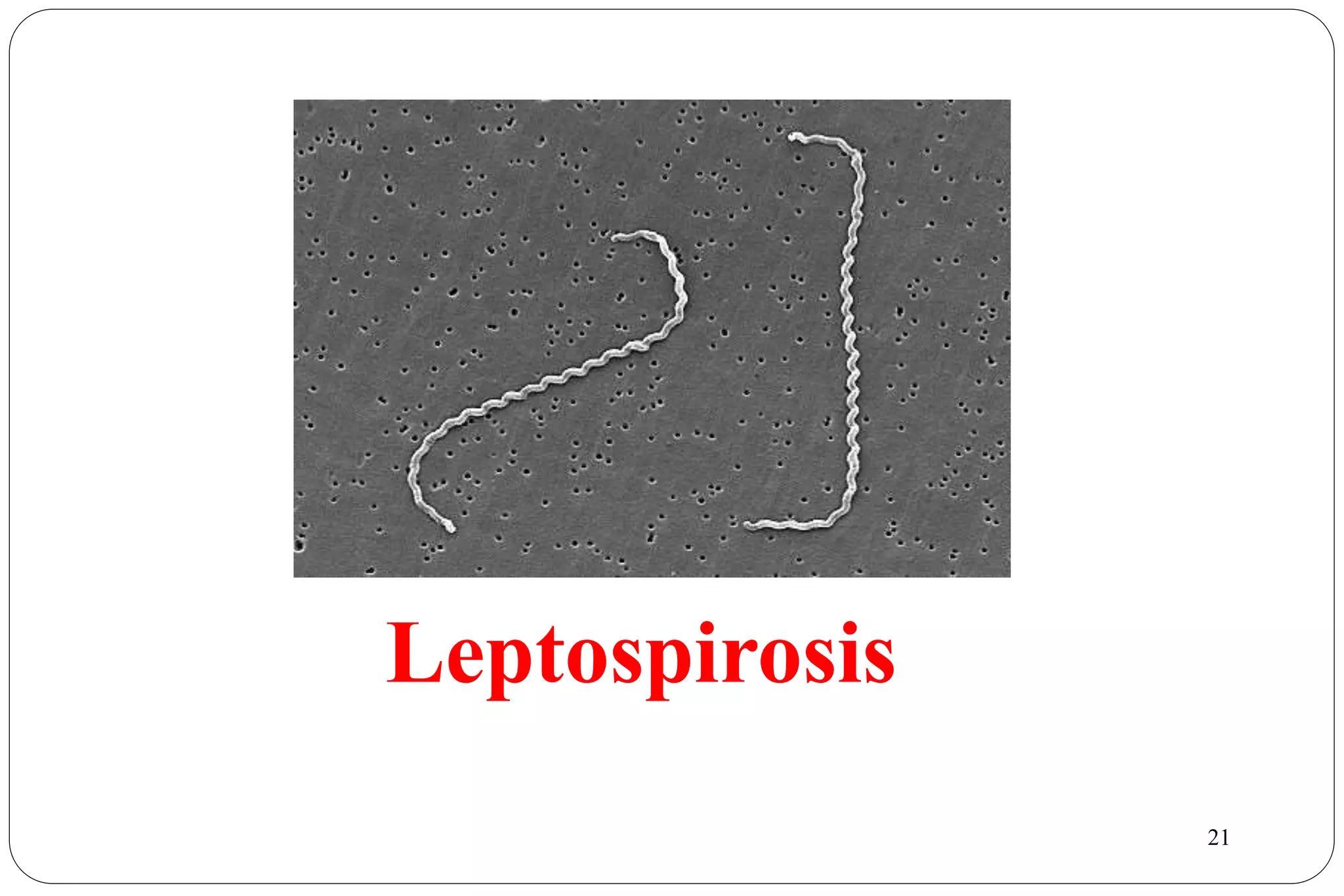
Leptospirosis
LEPTOSPIRA
 Several are saprophytic, many are parasitic in rodents
 Infection in natural host- asymptomatic
 Genus Leptospira--- L.interrogans(pathogenic)
L.biflexa(saprophytic)
 6-12 m long x 0.1 m thick
 Hooked ends( umbrella handles)
 Numerous closely placed coils
 Seen under Dark ground/ Phase contrast microscopy as
actively motile
 Stained best by silver impregnation
CULTURE OF LEPTOSPIRA
 Aerobic, microaerophilic
 Cultivated in media with rabbit serum
 Liquid and semi-solid ( Korthof’s, Stuart’s, Fletcher’s)
 Semi-synthetic medium( Ellinghausen McCullough Johnson Harris-
EMJH medium)
 Grow on chorio-allantoic membrane of chick embryo
 Intra-peritoneal inoculation of guinea pigs
LEPTOSPIRA- RESISTANCE
 Killed in 10 minutes at 50oC, 10 seconds at 60oC
 Sensitive to acid and bile
 Destroyed by chlorine and most antiseptics and disinfectants
 Survival in water depends on pH, salinity, temperature, nature,
amount of pollution
ANTIGENS OF LEPTOSPIRA
 Genus- specific antigen common to all members of the genus
 Classification into serogroups and serovars based on surface
antigens
 L.interrogans  serogp icterohemorrhagiae  22 serovars:
 e.g. icterohemorrhagiae, pomona, canicola, grippotyphosa,
copenhageni
LEPTOSPIRA- PATHOGENICITY
 It is a zoonosis; humans infected when water contaminated with urine of
carrier animals enters body through cuts/ abrasions/ intact mucosa
 Incubation period- 10 days
 Ranges from mild undifferentiated pyrexia  Weil’s syndrome( severe
disease with hepatorenal damage which can be fatal)
CLINICAL FEATURES
 Fever with rigors, vomiting, headache, conjunctival suffusion, calf pain,
purpuric haemorrhages
 Albuminuria, jaundice seen in 10-20%
 Aseptic meningitis or abdominal symptoms may predominate
 Mild virus-like syndrome
 Anicteric leptospirosis: Systemic with aseptic meningitis
 Icteric leptospirosis: Overwhelming disease (Weil’s disease)
Vascular collapse
Thrombocytopenia
Hemorrhage
Hepatic and renal dysfunction
NOTE: Icteric refers to jaundice (yellowing of skin and mucus
membranes by deposition of bile) and liver involvement
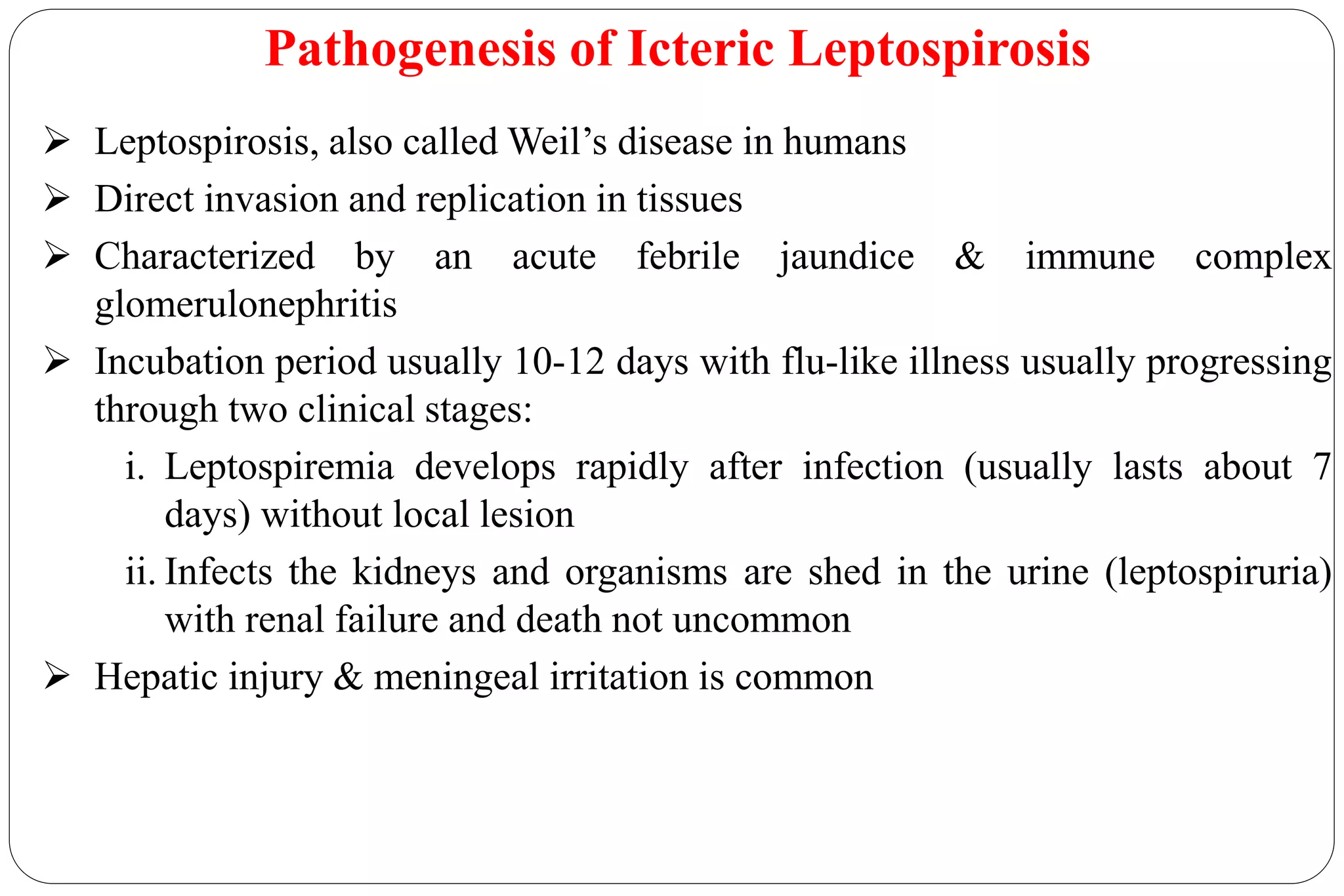
 Leptospirosis, also called Weil’s disease in humans
 Direct invasion and replication in tissues
 Characterized by an acute febrile jaundice & immune complex
glomerulonephritis
 Incubation period usually 10-12 days with flu-like illness usually progressing
through two clinical stages:
i. Leptospiremia develops rapidly after infection (usually lasts about 7
days) without local lesion
ii. Infects the kidneys and organisms are shed in the urine (leptospiruria)
with renal failure and death not uncommon
 Hepatic injury & meningeal irritation is common
Pathogenesis of Icteric Leptospirosis
LAB DIAGNOSIS- EXAMINATION OF BLOOD
 Only in early stages before antibiotic is given
 Dark ground/ Phase contrast microscopy of blood films
 Culture on EMJH/ other medium  may take weeks to months
 Inoculation into young guinea pigs
 Identification by agglutination with type specific sera
EXAMINATION OF URINE
 From 2nd to 4th/6th week
 Centrifuged deposit- neutralised with alkaline solution
 Inoculation into guinea pigs
SEROLOGY
 Antibodies in serum  appear at end of 1st week, increase till 4th week
 Genus specific tests: Antigen used is L.biflexa Patoc 1 strain-
-Sensitized Erythrocyte Lysis
-Complement Fixation
-Indirect Immunofluorescence
-ELISA (IgM, IgG)
-IgM specific dipstick
 Type specific tests: identify serovar
-Macroscopic Agglutination Test
-Microscopic Agglutination Test- more specific, done in reference
laboratories
 Diagnosis in animals- Culturing pieces of kidneys
 Examination of water
 Treatment of leptospirosis - Penicillin
- Doxycycline for prophylaxis
Comparison of Diagnostic Tests for Leptospirosis
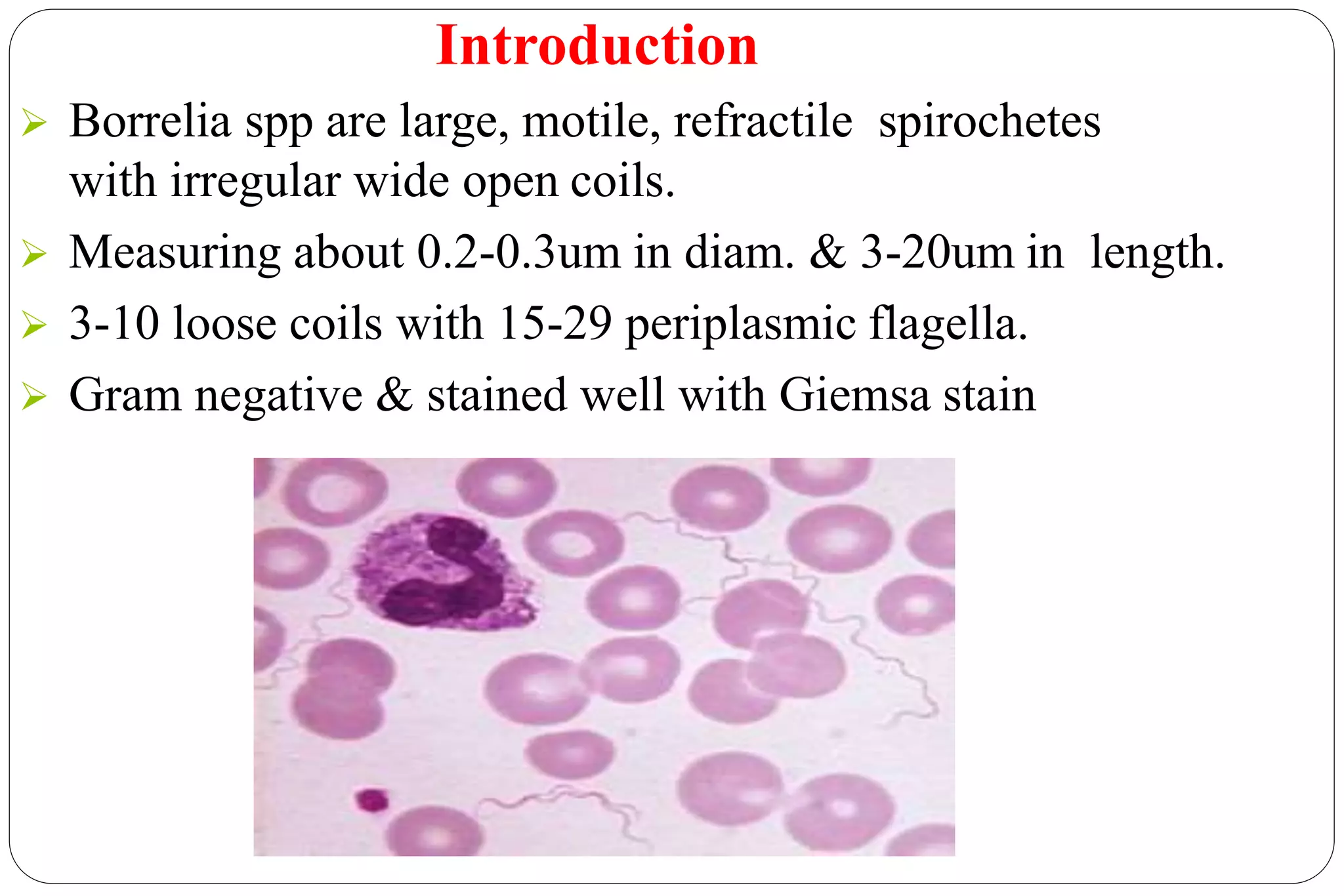
Introduction
 Borrelia spp are large, motile, refractile spirochetes
with irregular wide open coils.
 Measuring about 0.2-0.3um in diam. & 3-20um in length.
 3-10 loose coils with 15-29 periplasmic flagella.
 Gram negative & stained well with Giemsa stain.
Some medically
important
borrelia-
B. recurrentis
– Relapsing
fever
B. burgdorferi-
Lyme’s
disease
B. vincenti-
Vincent
Angina.
Relapsing Fever
Characteristic Louseborn Tickborn
Epidemology Epidemic Usually endemic
Agent B. Recurrentis B. hermesii, B. turicatae,
B. parkeri
Route of entry Crushing & rubbing on
abraded skin
Through bite
Shedding in saliva &
discharges
No Yes
Transovarial
transmission
No Yes
Clinical features More severe Less severe
Borrelia recurrentis-
Morphology
-
Irregular spiral with one or both ends pointed.
Possesses 5-10 loose spiral coils at interval of about 2mm
Cultural characteristics-
Microaerophilic, temp- 28-30°C
Cultivation is difficult but can be cultivated on ‘modified Kelly’s
medium’
Grows well on CAM of chick embryos.
Inoculated in mice & rats intraperitoneally.
Antigenic properties-
Readily undergoes antigenic variation in vivo.
Therefore occurrence of relapses in the disease.
Antigenic variation is due to DNA rearrangements in linear
plasmids.
Recovery after no. of relapses is due to development of
immunity to all antigenic variants.
Clinical features-
 Onset is typically abrupt (I.P.- 2-10 days)
 High fever (40°C ) ( borrelia are demonstrable)
 Shaking chills, delirium, severe muscle aches, pain in bone & joints
 Hepatosplenomegaly
 Neurologic complications
 Fever subsides in 3-5 days
 Afebrile period (4-10 days)(disappearence)
 Relapse(reappearence)
 3-10 relapses
 Disease subsides
Lab diagnosis
Borrelia can be found in blood during fever
Drop of blood- Dark ground OR Phase contrast
microscopy
Blood smears- Giemsa/Leishman/dilute Carbol fuchsin
Inoculation of 1-2 ml blood into white mice & smear is
prepared from blood collected from tail of vein after 2
days, observed daily for 2 weeks.
Fluoroscent procedures
Serology & cultures are unreliable.
False positive reaction for syphilis(VDRL)
 Identified in 1975 in Lyme , Connecticut , USA.
 Is a most common vector born disease in USA
 Causitive agent- Borrelia burgdorferi
-B.garinii, B.afzeli
 Epidemology-
 Vector- Ixodid tick
 Borrelia grows mainly in midgut of the tick.
 Infection occurs by regurgitation of the gut content during
biting.
 Most commonly found in North eastern states in USA.
 No vertical transmission in ticks.
 Most effective tick stage of transmission is - nymph
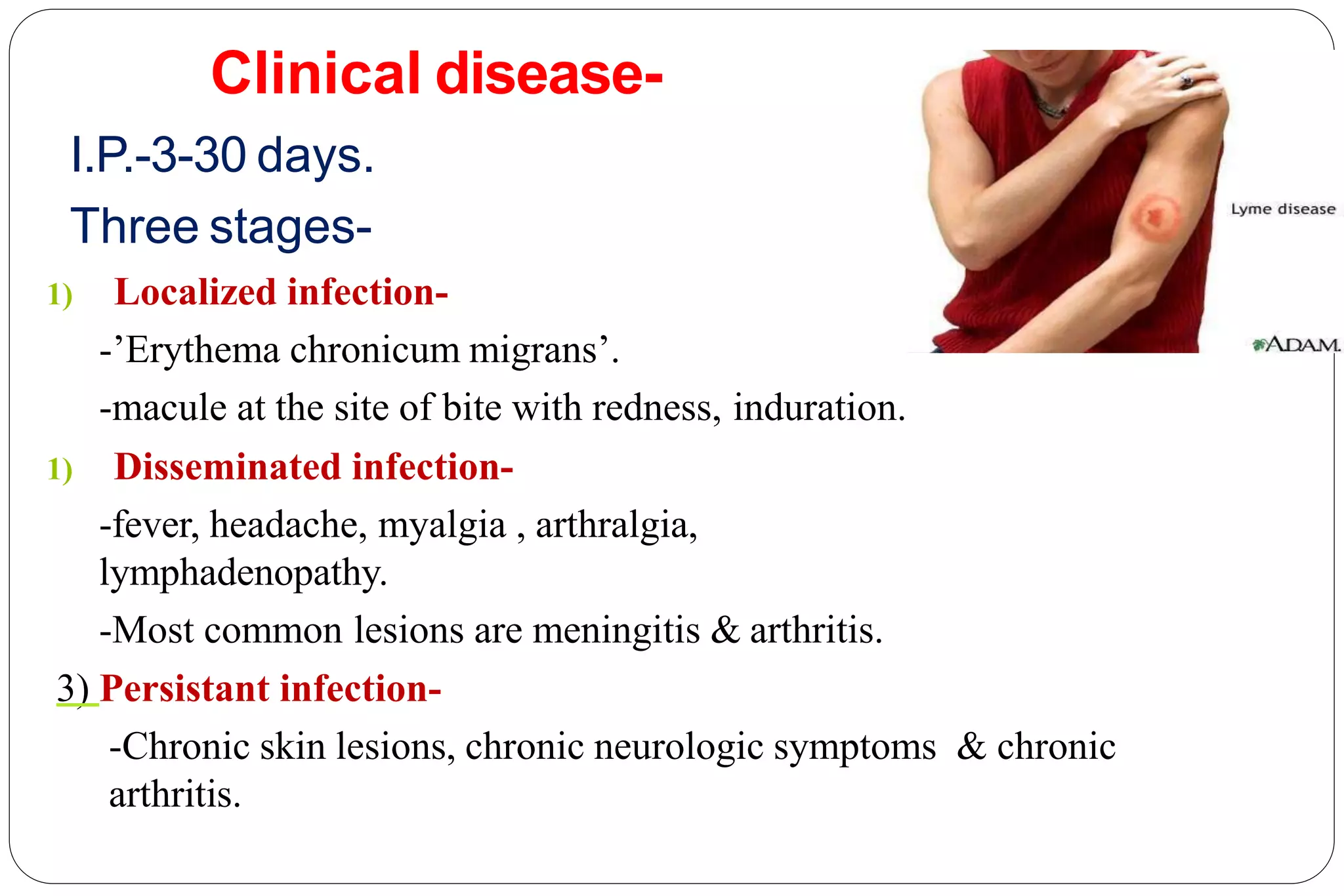
Clinical disease-
I.P.-3-30 days.
Three stages-
1) Localized infection-
-’Erythema chronicum migrans’.
-macule at the site of bite with redness, induration.
1) Disseminated infection-
-fever, headache, myalgia , arthralgia,
lymphadenopathy.
-Most common lesions are meningitis & arthritis.
3) Persistant infection-
-Chronic skin lesions, chronic neurologic symptoms & chronic
arthritis.
Lab diagnosis-
 Culture- modified Kelly’s medium
-Most effective in early Lyme’s disease
 Morphologic detection- silver impregnation method
- Insensitive method.
 Molecular detection- more sensitive method
 Serologic detection- diagnostic method of choice.
-EIA, Immunofluoroscence, Immunoblot tech.
 Cross reactions-
-specific treponemal Ag, HIV, EBV, ricketssial
infections.
VincentAngina
Caused by borrelia vincenti .
Is a mouth commensal but may, under predisposing
conditions such as malnutrition, viral infections, give rise
to ulcerative gingivostomatitis or oropharyngitis (Vincent
angina)
In this B. vincenti is always associated with fusiform
bacilli (fusobacterium fusiforme)
Symbiotic infection is called as ‘fusospirochetosis’.
This symbiotic infection can be demonstrated in some of the
lung abscess, phagedenous skin ulcers & gangrenous
balanitis.
 Morphology-
 Motile spirochetes, 5-20um × 0.2-0.6um wide with 3-8 coils.
 Easily stained with dilute carbol fuchsin & is Gram negative.
Demonstration of spirochetes & fusiform bacilli in stained
smears
Culturing is difficult.
Molecular methods.
Thank You

Spirochaetes

  • 1.
    Arun Kumar P Deptof Microbiology SPIROCHAETES
  • 2.
     Elongated, motile,flexible bacteria twisted spirally along the long axis  Speira- coiled, chaite- hair  Endoflagella- polar flagella wound along the helical protoplasmic cylinder; situated between outer membrane and cell wall  Aerobic, anaerobic or facultative, some are non-cultivable  Reproduction by transverse fission  Pathogenic Spirochaetes- Treponema, Borrelia, Leptospira
  • 4.
  • 5.
    Tightly Coiled Spirochete AF OS= outer sheath AF = axial fibrils Leptospira interrogans
  • 6.
    Genus Species Disease Treponemapallidum ssp. pallidum pallidum ssp. endemicum pallidum ssp. pertenue carateum Syphilis Bejel Yaws Pinta Borrelia burgdorferi recurrentis Many species Lyme disease (borreliosis) Epidemic relapsing fever Endemic relapsing fever Leptospira interrogans Leptospirosis (Weil’s Disease) Spirochaetales Associated Human Diseases
  • 7.
    Morphology:- 10µm long and0.1 to 0.2 µm wide Ten regular spirals with sharp and angular at regular intervals of about 1 µm Actively motile, exhibiting rotation around the long axis, backward and forward movements and flexion of whole body During motion, secondary curves appear and disappear in succession but the primary spirals are unchanged Cannot seen under light microscope in wet films Morphology and motility seen under dark ground or Phase contrast microscope It can be stained by SLIVER IMPREGNATION or FONTANA staining methods Levaditi’s method for tissue section Treponema pallidum
  • 8.
    Cultivation of Treponema Do not grow in artificial culture media  Nichol’s strain- virulent strain of T.pallidum maintained by serial passage in rabbits; isolated from a case of General Paralysis of Insane in 1912.  Reiter’s strain- T.phagedenis ( non-pathogenic) used for group specific tests; grows well in thioglycollate medium with serum
  • 9.
    Resistance of Treponema Very delicate  Readily inactivated by drying and heat  Killed in 1-3 days at 0-4oC  Remains viable for 10-15 years frozen at –70oC in 10% glycerol, or in liquid nitrogen (– 130oC)  Inactivated by contact with distilled water, oxygen, soap, bismuth, mercurials, arsenicals, common antiseptic agents and antibiotics
  • 10.
    Antigenic Structure  Complexantigenic structure  3 types of antigens:  Reagin antigen- hapten extracted from beef heart is used as antigen to detect these antibodies; antigen is cardiolipin- chemically diphosphatidyl glycerol  Group antigen- found in T.pallidum and non-pathogenic strains e.g. Reiter’s strain  Species specific antigen- polysaccharide in nature; antibodies seen only in sera of patients with pathogenic T.pallidum infection
  • 11.
     Diseases caused: Venerealsyphilis - T.pallidum Non-venereal treponematoses: T.pallidum- endemic syphilis T.pertenue - yaws T.carateum - pinta Transmission- sexual, trans-placental Primary: chancre- hard, painless, avascular covered by exudate rich in spirochaetes; regional lymph nodes are discrete, rubbery and non-tender Seconadary: 3 months after primary lesion heals- roseolar/ papular skin rashes, condylomata at mucocutaneous junctions, mucous patches in oropharynx; patient is most infectious in this stage; ophthalmic, osseous, meningeal involvement Venereal syphilis • primary lesion - chancre – 10 to 60 days – area of ulceration/ inflammation – many organisms
  • 12.
     Latent: Periodof quiescence for several years, can only be diagnosed by serological tests  Tertiary: Cardiovascular lesions- aneurysms, chronic granulomata and meningovascular lesions; may represent manifestations of delayed hypersensitivity  Quarternary/ Late Tertiary: Tabes dorsalis or General Paralysis of Insane
  • 13.
    NON-VENEREAL SYPHILIS  Congenitalsyphilis:  Woman with early syphilis is more infective to her fetus  Lesions usually develop after 4th month of gestation- suggests that pathogenesis requires immune response from the fetus  Can be treated if mother is treated adequately before 4th month of pregnancy  Occupational syphilis: primary chancre is absent or extragenital, usually on fingers
  • 14.
    LAB DIAGNOSIS OFSYPHILIS Microscopy  Applicable in primary and secondary syphilis, and in congenital syphilis with superficial lesions  Serum exuding from base of lesion should be collected  Wet films examined under dark ground or phase contrast microscopy  Direct fluorescent antibody test( DFA-TP)- better and safer than DGM
  • 15.
    SEROLOGICAL TESTS Standard testsfor Syphilis/ reagin Ab tests (Non-specific) Cardiolipin is purified extract of beef heart with lecithin and cholesterol  Wasserman’s Complement Fixation Test- no longer in use  Kahn Test- Tube flocculation test  VDRL- Slide flocculation test, requires inactivated serum, seen under low power lens of microscope  Rapid Plasma Reagin test- Antigen contains fine carbon particles; so reaction easily visible to naked eye, not suitable for testing CSF  Reagin tests- negative 6-18 months after treatment
  • 16.
    BIOLOGICAL FALSE POSITIVE(BFP) REACTIONS  Positive reactions with cardiolipin tests, negative with specific treponemal tests, in absence of present/ past infection, no technical error  Seen in 1% normal sera  Acute BFP- acute infections, injury, inflammation  Chronic BFP- relapsing fever, hepatitis, tropical eosinophilia
  • 17.
    Specific T. pallidumTests  Strain used- virulent Nichol’s strain  Treponema pallidum Immobilization (TPI)- positive when 50% organisms immobilized; most specific but complex test  Fluorescent Treponemal Antibody (FTA) test- Indirect immunofluorescent test; Nichol’s strain used as smears on slides  FTA-ABS - Test serum preabsorbed with sonicate of Reiter’s treponemes; standard reference test  Treponema pallidum haemagglutination (TPHA)- Antigen used: tanned erythrocytes sensitized with sonicate of Reiter’s treponeme; simpler, more economical than FTA-ABS, standard kits available; so standard confirmatory test
  • 18.
    Nonvenereal Treponemal Diseases Bejel, Yaws & Pinta  Primitive tropical and subtropical regions  Primarily in impoverished children Treponema pallidum ssp. endemicum  Bejel (endemic syphilis) • Initial lesions: nondescript oral lesions • Secondary lesions: oral papules and mucosal patches • Late: gummas (granulomas) of skin, bones & nasopharynx  Transmitted person-to-person by contaminated eating utensils  Primitive tropical/subtropical areas (Africa, Asia & Australia)
  • 19.
    Treponema pallidum ssp.pertenue Papillomatous Lesions of Yaws: painless nodules widely distributed over body with abundant contagious spirochetes.  Yaws: granulomatous disease • Early: skin lesions (see below) • Late: destructive lesions of skin, lymph nodes & bones  Transmitted by direct contact with lesions containing abundant spirochetes  Primitive tropical areas (S. America, Central Africa, SE Asia)
  • 20.
    Treponema carateum Pinta: primarilyrestricted to skin • 1-3 week incubation period • Initial lesions: small pruritic papules • Secondary: enlarged plaques persist for months to years • Late: disseminated, recurrent hypopigmentation or depigmentation of skin lesions; scarring & disfigurement Transmitted by direct contact with skin lesions Primitive tropical areas (Mexico, Central & South America) Hypopigmented Skin Lesions of Pinta: depigmentation is commonly seen as a late sequel with all treponemal diseases
  • 21.
  • 22.
    LEPTOSPIRA  Several aresaprophytic, many are parasitic in rodents  Infection in natural host- asymptomatic  Genus Leptospira--- L.interrogans(pathogenic) L.biflexa(saprophytic)  6-12 m long x 0.1 m thick  Hooked ends( umbrella handles)  Numerous closely placed coils  Seen under Dark ground/ Phase contrast microscopy as actively motile  Stained best by silver impregnation
  • 23.
    CULTURE OF LEPTOSPIRA Aerobic, microaerophilic  Cultivated in media with rabbit serum  Liquid and semi-solid ( Korthof’s, Stuart’s, Fletcher’s)  Semi-synthetic medium( Ellinghausen McCullough Johnson Harris- EMJH medium)  Grow on chorio-allantoic membrane of chick embryo  Intra-peritoneal inoculation of guinea pigs
  • 24.
    LEPTOSPIRA- RESISTANCE  Killedin 10 minutes at 50oC, 10 seconds at 60oC  Sensitive to acid and bile  Destroyed by chlorine and most antiseptics and disinfectants  Survival in water depends on pH, salinity, temperature, nature, amount of pollution
  • 25.
    ANTIGENS OF LEPTOSPIRA Genus- specific antigen common to all members of the genus  Classification into serogroups and serovars based on surface antigens  L.interrogans  serogp icterohemorrhagiae  22 serovars:  e.g. icterohemorrhagiae, pomona, canicola, grippotyphosa, copenhageni
  • 26.
    LEPTOSPIRA- PATHOGENICITY  Itis a zoonosis; humans infected when water contaminated with urine of carrier animals enters body through cuts/ abrasions/ intact mucosa  Incubation period- 10 days  Ranges from mild undifferentiated pyrexia  Weil’s syndrome( severe disease with hepatorenal damage which can be fatal)
  • 27.
    CLINICAL FEATURES  Feverwith rigors, vomiting, headache, conjunctival suffusion, calf pain, purpuric haemorrhages  Albuminuria, jaundice seen in 10-20%  Aseptic meningitis or abdominal symptoms may predominate  Mild virus-like syndrome  Anicteric leptospirosis: Systemic with aseptic meningitis  Icteric leptospirosis: Overwhelming disease (Weil’s disease) Vascular collapse Thrombocytopenia Hemorrhage Hepatic and renal dysfunction NOTE: Icteric refers to jaundice (yellowing of skin and mucus membranes by deposition of bile) and liver involvement
  • 28.
     Leptospirosis, alsocalled Weil’s disease in humans  Direct invasion and replication in tissues  Characterized by an acute febrile jaundice & immune complex glomerulonephritis  Incubation period usually 10-12 days with flu-like illness usually progressing through two clinical stages: i. Leptospiremia develops rapidly after infection (usually lasts about 7 days) without local lesion ii. Infects the kidneys and organisms are shed in the urine (leptospiruria) with renal failure and death not uncommon  Hepatic injury & meningeal irritation is common Pathogenesis of Icteric Leptospirosis
  • 29.
    LAB DIAGNOSIS- EXAMINATIONOF BLOOD  Only in early stages before antibiotic is given  Dark ground/ Phase contrast microscopy of blood films  Culture on EMJH/ other medium  may take weeks to months  Inoculation into young guinea pigs  Identification by agglutination with type specific sera EXAMINATION OF URINE  From 2nd to 4th/6th week  Centrifuged deposit- neutralised with alkaline solution  Inoculation into guinea pigs
  • 30.
    SEROLOGY  Antibodies inserum  appear at end of 1st week, increase till 4th week  Genus specific tests: Antigen used is L.biflexa Patoc 1 strain- -Sensitized Erythrocyte Lysis -Complement Fixation -Indirect Immunofluorescence -ELISA (IgM, IgG) -IgM specific dipstick  Type specific tests: identify serovar -Macroscopic Agglutination Test -Microscopic Agglutination Test- more specific, done in reference laboratories
  • 31.
     Diagnosis inanimals- Culturing pieces of kidneys  Examination of water  Treatment of leptospirosis - Penicillin - Doxycycline for prophylaxis
  • 32.
    Comparison of DiagnosticTests for Leptospirosis
  • 33.
    Introduction  Borrelia sppare large, motile, refractile spirochetes with irregular wide open coils.  Measuring about 0.2-0.3um in diam. & 3-20um in length.  3-10 loose coils with 15-29 periplasmic flagella.  Gram negative & stained well with Giemsa stain.
  • 34.
    Some medically important borrelia- B. recurrentis –Relapsing fever B. burgdorferi- Lyme’s disease B. vincenti- Vincent Angina.
  • 35.
    Relapsing Fever Characteristic LousebornTickborn Epidemology Epidemic Usually endemic Agent B. Recurrentis B. hermesii, B. turicatae, B. parkeri Route of entry Crushing & rubbing on abraded skin Through bite Shedding in saliva & discharges No Yes Transovarial transmission No Yes Clinical features More severe Less severe
  • 36.
    Borrelia recurrentis- Morphology - Irregular spiralwith one or both ends pointed. Possesses 5-10 loose spiral coils at interval of about 2mm Cultural characteristics- Microaerophilic, temp- 28-30°C Cultivation is difficult but can be cultivated on ‘modified Kelly’s medium’ Grows well on CAM of chick embryos. Inoculated in mice & rats intraperitoneally.
  • 37.
    Antigenic properties- Readily undergoesantigenic variation in vivo. Therefore occurrence of relapses in the disease. Antigenic variation is due to DNA rearrangements in linear plasmids. Recovery after no. of relapses is due to development of immunity to all antigenic variants.
  • 38.
    Clinical features-  Onsetis typically abrupt (I.P.- 2-10 days)  High fever (40°C ) ( borrelia are demonstrable)  Shaking chills, delirium, severe muscle aches, pain in bone & joints  Hepatosplenomegaly  Neurologic complications  Fever subsides in 3-5 days  Afebrile period (4-10 days)(disappearence)  Relapse(reappearence)  3-10 relapses  Disease subsides
  • 39.
    Lab diagnosis Borrelia canbe found in blood during fever Drop of blood- Dark ground OR Phase contrast microscopy Blood smears- Giemsa/Leishman/dilute Carbol fuchsin Inoculation of 1-2 ml blood into white mice & smear is prepared from blood collected from tail of vein after 2 days, observed daily for 2 weeks. Fluoroscent procedures Serology & cultures are unreliable. False positive reaction for syphilis(VDRL)
  • 40.
     Identified in1975 in Lyme , Connecticut , USA.  Is a most common vector born disease in USA  Causitive agent- Borrelia burgdorferi -B.garinii, B.afzeli
  • 41.
     Epidemology-  Vector-Ixodid tick  Borrelia grows mainly in midgut of the tick.  Infection occurs by regurgitation of the gut content during biting.  Most commonly found in North eastern states in USA.  No vertical transmission in ticks.  Most effective tick stage of transmission is - nymph
  • 42.
    Clinical disease- I.P.-3-30 days. Threestages- 1) Localized infection- -’Erythema chronicum migrans’. -macule at the site of bite with redness, induration. 1) Disseminated infection- -fever, headache, myalgia , arthralgia, lymphadenopathy. -Most common lesions are meningitis & arthritis. 3) Persistant infection- -Chronic skin lesions, chronic neurologic symptoms & chronic arthritis.
  • 43.
    Lab diagnosis-  Culture-modified Kelly’s medium -Most effective in early Lyme’s disease  Morphologic detection- silver impregnation method - Insensitive method.  Molecular detection- more sensitive method  Serologic detection- diagnostic method of choice. -EIA, Immunofluoroscence, Immunoblot tech.  Cross reactions- -specific treponemal Ag, HIV, EBV, ricketssial infections.
  • 45.
    VincentAngina Caused by borreliavincenti . Is a mouth commensal but may, under predisposing conditions such as malnutrition, viral infections, give rise to ulcerative gingivostomatitis or oropharyngitis (Vincent angina) In this B. vincenti is always associated with fusiform bacilli (fusobacterium fusiforme) Symbiotic infection is called as ‘fusospirochetosis’.
  • 47.
    This symbiotic infectioncan be demonstrated in some of the lung abscess, phagedenous skin ulcers & gangrenous balanitis.  Morphology-  Motile spirochetes, 5-20um × 0.2-0.6um wide with 3-8 coils.  Easily stained with dilute carbol fuchsin & is Gram negative. Demonstration of spirochetes & fusiform bacilli in stained smears Culturing is difficult. Molecular methods.
  • 48.