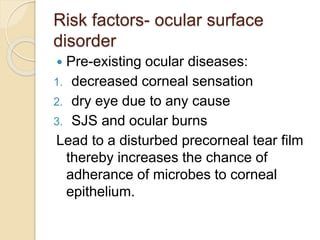
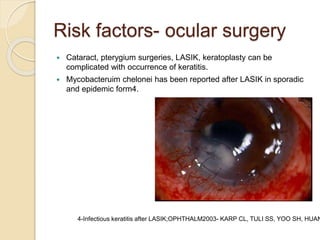
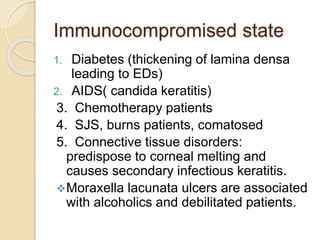
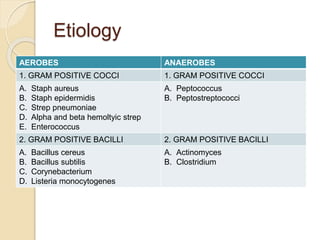
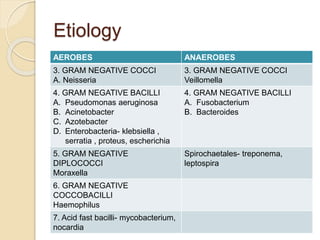
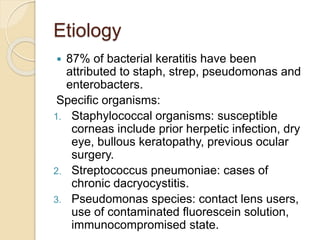
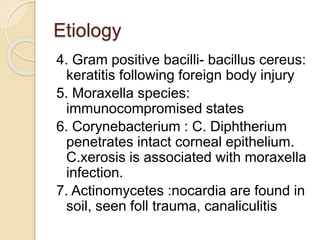
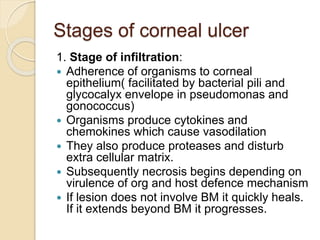
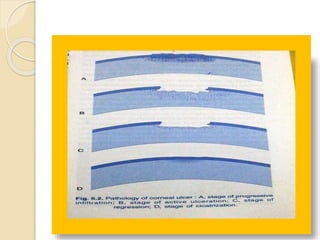
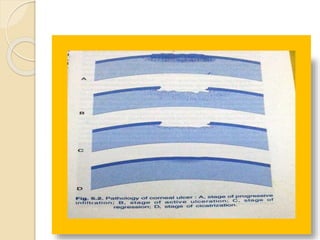
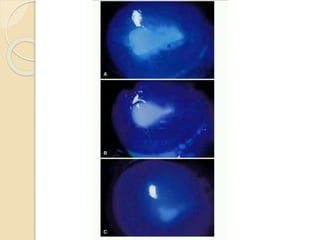
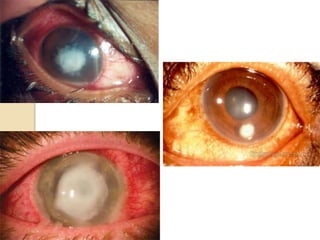
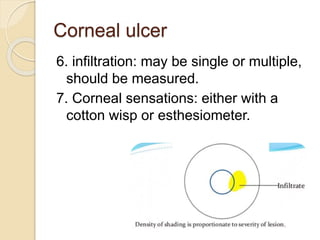
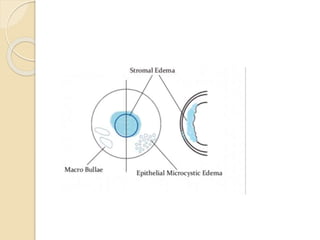
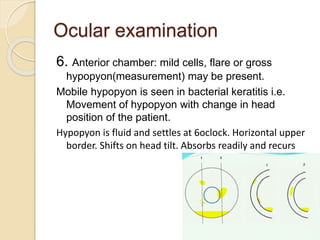
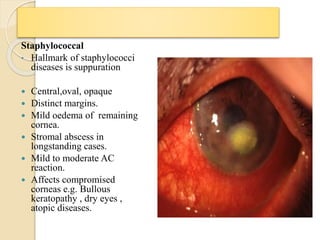
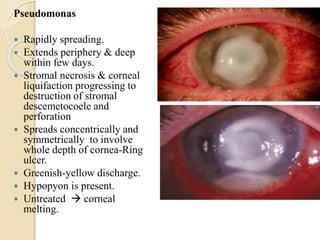
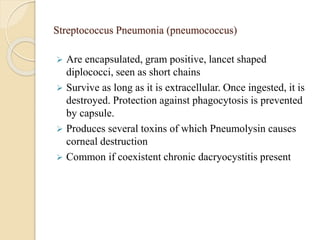
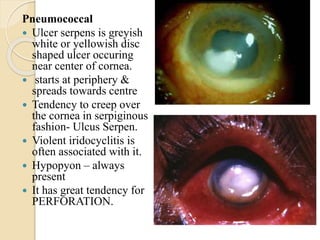
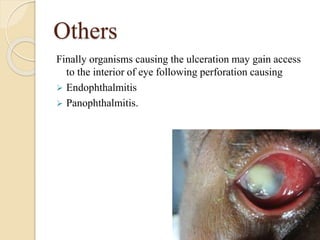
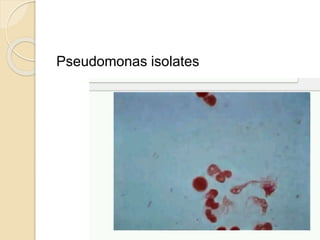
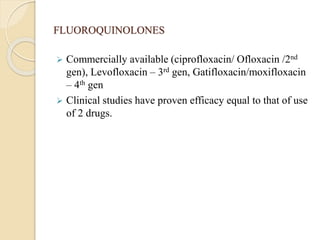
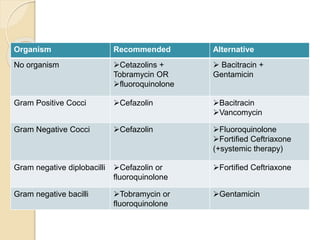
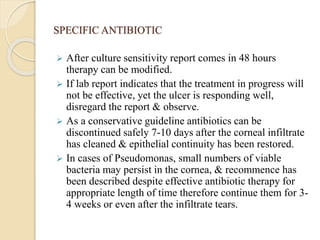
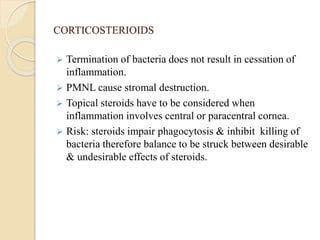
Bacterial corneal ulcer is defined as discontinuation of the normal corneal epithelium associated with necrosis of surrounding corneal tissue. It occurs when the normal defenses of the cornea are breached, allowing bacteria to infiltrate. Pseudomonas, Staphylococcus, and Streptococcus are common causative organisms. Risk factors include contact lens wear, ocular surface disease, trauma, and immunosuppression. Clinical features vary depending on the organism and host factors but may include pain, redness, photophobia, and discharge. Ulcers progress through stages of infiltration, progression, regression, and cicatrization if adequately treated.