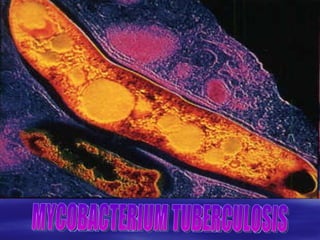
MYCOBACTERIUM TUBERCULOSIS
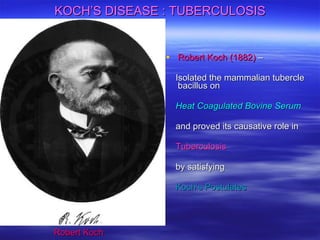
KOCH’S DISEASE : TUBERCULOSIS Robert Koch Robert Koch (1882)  – Isolated the mammalian tubercle bacillus on  Heat Coagulated Bovine Serum   and proved its causative role in  Tuberculosis   by satisfying  Koch’s Postulates
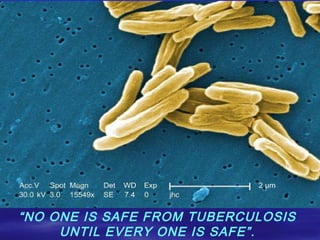
“ NO ONE IS SAFE FROM TUBERCULOSIS UNTIL EVERY ONE IS SAFE”.
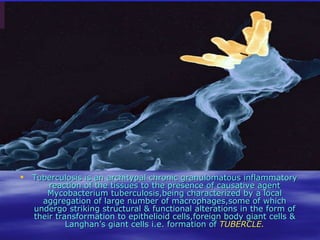
Tuberculosis is an architypal chronic granulomatous inflammatory reaction of the tissues to the presence of causative agent Mycobacterium tuberculosis,being characterized by a local aggregation of large number of macrophages,some of which undergo striking structural & functional alterations in the form of their transformation to epithelioid cells,foreign body giant cells & Langhan’s giant cells i.e. formation of  TUBERCLE.
Mycobacterium
Organisms belonging to the genus Mycobacterium are---- 1.Very Thin 2.Rod shaped 3.0.2 to 0.4 X 2 to 10 µ  m 4.Non motile  5.Sometimes showing filamentous branching like  fungus. 6.Forming mould like pellicle in liquid culture. HENCE CALLED MYCOBACTERIA
CLASSIFICATION OF MYCOBACTERIA Typical Mycobacteria M tuberculosis M bovis M bovis BCG M africanum Atypical Mycobacteria Photochromogens Scotochromogens Non Photochromogens Rapid Growers Non-Cultivable Mycobacteria M leprae Saprophytic Mycobacteria M butyricum M pheli M smegmatis
Mycobacterium tuberculosis Mycobacterium bovis Mycobacterium bovis BCG Mycobacterium africanum Mycobacterium microti (Vole)  MYCOBACTERIUM TUBERCULOSIS COMPLEX
MYCOBACTERIUM TUBERCULOSIS Mycobacterium tuberculosis Mycobacterium tuberculosis Scientific classification Kingdom:  Bacteria Phylum:  Actinobacteria Order:  Actinomycetales Suborder:  Corynebacterineae Family:  Mycobacteriaceae Genus:  Mycobacterium Species:   M. tuberculosis Binomial name
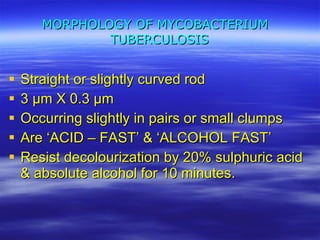
MORPHOLOGY OF MYCOBACTERIUM  TUBERCULOSIS Straight or slightly curved rod 3 µm X   0.3 µm Occurring slightly in pairs or small clumps Are ‘ACID – FAST’ & ‘ALCOHOL FAST’ Resist decolourization by 20% sulphuric acid & absolute alcohol for 10 minutes.
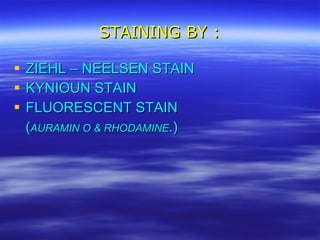
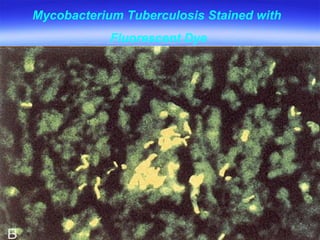
STAINING BY : ZIEHL – NEELSEN STAIN KYNIOUN STAIN FLUORESCENT STAIN ( AURAMIN O & RHODAMINE .)
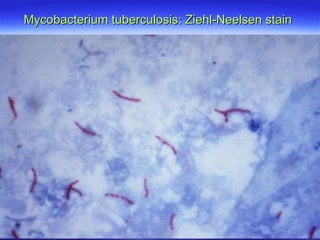
Mycobacterium tuberculosis: Ziehl-Neelsen stain
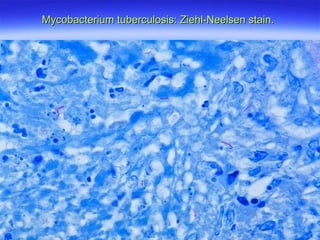
Mycobacterium tuberculosis: Ziehl-Neelsen stain.
Mycobacterium Tuberculosis Stained with  Fluorescent Dye
 
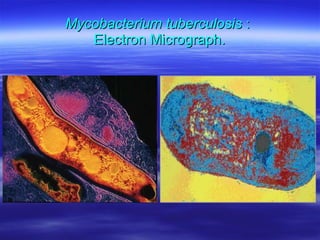
Mycobacterium tuberculosis  :  Electron Micrograph.
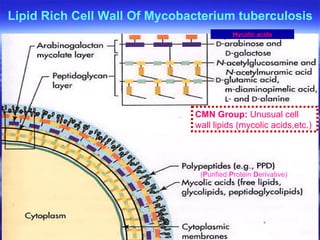
CMN Group:  Unusual cell wall lipids (mycolic acids,etc.) ( P urified  P rotein  D erivative) Lipid Rich Cell Wall Of Mycobacterium tuberculosis Mycolic acids
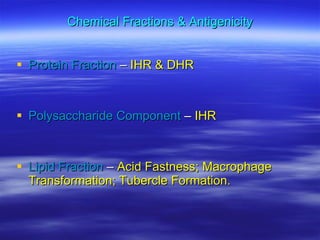
Chemical Fractions & Antigenicity Protein Fraction  –  IHR & DHR Polysaccharide Component  –  IHR Lipid Fraction  –  Acid Fastness; Macrophage Transformation; Tubercle Formation.
ACID FASTNESS  OF  MYCOBACTERIUM TUBERCULOSIS   IS DUE TO PRESENCE OF  A HIGH MOLECULAR WEIGHT HYDROXY ACID CONTAINING CARBOXYL GROUPS CALLED  MYCOLIC ACID   IN THE BACTERIAL CELL WALL OR TO A SEMIPERMIABLE MEMBRANE AROUND THE CELL.
Resistance of M tuberculosis Killed at 60ºC in 15 – 20 mins, Killed on exposure to sunlight for 2 hrs, Remain viable for 8 – 10 days in Droplet Nuclei, Cultures remain viable at Room temp.  for 6 – 8 months, Survive exposure to 5% Phenol, 15% Sulphuric acid, 3% Nitric acid, 5% Oxalic acid and 4% NaOH. Sensitive to Formaldehyde & Glutaraldehyde. Killed with Tincture Iodine in 5 mins. & by  80% Ethanol in 2 – 10 mins.
Cultural Characteristics  Slow Growing Bacteria. Generation Time – 14 – 15 hrs. Optimum Temp - 37ºC’ Optimum pH – 6.4 – 7, Eugonic (5% Glycerol – luxuriant growth), Require Egg, Blood, Potato or Serum for good growth.
CULTURE MEDIA SOLID MEDIA Egg-based Media: Lowenstein-Jensen (LJ) Medium Dorset Medium Serum containing Media: Loeffler’s Medium Potato-based Media: Pawlowsky’s Medium Blood containing Media: Tarshi’s Medium Agar-based Media: Middlebrook 7H10 Middlebrook 7H11 Middlebrook Biplate (7H10/7H11 S Agar).
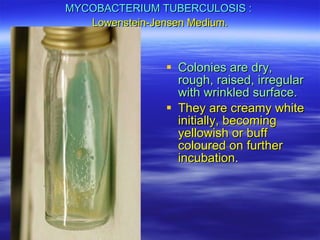
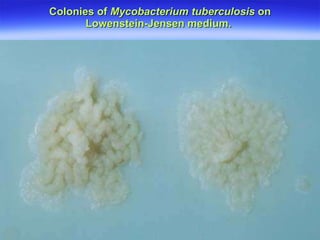
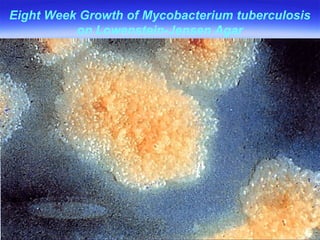
MYCOBACTERIUM TUBERCULOSIS :  Lowenstein-Jensen Medium. Colonies are dry, rough, raised, irregular with wrinkled surface. They are creamy white initially, becoming yellowish or buff coloured on further incubation .
Colonies of  Mycobacterium tuberculosis  on Lowenstein-Jensen medium.
M. tuberculosis  bacterial colonies
Eight Week Growth of Mycobacterium tuberculosis on Lowenstein-Jensen Agar
CULTURE MEDIA LIQUID MEDIA BACTEC 12 B Medium BACTEC 460 TB BACTEC 9000 MB BACTEC MGIT 960  EPS Culture System II Middlebrook 7H9 Broth SeptiChek AFB Dubo’s Medium Tween 80  (Sorbitol Mono oleate) Continuous Monitoring system
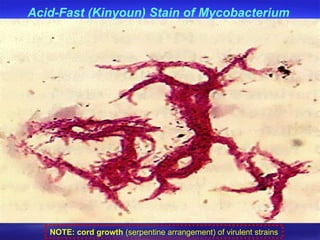
Acid-Fast (Kinyoun) Stain of Mycobacterium NOTE: cord growth  (serpentine arrangement)   of virulent strains
Biochemical Reactions: Niacin Test Arylsulphatase Test Neutral Red Test Catalase-Peroxidase Test Tween 80 Hydrolysis Test Amidase Test Nitrate Reduction Test Thiophene 2-Carboxylic acid Hydrazide (TCH) Test Tellurite Reduction Test
BIOCHEMICAL REACTIONS: + - +/- - - - - - - - M  Africanum + - - +/- - - - - - - M  bovis + + + +/- - + - + - + M tuberculosis UREASE TEST PYRAZI-NAMIDASE  TSET GROWTH ON TCH TELLURI--TE REDUCTION TEST TWEEN 80 HYDRO--LYSIS TSET PEROX---IDASE TEST HOT CATAL---ASE TEST NITRATE REDUC---TION TEST ARYL-SULPH---ATASE TEST NIACIN TEST SPECIES
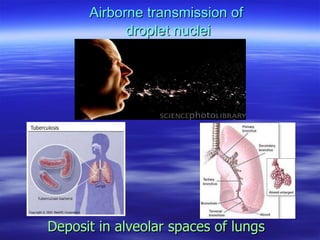
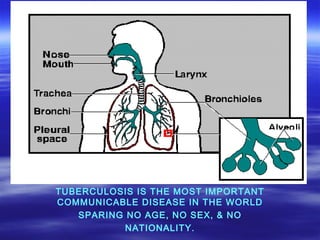
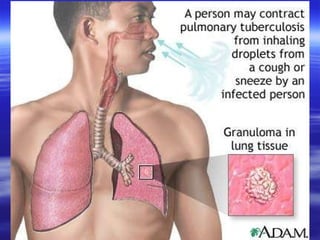
Airborne transmission of  droplet nuclei Deposit in alveolar spaces of lungs
Transmission Pulmonary tuberculosis is a disease of respiratory transmission, Patients with the active disease (bacilli) expel them into the air by: coughing,   sneezing,   shouting, or any other way that will expel bacilli into the air
TUBERCULOSIS IS THE MOST IMPORTANT COMMUNICABLE DISEASE IN THE WORLD SPARING NO AGE, NO SEX, & NO  NATIONALITY.
 
 
VIRULENCE FACTORS Cord Factor Sulphatid Lipo-Arabino Mannan (LAM) Heat Shock Protein  Mac-1 Integrin Antigen 85 Complex
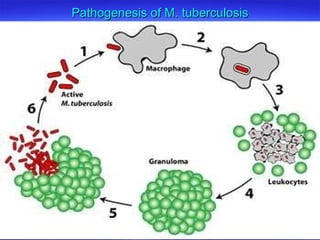
Pathogenesis of M. tuberculosis
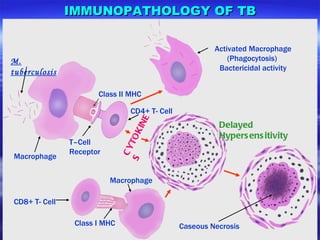
IMMUNOPATHOLOGY OF TB M. tuberculosis Macrophage Class II MHC Activated Macrophage (Phagocytosis)  Bactericidal activity T–Cell Receptor CD4+ T- Cell CYTOKINES CD8+ T- Cell Delayed Hypersensitivity Class I MHC Macrophage Caseous Necrosis
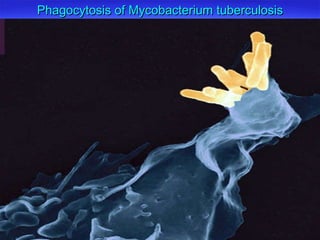
Phagocytosis of Mycobacterium tuberculosis
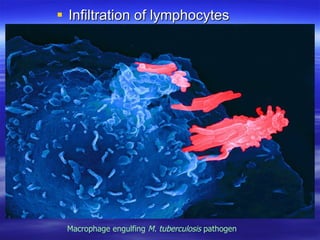
Infiltration of lymphocytes Macrophage engulfing  M. tuberculosis  pathogen
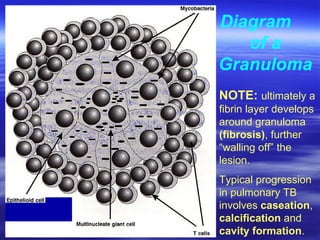
Diagram  of a Granuloma NOTE:  ultimately a fibrin layer develops around granuloma  (fibrosis) , further “walling off” the lesion. Typical progression in pulmonary TB involves  caseation ,  calcification  and  cavity formation .
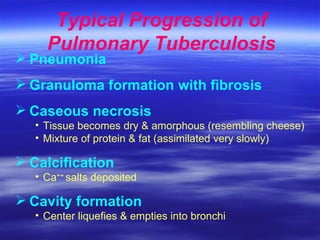
Pneumonia Granuloma formation with fibrosis Caseous necrosis Tissue becomes dry & amorphous (resembling cheese) Mixture of protein & fat (assimilated very slowly) Calcification Ca ++  salts deposited Cavity formation Center liquefies & empties into bronchi Typical Progression of Pulmonary Tuberculosis
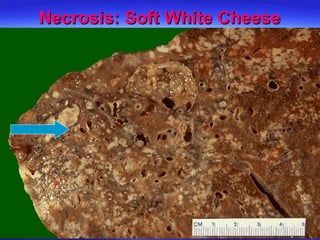
Necrosis: Soft White Cheese
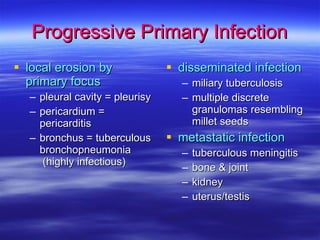
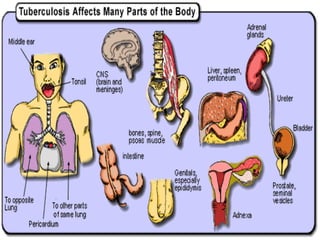
Progressive Primary Infection local erosion by primary focus pleural cavity = pleurisy pericardium = pericarditis bronchus = tuberculous bronchopneumonia  (highly infectious) disseminated infection miliary tuberculosis multiple discrete granulomas resembling  millet seeds metastatic infection tuberculous meningitis bone & joint kidney uterus/testis
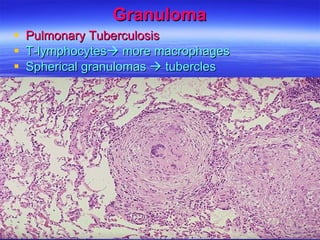
Granuloma Pulmonary Tuberculosis T-lymphocytes   more macrophages Spherical granulomas    tubercles
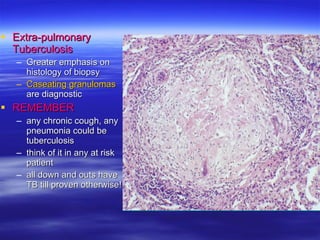
Extra-pulmonary Tuberculosis Greater emphasis on histology of biopsy  Caseating granulomas  are diagnostic REMEMBER any chronic cough, any pneumonia could be tuberculosis think of it in any at risk patient all down and outs have TB till proven otherwise!
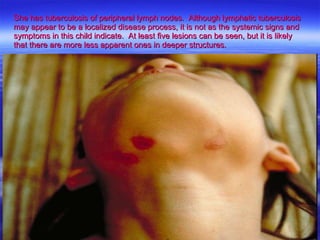
She has tuberculosis of peripheral lymph nodes.  Although lymphatic tuberculosis may appear to be a localized disease process, it is not as the systemic signs and symptoms in this child indicate.  At least five lesions can be seen, but it is likely that there are more less apparent ones in deeper structures.
 
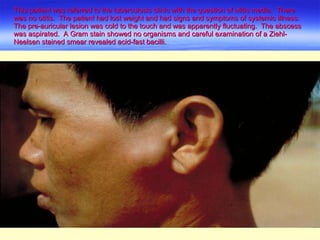
This patient was referred to the tuberculosis clinic with the question of otitis media.  There was no otitis.  The patient had lost weight and had signs and symptoms of systemic illness.  The pre-auricular lesion was cold to the touch and was apparently fluctuating.  The abscess was aspirated.  A Gram stain showed no organisms and careful examination of a Ziehl-Neelsen stained smear revealed acid-fast bacilli.
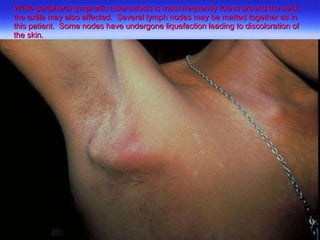
While peripheral lymphatic tuberculosis is most frequently found around the neck, the axilla may also affected.  Several lymph nodes may be matted together as in this patient.  Some nodes have undergone liquefaction leading to discoloration of the skin.
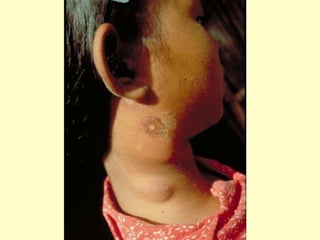
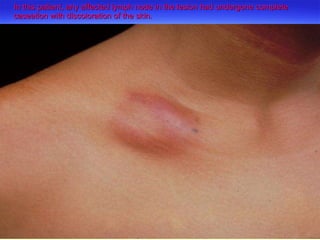
In this patient, any affected lymph node in the lesion had undergone complete caseation with discoloration of the skin.
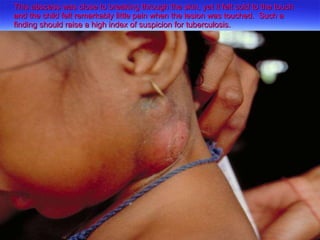
This abscess was close to breaking through the skin, yet it felt cold to the touch and the child felt remarkably little pain when the lesion was touched.  Such a finding should raise a high index of suspicion for tuberculosis.
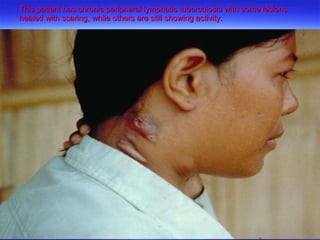
This patient has chronic peripheral lymphatic tuberculosis with some lesions healed with scaring, while others are still showing activity.
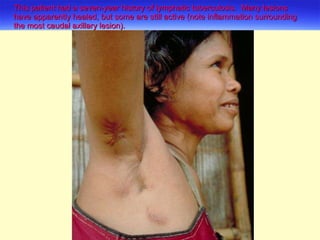
This patient had a seven-year history of lymphatic tuberculosis.  Many lesions have apparently healed, but some are still active (note inflammation surrounding the most caudal axillary lesion).
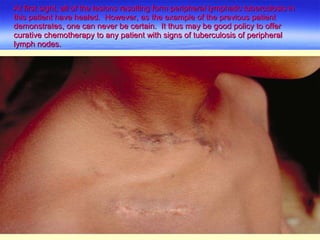
At first sight, all of the lesions resulting form peripheral lymphatic tuberculosis in this patient have healed.  However, as the example of the previous patient demonstrates, one can never be certain.  It thus may be good policy to offer curative chemotherapy to any patient with signs of tuberculosis of peripheral lymph nodes.
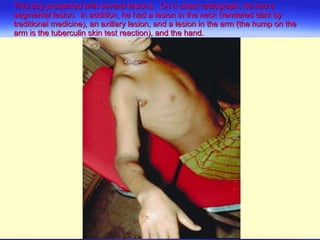
This boy presented with several lesions.  On a chest radiograph, he had a segmental lesion.  In addition, he had a lesion in the neck (rendered dark by traditional medicine), an axillary lesion, and a lesion in the arm (the hump on the arm is the tuberculin skin test reaction), and the hand.
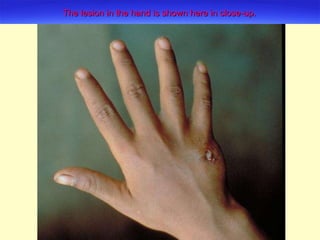
The lesion in the hand is shown here in close-up.
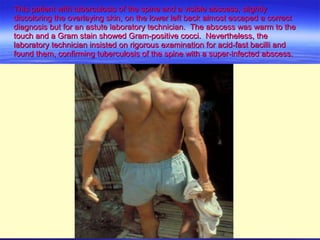
This patient with tuberculosis of the spine and a visible abscess, slightly discoloring the overlaying skin, on the lower left back almost escaped a correct diagnosis but for an astute laboratory technician.  The abscess was warm to the touch and a Gram stain showed Gram-positive cocci.  Nevertheless, the  laboratory technician insisted on rigorous examination for acid-fast bacilli and found them, confirming tuberculosis of the spine with a super-infected abscess.
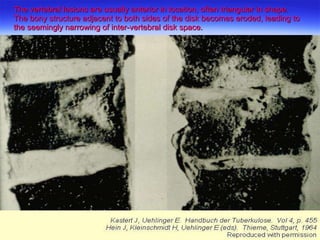
The vertebral lesions are usually anterior in location, often triangular in shape.  The bony structure adjacent to both sides of the disk becomes eroded, leading to the seemingly narrowing of inter-vertebral disk space.
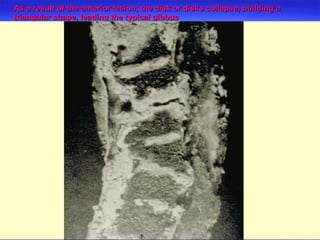
As a result of the anterior lesion, the disk or disks collapse, building a triangular shape, leading the typical gibbus
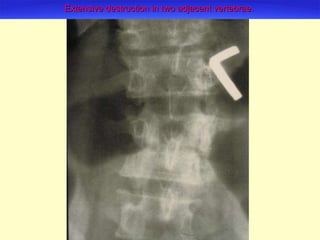
Extensive destruction in two adjacent vertebrae.
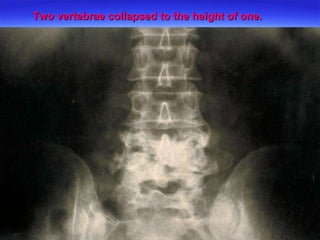
Two vertebrae collapsed to the height of one.
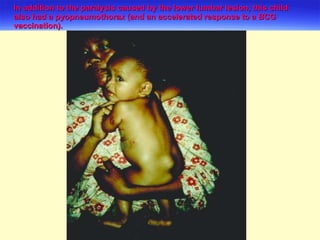
In addition to the paralysis caused by the lower lumbar lesion, this child also had a pyopneumothorax (and an accelerated response to a BCG vaccination).
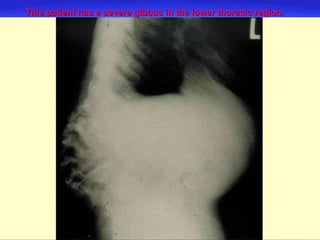
This patient has a severe gibbus in the lower thoracic region.
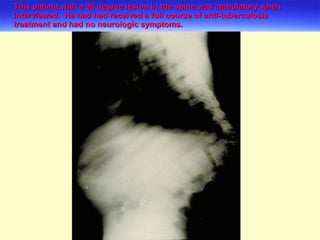
This patient with a 90 degree lesion in the spine was ambulatory when interviewed.  He had had received a full course of anti-tuberculosis treatment and had no neurologic symptoms.
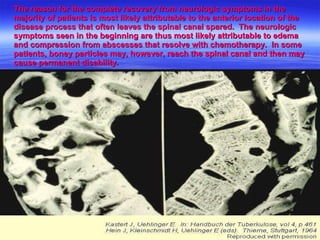
The reason for the complete recovery from neurologic symptoms in the majority of patients is most likely attributable to the anterior location of the disease process that often leaves the spinal canal spared.  The neurologic symptoms seen in the beginning are thus most likely attributable to edema and compression from abscesses that resolve with chemotherapy.  In some patients, boney particles may, however, reach the spinal canal and then may cause permanent disability.
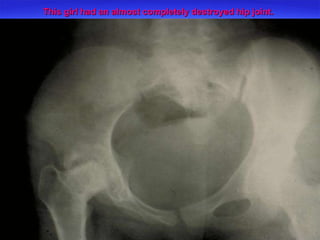
This girl had an almost completely destroyed hip joint.
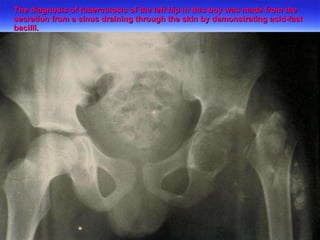
The diagnosis of tuberculosis of the left hip in this boy was made from the secretion from a sinus draining through the skin by demonstrating acid-fast bacilli.
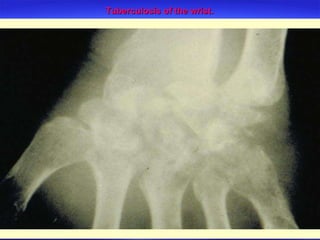
Tuberculosis of the wrist.
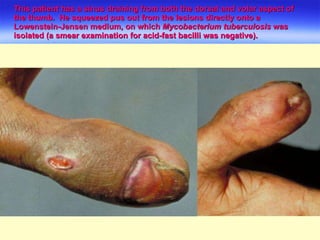
This patient has a sinus draining from both the dorsal and volar aspect of the thumb.  He squeezed pus out from the lesions directly onto a Lowenstein-Jensen medium, on which  Mycobacterium tuberculosis  was isolated (a smear examination for acid-fast bacilli was negative).
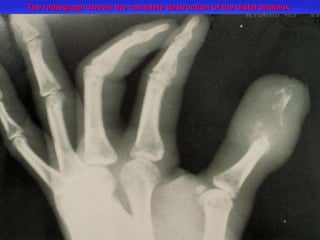
The radiograph shows the complete destruction of the distal phalanx.
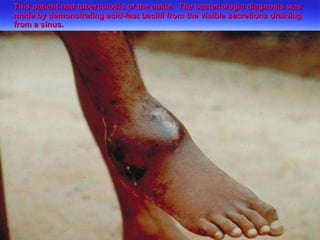
This patient had tuberculosis of the ankle.  The bacteriologic diagnosis was made by demonstrating acid-fast bacilli from the visible secretions draining from a sinus.
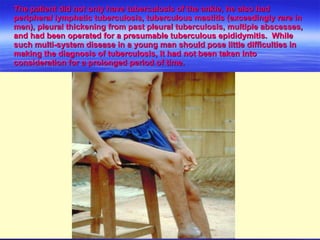
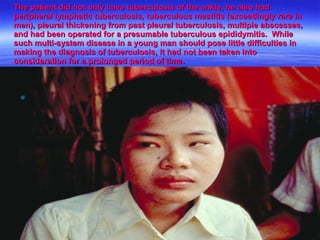
The patient did not only have tuberculosis of the ankle, he also had peripheral lymphatic tuberculosis, tuberculous mastitis (exceedingly rare in men), pleural thickening from past pleural tuberculosis, multiple abscesses, and had been operated for a presumable tuberculous epididymitis.  While such multi-system disease in a young man should pose little difficulties in making the diagnosis of tuberculosis, it had not been taken into consideration for a prolonged period of time.
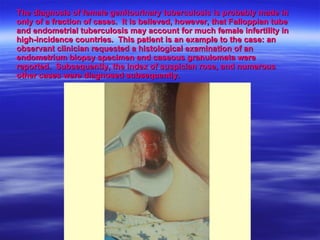
The diagnosis of female genitourinary tuberculosis is probably made in only of a fraction of cases.  It is believed, however, that Falloppian tube and endometrial tuberculosis may account for much female infertility in high-incidence countries.  This patient is an example to the case: an observant clinician requested a histological examination of an endometrium biopsy specimen and caseous granulomata were reported.  Subsequently, the index of suspician rose, and numerous other cases were diagnosed subsequently.
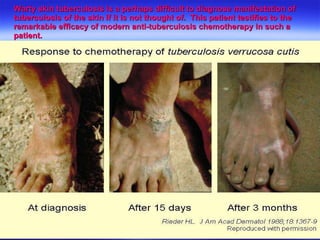
Warty skin tuberculosis is a perhaps difficult to diagnose manifestation of tuberculosis of the skin if it is not thought of.  This patient testifies to the remarkable efficacy of modern anti-tuberculosis chemotherapy in such a patient. 
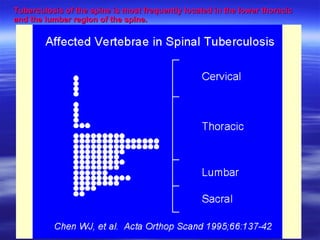
Tuberculosis of the spine is most frequently located in the lower thoracic and the lumber region of the spine.  
THANK YOU

Mycobacterium tuberculosis seminar

  • 1.
  • 2.
    KOCH’S DISEASE :TUBERCULOSIS Robert Koch Robert Koch (1882) – Isolated the mammalian tubercle bacillus on Heat Coagulated Bovine Serum and proved its causative role in Tuberculosis by satisfying Koch’s Postulates
  • 3.
    “ NO ONEIS SAFE FROM TUBERCULOSIS UNTIL EVERY ONE IS SAFE”.
  • 4.
    Tuberculosis is anarchitypal chronic granulomatous inflammatory reaction of the tissues to the presence of causative agent Mycobacterium tuberculosis,being characterized by a local aggregation of large number of macrophages,some of which undergo striking structural & functional alterations in the form of their transformation to epithelioid cells,foreign body giant cells & Langhan’s giant cells i.e. formation of TUBERCLE.
  • 5.
  • 6.
    Organisms belonging tothe genus Mycobacterium are---- 1.Very Thin 2.Rod shaped 3.0.2 to 0.4 X 2 to 10 µ m 4.Non motile 5.Sometimes showing filamentous branching like fungus. 6.Forming mould like pellicle in liquid culture. HENCE CALLED MYCOBACTERIA

  • 7.
    CLASSIFICATION OF MYCOBACTERIATypical Mycobacteria M tuberculosis M bovis M bovis BCG M africanum Atypical Mycobacteria Photochromogens Scotochromogens Non Photochromogens Rapid Growers Non-Cultivable Mycobacteria M leprae Saprophytic Mycobacteria M butyricum M pheli M smegmatis
  • 8.
    Mycobacterium tuberculosis Mycobacteriumbovis Mycobacterium bovis BCG Mycobacterium africanum Mycobacterium microti (Vole) MYCOBACTERIUM TUBERCULOSIS COMPLEX
  • 9.
    MYCOBACTERIUM TUBERCULOSIS Mycobacteriumtuberculosis Mycobacterium tuberculosis Scientific classification Kingdom: Bacteria Phylum: Actinobacteria Order: Actinomycetales Suborder: Corynebacterineae Family: Mycobacteriaceae Genus: Mycobacterium Species: M. tuberculosis Binomial name
  • 10.
    MORPHOLOGY OF MYCOBACTERIUM TUBERCULOSIS Straight or slightly curved rod 3 µm X 0.3 µm Occurring slightly in pairs or small clumps Are ‘ACID – FAST’ & ‘ALCOHOL FAST’ Resist decolourization by 20% sulphuric acid & absolute alcohol for 10 minutes.
  • 11.
    STAINING BY :ZIEHL – NEELSEN STAIN KYNIOUN STAIN FLUORESCENT STAIN ( AURAMIN O & RHODAMINE .)
  • 12.
  • 13.
  • 14.
  • 15.
  • 16.
    Mycobacterium tuberculosis : Electron Micrograph.
  • 17.
    CMN Group: Unusual cell wall lipids (mycolic acids,etc.) ( P urified P rotein D erivative) Lipid Rich Cell Wall Of Mycobacterium tuberculosis Mycolic acids
  • 18.
    Chemical Fractions &Antigenicity Protein Fraction – IHR & DHR Polysaccharide Component – IHR Lipid Fraction – Acid Fastness; Macrophage Transformation; Tubercle Formation.
  • 19.
    ACID FASTNESS OF MYCOBACTERIUM TUBERCULOSIS IS DUE TO PRESENCE OF A HIGH MOLECULAR WEIGHT HYDROXY ACID CONTAINING CARBOXYL GROUPS CALLED MYCOLIC ACID IN THE BACTERIAL CELL WALL OR TO A SEMIPERMIABLE MEMBRANE AROUND THE CELL.
  • 20.
    Resistance of Mtuberculosis Killed at 60ºC in 15 – 20 mins, Killed on exposure to sunlight for 2 hrs, Remain viable for 8 – 10 days in Droplet Nuclei, Cultures remain viable at Room temp. for 6 – 8 months, Survive exposure to 5% Phenol, 15% Sulphuric acid, 3% Nitric acid, 5% Oxalic acid and 4% NaOH. Sensitive to Formaldehyde & Glutaraldehyde. Killed with Tincture Iodine in 5 mins. & by 80% Ethanol in 2 – 10 mins.
  • 21.
    Cultural Characteristics Slow Growing Bacteria. Generation Time – 14 – 15 hrs. Optimum Temp - 37ºC’ Optimum pH – 6.4 – 7, Eugonic (5% Glycerol – luxuriant growth), Require Egg, Blood, Potato or Serum for good growth.
  • 22.
    CULTURE MEDIA SOLIDMEDIA Egg-based Media: Lowenstein-Jensen (LJ) Medium Dorset Medium Serum containing Media: Loeffler’s Medium Potato-based Media: Pawlowsky’s Medium Blood containing Media: Tarshi’s Medium Agar-based Media: Middlebrook 7H10 Middlebrook 7H11 Middlebrook Biplate (7H10/7H11 S Agar).
  • 23.
    MYCOBACTERIUM TUBERCULOSIS : Lowenstein-Jensen Medium. Colonies are dry, rough, raised, irregular with wrinkled surface. They are creamy white initially, becoming yellowish or buff coloured on further incubation .
  • 24.
    Colonies of Mycobacterium tuberculosis on Lowenstein-Jensen medium.
  • 25.
    M. tuberculosis bacterial colonies
  • 26.
    Eight Week Growthof Mycobacterium tuberculosis on Lowenstein-Jensen Agar
  • 27.
    CULTURE MEDIA LIQUIDMEDIA BACTEC 12 B Medium BACTEC 460 TB BACTEC 9000 MB BACTEC MGIT 960 EPS Culture System II Middlebrook 7H9 Broth SeptiChek AFB Dubo’s Medium Tween 80 (Sorbitol Mono oleate) Continuous Monitoring system
  • 28.
    Acid-Fast (Kinyoun) Stainof Mycobacterium NOTE: cord growth (serpentine arrangement) of virulent strains
  • 29.
    Biochemical Reactions: NiacinTest Arylsulphatase Test Neutral Red Test Catalase-Peroxidase Test Tween 80 Hydrolysis Test Amidase Test Nitrate Reduction Test Thiophene 2-Carboxylic acid Hydrazide (TCH) Test Tellurite Reduction Test
  • 30.
    BIOCHEMICAL REACTIONS: +- +/- - - - - - - - M Africanum + - - +/- - - - - - - M bovis + + + +/- - + - + - + M tuberculosis UREASE TEST PYRAZI-NAMIDASE TSET GROWTH ON TCH TELLURI--TE REDUCTION TEST TWEEN 80 HYDRO--LYSIS TSET PEROX---IDASE TEST HOT CATAL---ASE TEST NITRATE REDUC---TION TEST ARYL-SULPH---ATASE TEST NIACIN TEST SPECIES
  • 31.
    Airborne transmission of droplet nuclei Deposit in alveolar spaces of lungs
  • 32.
    Transmission Pulmonary tuberculosisis a disease of respiratory transmission, Patients with the active disease (bacilli) expel them into the air by: coughing, sneezing, shouting, or any other way that will expel bacilli into the air
  • 33.
    TUBERCULOSIS IS THEMOST IMPORTANT COMMUNICABLE DISEASE IN THE WORLD SPARING NO AGE, NO SEX, & NO NATIONALITY.
  • 34.
  • 35.
  • 36.
    VIRULENCE FACTORS CordFactor Sulphatid Lipo-Arabino Mannan (LAM) Heat Shock Protein Mac-1 Integrin Antigen 85 Complex
  • 37.
    Pathogenesis of M.tuberculosis
  • 38.
    IMMUNOPATHOLOGY OF TBM. tuberculosis Macrophage Class II MHC Activated Macrophage (Phagocytosis) Bactericidal activity T–Cell Receptor CD4+ T- Cell CYTOKINES CD8+ T- Cell Delayed Hypersensitivity Class I MHC Macrophage Caseous Necrosis
  • 39.
  • 40.
    Infiltration of lymphocytesMacrophage engulfing M. tuberculosis pathogen
  • 41.
    Diagram ofa Granuloma NOTE: ultimately a fibrin layer develops around granuloma (fibrosis) , further “walling off” the lesion. Typical progression in pulmonary TB involves caseation , calcification and cavity formation .
  • 42.
    Pneumonia Granuloma formationwith fibrosis Caseous necrosis Tissue becomes dry & amorphous (resembling cheese) Mixture of protein & fat (assimilated very slowly) Calcification Ca ++ salts deposited Cavity formation Center liquefies & empties into bronchi Typical Progression of Pulmonary Tuberculosis
  • 43.
  • 44.
    Progressive Primary Infectionlocal erosion by primary focus pleural cavity = pleurisy pericardium = pericarditis bronchus = tuberculous bronchopneumonia (highly infectious) disseminated infection miliary tuberculosis multiple discrete granulomas resembling millet seeds metastatic infection tuberculous meningitis bone & joint kidney uterus/testis
  • 45.
    Granuloma Pulmonary TuberculosisT-lymphocytes  more macrophages Spherical granulomas  tubercles
  • 46.
    Extra-pulmonary Tuberculosis Greateremphasis on histology of biopsy Caseating granulomas are diagnostic REMEMBER any chronic cough, any pneumonia could be tuberculosis think of it in any at risk patient all down and outs have TB till proven otherwise!
  • 47.
    She has tuberculosisof peripheral lymph nodes.  Although lymphatic tuberculosis may appear to be a localized disease process, it is not as the systemic signs and symptoms in this child indicate.  At least five lesions can be seen, but it is likely that there are more less apparent ones in deeper structures.
  • 48.
  • 49.
    This patient wasreferred to the tuberculosis clinic with the question of otitis media.  There was no otitis.  The patient had lost weight and had signs and symptoms of systemic illness.  The pre-auricular lesion was cold to the touch and was apparently fluctuating.  The abscess was aspirated.  A Gram stain showed no organisms and careful examination of a Ziehl-Neelsen stained smear revealed acid-fast bacilli.
  • 50.
    While peripheral lymphatictuberculosis is most frequently found around the neck, the axilla may also affected.  Several lymph nodes may be matted together as in this patient.  Some nodes have undergone liquefaction leading to discoloration of the skin.
  • 51.
    In this patient,any affected lymph node in the lesion had undergone complete caseation with discoloration of the skin.
  • 52.
    This abscess wasclose to breaking through the skin, yet it felt cold to the touch and the child felt remarkably little pain when the lesion was touched.  Such a finding should raise a high index of suspicion for tuberculosis.
  • 53.
    This patient haschronic peripheral lymphatic tuberculosis with some lesions healed with scaring, while others are still showing activity.
  • 54.
    This patient hada seven-year history of lymphatic tuberculosis.  Many lesions have apparently healed, but some are still active (note inflammation surrounding the most caudal axillary lesion).
  • 55.
    At first sight,all of the lesions resulting form peripheral lymphatic tuberculosis in this patient have healed.  However, as the example of the previous patient demonstrates, one can never be certain.  It thus may be good policy to offer curative chemotherapy to any patient with signs of tuberculosis of peripheral lymph nodes.
  • 56.
    This boy presentedwith several lesions.  On a chest radiograph, he had a segmental lesion.  In addition, he had a lesion in the neck (rendered dark by traditional medicine), an axillary lesion, and a lesion in the arm (the hump on the arm is the tuberculin skin test reaction), and the hand.
  • 57.
    The lesion inthe hand is shown here in close-up.
  • 58.
    This patient withtuberculosis of the spine and a visible abscess, slightly discoloring the overlaying skin, on the lower left back almost escaped a correct diagnosis but for an astute laboratory technician.  The abscess was warm to the touch and a Gram stain showed Gram-positive cocci.  Nevertheless, the  laboratory technician insisted on rigorous examination for acid-fast bacilli and found them, confirming tuberculosis of the spine with a super-infected abscess.
  • 59.
    The vertebral lesionsare usually anterior in location, often triangular in shape.  The bony structure adjacent to both sides of the disk becomes eroded, leading to the seemingly narrowing of inter-vertebral disk space.
  • 60.
    As a resultof the anterior lesion, the disk or disks collapse, building a triangular shape, leading the typical gibbus
  • 61.
    Extensive destruction intwo adjacent vertebrae.
  • 62.
    Two vertebrae collapsedto the height of one.
  • 63.
    In addition tothe paralysis caused by the lower lumbar lesion, this child also had a pyopneumothorax (and an accelerated response to a BCG vaccination).
  • 64.
    This patient hasa severe gibbus in the lower thoracic region.
  • 65.
    This patient witha 90 degree lesion in the spine was ambulatory when interviewed.  He had had received a full course of anti-tuberculosis treatment and had no neurologic symptoms.
  • 66.
    The reason forthe complete recovery from neurologic symptoms in the majority of patients is most likely attributable to the anterior location of the disease process that often leaves the spinal canal spared.  The neurologic symptoms seen in the beginning are thus most likely attributable to edema and compression from abscesses that resolve with chemotherapy.  In some patients, boney particles may, however, reach the spinal canal and then may cause permanent disability.
  • 67.
    This girl hadan almost completely destroyed hip joint.
  • 68.
    The diagnosis oftuberculosis of the left hip in this boy was made from the secretion from a sinus draining through the skin by demonstrating acid-fast bacilli.
  • 69.
  • 70.
    This patient hasa sinus draining from both the dorsal and volar aspect of the thumb.  He squeezed pus out from the lesions directly onto a Lowenstein-Jensen medium, on which Mycobacterium tuberculosis was isolated (a smear examination for acid-fast bacilli was negative).
  • 71.
    The radiograph showsthe complete destruction of the distal phalanx.
  • 72.
    This patient hadtuberculosis of the ankle.  The bacteriologic diagnosis was made by demonstrating acid-fast bacilli from the visible secretions draining from a sinus.
  • 73.
    The patient didnot only have tuberculosis of the ankle, he also had peripheral lymphatic tuberculosis, tuberculous mastitis (exceedingly rare in men), pleural thickening from past pleural tuberculosis, multiple abscesses, and had been operated for a presumable tuberculous epididymitis.  While such multi-system disease in a young man should pose little difficulties in making the diagnosis of tuberculosis, it had not been taken into consideration for a prolonged period of time.
  • 74.
    The patient didnot only have tuberculosis of the ankle, he also had peripheral lymphatic tuberculosis, tuberculous mastitis (exceedingly rare in men), pleural thickening from past pleural tuberculosis, multiple abscesses, and had been operated for a presumable tuberculous epididymitis.  While such multi-system disease in a young man should pose little difficulties in making the diagnosis of tuberculosis, it had not been taken into consideration for a prolonged period of time.
  • 75.
    The diagnosis offemale genitourinary tuberculosis is probably made in only of a fraction of cases.  It is believed, however, that Falloppian tube and endometrial tuberculosis may account for much female infertility in high-incidence countries.  This patient is an example to the case: an observant clinician requested a histological examination of an endometrium biopsy specimen and caseous granulomata were reported.  Subsequently, the index of suspician rose, and numerous other cases were diagnosed subsequently.
  • 76.
    Warty skin tuberculosisis a perhaps difficult to diagnose manifestation of tuberculosis of the skin if it is not thought of.  This patient testifies to the remarkable efficacy of modern anti-tuberculosis chemotherapy in such a patient. 
  • 77.
    Tuberculosis of thespine is most frequently located in the lower thoracic and the lumber region of the spine.  
  • 78.

Editor's Notes

  • #44 Once a tubercle is formed, the immune system is activated, but by this time the bacteria may have already spread to other bronchi (Reviewed by Schaff, et al. , 2003). Necrosis occurs in the center of tubercles because of the toxins secreted by the surrounding immune cells. The caseous centers of tubercles liquefy, the bacteria continue to multiply, and then bronchi necrosis occurs. TB is often associated with caseous necrosis, which resembles soft white cheese. Fisher (2002) noted that most well-nourished and immunocompetent individuals can eliminate the bacteria before a more serious condition occurs. In 90% of cases, the bacteria are eliminated and the tubercle heals, evidenced by scar formation. On close inspection, the caseous tan necrotic tissue in this image constitutes the granulomas in this lung.
  • #46 Infection begins as T-lymphocytes secrete cytokines that recruit macrophages in response to the presence of the pathogen (Reviewed by Sharma and Mohran, 2004). These macrophages accumulate and aggregate in tissues to become spherical granulomas. Granulomas prevent the spread of M. tuberculosis by confining the bacteria in a compact area where the immune cells can work together to isolate and destroy the bacteria. The central zones of granulomas contain large macrophages surrounded by T-lymphocytes. Granulomas in TB are called tubercles and are visible as white spots (1-2 mm). Once in the alveoli, the bacteria can then spread to local lymph nodes, the bloodstream, and eventually, to distant organs (lung apices, peripheral lymph nodes, kidneys, brain, and bone).