



Coelenterata
Bollapalli Ashok Kumar
M.Sc.,B.Ed.,M.A(Lit)CSIR-NET,(Ph.D)
LECTURER IN ZOOLOGY
KRK Govt Degree & PG College
ADDANKI-523201
Phone:9652929696,9441635264
Email:
ashokkumarzoology@gmail.com
 9000 living sps and many fossils since Ordovician
period
 Marine , some are fresh watered
 Proterospongia-link between Protozoa and
Coelenterata
 Ctenoplana- link between Coelenterata and helminthes
 Cyanea arctica - Big and Long jelly fish-7.5.m radius
with 120 yards long tentacles
 Chirposalmus , Chironex jelly fishes are most
poisonous
 Coelenterates are called stinging animalcules
COELENTERATA
 PEYSONNEL (1773) called them as coral insects
 Linnaeus, Lamark ,Cuvier included these in Radiata
 Eschscholtz (1829) divided radiata into three groups like
Zoophyta, Ecalepha, Echinodermata. He studied
Ecalepha and later described Ctenophora and
Siphonophora medusae
 Johnston (1939) separated Hydroidea class
 Leuckart (1947)formed this phylum including sponges
and ctenophora
 Hatschek (1888) divided it into Spongiaria, Cnidaria ,
Ctenophora
COELENTERATA- Historical Background
Metazoan multicellular animals
Tissue grade of organisation
Aquatic animals except Hydra all are marine.
Solitary or Colonial, sedentary or free living
Radial or bilateral symmetry
Two types of individuals- polyp (asexual
form) and free swimming medusa (sexual
form)
General characters- Coelenterata
Zooids - small animals in a colony .
Depending on function, the nature of
zooid changes thus shows polymorphism
Diploblastic body wall with two cellular
layers
1. Outer epidermis
2. Inner gastrodermis
3. Gelatinous mesoglea in between
Body layers are with special nematocysts –
more in tentacles- many types. Stinging
cells useful for killing and protection
General characters- Coelenterata
 Acoelomate organisms
 Digestive system is incomplete anus being
absent and mouth for ingestion and egetion.
Digestion is intra and extracellular
 Mouth is with small, thin tentacles which are
useful for food capture, ingestion, locomotion
and protection
 Gastro vascular cavity is often branched. It
opens outside through mouth
General characters- Coelenterata
 Respiratory , circulatory and excretory systems
are absent
 Muscular system of epithelio and endothelio
muscle cells is present. Independent fibres are
present in mesoglea.
 Nerve nets of synaptic or non synaptic pattern
with diffuse conduction
 Sense organs are simple or complicated. Some
are with ocellli and statocysts
General characters- Coelenterata
Asexual reproduction – budding/binary
fission
Sexual reproduction by gametes. Sexual
forms are monoecious or dioecious
Development exhibits planula larva
Life cycle is with alternation of
generations with polyp generation and
medusoid generation
General characters- Coelenterata
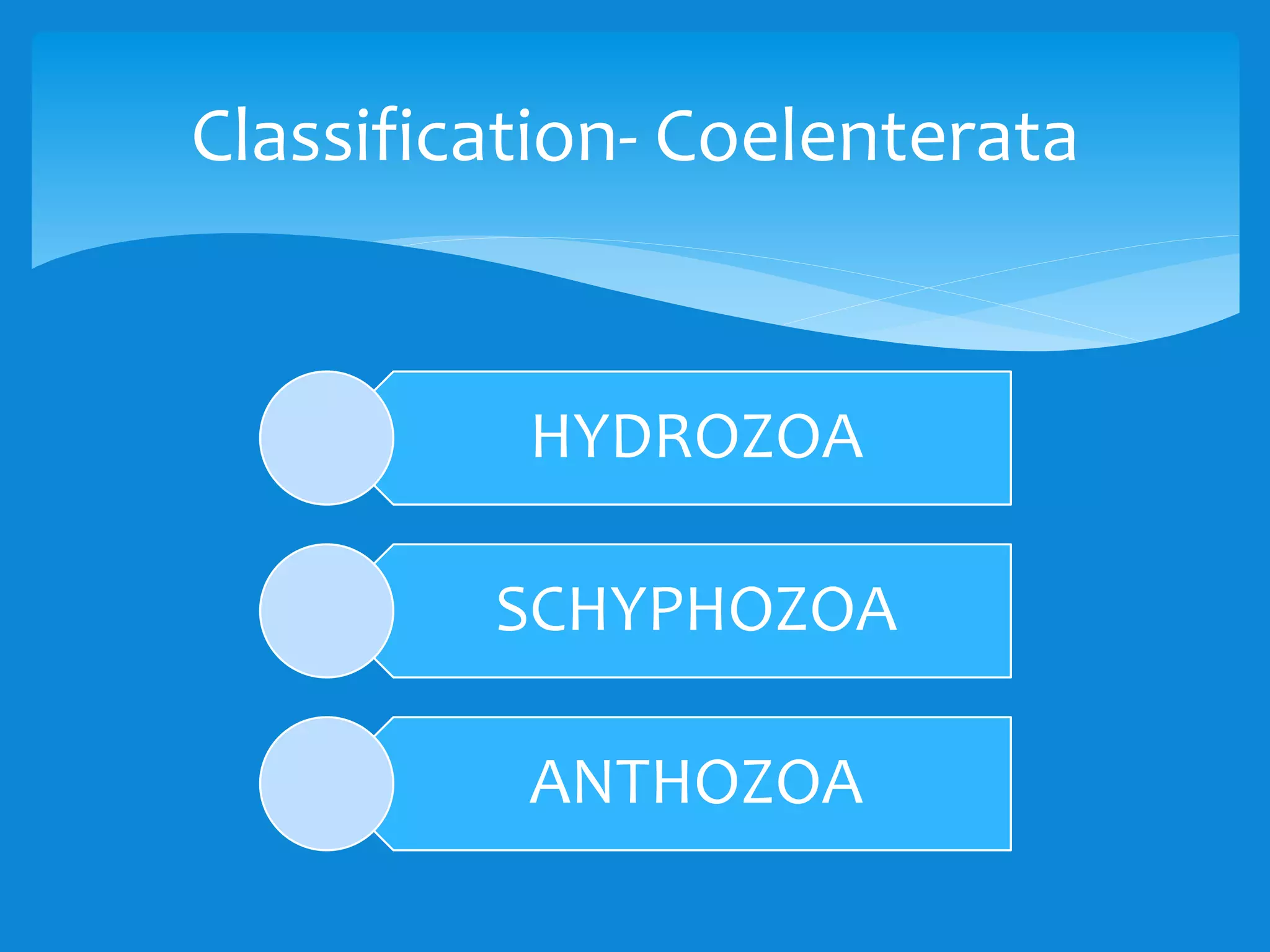
HYDROZOA
SCHYPHOZOA
ANTHOZOA
Classification- Coelenterata
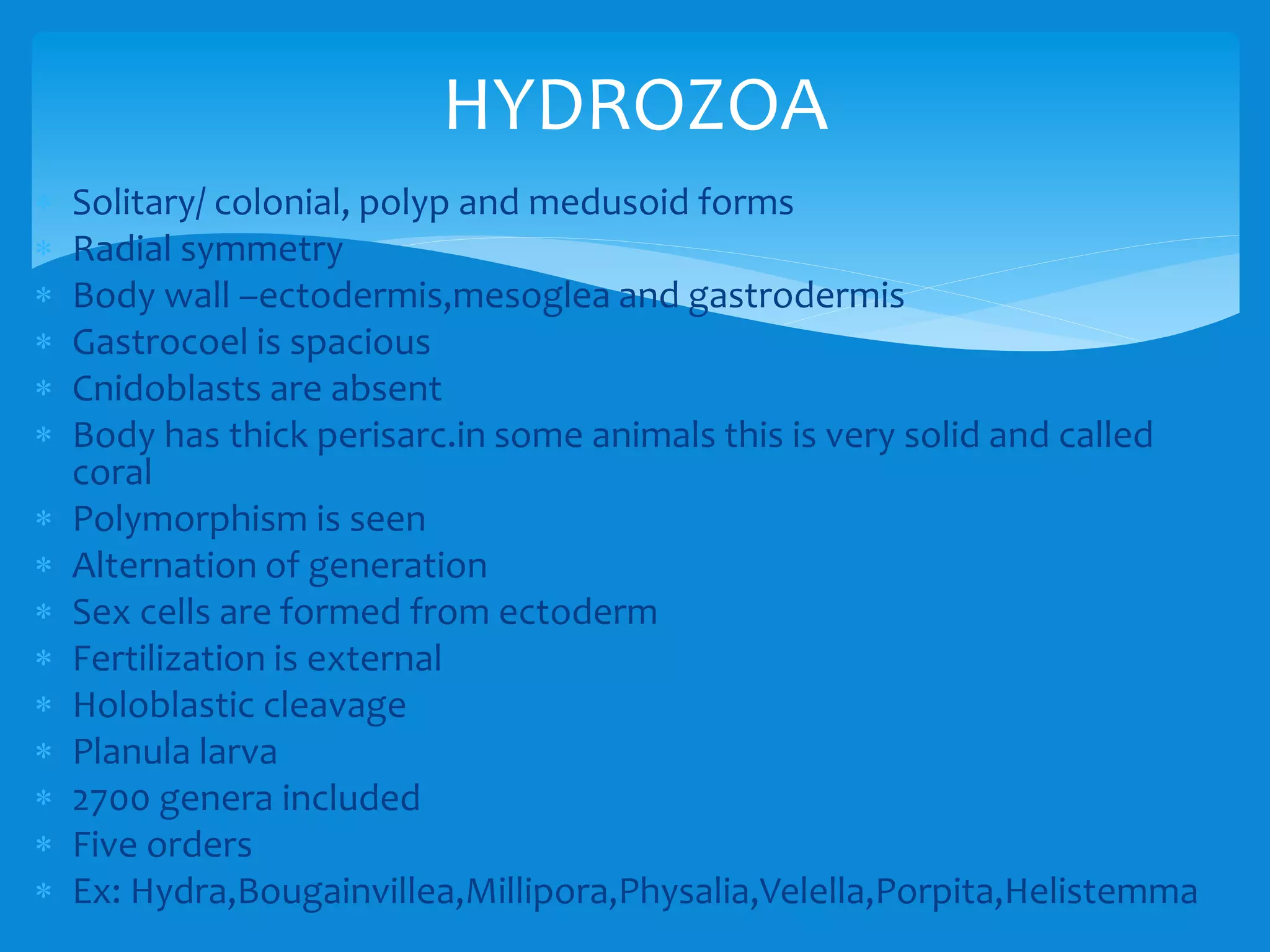
 Solitary/ colonial, polyp and medusoid forms
 Radial symmetry
 Body wall –ectodermis,mesoglea and gastrodermis
 Gastrocoel is spacious
 Cnidoblasts are absent
 Body has thick perisarc.in some animals this is very solid and called
coral
 Polymorphism is seen
 Alternation of generation
 Sex cells are formed from ectoderm
 Fertilization is external
 Holoblastic cleavage
 Planula larva
 2700 genera included
 Five orders
 Ex: Hydra,Bougainvillea,Millipora,Physalia,Velella,Porpita,Helistemma
HYDROZOA
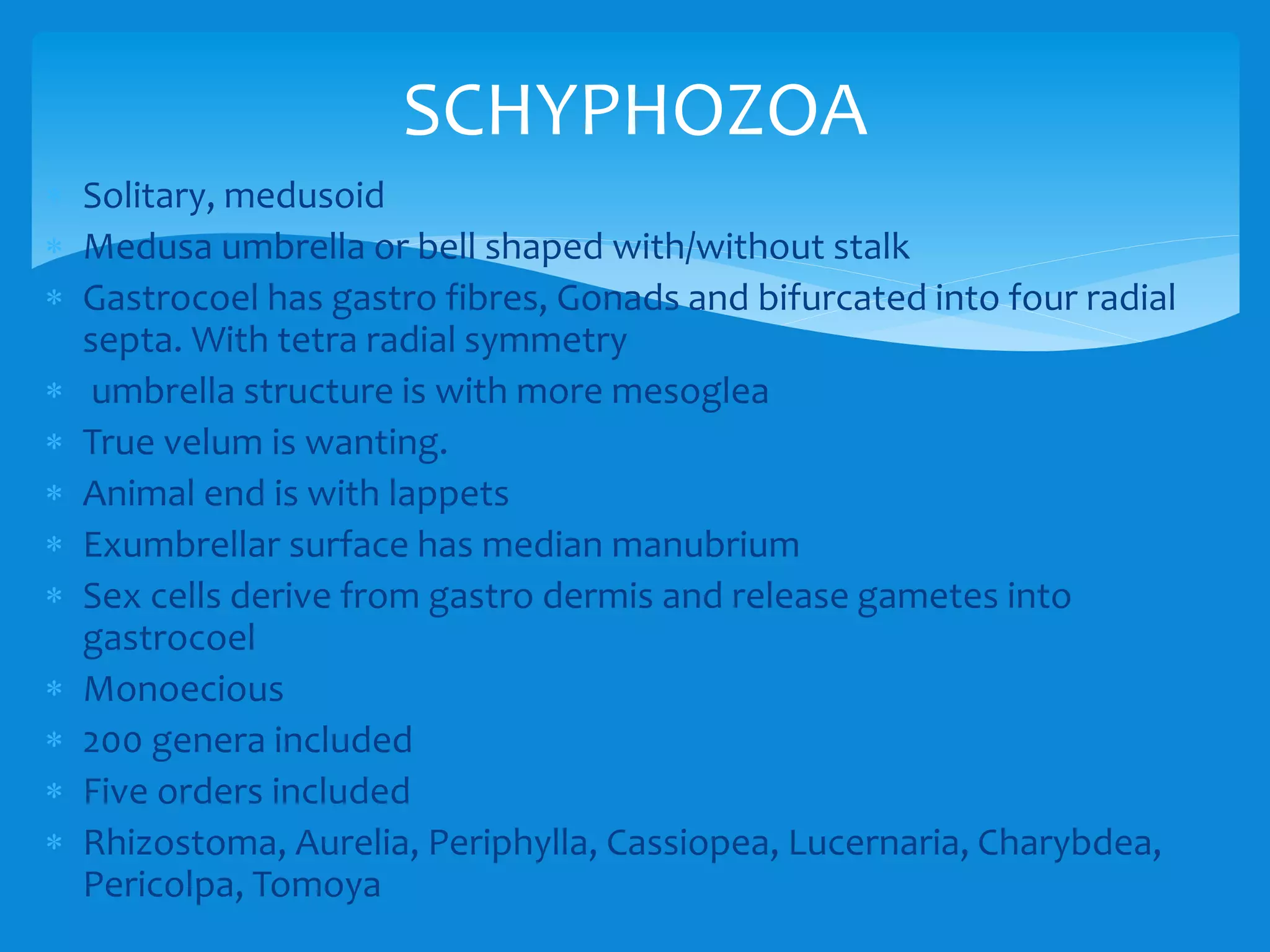
 Solitary, medusoid
 Medusa umbrella or bell shaped with/without stalk
 Gastrocoel has gastro fibres, Gonads and bifurcated into four radial
septa. With tetra radial symmetry
 umbrella structure is with more mesoglea
 True velum is wanting.
 Animal end is with lappets
 Exumbrellar surface has median manubrium
 Sex cells derive from gastro dermis and release gametes into
gastrocoel
 Monoecious
 200 genera included
 Five orders included
 Rhizostoma, Aurelia, Periphylla, Cassiopea, Lucernaria, Charybdea,
Pericolpa, Tomoya
SCHYPHOZOA
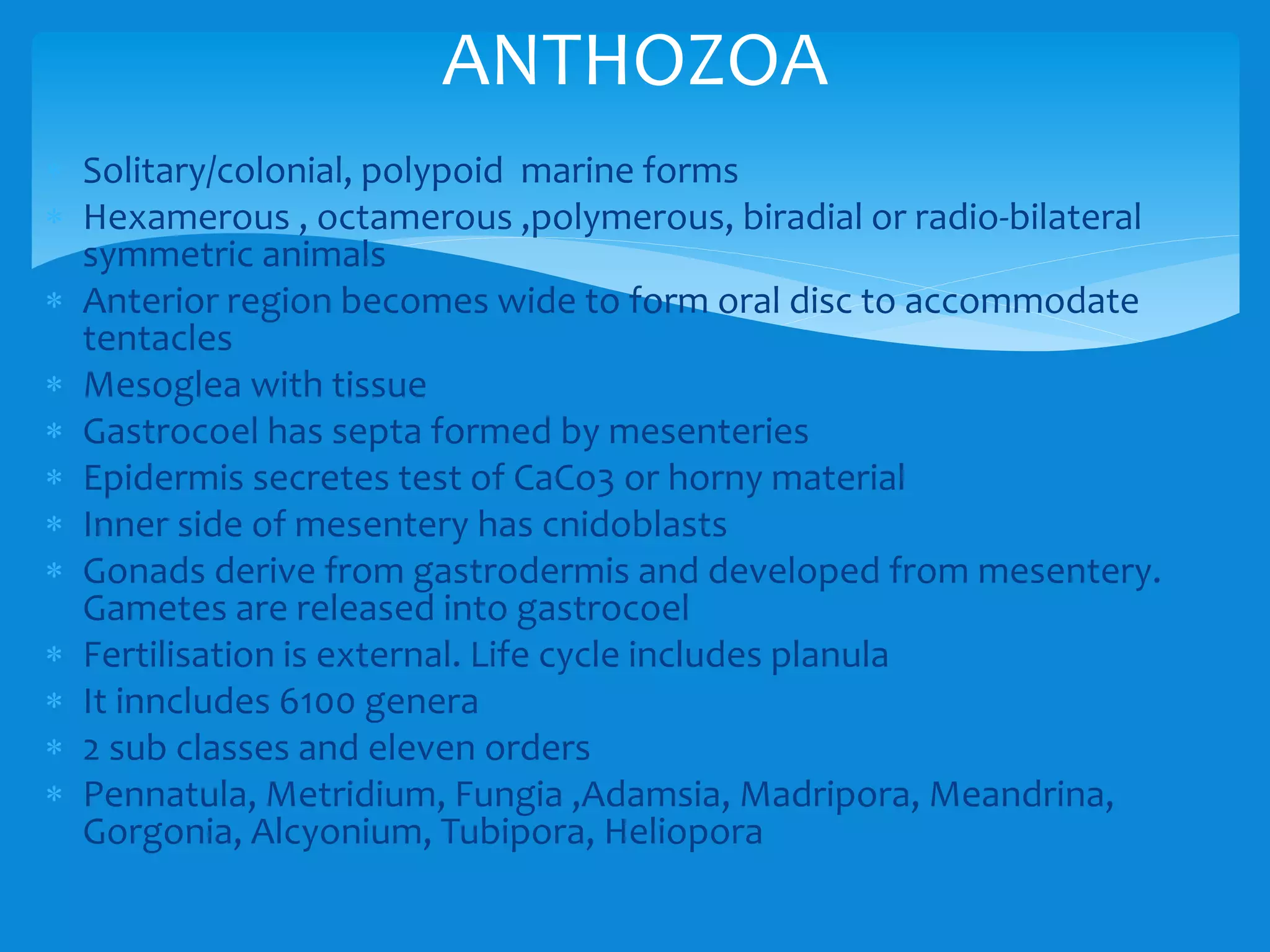
 Solitary/colonial, polypoid marine forms
 Hexamerous , octamerous ,polymerous, biradial or radio-bilateral
symmetric animals
 Anterior region becomes wide to form oral disc to accommodate
tentacles
 Mesoglea with tissue
 Gastrocoel has septa formed by mesenteries
 Epidermis secretes test of CaCo3 or horny material
 Inner side of mesentery has cnidoblasts
 Gonads derive from gastrodermis and developed from mesentery.
Gametes are released into gastrocoel
 Fertilisation is external. Life cycle includes planula
 It inncludes 6100 genera
 2 sub classes and eleven orders
 Pennatula, Metridium, Fungia ,Adamsia, Madripora, Meandrina,
Gorgonia, Alcyonium, Tubipora, Heliopora
ANTHOZOA
Coelenterata general characters & classification

Coelenterata general characters & classification

  • 1.
    Coelenterata Bollapalli Ashok Kumar M.Sc.,B.Ed.,M.A(Lit)CSIR-NET,(Ph.D) LECTURERIN ZOOLOGY KRK Govt Degree & PG College ADDANKI-523201 Phone:9652929696,9441635264 Email: ashokkumarzoology@gmail.com
  • 2.
     9000 livingsps and many fossils since Ordovician period  Marine , some are fresh watered  Proterospongia-link between Protozoa and Coelenterata  Ctenoplana- link between Coelenterata and helminthes  Cyanea arctica - Big and Long jelly fish-7.5.m radius with 120 yards long tentacles  Chirposalmus , Chironex jelly fishes are most poisonous  Coelenterates are called stinging animalcules COELENTERATA
  • 3.
     PEYSONNEL (1773)called them as coral insects  Linnaeus, Lamark ,Cuvier included these in Radiata  Eschscholtz (1829) divided radiata into three groups like Zoophyta, Ecalepha, Echinodermata. He studied Ecalepha and later described Ctenophora and Siphonophora medusae  Johnston (1939) separated Hydroidea class  Leuckart (1947)formed this phylum including sponges and ctenophora  Hatschek (1888) divided it into Spongiaria, Cnidaria , Ctenophora COELENTERATA- Historical Background
  • 4.
    Metazoan multicellular animals Tissuegrade of organisation Aquatic animals except Hydra all are marine. Solitary or Colonial, sedentary or free living Radial or bilateral symmetry Two types of individuals- polyp (asexual form) and free swimming medusa (sexual form) General characters- Coelenterata
  • 5.
    Zooids - smallanimals in a colony . Depending on function, the nature of zooid changes thus shows polymorphism Diploblastic body wall with two cellular layers 1. Outer epidermis 2. Inner gastrodermis 3. Gelatinous mesoglea in between Body layers are with special nematocysts – more in tentacles- many types. Stinging cells useful for killing and protection General characters- Coelenterata
  • 6.
     Acoelomate organisms Digestive system is incomplete anus being absent and mouth for ingestion and egetion. Digestion is intra and extracellular  Mouth is with small, thin tentacles which are useful for food capture, ingestion, locomotion and protection  Gastro vascular cavity is often branched. It opens outside through mouth General characters- Coelenterata
  • 7.
     Respiratory ,circulatory and excretory systems are absent  Muscular system of epithelio and endothelio muscle cells is present. Independent fibres are present in mesoglea.  Nerve nets of synaptic or non synaptic pattern with diffuse conduction  Sense organs are simple or complicated. Some are with ocellli and statocysts General characters- Coelenterata
  • 8.
    Asexual reproduction –budding/binary fission Sexual reproduction by gametes. Sexual forms are monoecious or dioecious Development exhibits planula larva Life cycle is with alternation of generations with polyp generation and medusoid generation General characters- Coelenterata
  • 9.
  • 10.
     Solitary/ colonial,polyp and medusoid forms  Radial symmetry  Body wall –ectodermis,mesoglea and gastrodermis  Gastrocoel is spacious  Cnidoblasts are absent  Body has thick perisarc.in some animals this is very solid and called coral  Polymorphism is seen  Alternation of generation  Sex cells are formed from ectoderm  Fertilization is external  Holoblastic cleavage  Planula larva  2700 genera included  Five orders  Ex: Hydra,Bougainvillea,Millipora,Physalia,Velella,Porpita,Helistemma HYDROZOA
  • 12.
     Solitary, medusoid Medusa umbrella or bell shaped with/without stalk  Gastrocoel has gastro fibres, Gonads and bifurcated into four radial septa. With tetra radial symmetry  umbrella structure is with more mesoglea  True velum is wanting.  Animal end is with lappets  Exumbrellar surface has median manubrium  Sex cells derive from gastro dermis and release gametes into gastrocoel  Monoecious  200 genera included  Five orders included  Rhizostoma, Aurelia, Periphylla, Cassiopea, Lucernaria, Charybdea, Pericolpa, Tomoya SCHYPHOZOA
  • 14.
     Solitary/colonial, polypoidmarine forms  Hexamerous , octamerous ,polymerous, biradial or radio-bilateral symmetric animals  Anterior region becomes wide to form oral disc to accommodate tentacles  Mesoglea with tissue  Gastrocoel has septa formed by mesenteries  Epidermis secretes test of CaCo3 or horny material  Inner side of mesentery has cnidoblasts  Gonads derive from gastrodermis and developed from mesentery. Gametes are released into gastrocoel  Fertilisation is external. Life cycle includes planula  It inncludes 6100 genera  2 sub classes and eleven orders  Pennatula, Metridium, Fungia ,Adamsia, Madripora, Meandrina, Gorgonia, Alcyonium, Tubipora, Heliopora ANTHOZOA