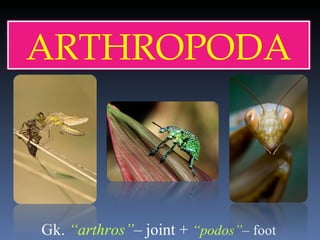
Gk.  “arthros” –  joint +  “podos” –  foot ARTHROPODA
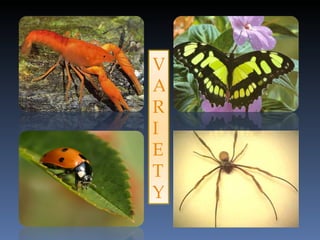
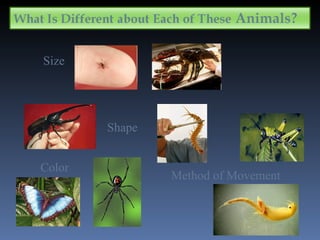
VARIETY
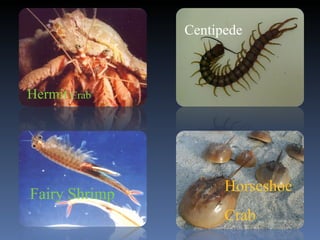
Hermit  Crab Fairy Shrimp Centipede Horseshoe Crab
 
Size Color Shape Method of Movement
Jointed Legs Exoskeleton Segmented Body Distinct Head Compound Eyes (most cases)
Common throughout marine, freshwater, terrestrial, and even aerial environments  GENERAL CHARACTERISTICS
Characteristics of Arthropods Segmented Jointed appendages Hard external skeleton 3 parts-head, thorax, abdomen (arachnids exception) Exoskeleton-hard, external skeleton made of chitin Molting- shed old exoskeleton and secrete a larger one, very vulnerable after molting
Complete digestive tract ( mandible -chewing or  proboscis - sucking)  with a dorsal heart and a ventral nervous system Respiration through gills, trachea, book lungs or body surface Sensory organs include  antennae  and hairs,  simple  and  compound eye Reproduces (mostly sexually), one to several larval stage
The muscle system is more or less assisted by  hydraulics  originated from the blood pressure created by the heart  Respiration through gills, trachea, book lungs or body surface With open circulatory system.  Haemolymph   that contains  haemocyanin , a copper-based oxygen-carrying protein
Body parts Ganglia -clusters of nerve cells along a nerve cord Compound eyes -may facets each with their own lenses, some have single lenses and some have both Spiracles-holes  in the exoskeleton that allow gas exchange (book lungs in arachnids) Trachea -chitin lined tubes in spiracles
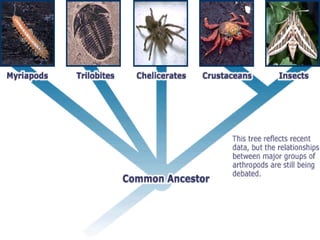
Four SUBPHYLA of Arthropods Trilobita –  thought to be the oldest arthropods Chelicerata –  two part body and mouthparts called chelicerae Crustacea –  hard exoskeleton, two pairs of antennae, mouthparts called mandibles Uniramia –  contains more species than all other groups of animals alive today
SUBPHYLUM -  Trilobites CLASS TRILOBITA  – Trilobites SUBPHYLUM CHELICERATA  CLASS ARACHNIDA  – Spiders, Scorpions, Ticks CLASS MEROSTOMATA  – Horseshoe crabs CLASS PYCNOGONIDA  – Sea spiders REPRESENTATIVE ORGANISMS:
SUBPHYLUM  UNIRAMIA CLASS CHILOPODA  – Centipedes CLASS DIPLOPODA  - Millipedes CLASS INSECTA  – Insects Class Branchiopoda –  Brine shrimp
CLASS CEPHALOCARIDA  – Horseshoe shrimp CLASS MAXILLOPODA  – Barnacles, and Fish lice CLASS MALACOSTRATA  – Lobsters, Crabs,  and Shrimps
CLASS CRUSTACEA  Lobsters, Crabs and Shrimps American lobster Homanus americanus Blue crab Callinectes sapidus
CLASS INSECTA Ants, Beetles and Bugs ORDER HYMENOPTERA Fire ant Solenopsis  invicta ORDER  ORTHOPTERA Migrating locust Locusta migratoria ORDER COLEOPTERA Weevil Beetle
MAJOR PARTS OF AN INSECT
Insects that have piercing and sucking mouthparts are called  BUGS  while  BEETLES  are insects distinguished as those having forewings modified into hard wing cases that cover and protect the hind wings and abdomen!
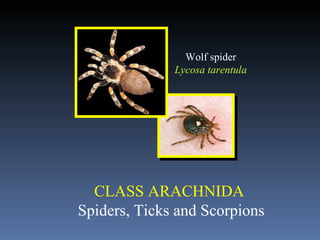
CLASS ARACHNIDA  Spiders, Ticks and Scorpions Wolf spider Lycosa tarentula
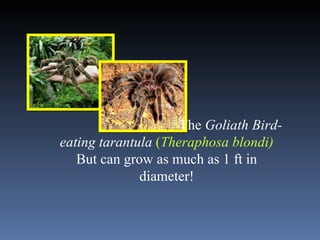
The  Goliath Bird-eating tarantula   ( Theraphosa blondi)   But  can grow as much as 1 ft in diameter!
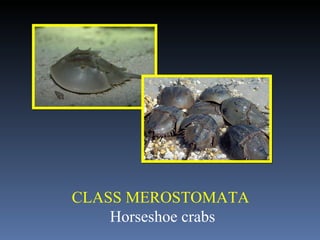
CLASS MEROSTOMATA   Horseshoe crabs
CLASS CHILOPODA  Centipedes Peruvian Giant
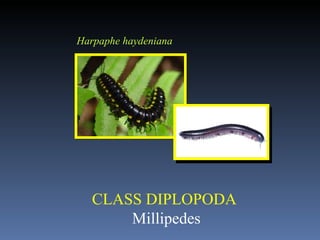
CLASS DIPLOPODA  Millipedes Harpaphe haydeniana
CLASS TRILOBITA   Trilobites
LIFE CYCLES OF SOME INSECTS
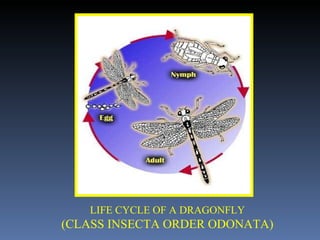
LIFE CYCLE OF A DRAGONFLY (CLASS INSECTA ORDER ODONATA)
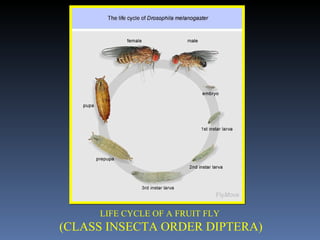
LIFE CYCLE OF A FRUIT FLY  (CLASS INSECTA ORDER DIPTERA)
LIFE CYCLE OF A BUTTERFLY (CLASS INSECTA ORDER LEPIDOPTERA) (Larva)  Caterpillar (Pupa)  Chrysalis
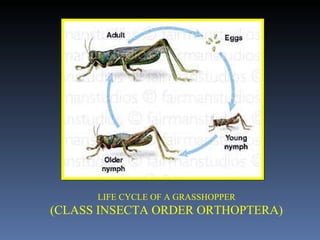
LIFE CYCLE OF A GRASSHOPPER (CLASS INSECTA ORDER ORTHOPTERA)
MIMICRY AND CAMOUFLAGE Mimicry  -  take on the appearance of (another animal or plant) in order to deter predators Camouflage  - the natural coloring or form of an animal which enables it to blend in with its surroundings
ECOLOGICAL IMPORTANCE Serve as food source for both animals and humans  Aid in the propagation of plant species by means of cross-pollination Control the population of some harmful organisms Some act as scavengers or saprotrophs

Phylum arthropoda

  • 1.
    Gk. “arthros”– joint + “podos” – foot ARTHROPODA
  • 2.
  • 3.
    Hermit CrabFairy Shrimp Centipede Horseshoe Crab
  • 4.
  • 5.
    Size Color ShapeMethod of Movement
  • 6.
    Jointed Legs ExoskeletonSegmented Body Distinct Head Compound Eyes (most cases)
  • 7.
    Common throughout marine,freshwater, terrestrial, and even aerial environments GENERAL CHARACTERISTICS
  • 8.
    Characteristics of ArthropodsSegmented Jointed appendages Hard external skeleton 3 parts-head, thorax, abdomen (arachnids exception) Exoskeleton-hard, external skeleton made of chitin Molting- shed old exoskeleton and secrete a larger one, very vulnerable after molting
  • 9.
    Complete digestive tract( mandible -chewing or proboscis - sucking) with a dorsal heart and a ventral nervous system Respiration through gills, trachea, book lungs or body surface Sensory organs include antennae and hairs, simple and compound eye Reproduces (mostly sexually), one to several larval stage
  • 10.
    The muscle systemis more or less assisted by hydraulics originated from the blood pressure created by the heart Respiration through gills, trachea, book lungs or body surface With open circulatory system. Haemolymph that contains haemocyanin , a copper-based oxygen-carrying protein
  • 11.
    Body parts Ganglia-clusters of nerve cells along a nerve cord Compound eyes -may facets each with their own lenses, some have single lenses and some have both Spiracles-holes in the exoskeleton that allow gas exchange (book lungs in arachnids) Trachea -chitin lined tubes in spiracles
  • 12.
    Four SUBPHYLA ofArthropods Trilobita – thought to be the oldest arthropods Chelicerata – two part body and mouthparts called chelicerae Crustacea – hard exoskeleton, two pairs of antennae, mouthparts called mandibles Uniramia – contains more species than all other groups of animals alive today
  • 13.
    SUBPHYLUM - Trilobites CLASS TRILOBITA – Trilobites SUBPHYLUM CHELICERATA CLASS ARACHNIDA – Spiders, Scorpions, Ticks CLASS MEROSTOMATA – Horseshoe crabs CLASS PYCNOGONIDA – Sea spiders REPRESENTATIVE ORGANISMS:
  • 14.
    SUBPHYLUM UNIRAMIACLASS CHILOPODA – Centipedes CLASS DIPLOPODA - Millipedes CLASS INSECTA – Insects Class Branchiopoda – Brine shrimp
  • 15.
    CLASS CEPHALOCARIDA – Horseshoe shrimp CLASS MAXILLOPODA – Barnacles, and Fish lice CLASS MALACOSTRATA – Lobsters, Crabs, and Shrimps
  • 16.
    CLASS CRUSTACEA Lobsters, Crabs and Shrimps American lobster Homanus americanus Blue crab Callinectes sapidus
  • 17.
    CLASS INSECTA Ants,Beetles and Bugs ORDER HYMENOPTERA Fire ant Solenopsis invicta ORDER ORTHOPTERA Migrating locust Locusta migratoria ORDER COLEOPTERA Weevil Beetle
  • 18.
    MAJOR PARTS OFAN INSECT
  • 19.
    Insects that havepiercing and sucking mouthparts are called BUGS while BEETLES are insects distinguished as those having forewings modified into hard wing cases that cover and protect the hind wings and abdomen!
  • 20.
    CLASS ARACHNIDA Spiders, Ticks and Scorpions Wolf spider Lycosa tarentula
  • 21.
    The GoliathBird-eating tarantula ( Theraphosa blondi) But can grow as much as 1 ft in diameter!
  • 22.
    CLASS MEROSTOMATA Horseshoe crabs
  • 23.
    CLASS CHILOPODA Centipedes Peruvian Giant
  • 24.
    CLASS DIPLOPODA Millipedes Harpaphe haydeniana
  • 25.
    CLASS TRILOBITA Trilobites
  • 26.
    LIFE CYCLES OFSOME INSECTS
  • 27.
    LIFE CYCLE OFA DRAGONFLY (CLASS INSECTA ORDER ODONATA)
  • 28.
    LIFE CYCLE OFA FRUIT FLY (CLASS INSECTA ORDER DIPTERA)
  • 29.
    LIFE CYCLE OFA BUTTERFLY (CLASS INSECTA ORDER LEPIDOPTERA) (Larva) Caterpillar (Pupa) Chrysalis
  • 30.
    LIFE CYCLE OFA GRASSHOPPER (CLASS INSECTA ORDER ORTHOPTERA)
  • 31.
    MIMICRY AND CAMOUFLAGEMimicry - take on the appearance of (another animal or plant) in order to deter predators Camouflage - the natural coloring or form of an animal which enables it to blend in with its surroundings
  • 32.
    ECOLOGICAL IMPORTANCE Serveas food source for both animals and humans Aid in the propagation of plant species by means of cross-pollination Control the population of some harmful organisms Some act as scavengers or saprotrophs