

 describes the whole process of research to be
undertaken
 a written plan of study
 It is a straight-forward document
 It is NOT a literary production
 It is clearly organized
 Title page
 Purpose or hypothesis and specific objectives
 Discussion of significance of need (justification)
 Review of work done or being done (literature)
 Materials and Methods
 Discussion of possible outcomes (conclusions)
 Time frame, budget, and biography of
investigators
 SPECIFIC and as brief as is possible consistent
with giving information
 As a general rule should not exceed 15 words
 contain the subject matter of the study, the
locale of the study, the population involved,
and the period when the data were gathered
or will be gathered.
Comment on this
 TheAmazing Production of Polyclonal and
MonoclonalAntibodiesAgainst Pseudomonas
solanaceum, E.F. Smith for Diagnosis of
BacterialWilt in Banana.
The Introduction should contain the following
subheadings:
 Background of the Study
 Statement of the Problem
 Research Objectives
 Hypothesis
 Significance of the Study
 Scope and Limitations
 Definition of KeyTerms (if applicable)
 the proponent cite the background of the study
by quoting some statements from published
materials relevant to the proposed study to give
the reader a bird’s eye view of the study.

 the proponent can also state the rationale of the
study or justification for doing the study but not
so extensive since there is another segment
where the proponent can explain this called
“Significance of the Study”.
 A general statement of the whole problem
followed by specific questions or
subproblems into which the general problem
is broken up.
 statement of purpose for which the
investigation is to be conducted. It differs
from a research problem by being stated in a
declarative form.
 only EXPERIMENTAL studies need expressly-
written hypothesis
 Rationale, timeliness, and/or relevance of the
study
 possible solutions to existing problems or
improvement of unsatisfactory conditions.
 Who are to be benefited and how?
 Possible contribution to the fund of
knowledge.
 a brief statement of the general purpose of the
study
 the subject matter and topics studied and
discussed
 the locale of the study, where the data were
gathered or to be gathered
 the population or universe from which the
respondents were selected
 the period of the study.
 only the terms, words, or phrases which have
special or unique meanings in the study are
defined
 terms should be defined operationally, i.e.
how they are used in the study
 definitions should be as brief, clear, and
unequivocal as possible.
 a summary of the writings of recognized
authorities and of previous research provides
evidence that the researcher is familiar with
what is already known and what is still
unknown and untested
 this section tells the reader exactly how the
study will be conducted and to ensure that a
competent worker could repeat your
experiment and compare his/her results with
your own.
 this section must directly satisfy the criterion
of replication.
 who will be the research participants (or what
population of plants or animals), how many
of them, their characteristics (number,
species, strain number, sex, age, weight,
etc.), and how will they be selected.
 Any mention of commercially marketed
equipment should be accompanied by the
firm’s name and the model number, or in the
case of a measuring instrument, a reference
that will enable the reader to obtain the same
scale
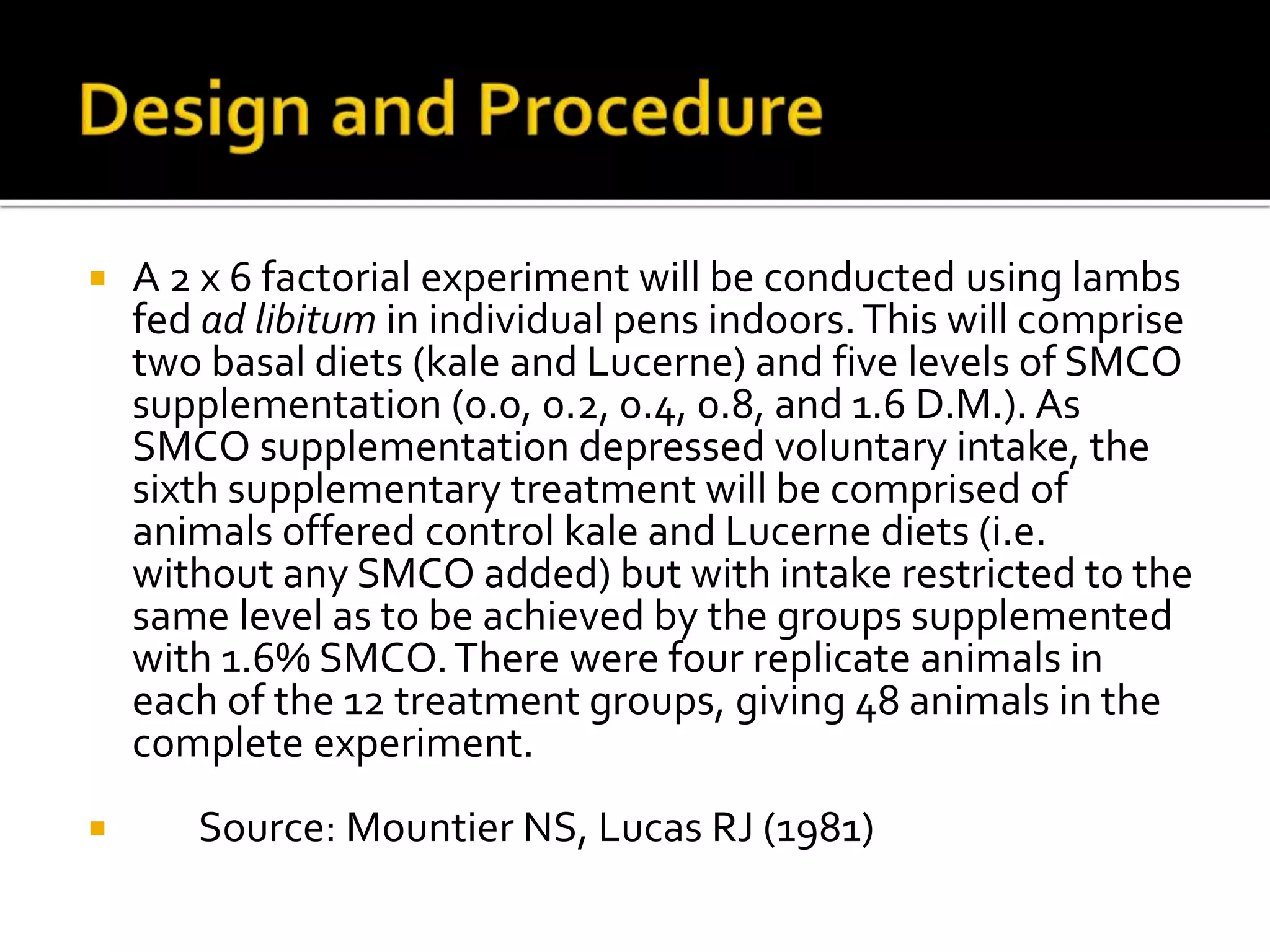
 A 2 x 6 factorial experiment will be conducted using lambs
fed ad libitum in individual pens indoors.This will comprise
two basal diets (kale and Lucerne) and five levels of SMCO
supplementation (0.0, 0.2, 0.4, 0.8, and 1.6 D.M.). As
SMCO supplementation depressed voluntary intake, the
sixth supplementary treatment will be comprised of
animals offered control kale and Lucerne diets (i.e.
without any SMCO added) but with intake restricted to the
same level as to be achieved by the groups supplemented
with 1.6% SMCO.There were four replicate animals in
each of the 12 treatment groups, giving 48 animals in the
complete experiment.
 Source: Mountier NS, Lucas RJ (1981)
 details about levels of statistical significance
applied in hypothesis testing, or any special
statistical tests or analyses done.This
depends on the objectives as well as the
chosen research design.
 This section should show the skeleton or
dummy tables or data sheets.
 Provides clues as to how the data will be best
presented, whether in tables or figures.
 accurate preliminary list of the articles cited
in your review of related literature.
 Additional literature may be added later.
 Follow a consistent style throughout
 Any error can destroy your credibility and
diminish the chance for acceptance of your
proposal.
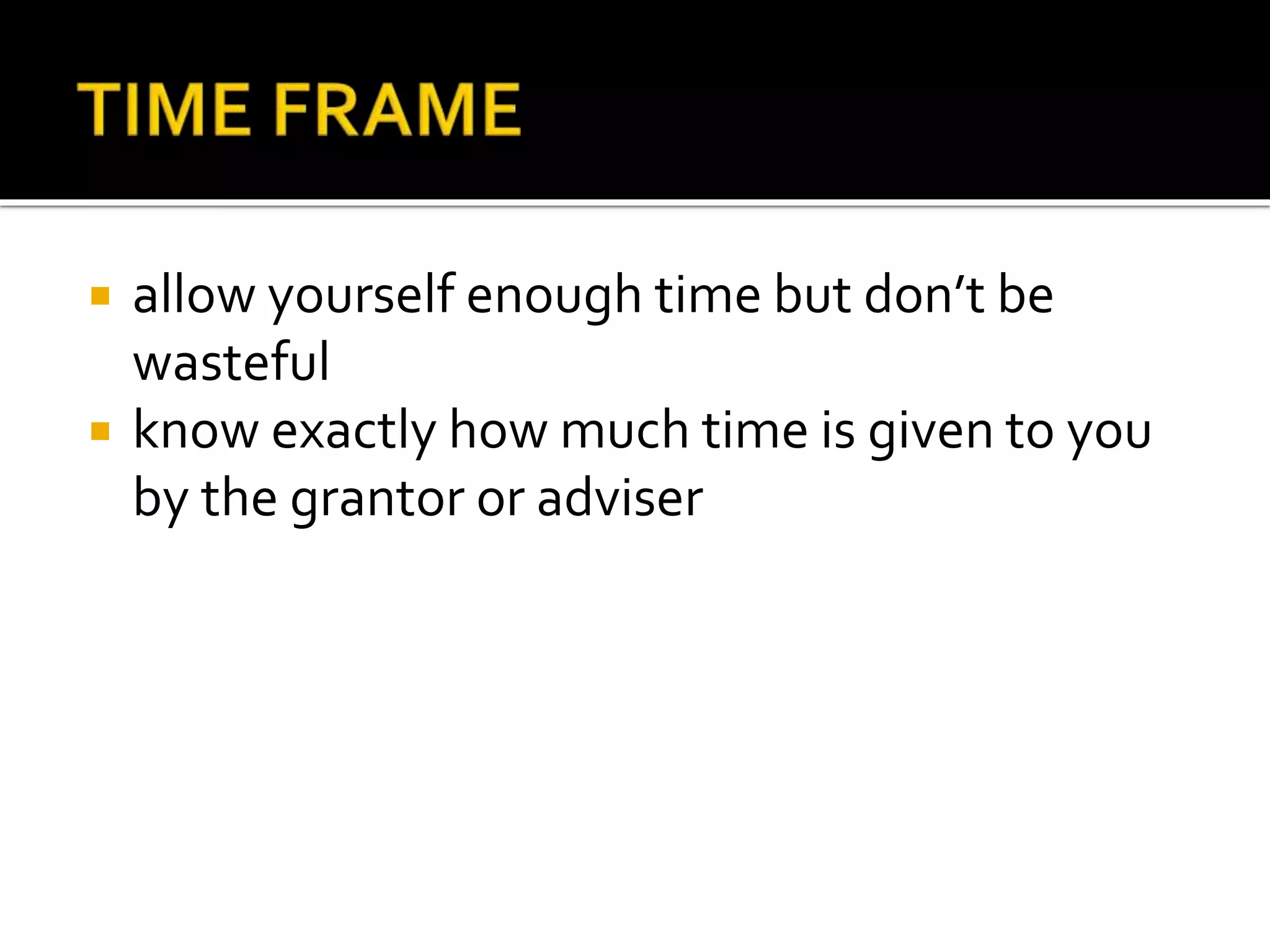
 allow yourself enough time but don’t be
wasteful
 know exactly how much time is given to you
by the grantor or adviser

Lec5 research proposal writing

  • 2.
     describes thewhole process of research to be undertaken  a written plan of study
  • 3.
     It isa straight-forward document  It is NOT a literary production  It is clearly organized
  • 4.
     Title page Purpose or hypothesis and specific objectives  Discussion of significance of need (justification)  Review of work done or being done (literature)  Materials and Methods  Discussion of possible outcomes (conclusions)  Time frame, budget, and biography of investigators
  • 5.
     SPECIFIC andas brief as is possible consistent with giving information  As a general rule should not exceed 15 words  contain the subject matter of the study, the locale of the study, the population involved, and the period when the data were gathered or will be gathered.
  • 6.
    Comment on this TheAmazing Production of Polyclonal and MonoclonalAntibodiesAgainst Pseudomonas solanaceum, E.F. Smith for Diagnosis of BacterialWilt in Banana.
  • 7.
    The Introduction shouldcontain the following subheadings:  Background of the Study  Statement of the Problem  Research Objectives  Hypothesis  Significance of the Study  Scope and Limitations  Definition of KeyTerms (if applicable)
  • 8.
     the proponentcite the background of the study by quoting some statements from published materials relevant to the proposed study to give the reader a bird’s eye view of the study.   the proponent can also state the rationale of the study or justification for doing the study but not so extensive since there is another segment where the proponent can explain this called “Significance of the Study”.
  • 9.
     A generalstatement of the whole problem followed by specific questions or subproblems into which the general problem is broken up.
  • 10.
     statement ofpurpose for which the investigation is to be conducted. It differs from a research problem by being stated in a declarative form.
  • 11.
     only EXPERIMENTALstudies need expressly- written hypothesis
  • 12.
     Rationale, timeliness,and/or relevance of the study  possible solutions to existing problems or improvement of unsatisfactory conditions.  Who are to be benefited and how?  Possible contribution to the fund of knowledge.
  • 13.
     a briefstatement of the general purpose of the study  the subject matter and topics studied and discussed  the locale of the study, where the data were gathered or to be gathered  the population or universe from which the respondents were selected  the period of the study.
  • 14.
     only theterms, words, or phrases which have special or unique meanings in the study are defined  terms should be defined operationally, i.e. how they are used in the study  definitions should be as brief, clear, and unequivocal as possible.
  • 15.
     a summaryof the writings of recognized authorities and of previous research provides evidence that the researcher is familiar with what is already known and what is still unknown and untested
  • 16.
     this sectiontells the reader exactly how the study will be conducted and to ensure that a competent worker could repeat your experiment and compare his/her results with your own.  this section must directly satisfy the criterion of replication.
  • 17.
     who willbe the research participants (or what population of plants or animals), how many of them, their characteristics (number, species, strain number, sex, age, weight, etc.), and how will they be selected.
  • 18.
     Any mentionof commercially marketed equipment should be accompanied by the firm’s name and the model number, or in the case of a measuring instrument, a reference that will enable the reader to obtain the same scale
  • 19.
     A 2x 6 factorial experiment will be conducted using lambs fed ad libitum in individual pens indoors.This will comprise two basal diets (kale and Lucerne) and five levels of SMCO supplementation (0.0, 0.2, 0.4, 0.8, and 1.6 D.M.). As SMCO supplementation depressed voluntary intake, the sixth supplementary treatment will be comprised of animals offered control kale and Lucerne diets (i.e. without any SMCO added) but with intake restricted to the same level as to be achieved by the groups supplemented with 1.6% SMCO.There were four replicate animals in each of the 12 treatment groups, giving 48 animals in the complete experiment.  Source: Mountier NS, Lucas RJ (1981)
  • 20.
     details aboutlevels of statistical significance applied in hypothesis testing, or any special statistical tests or analyses done.This depends on the objectives as well as the chosen research design.
  • 21.
     This sectionshould show the skeleton or dummy tables or data sheets.  Provides clues as to how the data will be best presented, whether in tables or figures.
  • 22.
     accurate preliminarylist of the articles cited in your review of related literature.  Additional literature may be added later.  Follow a consistent style throughout  Any error can destroy your credibility and diminish the chance for acceptance of your proposal.
  • 23.
     allow yourselfenough time but don’t be wasteful  know exactly how much time is given to you by the grantor or adviser