WRITING  A RESEARCH PROPOSAL
What is research?   Research refers to search for knowledge.  A careful investigation or inquiry specially through search for new facts in any branch of knowledge
Types of research   Exploratory studies- to understand a phenomenon or to get insights into it. Descriptive studies- description of characteristics of a particular individual, situation or group.  Explanation studies- determine the frequency with something occurs or its association with something .
Quantitative vs Qualitative   Quantitative research measures quantity and amount, applicable to phenomenon that can be expressed in terms of quantity. Qualitative research applicable to phenomenon relating to or involving quality or kind. It helps to understand and analyse various factors that motivate people to behave in a particular manner.
What is the study about? Why are you doing this study? Where will it be carried out? What type of data will be required? Where will the data be found? What will be the sample design?  What techniques of data collection will be used?  How will the data be analysed?  In what style will the report be written?
Variables and attributes Attributes are characteristics or qualities that describe an object or a person Variables are logical groupings of attributes.  Male and female are attributes and sex or gender are variables.
Understanding key constructs   Reality- objectivity and subjectivity Observation- information gathering –seeing and hearing Fact- Phenomenon that is observed Law- should be universally applicable
Theory- concepts, variables and statements   Theory- systematic explanation for the observed facts and laws that relate to a particular subject Elements of theory:  Concept: basic building blocks of theory, abstract elements representing classes of phenomenon within the field of study.
Units of analysis: Individuals Groups Organizations Social artifacts
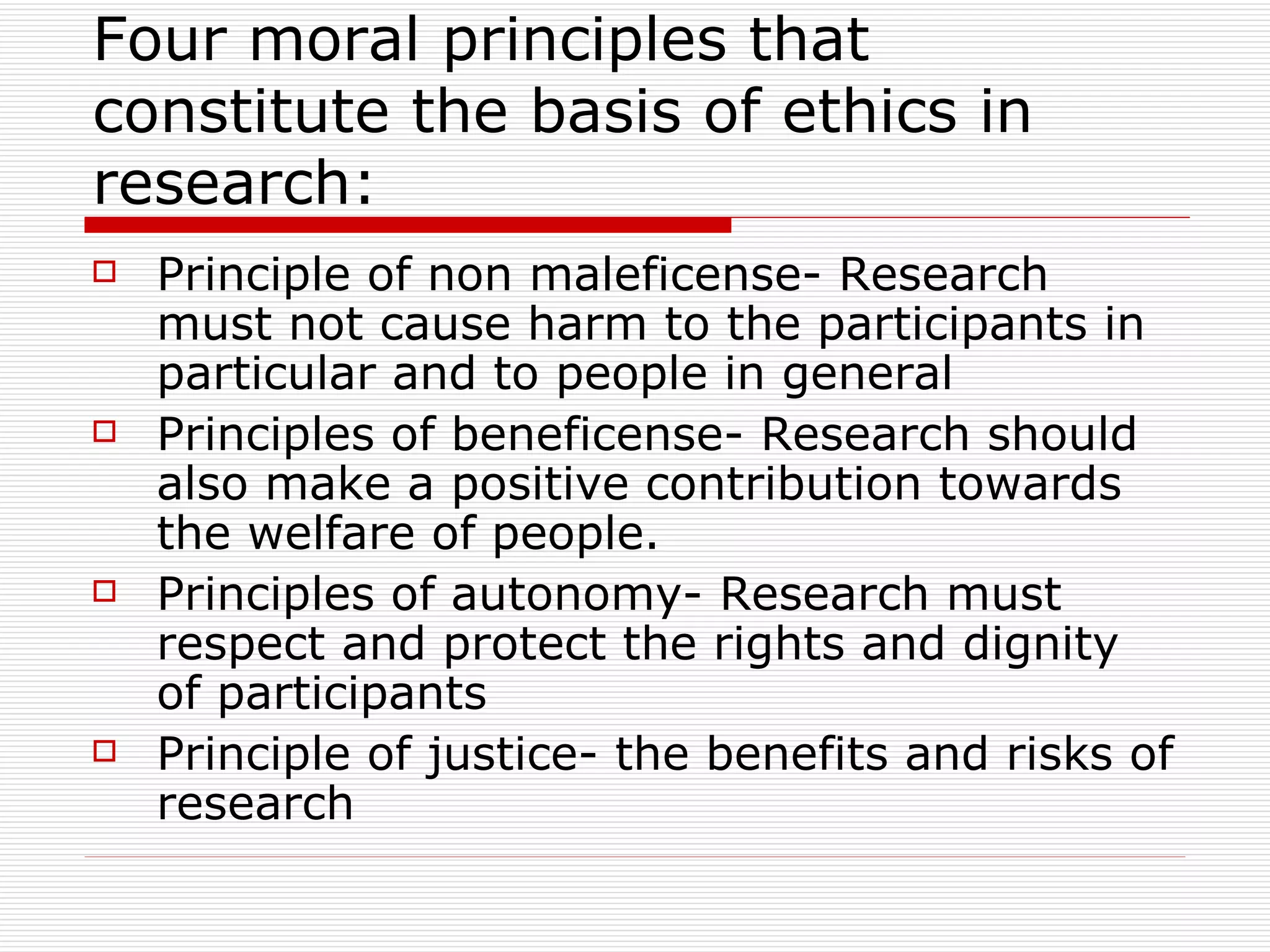
Four moral principles that constitute the basis of ethics in research: Principle of non maleficense- Research must not cause harm to the participants in particular and to people in general Principles of beneficense- Research should also make a positive contribution towards the welfare of people.  Principles of autonomy- Research must respect and protect the rights and dignity of participants Principle of justice- the benefits and risks of research
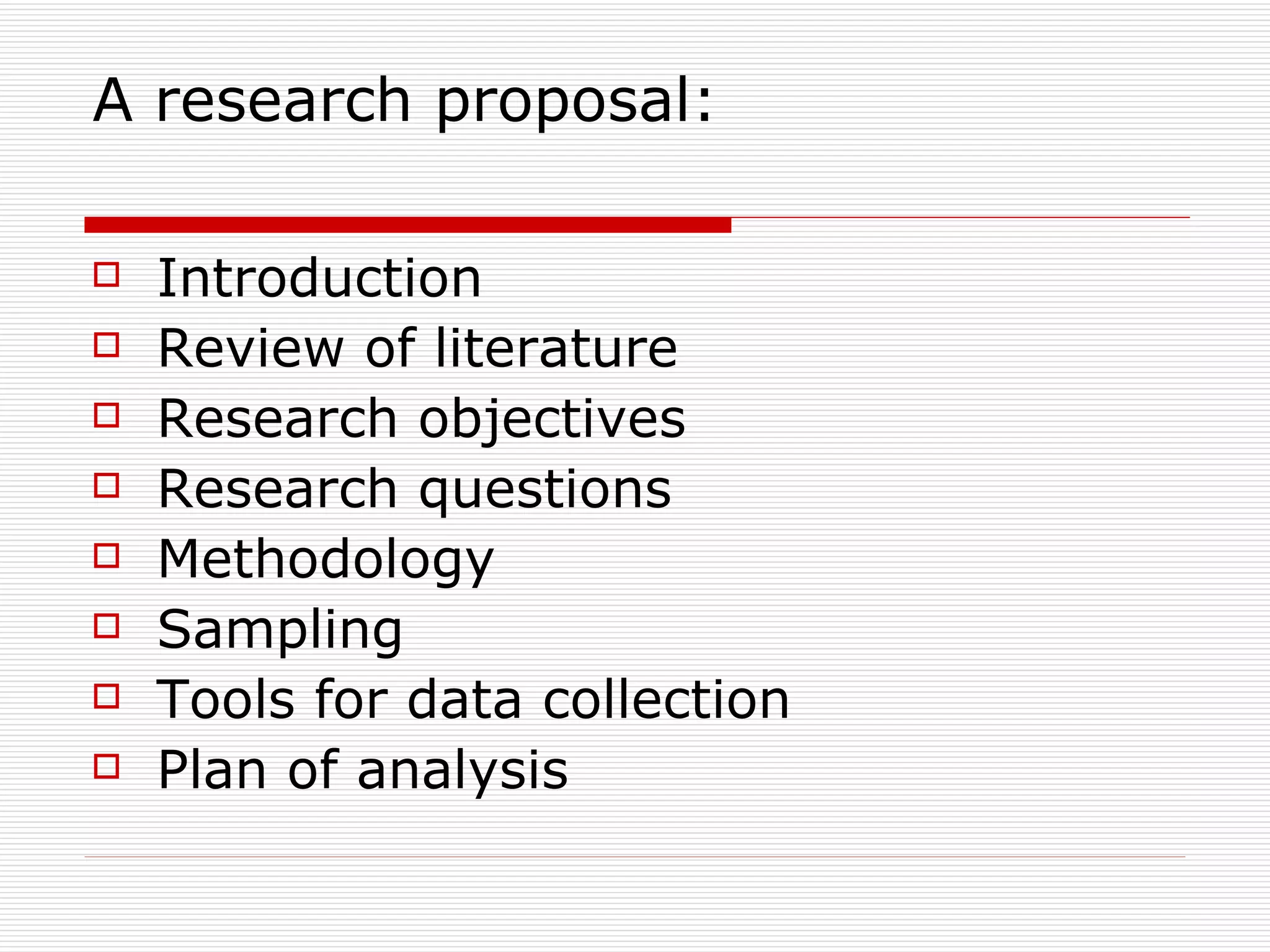
A research proposal:  Introduction Review of literature Research objectives Research questions Methodology Sampling Tools for data collection Plan of analysis
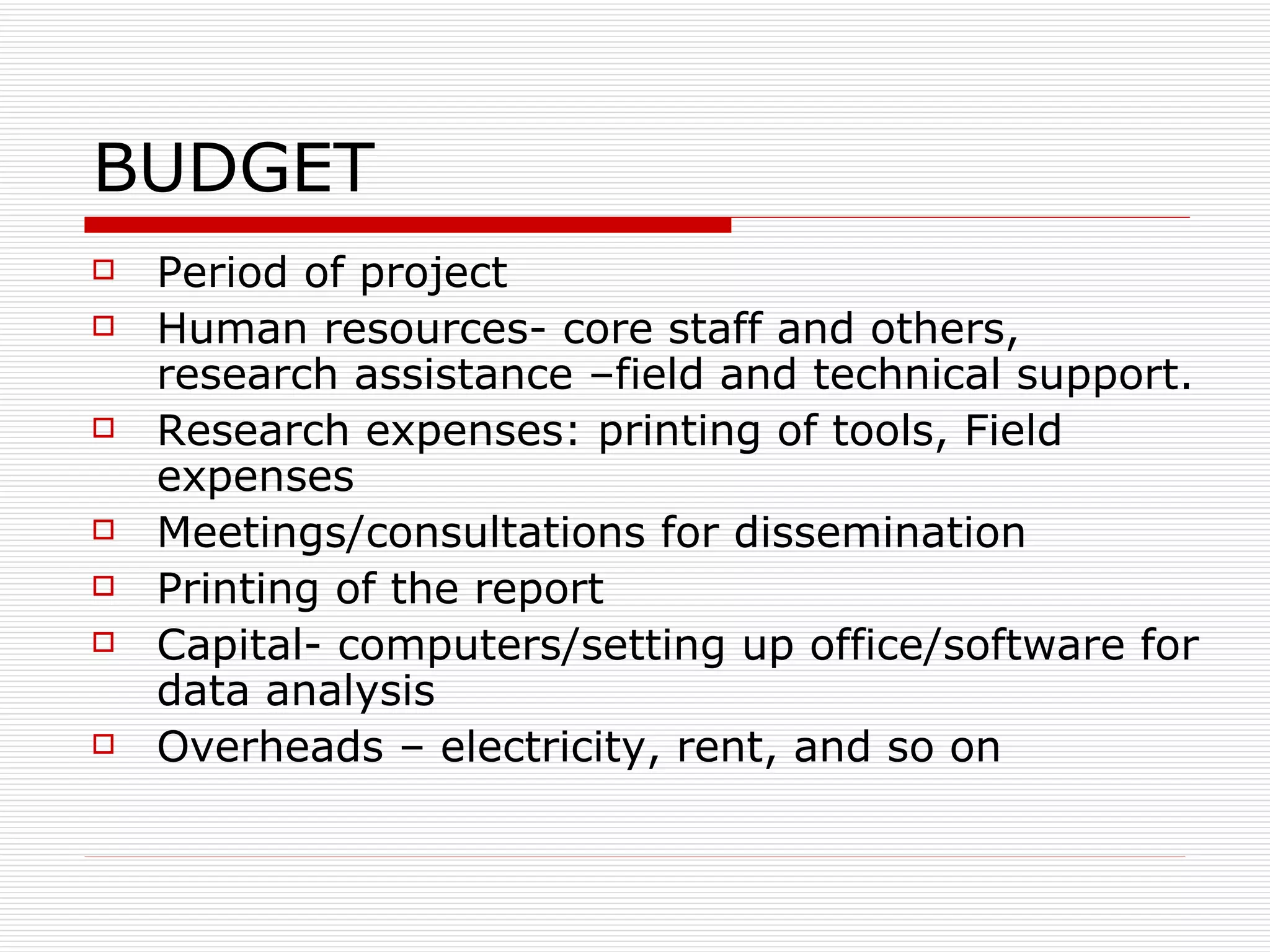
BUDGET Period of project Human resources- core staff and others, research assistance –field and technical support.  Research expenses: printing of tools, Field expenses Meetings/consultations for dissemination Printing of the report Capital- computers/setting up office/software for data analysis Overheads – electricity, rent, and so on

How to Write Form a Research Proposal and Form a Budget

  • 1.
    WRITING ARESEARCH PROPOSAL
  • 2.
    What is research? Research refers to search for knowledge. A careful investigation or inquiry specially through search for new facts in any branch of knowledge
  • 3.
    Types of research Exploratory studies- to understand a phenomenon or to get insights into it. Descriptive studies- description of characteristics of a particular individual, situation or group. Explanation studies- determine the frequency with something occurs or its association with something .
  • 4.
    Quantitative vs Qualitative Quantitative research measures quantity and amount, applicable to phenomenon that can be expressed in terms of quantity. Qualitative research applicable to phenomenon relating to or involving quality or kind. It helps to understand and analyse various factors that motivate people to behave in a particular manner.
  • 5.
    What is thestudy about? Why are you doing this study? Where will it be carried out? What type of data will be required? Where will the data be found? What will be the sample design? What techniques of data collection will be used? How will the data be analysed? In what style will the report be written?
  • 6.
    Variables and attributesAttributes are characteristics or qualities that describe an object or a person Variables are logical groupings of attributes. Male and female are attributes and sex or gender are variables.
  • 7.
    Understanding key constructs Reality- objectivity and subjectivity Observation- information gathering –seeing and hearing Fact- Phenomenon that is observed Law- should be universally applicable
  • 8.
    Theory- concepts, variablesand statements Theory- systematic explanation for the observed facts and laws that relate to a particular subject Elements of theory: Concept: basic building blocks of theory, abstract elements representing classes of phenomenon within the field of study.
  • 9.
    Units of analysis:Individuals Groups Organizations Social artifacts
  • 10.
    Four moral principlesthat constitute the basis of ethics in research: Principle of non maleficense- Research must not cause harm to the participants in particular and to people in general Principles of beneficense- Research should also make a positive contribution towards the welfare of people. Principles of autonomy- Research must respect and protect the rights and dignity of participants Principle of justice- the benefits and risks of research
  • 11.
    A research proposal: Introduction Review of literature Research objectives Research questions Methodology Sampling Tools for data collection Plan of analysis
  • 12.
    BUDGET Period ofproject Human resources- core staff and others, research assistance –field and technical support. Research expenses: printing of tools, Field expenses Meetings/consultations for dissemination Printing of the report Capital- computers/setting up office/software for data analysis Overheads – electricity, rent, and so on