








Asian Institute of Technology
                  Language Center


The Afghanistan Ministry of Higher Education
February 22nd , 23rd and 25th 2013
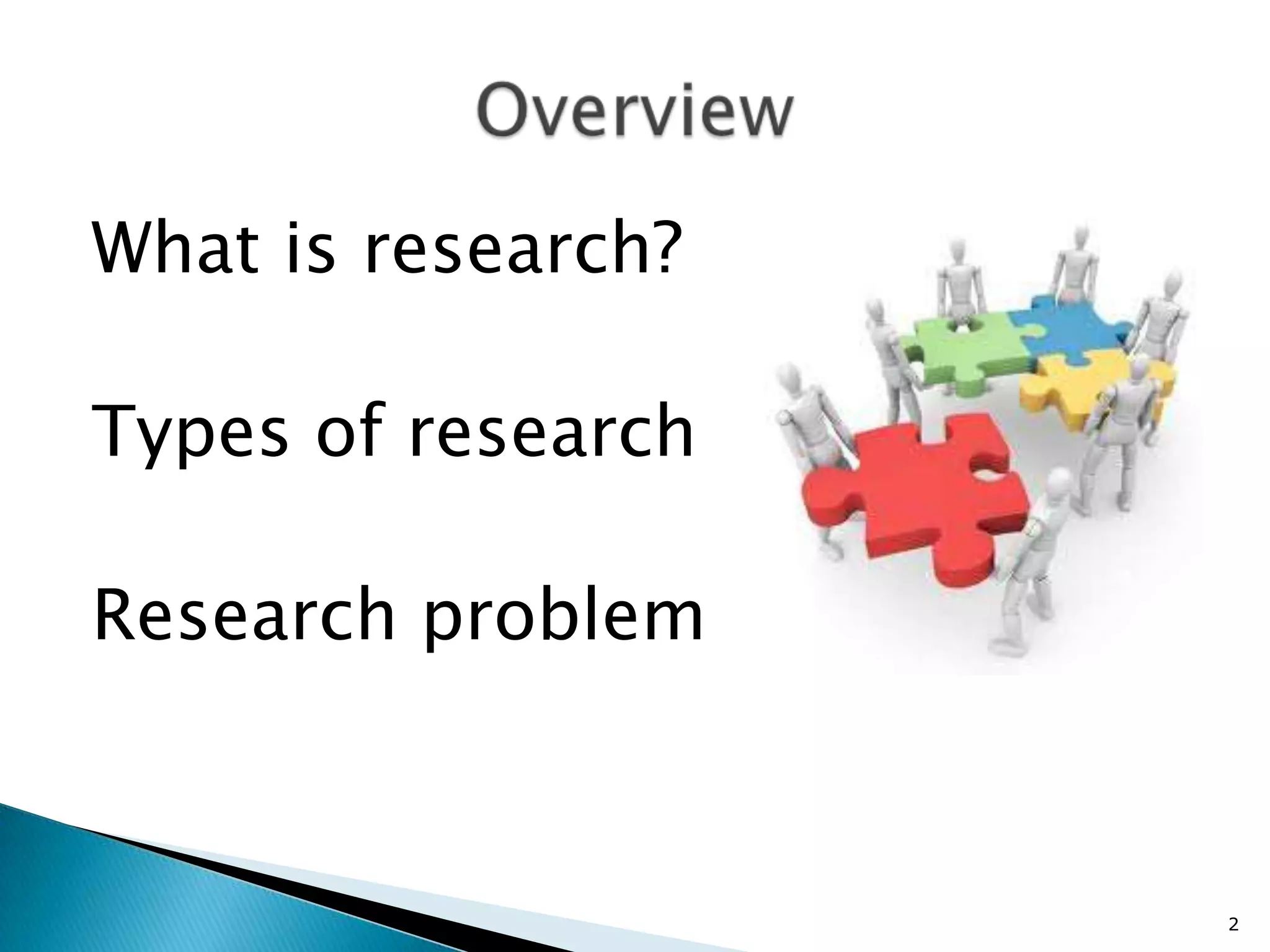
What is research?

Types of research

Research problem


                    2
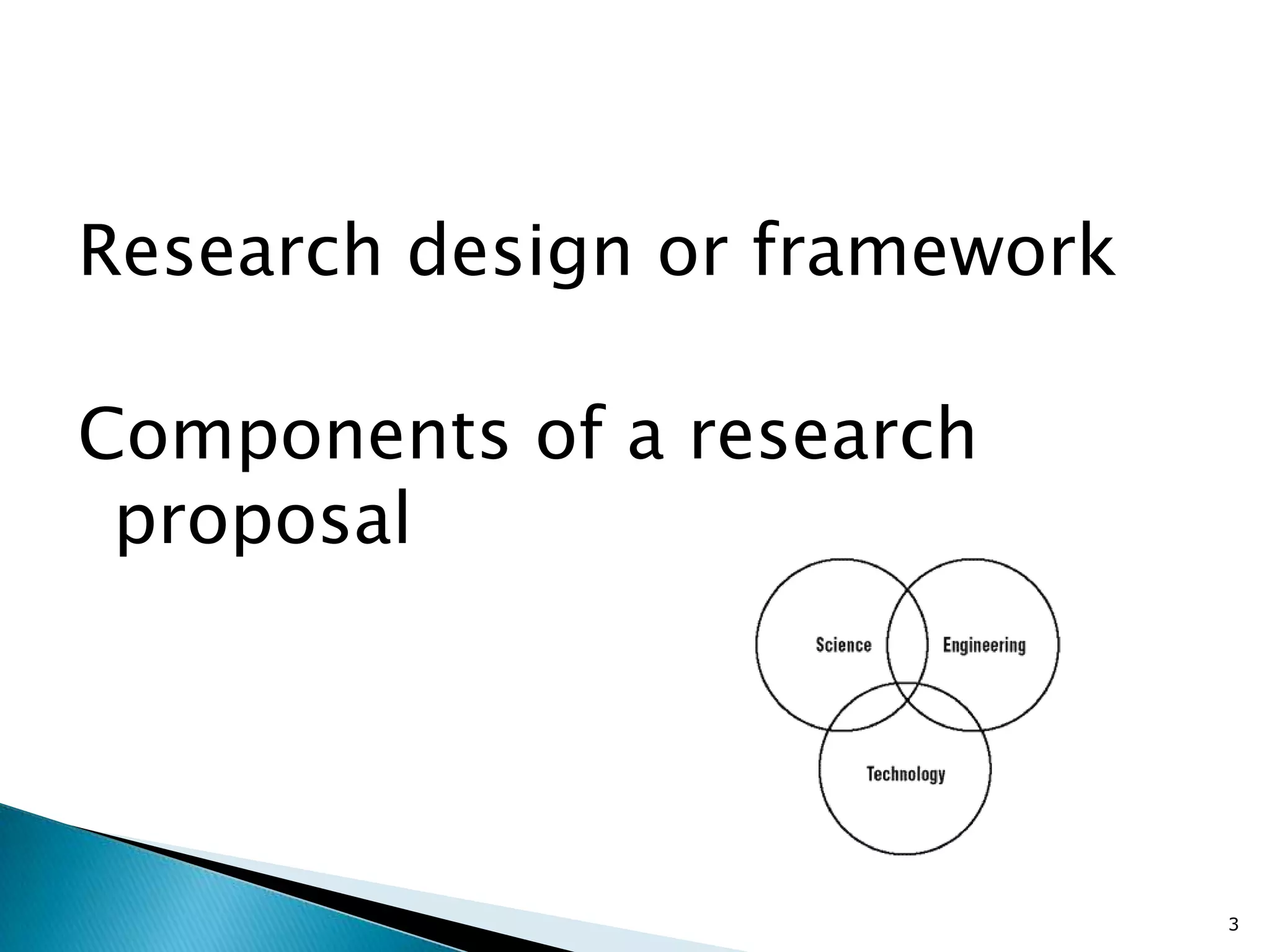
Research design or framework

Components of a research
 proposal


                               3
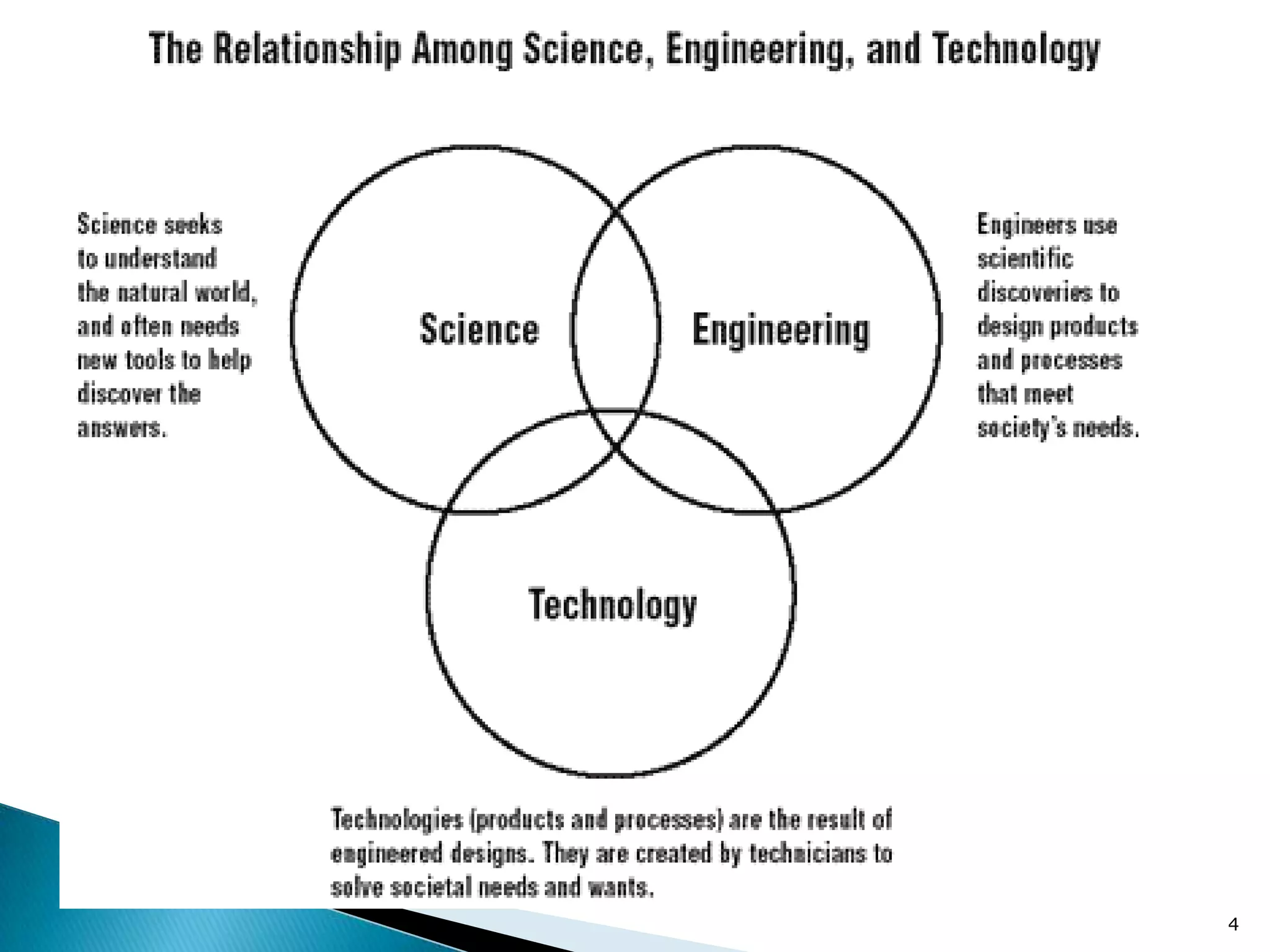
4
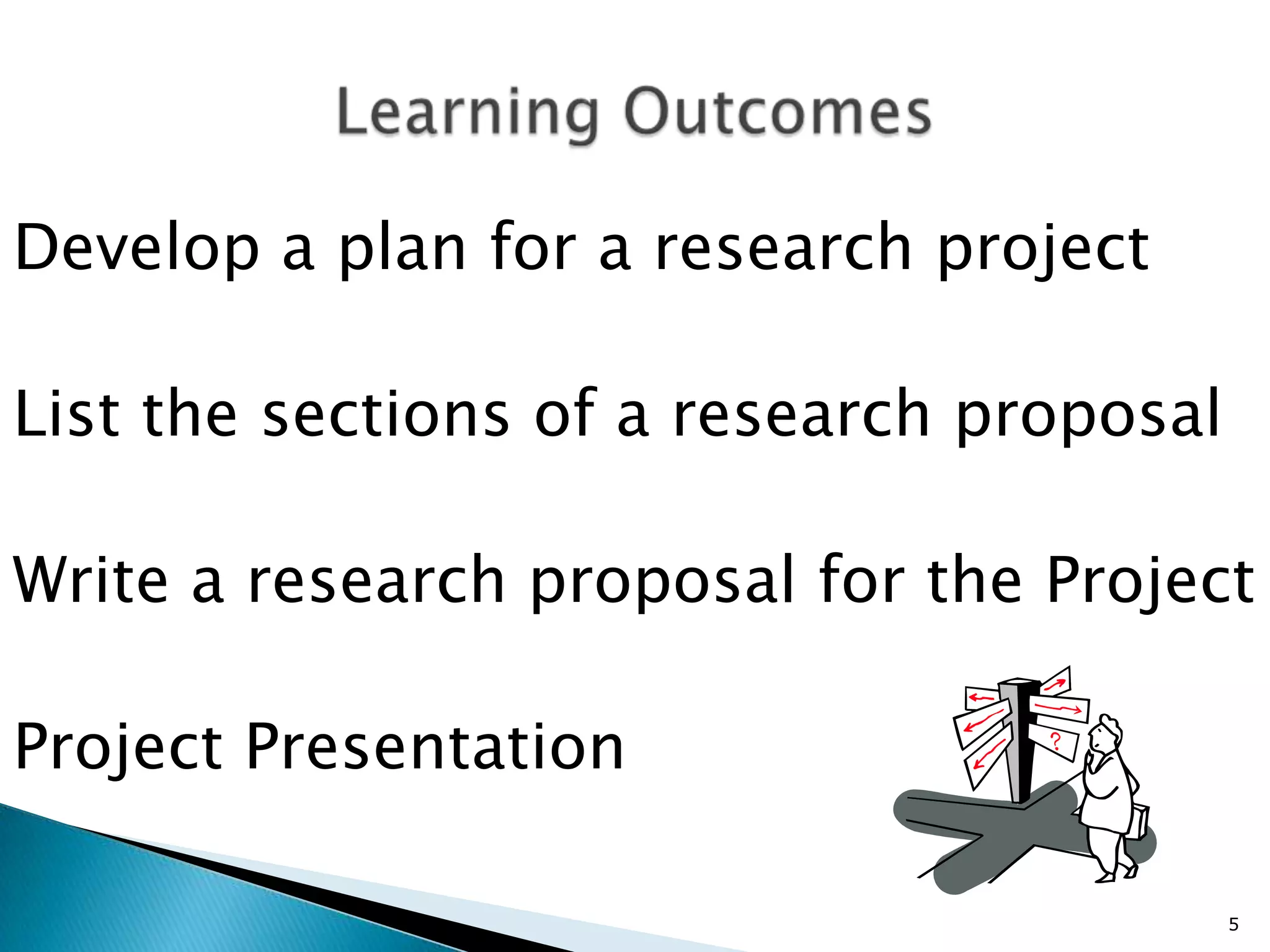
Develop a plan for a research project

List the sections of a research proposal

Write a research proposal for the Project

Project Presentation

                                           5
A systematic process of
 investigation into a problem

Is original and not repetition of
 something already known


                                    6
Expand knowledge and
 understanding of phenomenon

Attempts to answer ‘why’ and
 ‘how’


                               7
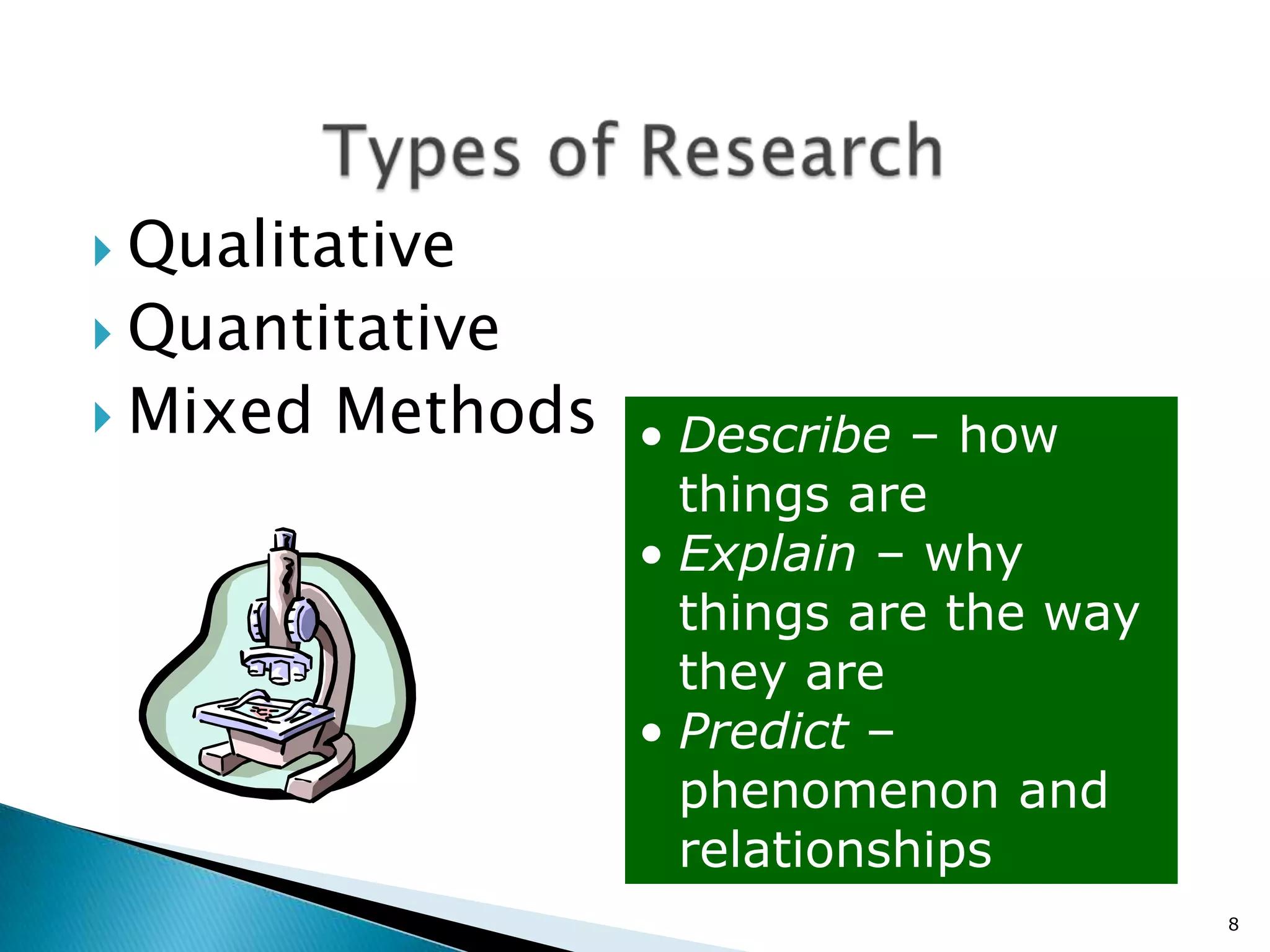
 Qualitative
 Quantitative
 Mixed   Methods   • Describe – how
                      things are
                    • Explain – why
                      things are the way
                      they are
                    • Predict –
                      phenomenon and
                      relationships
                                           8
Writing academically
Working Outline & Style-guide

Working Bibliography
 Keeping records of documents
 & Online resources


                                9
A ‘research problem’ refers to
 some difficulty that the researcher
 experiences in the context of
 either a theoretical or practical
 situation and to which he/she
 wants to obtain a solution.


                                       10
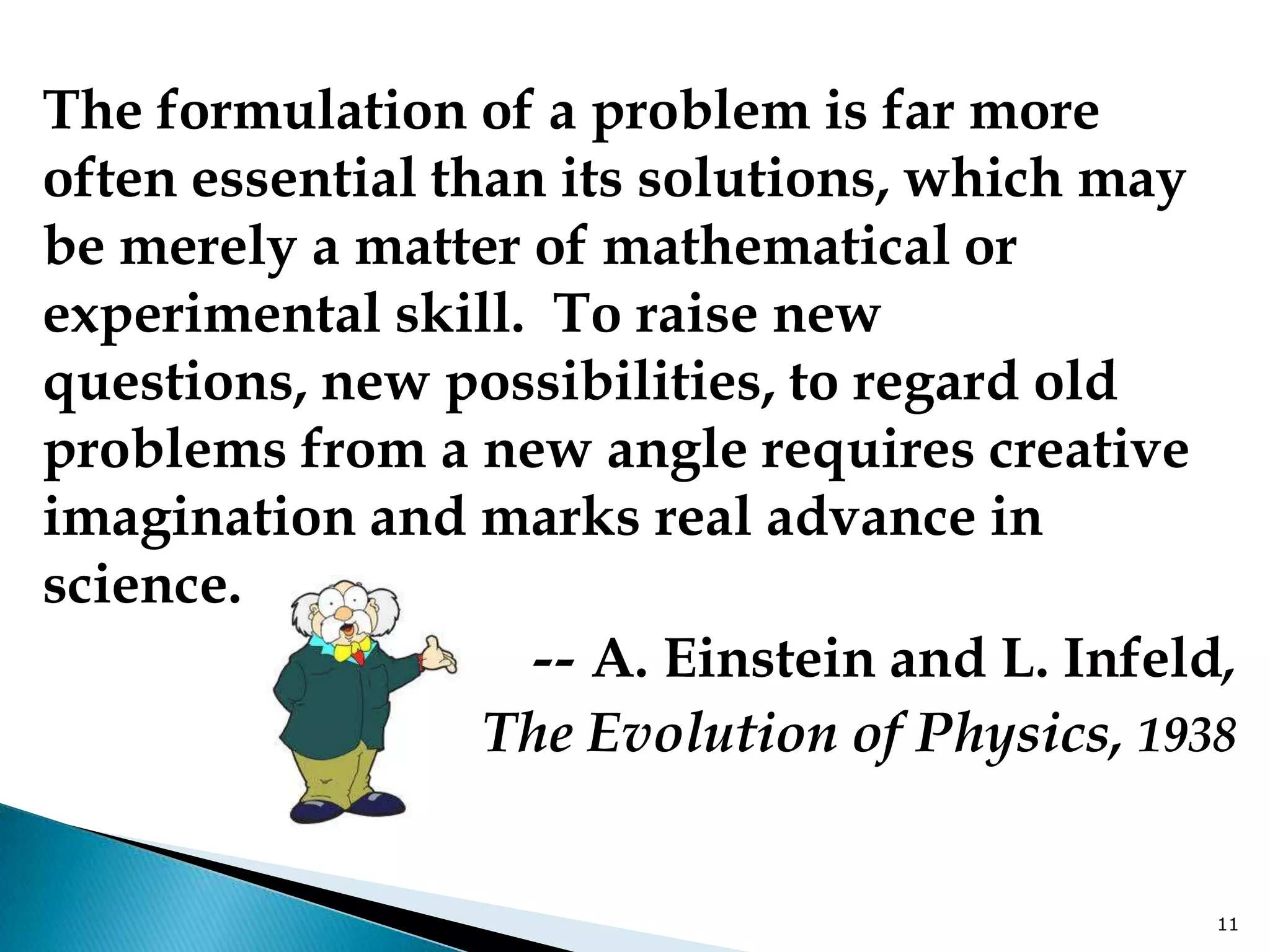
The formulation of a problem is far more
often essential than its solutions, which may
be merely a matter of mathematical or
experimental skill. To raise new
questions, new possibilities, to regard old
problems from a new angle requires creative
imagination and marks real advance in
science.
                    -- A. Einstein and L. Infeld,
                  The Evolution of Physics, 1938


                                                11
Actual or current problem

Related previous research

Theories related to problem

                              12
Express clearly the how and
 why to undertake the research

As a testable research
 hypothesis

As an exploratory research
 question

                                 13
A framework that guides us to
 undertake research on a specific
 problem

Cover issues of ‘which’ and ‘why’
 of methods and techniques

Decision on sample size and
 sampling procedure
                                    14
Process of data collection

Analysis procedures and
 statistical techniques to be
 used

Communicates the research
 findings / results

                                15
16
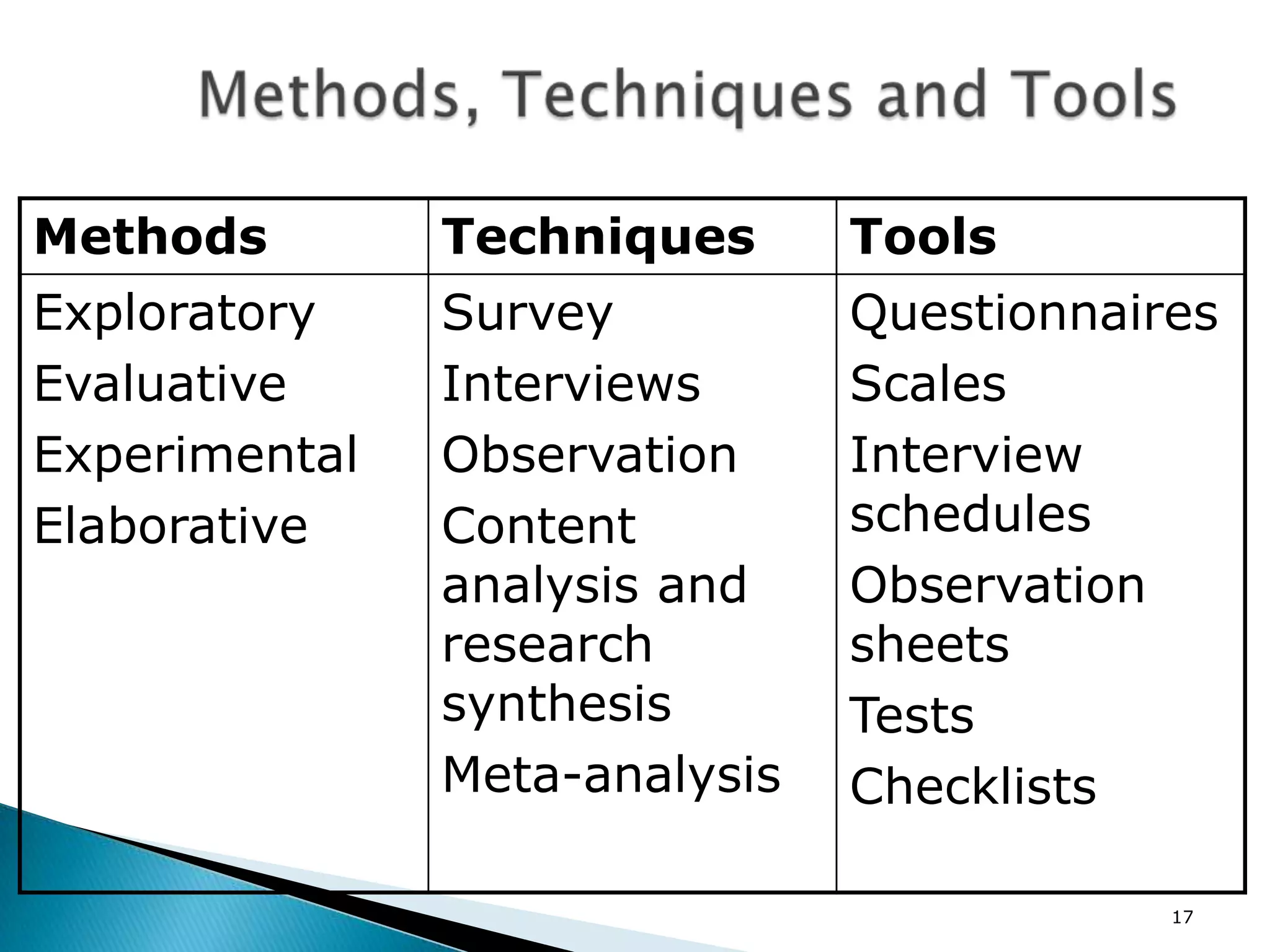
Methods        Techniques      Tools
Exploratory    Survey          Questionnaires
Evaluative     Interviews      Scales
Experimental   Observation     Interview
Elaborative    Content         schedules
               analysis and    Observation
               research        sheets
               synthesis       Tests
               Meta-analysis   Checklists

                                           17
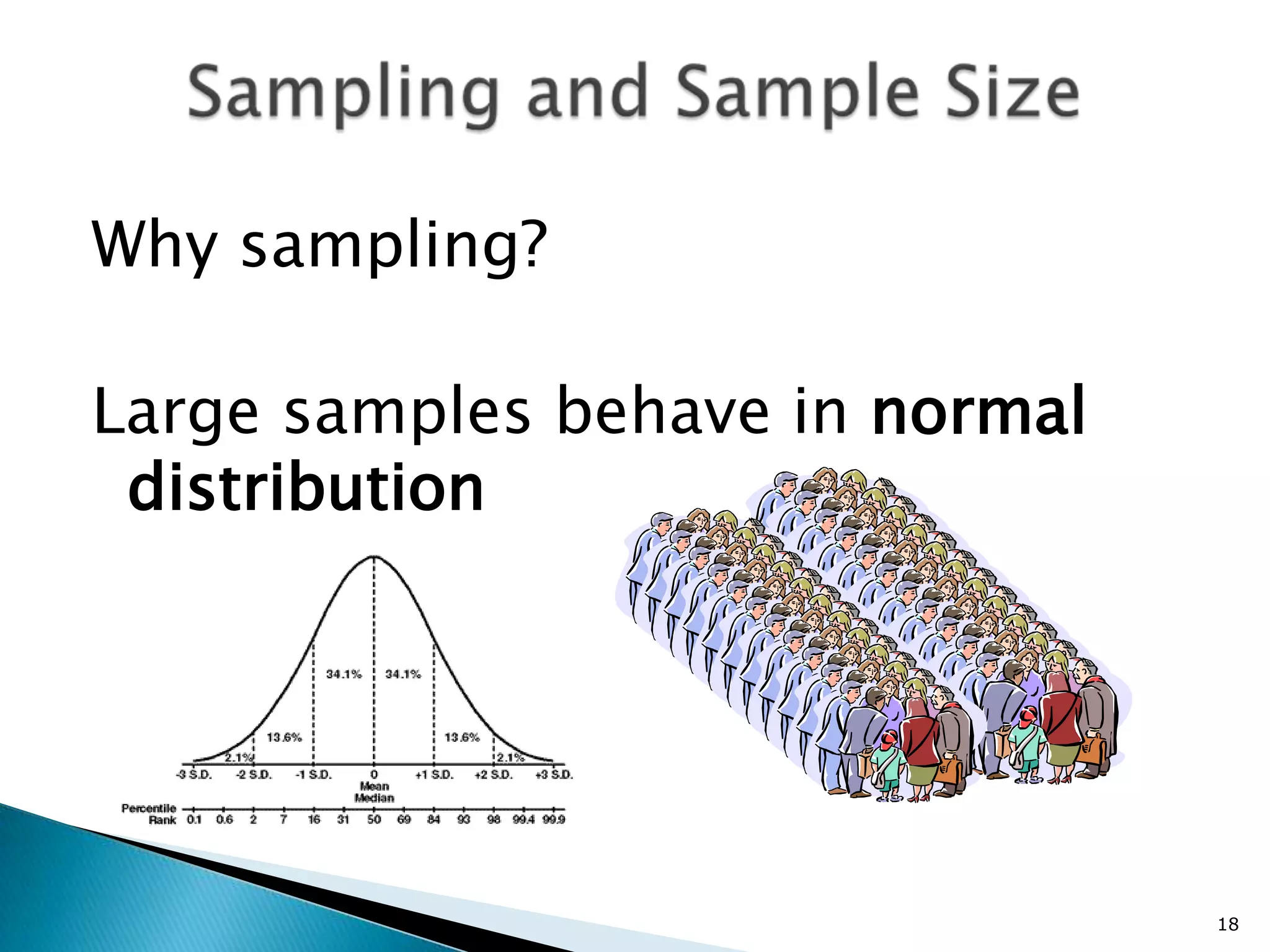
Why sampling?

Large samples behave in normal
 distribution


                                 18
Representative sample is important
 to draw conclusions about the
 population

Determine the sample size

Assist in reliability and validity of
the study

                                        19
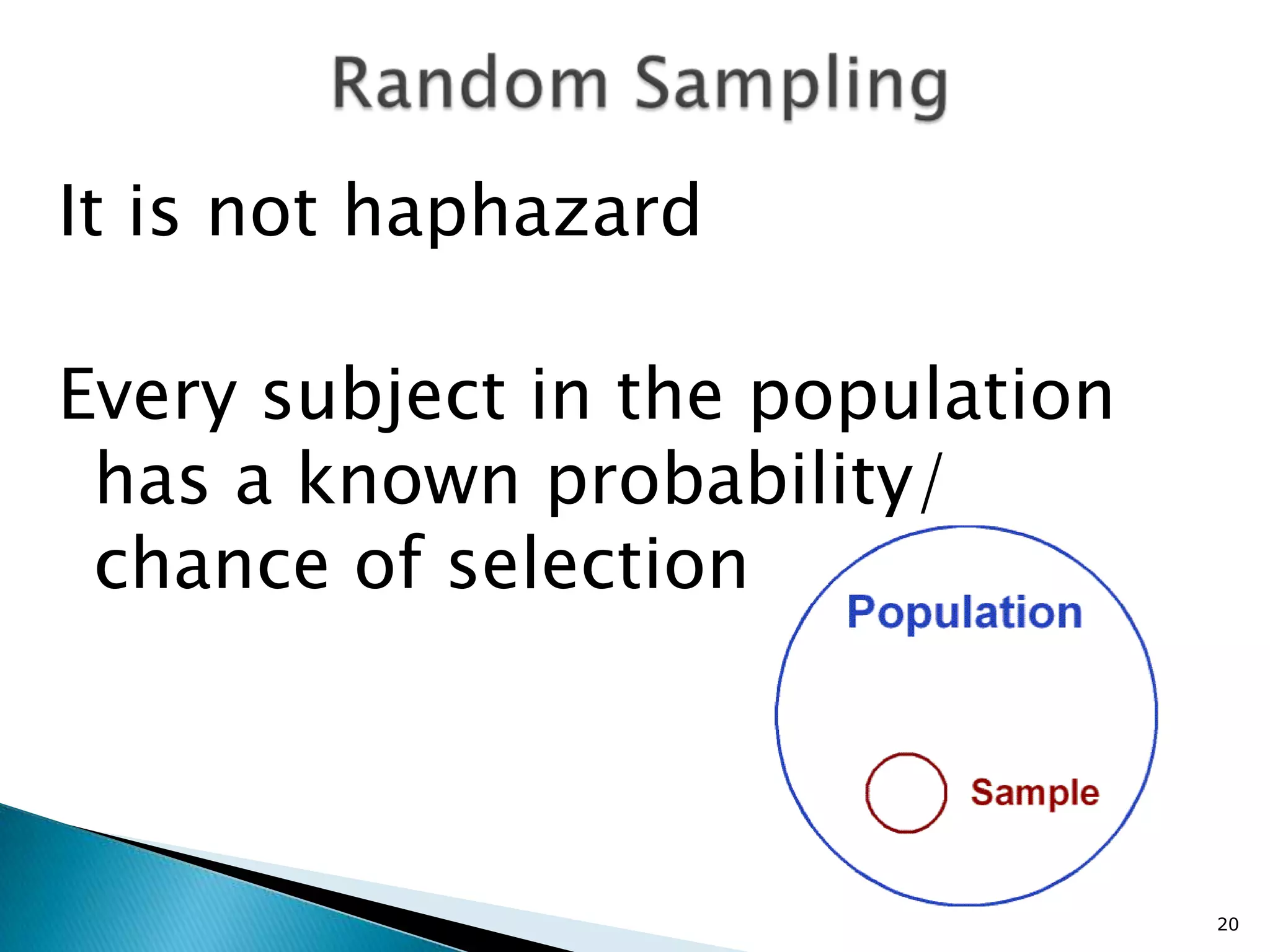
It is not haphazard

Every subject in the population
 has a known probability/
 chance of selection


                                  20
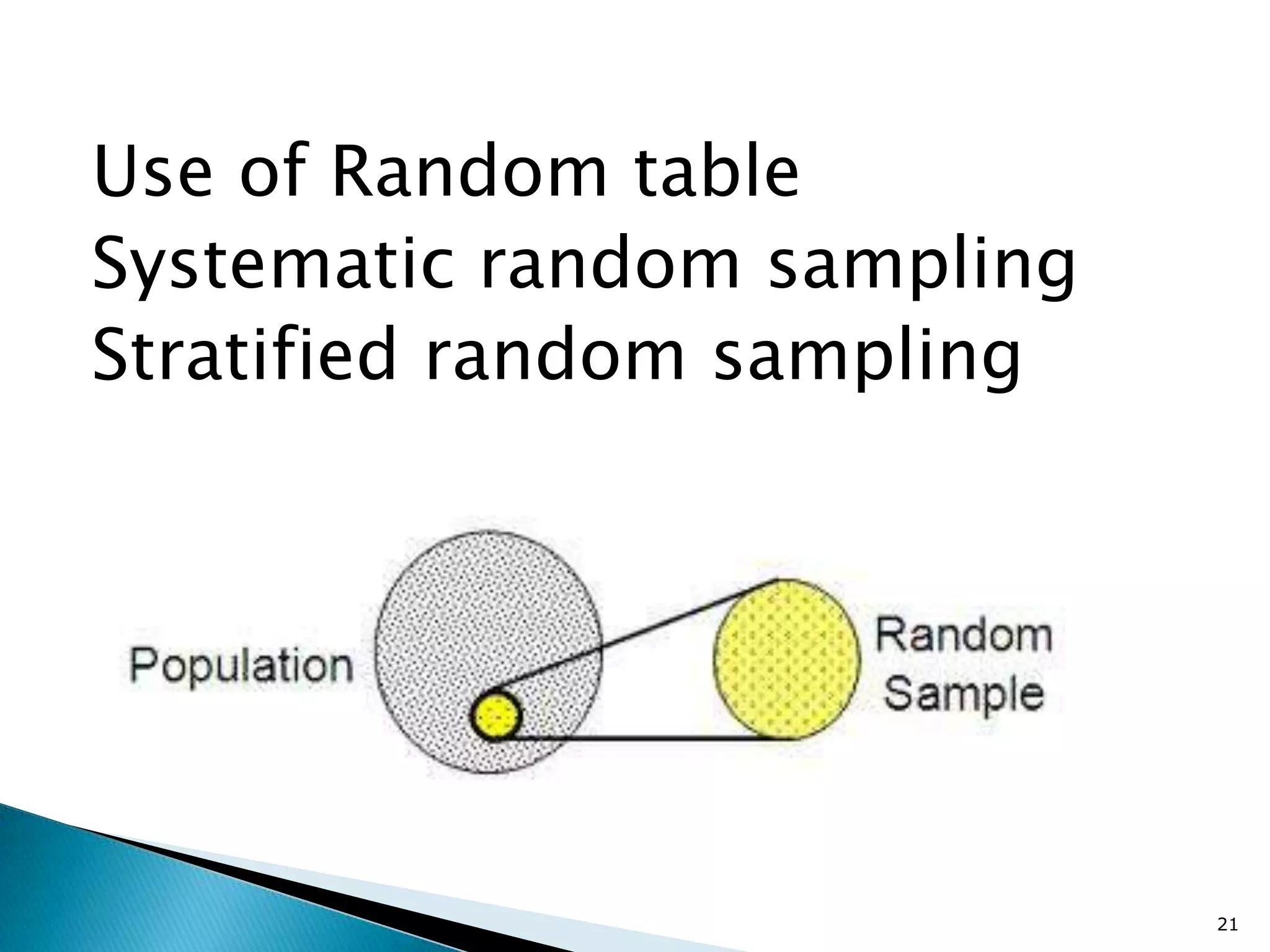
Use of Random table
Systematic random sampling
Stratified random sampling


                             21
Title
Introduction
Statement of the Problem
Procedures of the Study
Time and Cost Estimates
Appendices
References

                           22
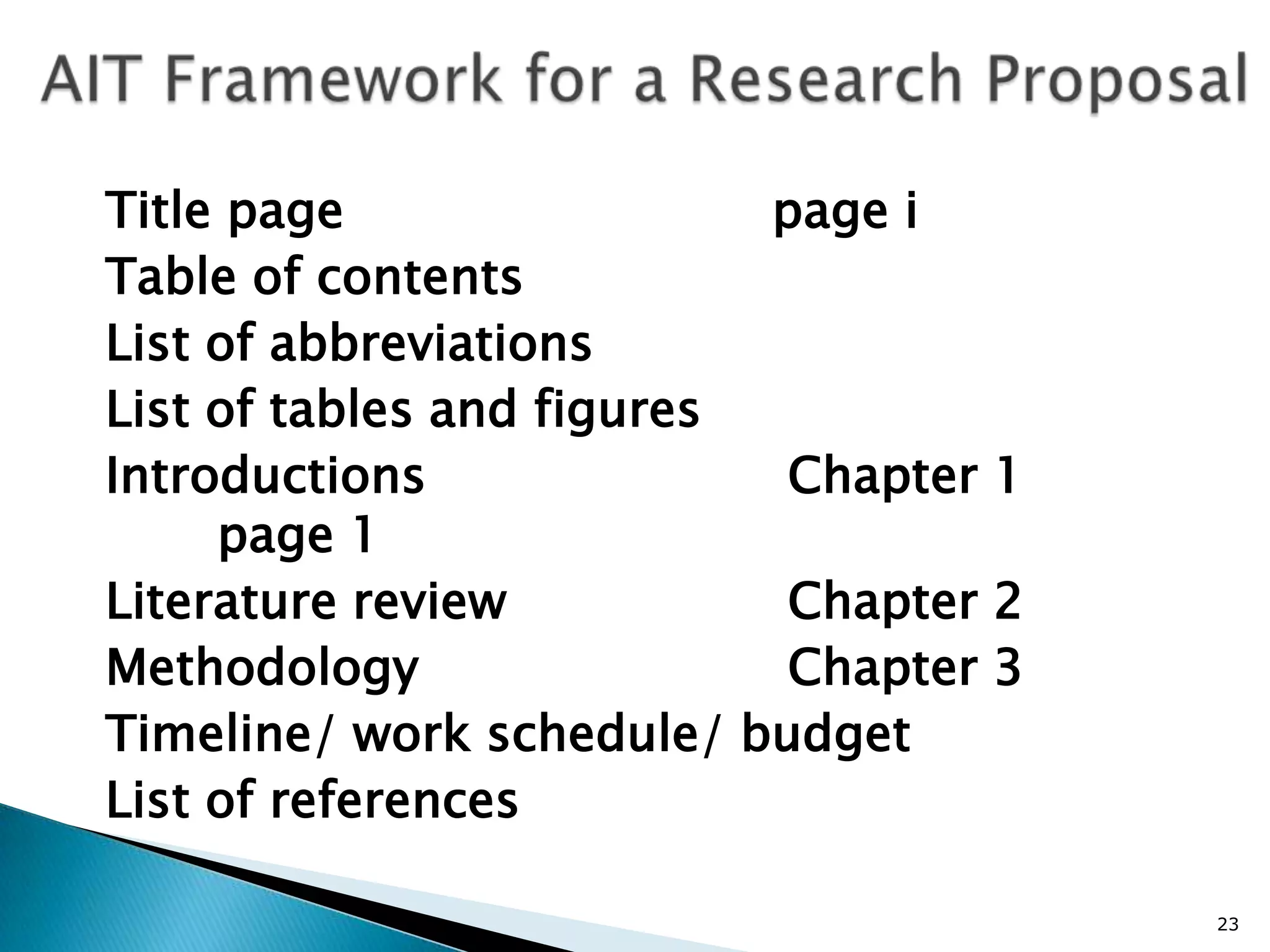
Title page                 page i
Table of contents
List of abbreviations
List of tables and figures
Introductions               Chapter 1
     page 1
Literature review           Chapter 2
Methodology                 Chapter 3
Timeline/ work schedule/ budget
List of references

                                        23
The proposal should have sufficient
information to convince your
readers that you have an important
research idea.

 Background of relevant literature
 Address major issues or problem
 Research methodology is sound


                                      24
It should be clear, concise and
  descriptive.


                                  25
Often titles are stated in terms
 of a functional
 relationship, because such
 titles clearly indicate the
 independent and dependent
 variables.
   (Who is the audience?)


                                   26
Think of an informative but catchy
 title

An effective title not only pricks the
 reader's interest, but also
 predisposes him/her favorably
 towards the proposal


                                         27
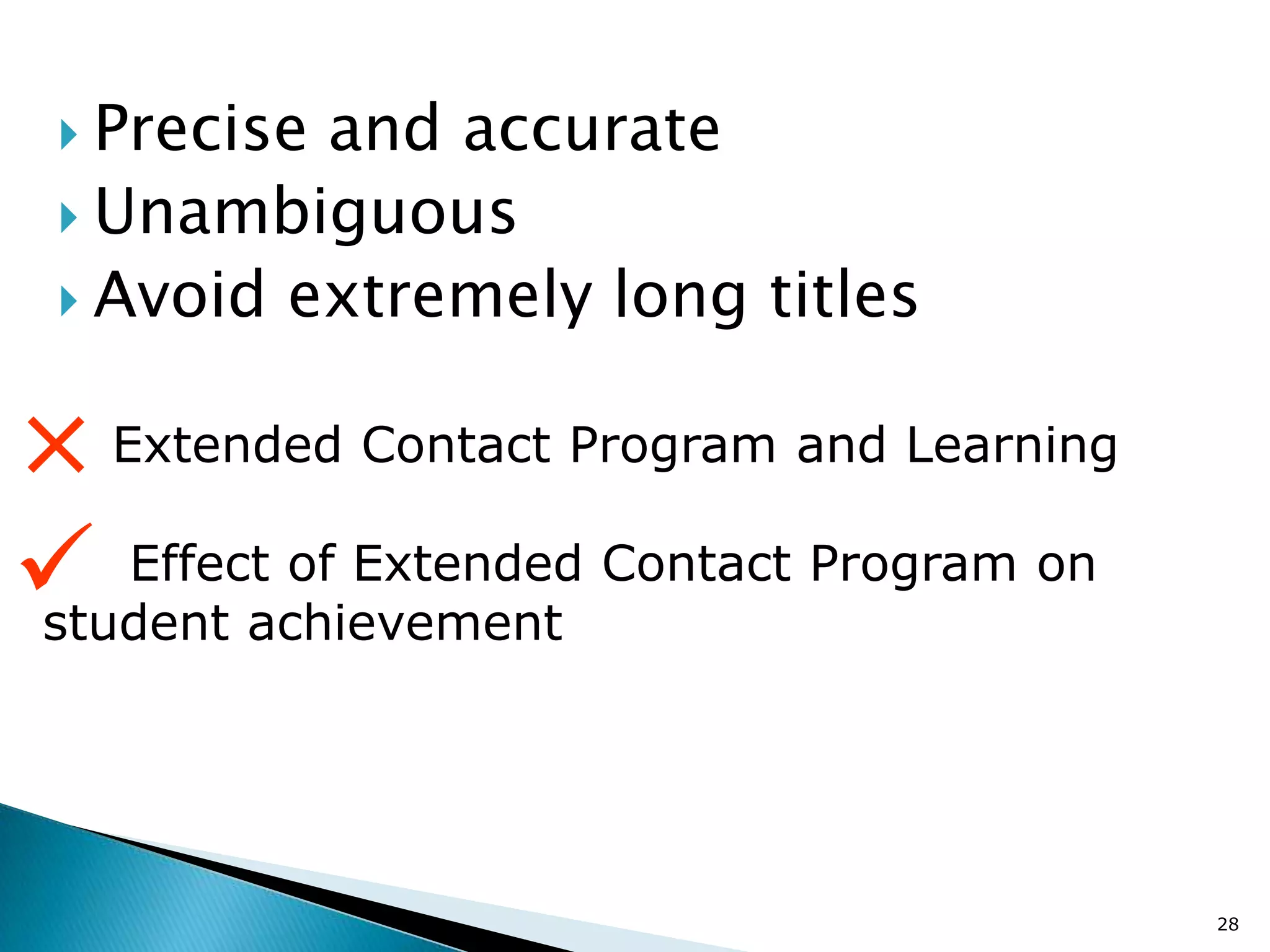
 Preciseand accurate
  Unambiguous
  Avoid extremely long titles


× Extended Contact Program and Learning
 Effect of Extended Contact Program on
student achievement


                                          28
29
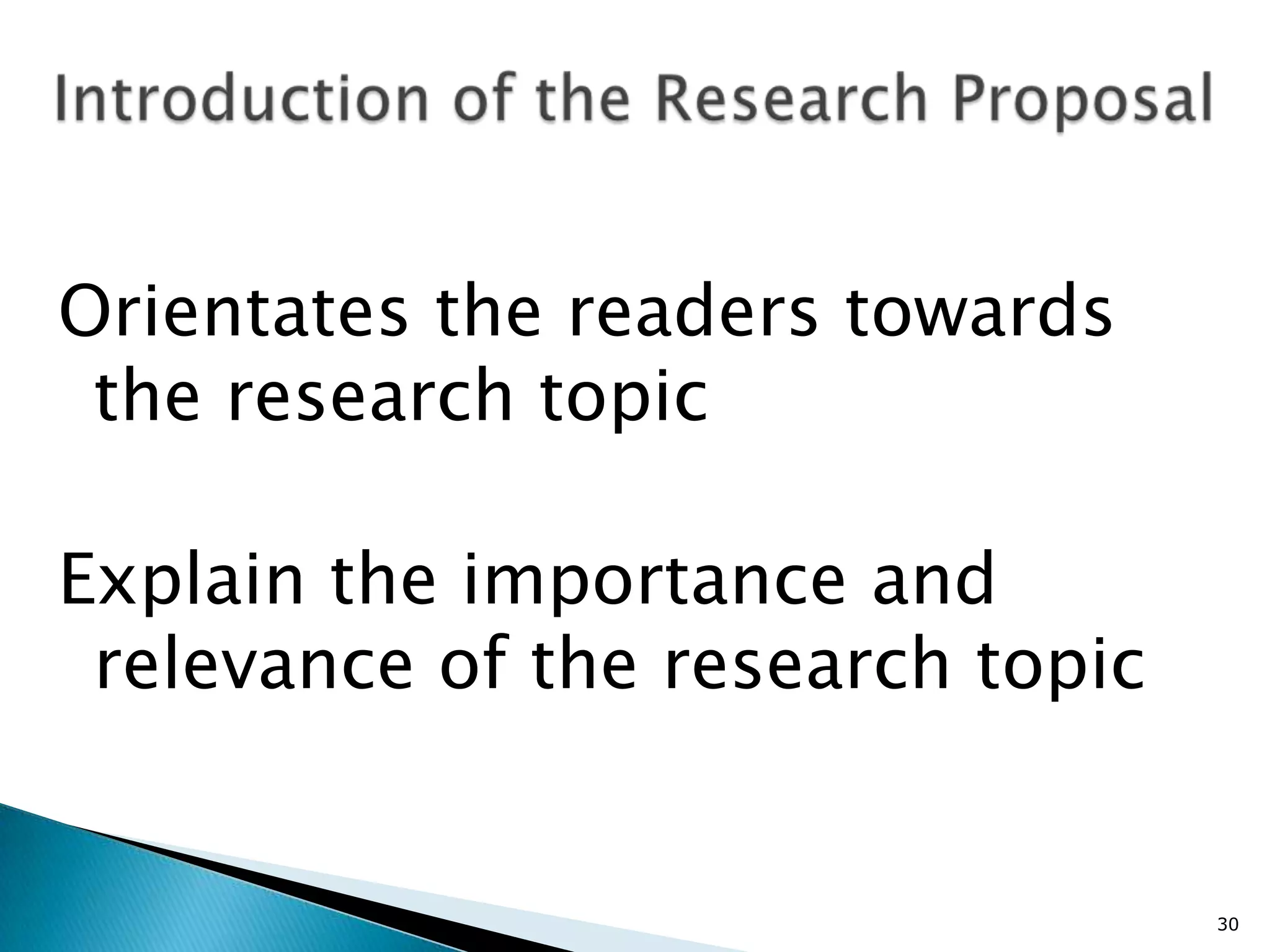
Orientates the readers towards
 the research topic

Explain the importance and
 relevance of the research topic


                                   30
Justifies the choice of the
 research topic

Provides a concise overview of
 relevant literature to make the
 proposal sound

                                   31
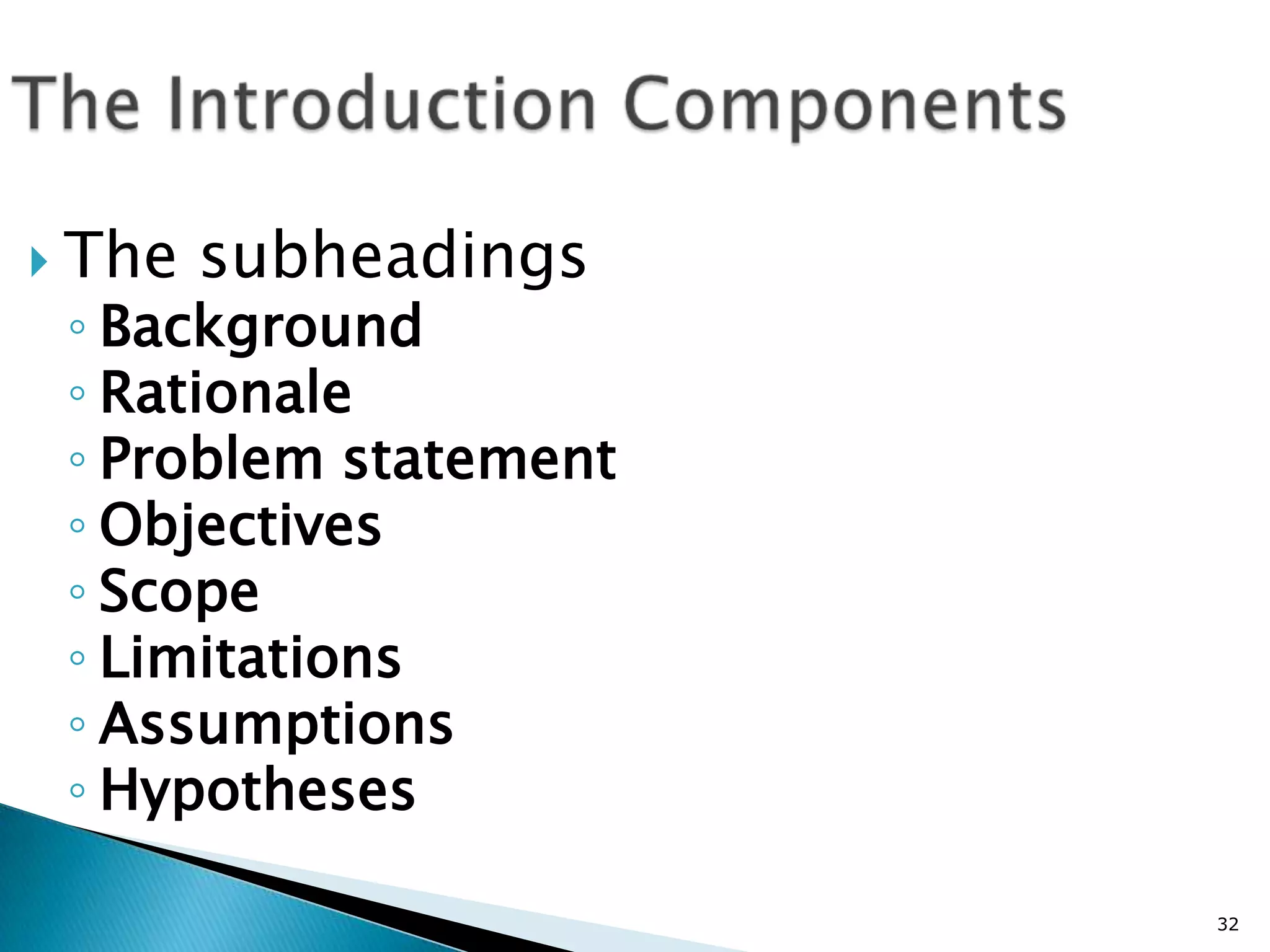
 The   subheadings
 ◦ Background
 ◦ Rationale
 ◦ Problem statement
 ◦ Objectives
 ◦ Scope
 ◦ Limitations
 ◦ Assumptions
 ◦ Hypotheses

                       32
Sometimes part of introduction

Further clarifies the intent of
 the investigator


                                  33
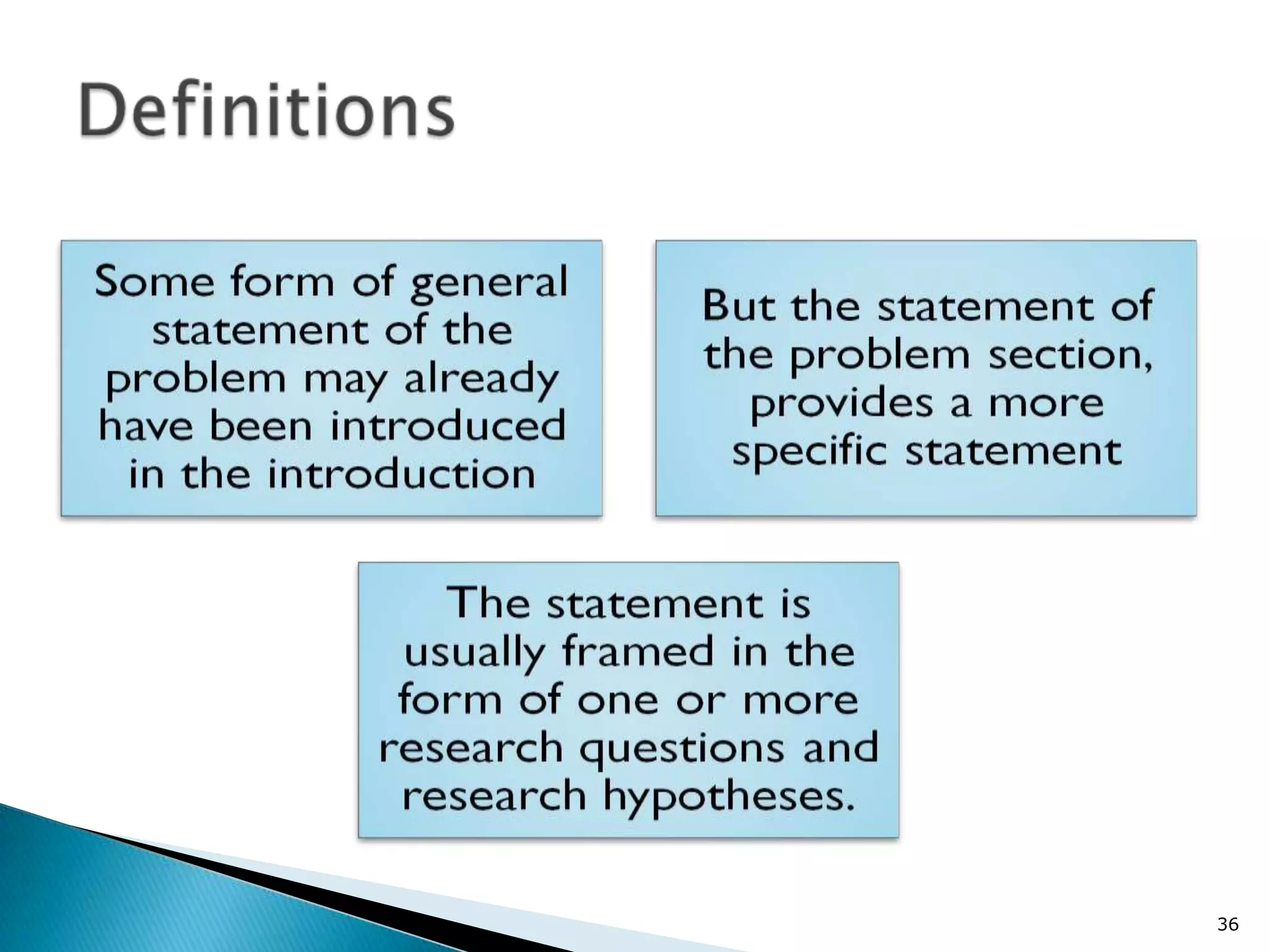
Presented as hypothesis or
 exploratory question for aims
 and objectives of the study


                                 34
Rationale
 ◦ a justification for doing something

Problem statement
 A problem statement is a clear concise
  description of the issue(s) that
  need(s) to be addressed


                                          35
36
37
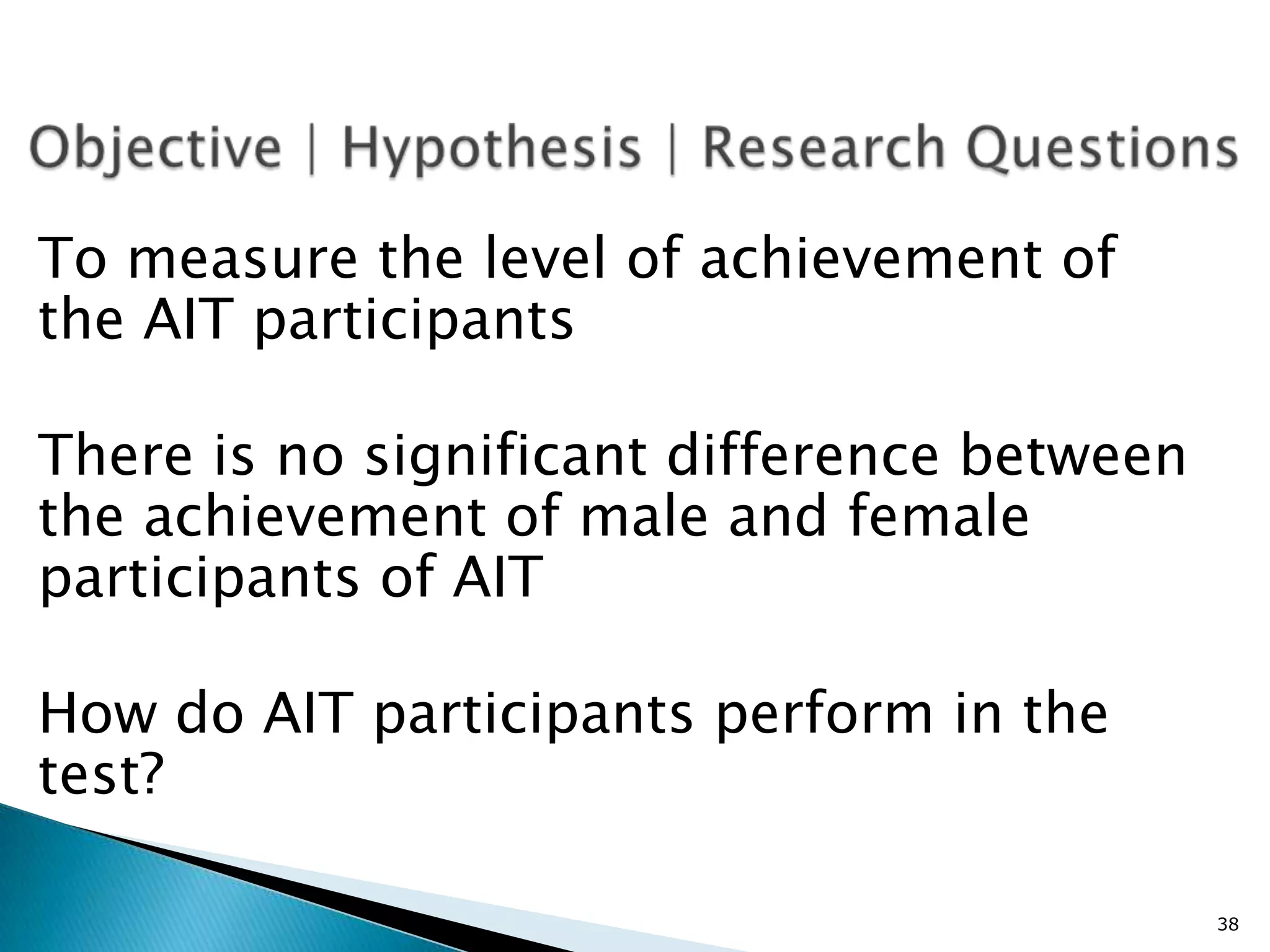
To measure the level of achievement of
the AIT participants

There is no significant difference between
the achievement of male and female
participants of AIT

How do AIT participants perform in the
test?

                                             38
39
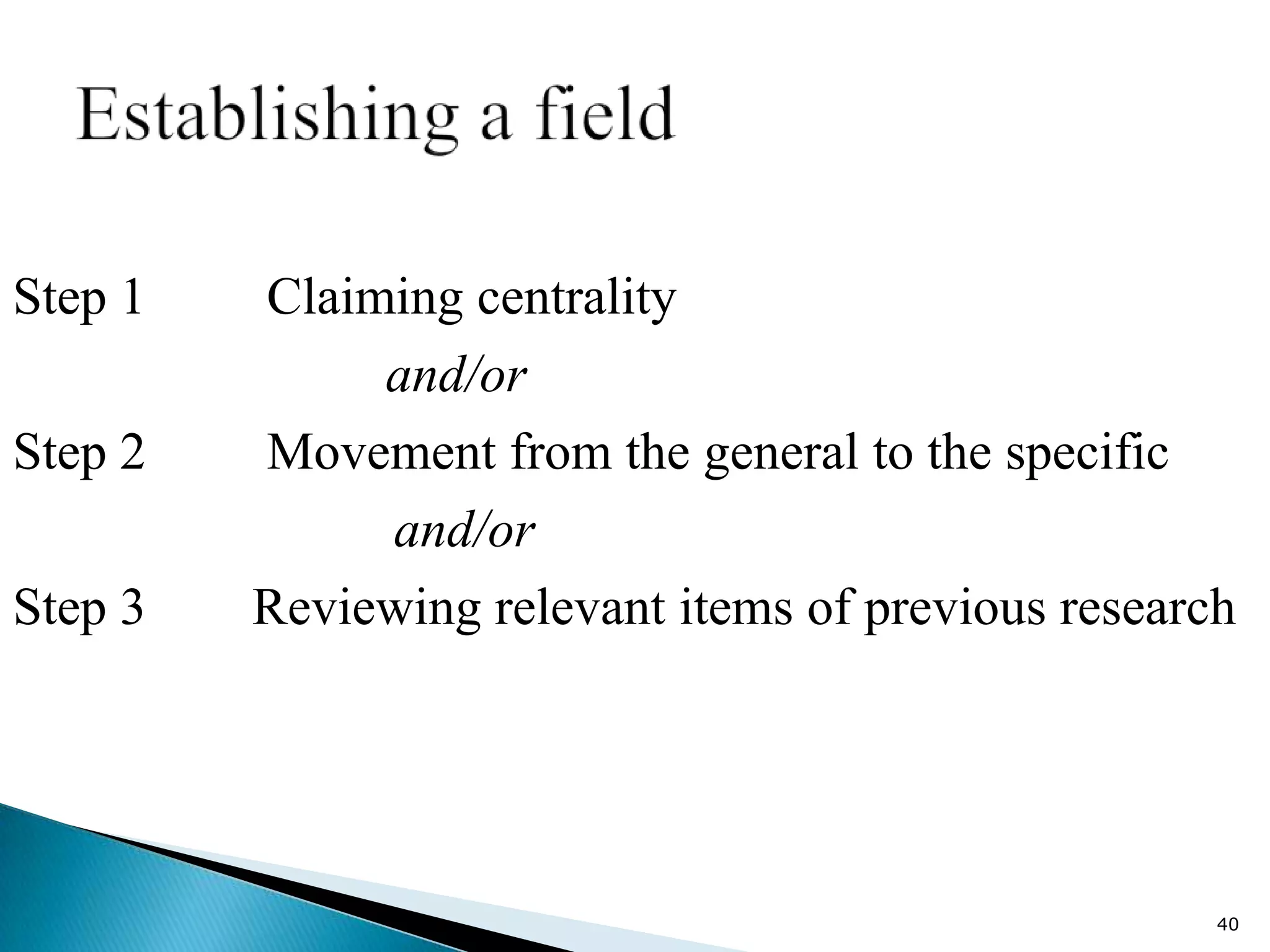
Step 1   Claiming centrality
              and/or
Step 2   Movement from the general to the specific
              and/or
Step 3   Reviewing relevant items of previous research


                                                     40
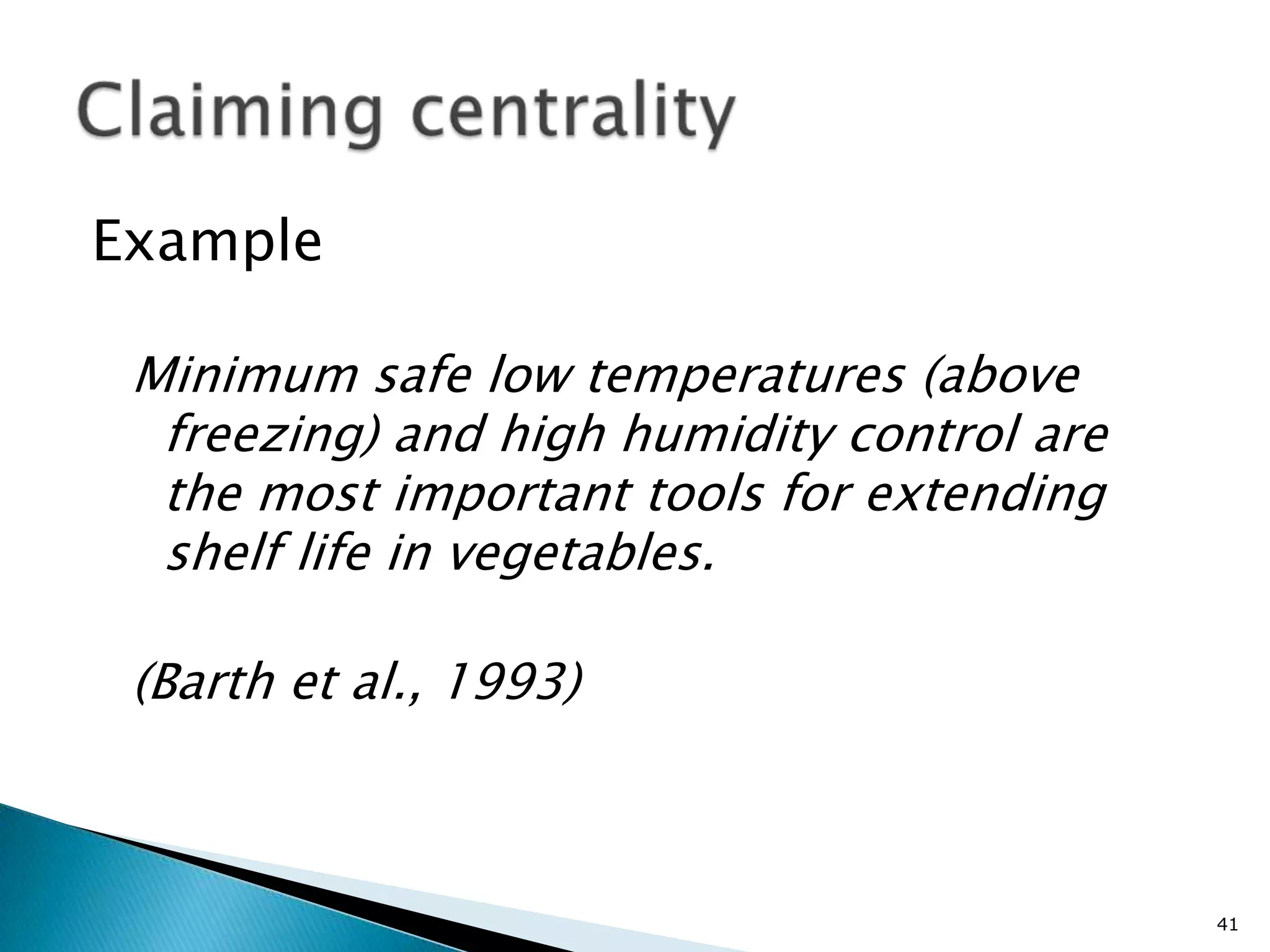
Example

 Minimum safe low temperatures (above
  freezing) and high humidity control are
  the most important tools for extending
  shelf life in vegetables.

 (Barth et al., 1993)


                                            41
Example
 In recent years, there has been an increased
 awareness of the potential impact of pollutants
 such as heavy metals. Moreover, the traditional
 methods for treating aqueous streams
 containing metal contaminants are expensive
 and can have inadequate facilities.
This is particularly true in developing countries.
 This has led to the use of alternative
 technologies. The use of biological materials is
 one such technology which has received
 considerable attention.
(Ho et al., 1996)

                                                     42
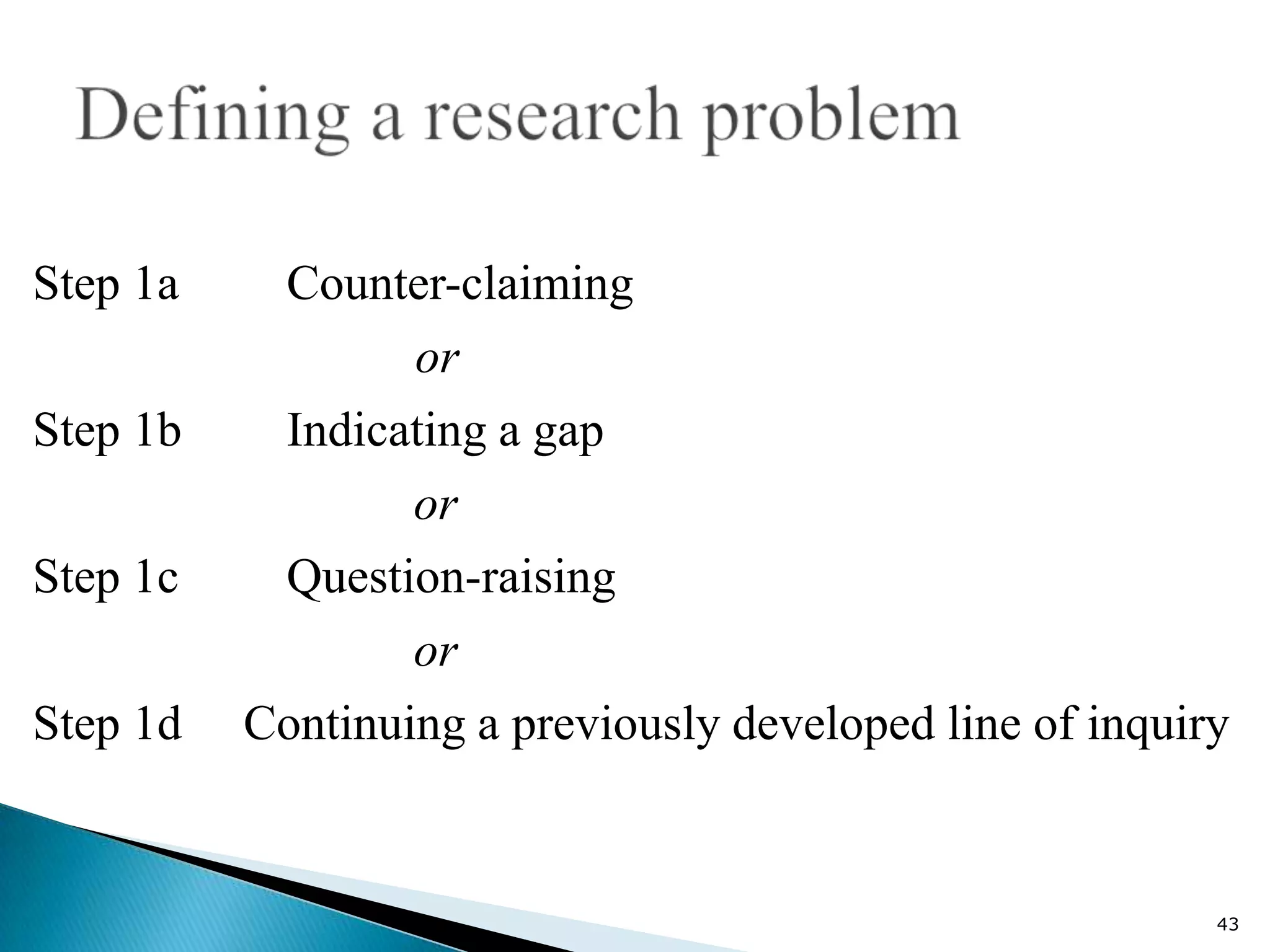
Step 1a    Counter-claiming
                  or
Step 1b    Indicating a gap
                  or
Step 1c    Question-raising
                  or
Step 1d   Continuing a previously developed line of inquiry


                                                          43
44
Numerous studies on the utilization of plant
 proteins as a partial or complete replacement
 for fish meal in diets have been conducted
 using various freshwater and marines fishes
 (Lovell, 1987; Tacon et al., 1983; Murai et
 al., 1989a; Cowey et al., 1974).
However, very little is known about the
 feasibility of using soybean meal as a dietary
 protein source in practical feeds for yellowtail
 Seriola quinqueradiata.
(Takii et al., 1989)


                                                45
The question addressed here is how
 technological change occurs when it is the
 overall system that needs to be changed.

In particular, how can we begin and sustain a
  technological transition away from
  hydrocarbon based technologies?

(Street and Miles, 1996)


                                                46
Step 1a   Outlining purposes
                         or
Step 1b   Announcing present research
Step 2    Announcing principal findings
Step 3    Indicating structure of the research


                                                 47
This work aims to establish the extent of
 interaction of alginate with calcium and
 aluminium ions with respect to the
 influence of algal exudates have on the
 removal of humic substances by aluminium
 coagulation during drinking water
 treatment.

(Gregor et al., 1996).


                                            48
This paper will examine the use of peat
 for the removal of two metals, copper
 and nickel, from both mono-solute and
 bi-solute solutions.

In particular, it reports the effect that a
  competing ion has on the rates of
  removal and examines the mechanisms
  which may affect the uptake of minerals.

(Ho et al., 1996)


                                              49
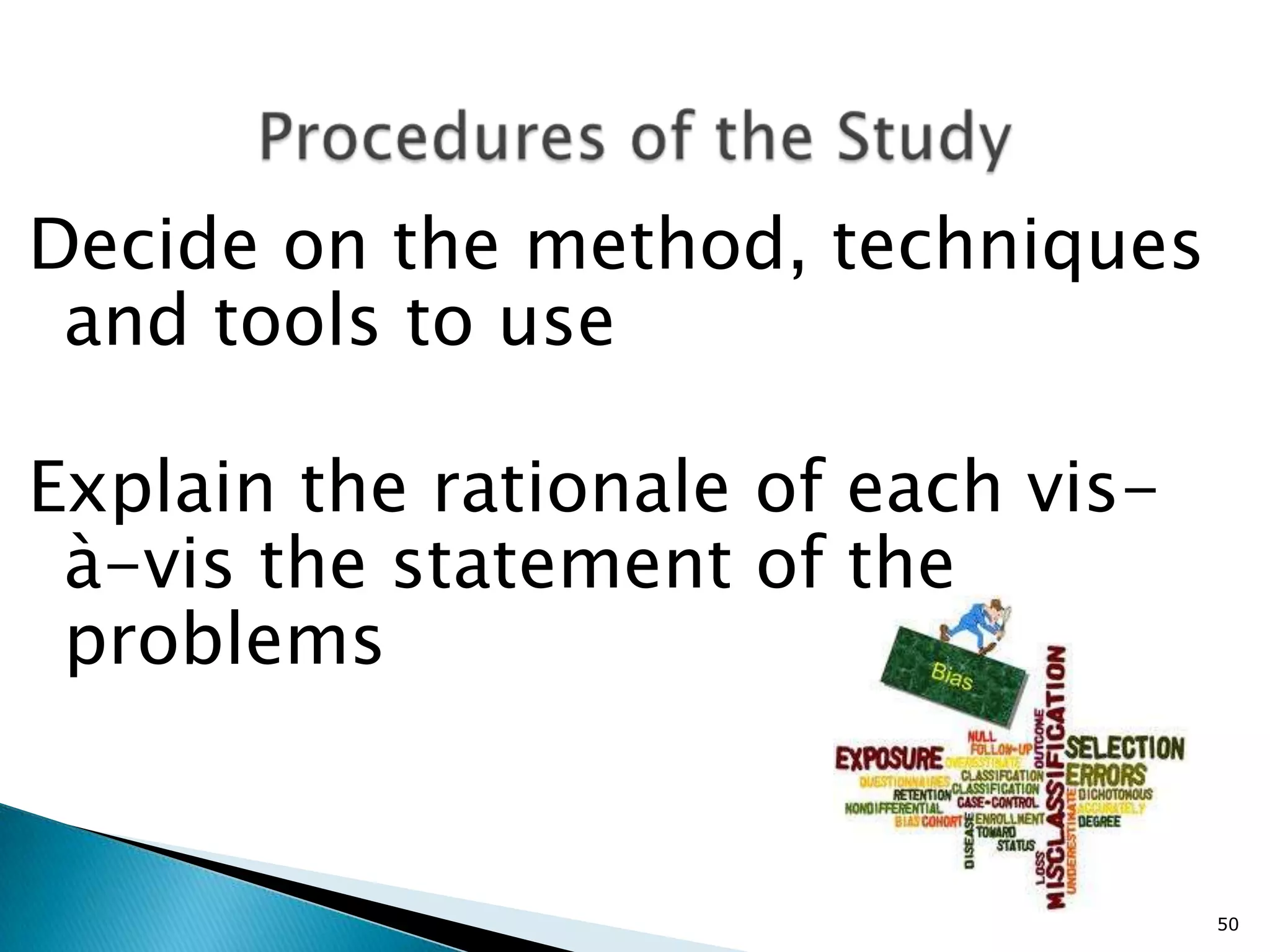
Decide on the method, techniques
 and tools to use

Explain the rationale of each vis-
 à-vis the statement of the
 problems


                                     50
Describe the tool development
 process or use of existing one

Describe how you will gather
 data for the study


                                  51
Indicate the population, sample
 size and the sampling
 procedure

Explain the statistical methods
 to be used with rationale


                                  52
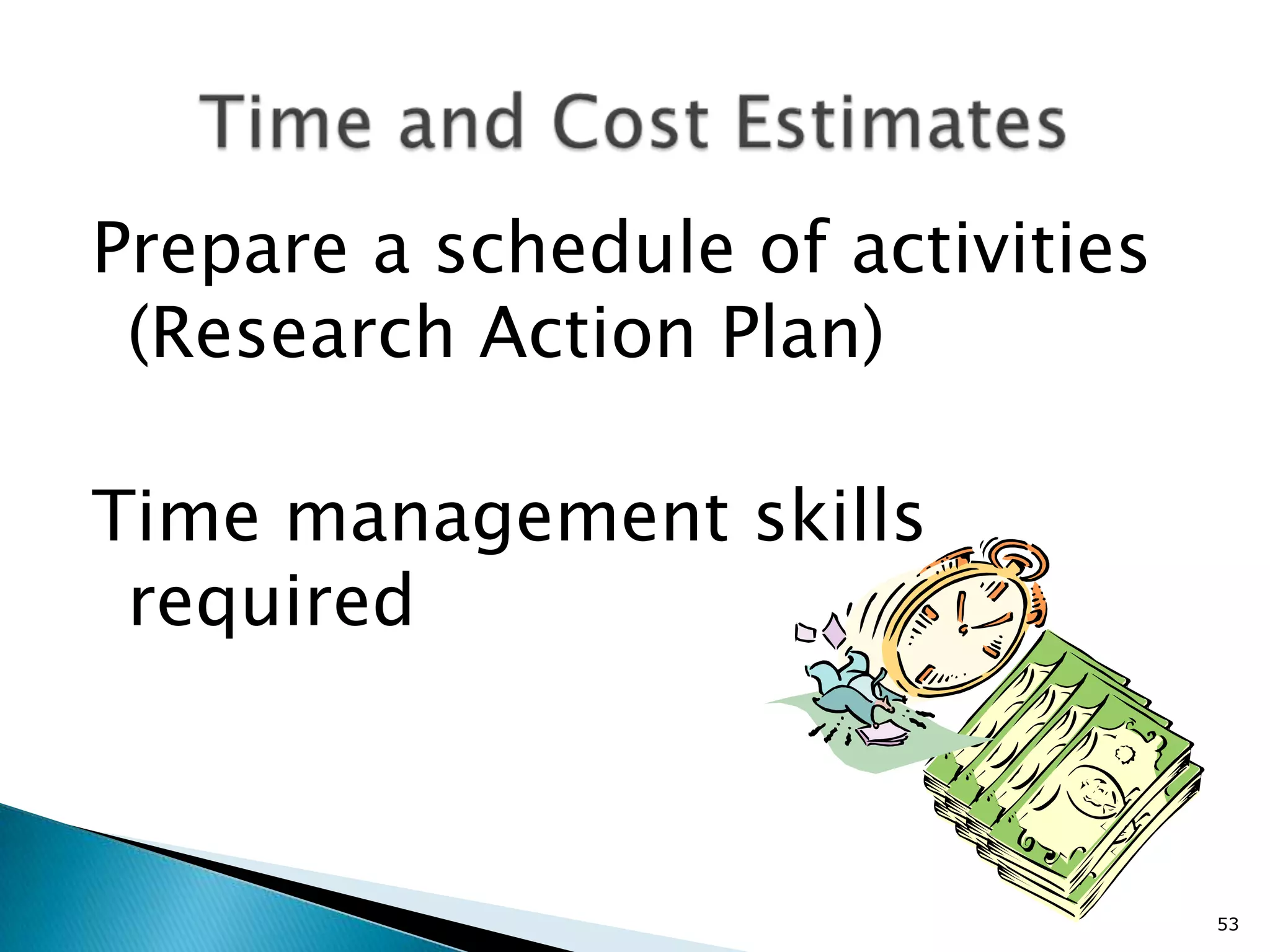
Prepare a schedule of activities
 (Research Action Plan)

Time management skills
 required


                                   53
54
Cost of the research project

Item-wise budgeting

Financial support required


                               55
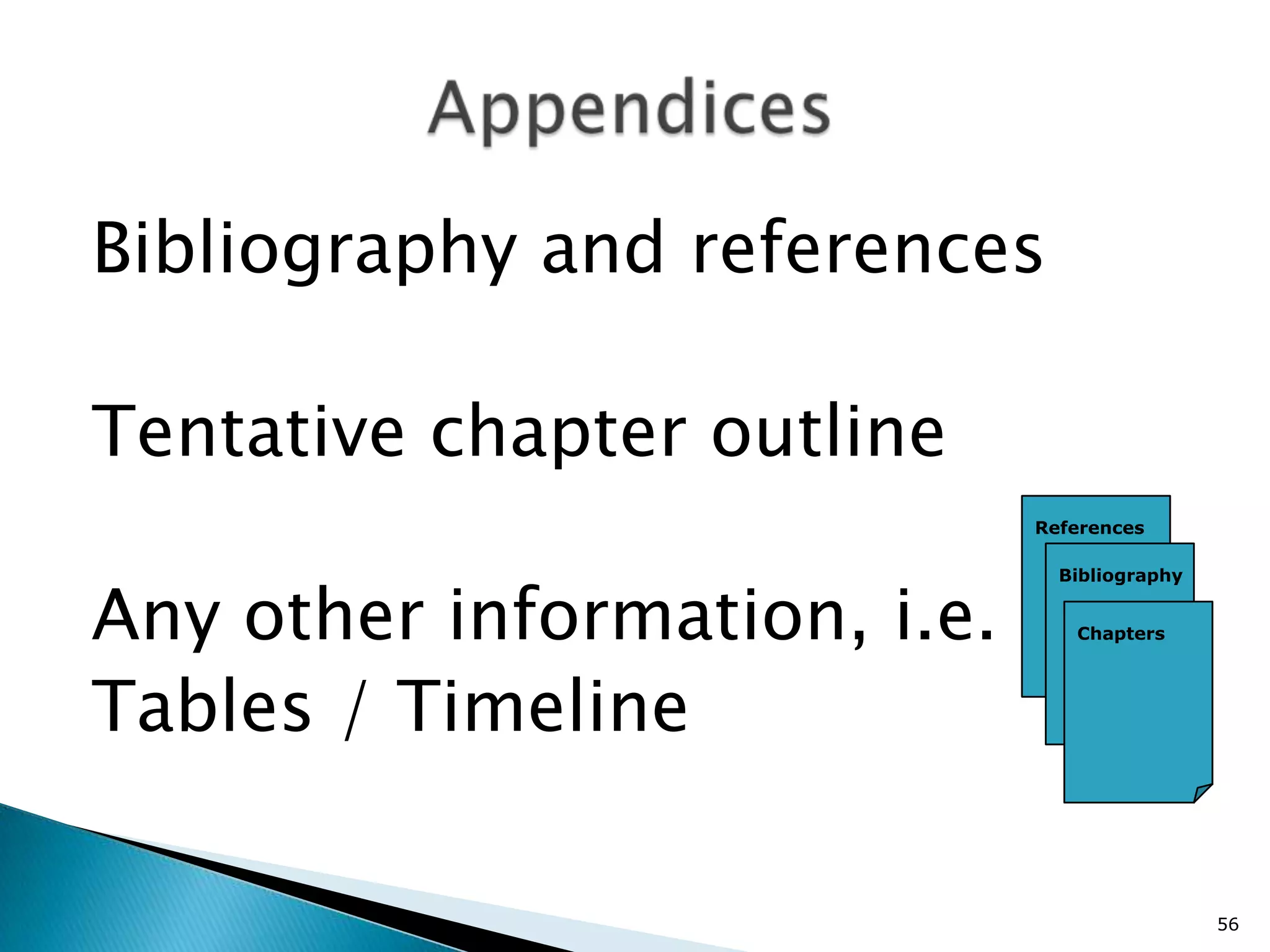
Bibliography and references

Tentative chapter outline
                              References


Any other information, i.e.
                                Bibliography


                                 Chapters


Tables / Timeline

                                               56
Reference

Bohez, E. L. J., & Thieravarut, M. (1997).
 Expert system for diagnosing computer
 numerically controlled machines: a case-
 study. Computers in Industry, 32, 233-248.


                                              57
http://www.searchcredible.com/
                            58
59
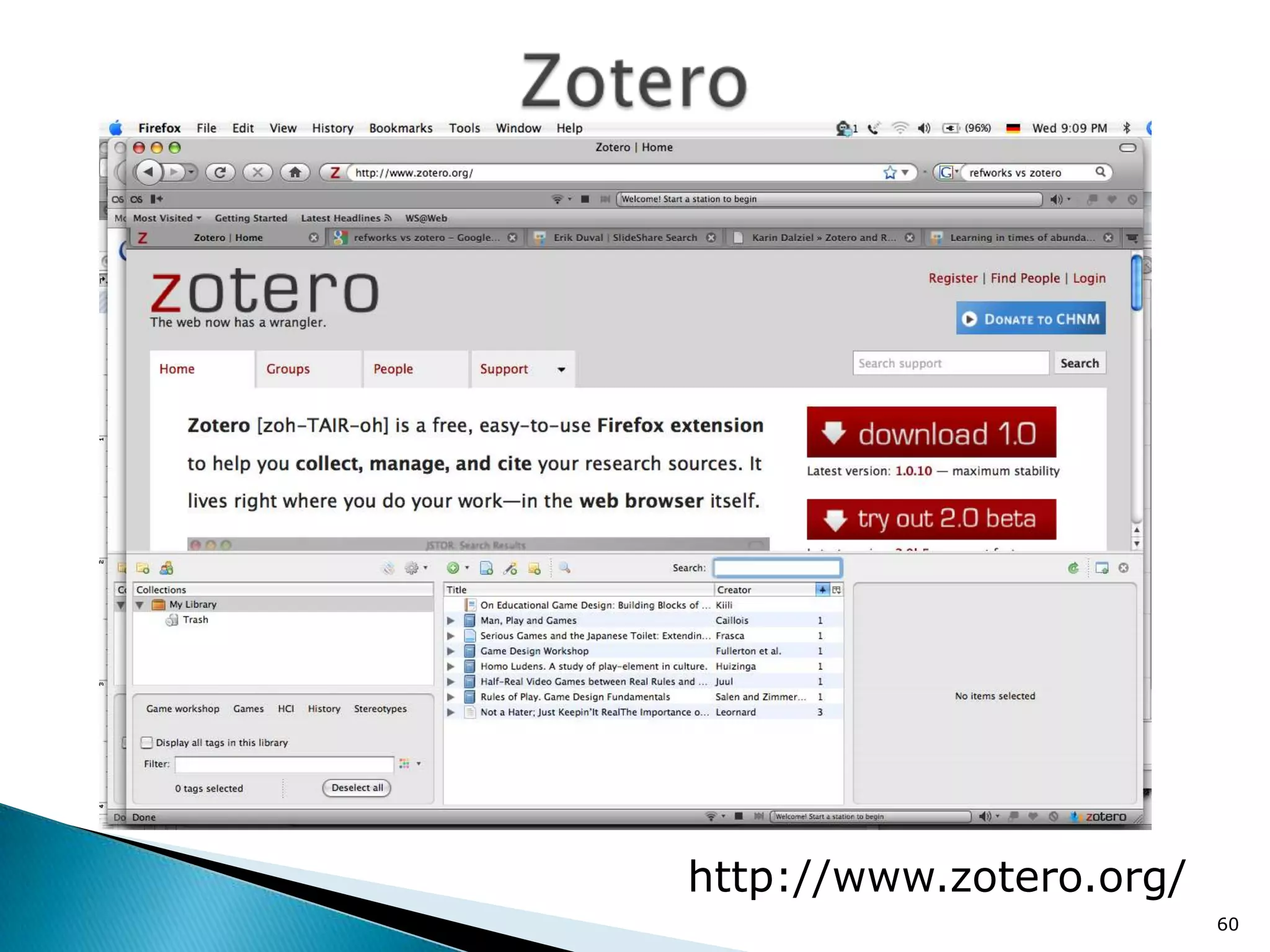
http://www.zotero.org/
                         60
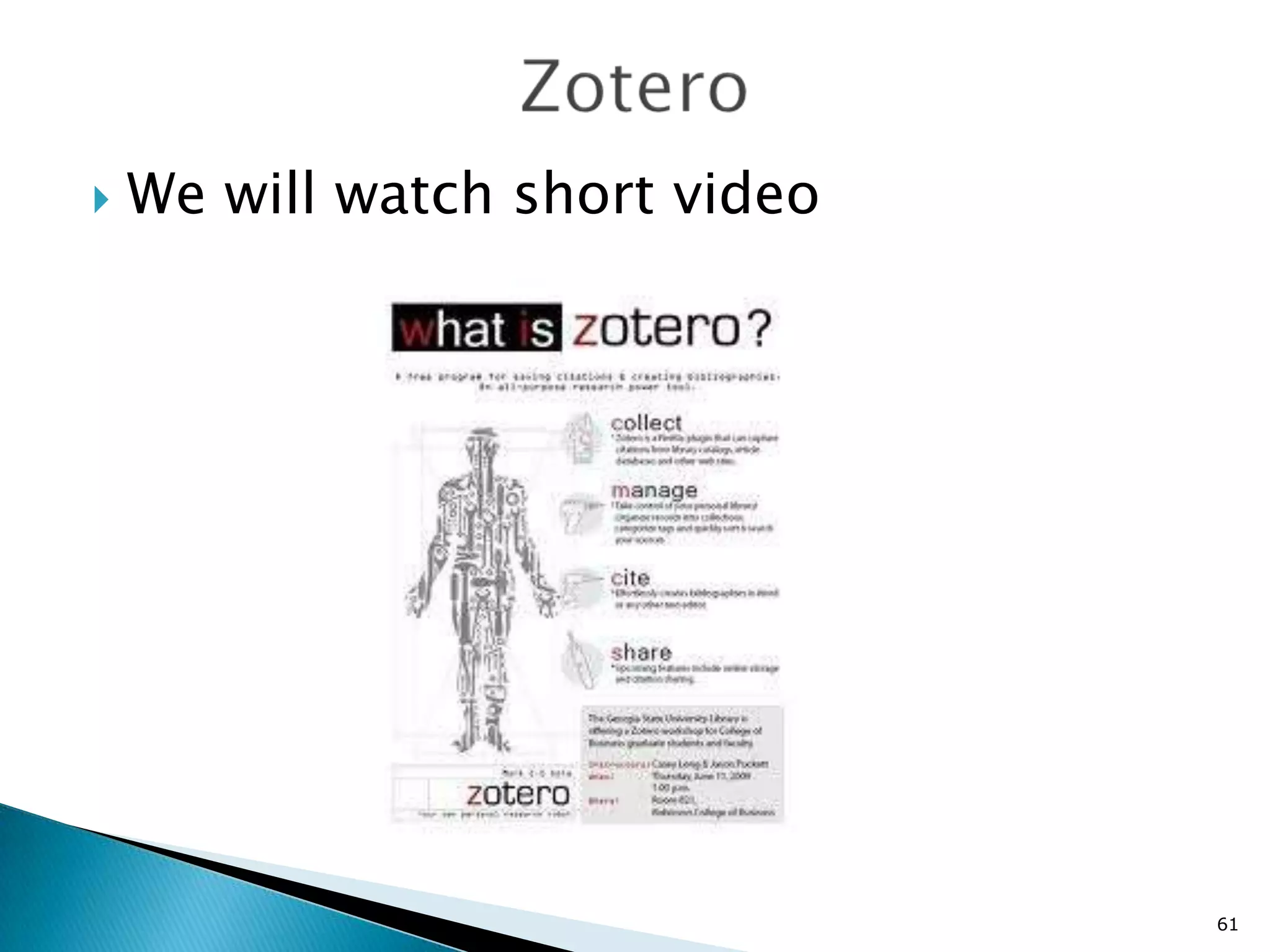
   We will watch short video


                                61
62
What are the 3 main components
 of a oral presentation?

Introduction

Body

Conclusion
                                 63
64
Choosing the right visual aid

Describing graphs and trends


                                65
66
Key   words

Key phrases

Key concepts / theories


                           67
68
Asian Institute of Technology
                       Language Center


Mr. Rob Hatfield, M.Ed.
AIT Language Center

AIT Research Proposal Writing Workshop

  • 1.
    Asian Institute ofTechnology Language Center The Afghanistan Ministry of Higher Education February 22nd , 23rd and 25th 2013
  • 2.
    What is research? Typesof research Research problem 2
  • 3.
    Research design orframework Components of a research proposal 3
  • 4.
  • 5.
    Develop a planfor a research project List the sections of a research proposal Write a research proposal for the Project Project Presentation 5
  • 6.
    A systematic processof investigation into a problem Is original and not repetition of something already known 6
  • 7.
    Expand knowledge and understanding of phenomenon Attempts to answer ‘why’ and ‘how’ 7
  • 8.
     Qualitative  Quantitative Mixed Methods • Describe – how things are • Explain – why things are the way they are • Predict – phenomenon and relationships 8
  • 9.
    Writing academically Working Outline& Style-guide Working Bibliography Keeping records of documents & Online resources 9
  • 10.
    A ‘research problem’refers to some difficulty that the researcher experiences in the context of either a theoretical or practical situation and to which he/she wants to obtain a solution. 10
  • 11.
    The formulation ofa problem is far more often essential than its solutions, which may be merely a matter of mathematical or experimental skill. To raise new questions, new possibilities, to regard old problems from a new angle requires creative imagination and marks real advance in science. -- A. Einstein and L. Infeld, The Evolution of Physics, 1938 11
  • 12.
    Actual or currentproblem Related previous research Theories related to problem 12
  • 13.
    Express clearly thehow and why to undertake the research As a testable research hypothesis As an exploratory research question 13
  • 14.
    A framework thatguides us to undertake research on a specific problem Cover issues of ‘which’ and ‘why’ of methods and techniques Decision on sample size and sampling procedure 14
  • 15.
    Process of datacollection Analysis procedures and statistical techniques to be used Communicates the research findings / results 15
  • 16.
  • 17.
    Methods Techniques Tools Exploratory Survey Questionnaires Evaluative Interviews Scales Experimental Observation Interview Elaborative Content schedules analysis and Observation research sheets synthesis Tests Meta-analysis Checklists 17
  • 18.
    Why sampling? Large samplesbehave in normal distribution 18
  • 19.
    Representative sample isimportant to draw conclusions about the population Determine the sample size Assist in reliability and validity of the study 19
  • 20.
    It is nothaphazard Every subject in the population has a known probability/ chance of selection 20
  • 21.
    Use of Randomtable Systematic random sampling Stratified random sampling 21
  • 22.
    Title Introduction Statement of theProblem Procedures of the Study Time and Cost Estimates Appendices References 22
  • 23.
    Title page page i Table of contents List of abbreviations List of tables and figures Introductions Chapter 1 page 1 Literature review Chapter 2 Methodology Chapter 3 Timeline/ work schedule/ budget List of references 23
  • 24.
    The proposal shouldhave sufficient information to convince your readers that you have an important research idea.  Background of relevant literature  Address major issues or problem  Research methodology is sound 24
  • 25.
    It should beclear, concise and descriptive. 25
  • 26.
    Often titles arestated in terms of a functional relationship, because such titles clearly indicate the independent and dependent variables.  (Who is the audience?) 26
  • 27.
    Think of aninformative but catchy title An effective title not only pricks the reader's interest, but also predisposes him/her favorably towards the proposal 27
  • 28.
     Preciseand accurate  Unambiguous  Avoid extremely long titles × Extended Contact Program and Learning  Effect of Extended Contact Program on student achievement 28
  • 29.
  • 30.
    Orientates the readerstowards the research topic Explain the importance and relevance of the research topic 30
  • 31.
    Justifies the choiceof the research topic Provides a concise overview of relevant literature to make the proposal sound 31
  • 32.
     The subheadings ◦ Background ◦ Rationale ◦ Problem statement ◦ Objectives ◦ Scope ◦ Limitations ◦ Assumptions ◦ Hypotheses 32
  • 33.
    Sometimes part ofintroduction Further clarifies the intent of the investigator 33
  • 34.
    Presented as hypothesisor exploratory question for aims and objectives of the study 34
  • 35.
    Rationale ◦ ajustification for doing something Problem statement A problem statement is a clear concise description of the issue(s) that need(s) to be addressed 35
  • 36.
  • 37.
  • 38.
    To measure thelevel of achievement of the AIT participants There is no significant difference between the achievement of male and female participants of AIT How do AIT participants perform in the test? 38
  • 39.
  • 40.
    Step 1 Claiming centrality and/or Step 2 Movement from the general to the specific and/or Step 3 Reviewing relevant items of previous research 40
  • 41.
    Example Minimum safelow temperatures (above freezing) and high humidity control are the most important tools for extending shelf life in vegetables. (Barth et al., 1993) 41
  • 42.
    Example In recentyears, there has been an increased awareness of the potential impact of pollutants such as heavy metals. Moreover, the traditional methods for treating aqueous streams containing metal contaminants are expensive and can have inadequate facilities. This is particularly true in developing countries. This has led to the use of alternative technologies. The use of biological materials is one such technology which has received considerable attention. (Ho et al., 1996) 42
  • 43.
    Step 1a Counter-claiming or Step 1b Indicating a gap or Step 1c Question-raising or Step 1d Continuing a previously developed line of inquiry 43
  • 44.
  • 45.
    Numerous studies onthe utilization of plant proteins as a partial or complete replacement for fish meal in diets have been conducted using various freshwater and marines fishes (Lovell, 1987; Tacon et al., 1983; Murai et al., 1989a; Cowey et al., 1974). However, very little is known about the feasibility of using soybean meal as a dietary protein source in practical feeds for yellowtail Seriola quinqueradiata. (Takii et al., 1989) 45
  • 46.
    The question addressedhere is how technological change occurs when it is the overall system that needs to be changed. In particular, how can we begin and sustain a technological transition away from hydrocarbon based technologies? (Street and Miles, 1996) 46
  • 47.
    Step 1a Outlining purposes or Step 1b Announcing present research Step 2 Announcing principal findings Step 3 Indicating structure of the research 47
  • 48.
    This work aimsto establish the extent of interaction of alginate with calcium and aluminium ions with respect to the influence of algal exudates have on the removal of humic substances by aluminium coagulation during drinking water treatment. (Gregor et al., 1996). 48
  • 49.
    This paper willexamine the use of peat for the removal of two metals, copper and nickel, from both mono-solute and bi-solute solutions. In particular, it reports the effect that a competing ion has on the rates of removal and examines the mechanisms which may affect the uptake of minerals. (Ho et al., 1996) 49
  • 50.
    Decide on themethod, techniques and tools to use Explain the rationale of each vis- à-vis the statement of the problems 50
  • 51.
    Describe the tooldevelopment process or use of existing one Describe how you will gather data for the study 51
  • 52.
    Indicate the population,sample size and the sampling procedure Explain the statistical methods to be used with rationale 52
  • 53.
    Prepare a scheduleof activities (Research Action Plan) Time management skills required 53
  • 54.
  • 55.
    Cost of theresearch project Item-wise budgeting Financial support required 55
  • 56.
    Bibliography and references Tentativechapter outline References Any other information, i.e. Bibliography Chapters Tables / Timeline 56
  • 57.
    Reference Bohez, E. L.J., & Thieravarut, M. (1997). Expert system for diagnosing computer numerically controlled machines: a case- study. Computers in Industry, 32, 233-248. 57
  • 58.
  • 59.
  • 60.
  • 61.
    We will watch short video 61
  • 62.
  • 63.
    What are the3 main components of a oral presentation? Introduction Body Conclusion 63
  • 64.
  • 65.
    Choosing the rightvisual aid Describing graphs and trends 65
  • 66.
  • 67.
    Key words Key phrases Key concepts / theories 67
  • 68.
  • 69.
    Asian Institute ofTechnology Language Center Mr. Rob Hatfield, M.Ed. AIT Language Center

Editor's Notes

  • #30 Go over each groups proposal – first peer to peer with comments – then with each group individually – 15 minutes
  • #38 Go over rationale and problem statements first peer to peer with comments and then with each group individually – 20 minutes
  • #40 Go over objectives – hypothesis (if any) and research questions – peer to peer then with each group individually
  • #45 Handout # 2 Counter Claiming
  • #55 Go over the procedures of the study – look to each group formatting and structure – Each linked and defined? 20 minutes
  • #60 Students to turn on a get access to internet – go over search creditable and to Zotero.org watch Zotero video short video from Boise State University 15 minutes
  • #62 http://youtu.be/vNfrv9lD_TM
  • #63 http://www.ait.ac.th/education/LanguageCenter/ait-writing-services/guide-book/index.htm
  • #65 Students will work through Handout # 4 on how to talk about Visual Aids - 20 minutes
  • #67 Students will work through Handout # 5 Effective Power point presentations
  • #69 Students will work through Activity # 6 Effective Oral and Power point presentations – group work on Power point 1 hour / group work oral presentations 1 hour