HOW TO WRITE YOUR
FULL-BLOWN
RESEARCH
PROPOSAL
Chapter 1 – The Research
Problem and Its Background
   Introduction (2-3 pages)
-   a prelude to research problem in macro
    approach
-   short but substantive write-up with highlight
    of relevant literature to present the scope of
    the study and its problem
-   use statistics and literature that can present
    state of the problem to rationalize the
    research, but no diagram and tables
-   link with the purpose of study
Chapter 1 – The Research
Problem and Its Background
   Background of the Study (1-2 pages)
-   state clear reasons in pursuing the
    topic
-   present the context in which topic is
    viewed on micro-approach and area of
    investigation
-   cite briefly the setting of the study with
    historical description,
    participants/respondents
Chapter 1 – The Research
Problem and Its Background
   Theoretical Framework (2-3 pages)
-   describe and explain the theory/theories on
    which to anchor the problem drawn from
    related literature and studies
-   clarify relationship between and among the
    major concepts of the theory/theories and its
    proponent
-   if any, original model is presented as is;
    otherwise draw the diagram of theory
Chapter 1 – The Research
Problem and Its Background
   Conceptual Framework (2-3 pages)
-   discuss the elements of the cited
    theory/theories as applied in the study
-   replace concepts of the theory/theories with
    study variables
-   explain the relationships of the variables
    founded on the theory/theories
-   draw the conceptual diagram showing study
    variables
Chapter 1 – The Research
Problem and Its Background
   Statement of the Problem (2-3 pages)
-   present the research problem in
    interrogatory form
-   start research problem with a short
    introductory paragraph on the intent of
    the study
-   close with the main research question
Chapter 1 – The Research
Problem and Its Background
   Sub-Problems/Research Objectives (1 page)
-   clear, definite and measurable statement or
    sub-problems/objectives (intentions)
-   sub-problems (also in question form) as
    breakdown of main problem and objectives
    to show intentions of research (infinitive to +
    research action word), do not repeat the
    main problem in the sub-problems
-   number and sequence (grade) the statements
    of sub-problems/objectives
-   serve as point of reference in reporting
    findings
Chapter 1 – The Research
Problem and Its Background
   Assumptions and/or Hypotheses (1/2 page)
-   state assumptions that identify relevant
    statements that were taken for granted
    and not verified by the study, no
    variable testing
-   state hypothesis if variables
    relationship will be tested (bi-
    variates/multi-variates)
Chapter 1 – The Research
Problem and Its Background
   Significance of the Study (1-2 pages)
-   present the contributions of research
    to various sectors (to the field, society,
    government/organizations)
-   address theoretical and practical
    significance
-   explain in paragraph form addressing
    each sector in relating importance of
    the study findings
Chapter 1 – The Research
Problem and Its Background
   Scope and Limitations of the Study (1-2 pages)
-   state limits of the locus (location and
    sampling)
-   state the extent of mode of investigation
    (modus)
-   state limits of subject matter covered (focus)
-   weaknesses of the study beyond control of
    the researcher
-   state inability/restrictions of the study in
    generalizing the findings
Chapter 1 – The Research
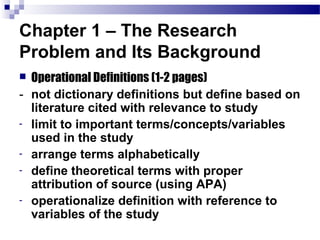
Problem and Its Background
 Operational Definitions (1-2 pages)
- not dictionary definitions but define based on
  literature cited with relevance to study
- limit to important terms/concepts/variables
  used in the study
- arrange terms alphabetically
- define theoretical terms with proper
  attribution of source (using APA)
- operationalize definition with reference to
  variables of the study
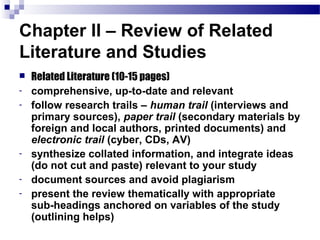
Chapter II – Review of Related
Literature and Studies
   Related Literature (10-15 pages)
-   comprehensive, up-to-date and relevant
-   follow research trails – human trail (interviews and
    primary sources), paper trail (secondary materials by
    foreign and local authors, printed documents) and
    electronic trail (cyber, CDs, AV)
-   synthesize collated information, and integrate ideas
    (do not cut and paste) relevant to your study
-   document sources and avoid plagiarism
-   present the review thematically with appropriate
    sub-headings anchored on variables of the study
    (outlining helps)
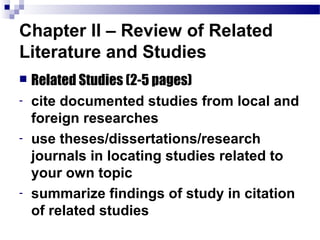
Chapter II – Review of Related
Literature and Studies
   Related Studies (2-5 pages)
-   cite documented studies from local and
    foreign researches
-   use theses/dissertations/research
    journals in locating studies related to
    your own topic
-   summarize findings of study in citation
    of related studies
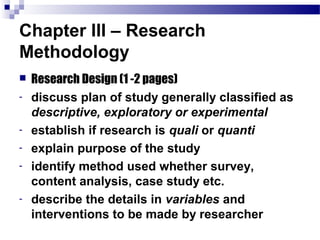
Chapter III – Research
Methodology
   Research Design (1 -2 pages)
-   discuss plan of study generally classified as
    descriptive, exploratory or experimental
-   establish if research is quali or quanti
-   explain purpose of the study
-   identify method used whether survey,
    content analysis, case study etc.
-   describe the details in variables and
    interventions to be made by researcher
Chapter III – Research
Methodology
   Sample and Sampling Technique (1-2 pages)
-   describe the sample or units of analysis
    (sampling locale, sampling size, sampling
    technique whether probability – random,
    stratified or cluster, or non-probability –
    purposive, snowball, quota, census)
-   describe characteristics of samples
-   state eligibility requirements for participation
    of respondents/participants
-   mention method of determining sample size
    like use of Slovin’s Formula and compute
    how size was derived
Chapter III – Research
Methodology
   Instrumentation (2-3 pages)
-   describe the instrument used (e.g. questionnaire,
    interview guide, coding sheet etc.)
-   present the major parts of the instrument based on
    method used
-   include the range of scores and give interpretation
    like Likert scale etc.
-   describe the construction of instrument, tell if
    adapted from another instrument but with
    permission
-   describe the pilot testing (pre-test) of instrument
Chapter III – Research
Methodology
   Data Collection Procedures (1 page)
-   describe data collection in clear, step by step
    manner
-   describe the distribution of instrument and
    instructions given including locale and time
-   discuss precautions on ethics and human
    rights and procedures to avoid intrusion
-   discuss types of data collected, whether
    primary or secondary and source of such
    information
Chapter III – Research
Methodology
   Statistical Treatment of Data and Formula (1 page)
-   state analytic procedures employed and
    provide computational formula and state
    level of significance to specific data
-   describe the general statistics to show
    sample demographics like %, ranking, means
    etc.
-   inferential statistics such as chi-square,
    ANOVA, t-test etc. will be used to show
    hypothesis testing

Mpa res 2 how to write your full blown research proposal

  • 1.
    HOW TO WRITEYOUR FULL-BLOWN RESEARCH PROPOSAL
  • 2.
    Chapter 1 –The Research Problem and Its Background  Introduction (2-3 pages) - a prelude to research problem in macro approach - short but substantive write-up with highlight of relevant literature to present the scope of the study and its problem - use statistics and literature that can present state of the problem to rationalize the research, but no diagram and tables - link with the purpose of study
  • 3.
    Chapter 1 –The Research Problem and Its Background  Background of the Study (1-2 pages) - state clear reasons in pursuing the topic - present the context in which topic is viewed on micro-approach and area of investigation - cite briefly the setting of the study with historical description, participants/respondents
  • 4.
    Chapter 1 –The Research Problem and Its Background  Theoretical Framework (2-3 pages) - describe and explain the theory/theories on which to anchor the problem drawn from related literature and studies - clarify relationship between and among the major concepts of the theory/theories and its proponent - if any, original model is presented as is; otherwise draw the diagram of theory
  • 5.
    Chapter 1 –The Research Problem and Its Background  Conceptual Framework (2-3 pages) - discuss the elements of the cited theory/theories as applied in the study - replace concepts of the theory/theories with study variables - explain the relationships of the variables founded on the theory/theories - draw the conceptual diagram showing study variables
  • 6.
    Chapter 1 –The Research Problem and Its Background  Statement of the Problem (2-3 pages) - present the research problem in interrogatory form - start research problem with a short introductory paragraph on the intent of the study - close with the main research question
  • 7.
    Chapter 1 –The Research Problem and Its Background  Sub-Problems/Research Objectives (1 page) - clear, definite and measurable statement or sub-problems/objectives (intentions) - sub-problems (also in question form) as breakdown of main problem and objectives to show intentions of research (infinitive to + research action word), do not repeat the main problem in the sub-problems - number and sequence (grade) the statements of sub-problems/objectives - serve as point of reference in reporting findings
  • 8.
    Chapter 1 –The Research Problem and Its Background  Assumptions and/or Hypotheses (1/2 page) - state assumptions that identify relevant statements that were taken for granted and not verified by the study, no variable testing - state hypothesis if variables relationship will be tested (bi- variates/multi-variates)
  • 9.
    Chapter 1 –The Research Problem and Its Background  Significance of the Study (1-2 pages) - present the contributions of research to various sectors (to the field, society, government/organizations) - address theoretical and practical significance - explain in paragraph form addressing each sector in relating importance of the study findings
  • 10.
    Chapter 1 –The Research Problem and Its Background  Scope and Limitations of the Study (1-2 pages) - state limits of the locus (location and sampling) - state the extent of mode of investigation (modus) - state limits of subject matter covered (focus) - weaknesses of the study beyond control of the researcher - state inability/restrictions of the study in generalizing the findings
  • 11.
    Chapter 1 –The Research Problem and Its Background  Operational Definitions (1-2 pages) - not dictionary definitions but define based on literature cited with relevance to study - limit to important terms/concepts/variables used in the study - arrange terms alphabetically - define theoretical terms with proper attribution of source (using APA) - operationalize definition with reference to variables of the study
  • 12.
    Chapter II –Review of Related Literature and Studies  Related Literature (10-15 pages) - comprehensive, up-to-date and relevant - follow research trails – human trail (interviews and primary sources), paper trail (secondary materials by foreign and local authors, printed documents) and electronic trail (cyber, CDs, AV) - synthesize collated information, and integrate ideas (do not cut and paste) relevant to your study - document sources and avoid plagiarism - present the review thematically with appropriate sub-headings anchored on variables of the study (outlining helps)
  • 13.
    Chapter II –Review of Related Literature and Studies  Related Studies (2-5 pages) - cite documented studies from local and foreign researches - use theses/dissertations/research journals in locating studies related to your own topic - summarize findings of study in citation of related studies
  • 14.
    Chapter III –Research Methodology  Research Design (1 -2 pages) - discuss plan of study generally classified as descriptive, exploratory or experimental - establish if research is quali or quanti - explain purpose of the study - identify method used whether survey, content analysis, case study etc. - describe the details in variables and interventions to be made by researcher
  • 15.
    Chapter III –Research Methodology  Sample and Sampling Technique (1-2 pages) - describe the sample or units of analysis (sampling locale, sampling size, sampling technique whether probability – random, stratified or cluster, or non-probability – purposive, snowball, quota, census) - describe characteristics of samples - state eligibility requirements for participation of respondents/participants - mention method of determining sample size like use of Slovin’s Formula and compute how size was derived
  • 16.
    Chapter III –Research Methodology  Instrumentation (2-3 pages) - describe the instrument used (e.g. questionnaire, interview guide, coding sheet etc.) - present the major parts of the instrument based on method used - include the range of scores and give interpretation like Likert scale etc. - describe the construction of instrument, tell if adapted from another instrument but with permission - describe the pilot testing (pre-test) of instrument
  • 17.
    Chapter III –Research Methodology  Data Collection Procedures (1 page) - describe data collection in clear, step by step manner - describe the distribution of instrument and instructions given including locale and time - discuss precautions on ethics and human rights and procedures to avoid intrusion - discuss types of data collected, whether primary or secondary and source of such information
  • 18.
    Chapter III –Research Methodology  Statistical Treatment of Data and Formula (1 page) - state analytic procedures employed and provide computational formula and state level of significance to specific data - describe the general statistics to show sample demographics like %, ranking, means etc. - inferential statistics such as chi-square, ANOVA, t-test etc. will be used to show hypothesis testing