
WRITING A RESEARCH
PROPOSAL
INTRODUCTION
 Written document specifying the research content
before project commences
 Communicates research problems, its significance,
planned procedures for solving the problems
 It is written for various reasons
i. Presenting a brief plan before data collection in
front of the professor
ii. University requirement
iii. Funding agencies
OVERVIEW OF RESEARCH PROPOSAL
PREPARATION
 Clear idea of researcher’s plan
 Explanation of how and when various tasks are to be
accomplished
 Determines the capability of the researcher for the
proposed plan
 Evaluation criteria for proposals
i. Importance of research question
ii. Its theoretical relevance
iii. Adequacy of research methods
iv. Availability of appropriate personnel and facilities
v. budget
GENERAL GUIDELINES PREPARING
RESEARCH PROPOSAL
 Proposal content
 General tips on proposal presentation
PROPOSAL CONTENT
 Following the Format of institution
 Filling the kit of funding association or agencies
a. Abstract
b. Statement of the problem
c. Significance of the problem
d. Background of the problem
e. Objectives
f. Methods
g. The work plan
h. Personnel
i. Facilities
j. Budget
a. ABSTRACT
 Brief synopsis
 Helps as frame of reference
 Should be 200 – 300 words in length
 Concise study objectives and methods to be used
STATEMENT OF THE PROBLEM
 Addressing the research problem
 Statement should say the importance
 Should not promise more than can be produced
 Broad and complex problems unlikely to solve
SIGNIFICANCE OF THE PROBLEM
 Explain how proposed research makes contribution
to knowledge
 Indicates
i. Generalizability
ii. Contribution to theory
iii. Potential for improving nursing practice & patient
care
iv. Possible applications or consequences of the
knowledge to be gained
BACKGROUND OF THE PROBLEM
 How intended research builds on what has already
done in an area
 Must strengthen the authors arguments concerning
the significance of the study
 Orientation of the reader what is already known about
the problem
 Indicate how proposed research augment the
knowledge
 Serve as a demonstration of the researcher’s
command of current knowledge in a field
OBJECTIVES
 Provides clear criteria against the research methods
 Stated as research hypothesis
 Conceptual frame work fit the variables of the study
 Avoid use of null hypotheses
 No possibility of hypotheses in descriptive and
exploratory studies
 In that case frame the objectives in question form
METHODS
 Thorough research methods will give knowledge on
application of research objectives
 Thorough method section includes
a. Description of the sampling plan
b. Instrumentation
c. Specific procedures
d. Analytic strategies
e. Rationale for methods
f. Potential methodological problems
g. Intended strategies for handling the problems
THE WORK PLAN
 Plan of managing the work
 Work plan sequence to complete the task
 Anticipated length of time for the completion
 Personnel required for the completion
 It indicates how realistic and thorough the
researcher is in designing the study
PERSONNEL
 Addressing Funding agencies
 Qualifications of the key project personnel
description
 Competencies of project director and other team
members
FACILITIES
 Requirement of special facilities
 Access to physiologic instrumentation, libraries,
data processing equipments computers, special
documents or records
 Reassurance of sponsors of advertisers
 Willingness of the institute in case of any need like
space provision, equipment, services or data
BUDGET
 Project activity in monetary terms
 How much money need for various tasks
 Well conceived work plan helps for preparation of
budget
 Difficulties in detailing budget indicates inadequacy
insufficiently developed budget
GENERAL TIPS ON PROPOSAL
PRESENTATION
 No exact steps to follow
 But some advise will minimize anxiety and frustration
 Following tips are especially relevant to funded
research project
I. Review a successful proposal
II. Pay attention to reviewer’s criteria
III. Be judicious in developing a research team
IV. Justify and document the decisions
V. Arrange for a critique for a proposal
I. REVIEW A SUCCESSFUL PROPOSAL
 Accepted written proposals
 Referring – journals, proposals
 Attending
 Reading
 Reading grants magazines
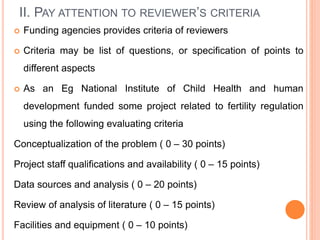
II. PAY ATTENTION TO REVIEWER’S CRITERIA
 Funding agencies provides criteria of reviewers
 Criteria may be list of questions, or specification of points to
different aspects
 As an Eg National Institute of Child Health and human
development funded some project related to fertility regulation
using the following evaluating criteria
Conceptualization of the problem ( 0 – 30 points)
Project staff qualifications and availability ( 0 – 15 points)
Data sources and analysis ( 0 – 20 points)
Review of analysis of literature ( 0 – 15 points)
Facilities and equipment ( 0 – 10 points)
III. BE JUDICIOUS IN DEVELOPING A RESEARCH
TEAM
 Funding agencies weighs the qualification of the
researcher
 Needs 3 brilliant theorists
 Compensate gaps and weakness by use of
consultants
 No need of too many managers
 Unwise to have 5 or more top level professionals
IV. JUSTIFY AND DOCUMENT THE DECISIONS
 Proposal sometime fails because of poor confidence,
inadequate thought, rationale for decisions
 Decision must be made carefully, minding the cost
and benefits
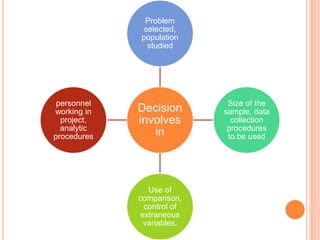
Decision
involves
in
Problem
selected,
population
studied
Size of the
sample, data
collection
procedures
to be used
Use of
comparison,
control of
extraneous
variables,
personnel
working in
project,
analytic
procedures
ARRANGE FOR A CRITIQUE FOR A PROPOSAL
 Before formal submission review the draft by other
person
 Consultant participation in development of draft
FUNDING FOR THE RESEARCH PROPOSAL
 Government funding
 Private funding

Writing research proposal

  • 1.
  • 2.
    INTRODUCTION  Written documentspecifying the research content before project commences  Communicates research problems, its significance, planned procedures for solving the problems  It is written for various reasons i. Presenting a brief plan before data collection in front of the professor ii. University requirement iii. Funding agencies
  • 3.
    OVERVIEW OF RESEARCHPROPOSAL PREPARATION  Clear idea of researcher’s plan  Explanation of how and when various tasks are to be accomplished  Determines the capability of the researcher for the proposed plan  Evaluation criteria for proposals i. Importance of research question ii. Its theoretical relevance iii. Adequacy of research methods iv. Availability of appropriate personnel and facilities v. budget
  • 4.
    GENERAL GUIDELINES PREPARING RESEARCHPROPOSAL  Proposal content  General tips on proposal presentation
  • 5.
    PROPOSAL CONTENT  Followingthe Format of institution  Filling the kit of funding association or agencies a. Abstract b. Statement of the problem c. Significance of the problem d. Background of the problem e. Objectives f. Methods g. The work plan h. Personnel i. Facilities j. Budget
  • 6.
    a. ABSTRACT  Briefsynopsis  Helps as frame of reference  Should be 200 – 300 words in length  Concise study objectives and methods to be used
  • 7.
    STATEMENT OF THEPROBLEM  Addressing the research problem  Statement should say the importance  Should not promise more than can be produced  Broad and complex problems unlikely to solve
  • 8.
    SIGNIFICANCE OF THEPROBLEM  Explain how proposed research makes contribution to knowledge  Indicates i. Generalizability ii. Contribution to theory iii. Potential for improving nursing practice & patient care iv. Possible applications or consequences of the knowledge to be gained
  • 9.
    BACKGROUND OF THEPROBLEM  How intended research builds on what has already done in an area  Must strengthen the authors arguments concerning the significance of the study  Orientation of the reader what is already known about the problem  Indicate how proposed research augment the knowledge  Serve as a demonstration of the researcher’s command of current knowledge in a field
  • 10.
    OBJECTIVES  Provides clearcriteria against the research methods  Stated as research hypothesis  Conceptual frame work fit the variables of the study  Avoid use of null hypotheses  No possibility of hypotheses in descriptive and exploratory studies  In that case frame the objectives in question form
  • 11.
    METHODS  Thorough researchmethods will give knowledge on application of research objectives  Thorough method section includes a. Description of the sampling plan b. Instrumentation c. Specific procedures d. Analytic strategies e. Rationale for methods f. Potential methodological problems g. Intended strategies for handling the problems
  • 12.
    THE WORK PLAN Plan of managing the work  Work plan sequence to complete the task  Anticipated length of time for the completion  Personnel required for the completion  It indicates how realistic and thorough the researcher is in designing the study
  • 13.
    PERSONNEL  Addressing Fundingagencies  Qualifications of the key project personnel description  Competencies of project director and other team members
  • 14.
    FACILITIES  Requirement ofspecial facilities  Access to physiologic instrumentation, libraries, data processing equipments computers, special documents or records  Reassurance of sponsors of advertisers  Willingness of the institute in case of any need like space provision, equipment, services or data
  • 15.
    BUDGET  Project activityin monetary terms  How much money need for various tasks  Well conceived work plan helps for preparation of budget  Difficulties in detailing budget indicates inadequacy insufficiently developed budget
  • 16.
    GENERAL TIPS ONPROPOSAL PRESENTATION  No exact steps to follow  But some advise will minimize anxiety and frustration  Following tips are especially relevant to funded research project I. Review a successful proposal II. Pay attention to reviewer’s criteria III. Be judicious in developing a research team IV. Justify and document the decisions V. Arrange for a critique for a proposal
  • 17.
    I. REVIEW ASUCCESSFUL PROPOSAL  Accepted written proposals  Referring – journals, proposals  Attending  Reading  Reading grants magazines
  • 18.
    II. PAY ATTENTIONTO REVIEWER’S CRITERIA  Funding agencies provides criteria of reviewers  Criteria may be list of questions, or specification of points to different aspects  As an Eg National Institute of Child Health and human development funded some project related to fertility regulation using the following evaluating criteria Conceptualization of the problem ( 0 – 30 points) Project staff qualifications and availability ( 0 – 15 points) Data sources and analysis ( 0 – 20 points) Review of analysis of literature ( 0 – 15 points) Facilities and equipment ( 0 – 10 points)
  • 19.
    III. BE JUDICIOUSIN DEVELOPING A RESEARCH TEAM  Funding agencies weighs the qualification of the researcher  Needs 3 brilliant theorists  Compensate gaps and weakness by use of consultants  No need of too many managers  Unwise to have 5 or more top level professionals
  • 20.
    IV. JUSTIFY ANDDOCUMENT THE DECISIONS  Proposal sometime fails because of poor confidence, inadequate thought, rationale for decisions  Decision must be made carefully, minding the cost and benefits
  • 21.
    Decision involves in Problem selected, population studied Size of the sample,data collection procedures to be used Use of comparison, control of extraneous variables, personnel working in project, analytic procedures
  • 22.
    ARRANGE FOR ACRITIQUE FOR A PROPOSAL  Before formal submission review the draft by other person  Consultant participation in development of draft
  • 23.
    FUNDING FOR THERESEARCH PROPOSAL  Government funding  Private funding