Topic

Introduction to Computer
Architecture and Organization
Computer architecture

The architecture of a computer is the interface between the
machine and the software.
Deals with the functional behavior of a computer system as
viewed by programmer (like the size of a data type – 32 bits
to an integer).
Logical aspects of system implementation as seen by the
programmer.
E.g., instruction sets, instruction formats, data types,
addressing modes.
Computer organization

Deals with structural relationships that are not
visible to the programmer(like clock frequency or the
size of the physical memory).
All physical aspects of computer systems,
E.g. circuit design, control signals, memory types
Why study computer organization
and architecture?
Design better programs, including system software
such as compilers, operating systems, and device
drivers.
Optimize program behavior.
Evaluate computer system performance.
Understand time, space, and price tradeoffs
What is Computer Architecture

Computer Architecture = ISA+CO

Instruction Set Architecture (ISA)
the computer does (logical view)

Computer Organization (CO)
the ISA is implemented (physical view)
Instruction Set Architecture

Critical interface between hardware and software
Standardizes instructions, machine language bit
patterns, etc.
Advantage: different implementations of the same
architecture
Disadvantage: sometimes prevents using new
innovations
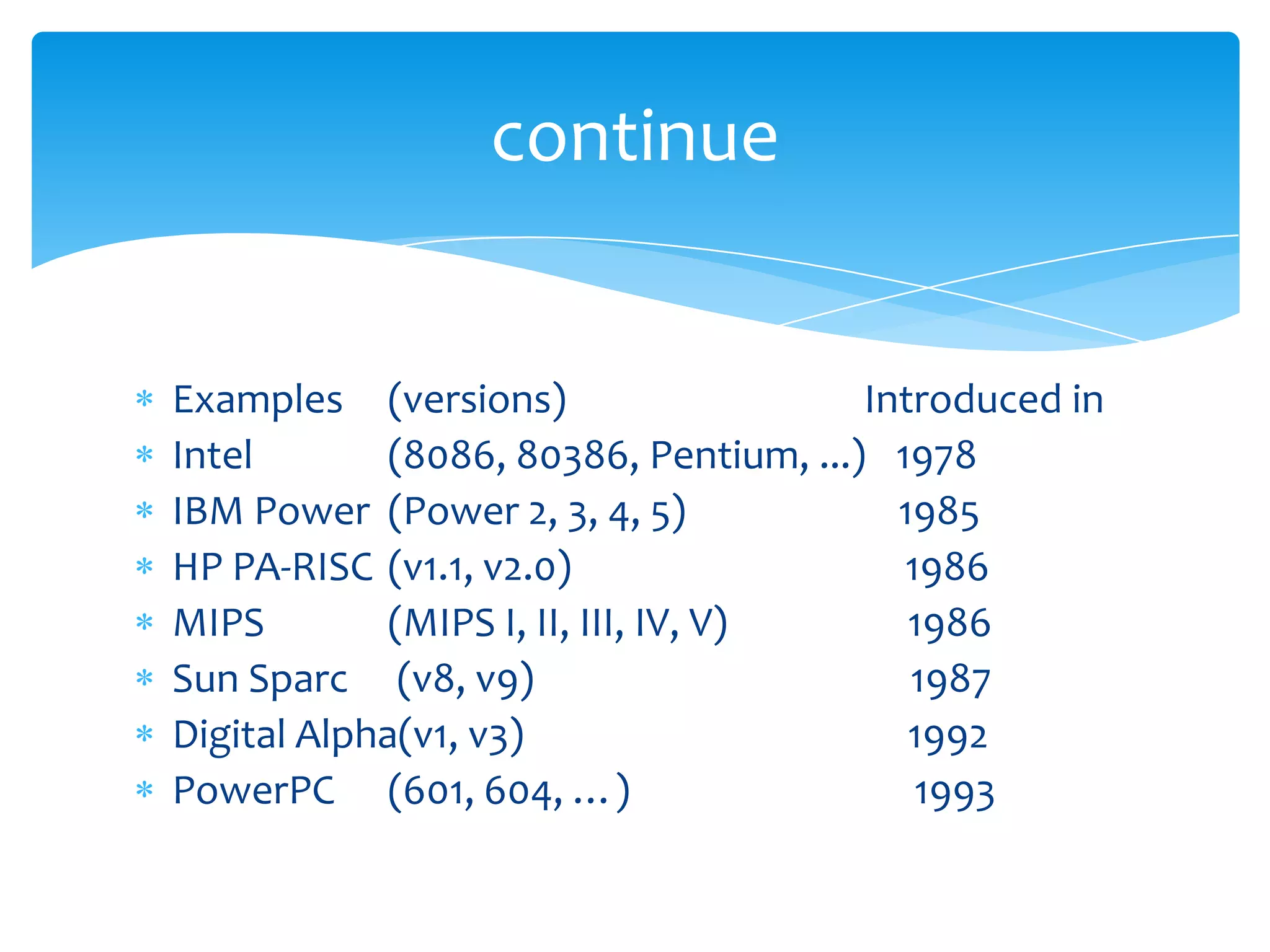
continue

Examples (versions)
Introduced in
Intel
(8086, 80386, Pentium, ...) 1978
IBM Power (Power 2, 3, 4, 5)
1985
HP PA-RISC (v1.1, v2.0)
1986
MIPS
(MIPS I, II, III, IV, V)
1986
Sun Sparc (v8, v9)
1987
Digital Alpha(v1, v3)
1992
PowerPC (601, 604, …)
1993
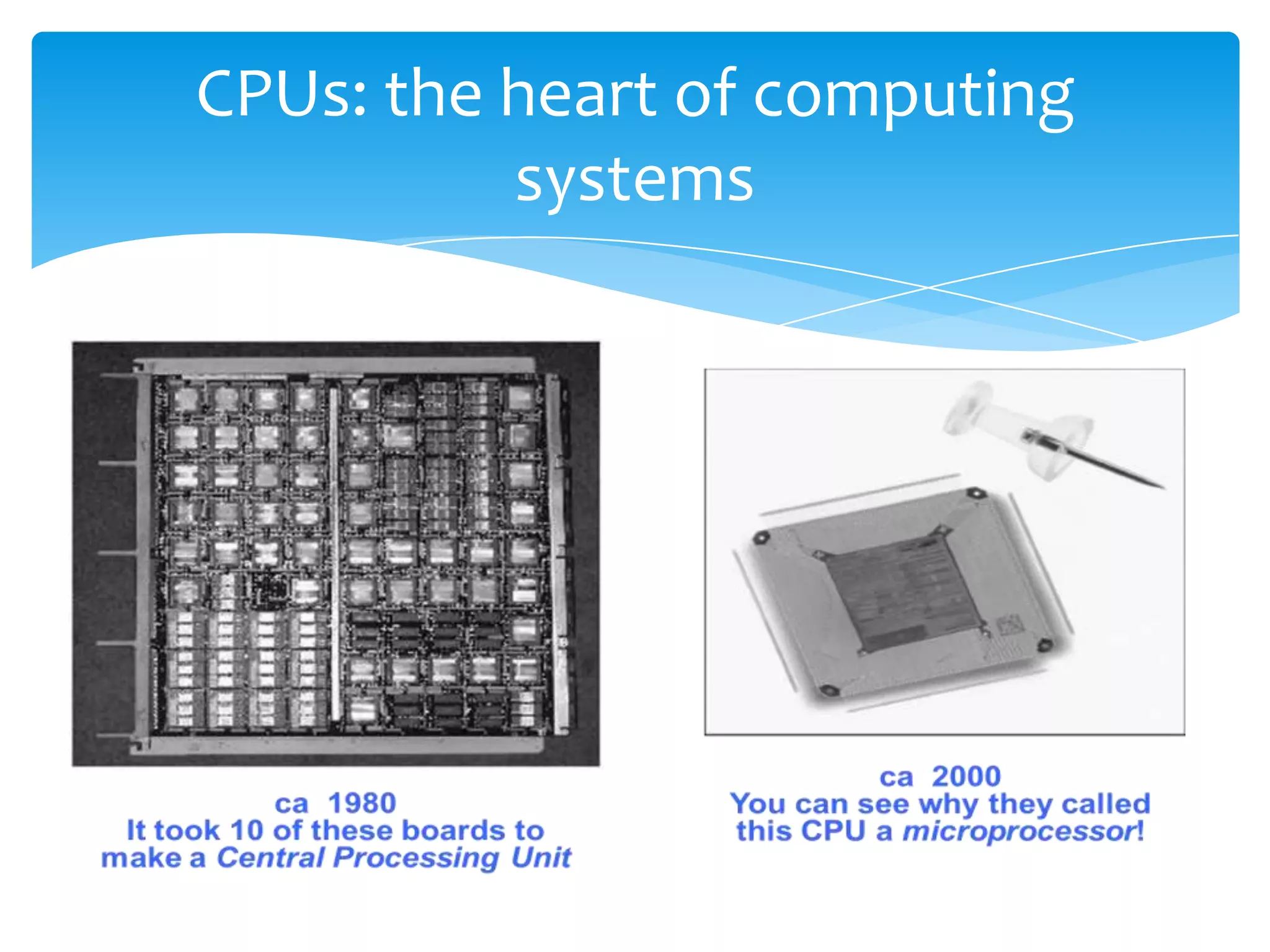
CPUs: the heart of computing
systems
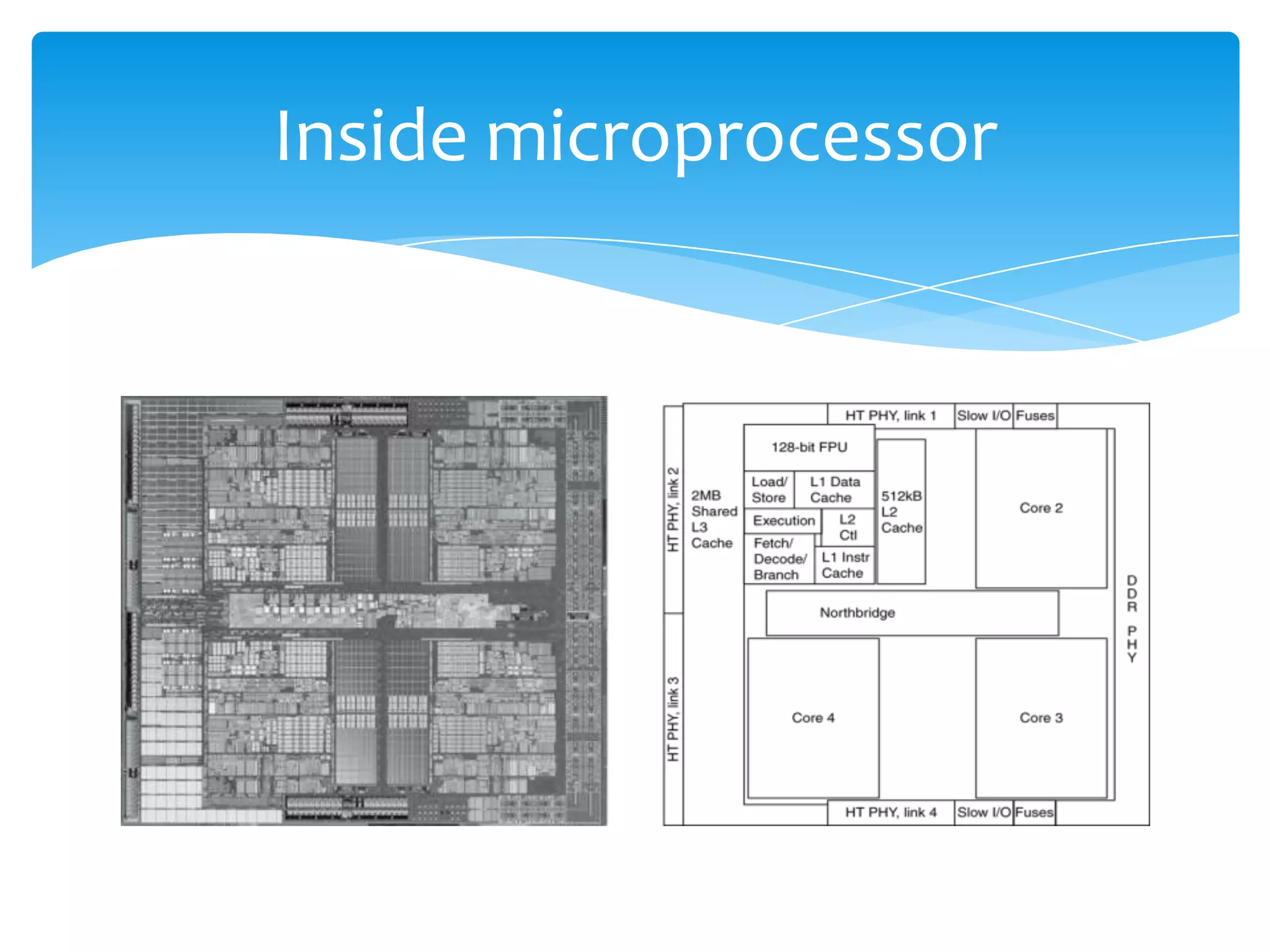
Inside microprocessor
Other architecture styles

Accumulator architecture
Stack
Register (load store)
Register-Memory
Memory-Memory
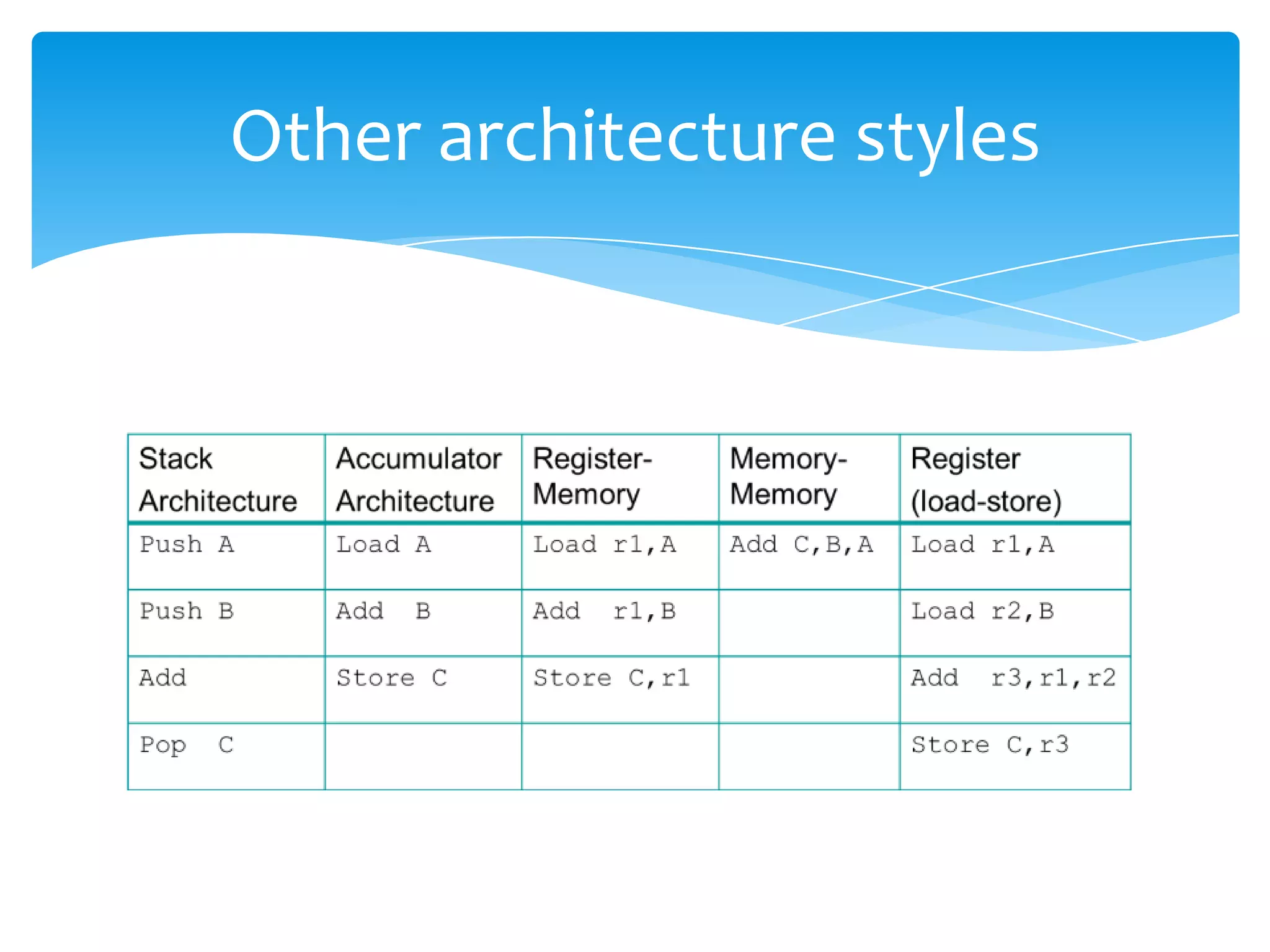
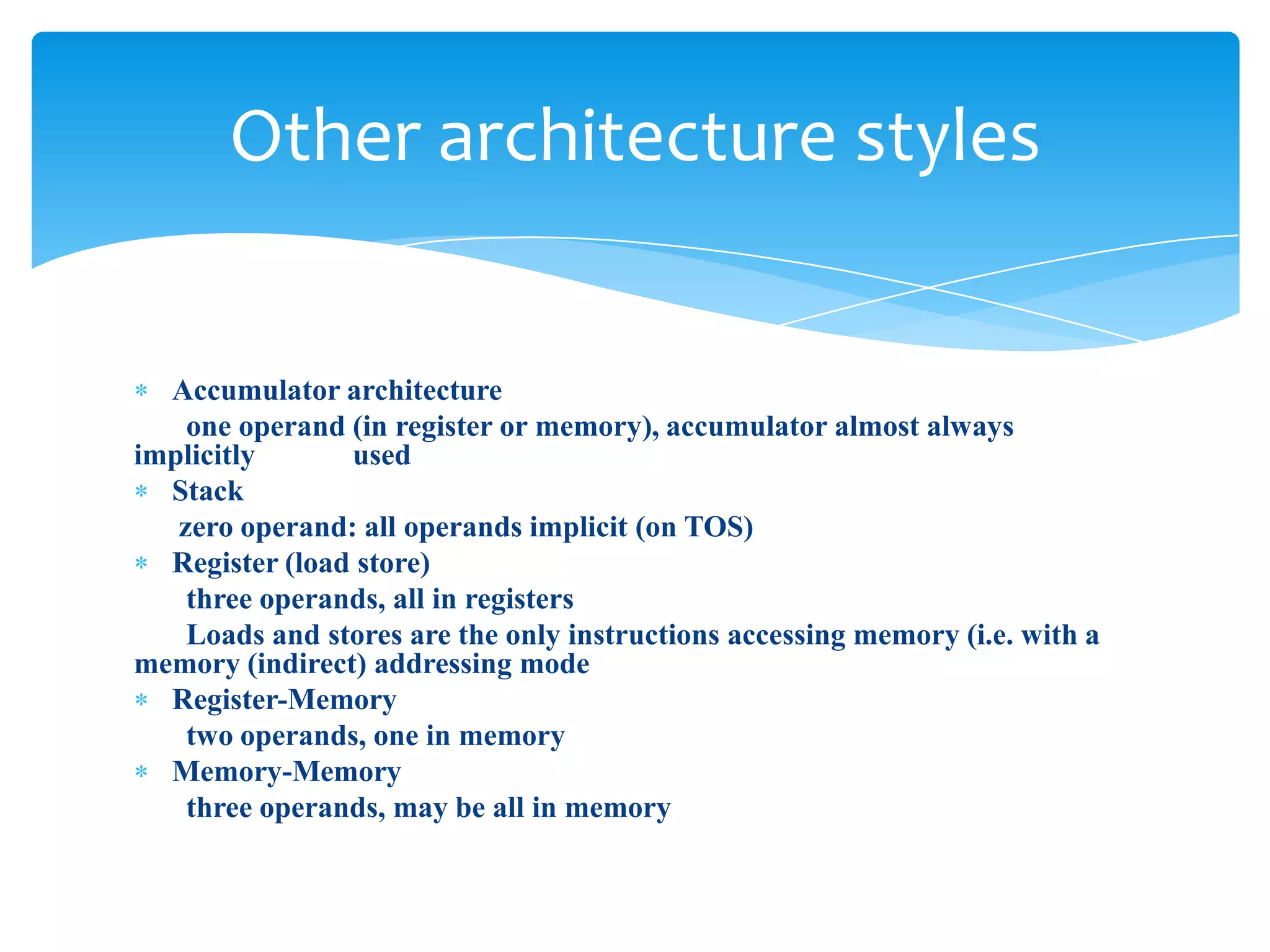
Other architecture styles

Accumulator architecture
one operand (in register or memory), accumulator almost always
implicitly
used
Stack
zero operand: all operands implicit (on TOS)
Register (load store)
three operands, all in registers
Loads and stores are the only instructions accessing memory (i.e. with a
memory (indirect) addressing mode
Register-Memory
two operands, one in memory
Memory-Memory
three operands, may be all in memory
END

Introduction to computer architecture and organization

  • 2.
  • 3.
    Computer architecture The architectureof a computer is the interface between the machine and the software. Deals with the functional behavior of a computer system as viewed by programmer (like the size of a data type – 32 bits to an integer). Logical aspects of system implementation as seen by the programmer. E.g., instruction sets, instruction formats, data types, addressing modes.
  • 4.
    Computer organization Deals withstructural relationships that are not visible to the programmer(like clock frequency or the size of the physical memory). All physical aspects of computer systems, E.g. circuit design, control signals, memory types
  • 5.
    Why study computerorganization and architecture? Design better programs, including system software such as compilers, operating systems, and device drivers. Optimize program behavior. Evaluate computer system performance. Understand time, space, and price tradeoffs
  • 6.
    What is ComputerArchitecture Computer Architecture = ISA+CO Instruction Set Architecture (ISA) the computer does (logical view) Computer Organization (CO) the ISA is implemented (physical view)
  • 7.
    Instruction Set Architecture Criticalinterface between hardware and software Standardizes instructions, machine language bit patterns, etc. Advantage: different implementations of the same architecture Disadvantage: sometimes prevents using new innovations
  • 8.
    continue Examples (versions) Introduced in Intel (8086,80386, Pentium, ...) 1978 IBM Power (Power 2, 3, 4, 5) 1985 HP PA-RISC (v1.1, v2.0) 1986 MIPS (MIPS I, II, III, IV, V) 1986 Sun Sparc (v8, v9) 1987 Digital Alpha(v1, v3) 1992 PowerPC (601, 604, …) 1993
  • 9.
    CPUs: the heartof computing systems
  • 10.
  • 11.
    Other architecture styles Accumulatorarchitecture Stack Register (load store) Register-Memory Memory-Memory
  • 12.
  • 13.
    Other architecture styles Accumulatorarchitecture one operand (in register or memory), accumulator almost always implicitly used Stack zero operand: all operands implicit (on TOS) Register (load store) three operands, all in registers Loads and stores are the only instructions accessing memory (i.e. with a memory (indirect) addressing mode Register-Memory two operands, one in memory Memory-Memory three operands, may be all in memory
  • 14.