Fish LocomotionFish Locomotion
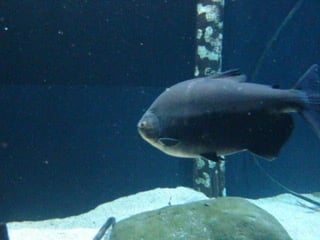
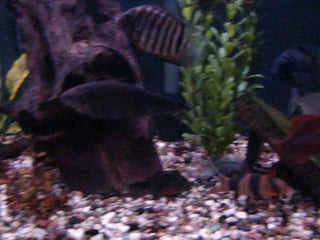
The most common form of fish locomotion is calledThe most common form of fish locomotion is called
carangiformcarangiform locomotion.locomotion.
The most common form of fish locomotion is calledThe most common form of fish locomotion is called
carangiformcarangiform locomotion.locomotion.
Fish that use this form sweep their caudal fin fromFish that use this form sweep their caudal fin from
side to side to push themselves forward.side to side to push themselves forward.
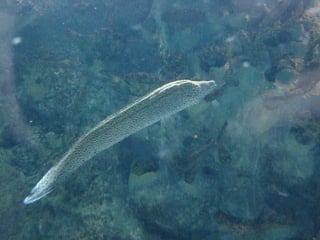
AngulliformAngulliform locomotion is used by fish with eel-locomotion is used by fish with eel-
like bodies. Obviously this includes eels, but alsolike bodies. Obviously this includes eels, but also
some Agnathan fishes such as lampreys use it.some Agnathan fishes such as lampreys use it.
AngulliformAngulliform locomotion is used by fish with eel-locomotion is used by fish with eel-
like bodies. Obviously this includes eels, but alsolike bodies. Obviously this includes eels, but also
some Agnathan fishes such as lampreys use it.some Agnathan fishes such as lampreys use it.
They send waves along the length of their bodyThey send waves along the length of their body
and as the waves move down the body, they pushand as the waves move down the body, they push
against the water.against the water.
AngulliformAngulliform locomotion is used by fish with eel-locomotion is used by fish with eel-
like bodies. Obviously this includes eels, but alsolike bodies. Obviously this includes eels, but also
some Agnathan fishes such as lampreys use it.some Agnathan fishes such as lampreys use it.
They send waves along the length of their bodyThey send waves along the length of their body
and as the waves move down the body, they pushand as the waves move down the body, they push
against the water.against the water.
There is an opposite and equal force in theThere is an opposite and equal force in the
opposite direction. So if the body pushes againstopposite direction. So if the body pushes against


the water, the fish is pushed forward.the water, the fish is pushed forward.
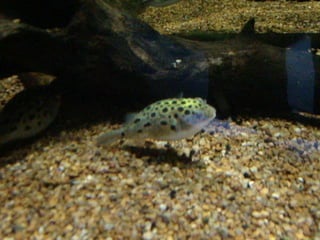
Some fish have a very stiff body and cannot flexSome fish have a very stiff body and cannot flex
their tail or send waves down the length of it. Onetheir tail or send waves down the length of it. One
way they can swim is to wiggle their fins to pushway they can swim is to wiggle their fins to push
themselves forward.themselves forward.
Some fish have a very stiff body and cannot flexSome fish have a very stiff body and cannot flex
their tail or send waves down the length of it. Onetheir tail or send waves down the length of it. One
way they can swim is to wiggle their fins to pushway they can swim is to wiggle their fins to push
themselves forward.themselves forward.
Unfortunately this form of locomotion, calledUnfortunately this form of locomotion, called
ostraciformostraciform, is very slow. To protect themselves,, is very slow. To protect themselves,
many of these fish have sharp spines covering themany of these fish have sharp spines covering the
skin or poisons that taste bad to predators.skin or poisons that taste bad to predators.
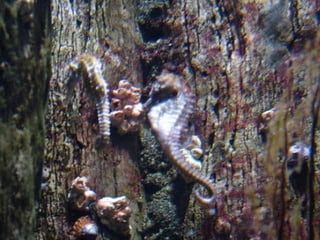
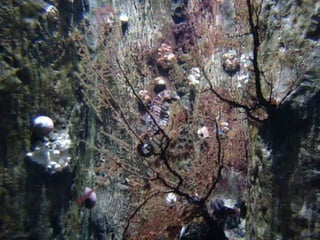
Because they’re slow, sea horses can’t swimBecause they’re slow, sea horses can’t swim
against strong currents of if waves toss themagainst strong currents of if waves toss them
about. To compensate, they use their prehensileabout. To compensate, they use their prehensile
tail to hold onto sea grasses, sea fans, etc.tail to hold onto sea grasses, sea fans, etc.
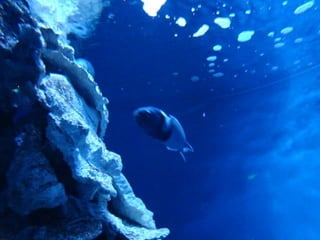
A few fish use a form of locomotion calledA few fish use a form of locomotion called
labriformlabriform locomotion. These fish paddle with theirlocomotion. These fish paddle with their
pectoral fins and, for the most part, keep theirpectoral fins and, for the most part, keep their
caudal fins and others still.caudal fins and others still.
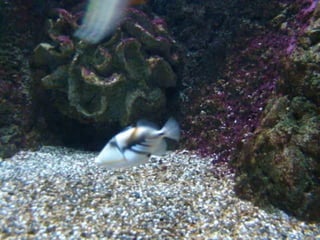
Another form of locomotion, calledAnother form of locomotion, called ballistiformballistiform
locomotion, is accomplished when the fish sendslocomotion, is accomplished when the fish sends
waves along the length of the its fins.waves along the length of the its fins.
Another form of locomotion, calledAnother form of locomotion, called ballistiformballistiform
locomotion, is accomplished when the fish sendslocomotion, is accomplished when the fish sends
waves along the length of the its fins.waves along the length of the its fins.
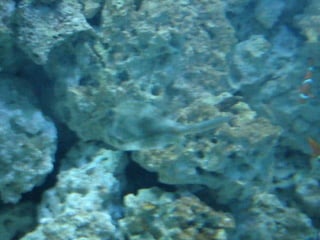
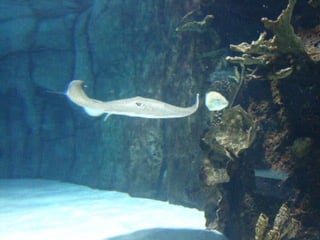
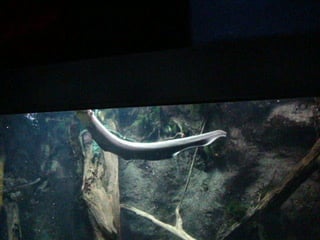
This can include the pectoral fins, in the case ofThis can include the pectoral fins, in the case of
rays and skates, or the anal fin, in the case ofrays and skates, or the anal fin, in the case of
knifefish.knifefish.
If a knifefish reverses the direction of the waves itIf a knifefish reverses the direction of the waves it
sends along its anal fin, it swims backwards!sends along its anal fin, it swims backwards!
Fish locomotion Notes

Fish locomotion Notes

  • 1.
  • 2.
    The most commonform of fish locomotion is calledThe most common form of fish locomotion is called carangiformcarangiform locomotion.locomotion.
  • 3.
    The most commonform of fish locomotion is calledThe most common form of fish locomotion is called carangiformcarangiform locomotion.locomotion. Fish that use this form sweep their caudal fin fromFish that use this form sweep their caudal fin from side to side to push themselves forward.side to side to push themselves forward.
  • 6.
    AngulliformAngulliform locomotion isused by fish with eel-locomotion is used by fish with eel- like bodies. Obviously this includes eels, but alsolike bodies. Obviously this includes eels, but also some Agnathan fishes such as lampreys use it.some Agnathan fishes such as lampreys use it.
  • 7.
    AngulliformAngulliform locomotion isused by fish with eel-locomotion is used by fish with eel- like bodies. Obviously this includes eels, but alsolike bodies. Obviously this includes eels, but also some Agnathan fishes such as lampreys use it.some Agnathan fishes such as lampreys use it. They send waves along the length of their bodyThey send waves along the length of their body and as the waves move down the body, they pushand as the waves move down the body, they push against the water.against the water.
  • 9.
    AngulliformAngulliform locomotion isused by fish with eel-locomotion is used by fish with eel- like bodies. Obviously this includes eels, but alsolike bodies. Obviously this includes eels, but also some Agnathan fishes such as lampreys use it.some Agnathan fishes such as lampreys use it. They send waves along the length of their bodyThey send waves along the length of their body and as the waves move down the body, they pushand as the waves move down the body, they push against the water.against the water. There is an opposite and equal force in theThere is an opposite and equal force in the opposite direction. So if the body pushes againstopposite direction. So if the body pushes against the water, the fish is pushed forward.the water, the fish is pushed forward.

  • 10.
    Some fish havea very stiff body and cannot flexSome fish have a very stiff body and cannot flex their tail or send waves down the length of it. Onetheir tail or send waves down the length of it. One way they can swim is to wiggle their fins to pushway they can swim is to wiggle their fins to push themselves forward.themselves forward.
  • 14.
    Some fish havea very stiff body and cannot flexSome fish have a very stiff body and cannot flex their tail or send waves down the length of it. Onetheir tail or send waves down the length of it. One way they can swim is to wiggle their fins to pushway they can swim is to wiggle their fins to push themselves forward.themselves forward. Unfortunately this form of locomotion, calledUnfortunately this form of locomotion, called ostraciformostraciform, is very slow. To protect themselves,, is very slow. To protect themselves, many of these fish have sharp spines covering themany of these fish have sharp spines covering the skin or poisons that taste bad to predators.skin or poisons that taste bad to predators.
  • 15.
    Because they’re slow,sea horses can’t swimBecause they’re slow, sea horses can’t swim against strong currents of if waves toss themagainst strong currents of if waves toss them about. To compensate, they use their prehensileabout. To compensate, they use their prehensile tail to hold onto sea grasses, sea fans, etc.tail to hold onto sea grasses, sea fans, etc.
  • 17.
    A few fishuse a form of locomotion calledA few fish use a form of locomotion called labriformlabriform locomotion. These fish paddle with theirlocomotion. These fish paddle with their pectoral fins and, for the most part, keep theirpectoral fins and, for the most part, keep their caudal fins and others still.caudal fins and others still.
  • 20.
    Another form oflocomotion, calledAnother form of locomotion, called ballistiformballistiform locomotion, is accomplished when the fish sendslocomotion, is accomplished when the fish sends waves along the length of the its fins.waves along the length of the its fins.
  • 21.
    Another form oflocomotion, calledAnother form of locomotion, called ballistiformballistiform locomotion, is accomplished when the fish sendslocomotion, is accomplished when the fish sends waves along the length of the its fins.waves along the length of the its fins. This can include the pectoral fins, in the case ofThis can include the pectoral fins, in the case of rays and skates, or the anal fin, in the case ofrays and skates, or the anal fin, in the case of knifefish.knifefish.
  • 26.
    If a knifefishreverses the direction of the waves itIf a knifefish reverses the direction of the waves it sends along its anal fin, it swims backwards!sends along its anal fin, it swims backwards!