Downloaded 84 times


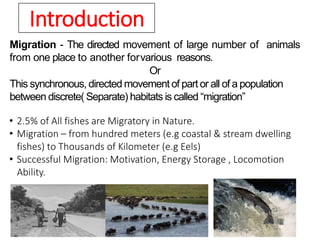
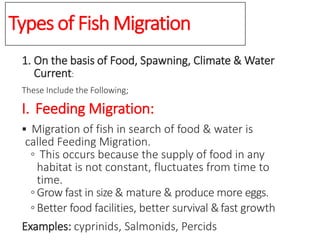
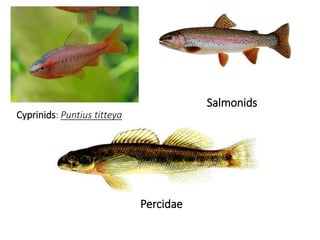
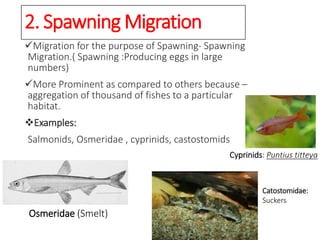
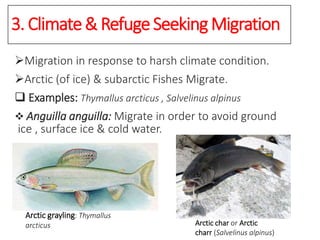

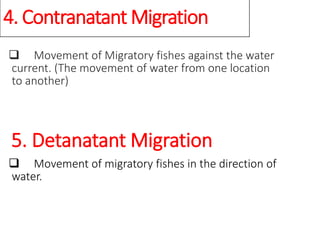
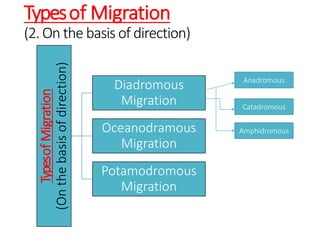
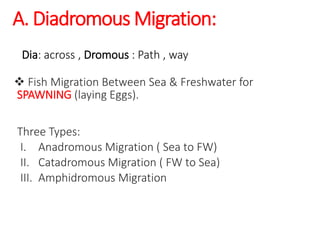
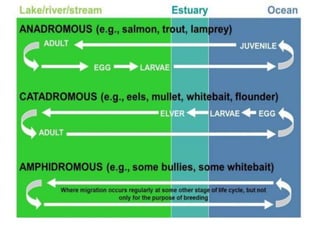
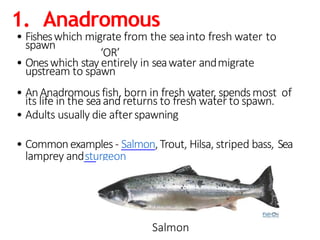
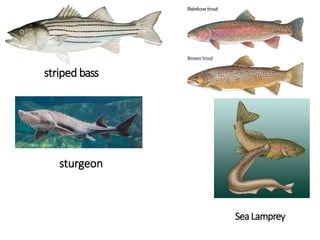
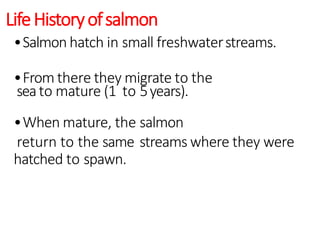
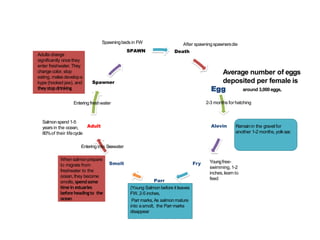
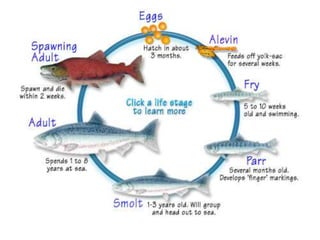
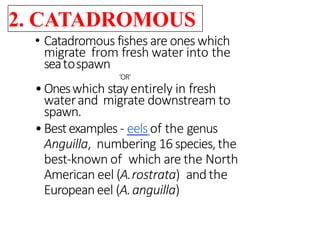
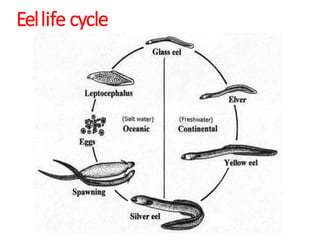
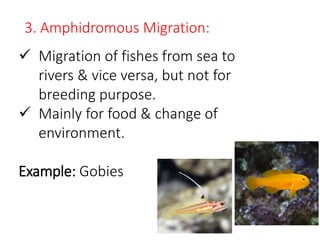
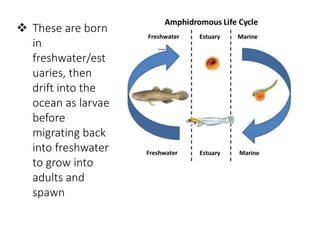
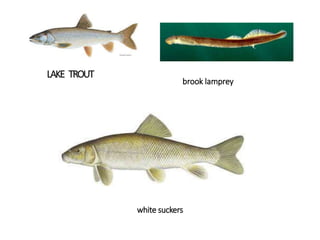
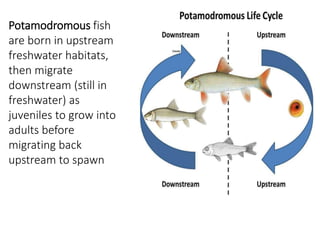
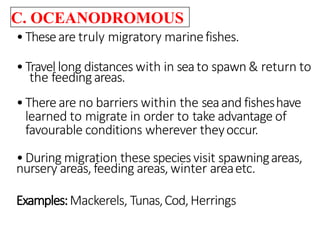
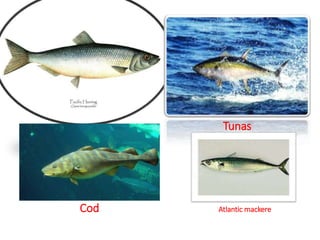
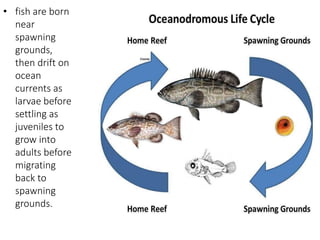
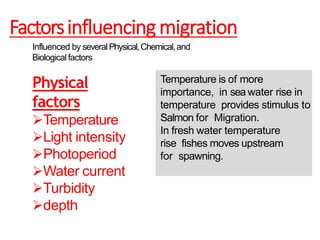
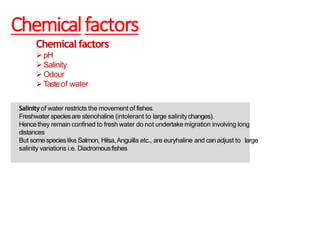
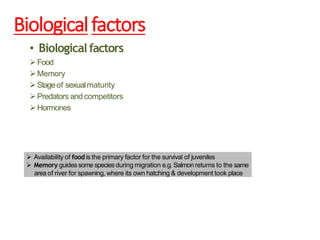


Fish migration occurs for various reasons such as finding new habitats, feeding, reproduction, and escaping predators. There are several types of fish migration defined by distance, direction, and purpose. Anadromous fish migrate from salt water to fresh water to spawn, like salmon, while catadromous fish do the opposite, migrating from fresh to salt water to spawn. Potamodromous fish migrate within fresh water systems. Oceanodromous fish migrate long distances within salt water environments. Physical, chemical, and biological factors influence fish migration patterns. Migration allows fish to access new food sources and breeding habitats but also carries risks.


