Phylum Chordata & Types of FishKingdom Animalia	Phylum Chordata		Subphylum Urochordata		Subphylum Cephalochordata		Subphylum Vertebrata			Class Agnatha			Class Chondrichthyes			Class Osteichthyes
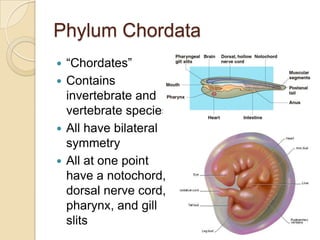
Phylum Chordata“Chordates”Contains invertebrate and vertebrate speciesAll have bilateral symmetryAll at one point have a notochord, dorsal nerve cord, pharynx, and gill slits
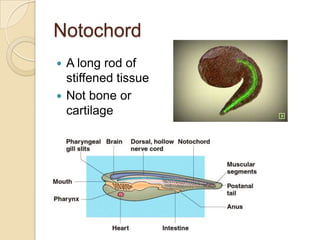
NotochordA long rod of stiffened tissueNot bone or cartilage
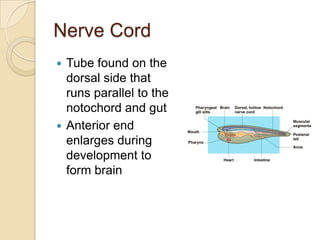
Nerve CordTube found on the dorsal side that runs parallel to the notochord and gutAnterior end enlarges during development to form brain
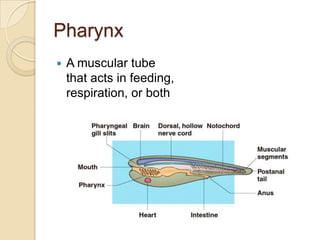
PharynxA muscular tube that acts in feeding, respiration, or both
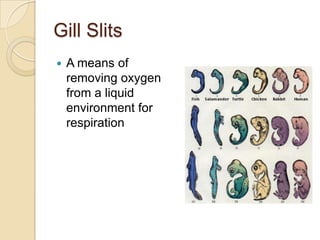
Gill SlitsA means of removing oxygen from a liquid environment for respiration
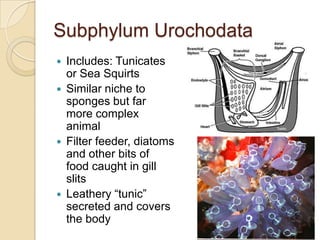
Subphylum UrochodataIncludes: Tunicates or Sea SquirtsSimilar niche to sponges but far more complex animalFilter feeder, diatoms and other bits of food caught in gill slitsLeathery “tunic” secreted and covers the body
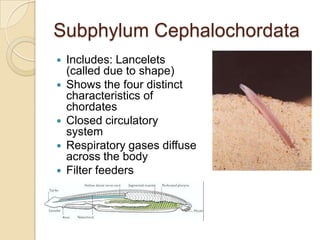
Subphylum CephalochordataIncludes: Lancelets (called due to shape)Shows the four distinct characteristics of chordatesClosed circulatory systemRespiratory gases diffuse across the bodyFilter feeders
Subphylum Vertebrata7 Current Classes:Agnatha – jawless fishChondrichthyes – Cartilaginous fishOsteichthyes – Bony fishAmphibia – AmphibiansReptilia – ReptilesAves – BirdsMammalia - Mammals
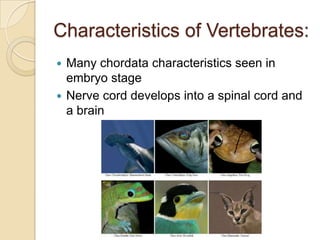
Characteristics of Vertebrates:Many chordata characteristics seen in embryo stageNerve cord develops into a spinal cord and a brain
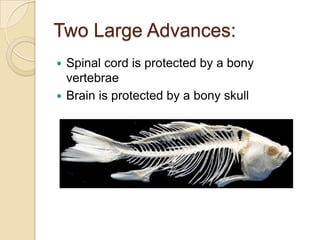
Two Large Advances:Spinal cord is protected by a bony vertebraeBrain is protected by a bony skull
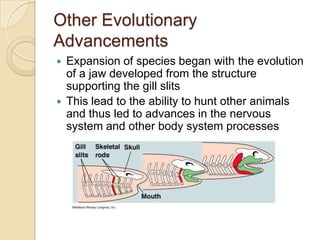
Other Evolutionary AdvancementsExpansion of species began with the evolution of a jaw developed from the structure supporting the gill slitsThis lead to the ability to hunt other animals and thus led to advances in the nervous system and other body system processes
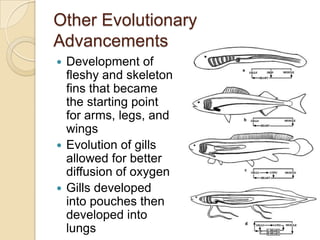
Other Evolutionary AdvancementsDevelopment of fleshy and skeleton fins that became the starting point for arms, legs, and wingsEvolution of gills allowed for better diffusion of oxygenGills developed into pouches then developed into lungs
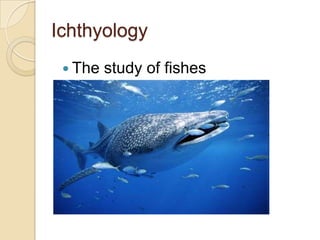
IchthyologyThe study of fishes
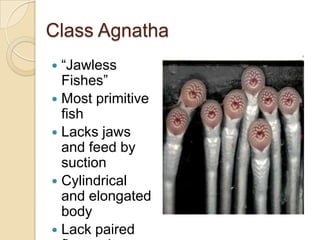
Class Agnatha“Jawless Fishes”Most primitive fishLacks jaws and feed by suctionCylindrical and elongated bodyLack paired fins and scales
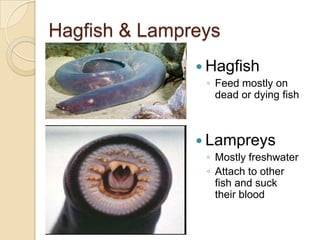
Hagfish & LampreysHagfish Feed mostly on dead or dying fishLampreysMostly freshwaterAttach to other fish and suck their blood
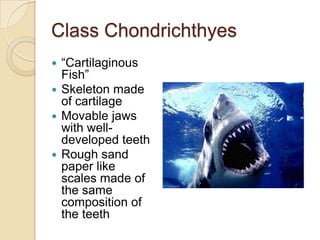
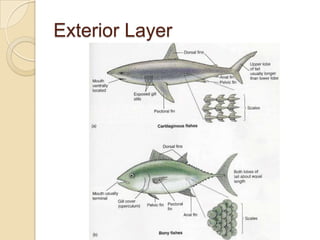
Class Chondrichthyes“Cartilaginous Fish”Skeleton made of cartilageMovable jaws with well-developed teethRough sand paper like scales made of the same composition of the teeth
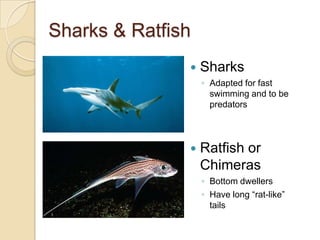
Sharks & RatfishSharksAdapted for fast swimming and to be predatorsRatfish or ChimerasBottom dwellers Have long “rat-like” tails
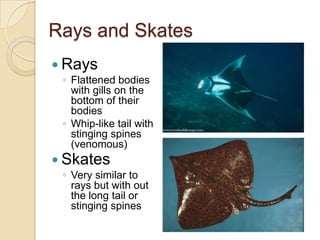
Rays and SkatesRaysFlattened bodies with gills on the bottom of their bodiesWhip-like tail with stinging spines (venomous)SkatesVery similar to rays but with out the long tail or stinging spines
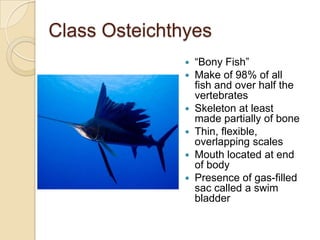
Class Osteichthyes“Bony Fish”Make of 98% of all fish and over half the vertebratesSkeleton at least made partially of boneThin, flexible, overlapping scalesMouth located at end of bodyPresence of gas-filled sac called a swim bladder
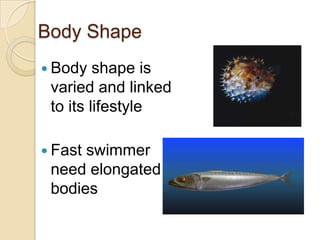
Body ShapeBody shape is varied and linked to its lifestyleFast swimmer need elongated bodies
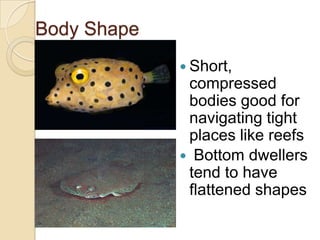
Body ShapeShort, compressed bodies good for navigating tight places like reefs Bottom dwellers tend to have flattened shapes
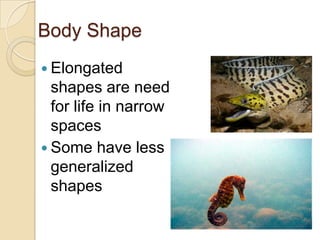
Body ShapeElongated shapes are need for life in narrow spacesSome have less generalized shapes
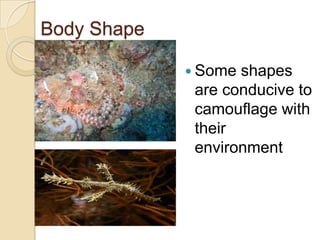
Body ShapeSome shapes are conducive to camouflage with their environment
Exterior Layer
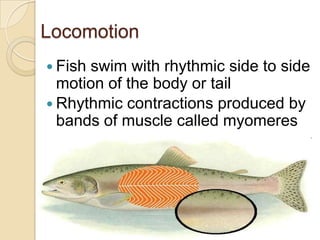
LocomotionFish swim with rhythmic side to side motion of the body or tailRhythmic contractions produced by bands of muscle called myomeres
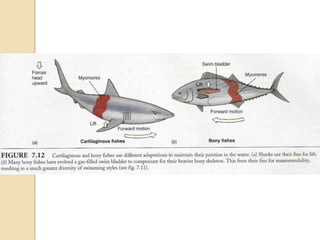
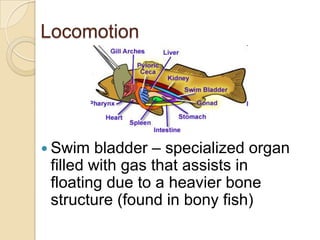
LocomotionSwim bladder – specialized organ filled with gas that assists in floating due to a heavier bone structure (found in bony fish)
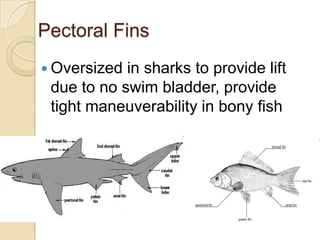
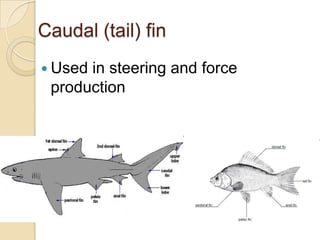
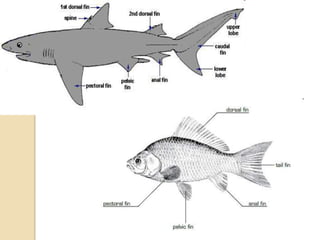
Pectoral FinsOversized in sharks to provide lift due to no swim bladder, provide tight maneuverability in bony fish
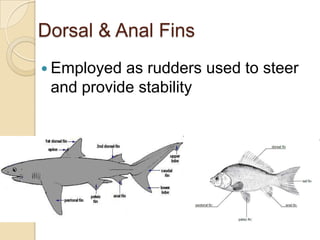
Dorsal & Anal FinsEmployed as rudders used to steer and provide stability
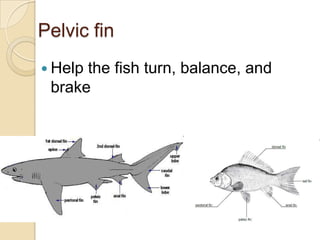
Pelvic finHelp the fish turn, balance, and brake
Caudal (tail) finUsed in steering and force production
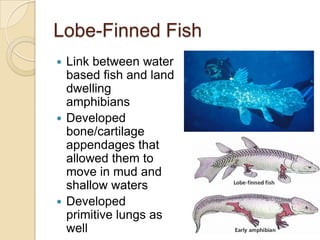
Lobe-Finned FishLink between water based fish and land dwelling amphibiansDeveloped bone/cartilage appendages that allowed them to move in mud and shallow watersDeveloped primitive lungs as well
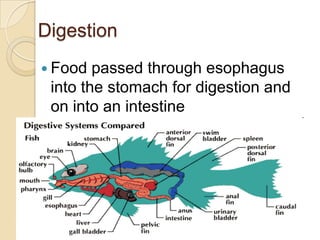
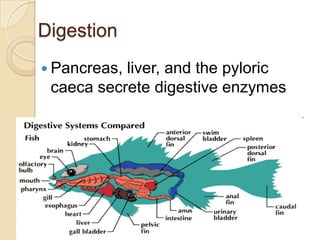
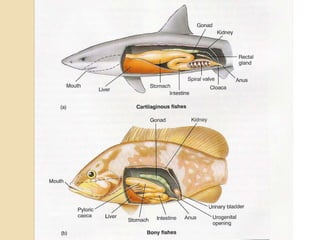
DigestionFood passed through esophagus into the stomach for digestion and on into an intestine
DigestionPancreas, liver, and the pyloric caeca secrete digestive enzymes
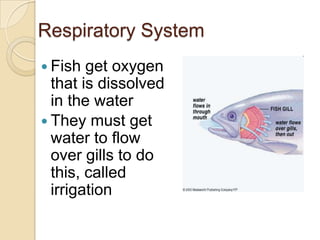
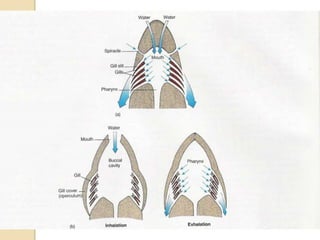
Respiratory SystemFish get oxygen that is dissolved in the waterThey must get water to flow over gills to do this, called irrigation
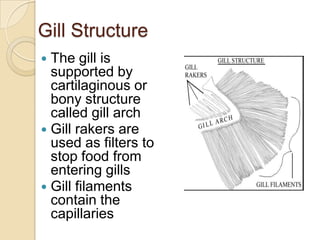
Gill StructureThe gill is supported by cartilaginous or bony structure called gill archGill rakers are used as filters to stop food from entering gillsGill filaments contain the capillaries
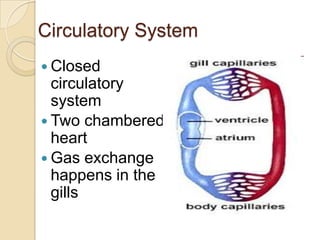
Circulatory SystemClosed circulatory systemTwo chambered heartGas exchange happens in the gills
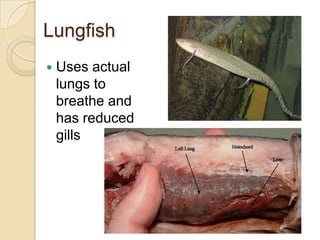
LungfishUses actual lungs to breathe and has reduced gills
Regulating Internal EnvironmentThe blood of marine fish is less salty than the water, therefore they lose water through osmosisTo replace it they must drink seawater
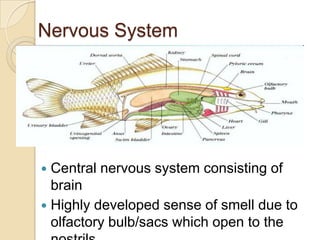
Nervous SystemCentral nervous system consisting of brain Highly developed sense of smell due to olfactory bulb/sacs which open to the nostrils
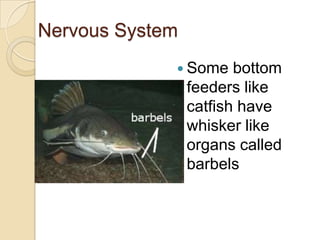
Nervous SystemSome bottom feeders like catfish have whisker like organs called barbels
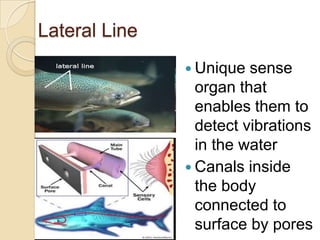
Lateral LineUnique sense organ that enables them to detect vibrations in the waterCanals inside the body connected to surface by pores
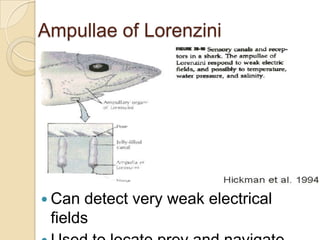
Ampullae of LorenziniCan detect very weak electrical fieldsUsed to locate prey and navigate

15. Phylum Chordata Notes