Department of zoology
Govt. Dungar Collage
DR. ANU KUMAR SHARMA
ASSOCIATE PROFESSOR
Adaptations in
Deep-sea Fishes
Contents :
•Adaptation.
•What is deep – sea ?
•Problems faced by deep-
sea fishes.
• Adaptation shown by deep
sea- fishes.
•Examples of deep – sea
fishes.
Adaptation is the evolutionary process where an
organism becomes better suited to its habitat.
This process takes place over many generations. It
is one of the basic phenomena of biology.
When people speak about adaptation, they often
mean a 'feature' (a trait) which helps an animal or
plant survive.
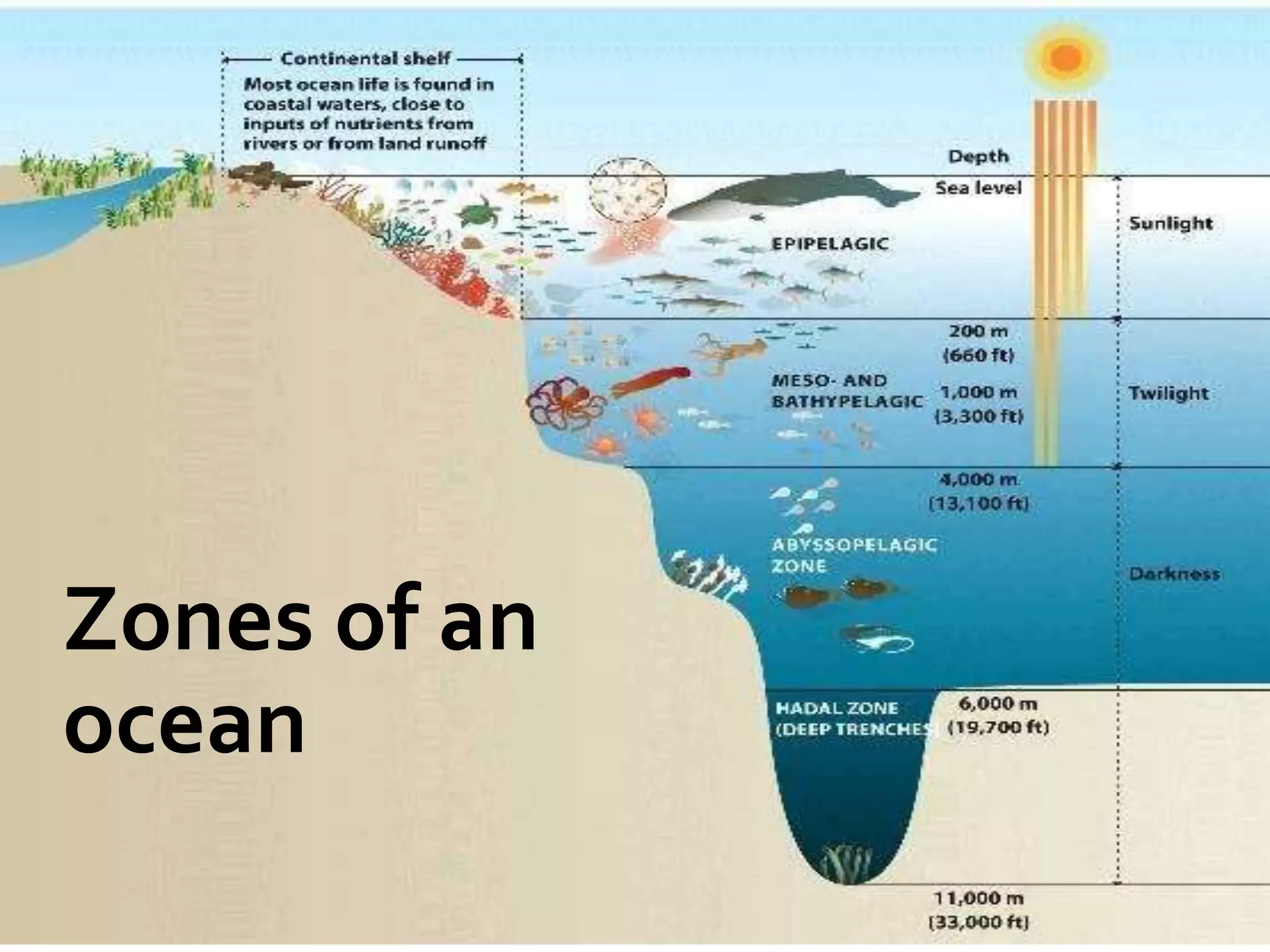
Zones of an
ocean
1. Absence of light:
Light is virtually absent in the deep ocean, which means that deep-sea
organisms cannot rely on vision for feeding, avoiding being eaten, or mating
and photosynthesis.
2. Low temperature and high pressure :
As we travel from the surface of the ocean downward to the seafloor, water
pressure increases by one atmosphere (or 14 pounds per square inch) for every
10 meters (32.8 feet) of depth.
Ocean waters have an average temperature of only 4°C (39°F).
3. Scarcity of food :
Plants are absent due to absence of light . Phytoplankton are also absent , so
the fishes are depended on dead plants and animals falling from surface water
but due to limiting amount it leads to competition.
4. Low oxygen and high salinity :
Oxygen acts as limiting factor as it is about 5 ppm below 1000 m depth.
Salinity doesn't have much affect on distribution or activity of fishes.
•Deep sea fishes are generally predators and carnivorous due to
scarcity of food
.e.g., Gstrostomias
•Some species are scavengers feeding on the dead plants and
animal falling from the above surface .
•Mesopelagic fishes migrate to the surface water at night to fed on
planktons and animals.
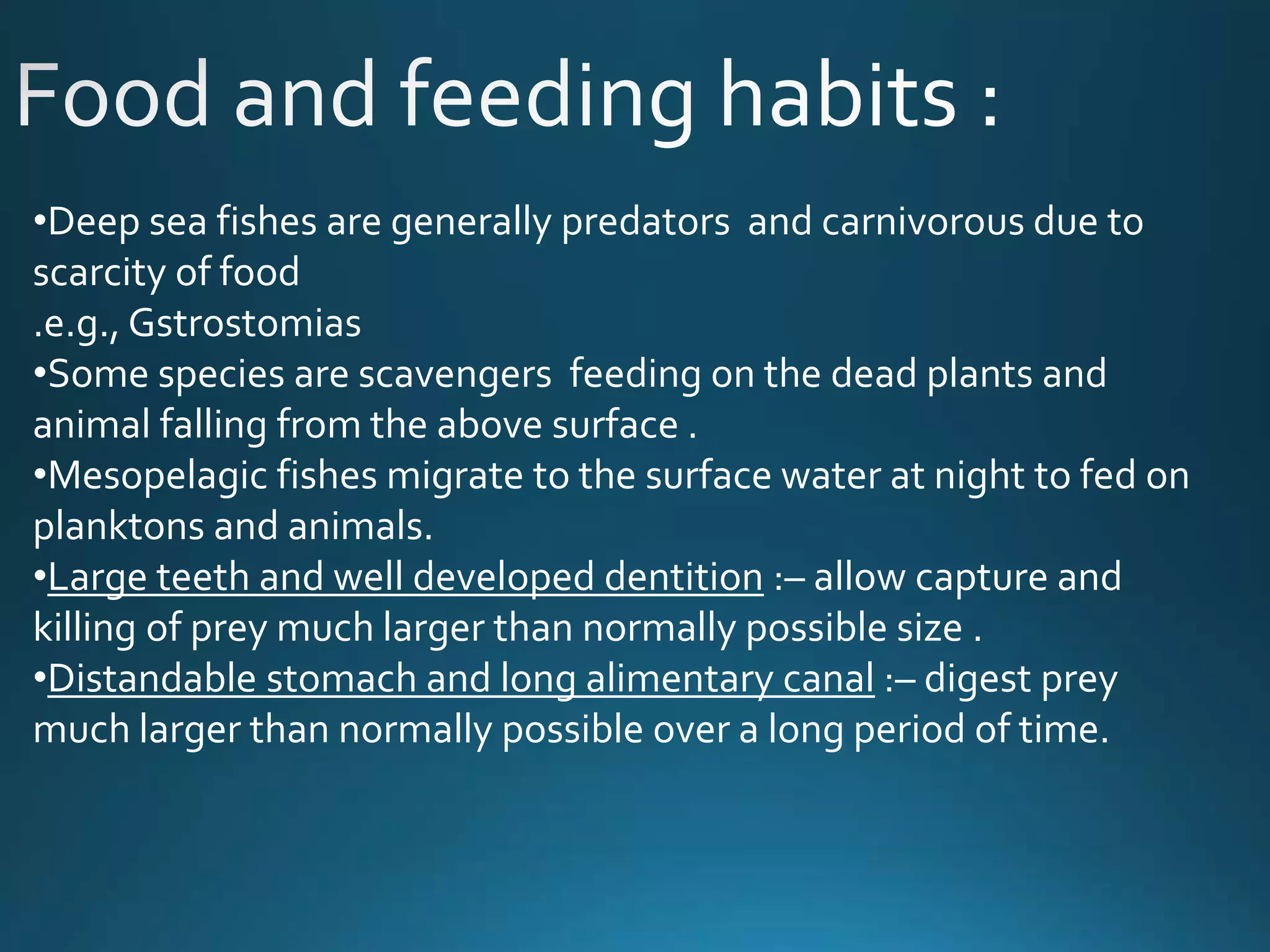
•Large teeth and well developed dentition :– allow capture and
killing of prey much larger than normally possible size .
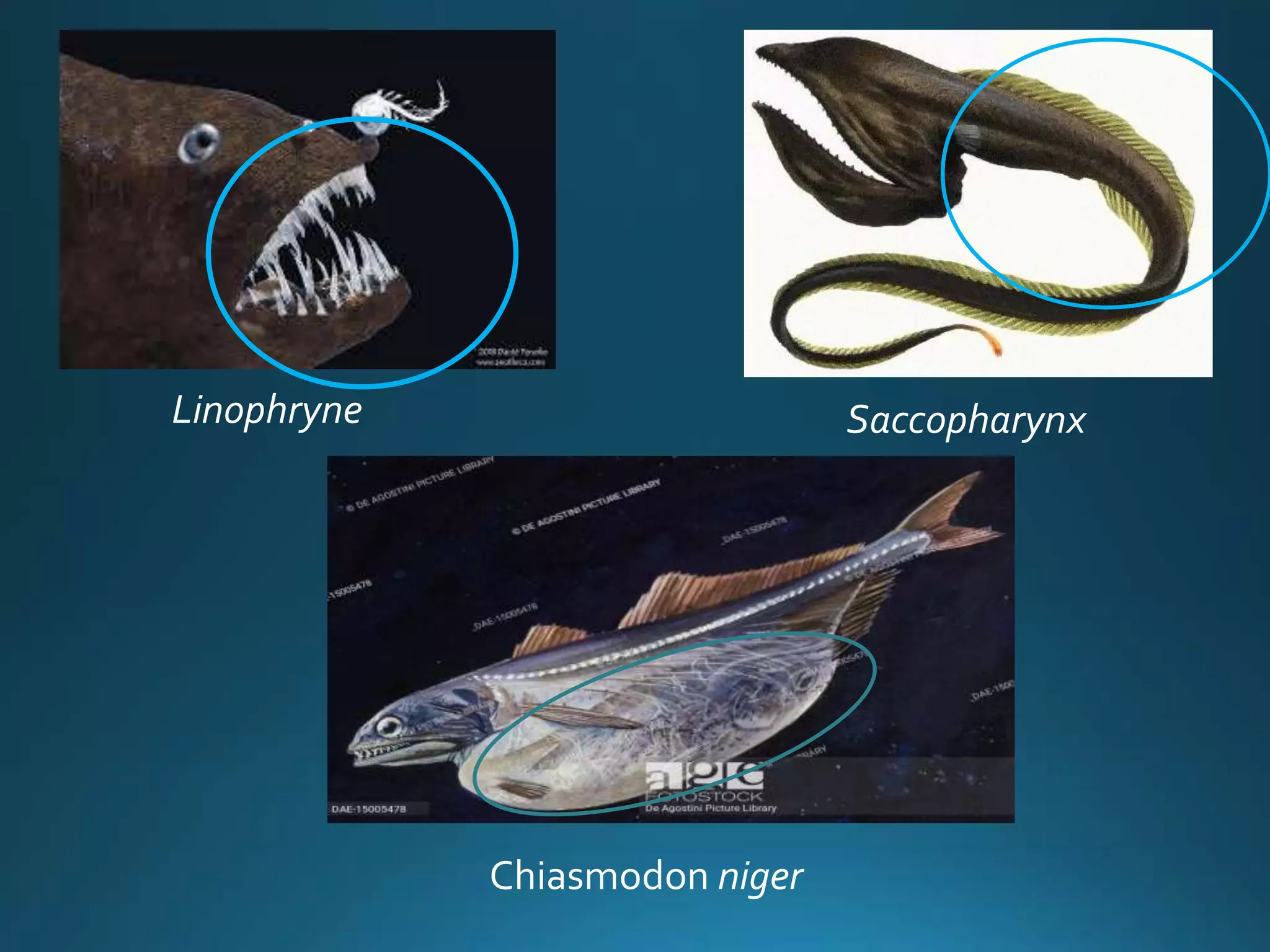
•Distandable stomach and long alimentary canal :– digest prey
much larger than normally possible over a long period of time.
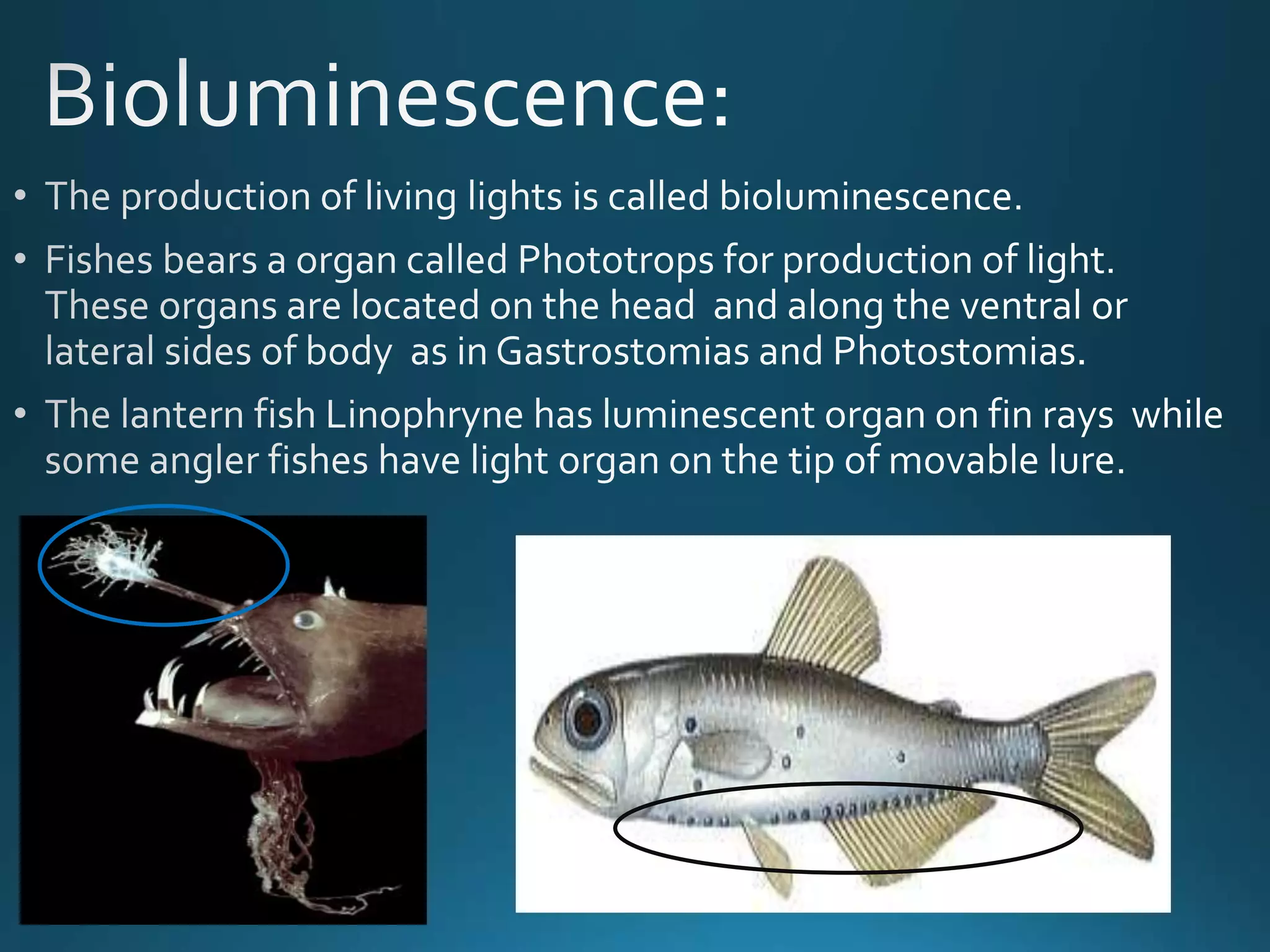
Linophryne
Chiasmodon niger
Saccopharynx
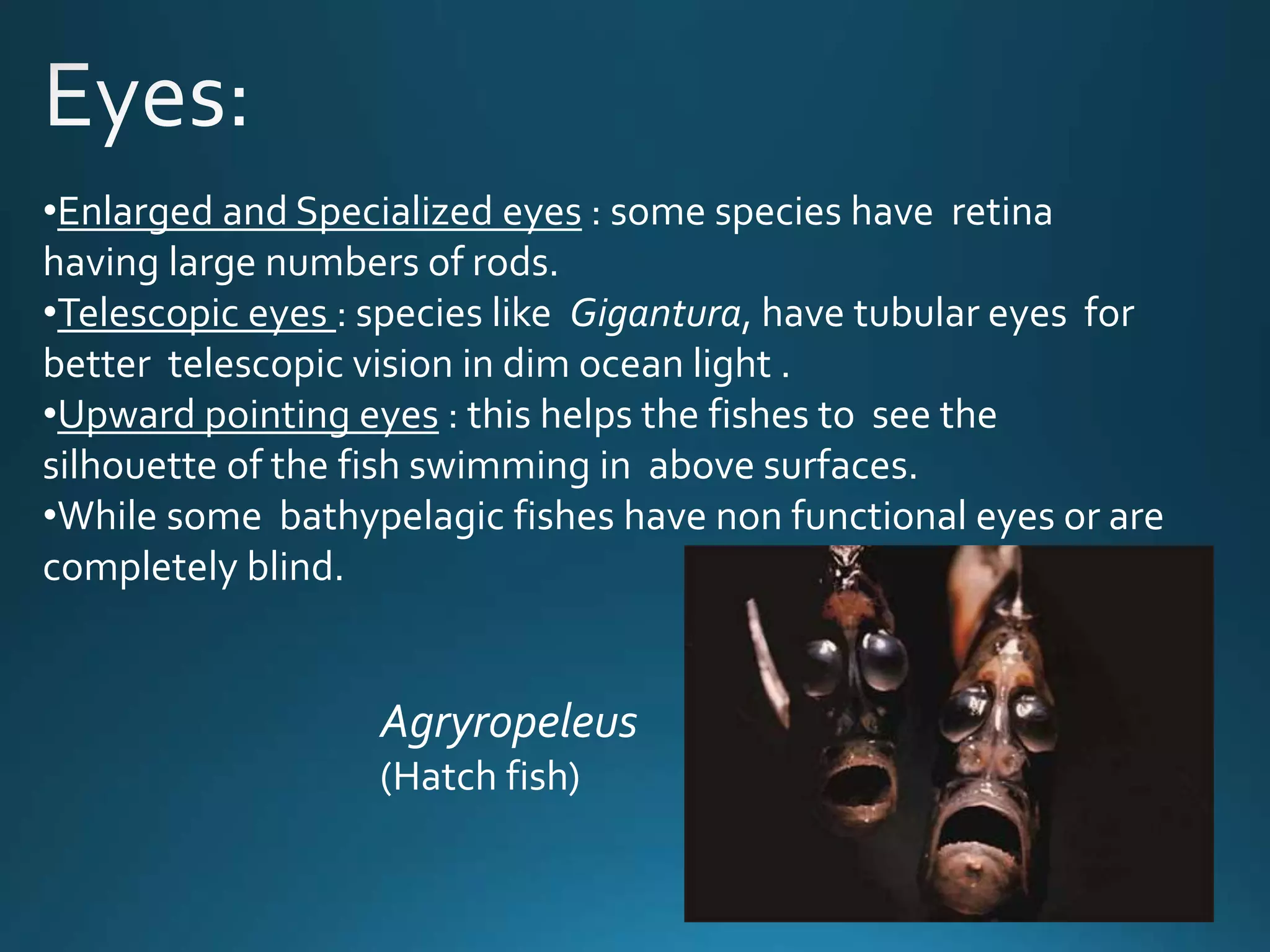
•Enlarged and Specialized eyes : some species have retina
having large numbers of rods.
•Telescopic eyes : species like Gigantura, have tubular eyes for
better telescopic vision in dim ocean light .
•Upward pointing eyes : this helps the fishes to see the
silhouette of the fish swimming in above surfaces.
•While some bathypelagic fishes have non functional eyes or are
completely blind.
Agryropeleus
(Hatch fish)
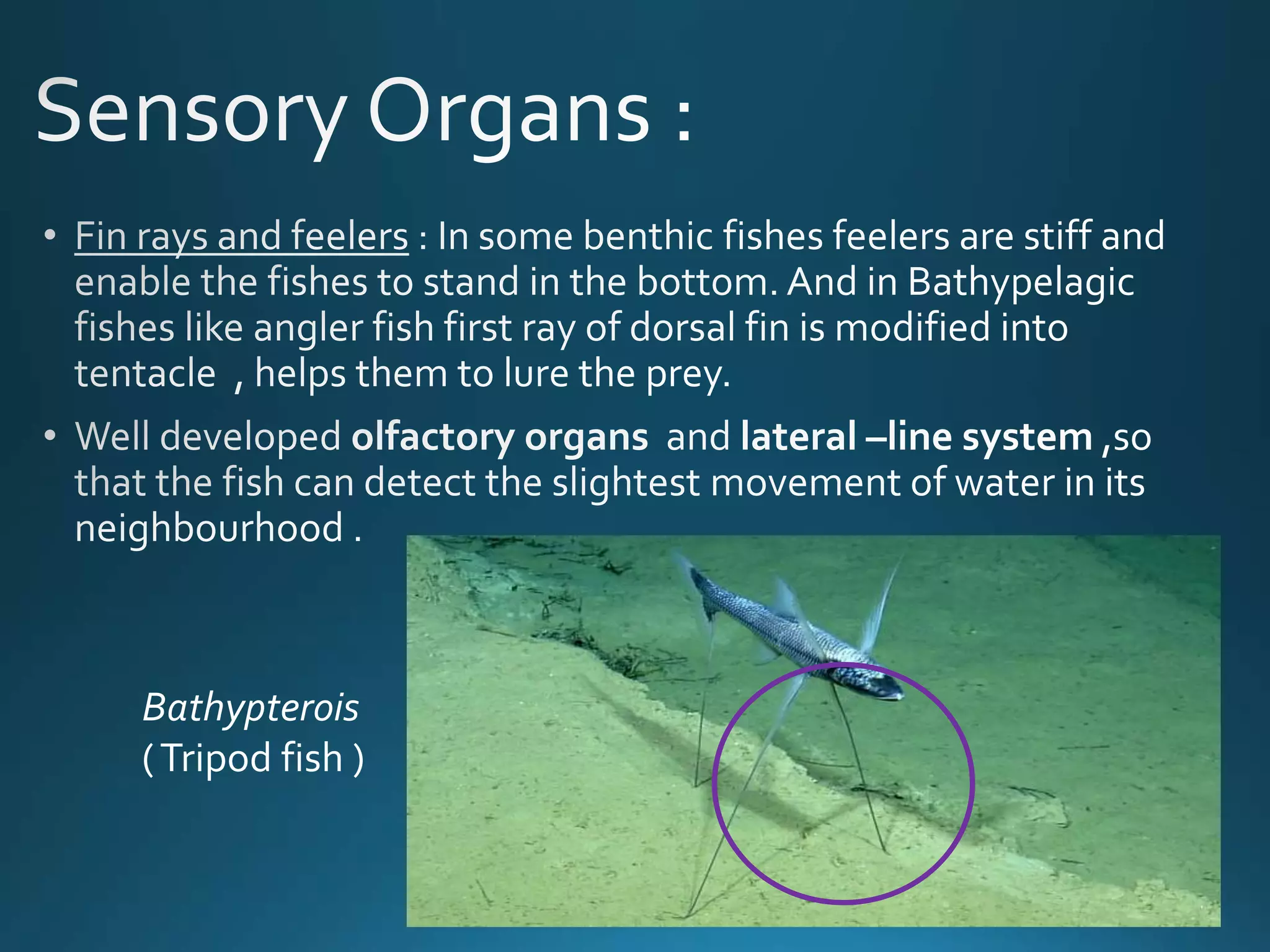
Bathypterois
(Tripod fish )
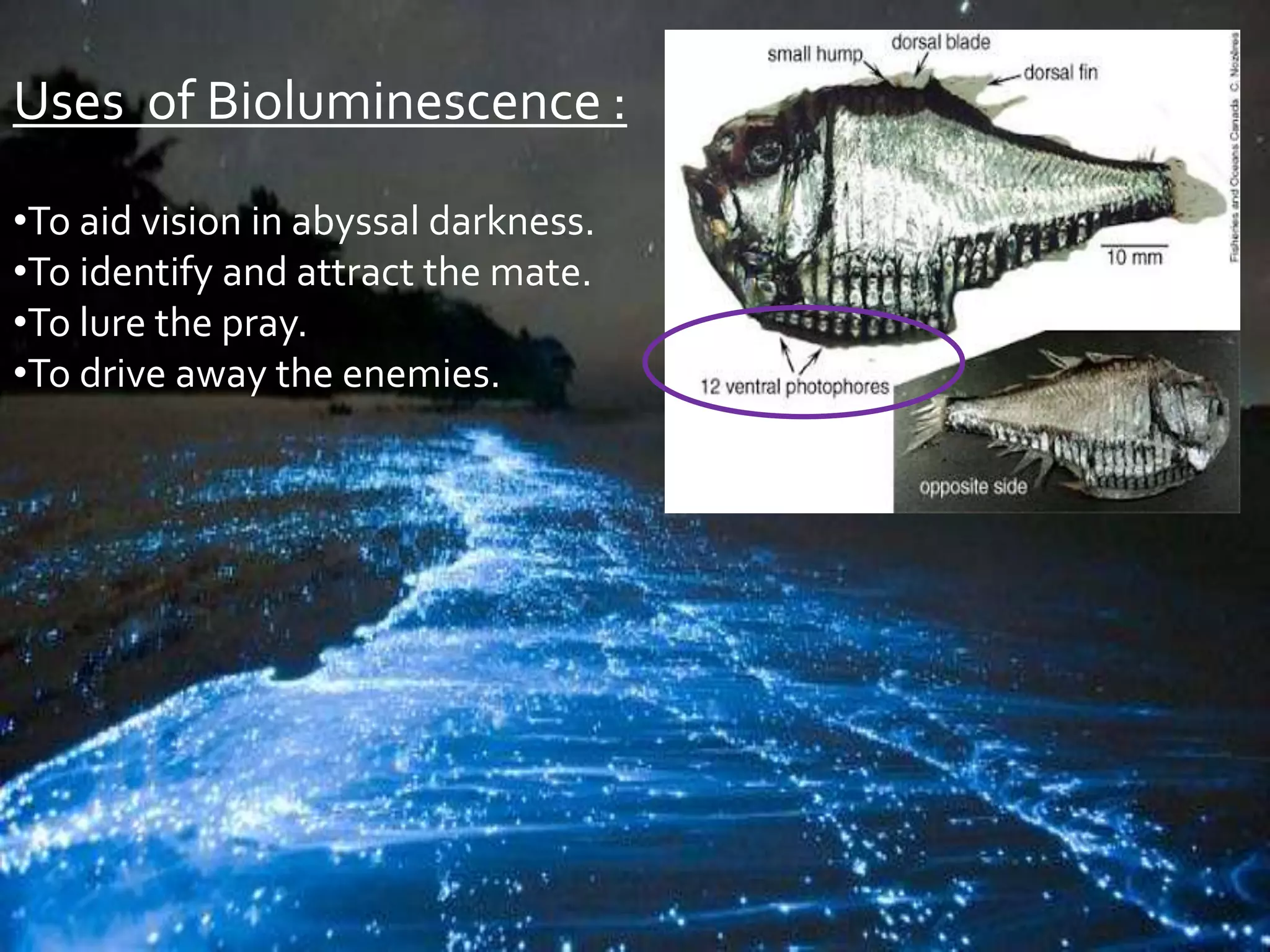
Uses of Bioluminescence :
•To aid vision in abyssal darkness.
•To identify and attract the mate.
•To lure the pray.
•To drive away the enemies.
Larva of anglerfish
Alepisaurus (Lancet fish ) Cetomimus (whale fish)
Bathysaurus (Lizard fish)
Adaptations in deep sea fishes

Adaptations in deep sea fishes

  • 1.
    Department of zoology Govt.Dungar Collage DR. ANU KUMAR SHARMA ASSOCIATE PROFESSOR
  • 2.
  • 3.
    Contents : •Adaptation. •What isdeep – sea ? •Problems faced by deep- sea fishes. • Adaptation shown by deep sea- fishes. •Examples of deep – sea fishes.
  • 4.
    Adaptation is theevolutionary process where an organism becomes better suited to its habitat. This process takes place over many generations. It is one of the basic phenomena of biology. When people speak about adaptation, they often mean a 'feature' (a trait) which helps an animal or plant survive.
  • 6.
  • 8.
    1. Absence oflight: Light is virtually absent in the deep ocean, which means that deep-sea organisms cannot rely on vision for feeding, avoiding being eaten, or mating and photosynthesis. 2. Low temperature and high pressure : As we travel from the surface of the ocean downward to the seafloor, water pressure increases by one atmosphere (or 14 pounds per square inch) for every 10 meters (32.8 feet) of depth. Ocean waters have an average temperature of only 4°C (39°F). 3. Scarcity of food : Plants are absent due to absence of light . Phytoplankton are also absent , so the fishes are depended on dead plants and animals falling from surface water but due to limiting amount it leads to competition. 4. Low oxygen and high salinity : Oxygen acts as limiting factor as it is about 5 ppm below 1000 m depth. Salinity doesn't have much affect on distribution or activity of fishes.
  • 10.
    •Deep sea fishesare generally predators and carnivorous due to scarcity of food .e.g., Gstrostomias •Some species are scavengers feeding on the dead plants and animal falling from the above surface . •Mesopelagic fishes migrate to the surface water at night to fed on planktons and animals. •Large teeth and well developed dentition :– allow capture and killing of prey much larger than normally possible size . •Distandable stomach and long alimentary canal :– digest prey much larger than normally possible over a long period of time.
  • 11.
  • 12.
    •Enlarged and Specializedeyes : some species have retina having large numbers of rods. •Telescopic eyes : species like Gigantura, have tubular eyes for better telescopic vision in dim ocean light . •Upward pointing eyes : this helps the fishes to see the silhouette of the fish swimming in above surfaces. •While some bathypelagic fishes have non functional eyes or are completely blind. Agryropeleus (Hatch fish)
  • 13.
  • 16.
    Uses of Bioluminescence: •To aid vision in abyssal darkness. •To identify and attract the mate. •To lure the pray. •To drive away the enemies.
  • 18.
  • 19.
    Alepisaurus (Lancet fish) Cetomimus (whale fish) Bathysaurus (Lizard fish)