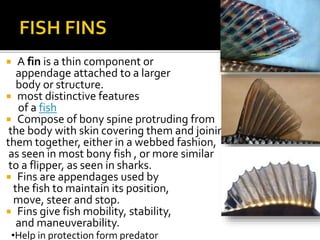
 A fin is a thin component or
appendage attached to a larger
body or structure.
 most distinctive features
of a fish
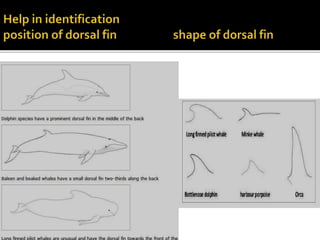
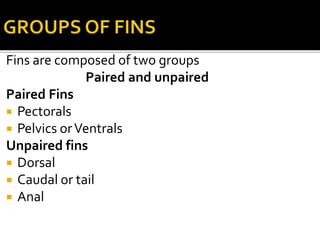
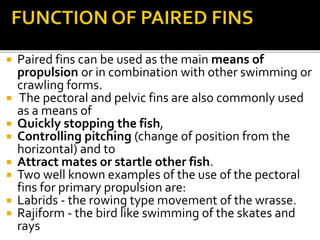
 Compose of bony spine protruding from
the body with skin covering them and joining
them together, either in a webbed fashion,
as seen in most bony fish , or more similar
to a flipper, as seen in sharks.
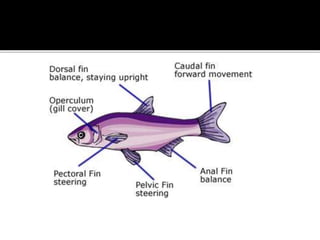
 Fins are appendages used by
the fish to maintain its position,
move, steer and stop.
 Fins give fish mobility, stability,
and maneuverability.
•Help in protection form predator
Fins are composed of two groups
Paired and unpaired
Paired Fins
 Pectorals
 Pelvics orVentrals
Unpaired fins
 Dorsal
 Caudal or tail
 Anal
 Paired fins can be used as the main means of
propulsion or in combination with other swimming or
crawling forms.
 The pectoral and pelvic fins are also commonly used
as a means of
 Quickly stopping the fish,
 Controlling pitching (change of position from the
horizontal) and to
 Attract mates or startle other fish.
 Two well known examples of the use of the pectoral
fins for primary propulsion are:
 Labrids - the rowing type movement of the wrasse.
 Rajiform - the bird like swimming of the skates and
rays
1:PECTORAL FINS
 On side of body , behind gill cavity
 In primitive fishes, the pectoral fins are found lower
on the body, nearer the ventral side.
 In some look like an arm-like extension.
 In other cases, the pectoral fins haveevolved to
look like wings for South American flying fish
 a pad for resting on the bottom in some catfish.
he pelvic fins are generally smaller than the
 The pelvic fins are located ventrally below and
behind the pectorals.
 Pelvic fins function in stabilizing , braking, move up
and down
 They are of little use for locomotion.
 Some have spines and rays on them.
 Other fish have modified pelvic fins in the form of a
sucker for holding on rocks.eg Gobies
 Some fish have even lost their pelvic fins
completely, especially those that spend their lives
scouring along the ocean floor.
1:DORSAL FINS
 Dorsal fins are located on the back or on the top of the
fish
 Aid the fish in sharp turns or stops, and assist the fish in
rolling.
 Fish may have up to three distinct dorsal fins, known
as proximal, middle , and distal dorsal fins
 several fish have just two dorsal fins with the
middle and distal fins fused together.
 May be a fleshy ray, or quite large and
supported by spines.
 Dorsal fins have been modified in the
remoras into a sucking disc that allows them
to cling to sharks or other large fishes.
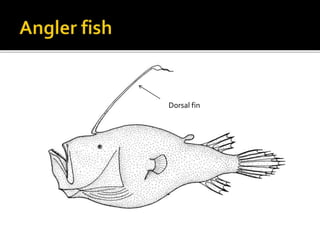
 In the anglerfish, the dorsal fin has been
modified into a fishing rod and lure.
Dorsal fin
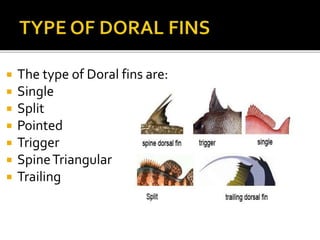
 The type of Doral fins are:
 Single
 Split
 Pointed
 Trigger
 SpineTriangular
 Trailing
 The caudal fin is the tail tail located at the end of the
caudal peduncle.
 For fish identification, the type of Caudal fin is used to
distinguish one type from another.
Types of caudal fin
 Indented
 Round
 Square
 Forked
 Lunate
 Pointed
 Emarginate
 Heteroceral
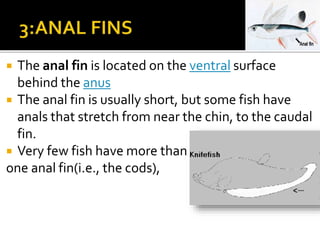
 The anal fin is located on the ventral surface
behind the anus
 The anal fin is usually short, but some fish have
anals that stretch from near the chin, to the caudal
fin.
 Very few fish have more than
one anal fin(i.e., the cods),
•some do not have one at all (i.e., skates
and rays).
• In some species,the anal fin has modified
into an organ used in copulation called
gonopodium.
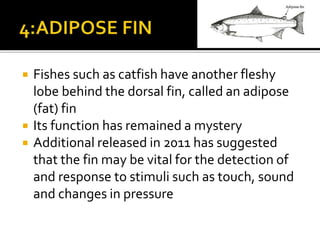
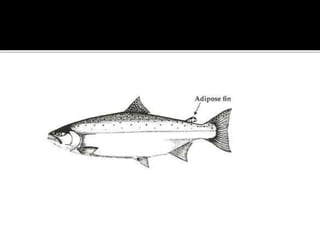
 Fishes such as catfish have another fleshy
lobe behind the dorsal fin, called an adipose
(fat) fin
 Its function has remained a mystery
 Additional released in 2011 has suggested
that the fin may be vital for the detection of
and response to stimuli such as touch, sound
and changes in pressure
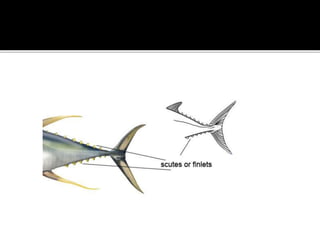
 Finlets are small fins located between the
dorsal fin and the tail of the fish
 anal fins and the tail of the fish.
 These finlets are found on fast swimming fish
like tuna, and is said to aid in the speed of the
fish, by cutting through the water.
Fish fins

Fish fins

  • 1.
     A finis a thin component or appendage attached to a larger body or structure.  most distinctive features of a fish  Compose of bony spine protruding from the body with skin covering them and joining them together, either in a webbed fashion, as seen in most bony fish , or more similar to a flipper, as seen in sharks.  Fins are appendages used by the fish to maintain its position, move, steer and stop.  Fins give fish mobility, stability, and maneuverability. •Help in protection form predator
  • 4.
    Fins are composedof two groups Paired and unpaired Paired Fins  Pectorals  Pelvics orVentrals Unpaired fins  Dorsal  Caudal or tail  Anal
  • 5.
     Paired finscan be used as the main means of propulsion or in combination with other swimming or crawling forms.  The pectoral and pelvic fins are also commonly used as a means of  Quickly stopping the fish,  Controlling pitching (change of position from the horizontal) and to  Attract mates or startle other fish.  Two well known examples of the use of the pectoral fins for primary propulsion are:  Labrids - the rowing type movement of the wrasse.  Rajiform - the bird like swimming of the skates and rays
  • 6.
    1:PECTORAL FINS  Onside of body , behind gill cavity  In primitive fishes, the pectoral fins are found lower on the body, nearer the ventral side.  In some look like an arm-like extension.  In other cases, the pectoral fins haveevolved to look like wings for South American flying fish  a pad for resting on the bottom in some catfish.
  • 8.
    he pelvic finsare generally smaller than the  The pelvic fins are located ventrally below and behind the pectorals.  Pelvic fins function in stabilizing , braking, move up and down  They are of little use for locomotion.  Some have spines and rays on them.  Other fish have modified pelvic fins in the form of a sucker for holding on rocks.eg Gobies  Some fish have even lost their pelvic fins completely, especially those that spend their lives scouring along the ocean floor.
  • 11.
    1:DORSAL FINS  Dorsalfins are located on the back or on the top of the fish  Aid the fish in sharp turns or stops, and assist the fish in rolling.  Fish may have up to three distinct dorsal fins, known as proximal, middle , and distal dorsal fins
  • 12.
     several fishhave just two dorsal fins with the middle and distal fins fused together.  May be a fleshy ray, or quite large and supported by spines.  Dorsal fins have been modified in the remoras into a sucking disc that allows them to cling to sharks or other large fishes.  In the anglerfish, the dorsal fin has been modified into a fishing rod and lure.
  • 13.
  • 14.
     The typeof Doral fins are:  Single  Split  Pointed  Trigger  SpineTriangular  Trailing
  • 15.
     The caudalfin is the tail tail located at the end of the caudal peduncle.  For fish identification, the type of Caudal fin is used to distinguish one type from another. Types of caudal fin  Indented  Round  Square  Forked  Lunate  Pointed  Emarginate  Heteroceral
  • 17.
     The analfin is located on the ventral surface behind the anus  The anal fin is usually short, but some fish have anals that stretch from near the chin, to the caudal fin.  Very few fish have more than one anal fin(i.e., the cods),
  • 18.
    •some do nothave one at all (i.e., skates and rays). • In some species,the anal fin has modified into an organ used in copulation called gonopodium.
  • 19.
     Fishes suchas catfish have another fleshy lobe behind the dorsal fin, called an adipose (fat) fin  Its function has remained a mystery  Additional released in 2011 has suggested that the fin may be vital for the detection of and response to stimuli such as touch, sound and changes in pressure
  • 21.
     Finlets aresmall fins located between the dorsal fin and the tail of the fish  anal fins and the tail of the fish.  These finlets are found on fast swimming fish like tuna, and is said to aid in the speed of the fish, by cutting through the water.