LARVAL FORMS
OF CRUSTEANS
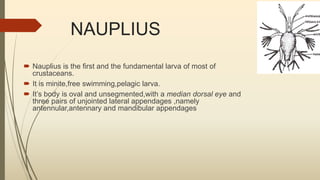
NAUPLIUS
 Nauplius is the first and the fundamental larva of most of
crustaceans.
 It is minite,free swimming,pelagic larva.
 It’s body is oval and unsegmented,with a median dorsal eye and
three pairs of unjointed lateral appendages ,namely
antennular,antennary and mandibular appendages
Antennular appendages are uniramous, and
the others are biramous
Anus is located at the posterior tip
Nauplius undergoes repeated moults and, in
most crustaceans, transforms to the
metanauplius stage
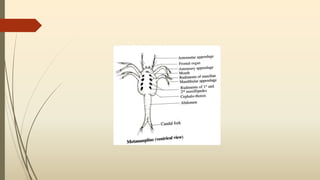
Metanauplius
Metanauplius represent an advanced stage of
nauplius
It’s body is elongated, with an oval cephalo-
thoracic region and a terminally forked
abdomen
Anteriorly, cephalo-thoracic has a pair of
papilliform frontal organs
Ventro laterally, there are the paired
antennular,antennary and mandibular
appendages and the rudiments of four pairs of
appendages
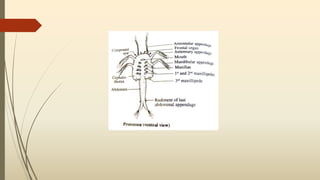
Protozoea
Protozoea has an enlarged and elongated
body, differentiated into cephalo-thorax and
abdomen
Cephalo-thorax is covered by the carapace or
dorsal shield
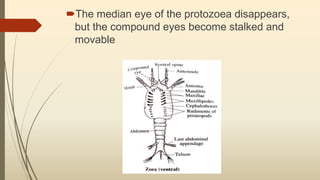
Zoea
Zoea is truly an advanced protozoea
It is the second important crustacean
larva
In zoea, the cephalothorax becomes
much developed and the abdomen
becomes six segmented
The median eye of the protozoea disappears,
but the compound eyes become stalked and
movable
• ALIMA
In squilla, the embryo hatches out from
the egg as a modified zoea known as
kalima larva
It is glassy and transparent pelagic larva,
with clean body covered by short and
broad carapace
Carapace bears a rostrum
Body has three divisions head,thorax and
abdomen
Head bears the antennules,antennae and the
stalked compound eyes
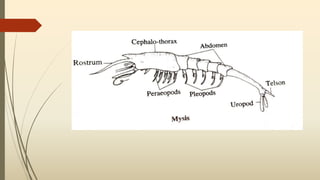
Music or schizopod
Mysis is found in the life cycle of Pegasus
It’s body is long and lean with an elongated and
six segmented abdomen
Abdomen appendages make their appearance
and develop to biramous pleopods swimming
legs
The last pair of swimmerets eventually transform
to uropods
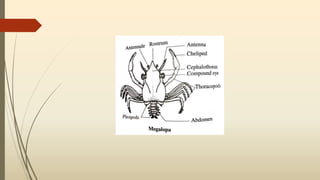
Megalopa
Cephalothorax is large and crab like,with well
developed appendages, large and stalked
compound eyes and a carapace produced into
a rostrum
Abdomen is six segmented with functional
pleopods
Larval forms in crustaceans

Larval forms in crustaceans

  • 1.
  • 2.
    NAUPLIUS  Nauplius isthe first and the fundamental larva of most of crustaceans.  It is minite,free swimming,pelagic larva.  It’s body is oval and unsegmented,with a median dorsal eye and three pairs of unjointed lateral appendages ,namely antennular,antennary and mandibular appendages
  • 3.
    Antennular appendages areuniramous, and the others are biramous Anus is located at the posterior tip Nauplius undergoes repeated moults and, in most crustaceans, transforms to the metanauplius stage
  • 4.
    Metanauplius Metanauplius represent anadvanced stage of nauplius It’s body is elongated, with an oval cephalo- thoracic region and a terminally forked abdomen Anteriorly, cephalo-thoracic has a pair of papilliform frontal organs
  • 5.
    Ventro laterally, thereare the paired antennular,antennary and mandibular appendages and the rudiments of four pairs of appendages
  • 8.
    Protozoea Protozoea has anenlarged and elongated body, differentiated into cephalo-thorax and abdomen Cephalo-thorax is covered by the carapace or dorsal shield
  • 10.
    Zoea Zoea is trulyan advanced protozoea It is the second important crustacean larva In zoea, the cephalothorax becomes much developed and the abdomen becomes six segmented
  • 11.
    The median eyeof the protozoea disappears, but the compound eyes become stalked and movable
  • 12.
    • ALIMA In squilla,the embryo hatches out from the egg as a modified zoea known as kalima larva It is glassy and transparent pelagic larva, with clean body covered by short and broad carapace
  • 13.
    Carapace bears arostrum Body has three divisions head,thorax and abdomen Head bears the antennules,antennae and the stalked compound eyes
  • 14.
    Music or schizopod Mysisis found in the life cycle of Pegasus It’s body is long and lean with an elongated and six segmented abdomen Abdomen appendages make their appearance and develop to biramous pleopods swimming legs The last pair of swimmerets eventually transform to uropods
  • 16.
    Megalopa Cephalothorax is largeand crab like,with well developed appendages, large and stalked compound eyes and a carapace produced into a rostrum Abdomen is six segmented with functional pleopods