Mitosis Notes
Mitosis
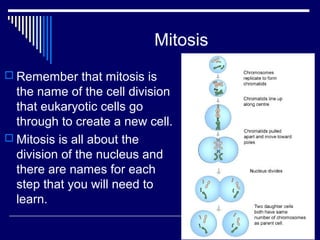
 Remember that mitosis is
the name of the cell division
that eukaryotic cells go
through to create a new cell.
 Mitosis is all about the
division of the nucleus and
there are names for each
step that you will need to
learn.
Cell Division
Mitosis- process of
making new
somatic (nonsex)
cells like skin cells
(clones)
Cell Cycle
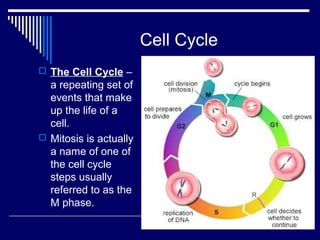
 The Cell Cycle –
a repeating set of
events that make
up the life of a
cell.
 Mitosis is actually
a name of one of
the cell cycle
steps usually
referred to as the
M phase.
Cell Cycle
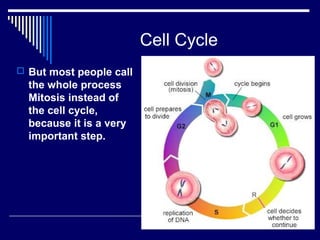
 But most people call
the whole process
Mitosis instead of
the cell cycle,
because it is a very
important step.
Cell Division
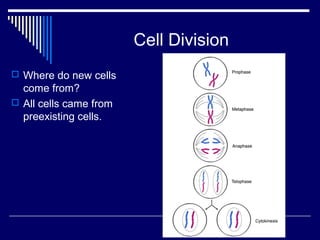
 Where do new cells
come from?
 All cells came from
preexisting cells.
Steps of the Cell Cycle
 1. Interphase – the longest phase,
80% of cells life is in this phase.
 Steps of Interphase:
 G1 phase – growth of cell
 G0 phase – inactive stage.
 S phase – DNA is replicated (“S”
synthesis of DNA)
 G2 phase – growth of cell; prepares
for cell division
Steps of the Cell Cycle
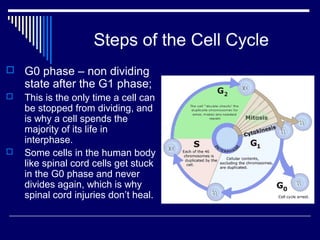
 G0 phase – non dividing
state after the G1 phase;
 This is the only time a cell can
be stopped from dividing, and
is why a cell spends the
majority of its life in
interphase.
 Some cells in the human body
like spinal cord cells get stuck
in the G0 phase and never
divides again, which is why
spinal cord injuries don’t heal.
Cell Cycle
 2. Mitosis – division of the nucleus; a continuous
process divided into 4 phases
 A. Prophase
 B. Metaphase
 C. Anaphase
 D. Telophase
M phase
G2 phase
S phase
G1 phase
Mitosis
 The following is what
happens during each phase
of mitosis.
 A. Prophase
 Chromosomes appear
 The nucleus begins to break
down
 Centrioles appear and
produce spindle fibers
Mitosis
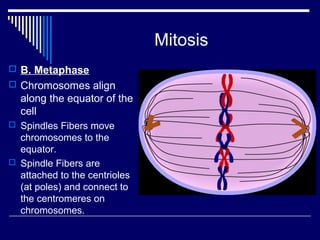
 B. Metaphase
 Chromosomes align
along the equator of the
cell
 Spindles Fibers move
chromosomes to the
equator.
 Spindle Fibers are
attached to the centrioles
(at poles) and connect to
the centromeres on
chromosomes.
Mitosis
 C. Anaphase
 Chromosomes are pulled
to the pole by the
contraction of the spindle
fibers
 So, the sister chromatids
are separated at the
centromere
Mitosis
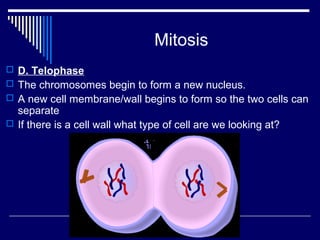
 D. Telophase
 The chromosomes begin to form a new nucleus.
 A new cell membrane/wall begins to form so the two cells can
separate
 If there is a cell wall what type of cell are we looking at?
Cell Cycle
 3. Cytokinesis – division of the cytoplasm
 The chromosomes start to uncoil and become less dense
 You now have two new genetically identical cells.
 Cytokinesis actually happens during Telophase, so you would
actually say Telophase/Cytokinesis.
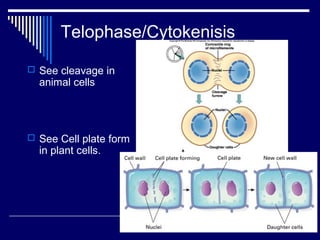
Telophase/Cytokenisis
 See cleavage in
animal cells
 See Cell plate form
in plant cells.

Mitosis Notes

  • 1.
  • 2.
    Mitosis  Remember thatmitosis is the name of the cell division that eukaryotic cells go through to create a new cell.  Mitosis is all about the division of the nucleus and there are names for each step that you will need to learn.
  • 3.
    Cell Division Mitosis- processof making new somatic (nonsex) cells like skin cells (clones)
  • 4.
    Cell Cycle  TheCell Cycle – a repeating set of events that make up the life of a cell.  Mitosis is actually a name of one of the cell cycle steps usually referred to as the M phase.
  • 5.
    Cell Cycle  Butmost people call the whole process Mitosis instead of the cell cycle, because it is a very important step.
  • 6.
    Cell Division  Wheredo new cells come from?  All cells came from preexisting cells.
  • 7.
    Steps of theCell Cycle  1. Interphase – the longest phase, 80% of cells life is in this phase.  Steps of Interphase:  G1 phase – growth of cell  G0 phase – inactive stage.  S phase – DNA is replicated (“S” synthesis of DNA)  G2 phase – growth of cell; prepares for cell division
  • 8.
    Steps of theCell Cycle  G0 phase – non dividing state after the G1 phase;  This is the only time a cell can be stopped from dividing, and is why a cell spends the majority of its life in interphase.  Some cells in the human body like spinal cord cells get stuck in the G0 phase and never divides again, which is why spinal cord injuries don’t heal.
  • 10.
    Cell Cycle  2.Mitosis – division of the nucleus; a continuous process divided into 4 phases  A. Prophase  B. Metaphase  C. Anaphase  D. Telophase
  • 11.
    M phase G2 phase Sphase G1 phase
  • 12.
    Mitosis  The followingis what happens during each phase of mitosis.  A. Prophase  Chromosomes appear  The nucleus begins to break down  Centrioles appear and produce spindle fibers
  • 13.
    Mitosis  B. Metaphase Chromosomes align along the equator of the cell  Spindles Fibers move chromosomes to the equator.  Spindle Fibers are attached to the centrioles (at poles) and connect to the centromeres on chromosomes.
  • 14.
    Mitosis  C. Anaphase Chromosomes are pulled to the pole by the contraction of the spindle fibers  So, the sister chromatids are separated at the centromere
  • 15.
    Mitosis  D. Telophase The chromosomes begin to form a new nucleus.  A new cell membrane/wall begins to form so the two cells can separate  If there is a cell wall what type of cell are we looking at?
  • 16.
    Cell Cycle  3.Cytokinesis – division of the cytoplasm  The chromosomes start to uncoil and become less dense  You now have two new genetically identical cells.  Cytokinesis actually happens during Telophase, so you would actually say Telophase/Cytokinesis.
  • 17.
    Telophase/Cytokenisis  See cleavagein animal cells  See Cell plate form in plant cells.