










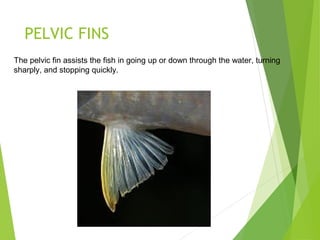


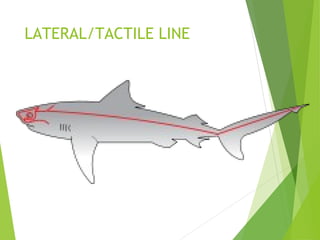


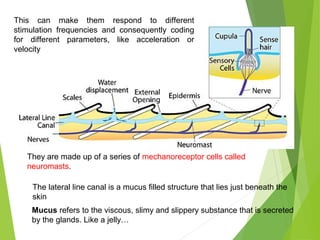


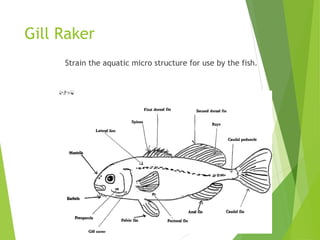
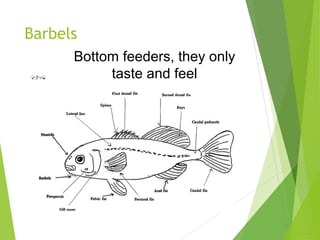
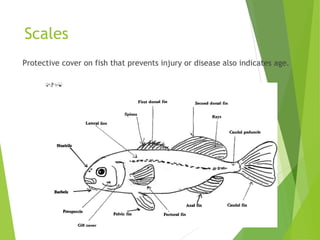
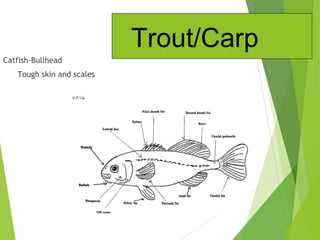
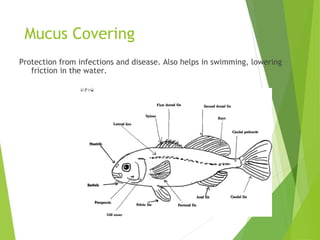


Fins originally evolved for locomotion in aquatic environments and have taken different shapes providing functions besides locomotion. The main external organs of fish are fins including dorsal, pectoral, pelvic, anal, and caudal fins which aid in movement, stability, stopping, and propulsion. The lateral line system detects vibrations through mechanoreceptor cells called neuromasts, allowing fish to find food, navigate, and avoid predators. It is made up of the lateral line canal containing neuromasts which transduce water movements to the brain. Gills supply oxygen from water and other organs include barbels, scales, and a mucus coating which aid in tasks like feeding, protection, and swimming.


