AmphibiansAmphibians
EatingEating
By Mr. “Frogs are Cool” ChapmanBy Mr. “Frogs are Cool” Chapman
AmphibiansAmphibians
 Amphibians have never been able to
completely leave the water (or at least
moist environments).
 1. They must return to the water to breed
 2. They have to keep their skin moist.
TonguesTongues
 Tongues of amphibian vary considerably.Tongues of amphibian vary considerably.
 Some amphibian have no tongues.Some amphibian have no tongues.
 Ex. CaeciliansEx. Caecilians
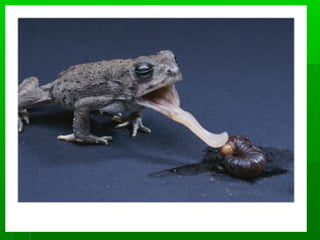
 Some amphibians have a very longSome amphibians have a very long
tongue with sticky tips.tongue with sticky tips.
 Ex. Most toadsEx. Most toads
 Amphibian tongues in betweenAmphibian tongues in between
Amphibian FeedingAmphibian Feeding
 Amphibians catch prey by using?Amphibians catch prey by using?
 Their tongueTheir tongue
 MouthMouth
FeedingFeeding
 Amphibians catch prey by using?Amphibians catch prey by using?
 Their tongueTheir tongue
 MouthMouth
 Once in there mouth, amphibians crushOnce in there mouth, amphibians crush
their prey with their jaws and swallow ittheir prey with their jaws and swallow it
whole.whole.
 Most Amphibians do not have teethMost Amphibians do not have teeth
FeedingFeeding
 How do amphibians push the food downHow do amphibians push the food down
their throat?their throat?
 Amphibians use their eyes to push theAmphibians use their eyes to push the
food down their throat.food down their throat.
Where They LiveWhere They Live
 Amphibians are mostly found?Amphibians are mostly found?
 Wetlands, swamps, or in moist areas.Wetlands, swamps, or in moist areas.
 Why do amphibians have to stay moist?Why do amphibians have to stay moist?
 If their skin dries up they will die.If their skin dries up they will die.
SkinSkin
 Amphibians skin is considered to beAmphibians skin is considered to be
semi-permeable.semi-permeable.
 Semi-permeable means liquids andSemi-permeable means liquids and
gases can pass through their skin, butgases can pass through their skin, but
not solids.not solids.
 If amphibians are in a dry environment,If amphibians are in a dry environment,
there is nothing to stop water fromthere is nothing to stop water from
moving out of their body.moving out of their body.
SkinSkin
 But what happens when they are in waterBut what happens when they are in water
that has toxic chemicals in it?that has toxic chemicals in it?
 The toxins get absorbed into their bodyThe toxins get absorbed into their body
with the water and they die.with the water and they die.
 Amphibians are considered to beAmphibians are considered to be
Bio-IndicatorsBio-Indicators
 Bio-IndicatorBio-Indicator – is an organism that– is an organism that
indicates whether or not an area isindicates whether or not an area is
healthy.healthy.
 Amphibians are widely used to figure outAmphibians are widely used to figure out
how healthy wetlands are.how healthy wetlands are.
 Example: If a pond has lots of frogs, youExample: If a pond has lots of frogs, you
would know the water is clean and free ofwould know the water is clean and free of
toxins.toxins.
Reproduction MethodsReproduction Methods
 OviparousOviparous – egg layers– egg layers
 ViviparousViviparous – live birth– live birth
 OvoviviparousOvoviviparous – eggs hatch in side– eggs hatch in side
mother and the young live in her untilmother and the young live in her until
maturity.maturity.

Amphibian Eating Notes

  • 1.
    AmphibiansAmphibians EatingEating By Mr. “Frogsare Cool” ChapmanBy Mr. “Frogs are Cool” Chapman
  • 2.
    AmphibiansAmphibians  Amphibians havenever been able to completely leave the water (or at least moist environments).  1. They must return to the water to breed  2. They have to keep their skin moist.
  • 3.
    TonguesTongues  Tongues ofamphibian vary considerably.Tongues of amphibian vary considerably.  Some amphibian have no tongues.Some amphibian have no tongues.  Ex. CaeciliansEx. Caecilians  Some amphibians have a very longSome amphibians have a very long tongue with sticky tips.tongue with sticky tips.  Ex. Most toadsEx. Most toads  Amphibian tongues in betweenAmphibian tongues in between
  • 8.
    Amphibian FeedingAmphibian Feeding Amphibians catch prey by using?Amphibians catch prey by using?  Their tongueTheir tongue  MouthMouth
  • 11.
    FeedingFeeding  Amphibians catchprey by using?Amphibians catch prey by using?  Their tongueTheir tongue  MouthMouth  Once in there mouth, amphibians crushOnce in there mouth, amphibians crush their prey with their jaws and swallow ittheir prey with their jaws and swallow it whole.whole.  Most Amphibians do not have teethMost Amphibians do not have teeth
  • 12.
    FeedingFeeding  How doamphibians push the food downHow do amphibians push the food down their throat?their throat?  Amphibians use their eyes to push theAmphibians use their eyes to push the food down their throat.food down their throat.
  • 16.
    Where They LiveWhereThey Live  Amphibians are mostly found?Amphibians are mostly found?  Wetlands, swamps, or in moist areas.Wetlands, swamps, or in moist areas.  Why do amphibians have to stay moist?Why do amphibians have to stay moist?  If their skin dries up they will die.If their skin dries up they will die.
  • 17.
    SkinSkin  Amphibians skinis considered to beAmphibians skin is considered to be semi-permeable.semi-permeable.  Semi-permeable means liquids andSemi-permeable means liquids and gases can pass through their skin, butgases can pass through their skin, but not solids.not solids.  If amphibians are in a dry environment,If amphibians are in a dry environment, there is nothing to stop water fromthere is nothing to stop water from moving out of their body.moving out of their body.
  • 19.
    SkinSkin  But whathappens when they are in waterBut what happens when they are in water that has toxic chemicals in it?that has toxic chemicals in it?  The toxins get absorbed into their bodyThe toxins get absorbed into their body with the water and they die.with the water and they die.  Amphibians are considered to beAmphibians are considered to be Bio-IndicatorsBio-Indicators
  • 20.
    Bio-IndicatorsBio-Indicators  Bio-IndicatorBio-Indicator –is an organism that– is an organism that indicates whether or not an area isindicates whether or not an area is healthy.healthy.  Amphibians are widely used to figure outAmphibians are widely used to figure out how healthy wetlands are.how healthy wetlands are.  Example: If a pond has lots of frogs, youExample: If a pond has lots of frogs, you would know the water is clean and free ofwould know the water is clean and free of toxins.toxins.
  • 21.
    Reproduction MethodsReproduction Methods OviparousOviparous – egg layers– egg layers  ViviparousViviparous – live birth– live birth  OvoviviparousOvoviviparous – eggs hatch in side– eggs hatch in side mother and the young live in her untilmother and the young live in her until maturity.maturity.