Bony Fish Kingdom: Animalia Phylum: Chordata Subphylum: Vertebrata Class: Osteichthyes
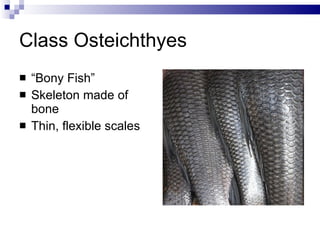
Class Osteichthyes “ Bony Fish” Skeleton made of bone Thin, flexible scales
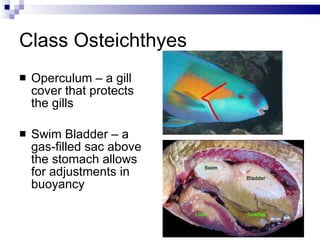
Class Osteichthyes Operculum – a gill cover that protects the gills Swim Bladder – a gas-filled sac above the stomach allows for adjustments in buoyancy
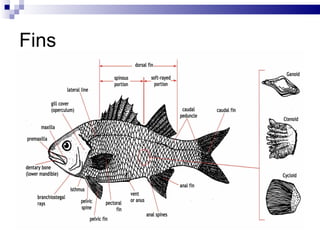
Fins
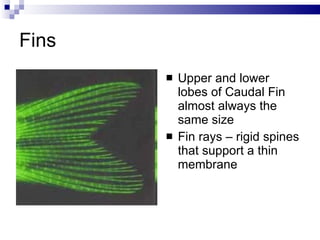
Fins Upper and lower lobes of Caudal Fin almost always the same size Fin rays – rigid spines that support a thin membrane
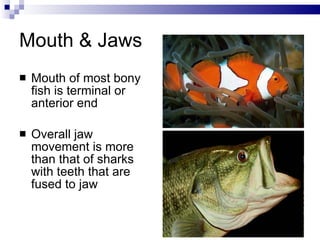
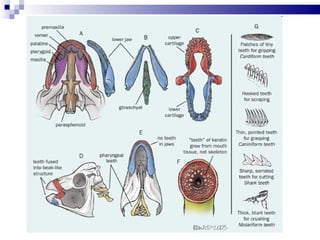
Mouth & Jaws Mouth of most bony fish is terminal or anterior end Overall jaw movement is more than that of sharks with teeth that are fused to jaw
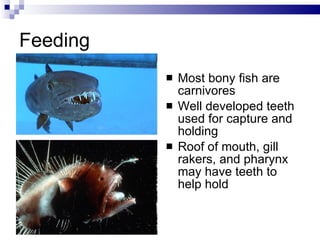
Feeding Most bony fish are carnivores Well developed teeth used for capture and holding Roof of mouth, gill rakers, and pharynx may have teeth to help hold
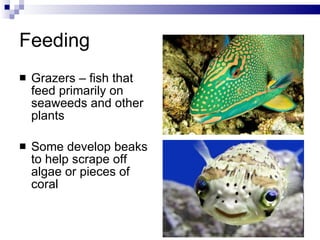
Feeding Grazers – fish that feed primarily on seaweeds and other plants Some develop beaks to help scrape off algae or pieces of coral
 
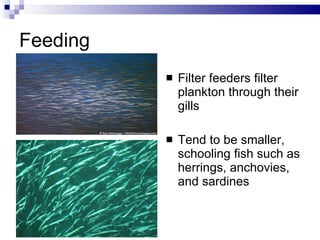
Feeding Filter feeders filter plankton through their gills Tend to be smaller, schooling fish such as herrings, anchovies, and sardines
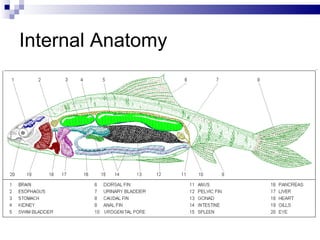
Internal Anatomy
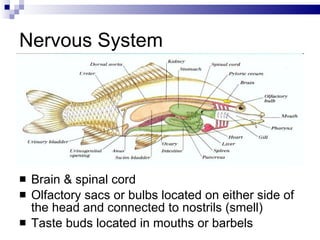
Digestive System Digestive System: stomach, intestine, pancreas, liver, pyloric caecae Pyloric caecae – slender tubes that secrete digestive enzymes Plant eaters = long intestine, Meat eaters = short intestines
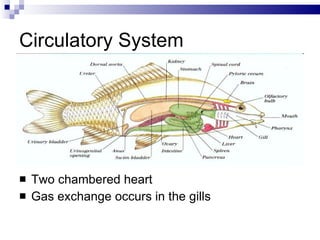
Circulatory System Two chambered heart Gas exchange occurs in the gills
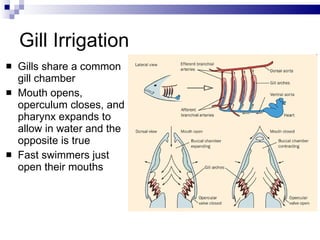
Gill Irrigation Gills share a common gill chamber Mouth opens, operculum closes, and pharynx expands to allow in water and the opposite is true Fast swimmers just open their mouths
Nervous System Brain & spinal cord Olfactory sacs or bulbs located on either side of the head and connected to nostrils (smell) Taste buds located in mouths or barbels
Vision Better eyes than chondrichthyes Fish eyes focus by moving closer or farther away from subject Many have color vision
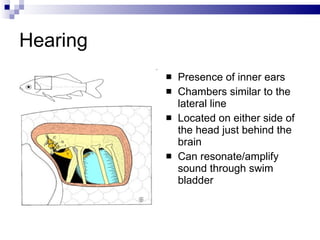
Hearing Presence of inner ears Chambers similar to the lateral line Located on either side of the head just behind the brain Can resonate/amplify sound through swim bladder
Lateral Line Detects vibrations in water Small canals filled with sensory cells
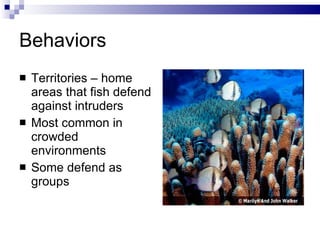
Behaviors Territories – home areas that fish defend against intruders Most common in crowded environments Some defend as groups
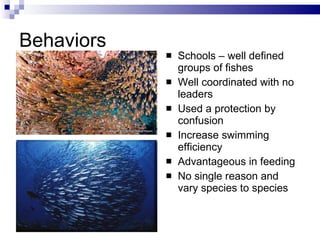
Behaviors Schools – well defined groups of fishes Well coordinated with no leaders Used a protection by confusion Increase swimming efficiency Advantageous in feeding No single reason and vary species to species
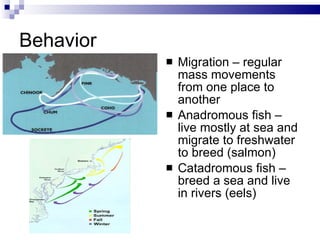
Behavior Migration – regular mass movements from one place to another Anadromous fish – live mostly at sea and migrate to freshwater to breed (salmon) Catadromous fish – breed a sea and live in rivers (eels)
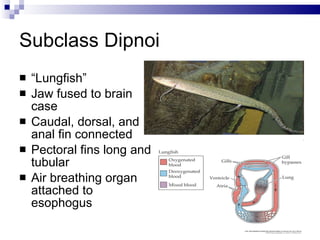
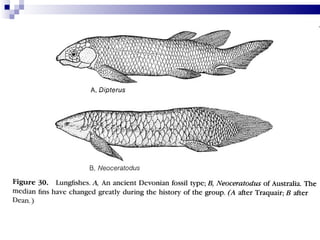
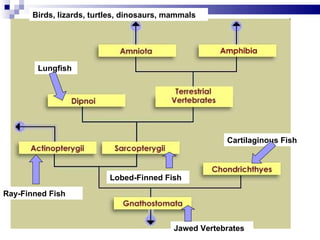
Subclass Dipnoi “ Lungfish” Jaw fused to brain case Caudal, dorsal, and anal fin connected Pectoral fins long and tubular Air breathing organ attached to esophogus
 
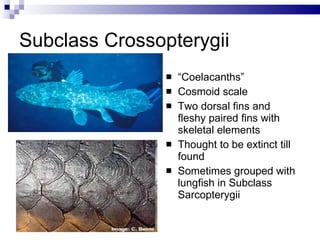
Subclass Crossopterygii  “ Coelacanths” Cosmoid scale Two dorsal fins and fleshy paired fins with skeletal elements Thought to be extinct till found Sometimes grouped with lungfish in Subclass Sarcopterygii
 
 
Subclass Actinopterygii  Ray-finned fishes Most familiar fish Have fin rays, swim bladders, and a symmetrically lobed caudal fin
Cartilaginous Fish Lungfish Ray-Finned Fish Lobed-Finned Fish Jawed Vertebrates Birds, lizards, turtles, dinosaurs, mammals
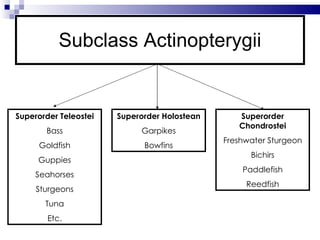
Subclass Actinopterygii Superorder Teleostei Bass Goldfish Guppies Seahorses Sturgeons Tuna Etc. Superorder Holostean Garpikes Bowfins Superorder Chondrostei Freshwater Sturgeon Bichirs Paddlefish Reedfish
Superorder Holostean Fin arrangements make for more efficient swimmers
Superorder Chondrostei Lack bone Sometimes classified with sharks Though more in common with the telosts
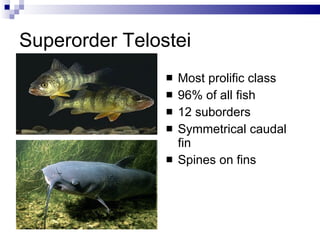
Superorder Telostei Most prolific class 96% of all fish 12 suborders Symmetrical caudal fin Spines on fins
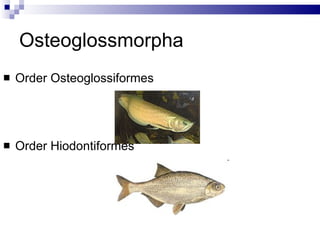
Osteoglossmorpha Order Osteoglossiformes Order Hiodontiformes
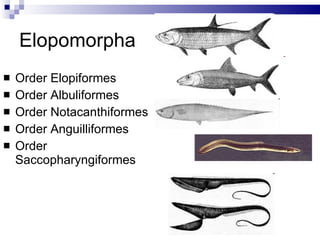
Elopomorpha Order Elopiformes Order Albuliformes Order Notacanthiformes Order Anguilliformes Order Saccopharyngiformes
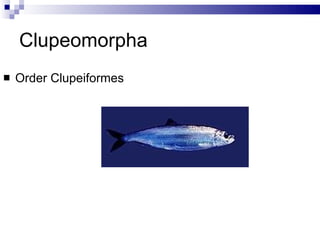
Clupeomorpha Order Clupeiformes
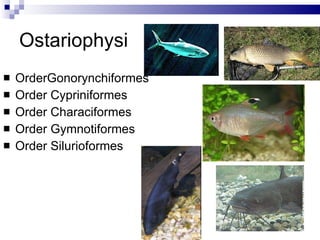
Ostariophysi OrderGonorynchiformes Order Cypriniformes Order Characiformes Order Gymnotiformes Order Silurioformes
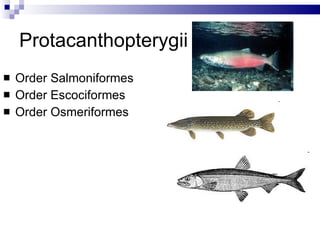
Protacanthopterygii Order Salmoniformes Order Escociformes Order Osmeriformes
Stenopterygii Order Ateleopodiformes Order Stomiiformes
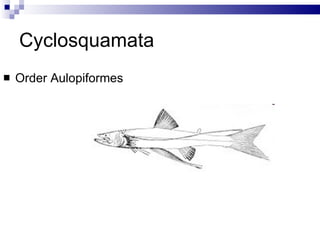
Cyclosquamata Order Aulopiformes
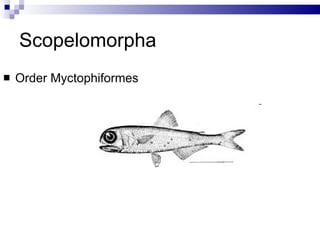
Scopelomorpha Order Myctophiformes
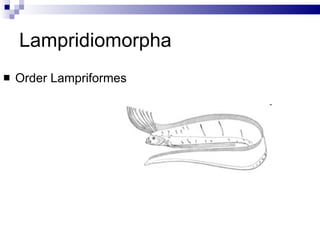
Lampridiomorpha Order Lampriformes
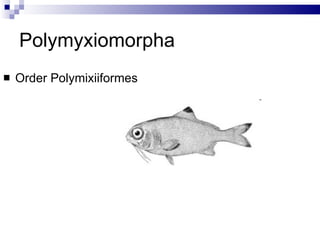
Polymyxiomorpha Order Polymixiiformes
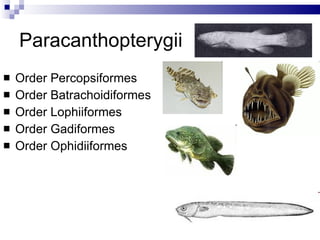
Paracanthopterygii Order Percopsiformes Order Batrachoidiformes Order Lophiiformes Order Gadiformes Order Ophidiiformes
Acanthopterygii Order Mugiliformes Order Atheriniformes Order Beloniformes Order Cetomimiformes Order Cyprinodontiformes Order Stephanoberyciformes Order Bericiformes Order Zeiformes
Acanthopterygii Order Gobiescociformes Order Gasterosteiformes Order Syngnathiformes Order Synbranchiformes Order Tetraodontiformes Order Pleuronectiformes Order Scorpaeniformes Order Perciformes - 46% of fish

16. Class Osteichthyes Notes