Catalysts
Vocabulary
 How do cells regulate chemical reaction rates?
 Cells use catalysts
 Activation Energy – the amount of energy needed to
start the reaction.
 Catalysts – is a substance that speeds up a chemical
reaction by reducing the amount of activation energy
required.
Catalysts
By using catalysts, chemical reactions will occur
quicker and work faster to make a product.
 In general, these are the attributes of catalysts:
 They speed up the rate of a reaction
 They cannot cause an unfavorable reaction to
occur.
 They won’t change the equilibrium
 Catalysts are not consumed
 Higher temperatures speed up a catalysts
 Each catalysts has a pH that it works best at.
Enzymes
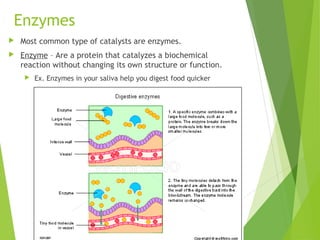
 Most common type of catalysts are enzymes.
 Enzyme – Are a protein that catalyzes a biochemical
reaction without changing its own structure or function.
 Ex. Enzymes in your saliva help you digest food quicker

Catalysts Notes

  • 1.
  • 2.
    Vocabulary  How docells regulate chemical reaction rates?  Cells use catalysts  Activation Energy – the amount of energy needed to start the reaction.  Catalysts – is a substance that speeds up a chemical reaction by reducing the amount of activation energy required.
  • 3.
    Catalysts By using catalysts,chemical reactions will occur quicker and work faster to make a product.  In general, these are the attributes of catalysts:  They speed up the rate of a reaction  They cannot cause an unfavorable reaction to occur.  They won’t change the equilibrium  Catalysts are not consumed  Higher temperatures speed up a catalysts  Each catalysts has a pH that it works best at.
  • 4.
    Enzymes  Most commontype of catalysts are enzymes.  Enzyme – Are a protein that catalyzes a biochemical reaction without changing its own structure or function.  Ex. Enzymes in your saliva help you digest food quicker