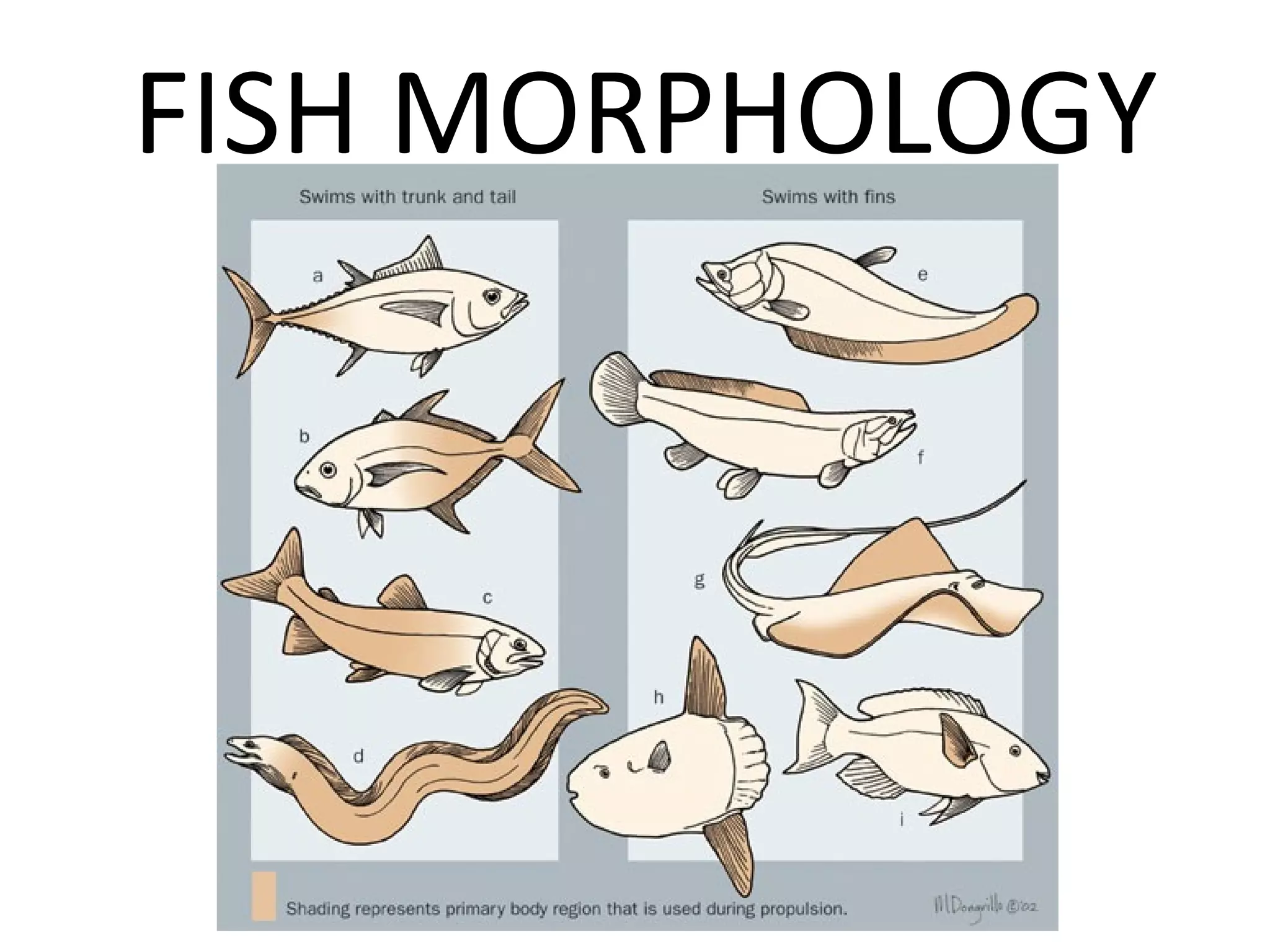
FISH MORPHOLOGY
Fish Morphology
• There is a great diversity in
shapes of fishes and their body
parts
• Shapes of fishes are adaptations
to the species’ environment
and/or behaviors
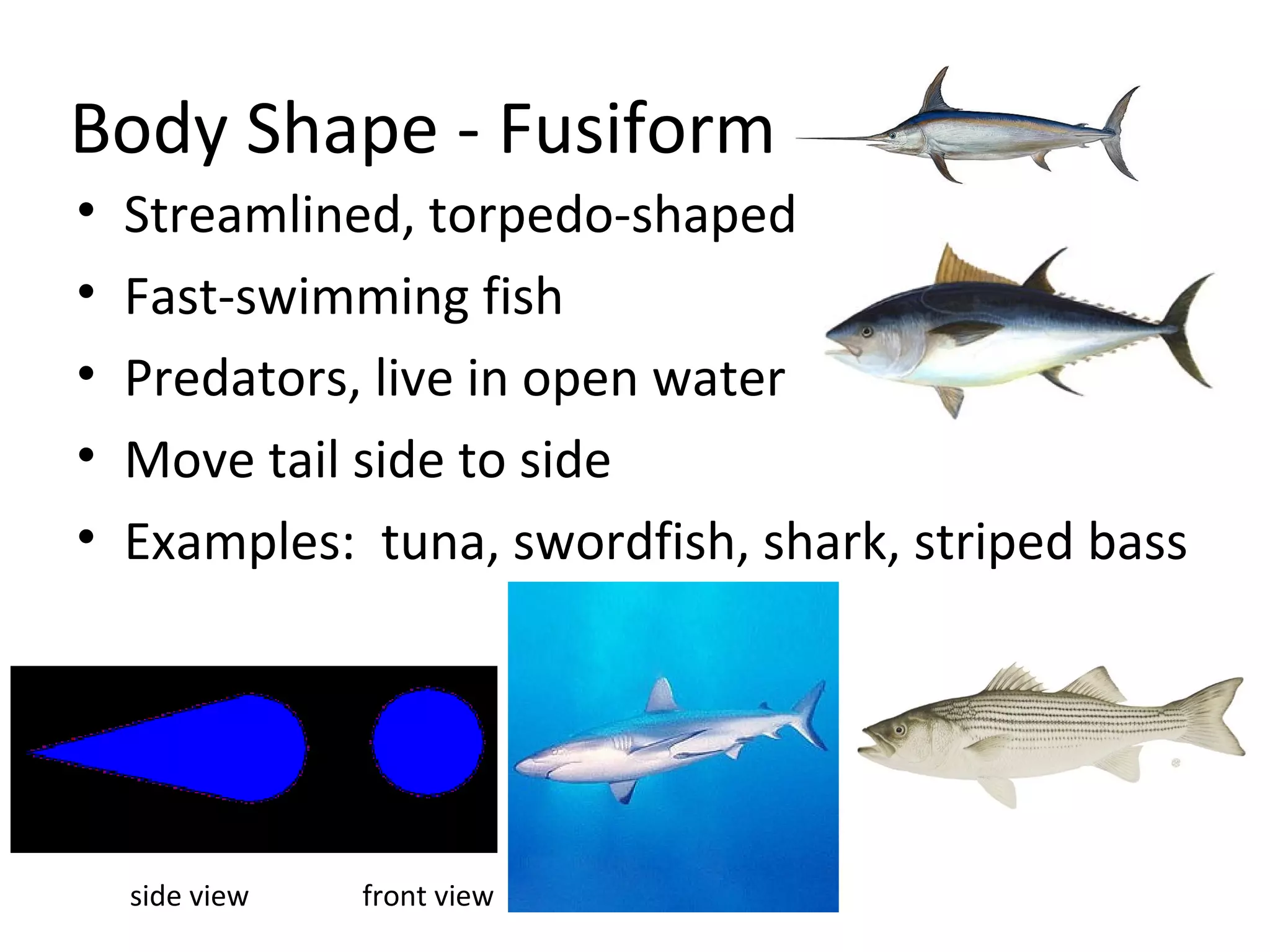
Body Shape - Fusiform
• Streamlined, torpedo-shaped
• Fast-swimming fish
• Predators, live in open water
• Move tail side to side
• Examples: tuna, swordfish, shark, striped bass
side view front view
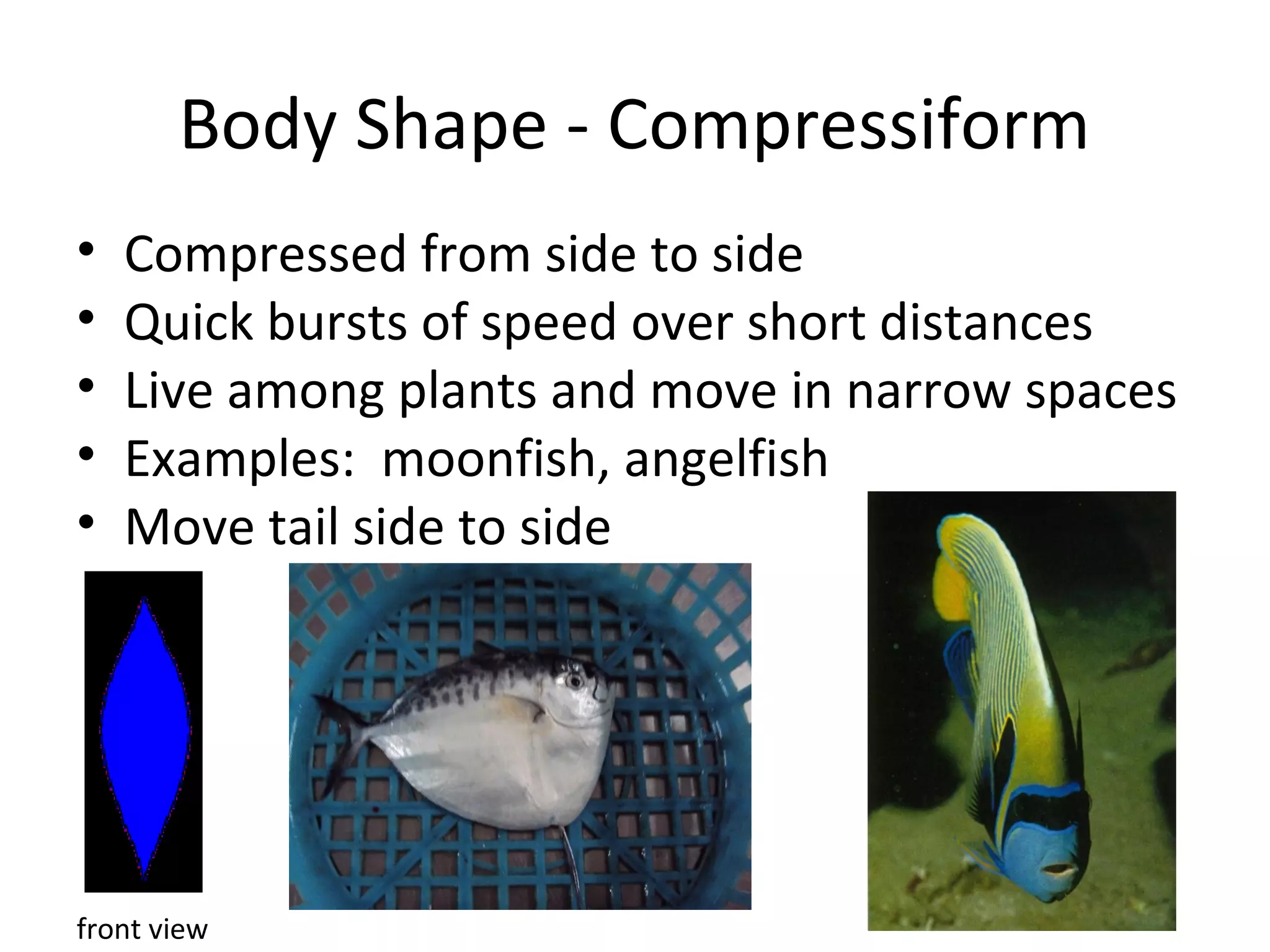
Body Shape - Compressiform
• Compressed from side to side
• Quick bursts of speed over short distances
• Live among plants and move in narrow spaces
• Examples: moonfish, angelfish
• Move tail side to side
front view
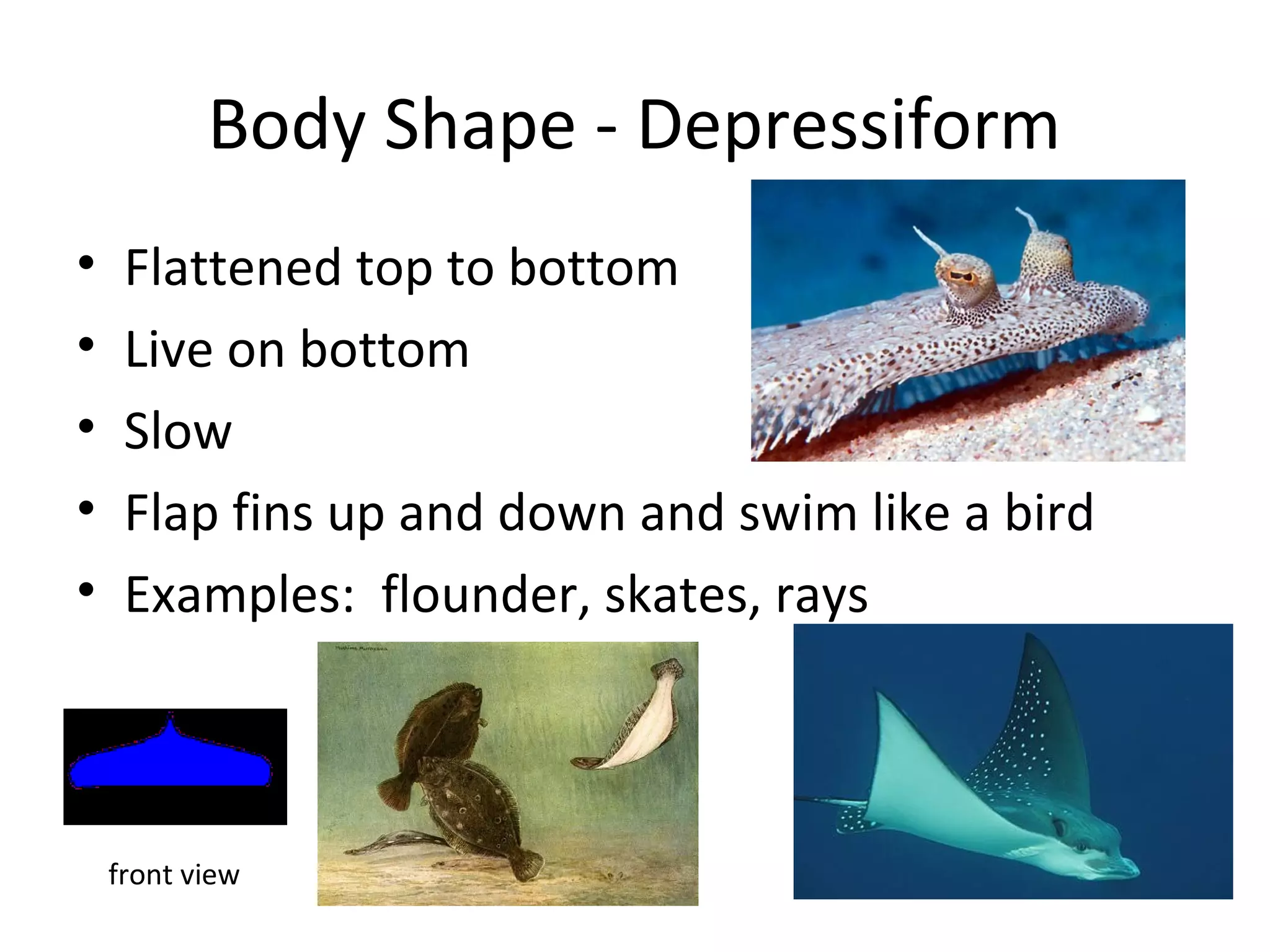
Body Shape - Depressiform
• Flattened top to bottom
• Live on bottom
• Slow
• Flap fins up and down and swim like a bird
• Examples: flounder, skates, rays
front view
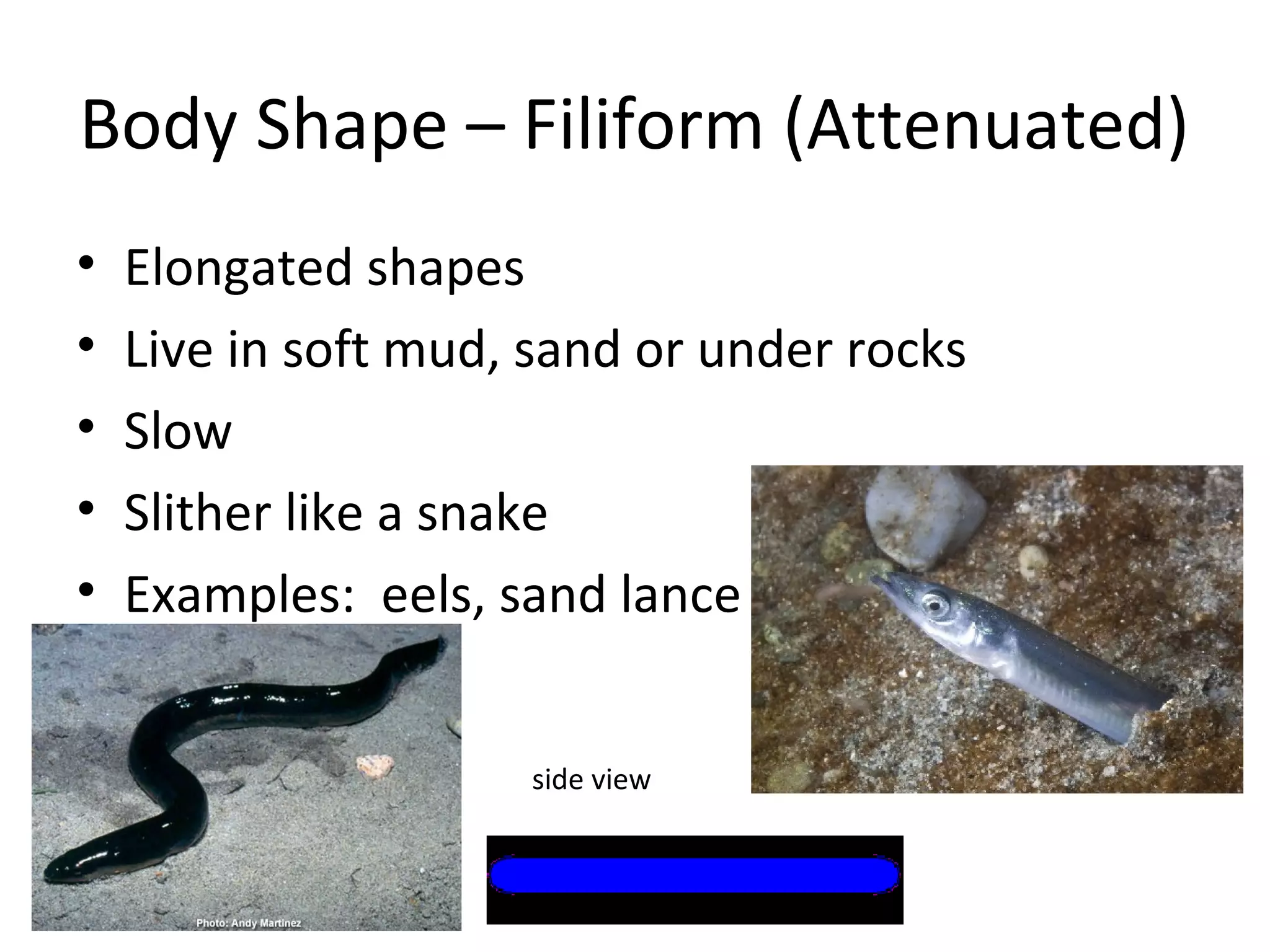
Body Shape – Filiform (Attenuated)
• Elongated shapes
• Live in soft mud, sand or under rocks
• Slow
• Slither like a snake
• Examples: eels, sand lance
side view
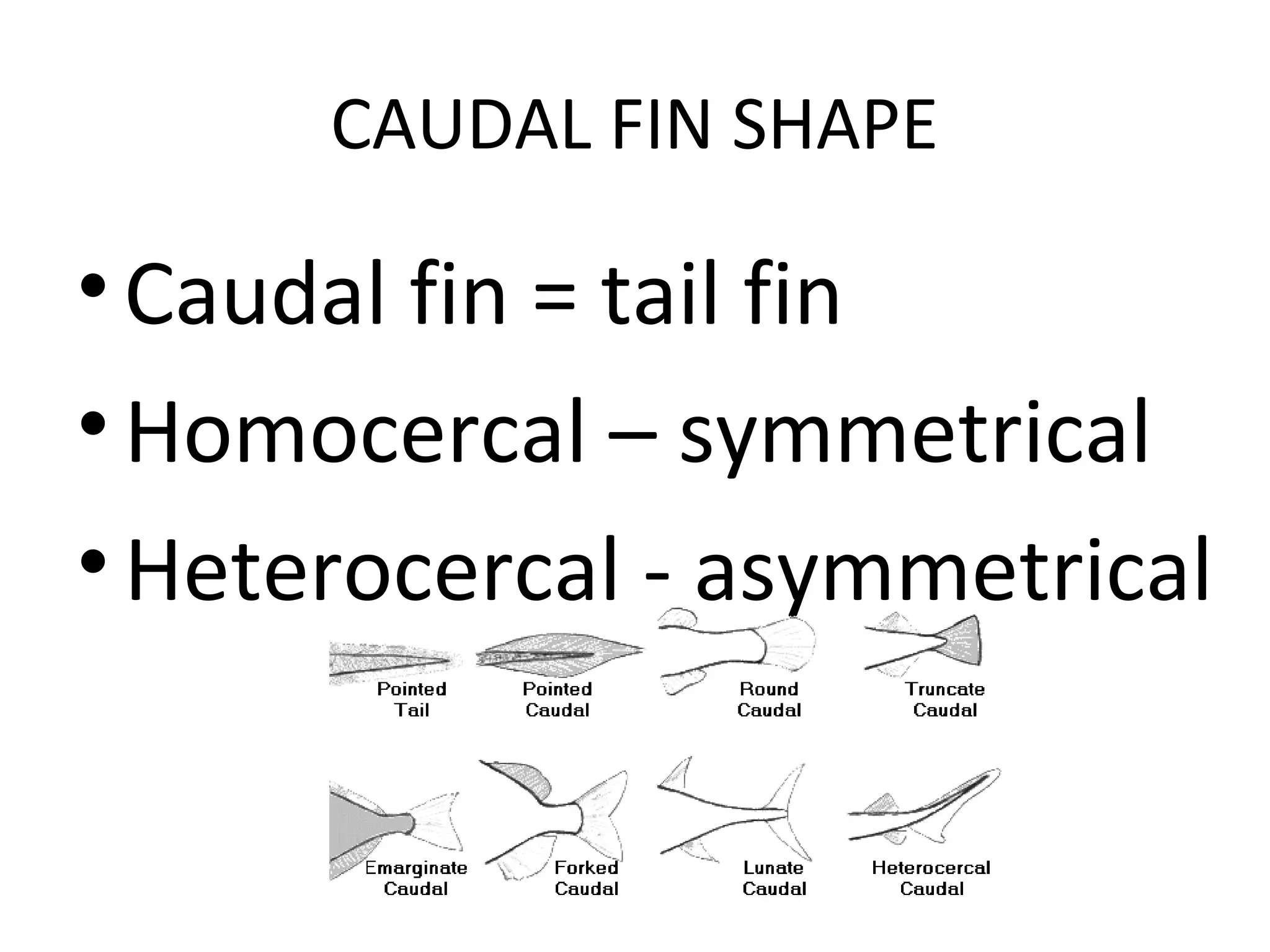
CAUDAL FIN SHAPE
•Caudal fin = tail fin
•Homocercal – symmetrical
•Heterocercal - asymmetrical
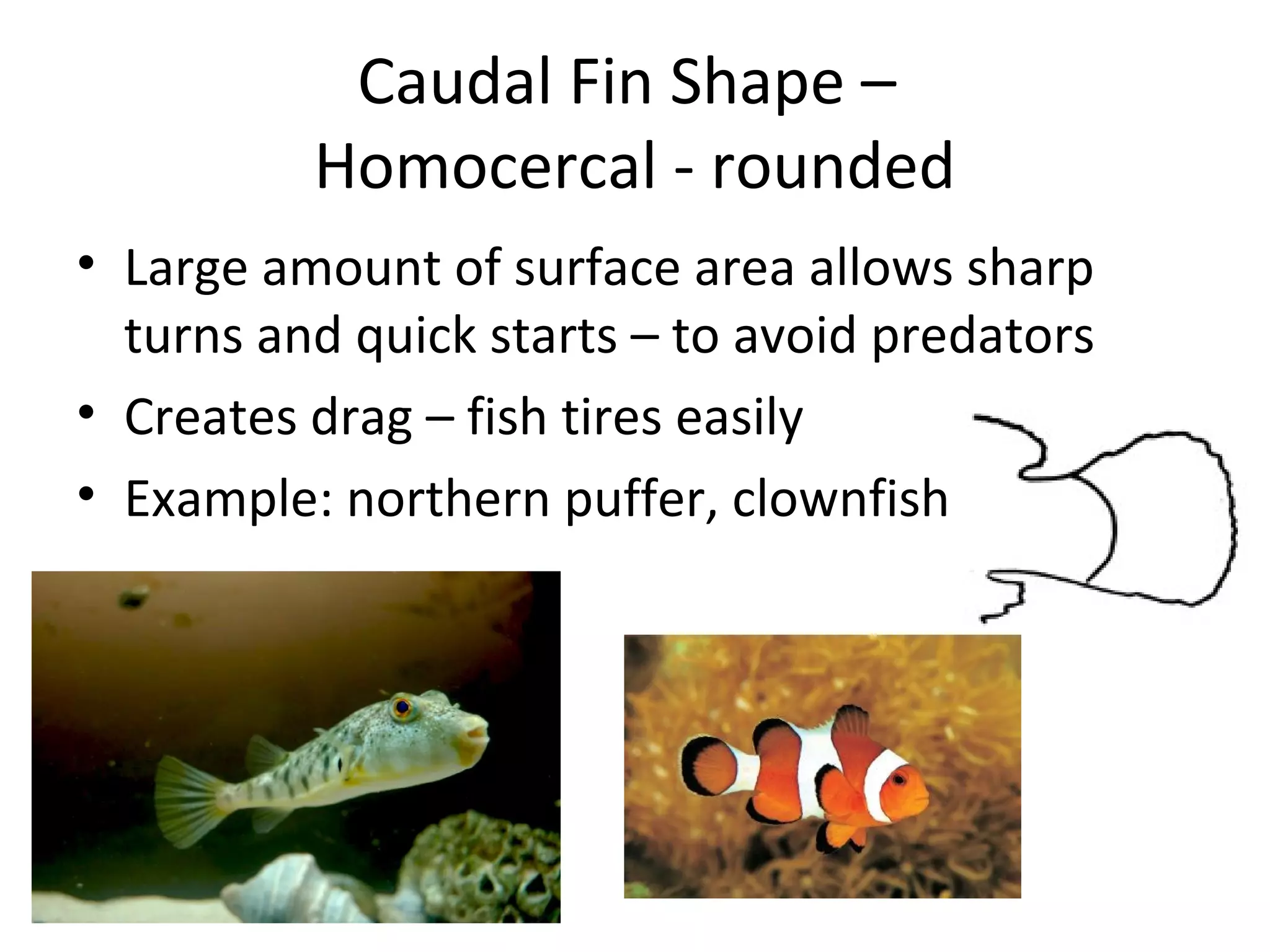
Caudal Fin Shape –
Homocercal - rounded
• Large amount of surface area allows sharp
turns and quick starts – to avoid predators
• Creates drag – fish tires easily
• Example: northern puffer, clownfish
Caudal Fin Shape –
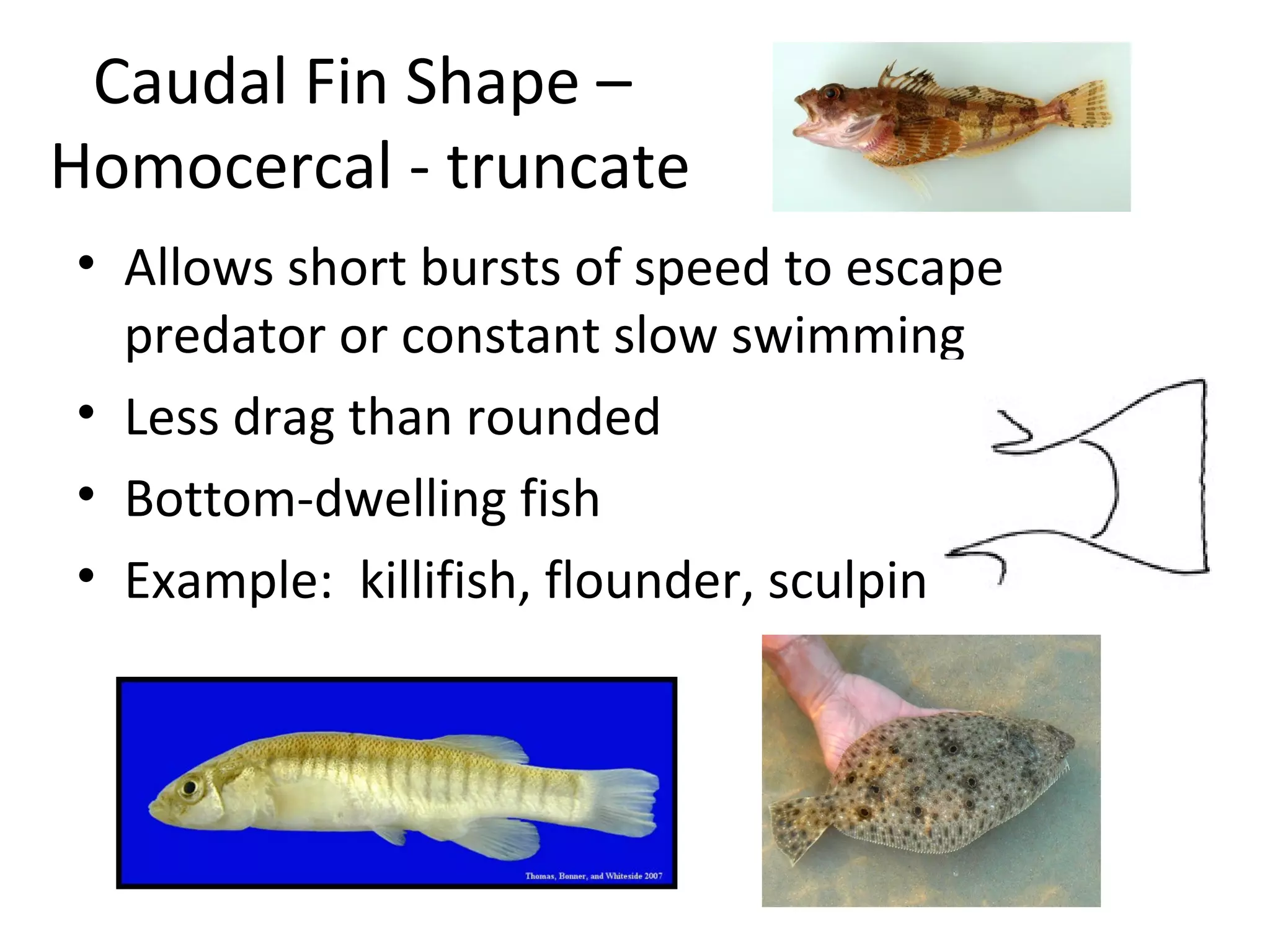
Homocercal - truncate
• Allows short bursts of speed to escape
predator or constant slow swimming
• Less drag than rounded
• Bottom-dwelling fish
• Example: killifish, flounder, sculpin
Caudal Fin Shape –
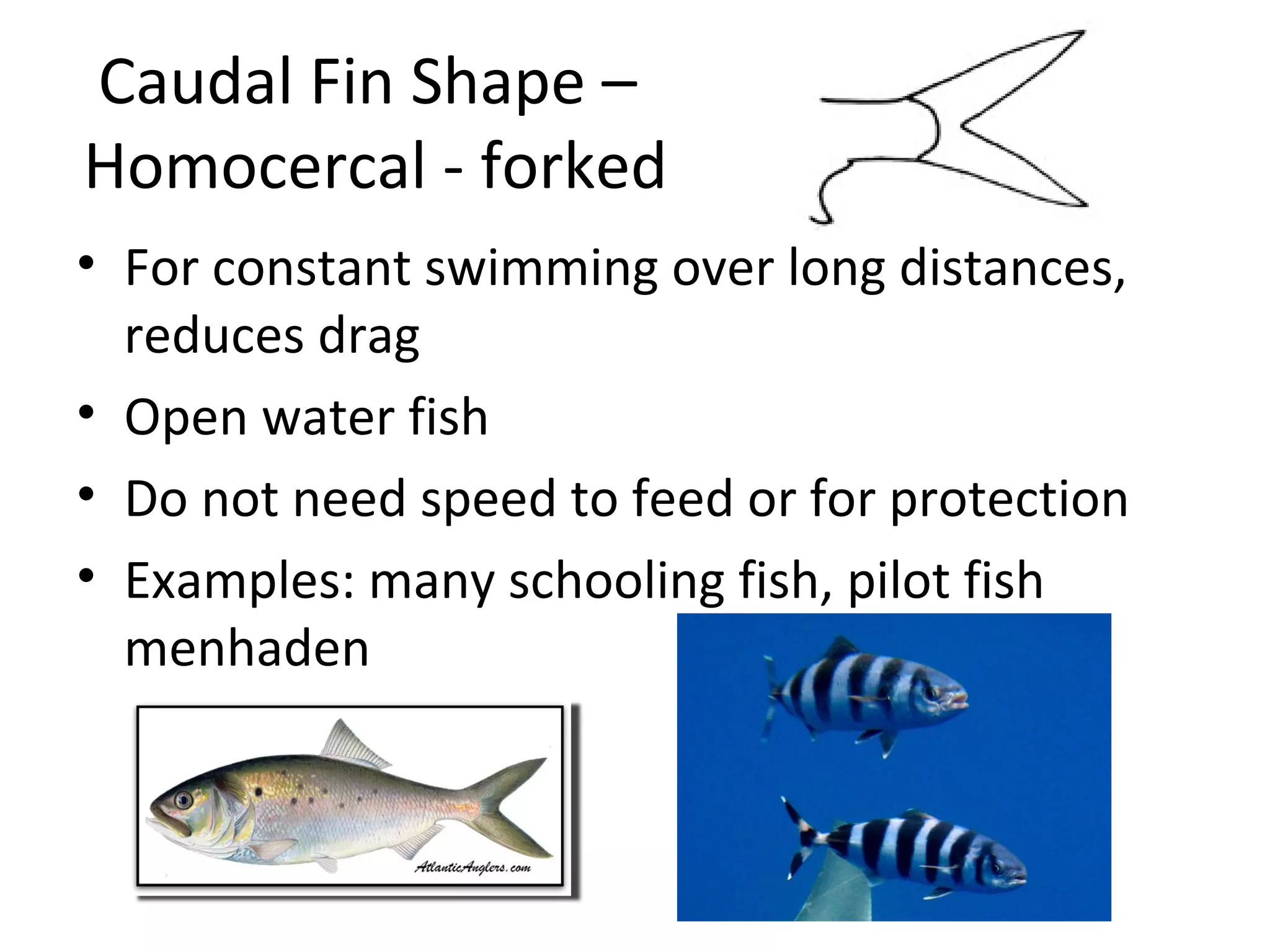
Homocercal - forked
• For constant swimming over long distances,
reduces drag
• Open water fish
• Do not need speed to feed or for protection
• Examples: many schooling fish, pilot fish
menhaden
Caudal Fin Shape –
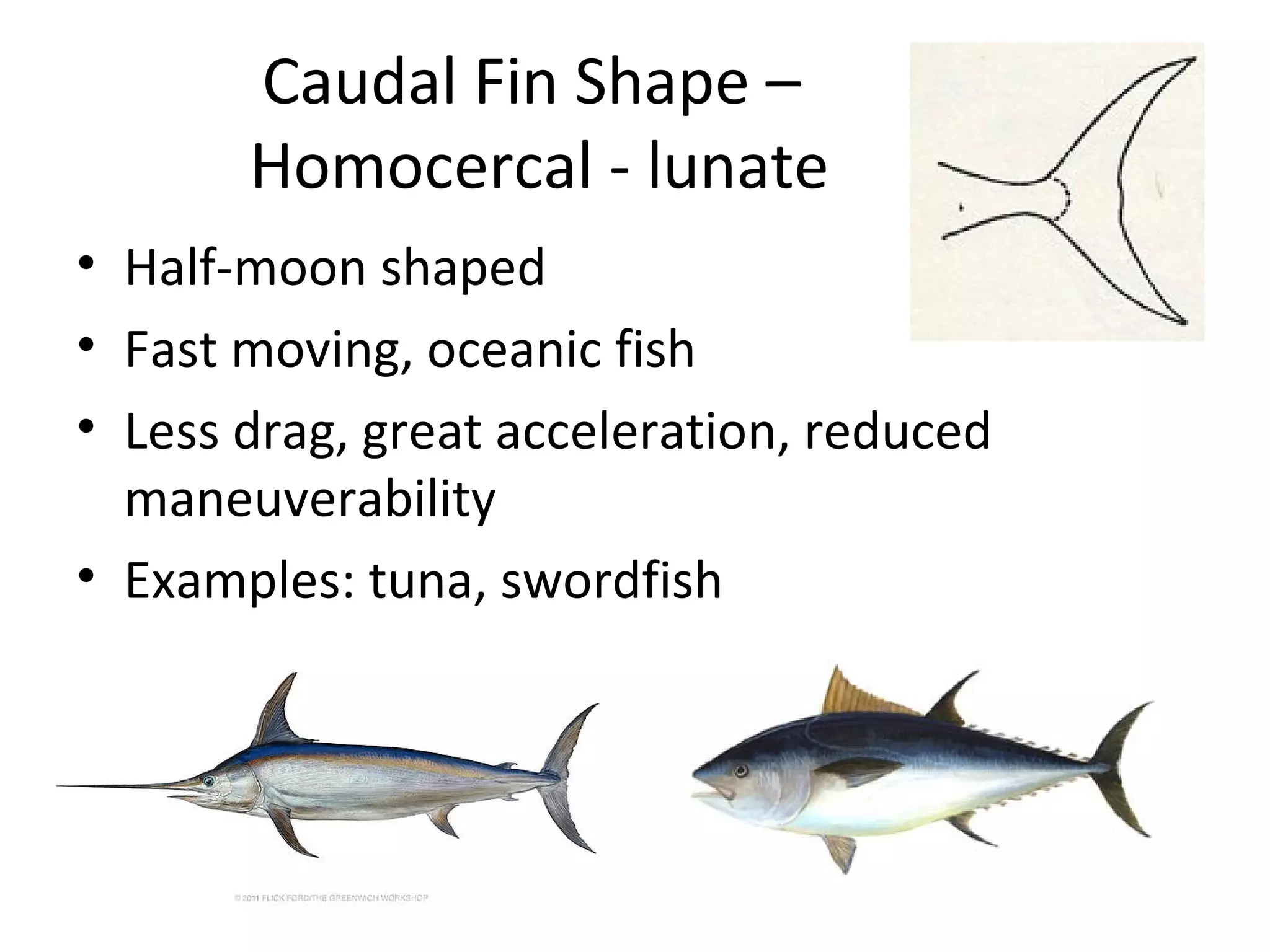
Homocercal - lunate
• Half-moon shaped
• Fast moving, oceanic fish
• Less drag, great acceleration, reduced
maneuverability
• Examples: tuna, swordfish
Caudal Fin Shape –
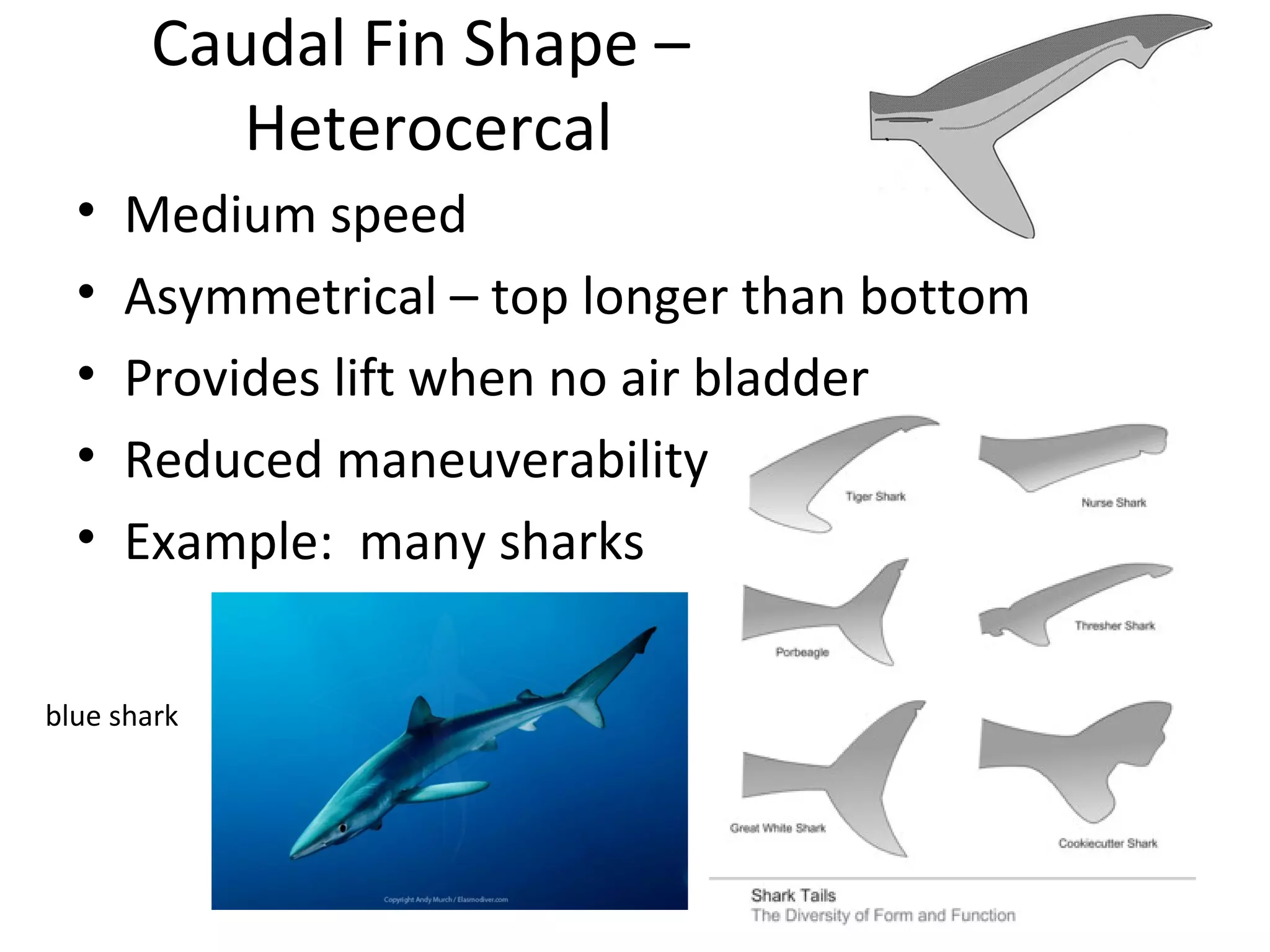
Heterocercal
• Medium speed
• Asymmetrical – top longer than bottom
• Provides lift when no air bladder
• Reduced maneuverability
• Example: many sharks
blue shark

Fish Morphology

  • 1.
  • 2.
    Fish Morphology • Thereis a great diversity in shapes of fishes and their body parts • Shapes of fishes are adaptations to the species’ environment and/or behaviors
  • 3.
    Body Shape -Fusiform • Streamlined, torpedo-shaped • Fast-swimming fish • Predators, live in open water • Move tail side to side • Examples: tuna, swordfish, shark, striped bass side view front view
  • 4.
    Body Shape -Compressiform • Compressed from side to side • Quick bursts of speed over short distances • Live among plants and move in narrow spaces • Examples: moonfish, angelfish • Move tail side to side front view
  • 5.
    Body Shape -Depressiform • Flattened top to bottom • Live on bottom • Slow • Flap fins up and down and swim like a bird • Examples: flounder, skates, rays front view
  • 6.
    Body Shape –Filiform (Attenuated) • Elongated shapes • Live in soft mud, sand or under rocks • Slow • Slither like a snake • Examples: eels, sand lance side view
  • 7.
    CAUDAL FIN SHAPE •Caudalfin = tail fin •Homocercal – symmetrical •Heterocercal - asymmetrical
  • 8.
    Caudal Fin Shape– Homocercal - rounded • Large amount of surface area allows sharp turns and quick starts – to avoid predators • Creates drag – fish tires easily • Example: northern puffer, clownfish
  • 9.
    Caudal Fin Shape– Homocercal - truncate • Allows short bursts of speed to escape predator or constant slow swimming • Less drag than rounded • Bottom-dwelling fish • Example: killifish, flounder, sculpin
  • 10.
    Caudal Fin Shape– Homocercal - forked • For constant swimming over long distances, reduces drag • Open water fish • Do not need speed to feed or for protection • Examples: many schooling fish, pilot fish menhaden
  • 11.
    Caudal Fin Shape– Homocercal - lunate • Half-moon shaped • Fast moving, oceanic fish • Less drag, great acceleration, reduced maneuverability • Examples: tuna, swordfish
  • 12.
    Caudal Fin Shape– Heterocercal • Medium speed • Asymmetrical – top longer than bottom • Provides lift when no air bladder • Reduced maneuverability • Example: many sharks blue shark