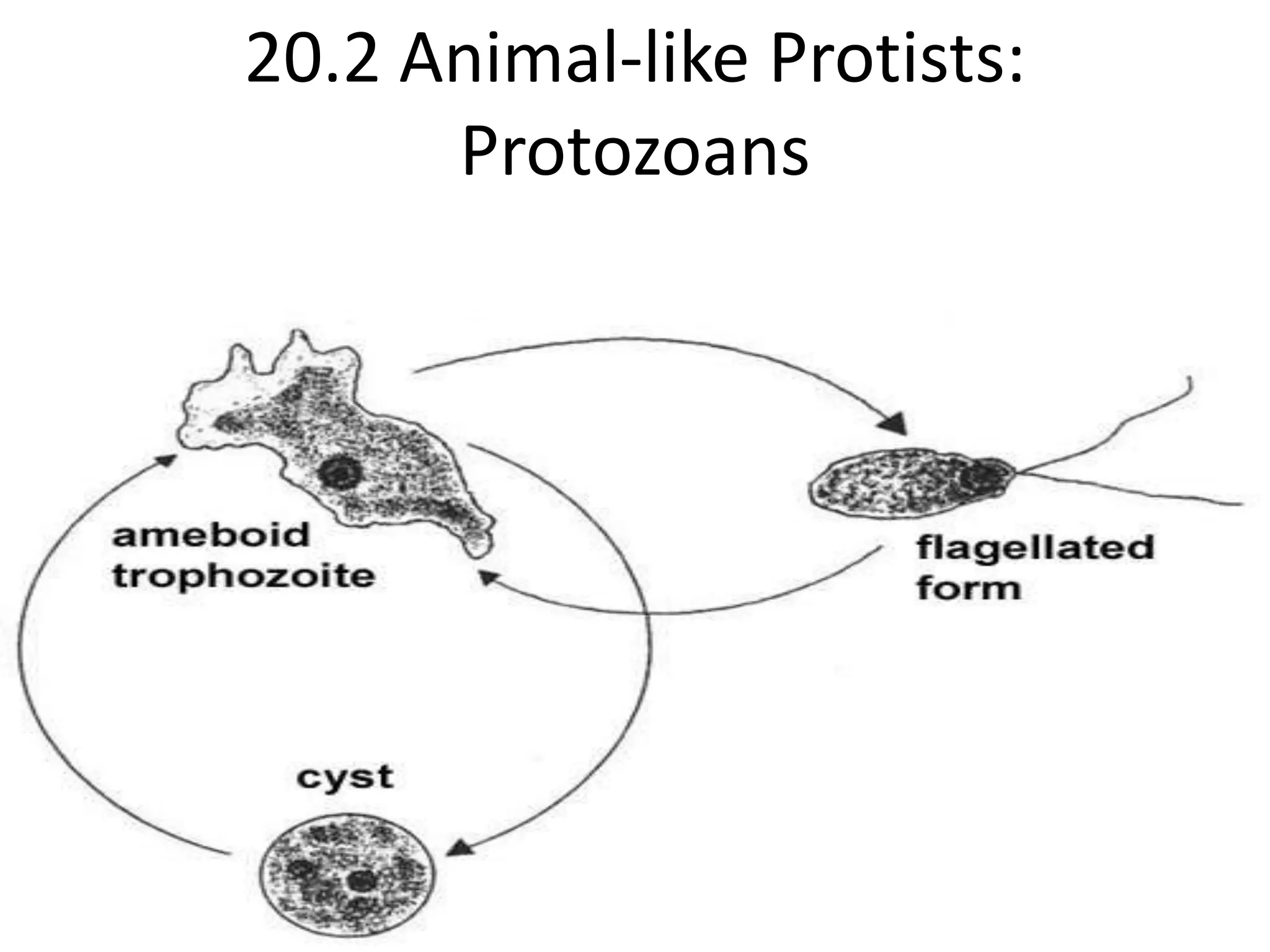
20.2 Animal-like Protists: Protozoans
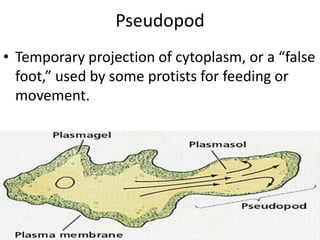
Pseudopod Temporary projection of cytoplasm, or a “false foot,” used by some protists for feeding or movement.
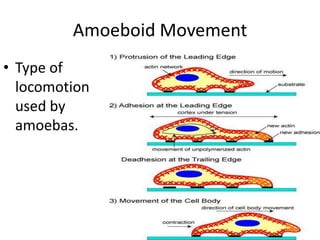
Amoeboid Movement Type of locomotion used by amoebas.
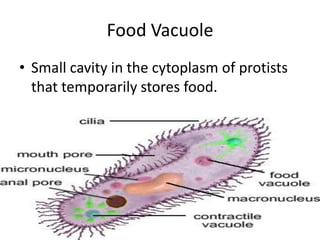
Food Vacuole Small cavity in the cytoplasm of protists that temporarily stores food.
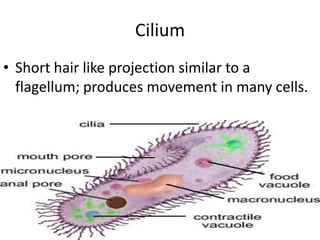
CiliumShort hair like projection similar to a flagellum; produces movement in many cells.
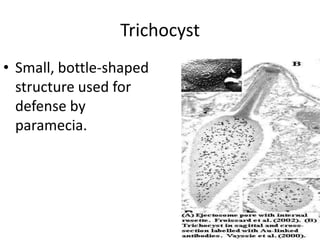
Trichocyst Small, bottle-shaped structure used for defense by paramecia.
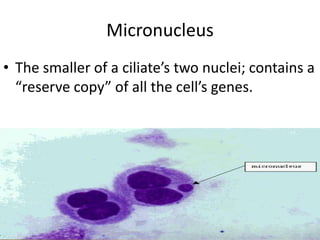
Micronucleus The smaller of a ciliate’s two nuclei; contains a “reserve copy” of all the cell’s genes.
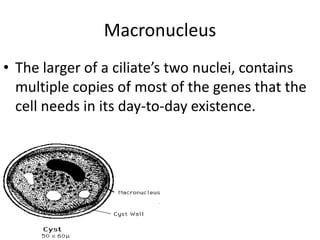
Macronucleus The larger of a ciliate’s two nuclei, contains multiple copies of most of the genes that the cell needs in its day-to-day existence.
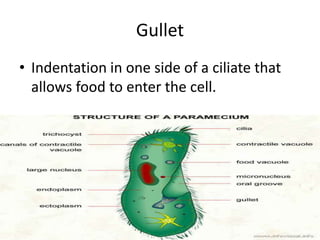
Gullet Indentation in one side of a ciliate that allows food to enter the cell.
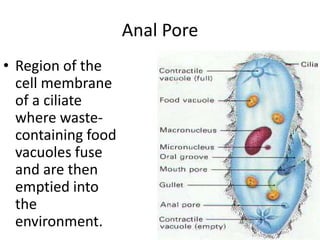
Anal Pore Region of the cell membrane of a ciliate where waste-containing food vacuoles fuse and are then emptied into the environment.
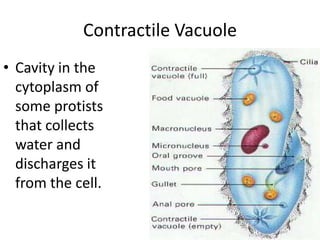
Contractile Vacuole Cavity in the cytoplasm of some protists that collects water and discharges it from the cell.
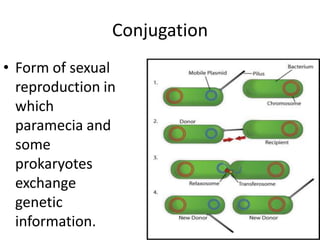
ConjugationForm of sexual reproduction in which paramecia and some prokaryotes exchange genetic information.
Key Concept Animal-like protists that swim using flagella are classified in the phylum Zoomastigina and are often referred to as Zooflagellates.Key Concept Some animal-like protists cause serious diseases, including malaria and African sleeping sickness.
Biology 20.2

Biology 20.2