Evolution and Adaptation
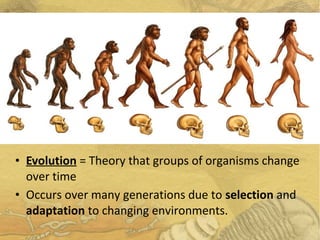
• Evolution = Theory that groups of organisms change
over time
• Occurs over many generations due to selection and
adaptation to changing environments.
• Ancient living organisms looked different than the
organisms living today.
• The study of evolution asks: what happened to cause
this shift and how did this process occur?
• Scientists are interested in the relationships between
groups of organisms, and explaining similarities
based on shared ancestry.
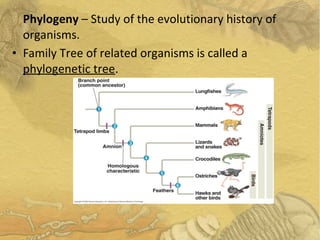
Phylogeny – Study of the evolutionary history of
organisms.
• Family Tree of related organisms is called a
phylogenetic tree.
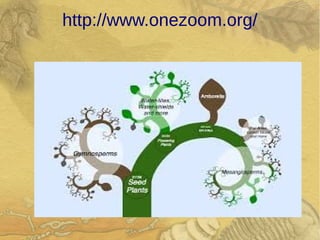
http://www.onezoom.org/
How did scientists build these trees?
What is the evidence of evolution?
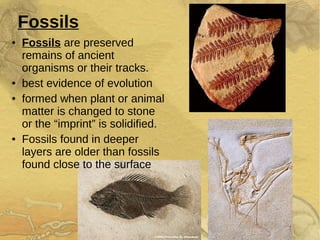
Fossils
● Fossils are preserved
remains of ancient
organisms or their tracks.
● best evidence of evolution
● formed when plant or animal
matter is changed to stone
or the “imprint” is solidified.
● Fossils found in deeper
layers are older than fossils
found close to the surface
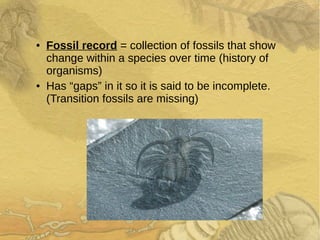
● Fossil record = collection of fossils that show
change within a species over time (history of
organisms)
● Has “gaps” in it so it is said to be incomplete.
(Transition fossils are missing)
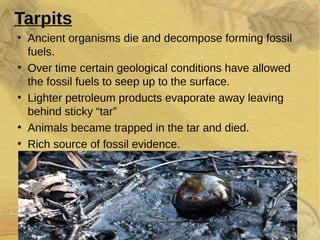
Tarpits
●
Ancient organisms die and decompose forming fossil
fuels.
●
Over time certain geological conditions have allowed
the fossil fuels to seep up to the surface.
●
Lighter petroleum products evaporate away leaving
behind sticky “tar”
●
Animals became trapped in the tar and died.
●
Rich source of fossil evidence.
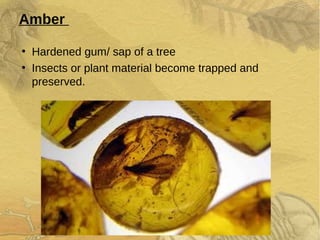
Amber
●
Hardened gum/ sap of a tree
●
Insects or plant material become trapped and
preserved.
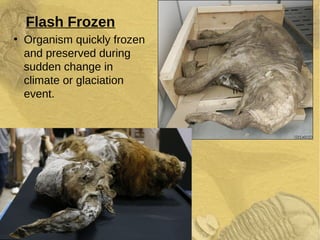
Flash Frozen
●
Organism quickly frozen
and preserved during
sudden change in
climate or glaciation
event.
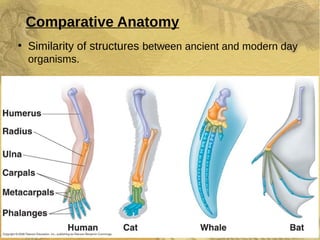
Comparative Anatomy
●
Similarity of structures between ancient and modern day
organisms.
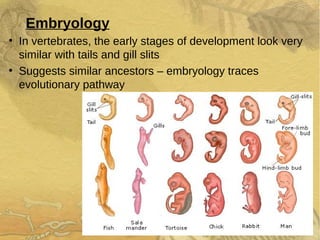
Embryology
●
In vertebrates, the early stages of development look very
similar with tails and gill slits
●
Suggests similar ancestors – embryology traces
evolutionary pathway
DNA
●
DNA has the same chemical make up for every living
thing on Earth
• Scientists compare the genes of different species to
determine how closely related the species are.
• The more similar the sequence of bases in the DNA, the
more closely related the species are.
• The more similar the order of amino acids (codes for
proteins) in the DNA, the more closely related the species
are.
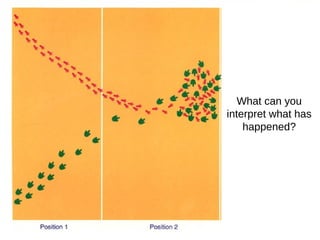
Fossilized footprint puzzle
●
attempting to reconstruct happenings from the
geological past by analyzing a set of fossilized
track
●
●
Can you tell anything about the size or nature of
the organisms?
●
Were all the tracks made at the same time?
●
How many animals were involved?
●
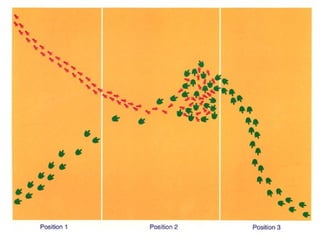
Can you reconstruct a series of events represented
by this set of fossil tracks?
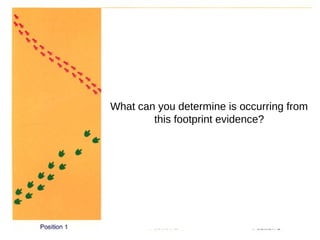
What can you determine is occurring from
this footprint evidence?
●
In what directions did the animals move?
●
Did they change their speed and direction?
●
What might have changed the footprint pattern?
●
Was the land level or irregular?
●
Was the soil moist or dry on the day these tracks were
made?
●
In what kind of rock were the prints made?
●
Were the sediments coarse or fine where the tracks were
made?
●
What conditions were necessary for their preservation?
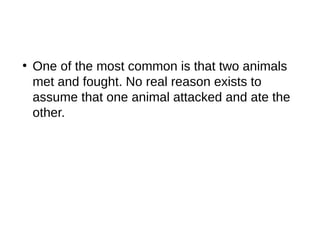
What can you
interpret what has
happened?
●
One of the most common is that two animals
met and fought. No real reason exists to
assume that one animal attacked and ate the
other.
Evolution and adaptation

Evolution and adaptation

  • 1.
  • 3.
    • Evolution =Theory that groups of organisms change over time • Occurs over many generations due to selection and adaptation to changing environments.
  • 4.
    • Ancient livingorganisms looked different than the organisms living today. • The study of evolution asks: what happened to cause this shift and how did this process occur? • Scientists are interested in the relationships between groups of organisms, and explaining similarities based on shared ancestry.
  • 5.
    Phylogeny – Studyof the evolutionary history of organisms. • Family Tree of related organisms is called a phylogenetic tree.
  • 6.
  • 7.
    How did scientistsbuild these trees? What is the evidence of evolution?
  • 8.
    Fossils ● Fossils arepreserved remains of ancient organisms or their tracks. ● best evidence of evolution ● formed when plant or animal matter is changed to stone or the “imprint” is solidified. ● Fossils found in deeper layers are older than fossils found close to the surface
  • 9.
    ● Fossil record= collection of fossils that show change within a species over time (history of organisms) ● Has “gaps” in it so it is said to be incomplete. (Transition fossils are missing)
  • 10.
    Tarpits ● Ancient organisms dieand decompose forming fossil fuels. ● Over time certain geological conditions have allowed the fossil fuels to seep up to the surface. ● Lighter petroleum products evaporate away leaving behind sticky “tar” ● Animals became trapped in the tar and died. ● Rich source of fossil evidence.
  • 11.
    Amber ● Hardened gum/ sapof a tree ● Insects or plant material become trapped and preserved.
  • 12.
    Flash Frozen ● Organism quicklyfrozen and preserved during sudden change in climate or glaciation event.
  • 13.
    Comparative Anatomy ● Similarity ofstructures between ancient and modern day organisms.
  • 14.
    Embryology ● In vertebrates, theearly stages of development look very similar with tails and gill slits ● Suggests similar ancestors – embryology traces evolutionary pathway
  • 15.
    DNA ● DNA has thesame chemical make up for every living thing on Earth • Scientists compare the genes of different species to determine how closely related the species are. • The more similar the sequence of bases in the DNA, the more closely related the species are. • The more similar the order of amino acids (codes for proteins) in the DNA, the more closely related the species are.
  • 16.
    Fossilized footprint puzzle ● attemptingto reconstruct happenings from the geological past by analyzing a set of fossilized track ●
  • 17.
    ● Can you tellanything about the size or nature of the organisms? ● Were all the tracks made at the same time? ● How many animals were involved? ● Can you reconstruct a series of events represented by this set of fossil tracks?
  • 18.
    What can youdetermine is occurring from this footprint evidence?
  • 19.
    ● In what directionsdid the animals move? ● Did they change their speed and direction? ● What might have changed the footprint pattern? ● Was the land level or irregular? ● Was the soil moist or dry on the day these tracks were made? ● In what kind of rock were the prints made? ● Were the sediments coarse or fine where the tracks were made? ● What conditions were necessary for their preservation?
  • 20.
    What can you interpretwhat has happened?
  • 21.
    ● One of themost common is that two animals met and fought. No real reason exists to assume that one animal attacked and ate the other.

Editor's Notes

  • #4 <number>
  • #5 <number>
  • #6 <number>