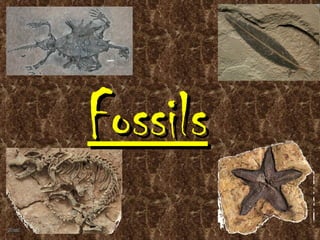
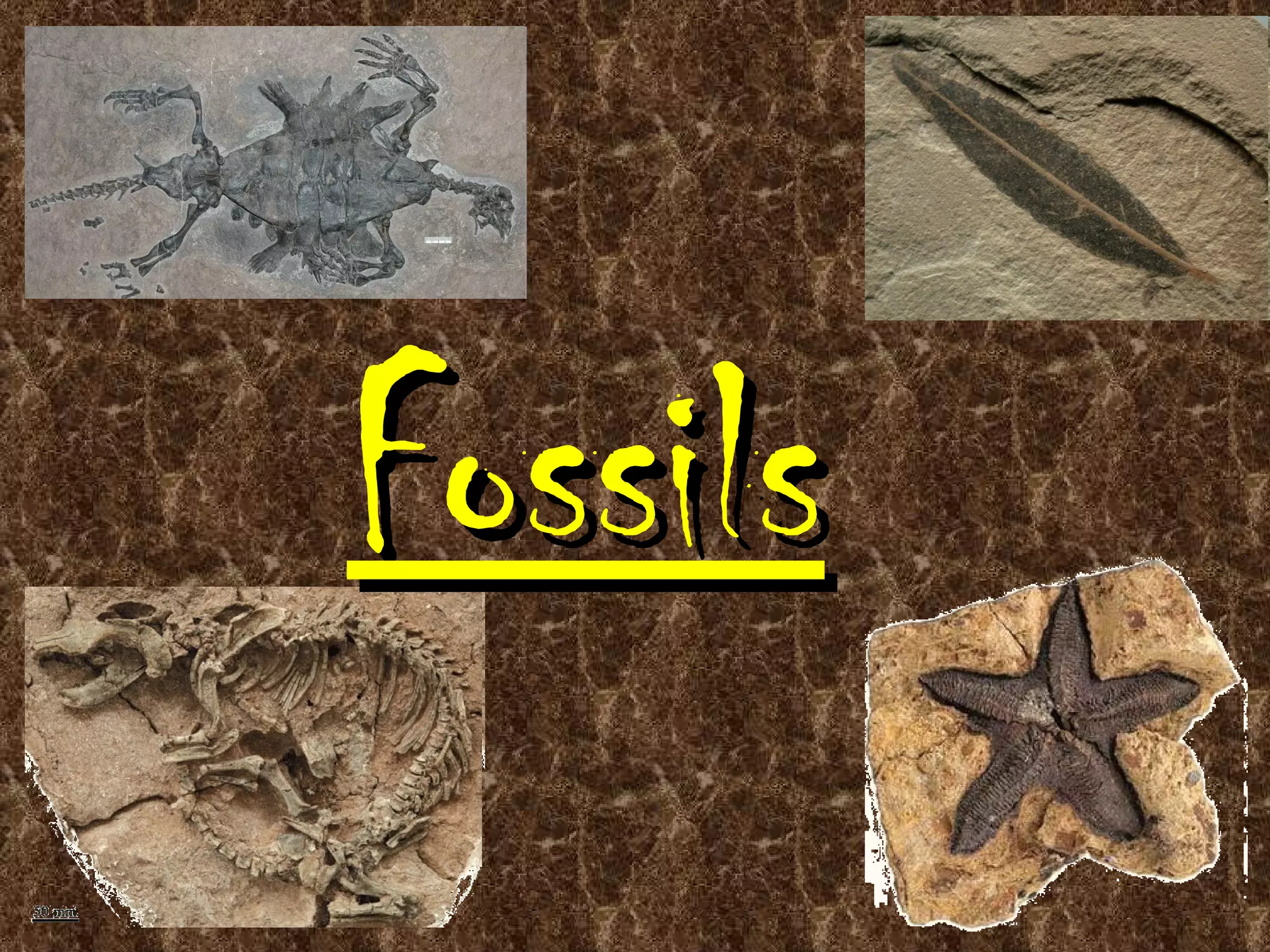
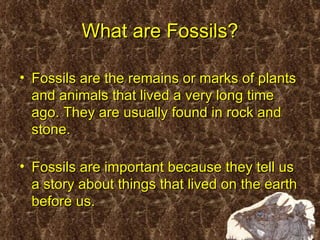
Fossils
What are Fossils?

• Fossils are the remains or marks of plants
  and animals that lived a very long time
  ago. They are usually found in rock and
  stone.

• Fossils are important because they tell us
  a story about things that lived on the earth
  before us.
What Things Become Fossils?

• Animals and plants become fossils.

• So do nests, eggs, footprints and even
  animal droppings!
How are Fossils Made?
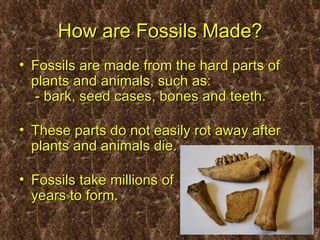
• Fossils are made from the hard parts of
  plants and animals, such as:
  - bark, seed cases, bones and teeth.

• These parts do not easily rot away after
  plants and animals die.

• Fossils take millions of
  years to form.
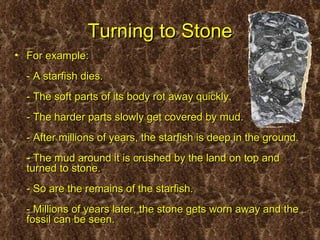
Turning to Stone
• For example:
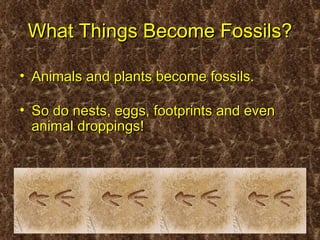
  - A starfish dies.
  - The soft parts of its body rot away quickly.
  - The harder parts slowly get covered by mud.
  - After millions of years, the starfish is deep in the ground.
  - The mud around it is crushed by the land on top and
  turned to stone.
  - So are the remains of the starfish.
  - Millions of years later, the stone gets worn away and the
  fossil can be seen.
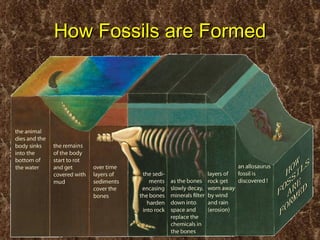
How Fossils are Formed
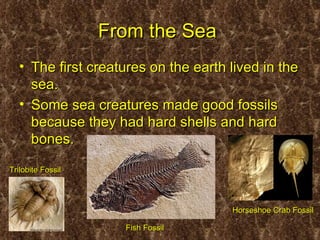
From the Sea
   • The first creatures on the earth lived in the
     sea.
   • Some sea creatures made good fossils
     because they had hard shells and hard
     bones.

Trilobite Fossil


                                      Horseshoe Crab Fossil

                     Fish Fossil
Plants
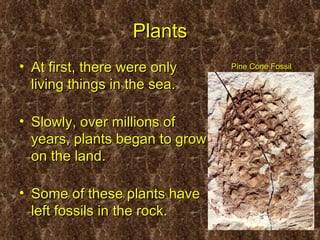
• At first, there were only     Pine Cone Fossil

  living things in the sea.

• Slowly, over millions of
  years, plants began to grow
  on the land.

• Some of these plants have
  left fossils in the rock.
Animals


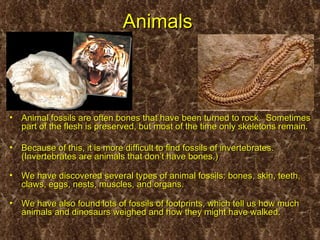
•   Animal fossils are often bones that have been turned to rock. Sometimes
    part of the flesh is preserved, but most of the time only skeletons remain.

•   Because of this, it is more difficult to find fossils of invertebrates.
    (Invertebrates are animals that don’t have bones.)

•   We have discovered several types of animal fossils: bones, skin, teeth,
    claws, eggs, nests, muscles, and organs.

•   We have also found lots of fossils of footprints, which tell us how much
    animals and dinosaurs weighed and how they might have walked.
When Did They Live?
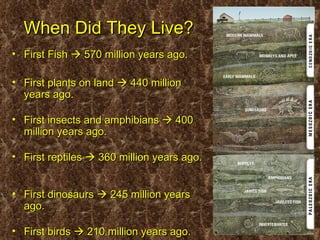
• First Fish  570 million years ago.

• First plants on land  440 million
  years ago.

• First insects and amphibians  400
  million years ago.

• First reptiles  360 million years ago.


• First dinosaurs  245 million years
  ago.

• First birds  210 million years ago.

Fossils ppt

  • 1.
  • 2.
    What are Fossils? •Fossils are the remains or marks of plants and animals that lived a very long time ago. They are usually found in rock and stone. • Fossils are important because they tell us a story about things that lived on the earth before us.
  • 3.
    What Things BecomeFossils? • Animals and plants become fossils. • So do nests, eggs, footprints and even animal droppings!
  • 4.
    How are FossilsMade? • Fossils are made from the hard parts of plants and animals, such as: - bark, seed cases, bones and teeth. • These parts do not easily rot away after plants and animals die. • Fossils take millions of years to form.
  • 5.
    Turning to Stone •For example: - A starfish dies. - The soft parts of its body rot away quickly. - The harder parts slowly get covered by mud. - After millions of years, the starfish is deep in the ground. - The mud around it is crushed by the land on top and turned to stone. - So are the remains of the starfish. - Millions of years later, the stone gets worn away and the fossil can be seen.
  • 6.
  • 7.
    From the Sea • The first creatures on the earth lived in the sea. • Some sea creatures made good fossils because they had hard shells and hard bones. Trilobite Fossil Horseshoe Crab Fossil Fish Fossil
  • 8.
    Plants • At first,there were only Pine Cone Fossil living things in the sea. • Slowly, over millions of years, plants began to grow on the land. • Some of these plants have left fossils in the rock.
  • 9.
    Animals • Animal fossils are often bones that have been turned to rock. Sometimes part of the flesh is preserved, but most of the time only skeletons remain. • Because of this, it is more difficult to find fossils of invertebrates. (Invertebrates are animals that don’t have bones.) • We have discovered several types of animal fossils: bones, skin, teeth, claws, eggs, nests, muscles, and organs. • We have also found lots of fossils of footprints, which tell us how much animals and dinosaurs weighed and how they might have walked.
  • 10.
    When Did TheyLive? • First Fish  570 million years ago. • First plants on land  440 million years ago. • First insects and amphibians  400 million years ago. • First reptiles  360 million years ago. • First dinosaurs  245 million years ago. • First birds  210 million years ago.