-

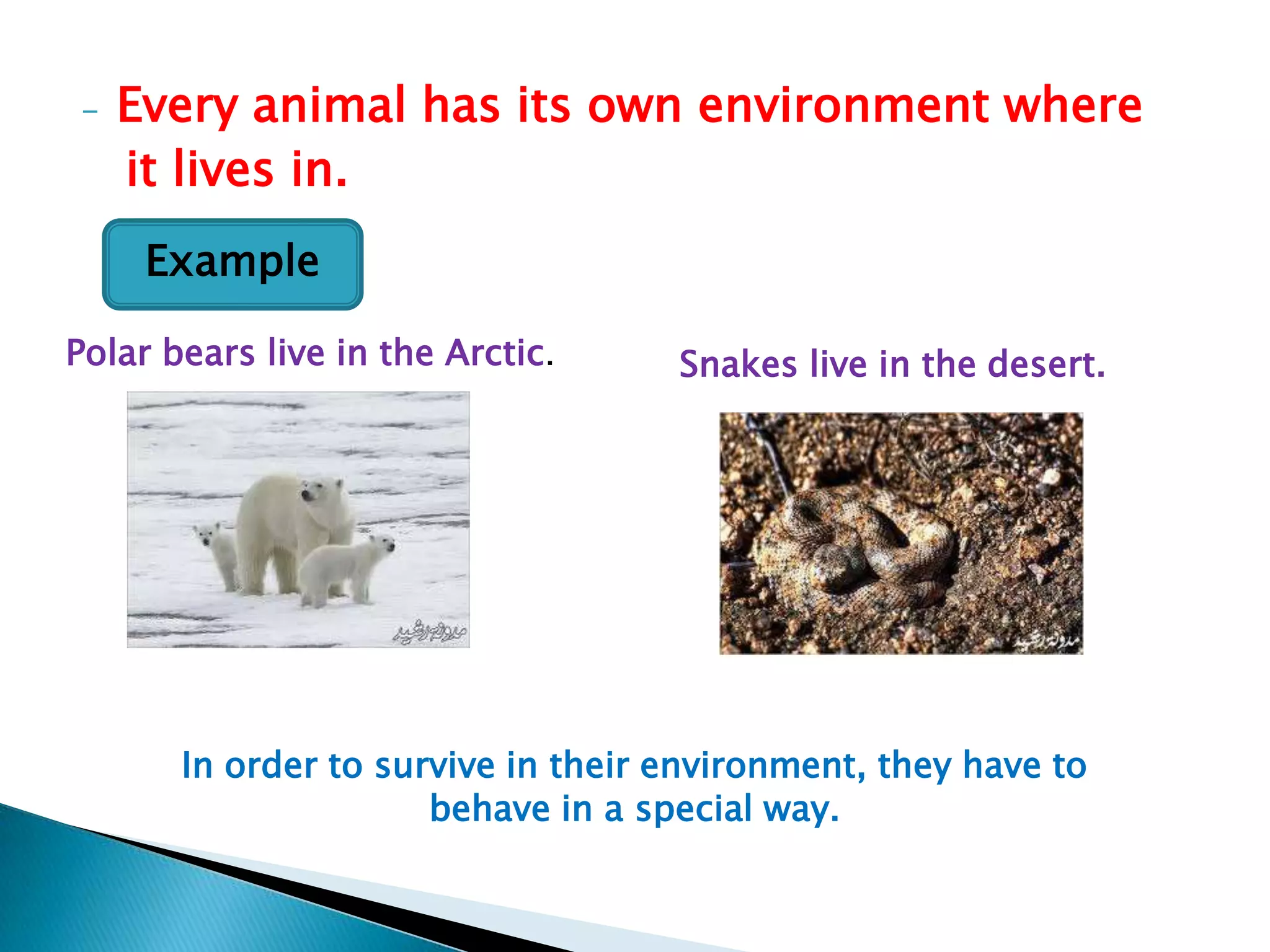
Every animal has its own environment where
it lives in.
Example

Polar bears live in the Arctic.

Snakes live in the desert.

In order to survive in their environment, they have to
behave in a special way.
Adaptation

It‟s the behavior that
helps a living thing
“animal” to survive in
its environment
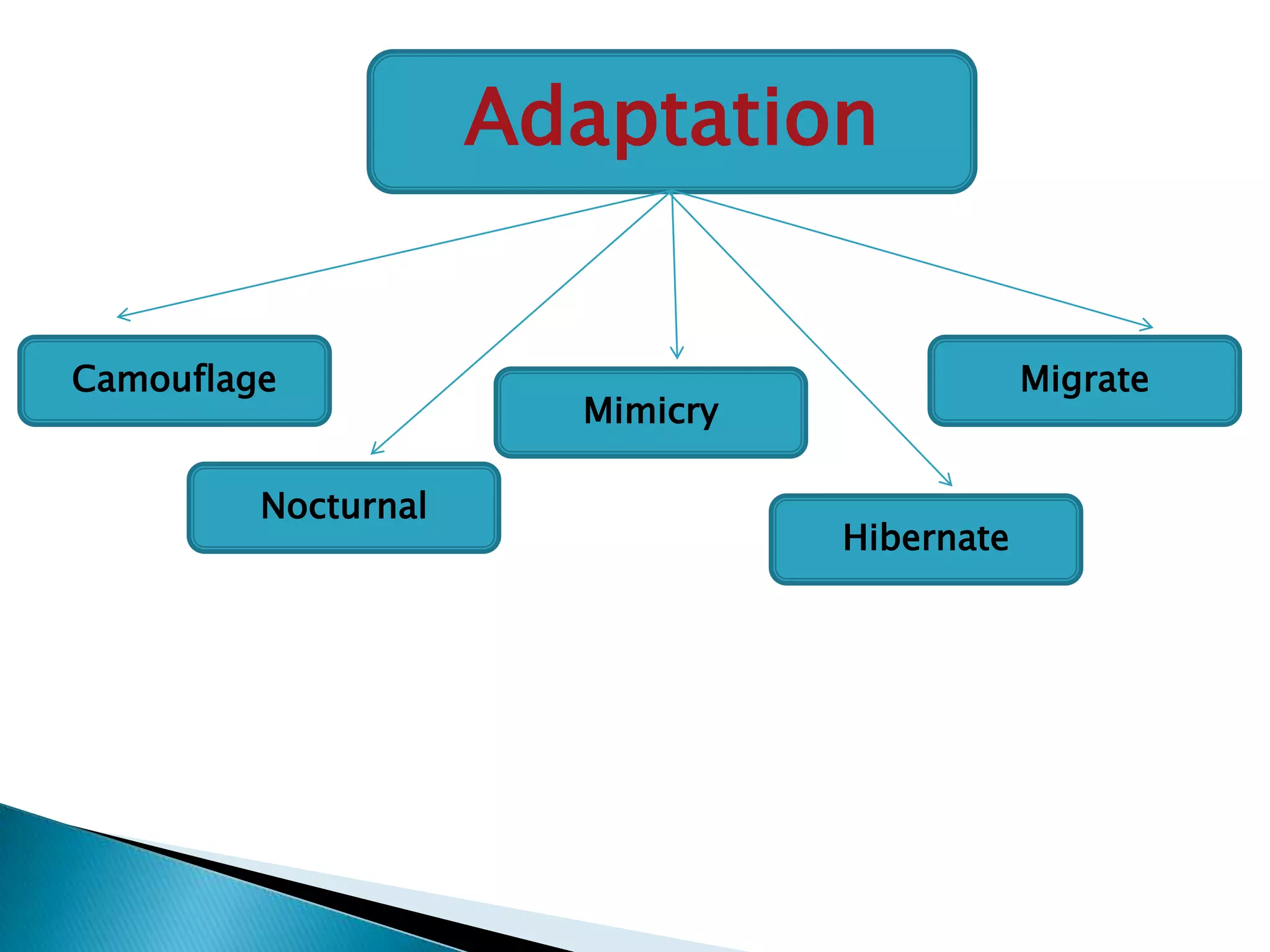
Adaptation
Camouflage
Nocturnal

Migrate

Mimicry

Hibernate
Camouflage
“Animals hide by blending in their environment”
-Many animals adapt to live in their environment by
“camouflage”.

-They hide & protect themselves from being eaten
by other animals by blending in their environment .
-Other animals use camouflage to help them not to
be noticed so that they can hunt their preys easily.
Examples
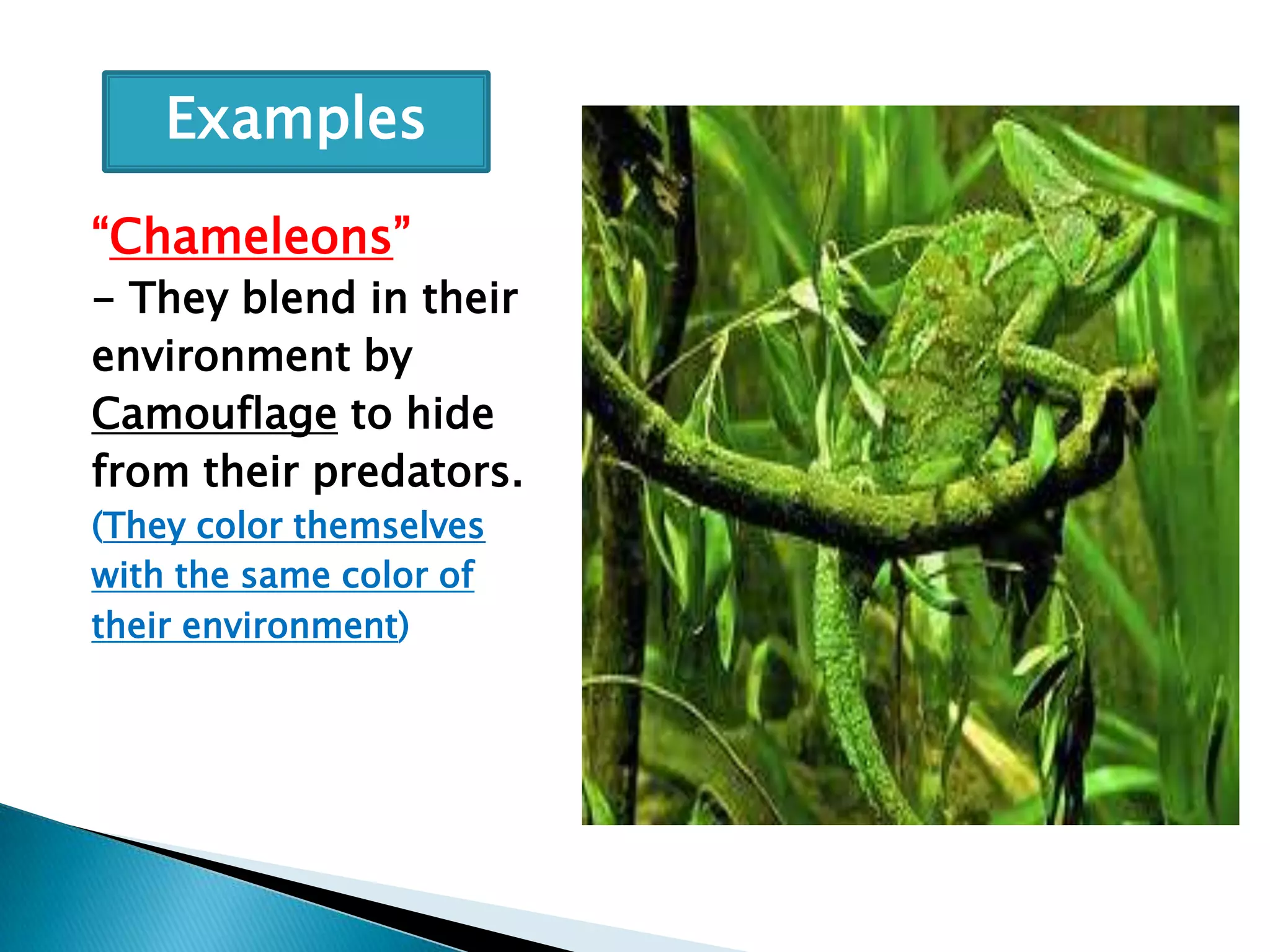
“Chameleons”
- They blend in their
environment by
Camouflage to hide
from their predators.
(They color themselves
with the same color of
their environment)
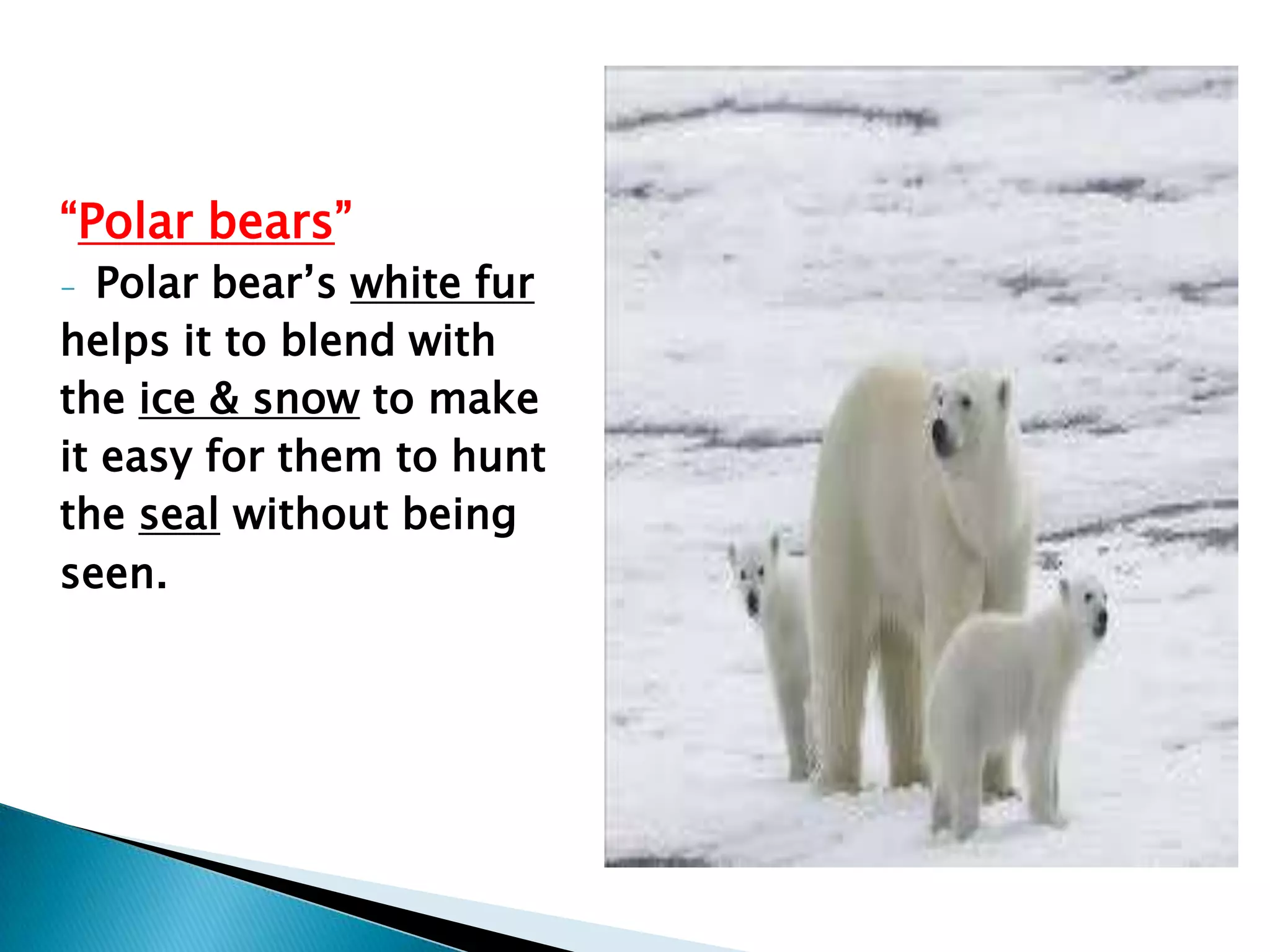
“Polar bears”
Polar bear‟s white fur
helps it to blend with
the ice & snow to make
it easy for them to hunt
the seal without being
seen.
-
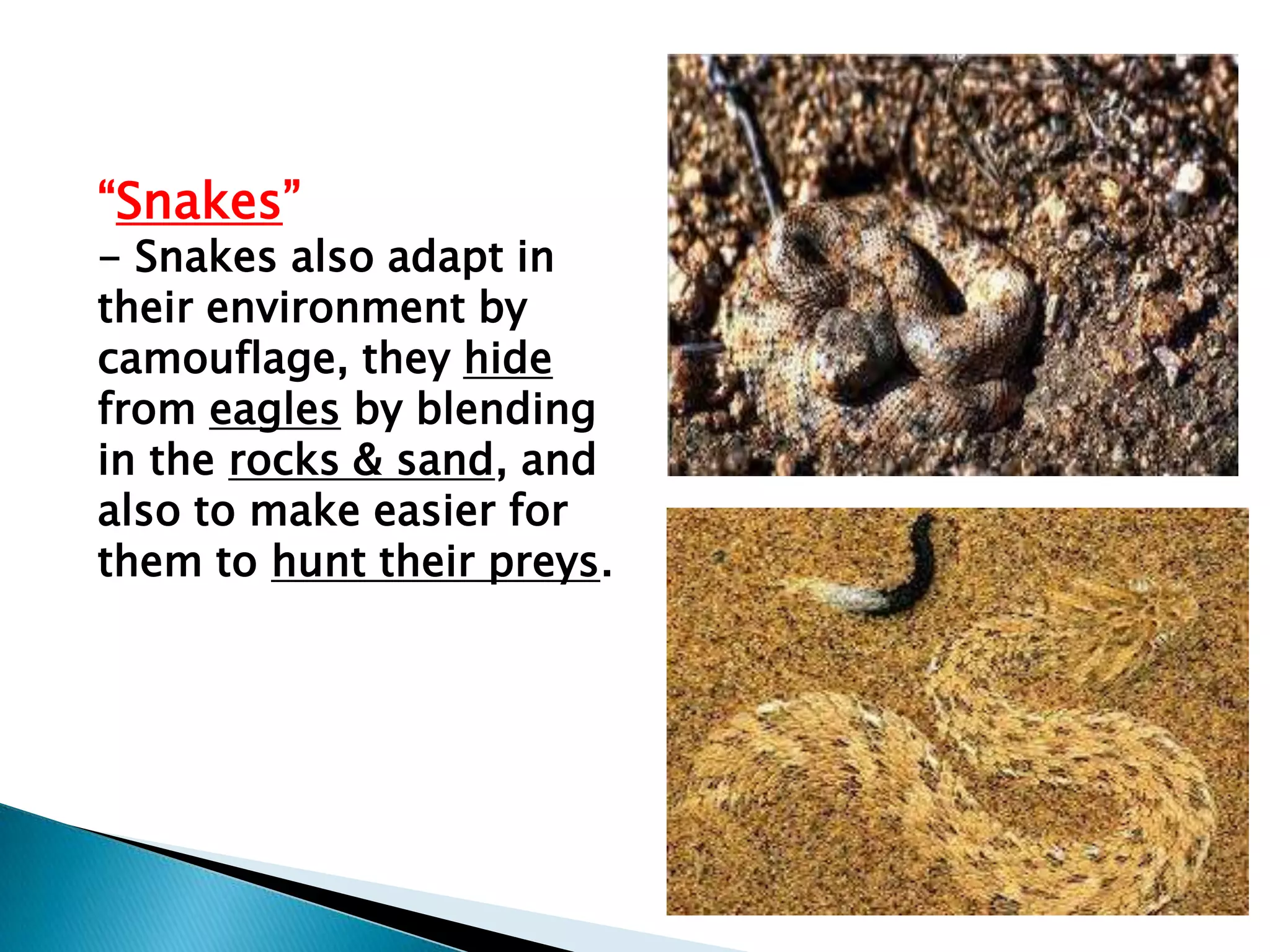
“Snakes”

- Snakes also adapt in
their environment by
camouflage, they hide
from eagles by blending
in the rocks & sand, and
also to make easier for
them to hunt their preys.
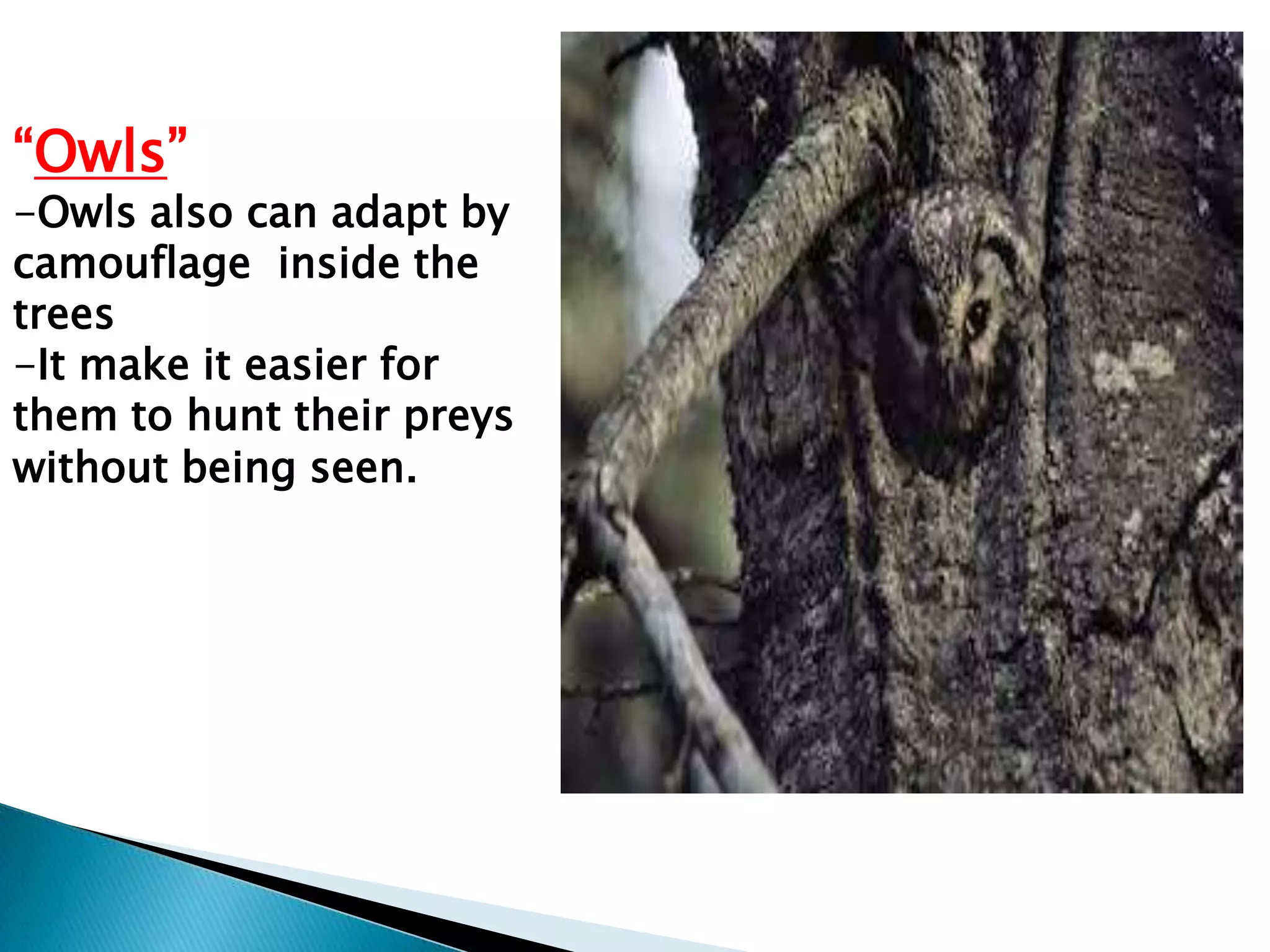
“Owls”

-Owls also can adapt by
camouflage inside the
trees
-It make it easier for
them to hunt their preys
without being seen.
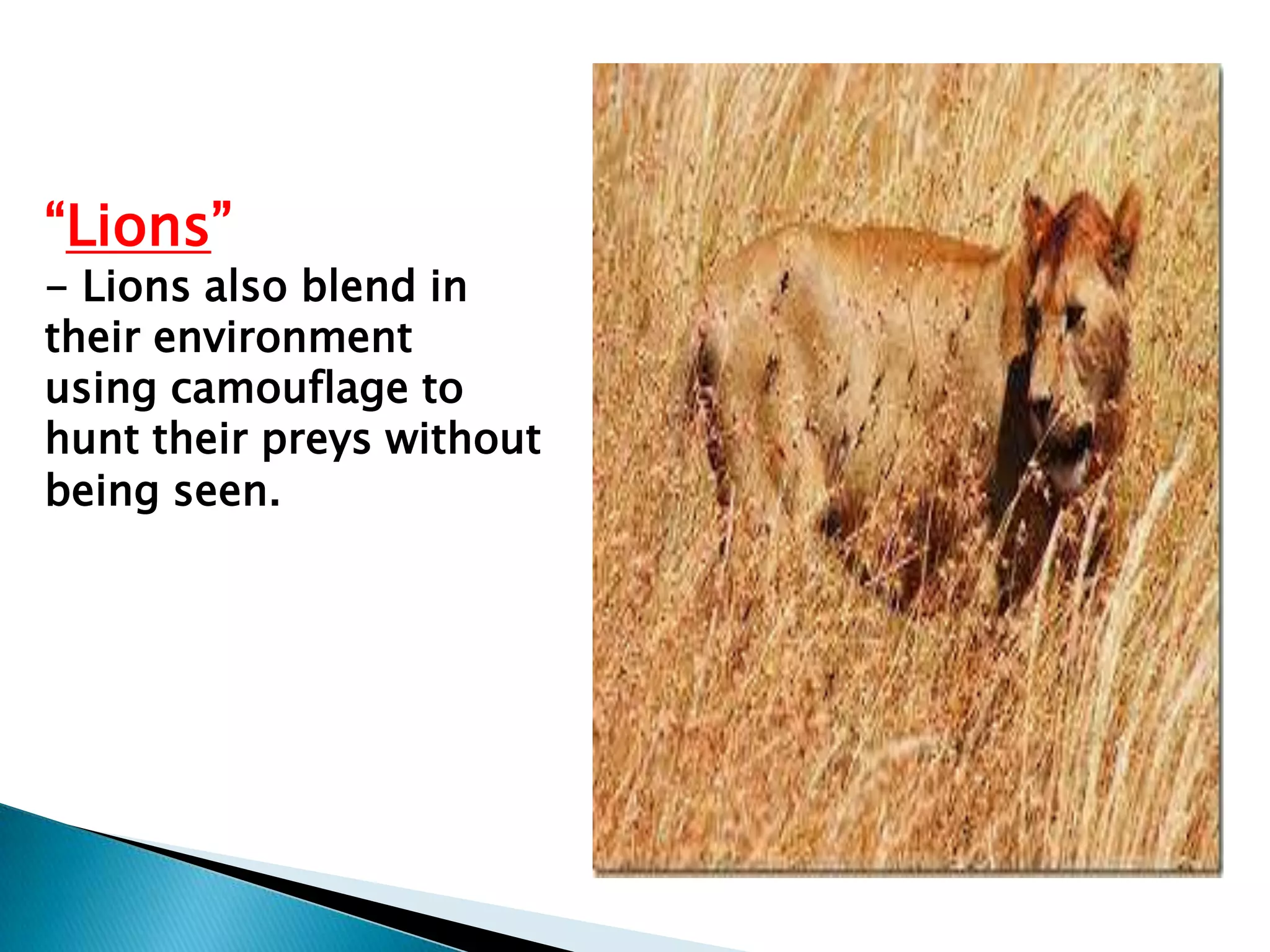
“Lions”

- Lions also blend in
their environment
using camouflage to
hunt their preys without
being seen.
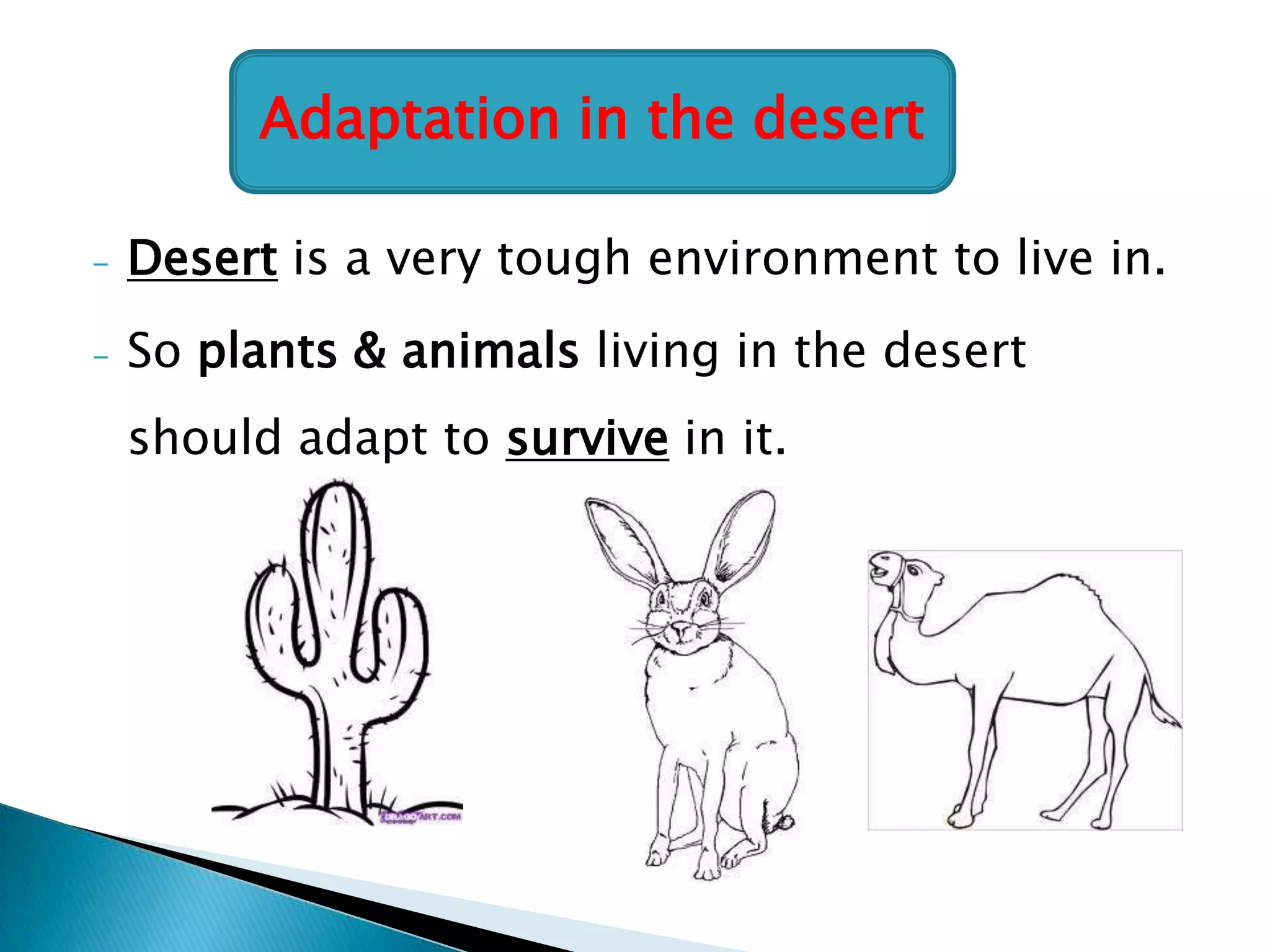
Adaptation in the desert
-

Desert is a very tough environment to live in.

-

So plants & animals living in the desert
should adapt to survive in it.
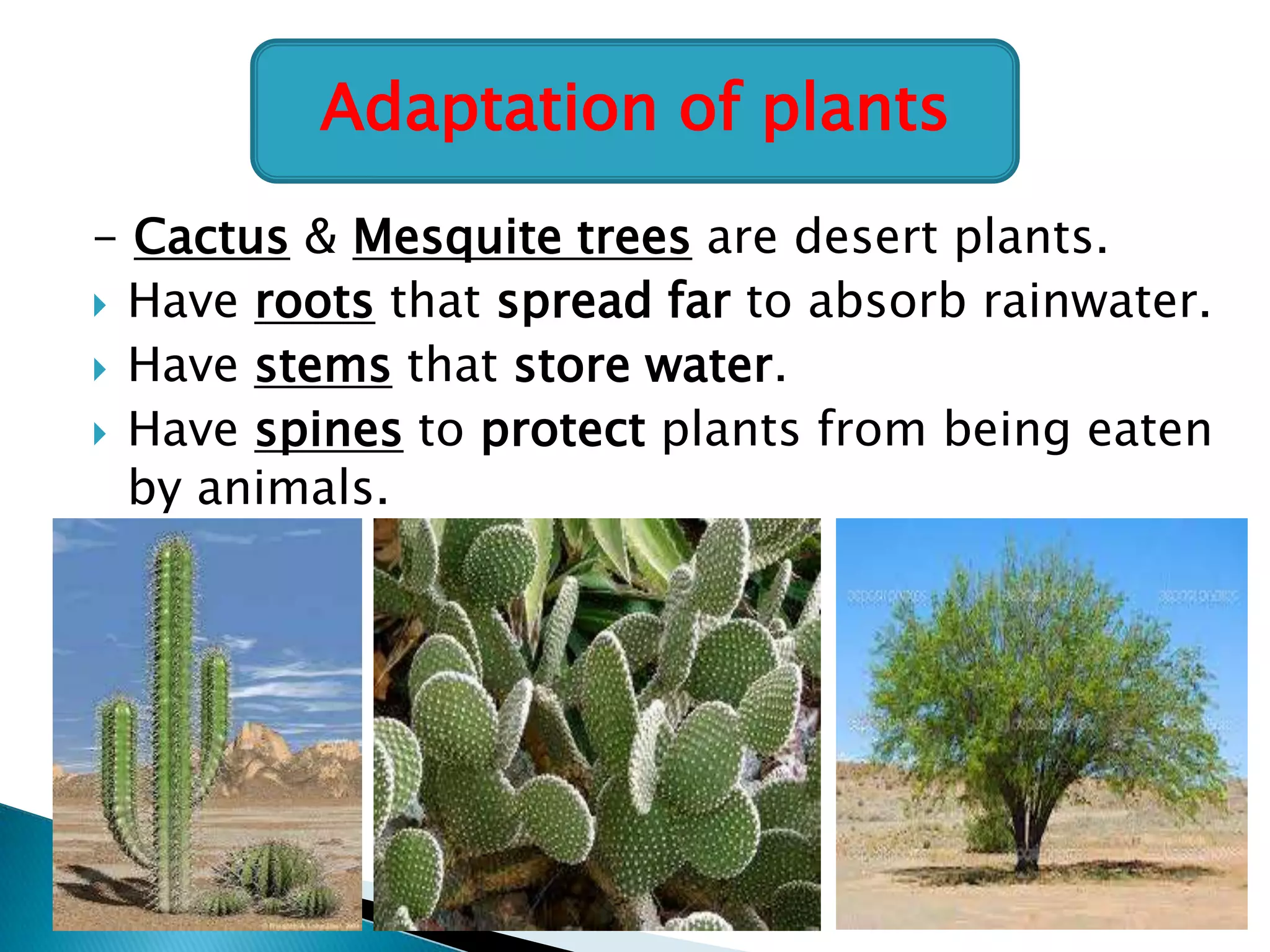
Adaptation of plants
- Cactus & Mesquite trees are desert plants.
 Have roots that spread far to absorb rainwater.
 Have stems that store water.
 Have spines to protect plants from being eaten
by animals.
Adaptation of animals
-

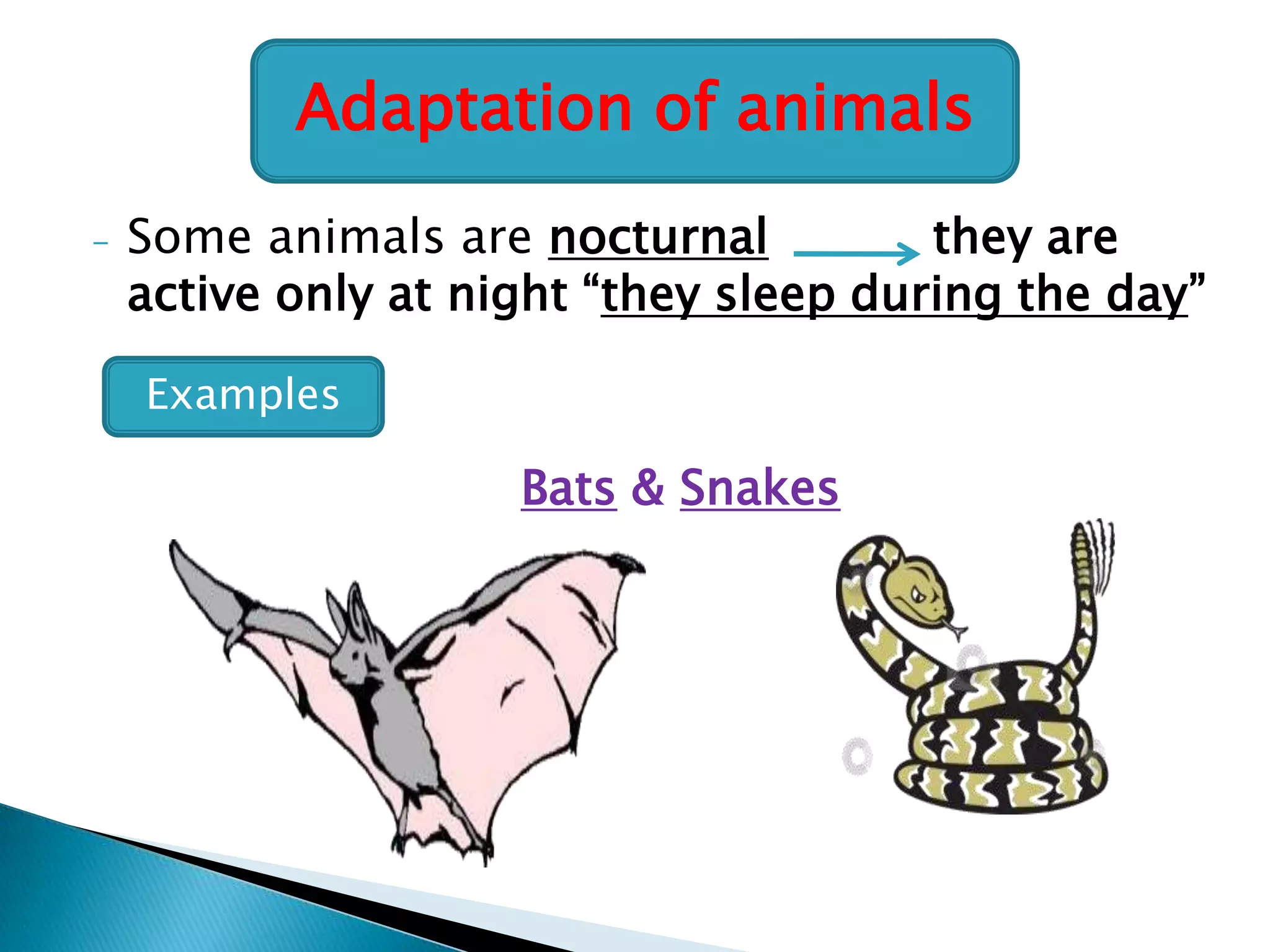
Some animals are nocturnal
they are
active only at night “they sleep during the day”
Examples

Bats & Snakes
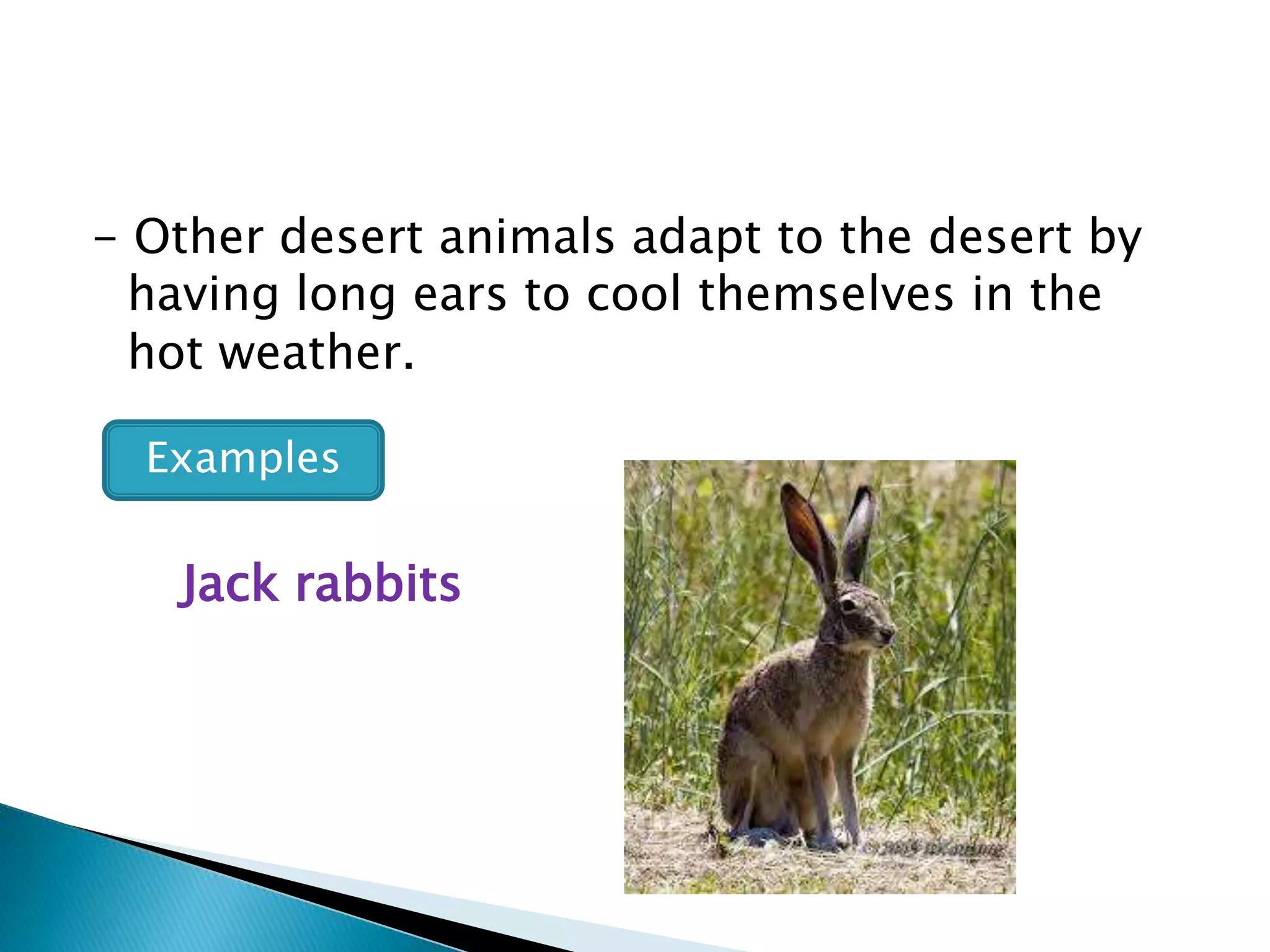
- Other desert animals adapt to the desert by
having long ears to cool themselves in the
hot weather.
Examples

Jack rabbits
Adaptation in the Forest
Adaptation in the tropical rainforest
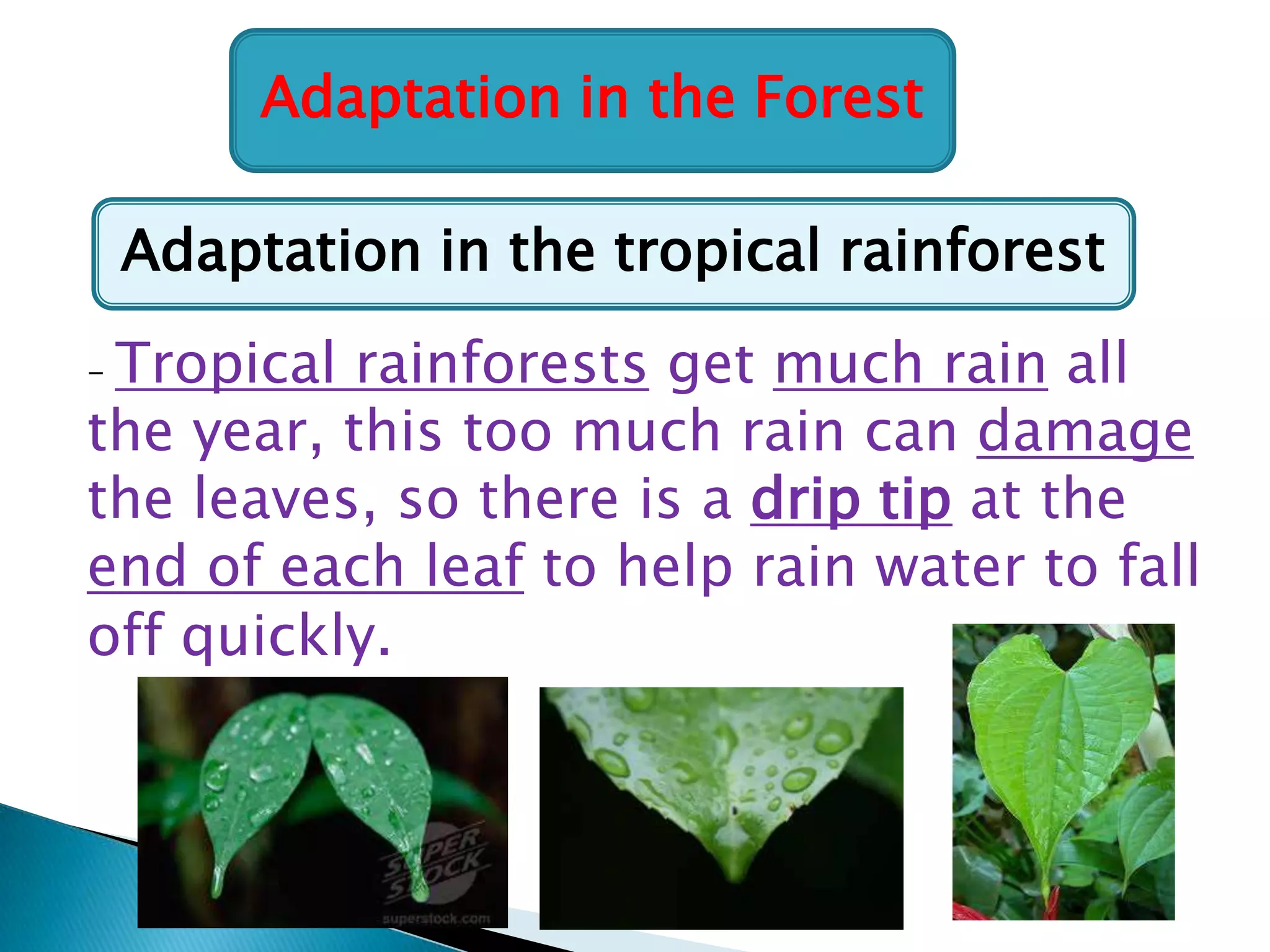
Tropical rainforests get much rain all
the year, this too much rain can damage
the leaves, so there is a drip tip at the
end of each leaf to help rain water to fall
off quickly.
-
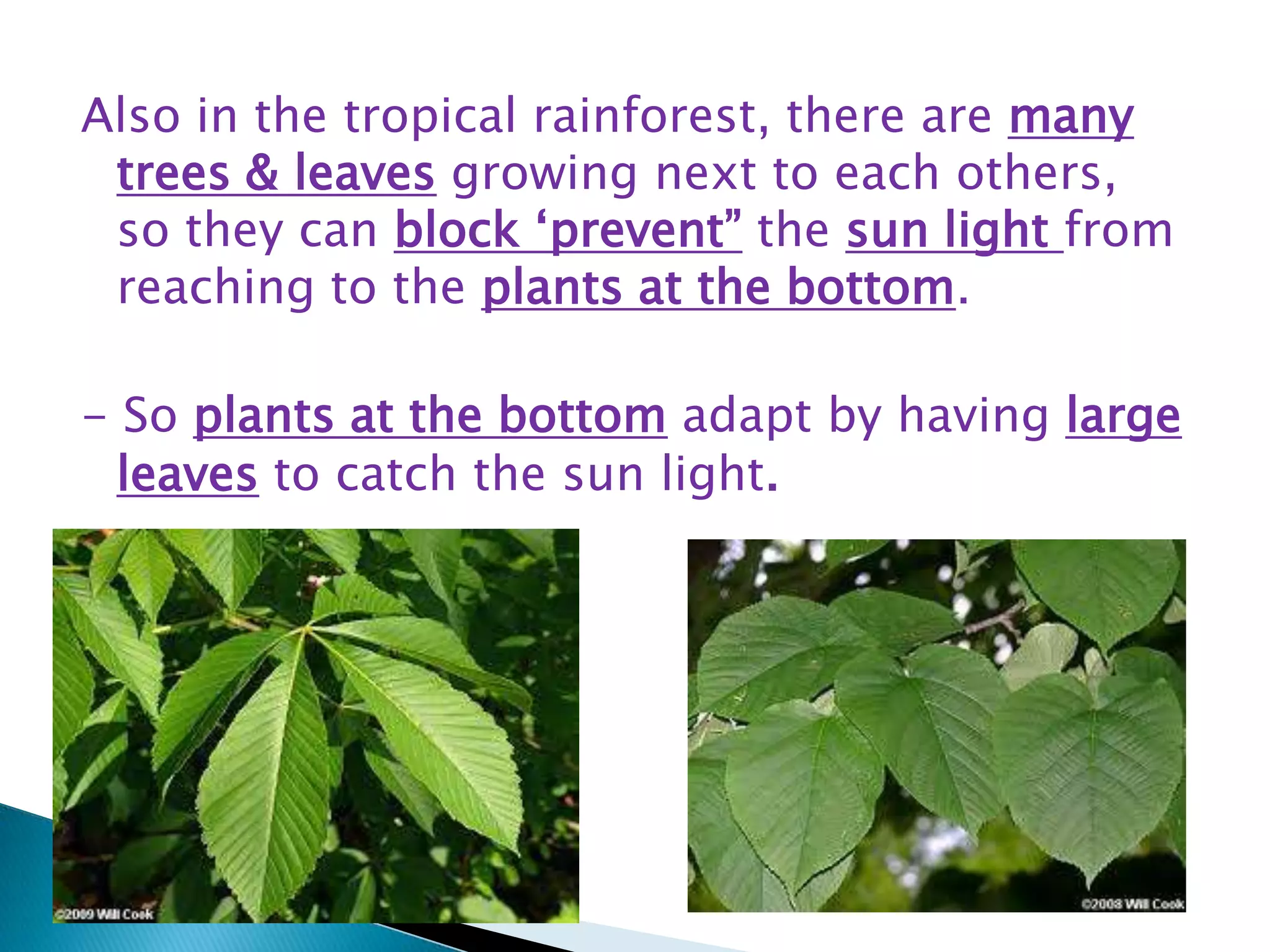
Also in the tropical rainforest, there are many
trees & leaves growing next to each others,
so they can block „prevent” the sun light from
reaching to the plants at the bottom.
- So plants at the bottom adapt by having large
leaves to catch the sun light.
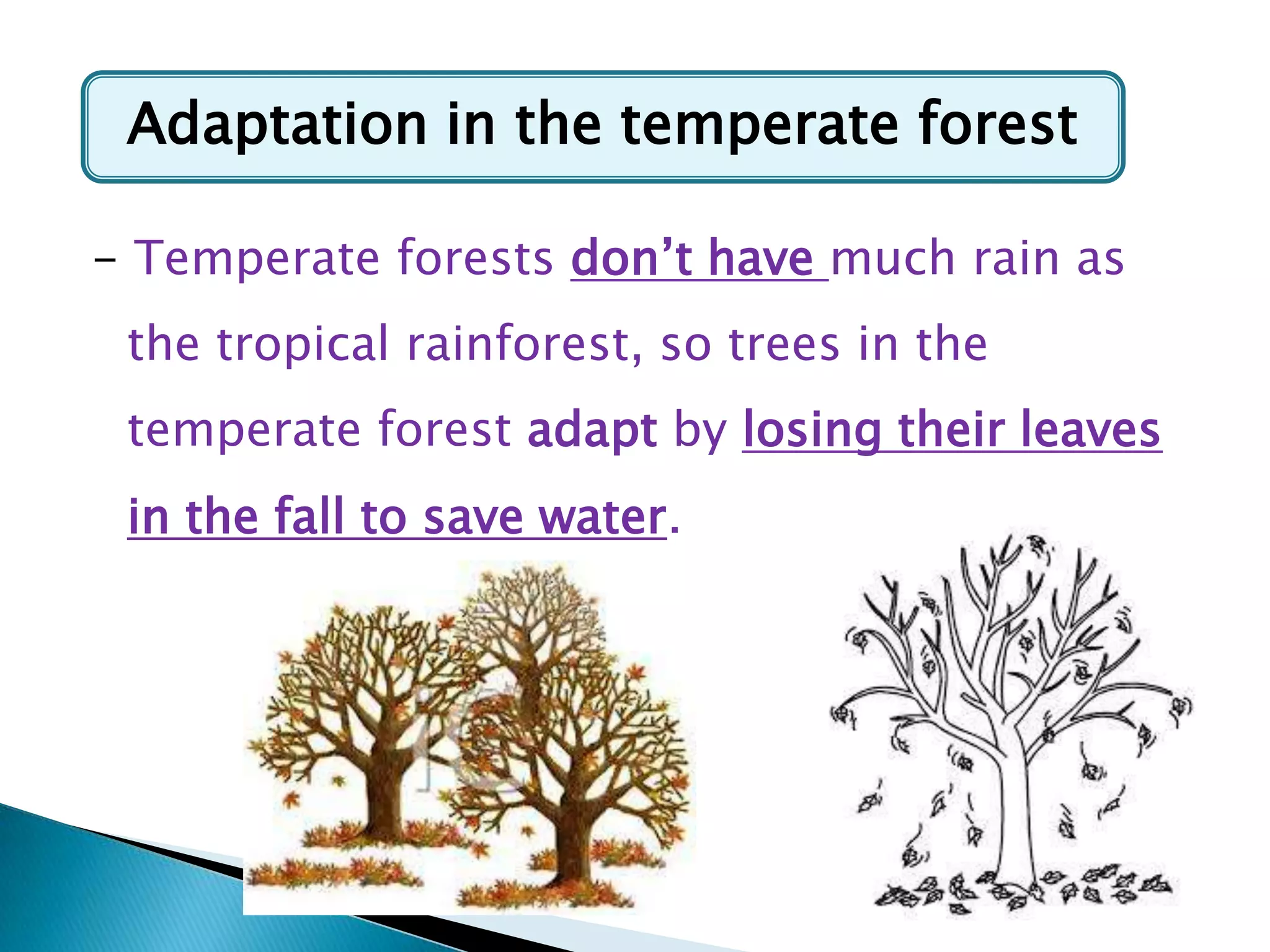
Adaptation in the temperate forest
- Temperate forests don‟t have much rain as

the tropical rainforest, so trees in the
temperate forest adapt by losing their leaves
in the fall to save water.
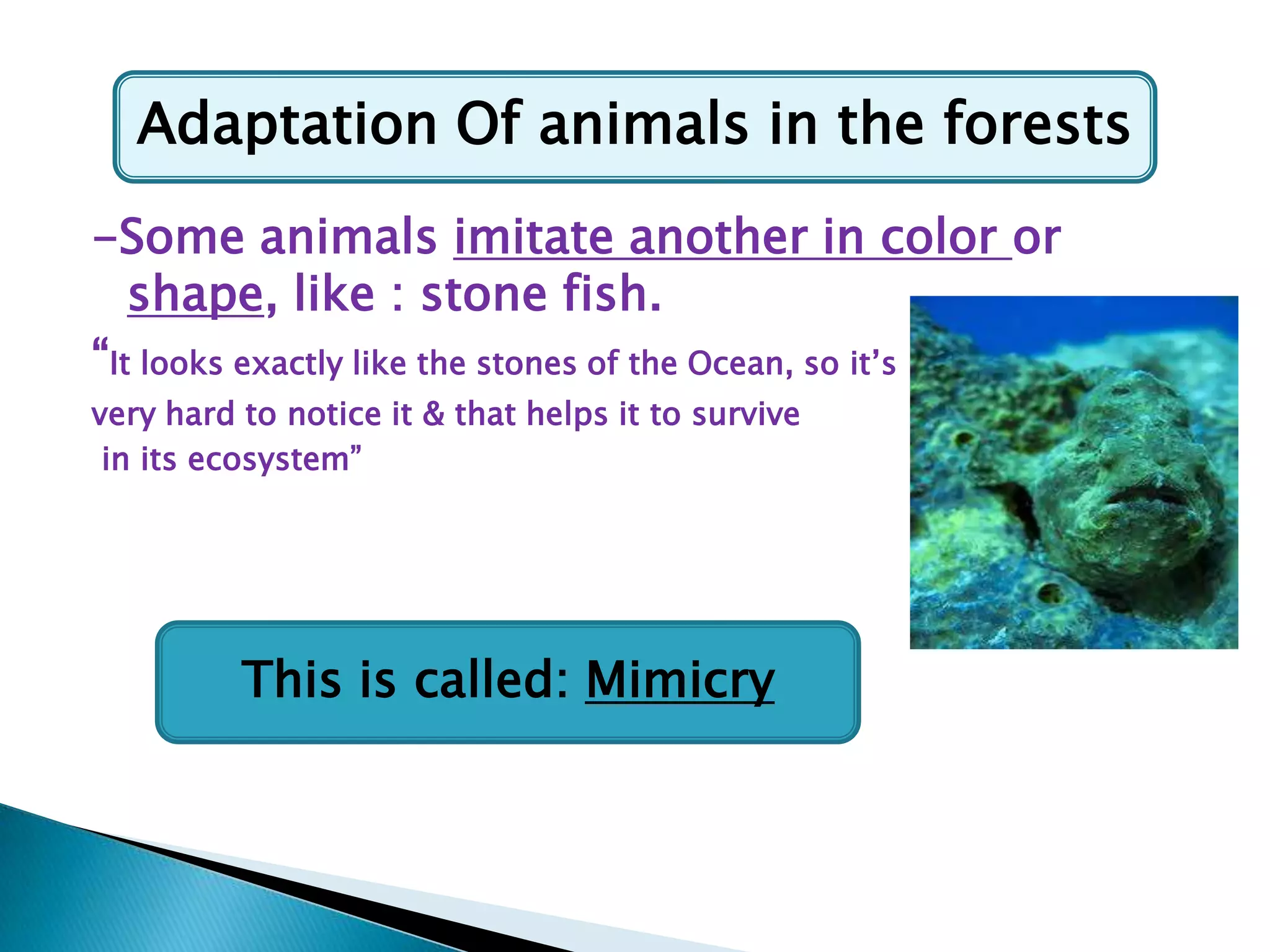
Adaptation Of animals in the forests
-Some animals imitate another in color or
shape, like : stone fish.
“It looks exactly like the stones of the Ocean, so it‟s
very hard to notice it & that helps it to survive
in its ecosystem”

This is called: Mimicry
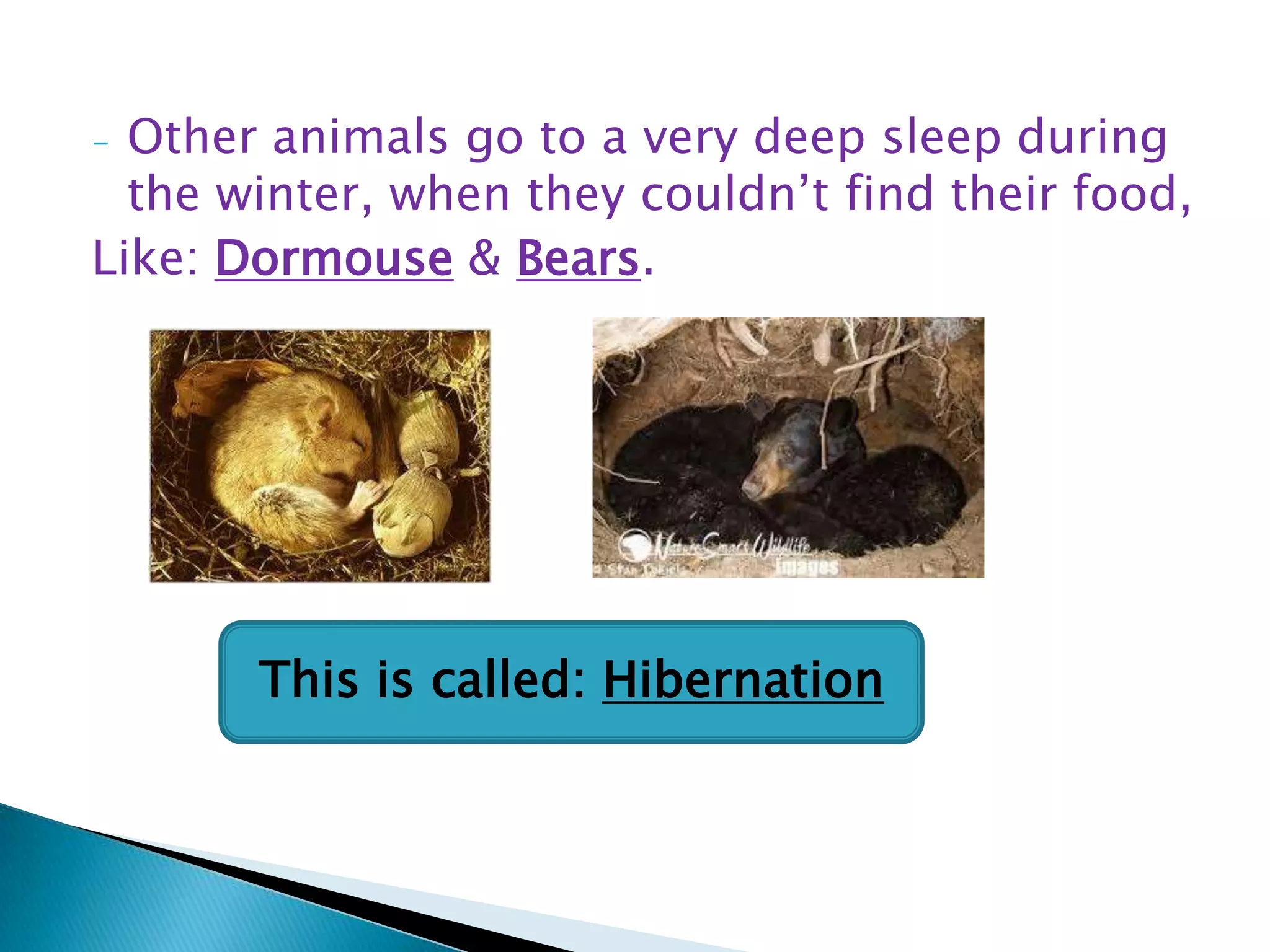
Other animals go to a very deep sleep during
the winter, when they couldn‟t find their food,
Like: Dormouse & Bears.
-

This is called: Hibernation
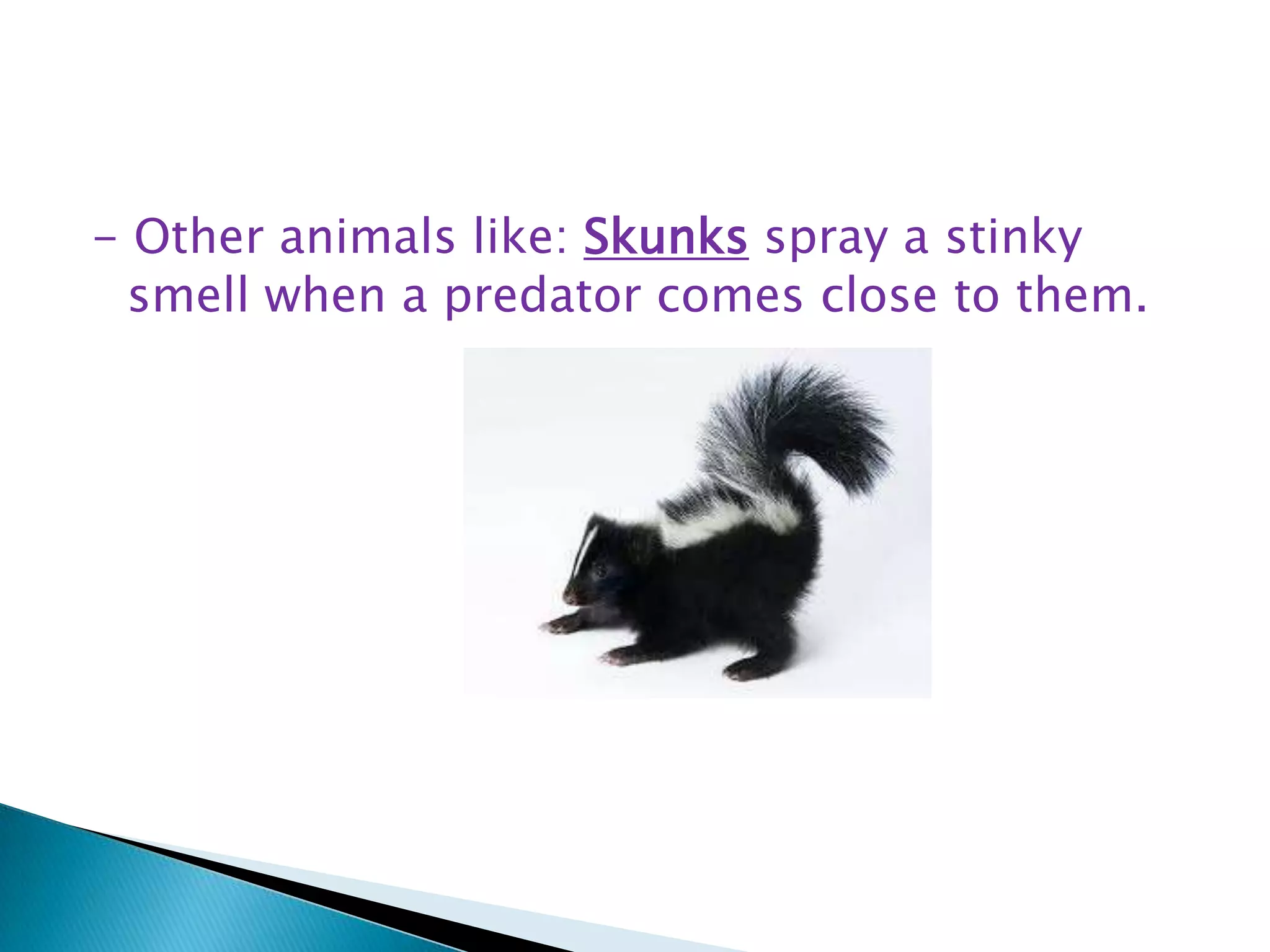
- Other animals like: Skunks spray a stinky
smell when a predator comes close to them.
Adaptation in the Ocean
Adaptation Of Plants in the Ocean
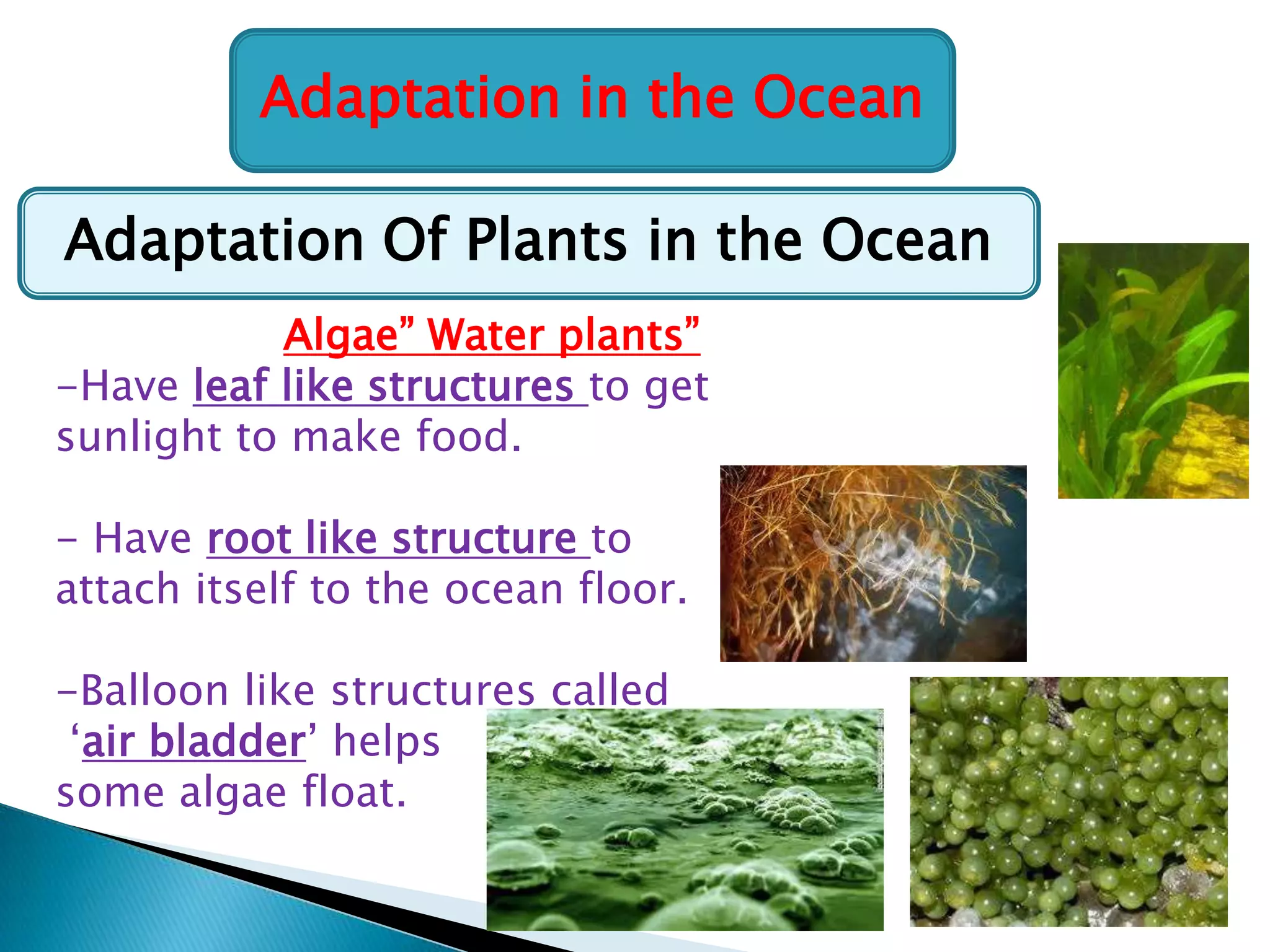
Algae” Water plants”
-Have leaf like structures to get
sunlight to make food.
- Have root like structure to
attach itself to the ocean floor.
-Balloon like structures called
„air bladder‟ helps
some algae float.
Adaptation Of animals in the Ocean
-

-

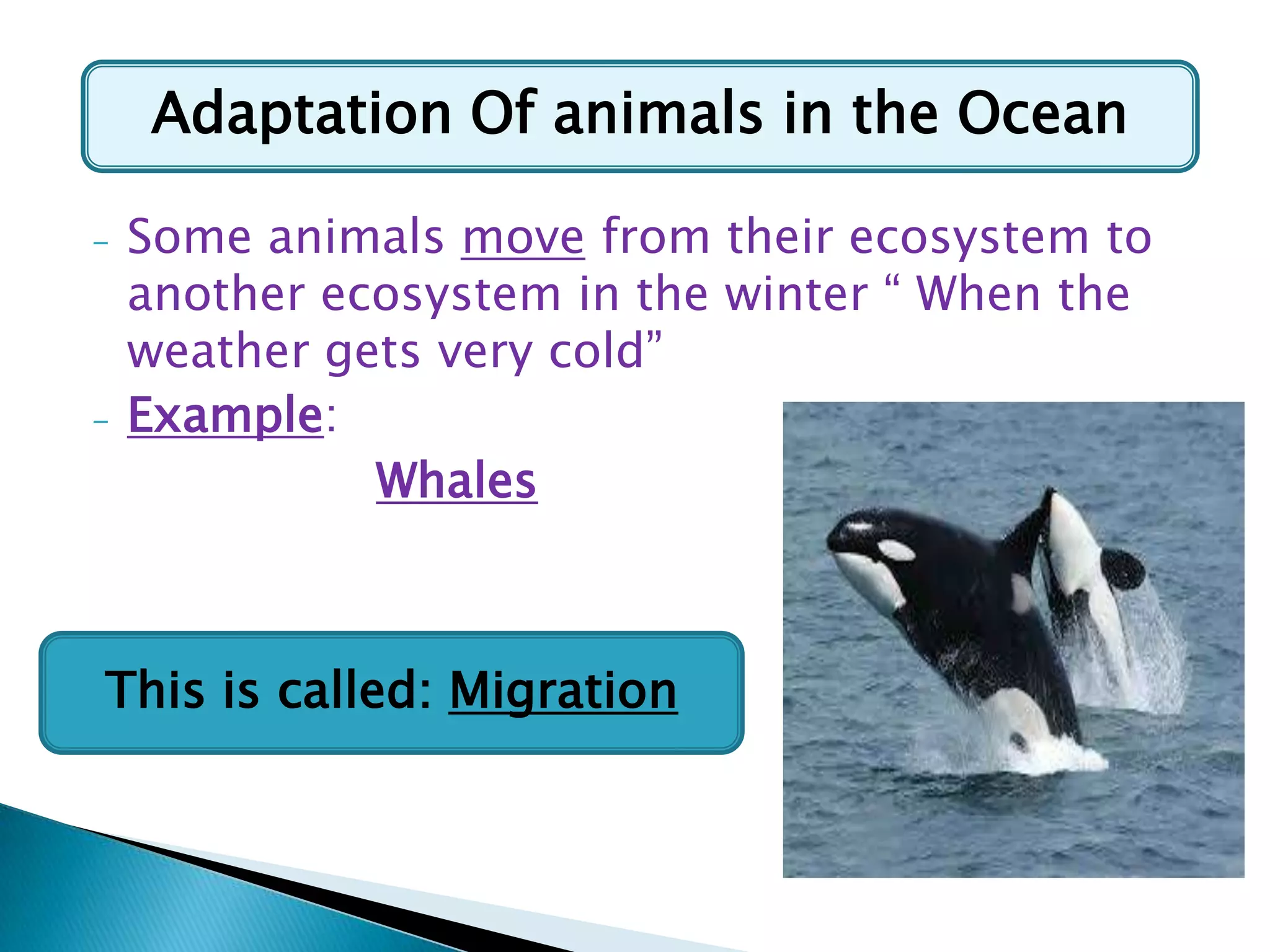
Some animals move from their ecosystem to
another ecosystem in the winter “ When the
weather gets very cold”
Example:
Whales

This is called: Migration
-

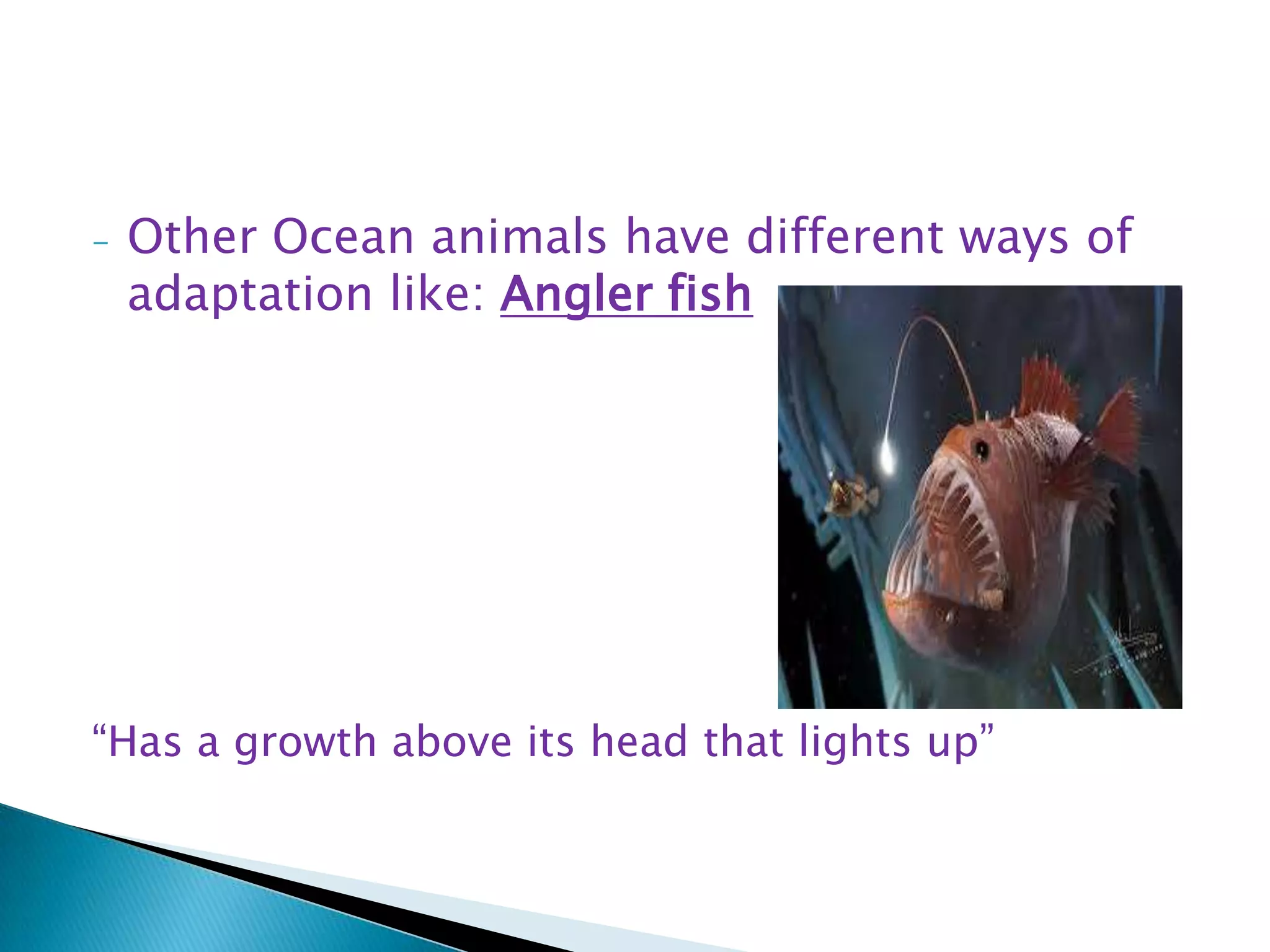
Other Ocean animals have different ways of
adaptation like: Angler fish

“Has a growth above its head that lights up”
Adaptation in Wetlands
Adaptation Of Plants in the wetland
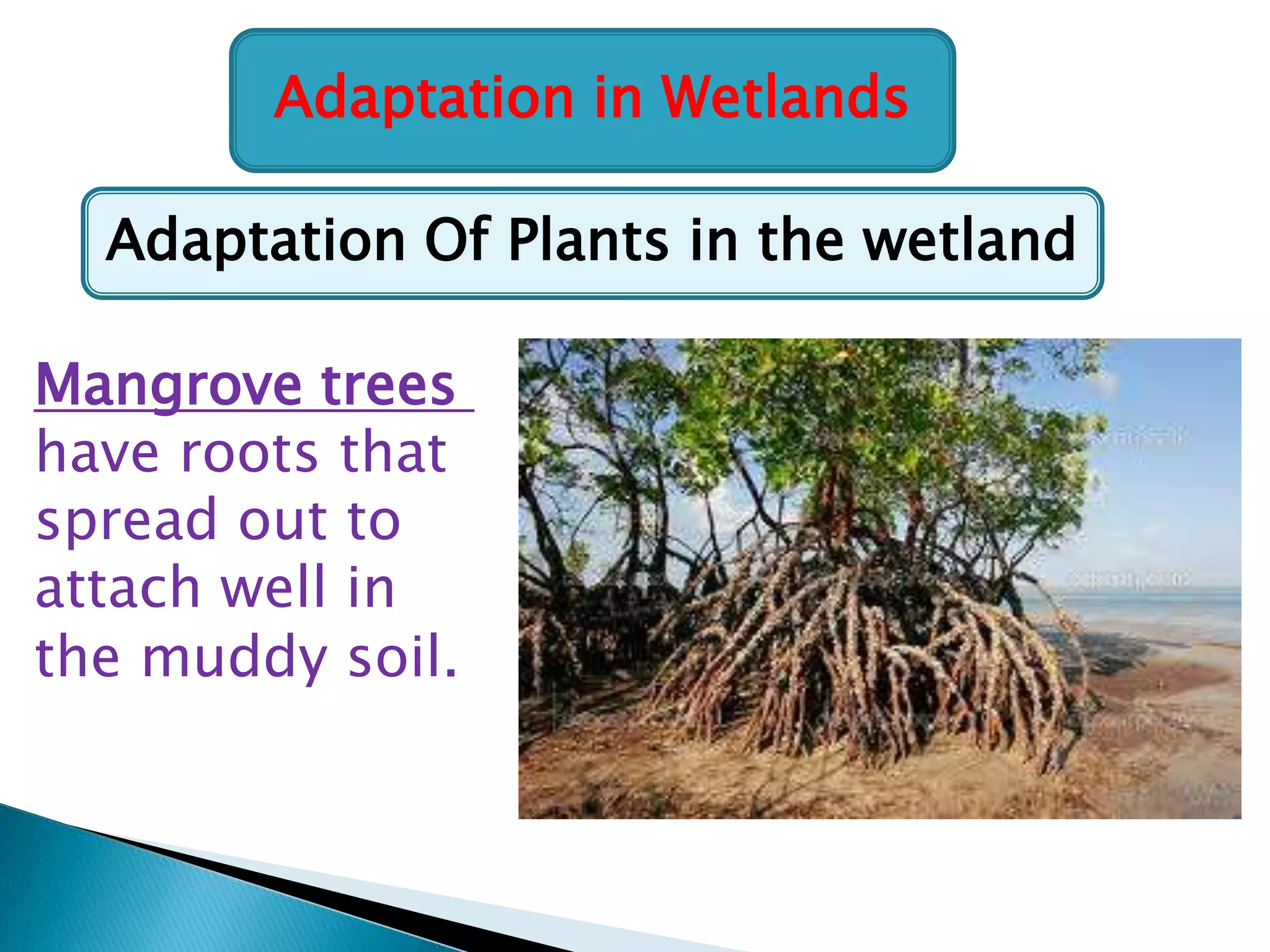
Mangrove trees
have roots that
spread out to
attach well in
the muddy soil.
Adaptation Of animals in the Wetland

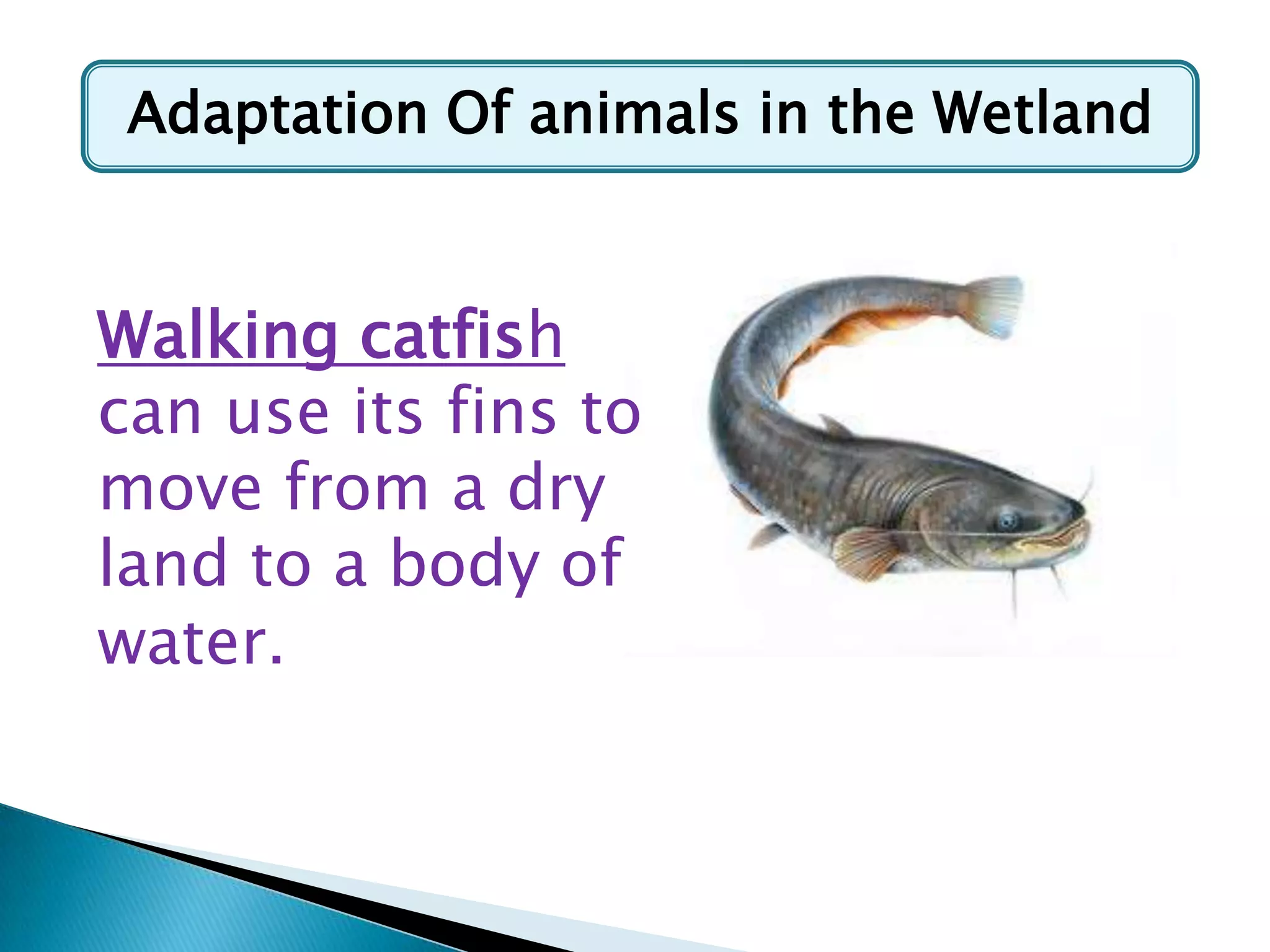
Walking catfish
can use its fins to
move from a dry
land to a body of
water.

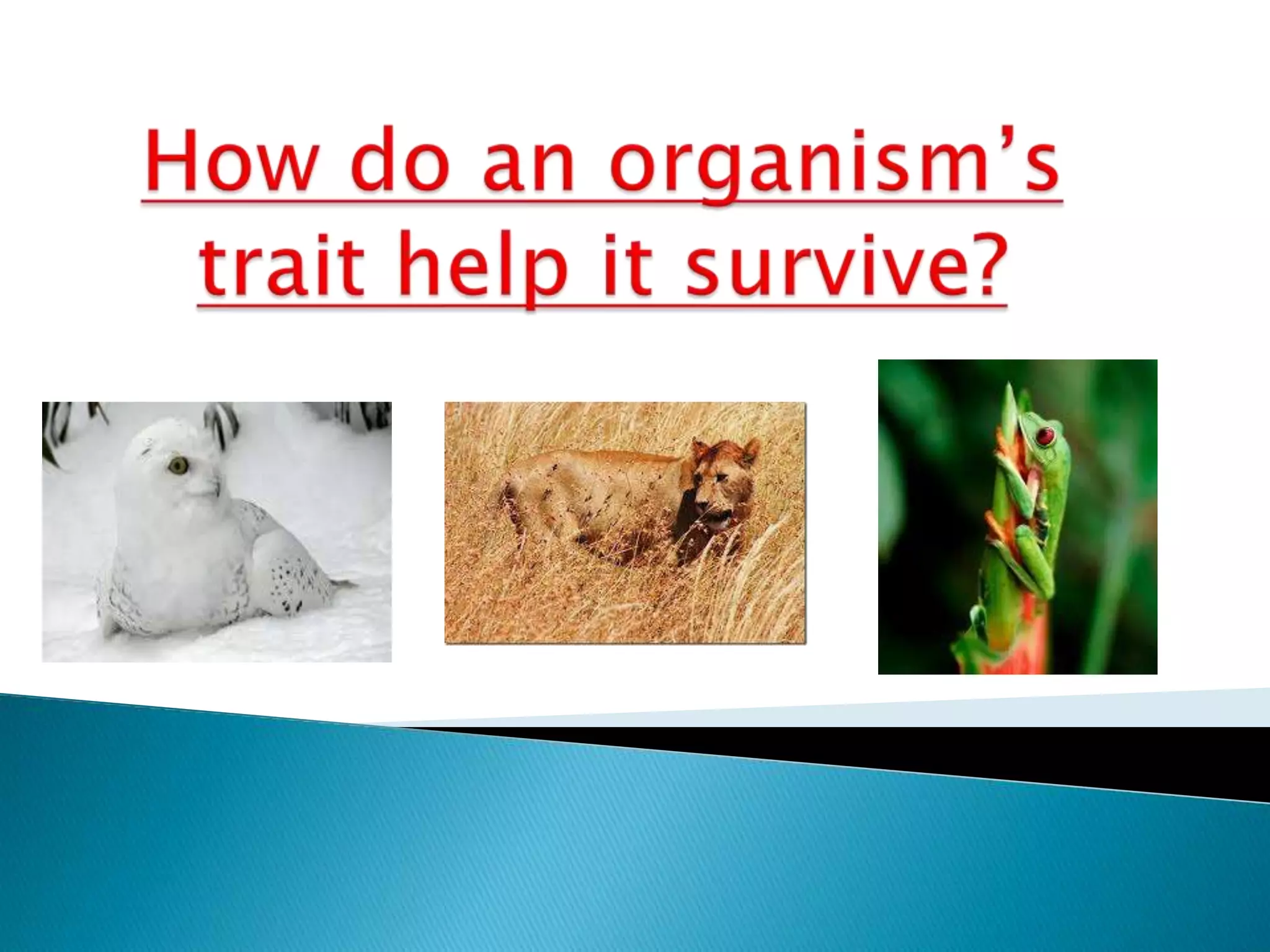
How do an organism’s trait help it survive

  • 2.
    - Every animal hasits own environment where it lives in. Example Polar bears live in the Arctic. Snakes live in the desert. In order to survive in their environment, they have to behave in a special way.
  • 3.
    Adaptation It‟s the behaviorthat helps a living thing “animal” to survive in its environment
  • 4.
  • 5.
    Camouflage “Animals hide byblending in their environment” -Many animals adapt to live in their environment by “camouflage”. -They hide & protect themselves from being eaten by other animals by blending in their environment . -Other animals use camouflage to help them not to be noticed so that they can hunt their preys easily.
  • 6.
    Examples “Chameleons” - They blendin their environment by Camouflage to hide from their predators. (They color themselves with the same color of their environment)
  • 7.
    “Polar bears” Polar bear‟swhite fur helps it to blend with the ice & snow to make it easy for them to hunt the seal without being seen. -
  • 8.
    “Snakes” - Snakes alsoadapt in their environment by camouflage, they hide from eagles by blending in the rocks & sand, and also to make easier for them to hunt their preys.
  • 9.
    “Owls” -Owls also canadapt by camouflage inside the trees -It make it easier for them to hunt their preys without being seen.
  • 10.
    “Lions” - Lions alsoblend in their environment using camouflage to hunt their preys without being seen.
  • 11.
    Adaptation in thedesert - Desert is a very tough environment to live in. - So plants & animals living in the desert should adapt to survive in it.
  • 12.
    Adaptation of plants -Cactus & Mesquite trees are desert plants.  Have roots that spread far to absorb rainwater.  Have stems that store water.  Have spines to protect plants from being eaten by animals.
  • 13.
    Adaptation of animals - Someanimals are nocturnal they are active only at night “they sleep during the day” Examples Bats & Snakes
  • 14.
    - Other desertanimals adapt to the desert by having long ears to cool themselves in the hot weather. Examples Jack rabbits
  • 15.
    Adaptation in theForest Adaptation in the tropical rainforest Tropical rainforests get much rain all the year, this too much rain can damage the leaves, so there is a drip tip at the end of each leaf to help rain water to fall off quickly. -
  • 16.
    Also in thetropical rainforest, there are many trees & leaves growing next to each others, so they can block „prevent” the sun light from reaching to the plants at the bottom. - So plants at the bottom adapt by having large leaves to catch the sun light.
  • 17.
    Adaptation in thetemperate forest - Temperate forests don‟t have much rain as the tropical rainforest, so trees in the temperate forest adapt by losing their leaves in the fall to save water.
  • 18.
    Adaptation Of animalsin the forests -Some animals imitate another in color or shape, like : stone fish. “It looks exactly like the stones of the Ocean, so it‟s very hard to notice it & that helps it to survive in its ecosystem” This is called: Mimicry
  • 19.
    Other animals goto a very deep sleep during the winter, when they couldn‟t find their food, Like: Dormouse & Bears. - This is called: Hibernation
  • 20.
    - Other animalslike: Skunks spray a stinky smell when a predator comes close to them.
  • 21.
    Adaptation in theOcean Adaptation Of Plants in the Ocean Algae” Water plants” -Have leaf like structures to get sunlight to make food. - Have root like structure to attach itself to the ocean floor. -Balloon like structures called „air bladder‟ helps some algae float.
  • 22.
    Adaptation Of animalsin the Ocean - - Some animals move from their ecosystem to another ecosystem in the winter “ When the weather gets very cold” Example: Whales This is called: Migration
  • 23.
    - Other Ocean animalshave different ways of adaptation like: Angler fish “Has a growth above its head that lights up”
  • 24.
    Adaptation in Wetlands AdaptationOf Plants in the wetland Mangrove trees have roots that spread out to attach well in the muddy soil.
  • 25.
    Adaptation Of animalsin the Wetland Walking catfish can use its fins to move from a dry land to a body of water.