Chapter Nine
Drum Brake Components
1
Drum Brake Components and
Operation
 Wheel Cylinders
 Two pistons, a spring, sealing cups or seals, two links,
and the cylinder body
 Bleeder must be positioned at highest point when
mounting cylinder
3
Drum Brake Components and
Operation
 Brake Shoes
 Provide mounting area for friction material
 Return springs hold brake shoes away from drum
until force is applied
 Shoes can require mounting instructions
4
Drum Brake Components and
Operation
 Brake Linings
 Thickness, positioning, and shape may be different on
each lining for one wheel
 Secondary shoe may be shorter and thinner than
primary shoe
5
Drum Brake Components and
Operation
 Brake Linings
 Brake linings are heat-resistant
 Copper, brass, zinc, and other materials have replaced
asbestos
6
Drum Brake Components and
Operation
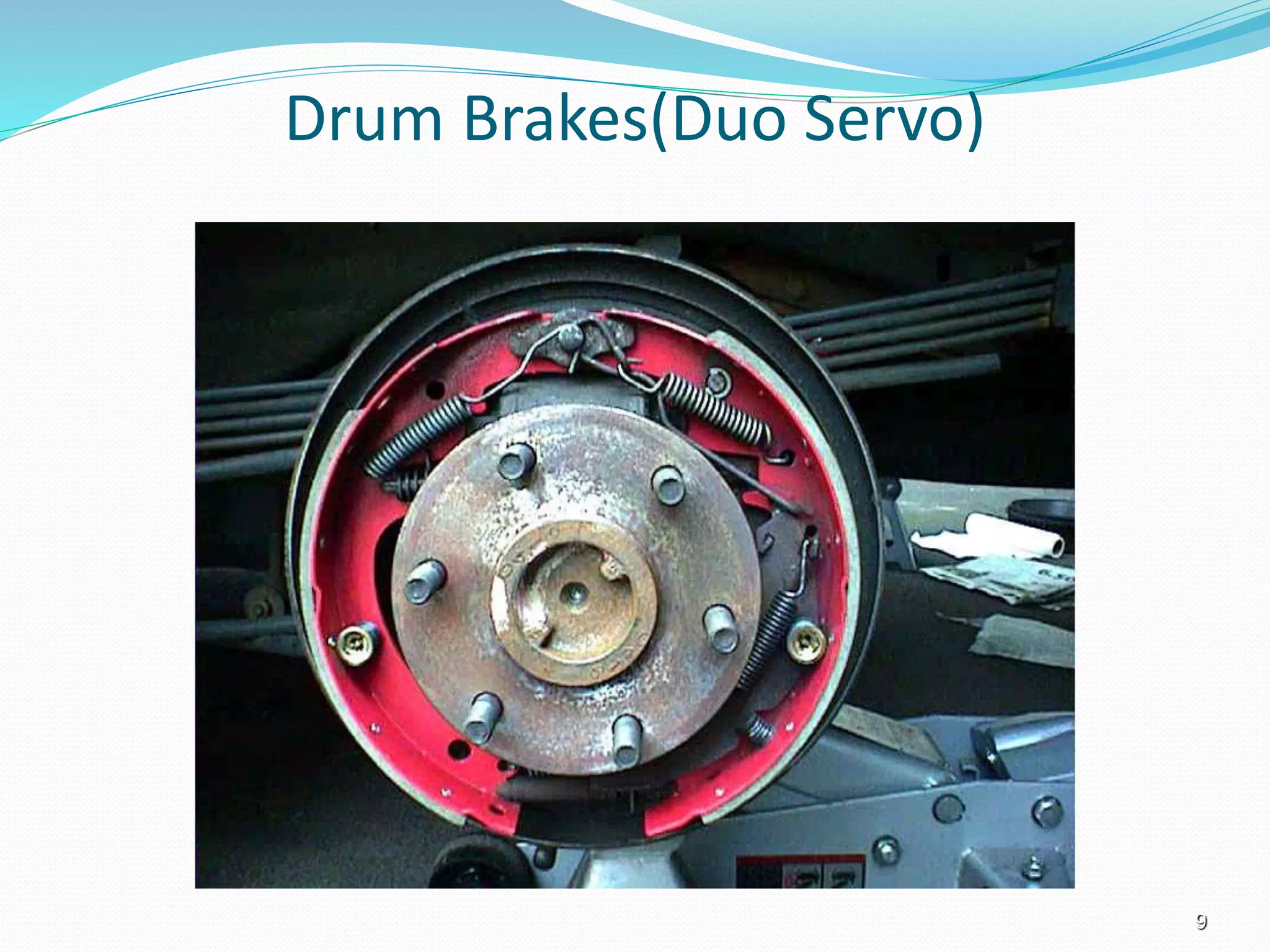
 Servo Action
 Some systems use a stationary anchor to hold lower
end of shoe in place
 Servo systems use force of one shoe to increase force
applied to another shoe
 Decrease stopping distance and force required
7
Drum Brakes(Leading Trailing)
8
Drum Brakes(Duo Servo)
9
Drum Brake Components and
Operation
 Brake Self-Adjusters
 Drum brakes require mechanical adjusters
 Some brake systems require periodic adjustment
 Others adjust shoes automatically as brakes are used
10
Drum Brake Components and
Operation
 Brake Self-Adjusters
 Automatic adjusters can be actuated by application of
brake pedal or parking brake
11
Drum Brake Components and
Operation
 Drums
 Cover brake mechanisms
 Provide a location for shoes to press against for
braking
 Interior surface must be machined smooth
12
Parking Brake Operation
 Holds vehicle in place once it is stopped
 Foot- or hand-operated brakes are used to set the
brake
 Systems have cable attached to hand or pedal
assembly to actuate rear brakes
17

Drum brakes

  • 1.
  • 2.
    Drum Brake Componentsand Operation  Wheel Cylinders  Two pistons, a spring, sealing cups or seals, two links, and the cylinder body  Bleeder must be positioned at highest point when mounting cylinder 3
  • 3.
    Drum Brake Componentsand Operation  Brake Shoes  Provide mounting area for friction material  Return springs hold brake shoes away from drum until force is applied  Shoes can require mounting instructions 4
  • 4.
    Drum Brake Componentsand Operation  Brake Linings  Thickness, positioning, and shape may be different on each lining for one wheel  Secondary shoe may be shorter and thinner than primary shoe 5
  • 5.
    Drum Brake Componentsand Operation  Brake Linings  Brake linings are heat-resistant  Copper, brass, zinc, and other materials have replaced asbestos 6
  • 6.
    Drum Brake Componentsand Operation  Servo Action  Some systems use a stationary anchor to hold lower end of shoe in place  Servo systems use force of one shoe to increase force applied to another shoe  Decrease stopping distance and force required 7
  • 7.
  • 8.
  • 9.
    Drum Brake Componentsand Operation  Brake Self-Adjusters  Drum brakes require mechanical adjusters  Some brake systems require periodic adjustment  Others adjust shoes automatically as brakes are used 10
  • 10.
    Drum Brake Componentsand Operation  Brake Self-Adjusters  Automatic adjusters can be actuated by application of brake pedal or parking brake 11
  • 11.
    Drum Brake Componentsand Operation  Drums  Cover brake mechanisms  Provide a location for shoes to press against for braking  Interior surface must be machined smooth 12
  • 12.
    Parking Brake Operation Holds vehicle in place once it is stopped  Foot- or hand-operated brakes are used to set the brake  Systems have cable attached to hand or pedal assembly to actuate rear brakes 17