Steps to performing a Perfect!!!
Rear Drum Brake job
This one had a leaking wheel cylinder
and owner requested shoe
replacement, even though shoes still
had miles on them. Clean the parts with
wet cleaner to prevent dust.
Begin by removing the shoe return
springs. This spring holds the
automatic adjuster lever.
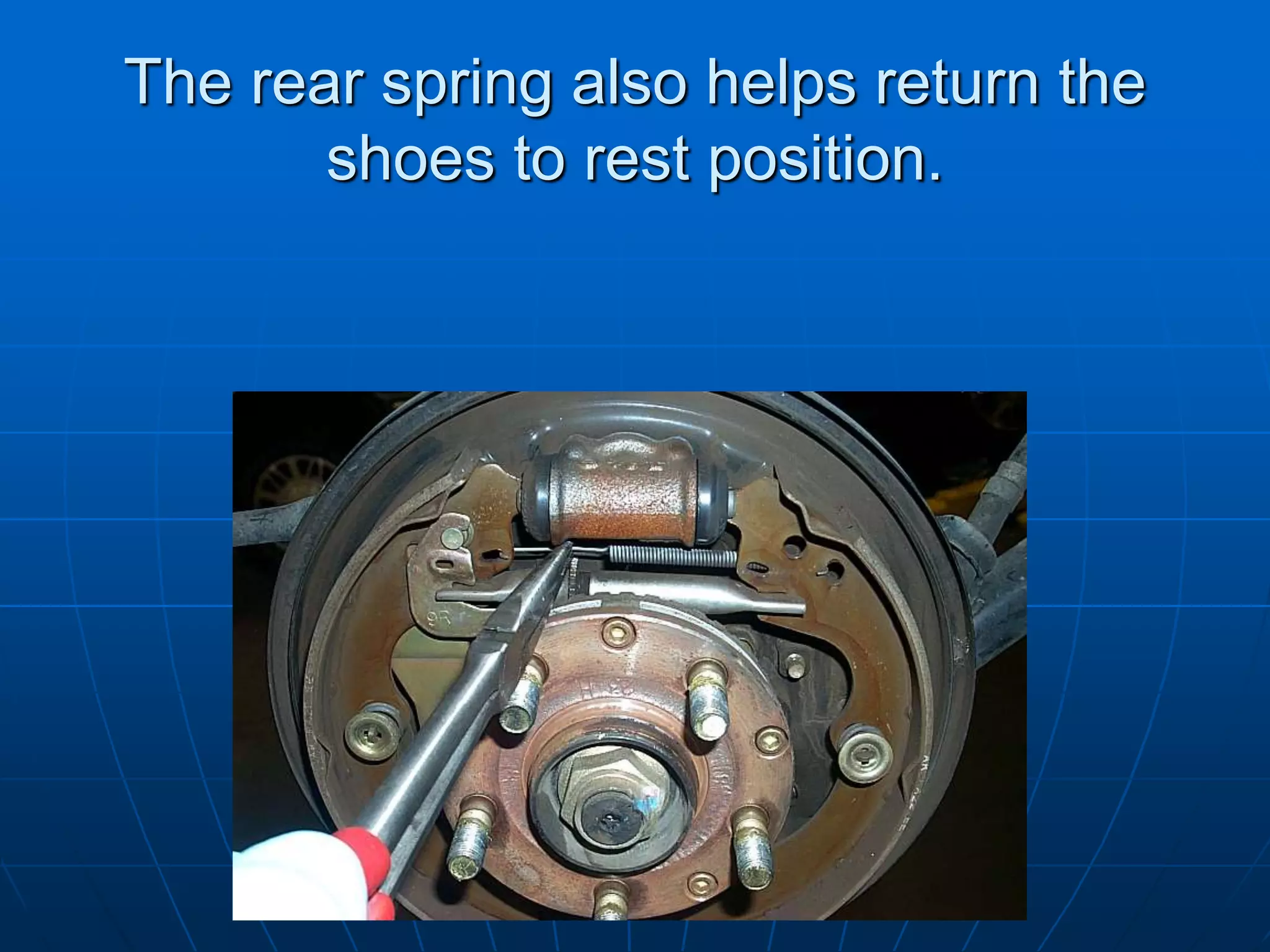
The rear spring also helps return the
shoes to rest position.
Remove the brake adjuster assembly.
Next, remove the hold-down cup and
spring from the primary (front) brake
shoe.
Don’t lose the hold-down pin.
Carefully remove the primary shoe, and
then remove the lower return spring.
Repeat on secondary (rear) shoe.
Grip inner cable with pliers, and
remove parking brake cable from
secondary shoe.
With all the hardware removed from the
shoe table (backing plate), remove the
wheel cylinders next.
Continue cleaning with a solvent
soaked rag, finish by spraying with
brake cleaner and dry with rag.
Inspect ABS sensor and tone ring.
Install to new wheel cylinder, apply high
temp brake lubricant to shoe contact
pads on shoe table.
Transfer parts to new shoe.
Finish by cleaning and lubing small
parts.
Reassemble in reverse order. Clean
your greasy fingerprints off brake shoes
(yes, mom…)
Stand back and admire your work, but
don’t screw around too long. Here
comes the boss..
Ok, the boss is gone. We gotta finish
this up. It’s a customer waiter. Measure
the inside of the drum with caliper.
Use the caliper to make a quick, basic
adjustment of shoes. This will save a
lot of work adjusting shoes through a
tiny hole.
Make small adjustments to “star-wheel”
and check by slipping drum on to see
how much drag there is.
Perfect amount is “just barely”!
Closer view of business end of
“star-wheel” adjuster. Finish up with a
quick brake bleed…
…and if you do everything right, you
should be able to stop by the house on
your way home!

Rear brake repair

  • 1.
    Steps to performinga Perfect!!! Rear Drum Brake job
  • 2.
    This one hada leaking wheel cylinder and owner requested shoe replacement, even though shoes still had miles on them. Clean the parts with wet cleaner to prevent dust.
  • 3.
    Begin by removingthe shoe return springs. This spring holds the automatic adjuster lever.
  • 4.
    The rear springalso helps return the shoes to rest position.
  • 5.
    Remove the brakeadjuster assembly.
  • 6.
    Next, remove thehold-down cup and spring from the primary (front) brake shoe.
  • 7.
    Don’t lose thehold-down pin.
  • 8.
    Carefully remove theprimary shoe, and then remove the lower return spring.
  • 9.
    Repeat on secondary(rear) shoe.
  • 10.
    Grip inner cablewith pliers, and remove parking brake cable from secondary shoe.
  • 11.
    With all thehardware removed from the shoe table (backing plate), remove the wheel cylinders next.
  • 12.
    Continue cleaning witha solvent soaked rag, finish by spraying with brake cleaner and dry with rag. Inspect ABS sensor and tone ring.
  • 13.
    Install to newwheel cylinder, apply high temp brake lubricant to shoe contact pads on shoe table.
  • 14.
  • 15.
    Finish by cleaningand lubing small parts.
  • 16.
    Reassemble in reverseorder. Clean your greasy fingerprints off brake shoes (yes, mom…)
  • 17.
    Stand back andadmire your work, but don’t screw around too long. Here comes the boss..
  • 18.
    Ok, the bossis gone. We gotta finish this up. It’s a customer waiter. Measure the inside of the drum with caliper.
  • 19.
    Use the caliperto make a quick, basic adjustment of shoes. This will save a lot of work adjusting shoes through a tiny hole.
  • 20.
    Make small adjustmentsto “star-wheel” and check by slipping drum on to see how much drag there is. Perfect amount is “just barely”!
  • 21.
    Closer view ofbusiness end of “star-wheel” adjuster. Finish up with a quick brake bleed…
  • 22.
    …and if youdo everything right, you should be able to stop by the house on your way home!