TORQUE TO YIELD
TYPE FASTENERS
Why are Torque-to-Yield bolts
a better choice for clamping?
 More consistent torque over wider range of
operating conditions.
 Matched to gasket and engine
 Head gasket failures are very rare now
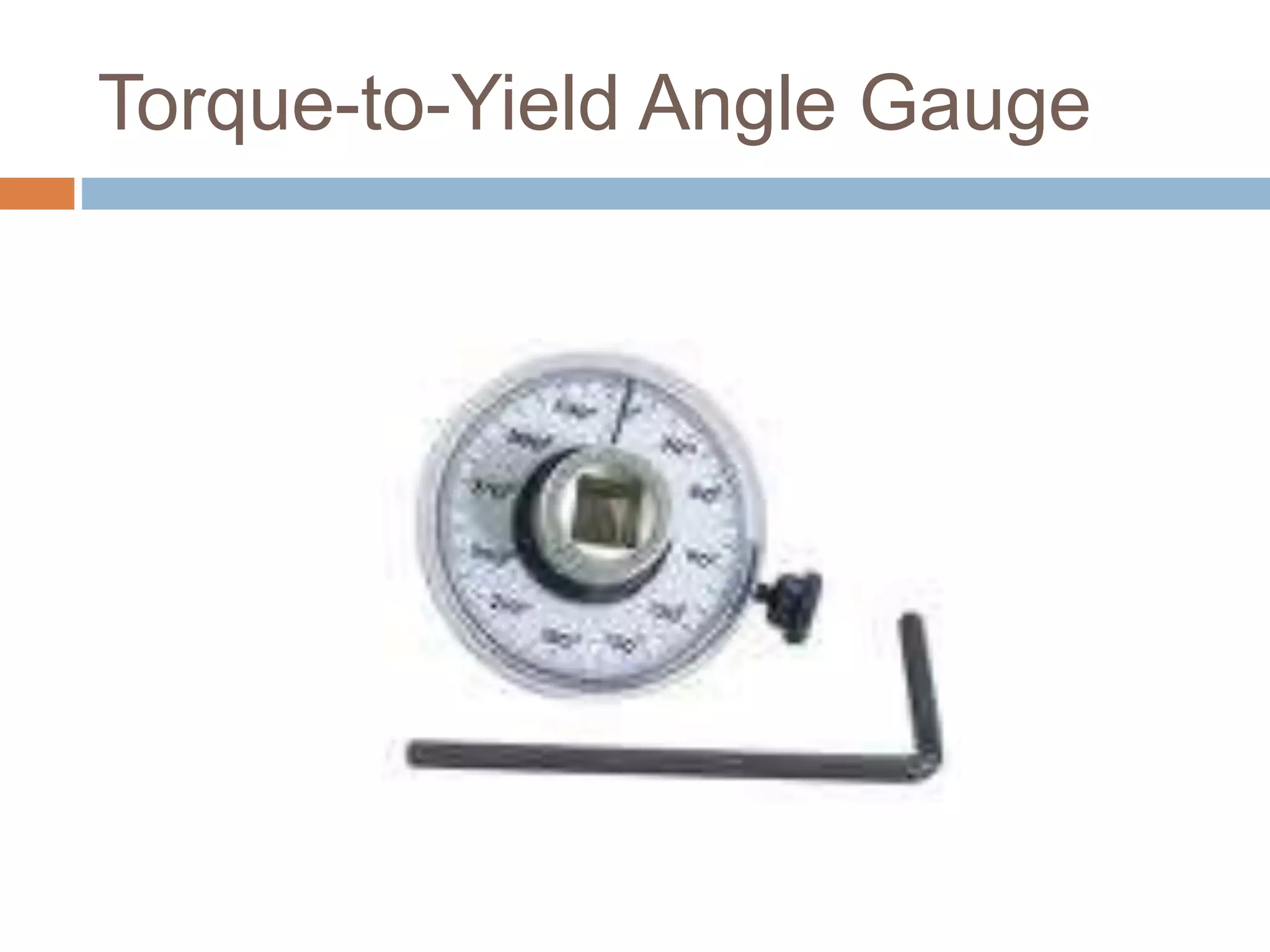
Torque-to-Yield Angle Gauge
How to use gauge
So…what is happening?
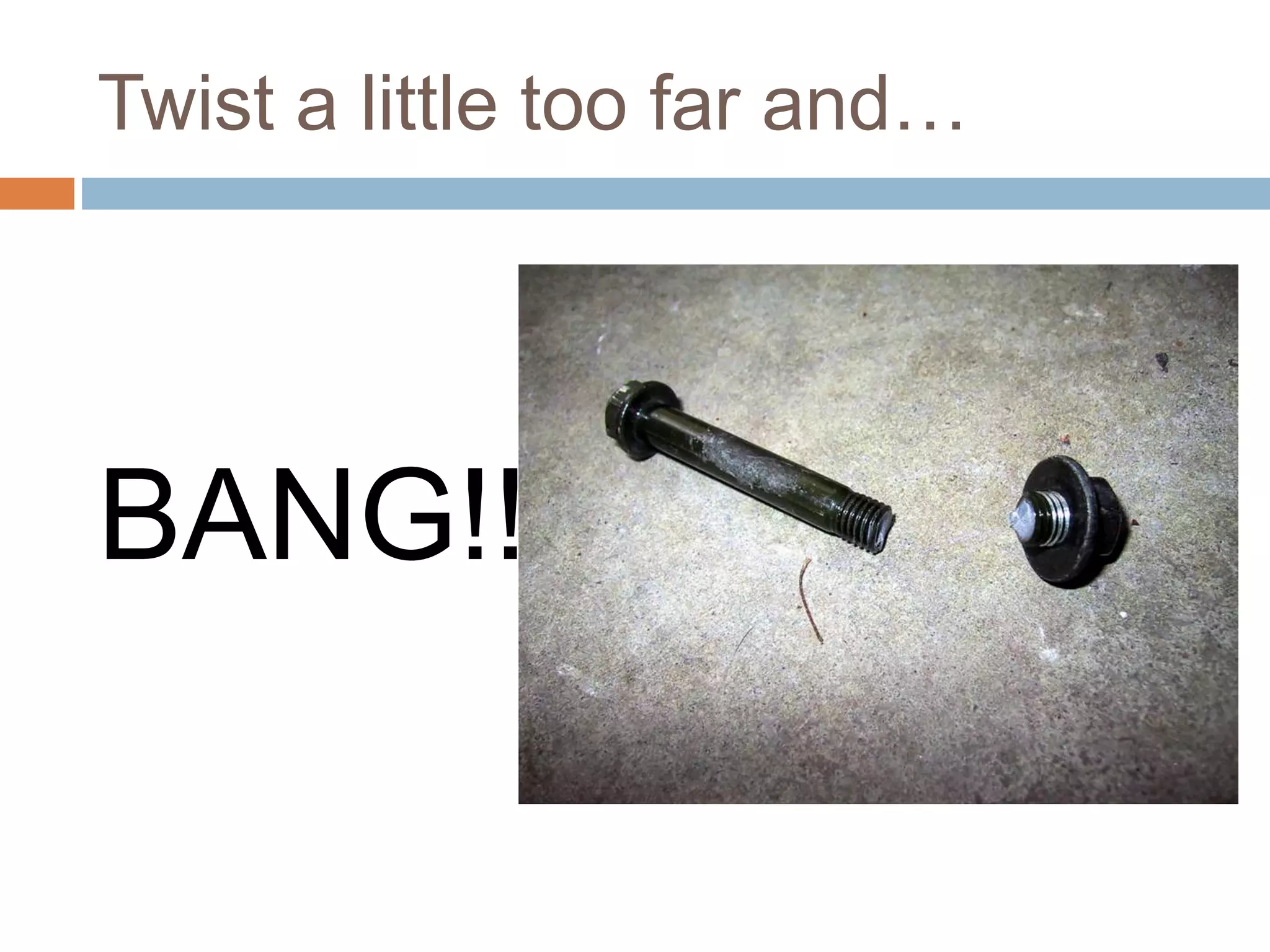
Twist a little too far and…
BANG!!!
So…what is happening?
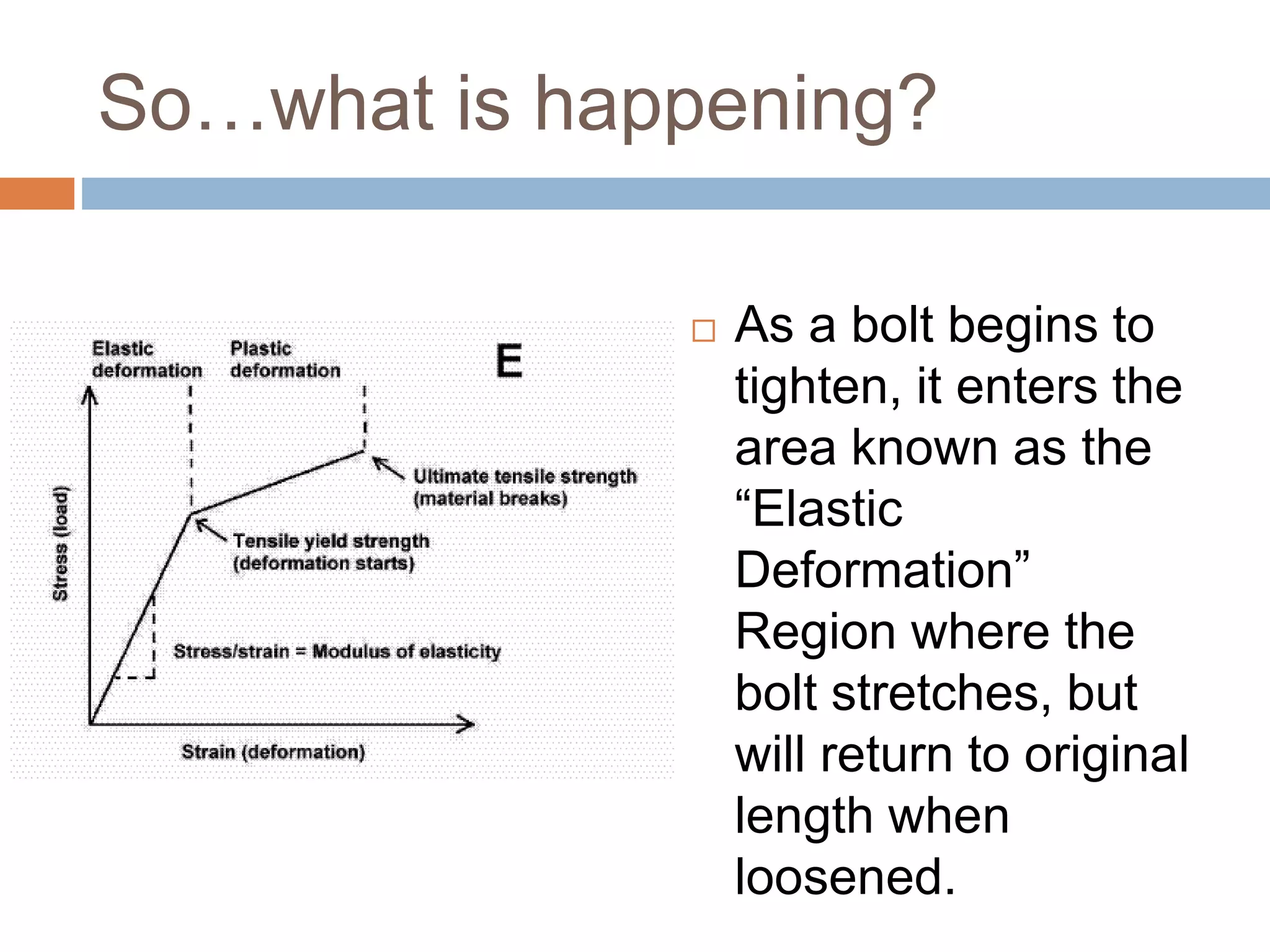
 As a bolt begins to
tighten, it enters the
area known as the
“Elastic
Deformation”
Region where the
bolt stretches, but
will return to original
length when
loosened.
Example: Connecting Rod Bolt
 This special tool will
actually measure
the amount that a
bolt will stretch
when tightened.
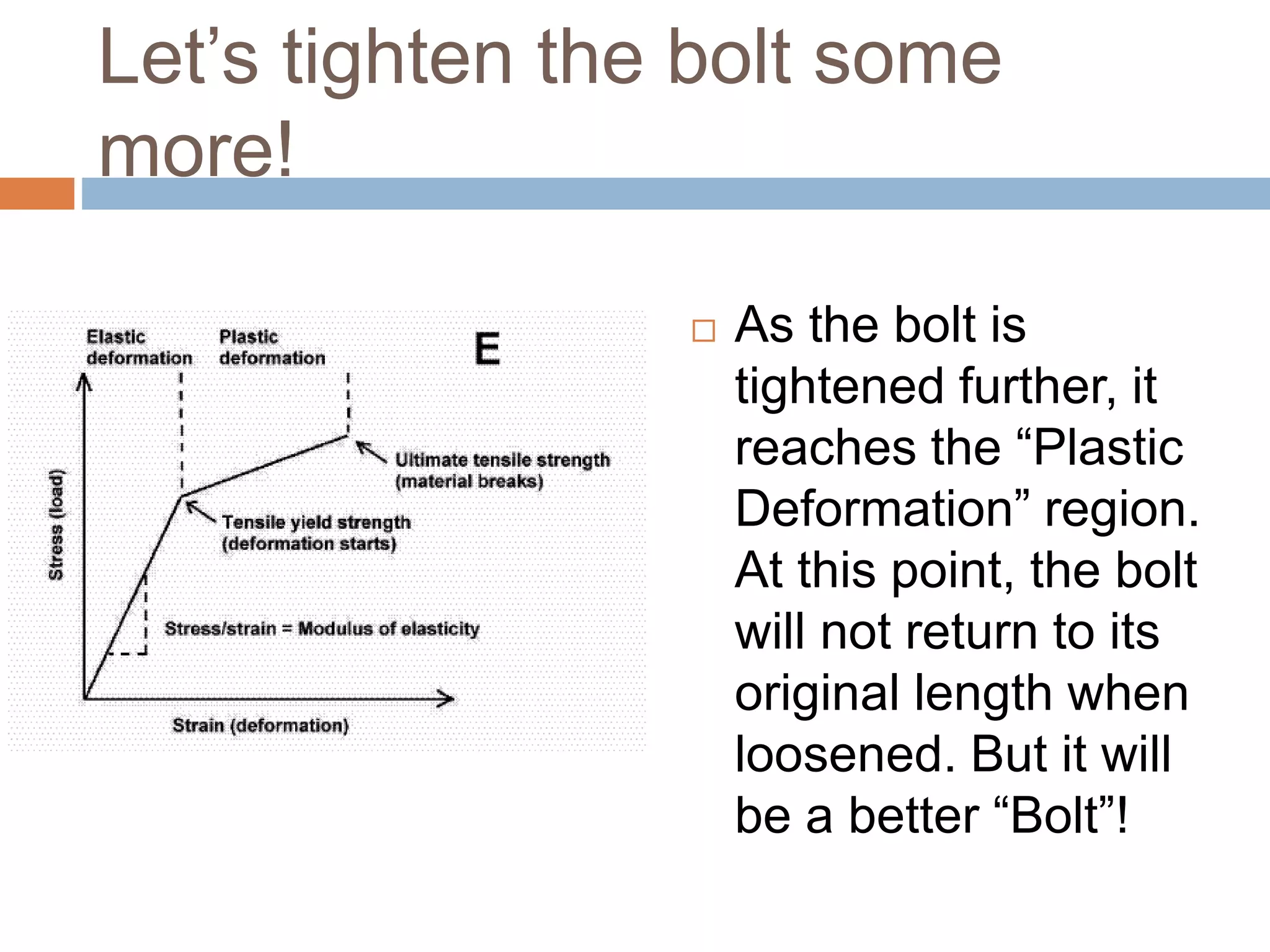
Let’s tighten the bolt some
more!
 As the bolt is
tightened further, it
reaches the “Plastic
Deformation” region.
At this point, the bolt
will not return to its
original length when
loosened. But it will
be a better “Bolt”!
But, we can over do it!
 It just got real easy
to turn all of a
sudden! At this
point, you can’t back
it off a quarter turn
and save it!
Hey! It got real easy to turn
 Ok, dumb-bunny.
You didn’t follow the
special “Torque-to-
Yield” directions in
the shop
manual…and now
you have a real
problem!
What this looks like-Real World!
1st Step: Base Torque, Mark
Bolts
What this looks like-Real World!
2nd Step: 90 deg. Turn
What this looks like-Real World!
3rd Step: 45 deg. Turn
What this looks like-Real World!
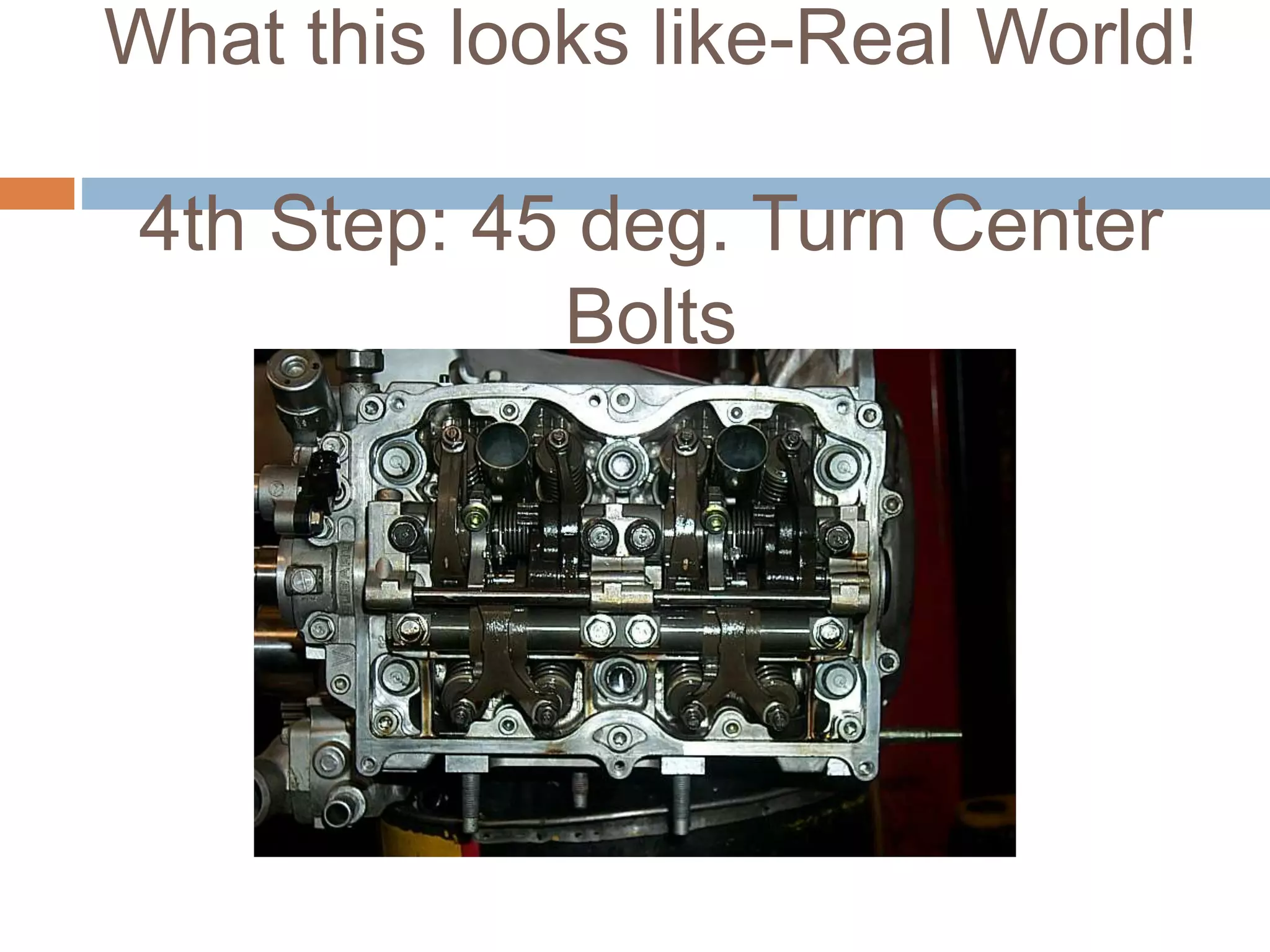
4th Step: 45 deg. Turn Center
Bolts
Remember!
 Always check the shop manual for instructions
for:
 Bolt length
 Lubrication requirements
 Special torque values and procedures
 Mark bolts when finished with final torque angle

Torque to yield fasteners

  • 1.
  • 2.
    Why are Torque-to-Yieldbolts a better choice for clamping?  More consistent torque over wider range of operating conditions.  Matched to gasket and engine  Head gasket failures are very rare now
  • 3.
  • 4.
  • 5.
  • 6.
    Twist a littletoo far and… BANG!!!
  • 7.
    So…what is happening? As a bolt begins to tighten, it enters the area known as the “Elastic Deformation” Region where the bolt stretches, but will return to original length when loosened.
  • 8.
    Example: Connecting RodBolt  This special tool will actually measure the amount that a bolt will stretch when tightened.
  • 10.
    Let’s tighten thebolt some more!  As the bolt is tightened further, it reaches the “Plastic Deformation” region. At this point, the bolt will not return to its original length when loosened. But it will be a better “Bolt”!
  • 11.
    But, we canover do it!  It just got real easy to turn all of a sudden! At this point, you can’t back it off a quarter turn and save it!
  • 12.
    Hey! It gotreal easy to turn  Ok, dumb-bunny. You didn’t follow the special “Torque-to- Yield” directions in the shop manual…and now you have a real problem!
  • 13.
    What this lookslike-Real World! 1st Step: Base Torque, Mark Bolts
  • 14.
    What this lookslike-Real World! 2nd Step: 90 deg. Turn
  • 15.
    What this lookslike-Real World! 3rd Step: 45 deg. Turn
  • 16.
    What this lookslike-Real World! 4th Step: 45 deg. Turn Center Bolts
  • 17.
    Remember!  Always checkthe shop manual for instructions for:  Bolt length  Lubrication requirements  Special torque values and procedures  Mark bolts when finished with final torque angle