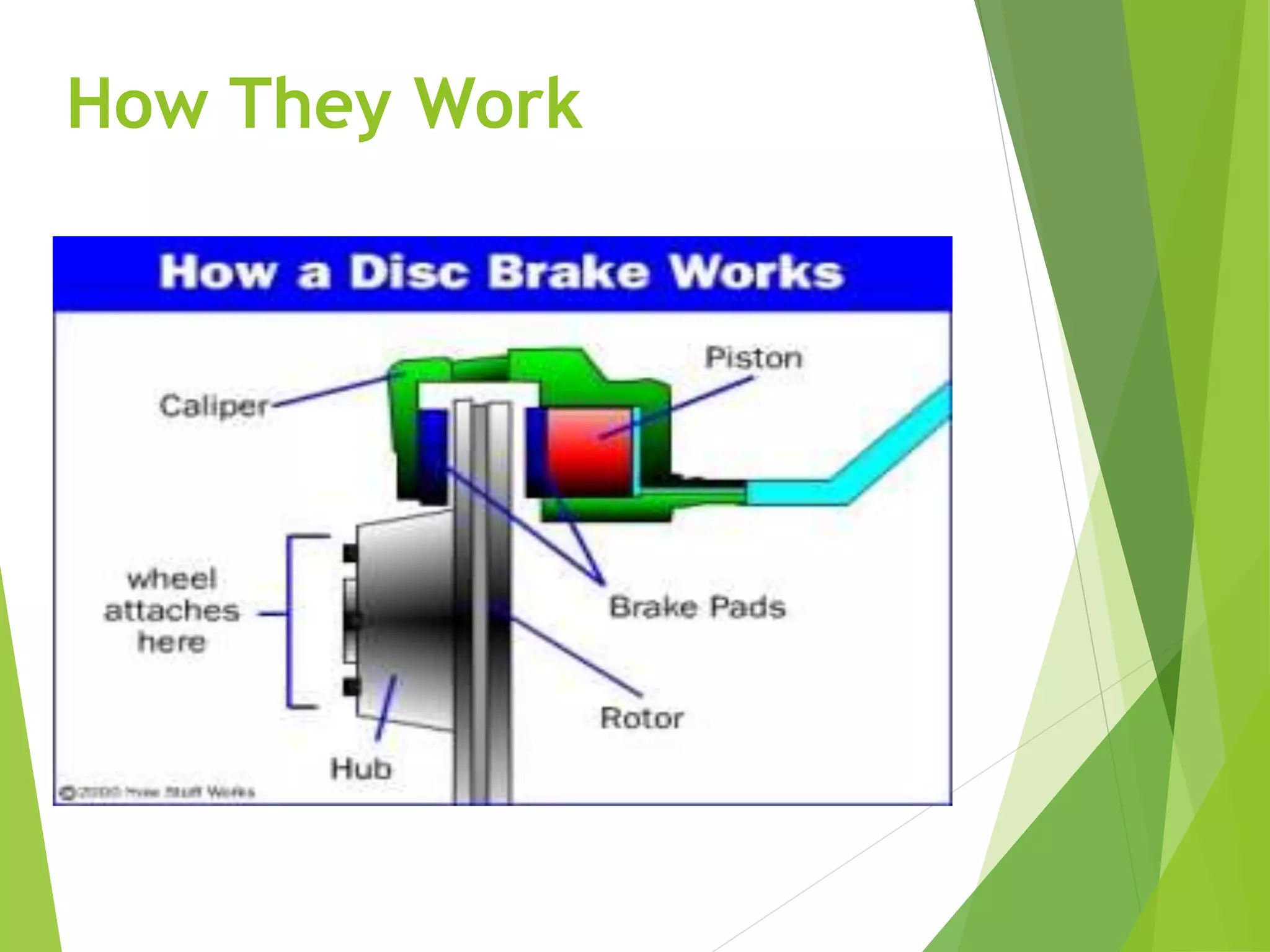
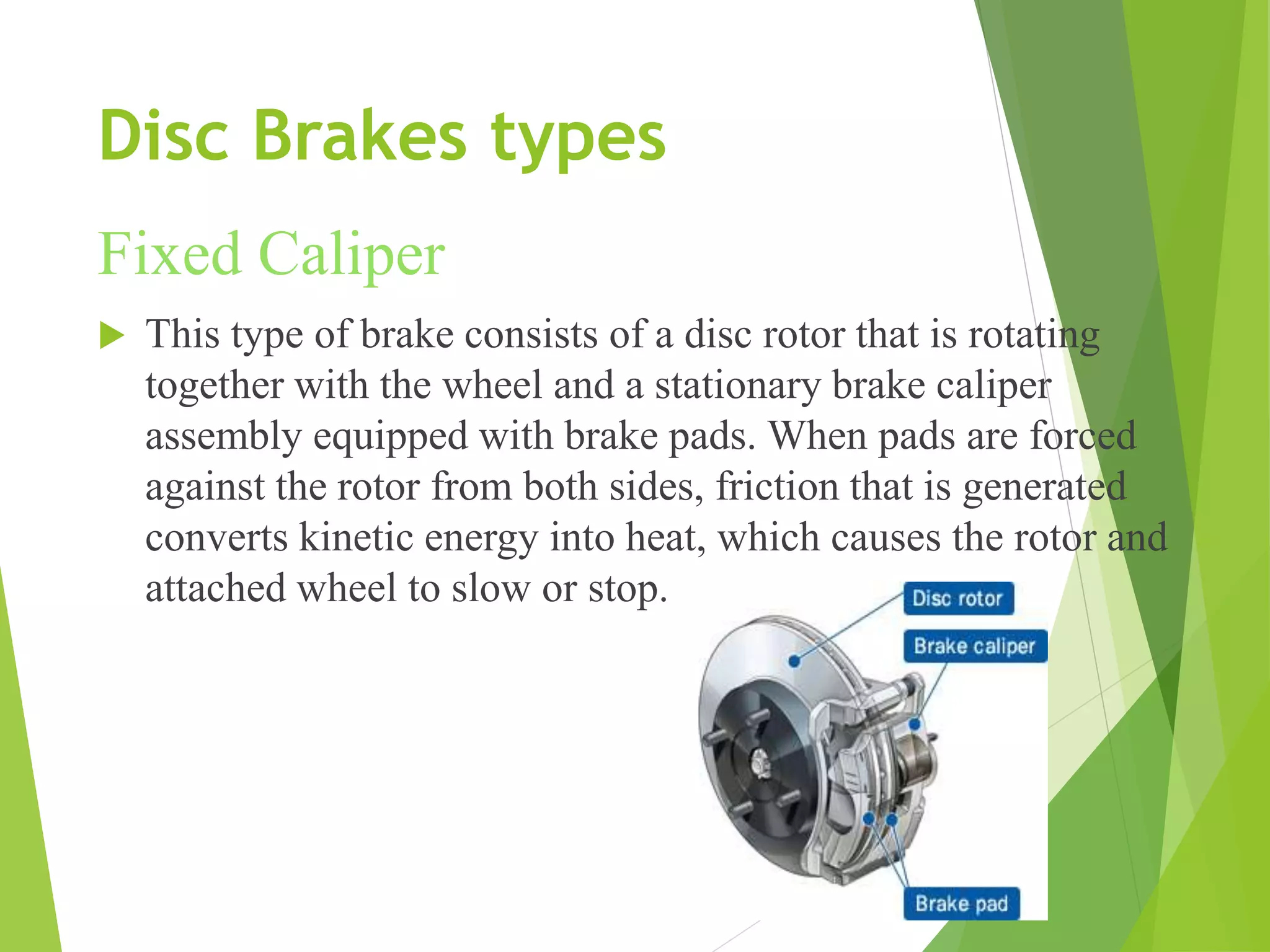
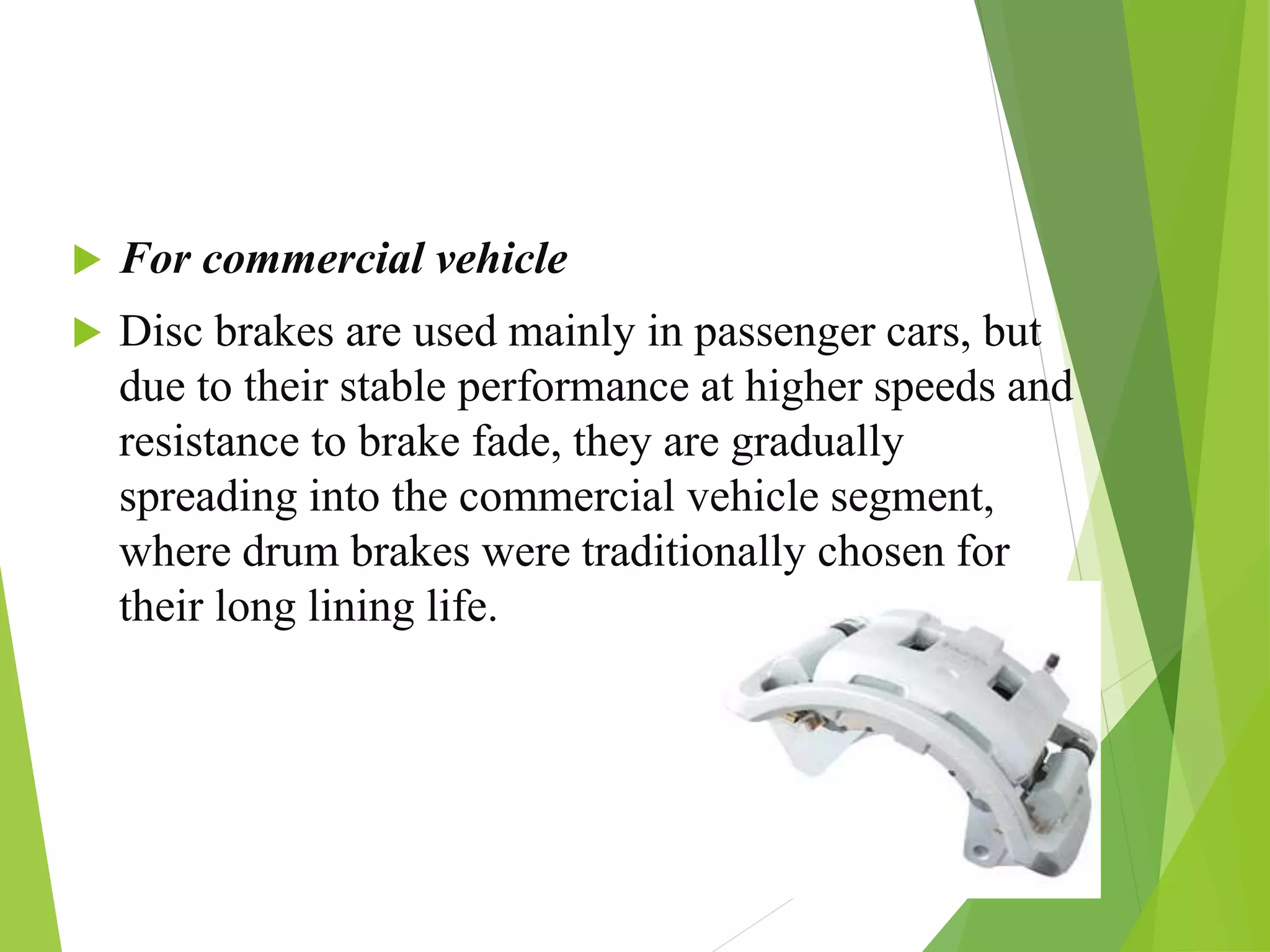
The document summarizes disk brakes, including how they work by squeezing an attached metal disc in a hydraulic caliper to slow a vehicle's wheels. It discusses the history of disk brakes, from animal-drawn vehicles relying on animals to accelerate and decelerate, to the more complex mechanical braking systems as technology advanced. The document also outlines the key advantages of disk brakes like improved efficiency, ability to withstand higher loads, and longer service life compared to drum brakes. Types of disk brakes include fixed and floating caliper designs, with floating calipers used commonly in passenger vehicles and air-actuated sliding calipers often used in commercial vehicles.