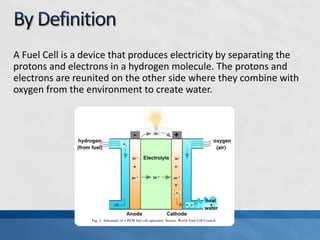
A Fuel Cell is a device that produces electricity by separating the
protons and electrons in a hydrogen molecule. The protons and
electrons are reunited on the other side where they combine with
oxygen from the environment to create water.
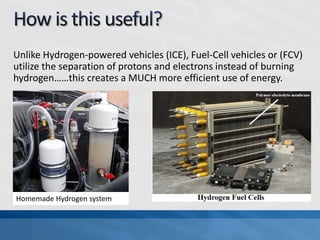
Unlike Hydrogen-powered vehicles (ICE), Fuel-Cell vehicles or (FCV)
utilize the separation of protons and electrons instead of burning
hydrogen……this creates a MUCH more efficient use of energy.
Homemade Hydrogen system
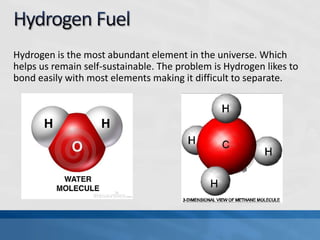
Hydrogen is the most abundant element in the universe. Which
helps us remain self-sustainable. The problem is Hydrogen likes to
bond easily with most elements making it difficult to separate.
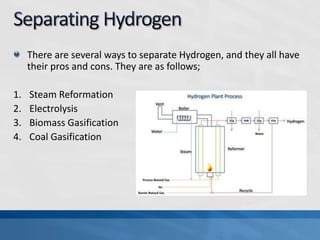
There are several ways to separate Hydrogen, and they all have
their pros and cons. They are as follows;
1. Steam Reformation
2. Electrolysis
3. Biomass Gasification
4. Coal Gasification
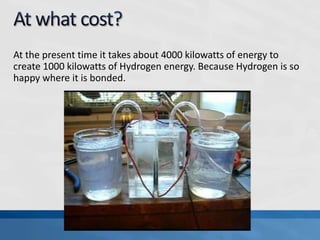
At the present time it takes about 4000 kilowatts of energy to
create 1000 kilowatts of Hydrogen energy. Because Hydrogen is so
happy where it is bonded.
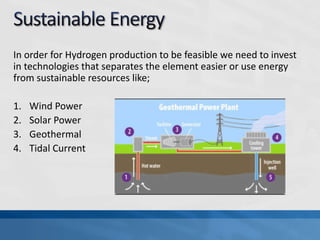
In order for Hydrogen production to be feasible we need to invest
in technologies that separates the element easier or use energy
from sustainable resources like;
1. Wind Power
2. Solar Power
3. Geothermal
4. Tidal Current
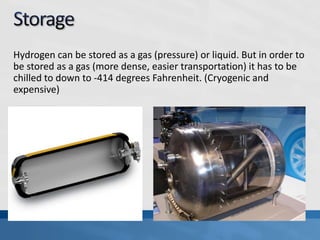
Hydrogen can be stored as a gas (pressure) or liquid. But in order to
be stored as a gas (more dense, easier transportation) it has to be
chilled to down to -414 degrees Fahrenheit. (Cryogenic and
expensive)
There are several different types of Fuel Cells but we will focus on
the operation of the “PEM” because it has been chosen by the
automotive industry because of its operating parameters. They are
as follows;
1. Proton Exchange Member (PEM)
2. Alkaline Fuel Cell (The oldest, and most expensive)
3. Phosphoric Acid Fuel Cell (Operates to high of temp)
4. Solid-Oxide Fuel Cell (Also to hot and expensive)
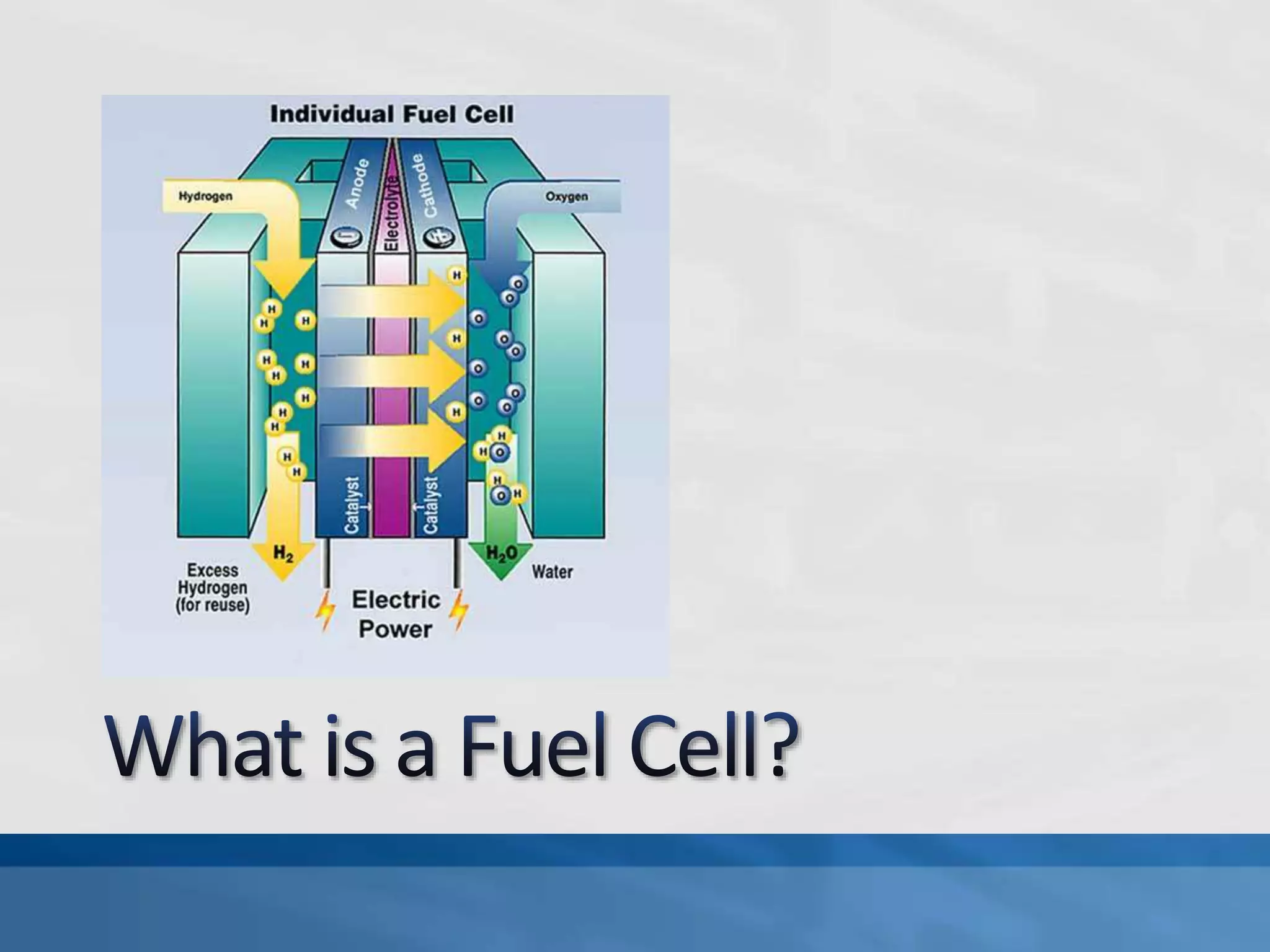
The PEM fuel cell is made up of four “working” parts. They are;
1. Proton Exchange Membrane: A thin membrane that only allows
protons to pass through
2. Anode: A negatively charged electrode
3. Cathode A positively charged electrode
4. Catalyst: A thin coating between the PEM and the electrodes
(usually platinum)
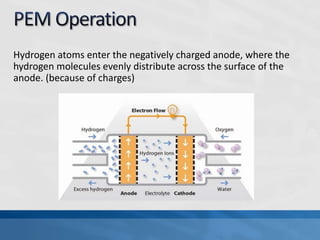
Hydrogen atoms enter the negatively charged anode, where the
hydrogen molecules evenly distribute across the surface of the
anode. (because of charges)
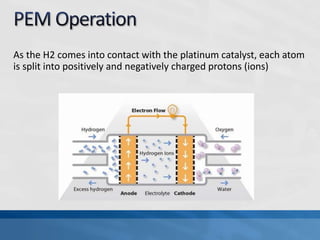
As the H2 comes into contact with the platinum catalyst, each atom
is split into positively and negatively charged protons (ions)
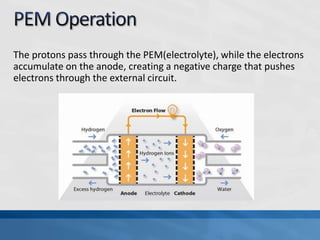
The protons pass through the PEM(electrolyte), while the electrons
accumulate on the anode, creating a negative charge that pushes
electrons through the external circuit.
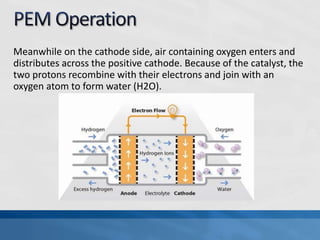
Meanwhile on the cathode side, air containing oxygen enters and
distributes across the positive cathode. Because of the catalyst, the
two protons recombine with their electrons and join with an
oxygen atom to form water (H2O).
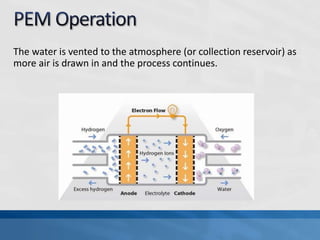
The water is vented to the atmosphere (or collection reservoir) as
more air is drawn in and the process continues.
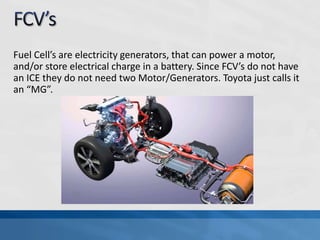
Fuel Cell’s are electricity generators, that can power a motor,
and/or store electrical charge in a battery. Since FCV’s do not have
an ICE they do not need two Motor/Generators. Toyota just calls it
an “MG”.
There are several advantages for Fuel Cell Vehicles. They are;
1. Produce no emissions
2. Foreign oil dependence reduction (self-sustainable)
3. Higher fuel efficiency
4. No negative environmental impact in case of a spill
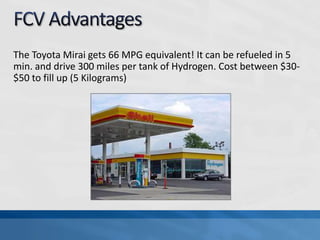
The Toyota Mirai gets 66 MPG equivalent! It can be refueled in 5
min. and drive 300 miles per tank of Hydrogen. Cost between $30-
$50 to fill up (5 Kilograms)
Although FCV’s show a promising future, there are some items to
overcome, such as;
1. Infrastructure
2. Cost more energy to produce than gained
3. Platinum catalyst is expensive ($30K for new fuel cell)
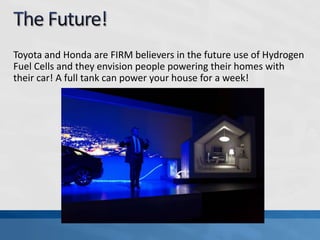
Toyota and Honda are FIRM believers in the future use of Hydrogen
Fuel Cells and they envision people powering their homes with
their car! A full tank can power your house for a week!
Using electrolysis we can make hydrogen here in the classroom!
Here’s how;

What is a fuel cell

  • 2.
    A Fuel Cellis a device that produces electricity by separating the protons and electrons in a hydrogen molecule. The protons and electrons are reunited on the other side where they combine with oxygen from the environment to create water.
  • 3.
    Unlike Hydrogen-powered vehicles(ICE), Fuel-Cell vehicles or (FCV) utilize the separation of protons and electrons instead of burning hydrogen……this creates a MUCH more efficient use of energy. Homemade Hydrogen system
  • 4.
    Hydrogen is themost abundant element in the universe. Which helps us remain self-sustainable. The problem is Hydrogen likes to bond easily with most elements making it difficult to separate.
  • 5.
    There are severalways to separate Hydrogen, and they all have their pros and cons. They are as follows; 1. Steam Reformation 2. Electrolysis 3. Biomass Gasification 4. Coal Gasification
  • 6.
    At the presenttime it takes about 4000 kilowatts of energy to create 1000 kilowatts of Hydrogen energy. Because Hydrogen is so happy where it is bonded.
  • 7.
    In order forHydrogen production to be feasible we need to invest in technologies that separates the element easier or use energy from sustainable resources like; 1. Wind Power 2. Solar Power 3. Geothermal 4. Tidal Current
  • 8.
    Hydrogen can bestored as a gas (pressure) or liquid. But in order to be stored as a gas (more dense, easier transportation) it has to be chilled to down to -414 degrees Fahrenheit. (Cryogenic and expensive)
  • 9.
    There are severaldifferent types of Fuel Cells but we will focus on the operation of the “PEM” because it has been chosen by the automotive industry because of its operating parameters. They are as follows; 1. Proton Exchange Member (PEM) 2. Alkaline Fuel Cell (The oldest, and most expensive) 3. Phosphoric Acid Fuel Cell (Operates to high of temp) 4. Solid-Oxide Fuel Cell (Also to hot and expensive)
  • 10.
    The PEM fuelcell is made up of four “working” parts. They are; 1. Proton Exchange Membrane: A thin membrane that only allows protons to pass through 2. Anode: A negatively charged electrode 3. Cathode A positively charged electrode 4. Catalyst: A thin coating between the PEM and the electrodes (usually platinum)
  • 11.
    Hydrogen atoms enterthe negatively charged anode, where the hydrogen molecules evenly distribute across the surface of the anode. (because of charges)
  • 12.
    As the H2comes into contact with the platinum catalyst, each atom is split into positively and negatively charged protons (ions)
  • 13.
    The protons passthrough the PEM(electrolyte), while the electrons accumulate on the anode, creating a negative charge that pushes electrons through the external circuit.
  • 14.
    Meanwhile on thecathode side, air containing oxygen enters and distributes across the positive cathode. Because of the catalyst, the two protons recombine with their electrons and join with an oxygen atom to form water (H2O).
  • 15.
    The water isvented to the atmosphere (or collection reservoir) as more air is drawn in and the process continues.
  • 16.
    Fuel Cell’s areelectricity generators, that can power a motor, and/or store electrical charge in a battery. Since FCV’s do not have an ICE they do not need two Motor/Generators. Toyota just calls it an “MG”.
  • 17.
    There are severaladvantages for Fuel Cell Vehicles. They are; 1. Produce no emissions 2. Foreign oil dependence reduction (self-sustainable) 3. Higher fuel efficiency 4. No negative environmental impact in case of a spill
  • 18.
    The Toyota Miraigets 66 MPG equivalent! It can be refueled in 5 min. and drive 300 miles per tank of Hydrogen. Cost between $30- $50 to fill up (5 Kilograms)
  • 19.
    Although FCV’s showa promising future, there are some items to overcome, such as; 1. Infrastructure 2. Cost more energy to produce than gained 3. Platinum catalyst is expensive ($30K for new fuel cell)
  • 20.
    Toyota and Hondaare FIRM believers in the future use of Hydrogen Fuel Cells and they envision people powering their homes with their car! A full tank can power your house for a week!
  • 21.
    Using electrolysis wecan make hydrogen here in the classroom! Here’s how;