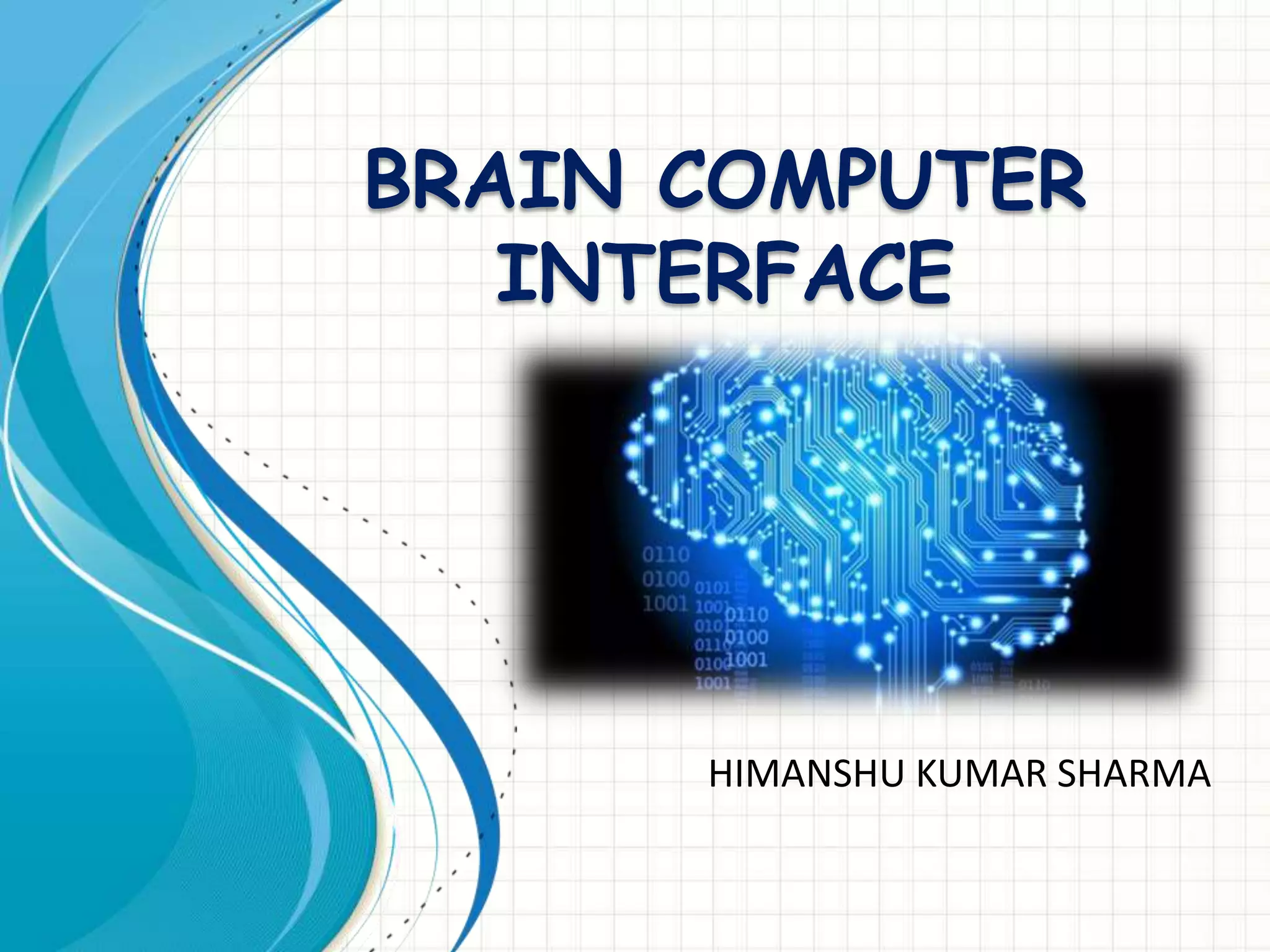



BRAIN COMPUTER
INTERFACE
HIMANSHU KUMAR SHARMA
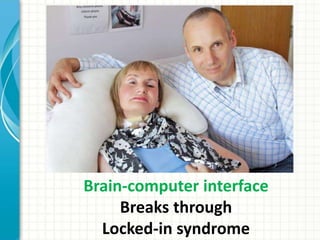
Brain-computer interface
Breaks through
Locked-in syndrome
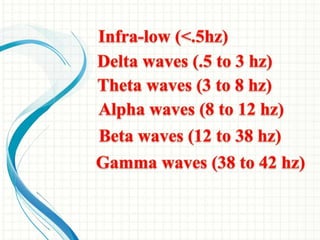
BRAIN WAVES
COMPONENTS
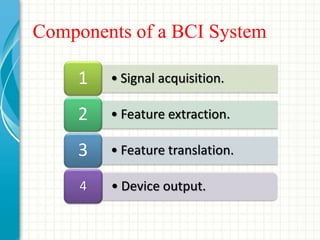
• Signal acquisition.1
• Feature extraction.2
• Feature translation.3
• Device output.4
Components of a BCI System
Signal acquisition.
• Measurement of brain
signals using a
particular sensor
modality.
• Signals are amplified
policies
• Remove electrical
noise
• Digitized and
transmitted
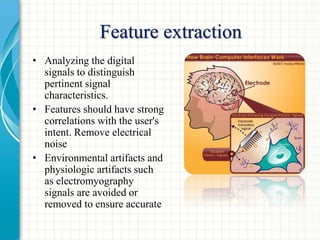
Feature extraction
• Analyzing the digital
signals to distinguish
pertinent signal
characteristics.
• Features should have strong
correlations with the user's
intent. Remove electrical
noise
• Environmental artifacts and
physiologic artifacts such
as electromyography
signals are avoided or
removed to ensure accurate
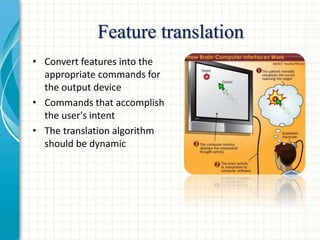
Feature translation
• Convert features into the
appropriate commands for
the output device
• Commands that accomplish
the user's intent
• The translation algorithm
should be dynamic
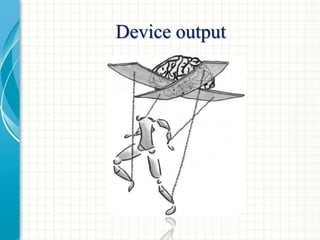
Device output
WORKING ARCHITECTURE
The three types of BCI.
 Invasive BCI
 Partially Invasive BCI
 Non-Invasive BCI
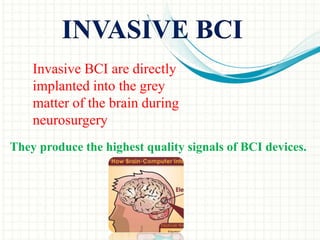
INVASIVE BCI
Invasive BCI are directly
implanted into the grey
matter of the brain during
neurosurgery
They produce the highest quality signals of BCI devices.
PARTIALLY INVASIVE BCI
Partially invasive BCI devices are
implanted inside the skull but rest
outside the brain rather than amidst
the grey matter.
They produce better resolution
signals than non-invasive BCIs
Electrocorticography(ECoG) uses
the same technology as non-
invasive electroencephalography
Easy to wear
Produce poor signal
It is more difficult to determine
the area of the brain that create
them.
Electroencephalography (EEG) is
the most studied potential non-
invasive interface, mainly due to its
fine temporal resolutions, ease of
use, portability and low set-up cost.
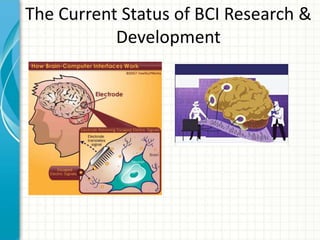
The Current Status of BCI Research &
Development
THANK YOU

Brain computer interface