Name: Pooja Dubey 
Course: EEE 
Roll No:120104026
HVDC 
Transmission 
Components 
of HVDC 
HVDC LINKS 
Advantage of HVDC 
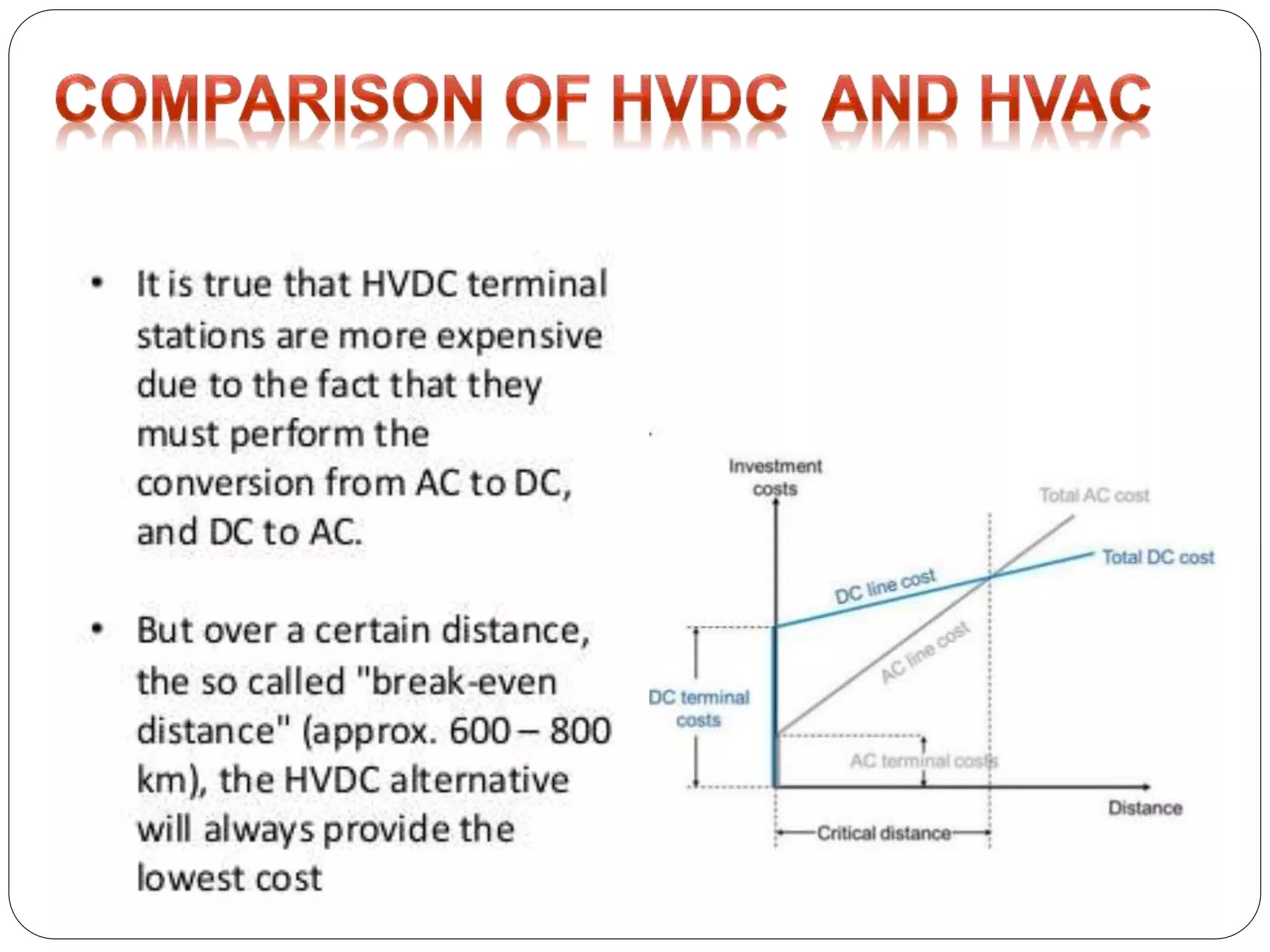
Comparison of HVDC AND HVAC 
Applications of HVDC 
CONCLUSION
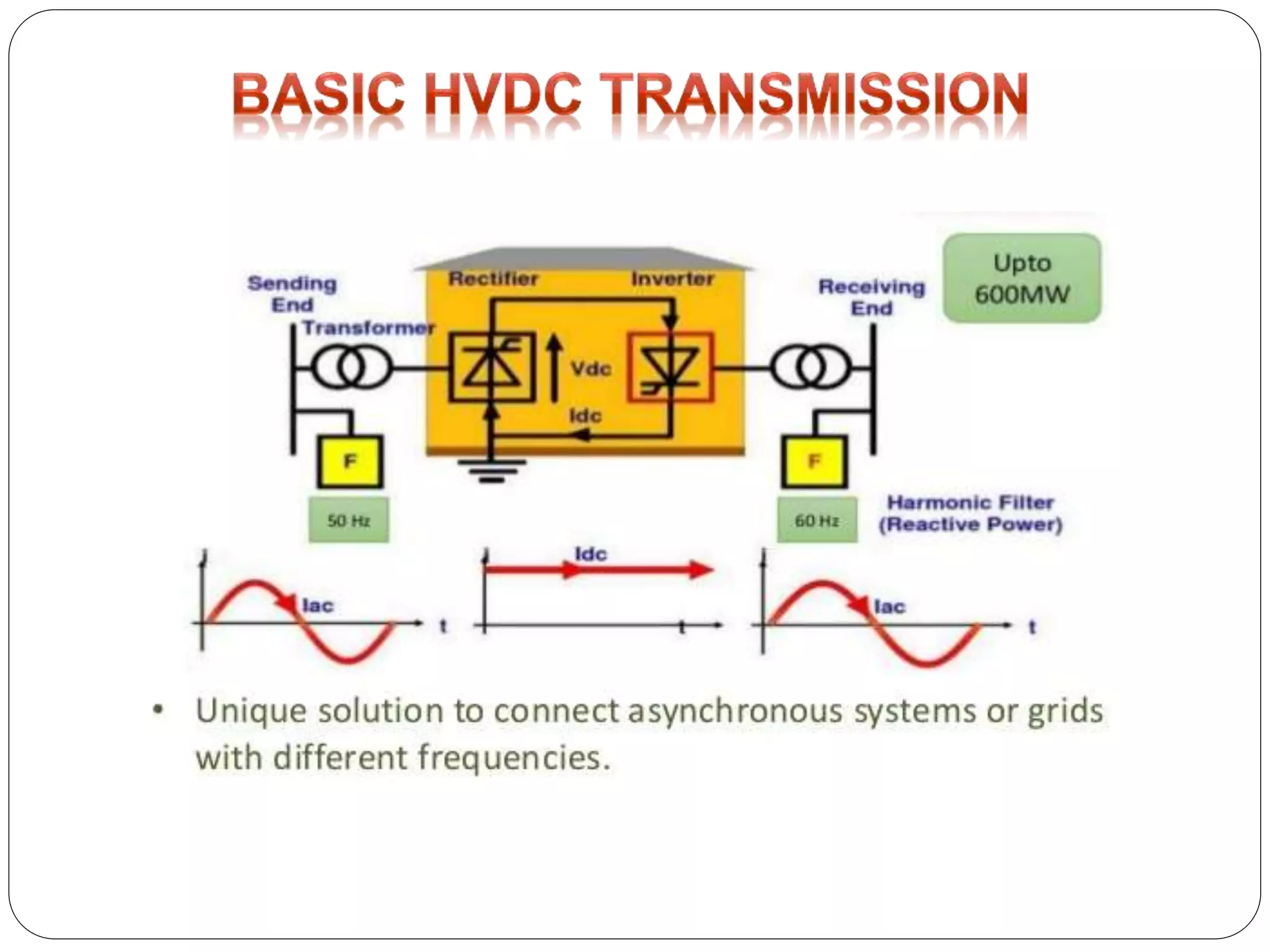
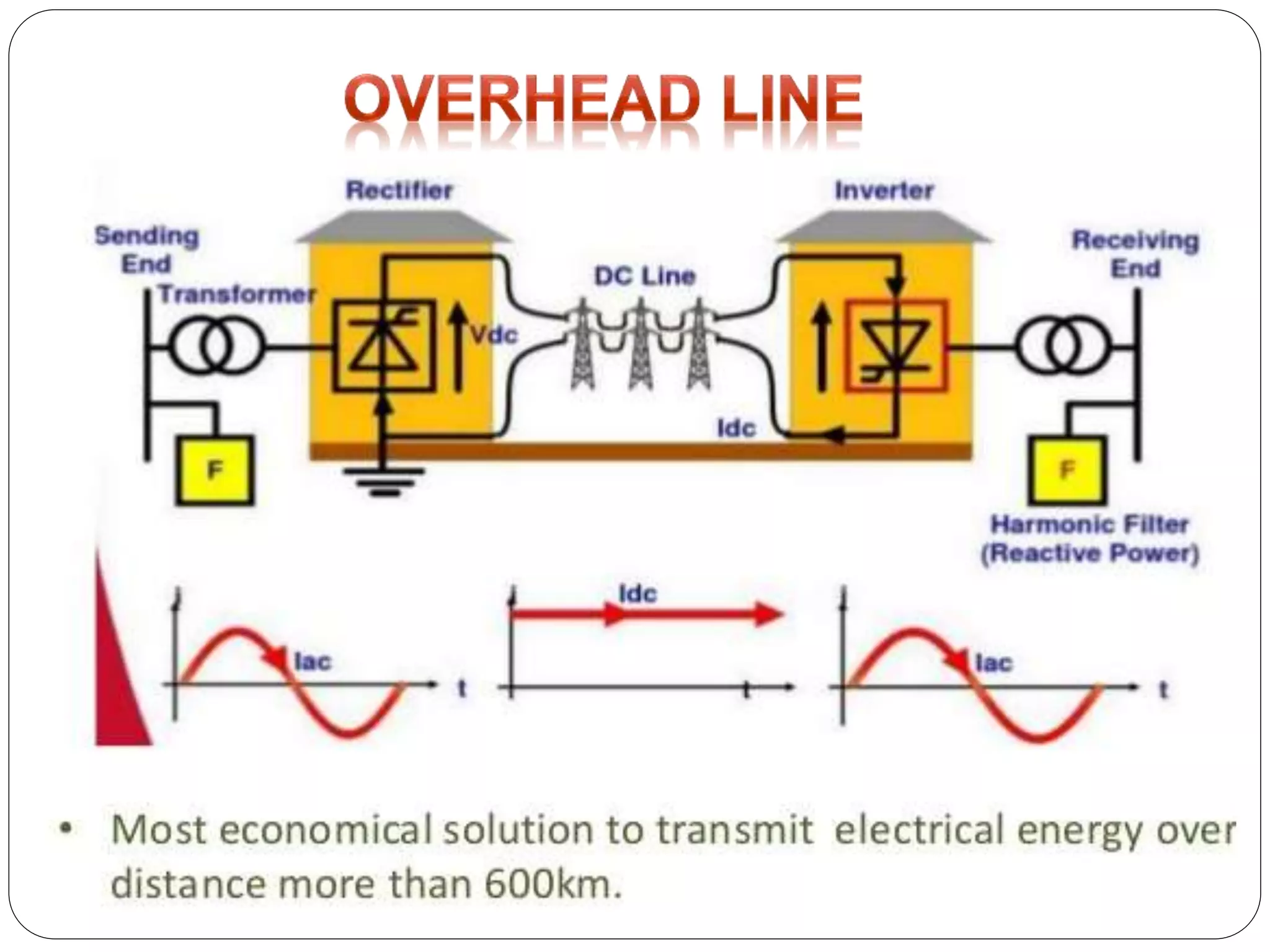
HVDC Transmission 
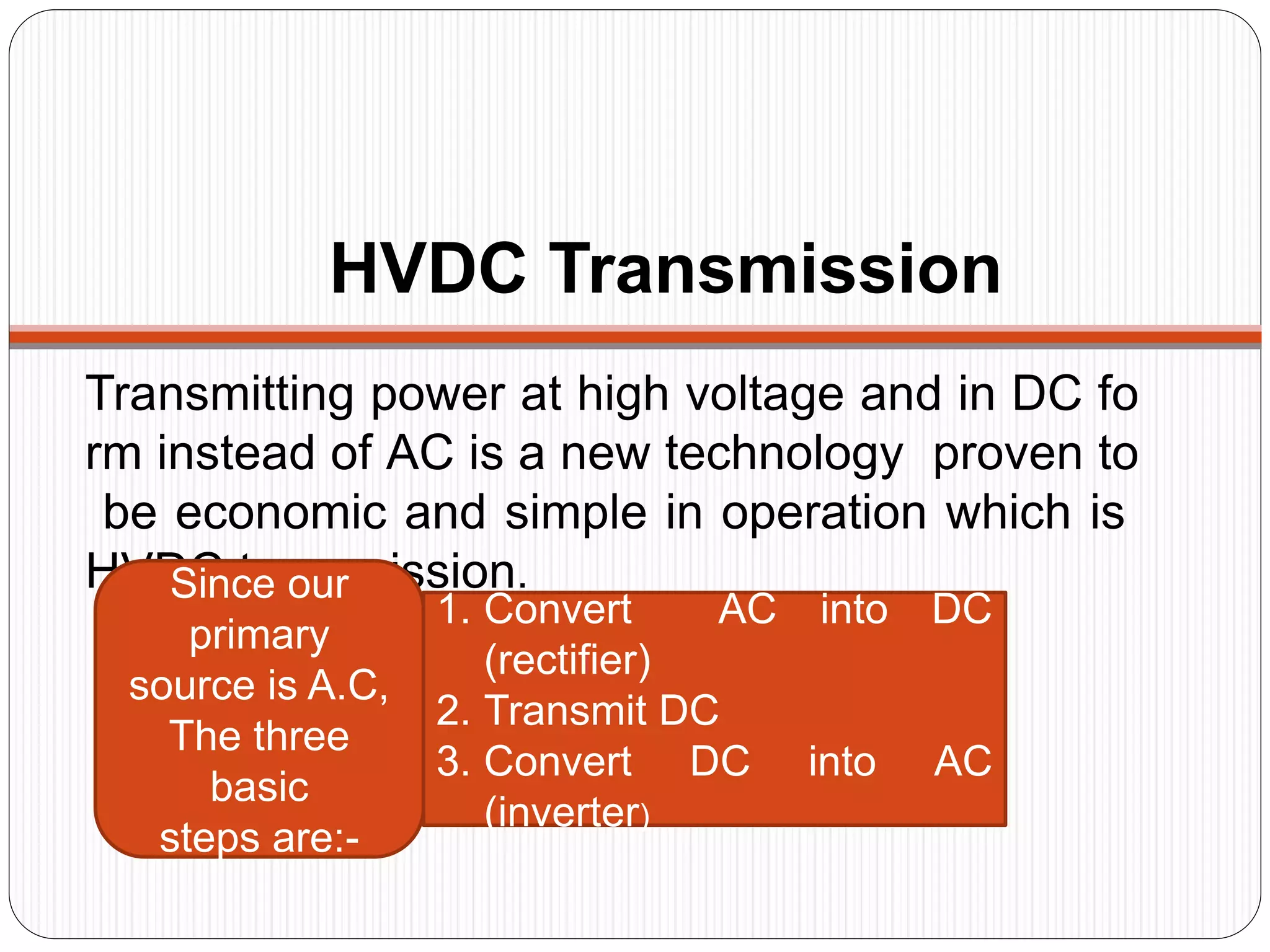
Transmitting power at high voltage and in DC fo 
rm instead of AC is a new technology proven to 
be economic and simple in operation which is 
HVDSCinctera onusrm ission. 
primary 
source is A.C, 
The three 
basic 
steps are:- 
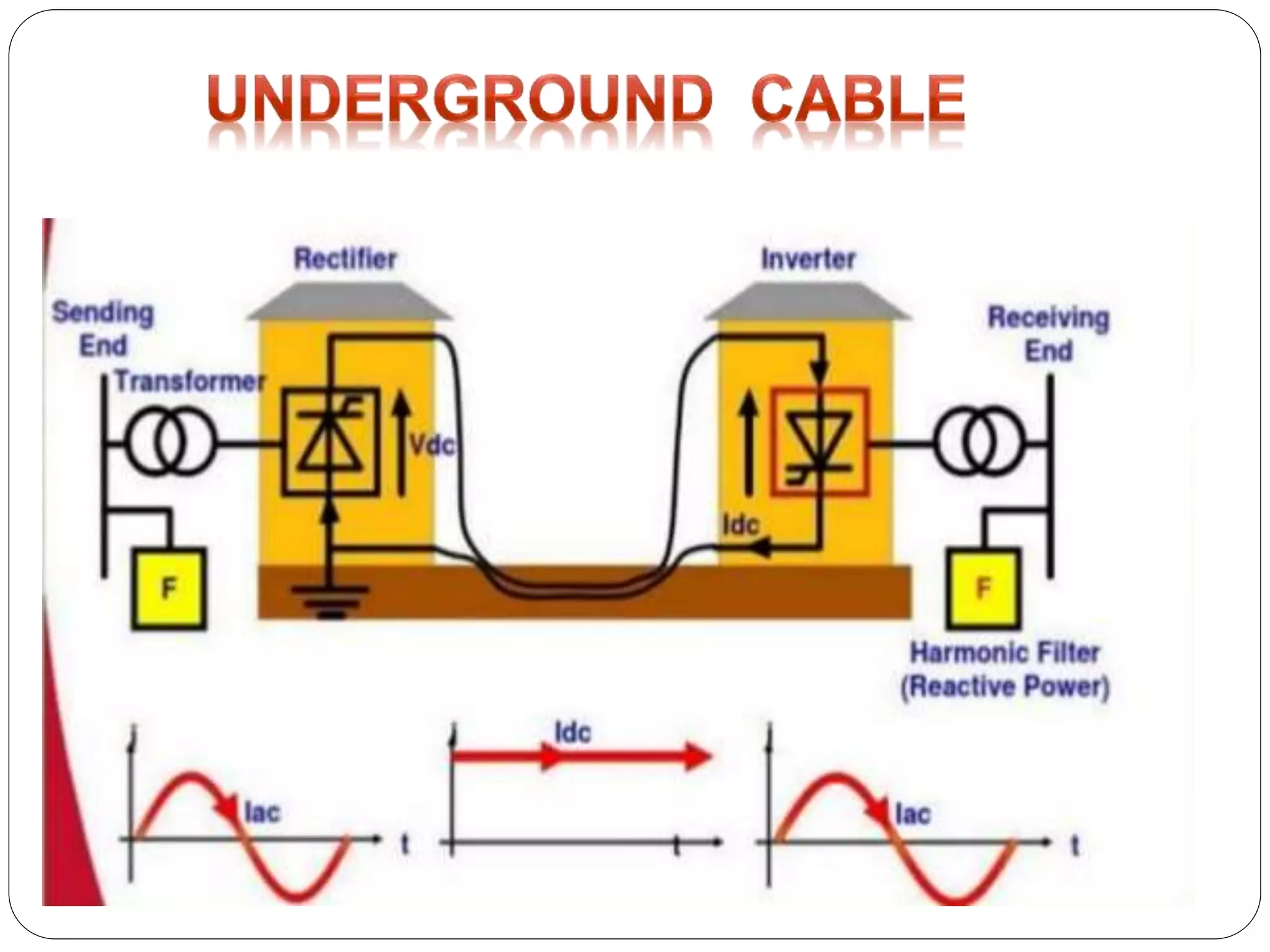
1. Convert AC into DC 
(rectifier) 
2. Transmit DC 
3. Convert DC into AC 
(inverter)
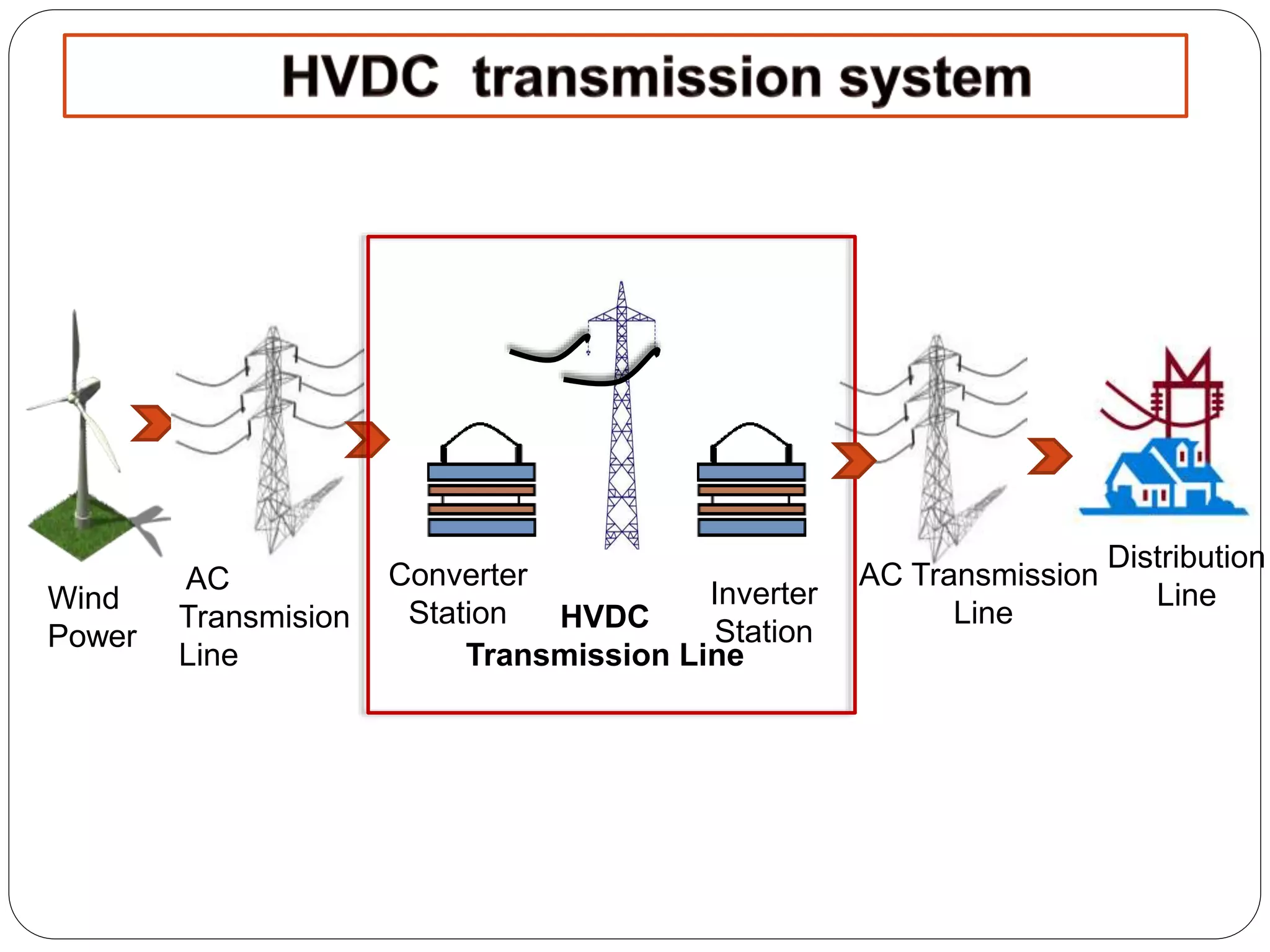
Wind 
Power 
AC 
Transmision 
Line 
Converter 
Station 
Inverter 
Station 
AC Transmission 
Line 
Distribution 
Line 
HVDC 
Transmission Line
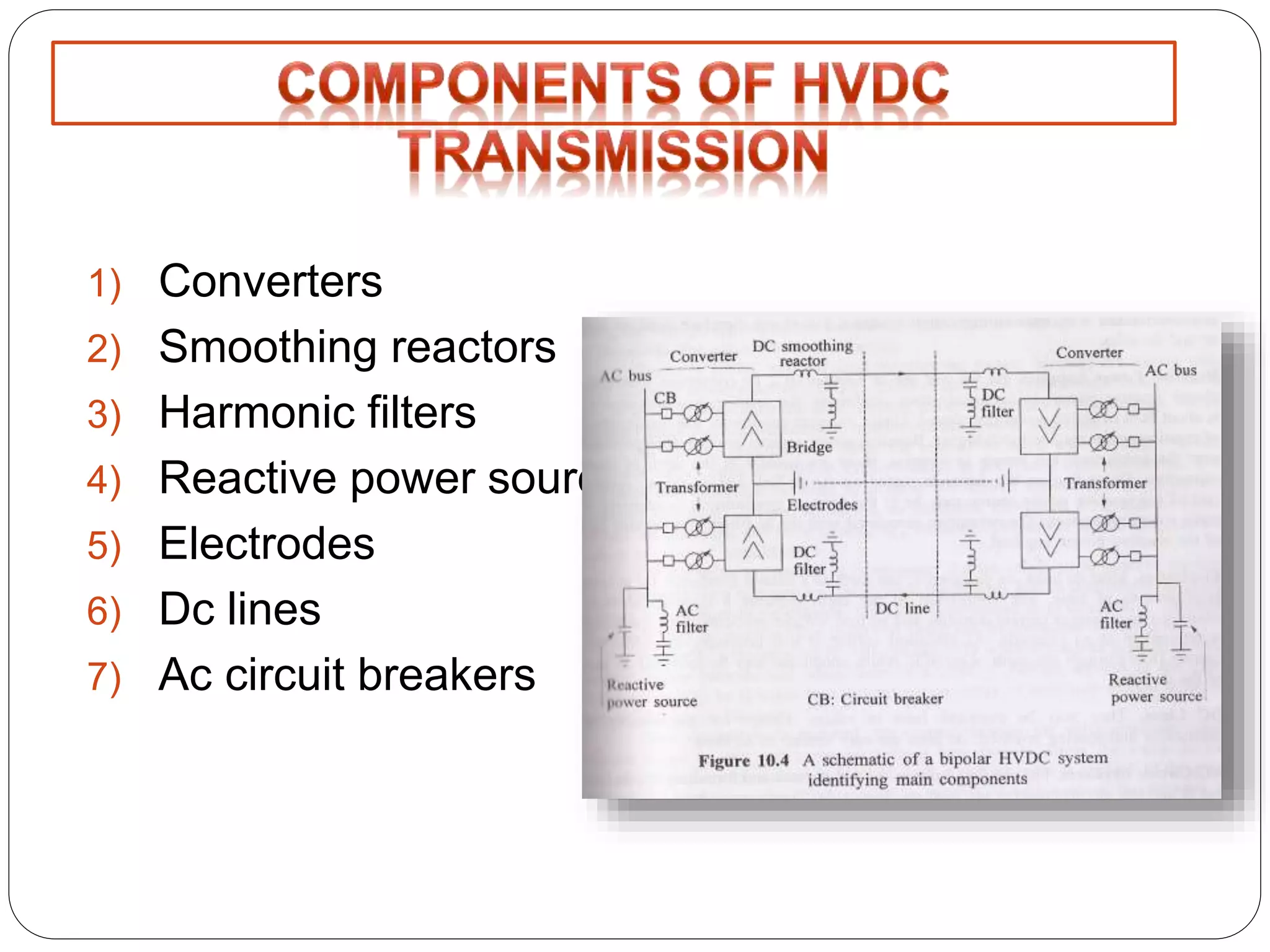
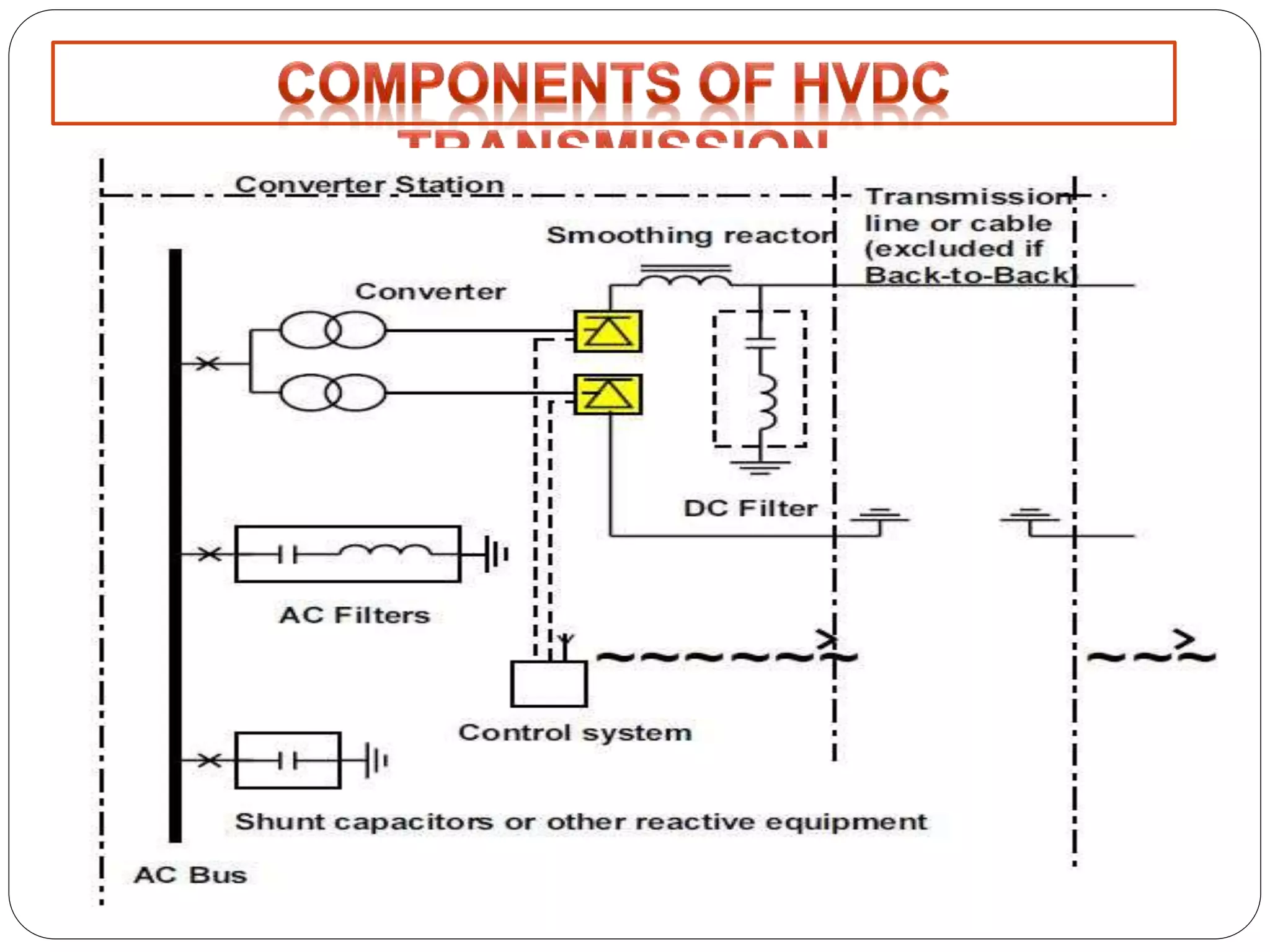
1) Converters 
2) Smoothing reactors 
3) Harmonic filters 
4) Reactive power source 
5) Electrodes 
6) Dc lines 
7) Ac circuit breakers
HVDC Transmission can be broadly classified 
into:- 
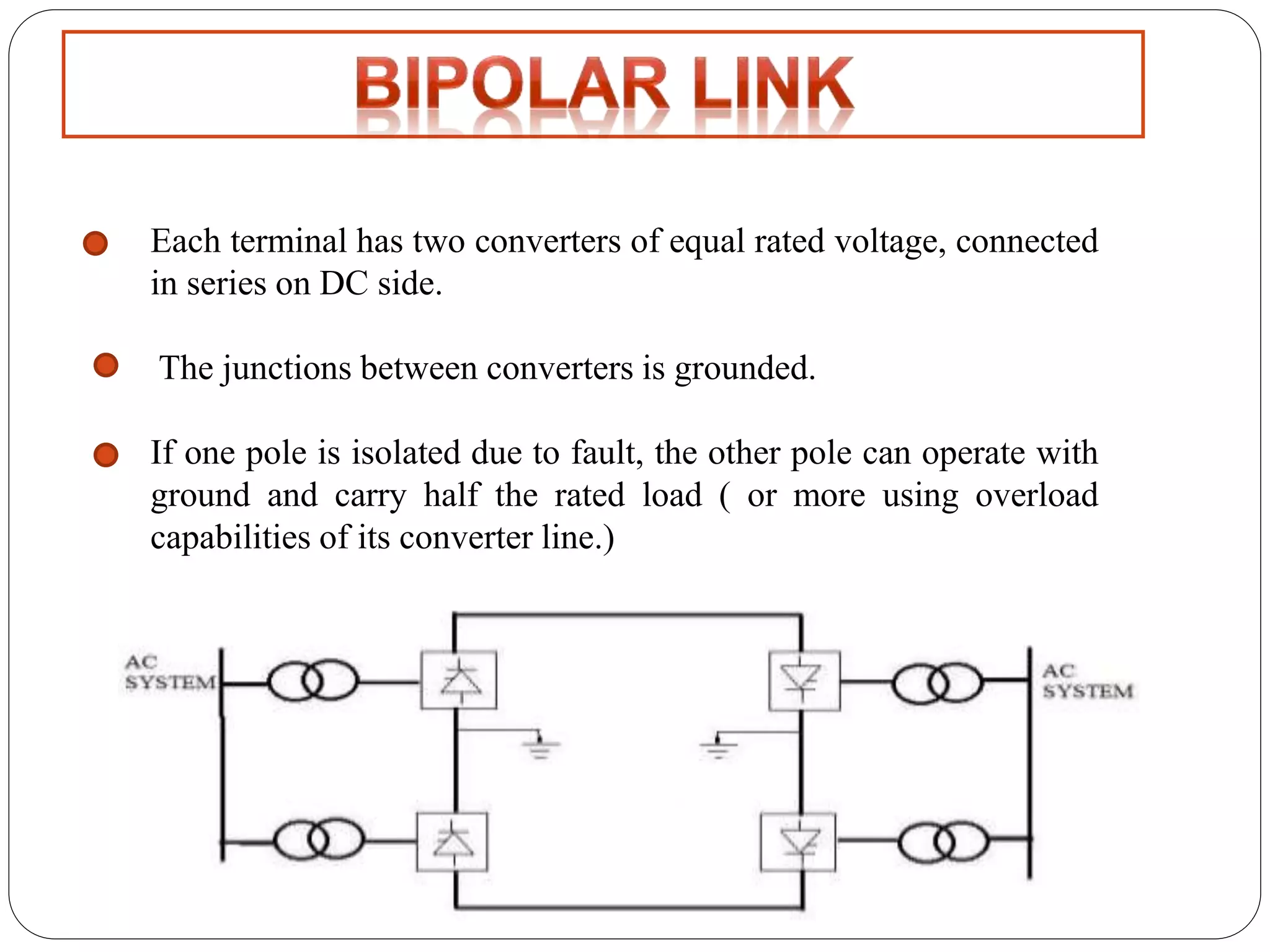
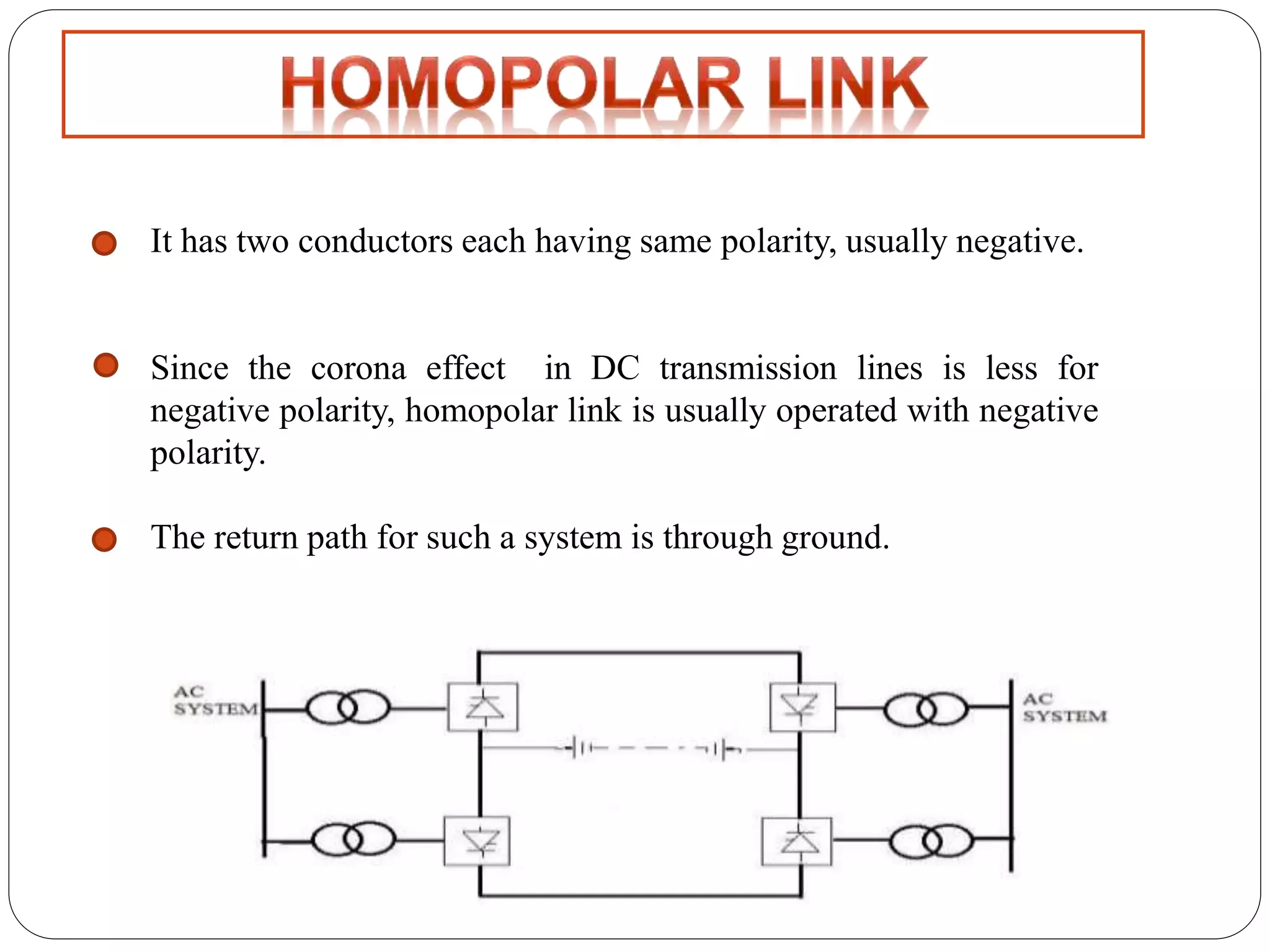
Monopolar link 
Bipolar link 
Homopolar link
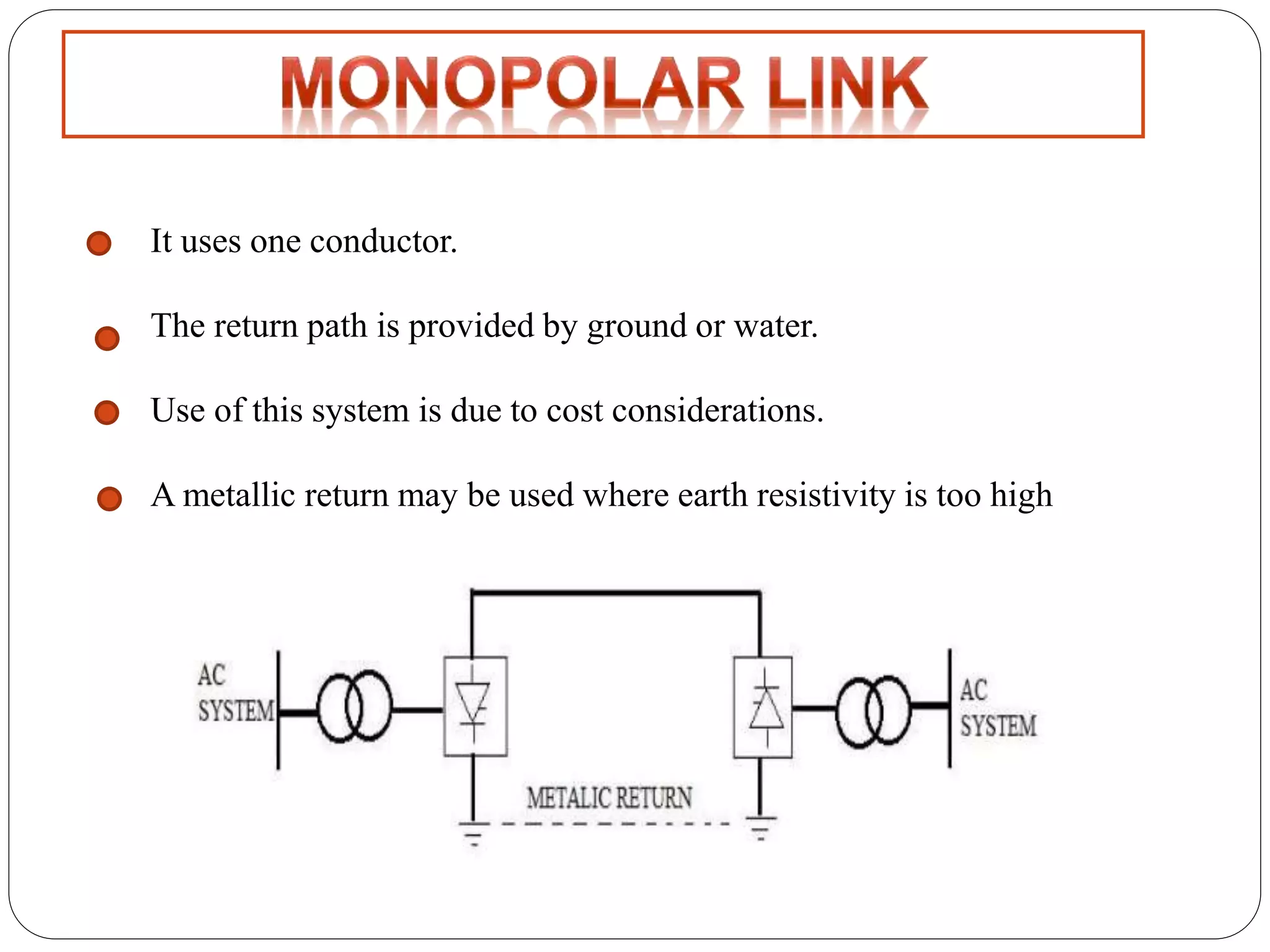
It uses one conductor. 
The return path is provided by ground or water. 
Use of this system is due to cost considerations. 
Ametallic return may be used where earth resistivity is too high
Each terminal has two converters of equal rated voltage, connected 
in series on DC side. 
The junctions between converters is grounded. 
If one pole is isolated due to fault, the other pole can operate with 
ground and carry half the rated load ( or more using overload 
capabilities of its converter line.)
It has two conductors each having same polarity, usually negative. 
Since the corona effect in DC transmission lines is less for 
negative polarity, homopolar link is usually operated with negative 
polarity. 
The return path for such a system is through ground.
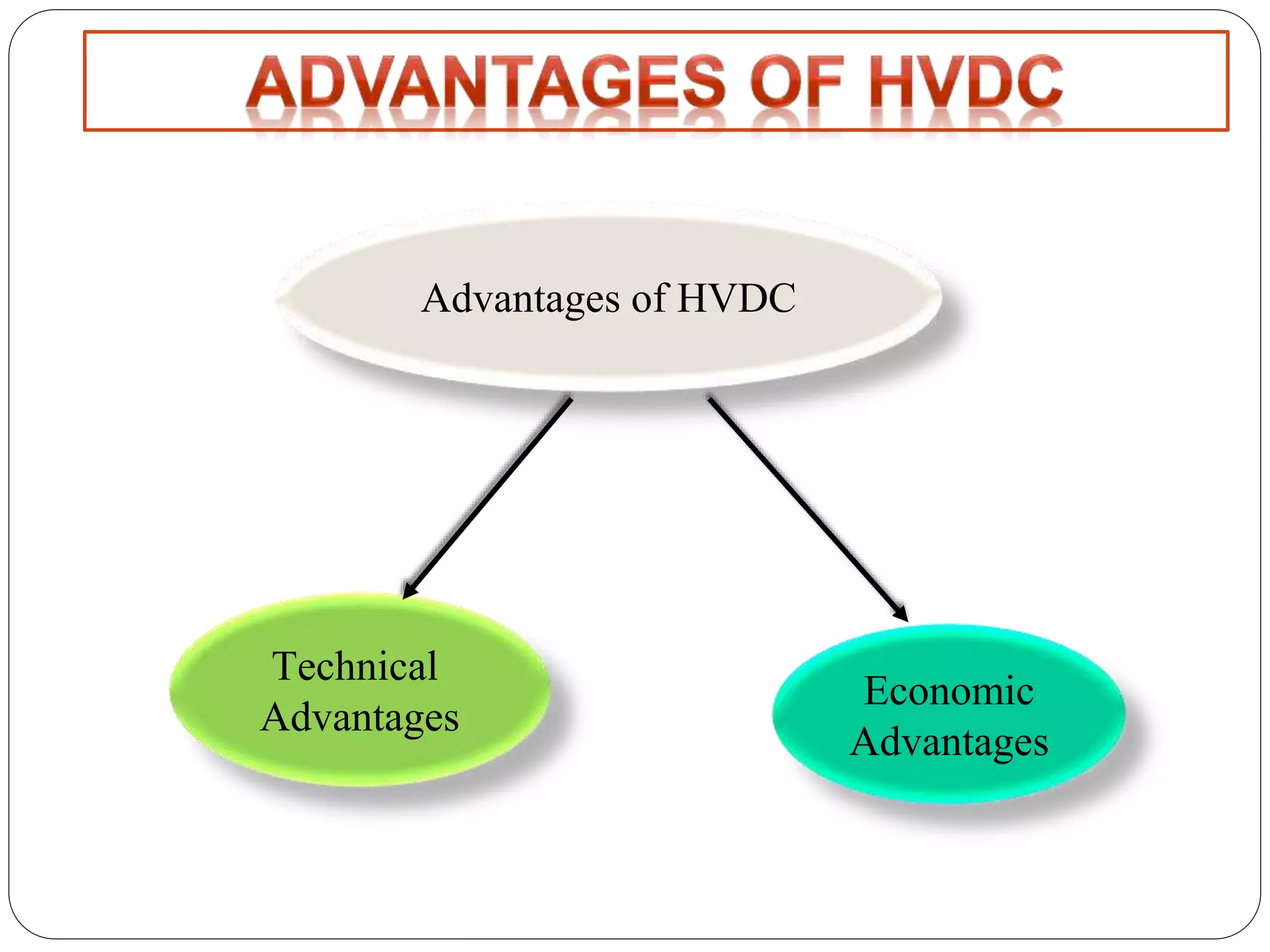
Advantages of HVDC 
Technical 
Advantages 
Economic 
Advantages
 Lesser Corona Loss and Radio interference. 
 The voltage regulation problem is much less 
serious for DC, since only the IR drop is 
involved. For the same reason steady state 
stability is no longer a major problem. 
 No skin and proximity and ferranti effect 
 Asynchronous operation possible between 
regions having different electrical 
parameters.
 DC lines and cables are cheaper than AC 
lines or cables. 
 The towers of the DC lines are narrower, 
simpler and cheaper compared to the towers 
of the AC lines. 
 Line losses in a DC line are lower than the 
losses in an AC lines.
 The disadvantages of HVDC are in conversion, 
switching, control, availability and maintenance. 
 There is nothing like DC transformer which can 
change the voltage level in a simple way. Voltage 
transformation has to be provided on the AC sides of 
the system. 
 The required converter stations are expensive and 
have limited overload capacity.
 A 500V, 1500W, 810Km bipolar HVDC transmission line is 
set up between Rihand & Delhi. 
 In Vindhyachal back to back link is laid for exchange of 
power between Northern & Western regions. 
 
 The Talcher–Kolar is a 1450 km,200MW, 
500V HVDC transmission connection between the eastern 
and southern regions in India. In 2007 the scheme was 
upgraded to 2500 MW. 
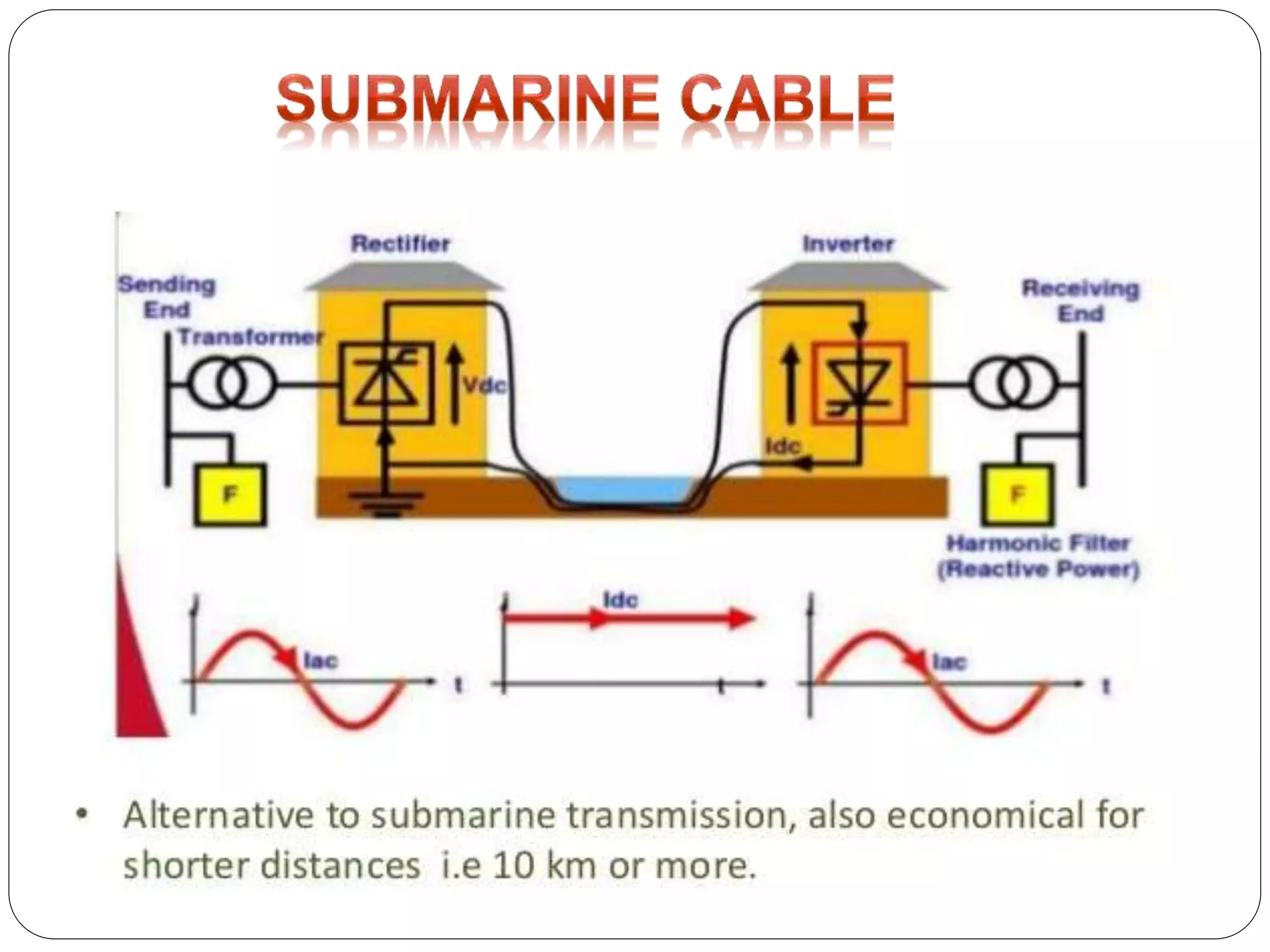
 Undersea cables, where high capacitance causes 
additional AC losses. (e.g. 250 km Baltic Cable between 
Sweden and Germany) .
HVDC offers powerful alternative to increase stability of a 
power system, with it power flow can be controlled rapidly 
and accurately. 
Use of HVDC to interconnect two points in a power grid, in 
many cases is the best economic alternative and further 
more it has excellent environmental benefits. 
Very large investment for example in China and India 
shows that HVDC 
very important in future especially in big, new industrial 
countries.
Hvdc transmission & its applications

Hvdc transmission & its applications

  • 1.
    Name: Pooja Dubey Course: EEE Roll No:120104026
  • 2.
    HVDC Transmission Components of HVDC HVDC LINKS Advantage of HVDC Comparison of HVDC AND HVAC Applications of HVDC CONCLUSION
  • 3.
    HVDC Transmission Transmittingpower at high voltage and in DC fo rm instead of AC is a new technology proven to be economic and simple in operation which is HVDSCinctera onusrm ission. primary source is A.C, The three basic steps are:- 1. Convert AC into DC (rectifier) 2. Transmit DC 3. Convert DC into AC (inverter)
  • 4.
    Wind Power AC Transmision Line Converter Station Inverter Station AC Transmission Line Distribution Line HVDC Transmission Line
  • 5.
    1) Converters 2)Smoothing reactors 3) Harmonic filters 4) Reactive power source 5) Electrodes 6) Dc lines 7) Ac circuit breakers
  • 7.
    HVDC Transmission canbe broadly classified into:- Monopolar link Bipolar link Homopolar link
  • 8.
    It uses oneconductor. The return path is provided by ground or water. Use of this system is due to cost considerations. Ametallic return may be used where earth resistivity is too high
  • 9.
    Each terminal hastwo converters of equal rated voltage, connected in series on DC side. The junctions between converters is grounded. If one pole is isolated due to fault, the other pole can operate with ground and carry half the rated load ( or more using overload capabilities of its converter line.)
  • 10.
    It has twoconductors each having same polarity, usually negative. Since the corona effect in DC transmission lines is less for negative polarity, homopolar link is usually operated with negative polarity. The return path for such a system is through ground.
  • 11.
    Advantages of HVDC Technical Advantages Economic Advantages
  • 12.
     Lesser CoronaLoss and Radio interference.  The voltage regulation problem is much less serious for DC, since only the IR drop is involved. For the same reason steady state stability is no longer a major problem.  No skin and proximity and ferranti effect  Asynchronous operation possible between regions having different electrical parameters.
  • 13.
     DC linesand cables are cheaper than AC lines or cables.  The towers of the DC lines are narrower, simpler and cheaper compared to the towers of the AC lines.  Line losses in a DC line are lower than the losses in an AC lines.
  • 14.
     The disadvantagesof HVDC are in conversion, switching, control, availability and maintenance.  There is nothing like DC transformer which can change the voltage level in a simple way. Voltage transformation has to be provided on the AC sides of the system.  The required converter stations are expensive and have limited overload capacity.
  • 16.
     A 500V,1500W, 810Km bipolar HVDC transmission line is set up between Rihand & Delhi.  In Vindhyachal back to back link is laid for exchange of power between Northern & Western regions.   The Talcher–Kolar is a 1450 km,200MW, 500V HVDC transmission connection between the eastern and southern regions in India. In 2007 the scheme was upgraded to 2500 MW.  Undersea cables, where high capacitance causes additional AC losses. (e.g. 250 km Baltic Cable between Sweden and Germany) .
  • 21.
    HVDC offers powerfulalternative to increase stability of a power system, with it power flow can be controlled rapidly and accurately. Use of HVDC to interconnect two points in a power grid, in many cases is the best economic alternative and further more it has excellent environmental benefits. Very large investment for example in China and India shows that HVDC very important in future especially in big, new industrial countries.