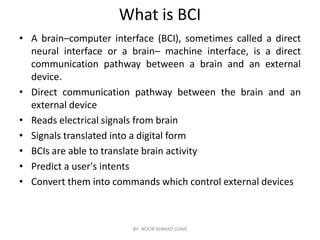
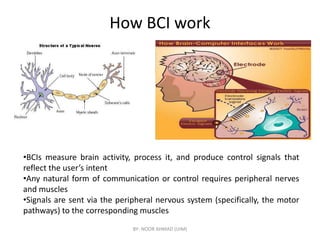
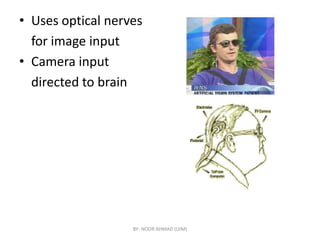
Brain-computer interfaces (BCI) allow direct communication between the brain and external devices. BCI systems work by measuring brain activity through sensors like EEG electrodes, processing the signals to predict user intent, and converting those signals into commands to control devices. There are invasive BCIs that are implanted in the brain, partially invasive BCIs implanted in the skull, and non-invasive BCIs using external electrodes to help severely disabled individuals move prosthetics or restore some movement.