K. S. RANGASAMY COLLEGE 
OF TECHNOLOGY 
BRAIN COMPUTER INTERFACE 
Presented by 
Jai Dersheni S
AGENDA 
 Introduction to BCI 
 Brain Waves Basics 
 Stages of BCI 
 Data Acquisition methods 
 Pre-processing Techniques 
 Feature extraction and classification 
 Applications
INTRODUCTION OF BCI 
A communication channel connecting the 
brain to a computer or another electronic 
device. 
Two basic requirements are 
 Features that are useful to distinguish 
several kinds of brain state 
 Methods for the detection and 
classification of such features 
implemented in real time.
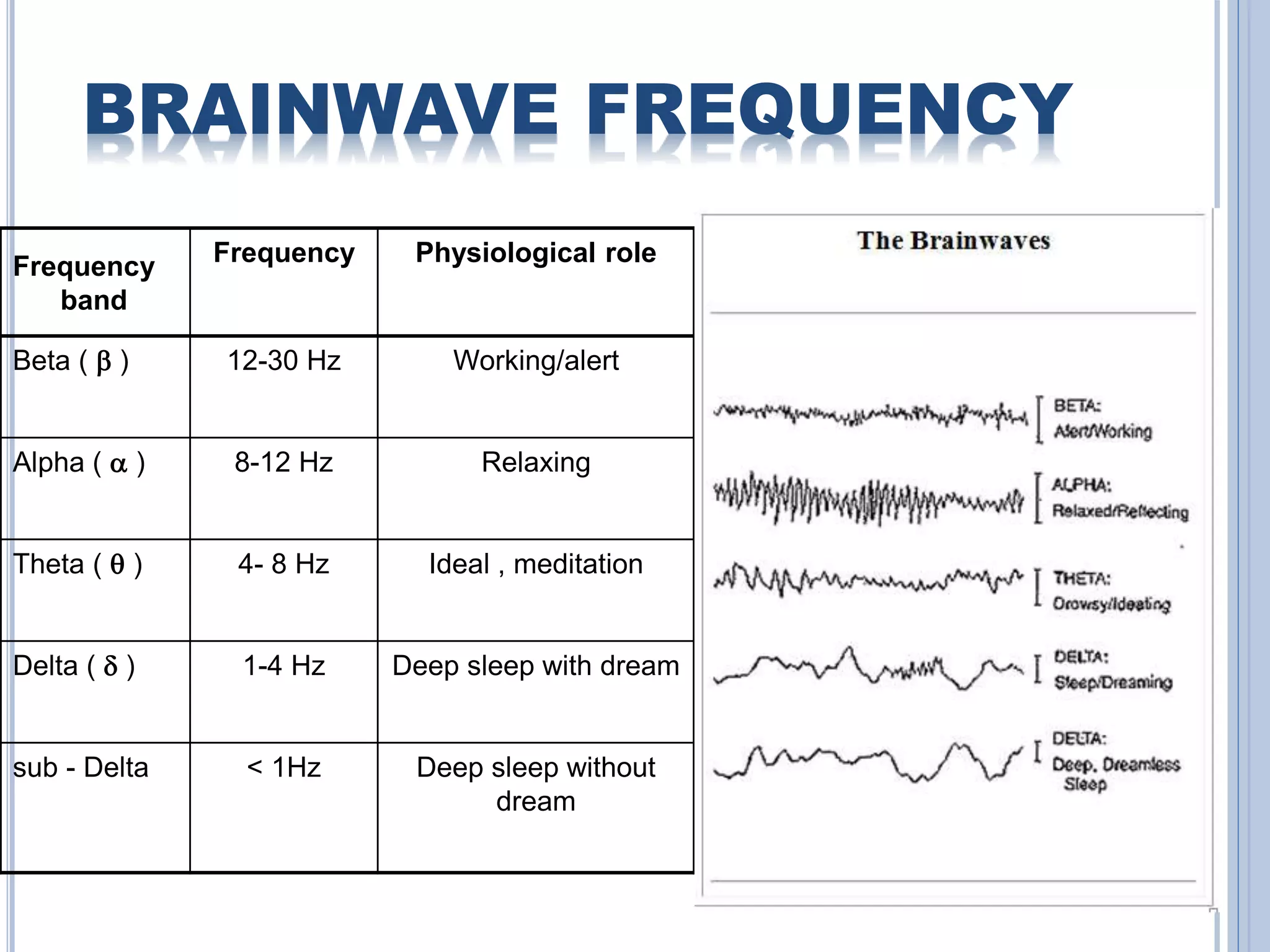
BRAINWAVE FREQUENCY 
Frequency 
band 
Frequency Physiological role 
Beta (  ) 12-30 Hz Working/alert 
Alpha (  ) 8-12 Hz Relaxing 
Theta (  ) 4- 8 Hz Ideal , meditation 
Delta (  ) 1-4 Hz Deep sleep with dream 
sub - Delta < 1Hz Deep sleep without 
dream
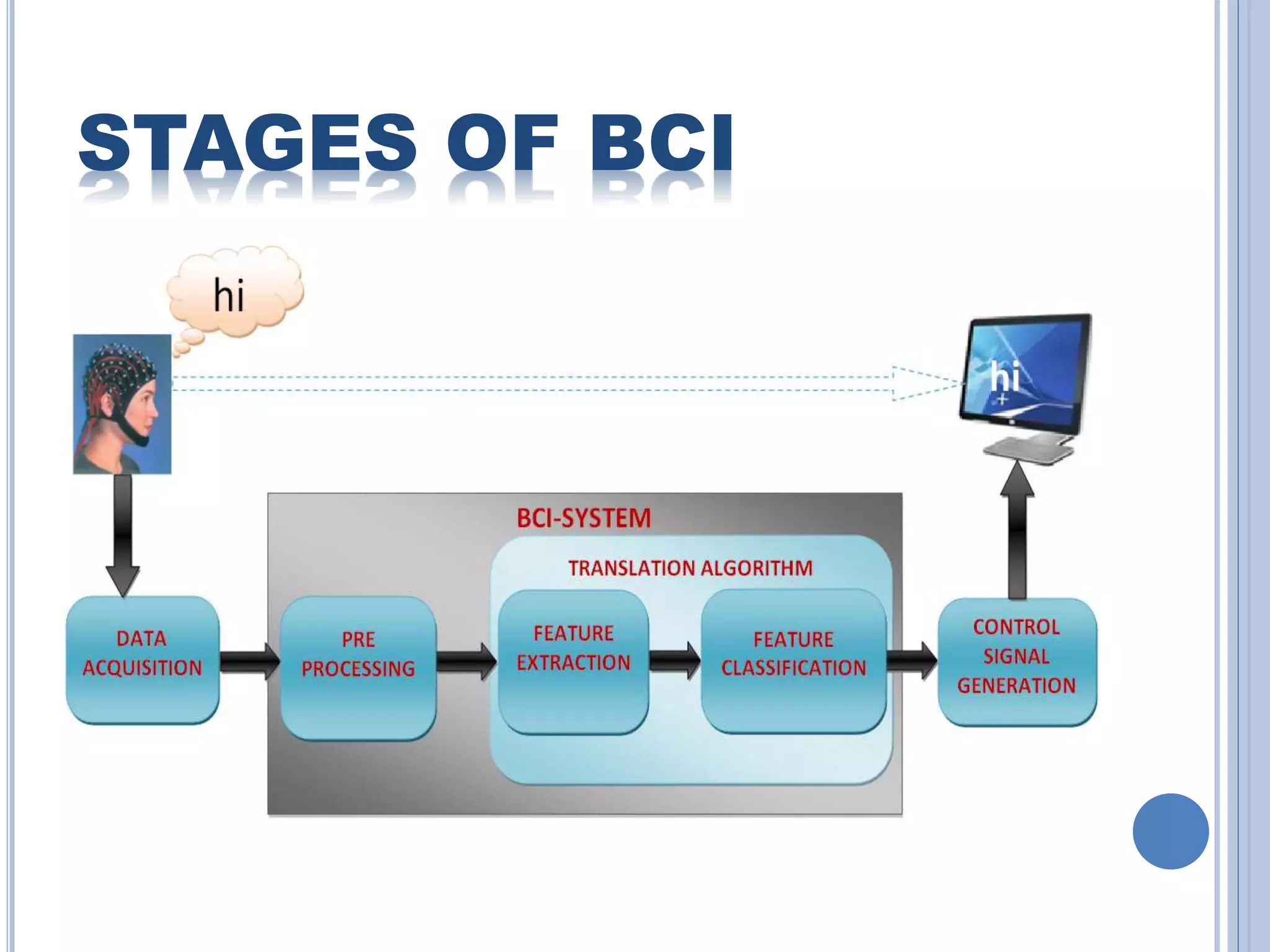
STAGES OF BCI
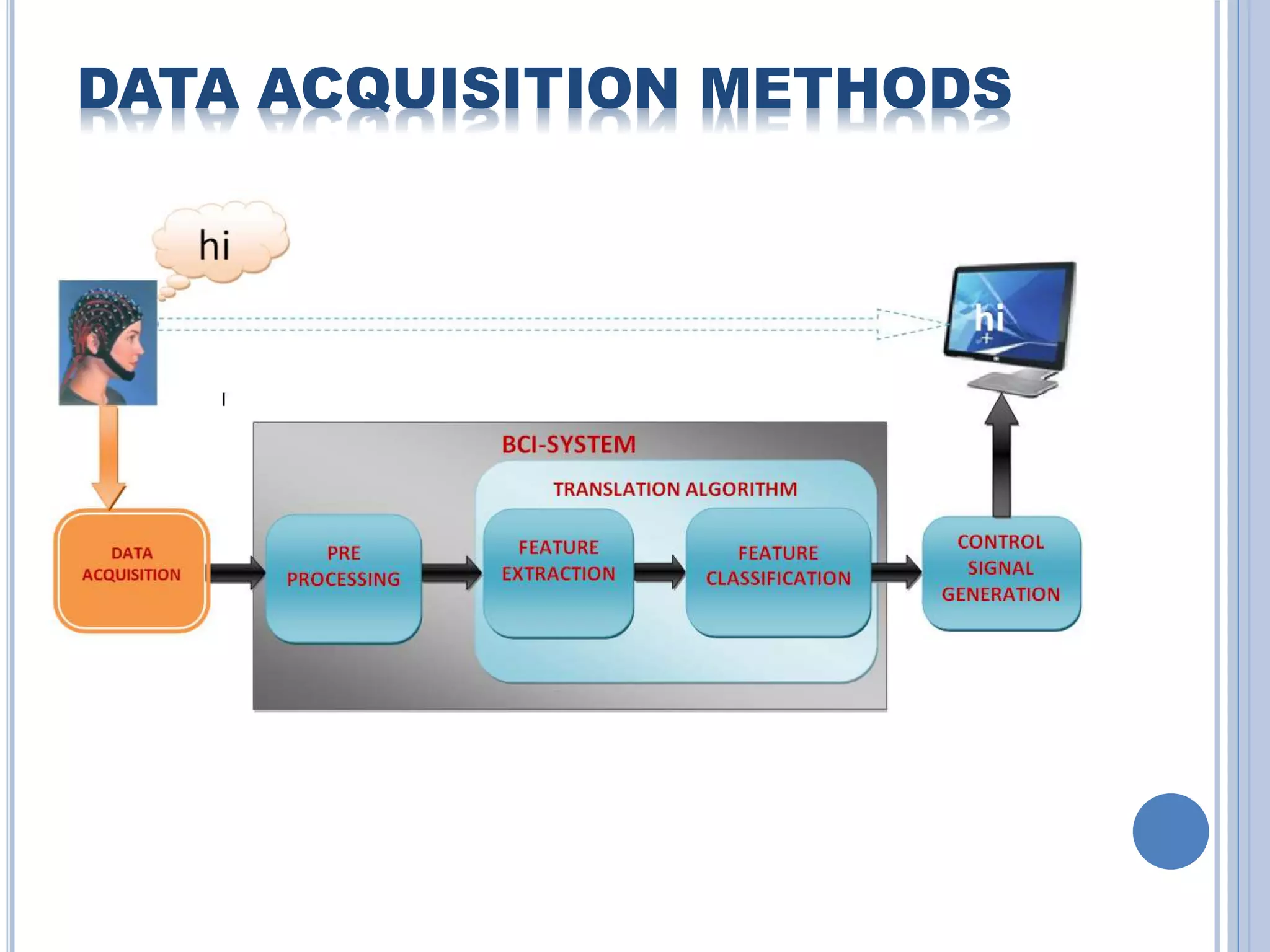
DATA ACQUISITION METHODS
DATA ACQUISITION METHODS 
EEG, ElectroEncephaloGraphy : 
 recording the electrical field generated by 
action potentials of neurons using small 
metal electrodes. 
MEG, magneto encephalography : 
 directly measures the cortical magnetic 
fields produced by electric current 
 fMRI, functional Magnetic Resonance 
Imaging : 
 provides information on brain metabolism 
using BOLD (Blood Oxygen Level 
Dependent).
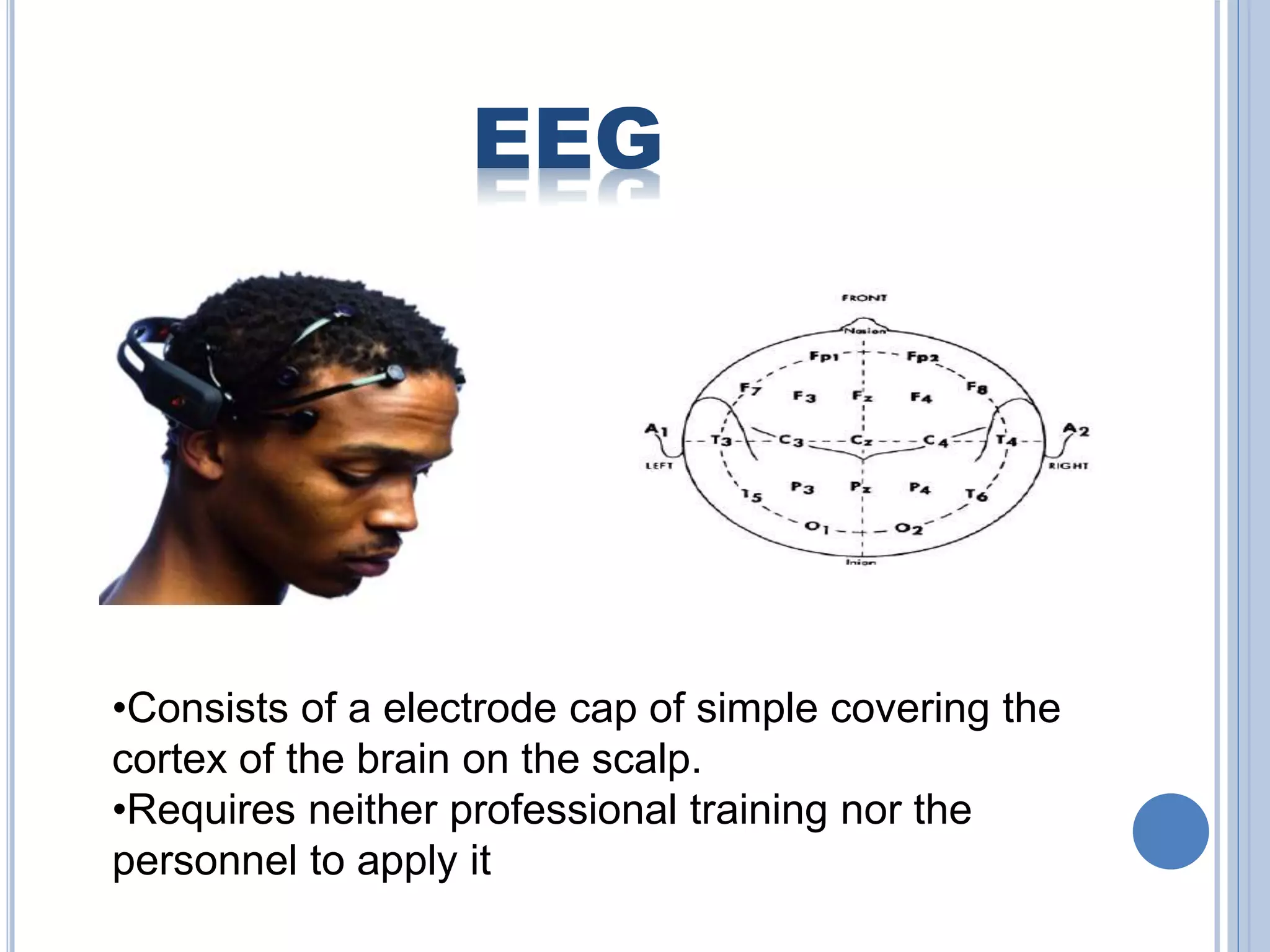
EEG 
•Consists of a electrode cap of simple covering the 
cortex of the brain on the scalp. 
•Requires neither professional training nor the 
personnel to apply it
ARTIFACTS 
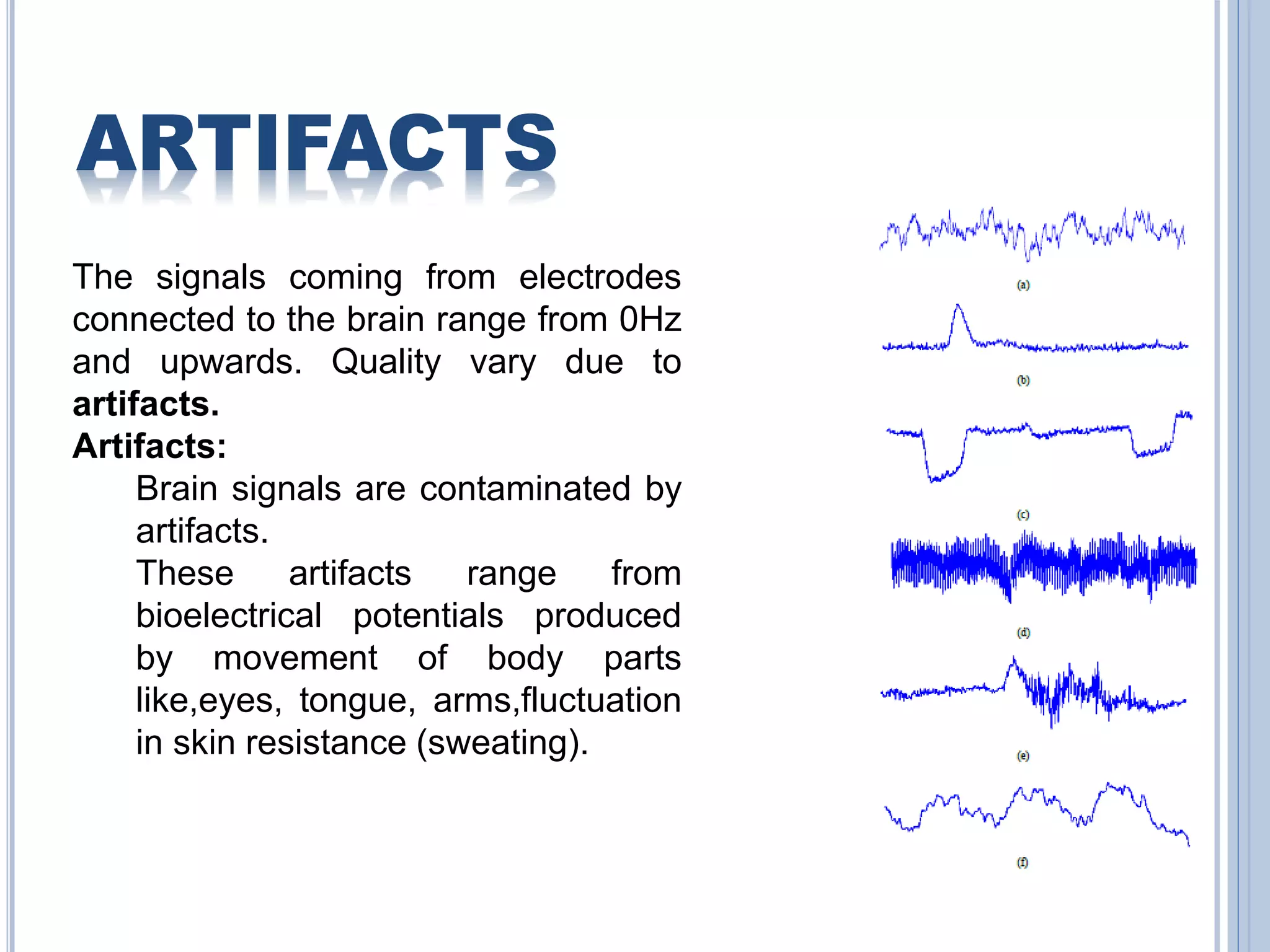
The signals coming from electrodes 
connected to the brain range from 0Hz 
and upwards. Quality vary due to 
artifacts. 
Artifacts: 
Brain signals are contaminated by 
artifacts. 
These artifacts range from 
bioelectrical potentials produced 
by movement of body parts 
like,eyes, tongue, arms,fluctuation 
in skin resistance (sweating).
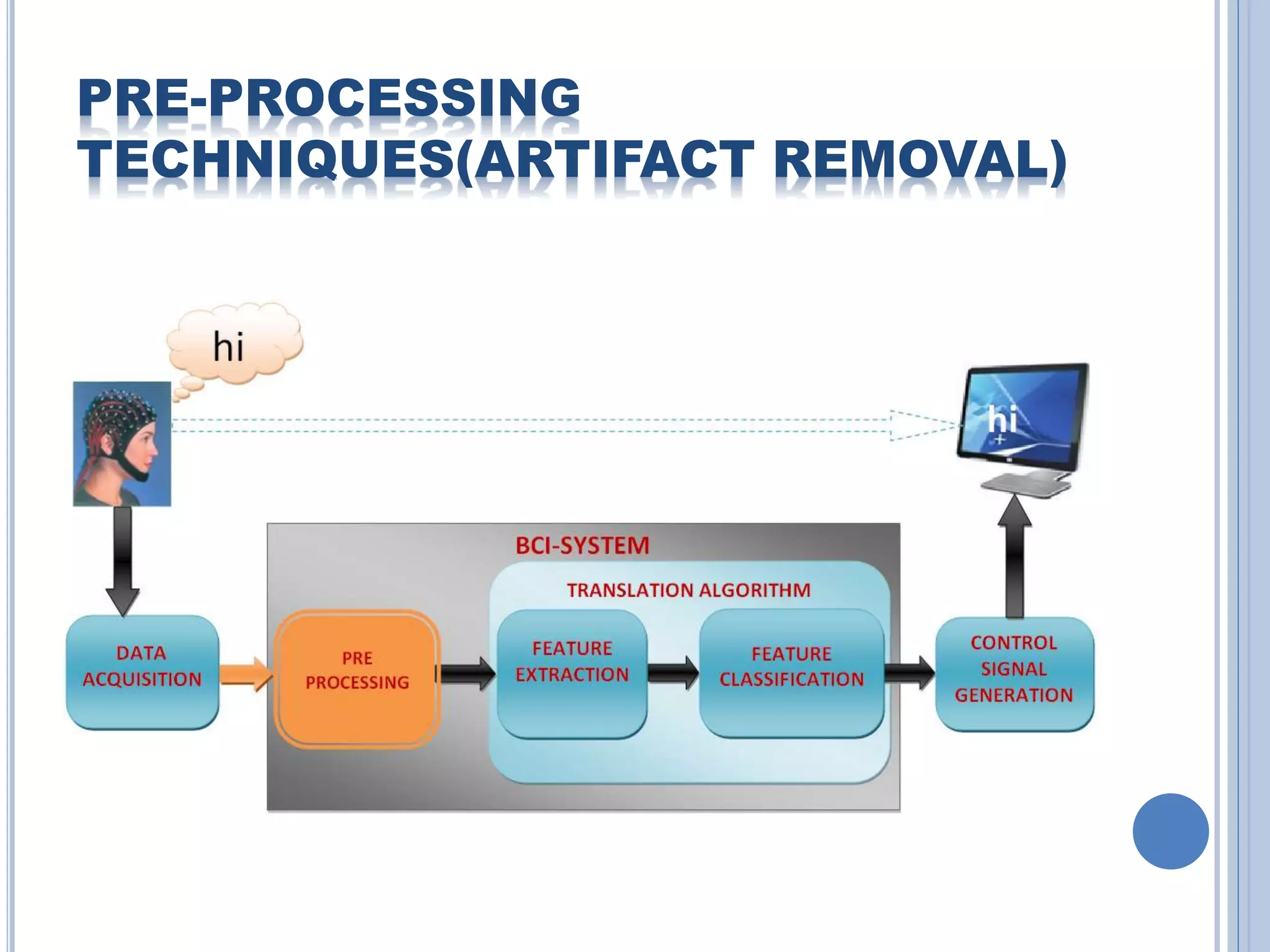
PRE-PROCESSING 
TECHNIQUES(ARTIFACT REMOVAL)
PRE-PROCESSING 
TECHNIQUES(ARTIFACT REMOVAL) 
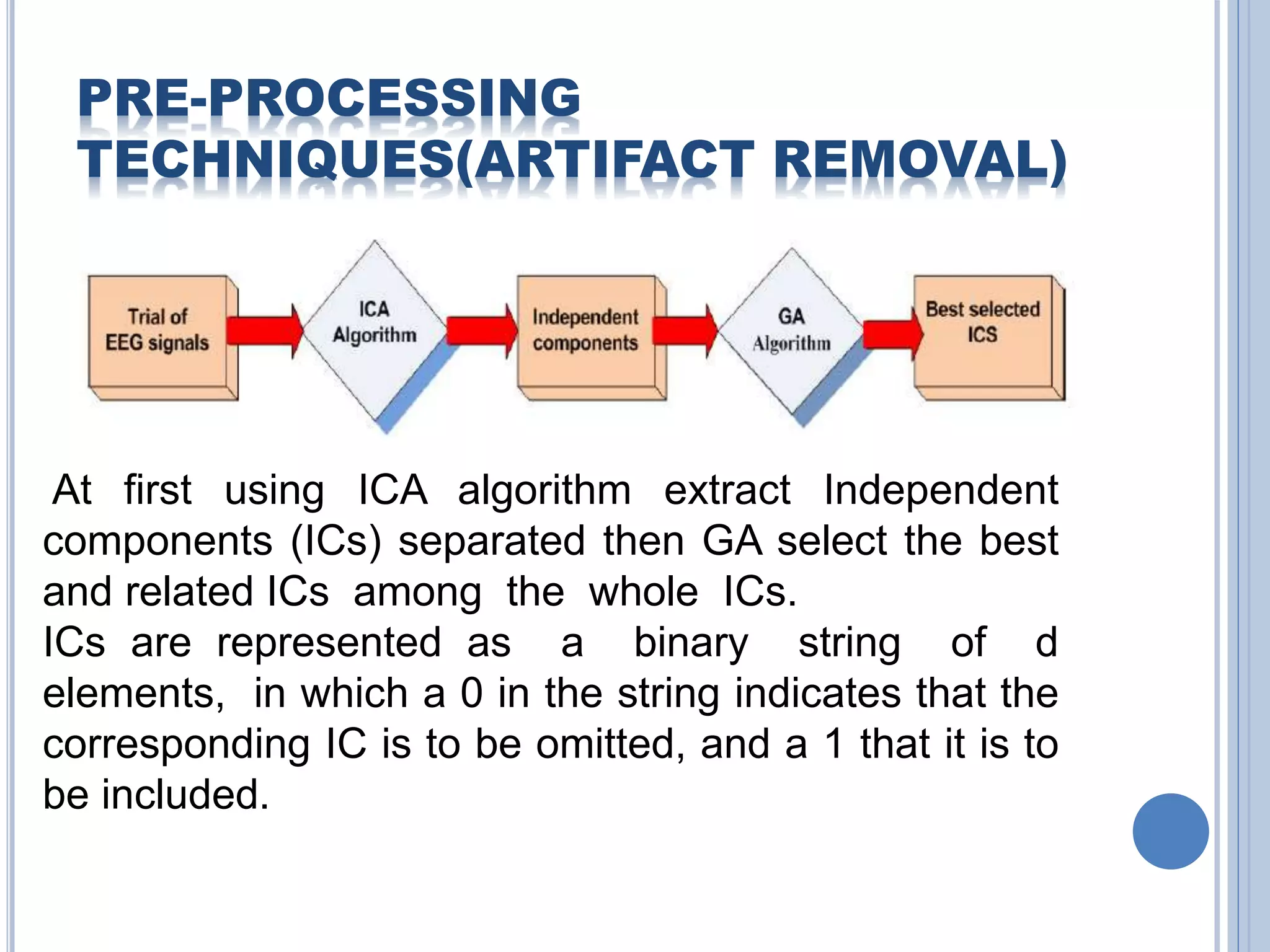
At first using ICA algorithm extract Independent 
components (ICs) separated then GA select the best 
and related ICs among the whole ICs. 
ICs are represented as a binary string of d 
elements, in which a 0 in the string indicates that the 
corresponding IC is to be omitted, and a 1 that it is to 
be included.
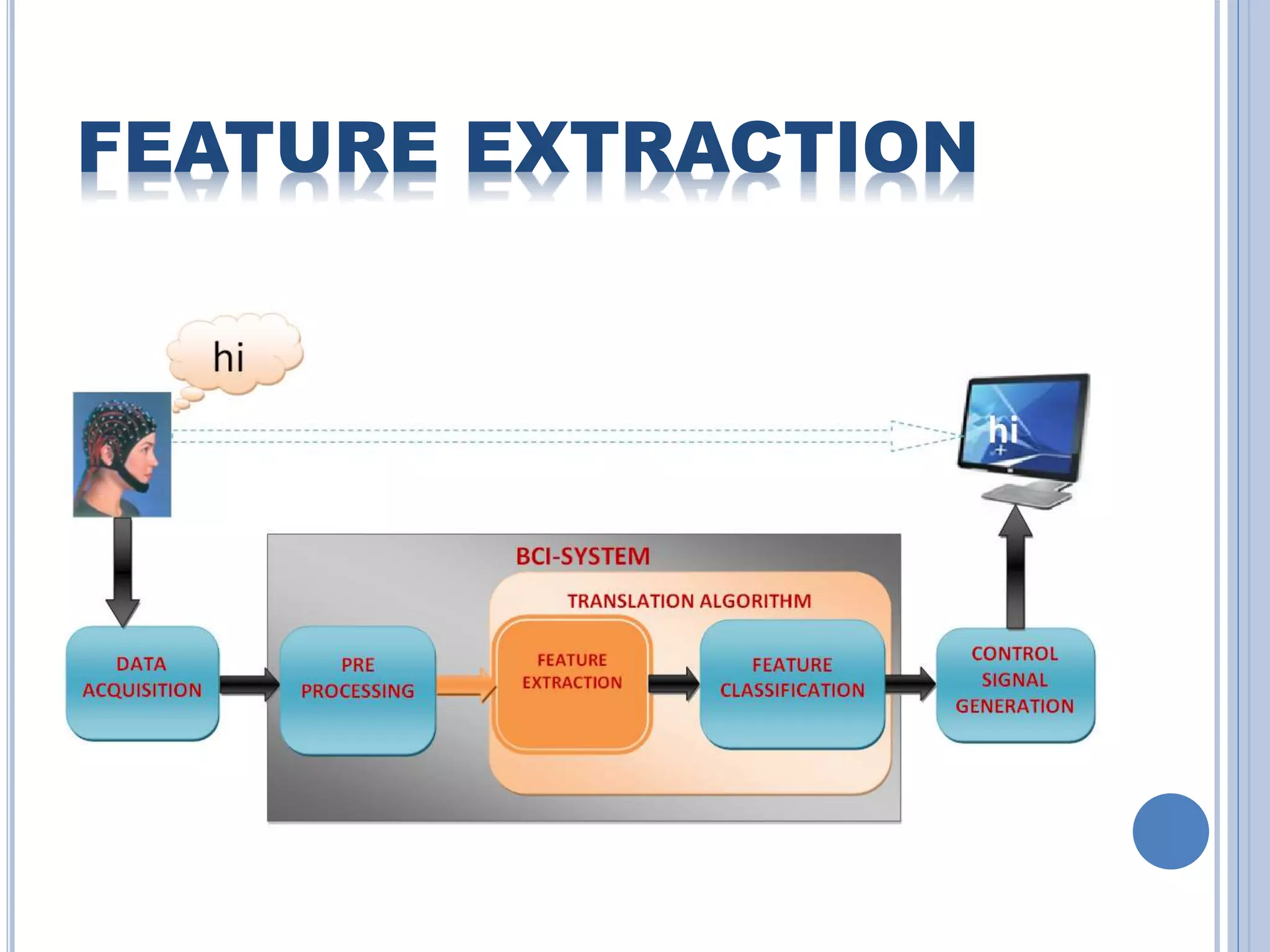
FEATURE EXTRACTION
FEATURE EXTRACTION 
• It is the process of selecting appropriate 
features from the input data 
• It can be done using autoregressive moving 
average (ARMA) model 
• The notation ARMA(p, q) refers to the model with 
 p autoregressive terms 
 q moving average terms. 
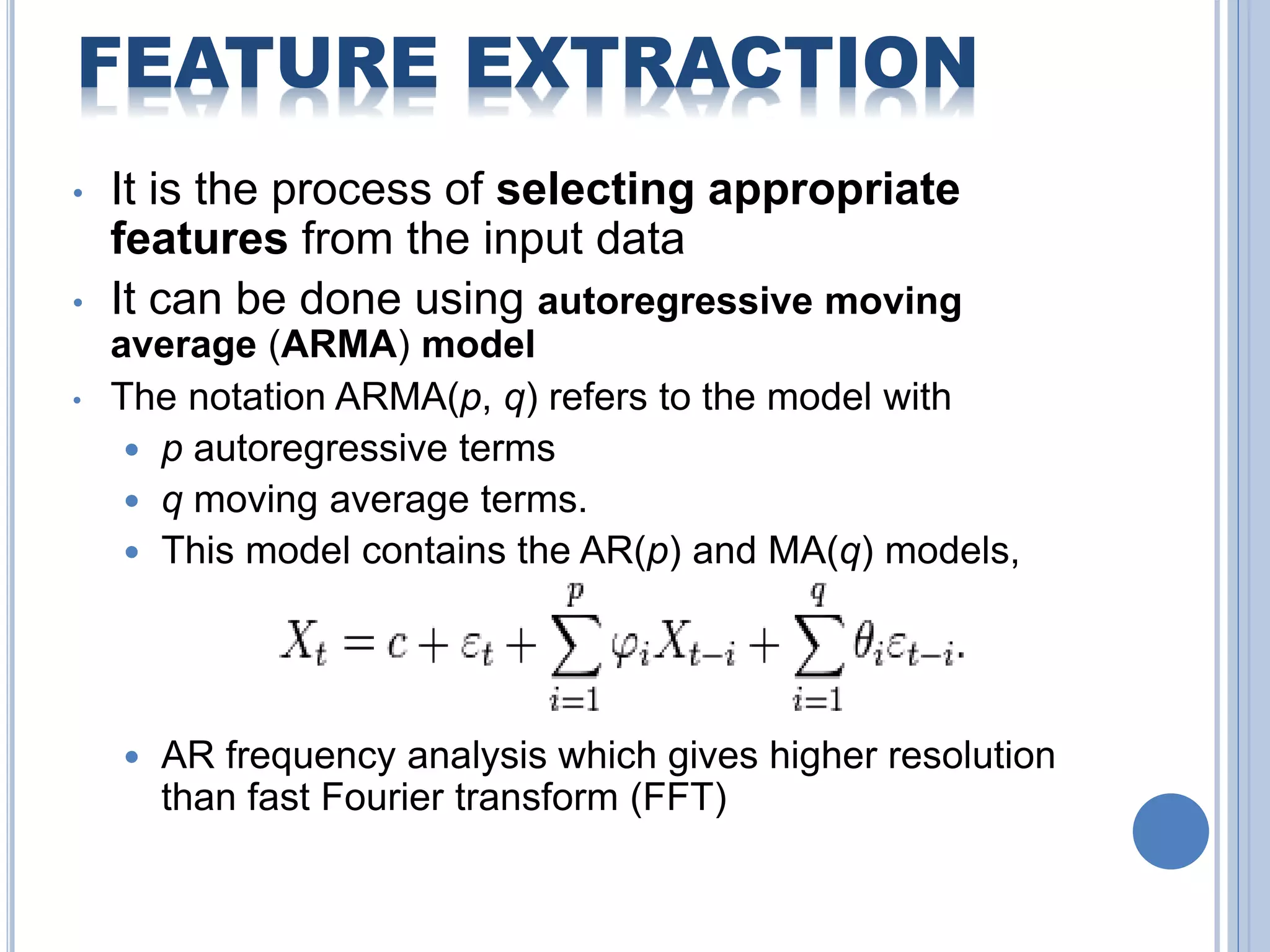
 This model contains the AR(p) and MA(q) models, 
 AR frequency analysis which gives higher resolution 
than fast Fourier transform (FFT)
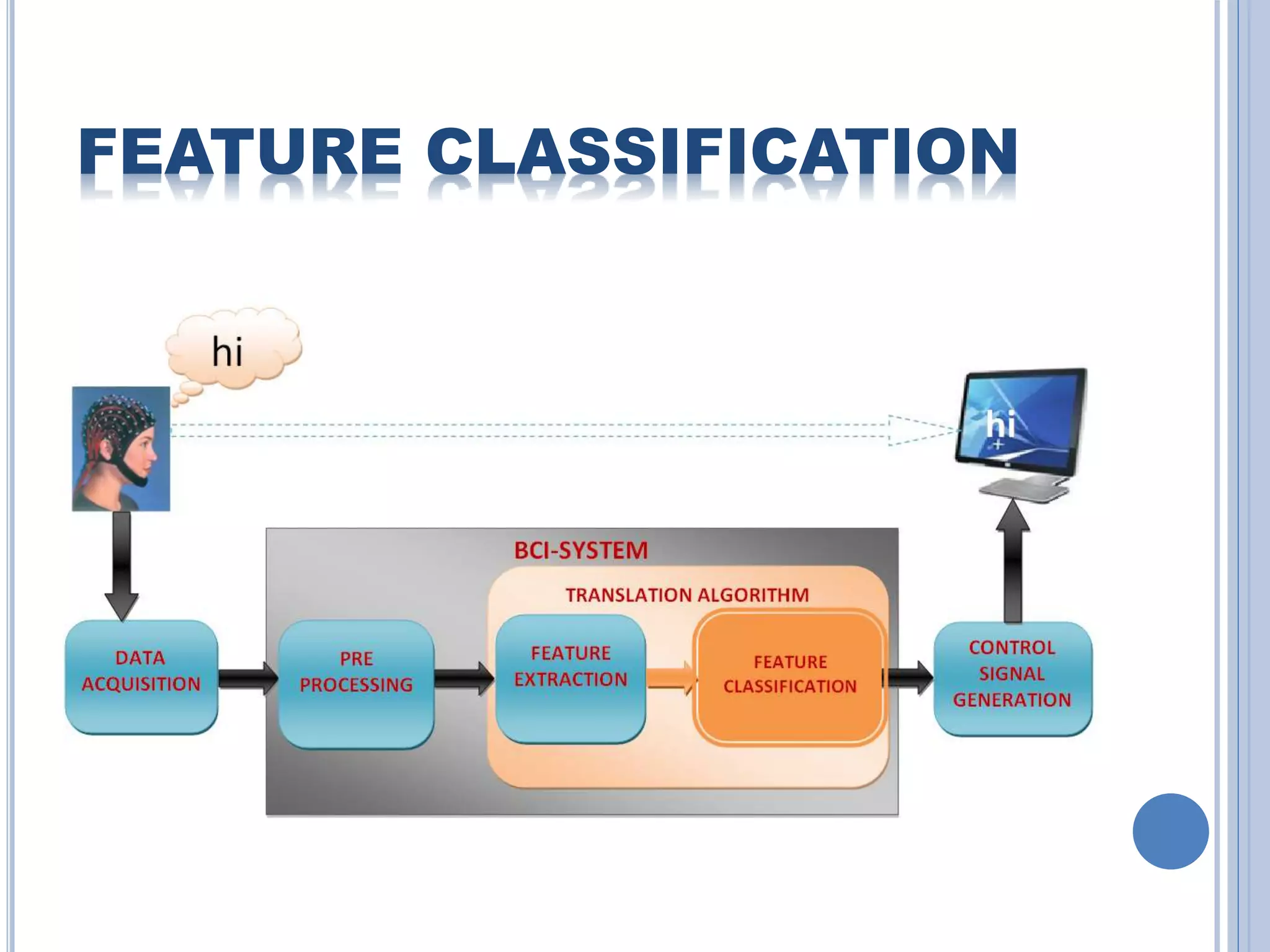
FEATURE CLASSIFICATION
FEATURE CLASSIFICATION 
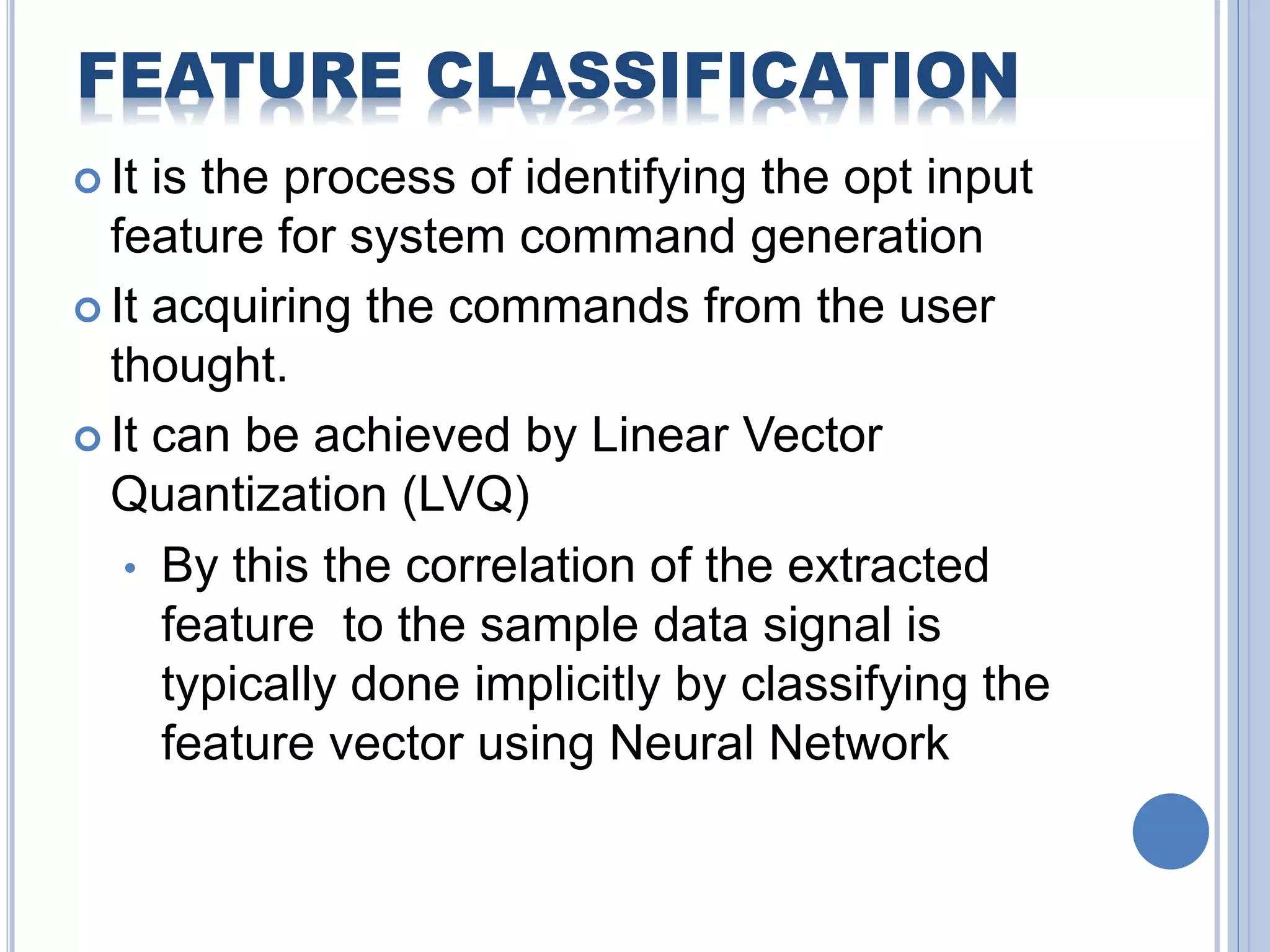
 It is the process of identifying the opt input 
feature for system command generation 
 It acquiring the commands from the user 
thought. 
 It can be achieved by Linear Vector 
Quantization (LVQ) 
• By this the correlation of the extracted 
feature to the sample data signal is 
typically done implicitly by classifying the 
feature vector using Neural Network
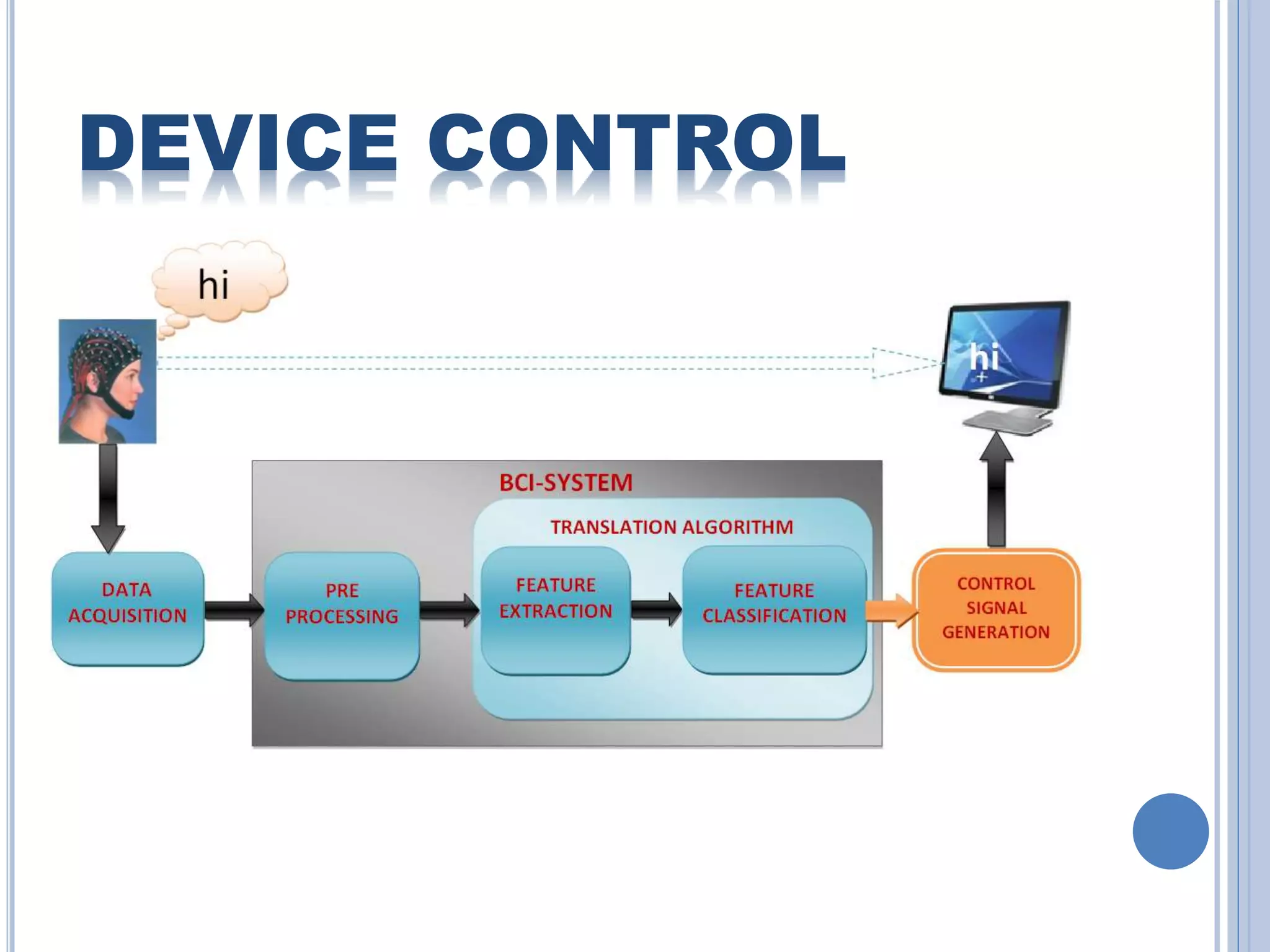
DEVICE CONTROL
APPLICATION 
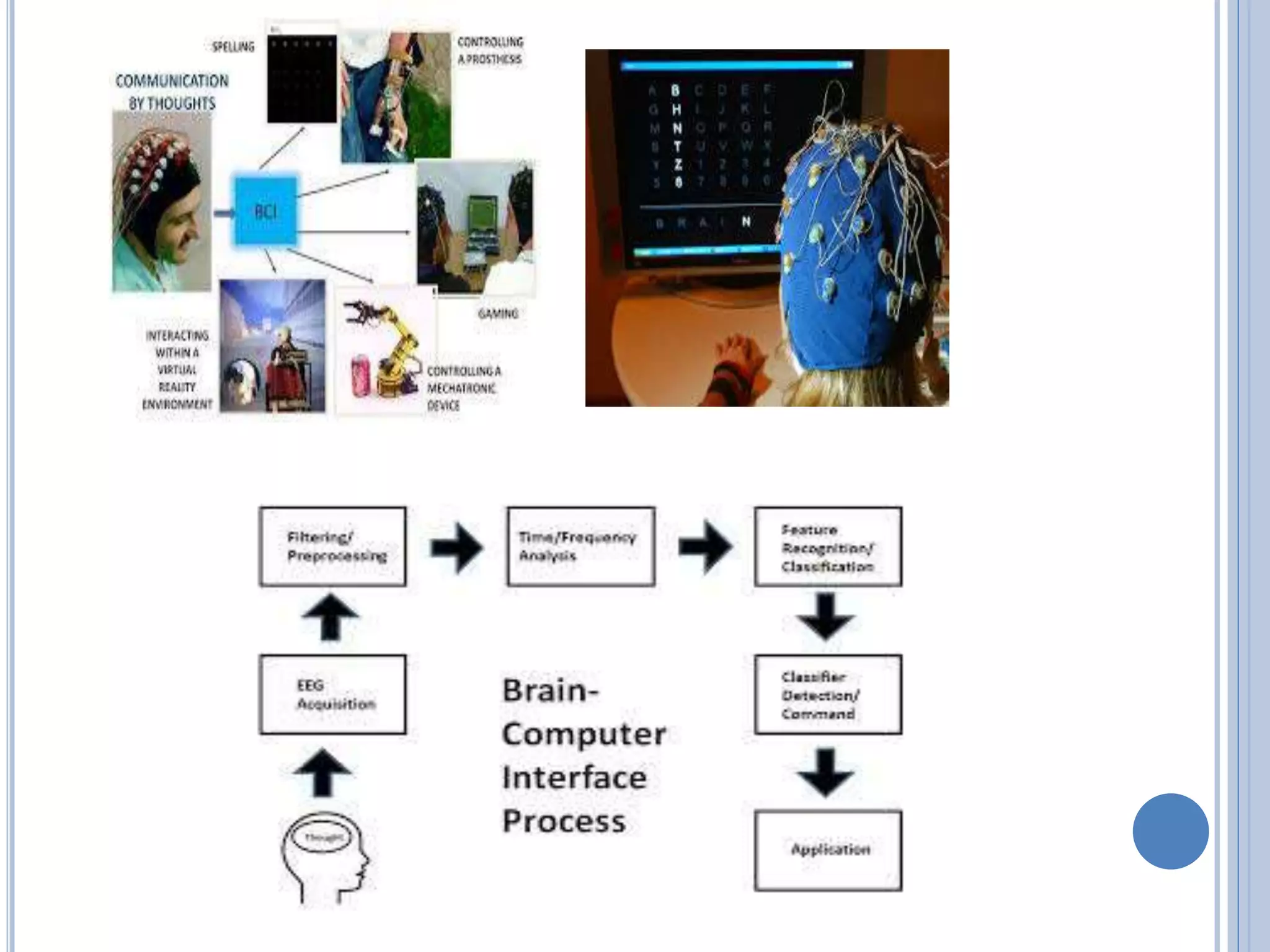
 The list of possible applications of BCI is practically 
endless 
 It range from simple decision programs to 
manipulation of the environment, 
from spelling programs 
to controlling the systems 
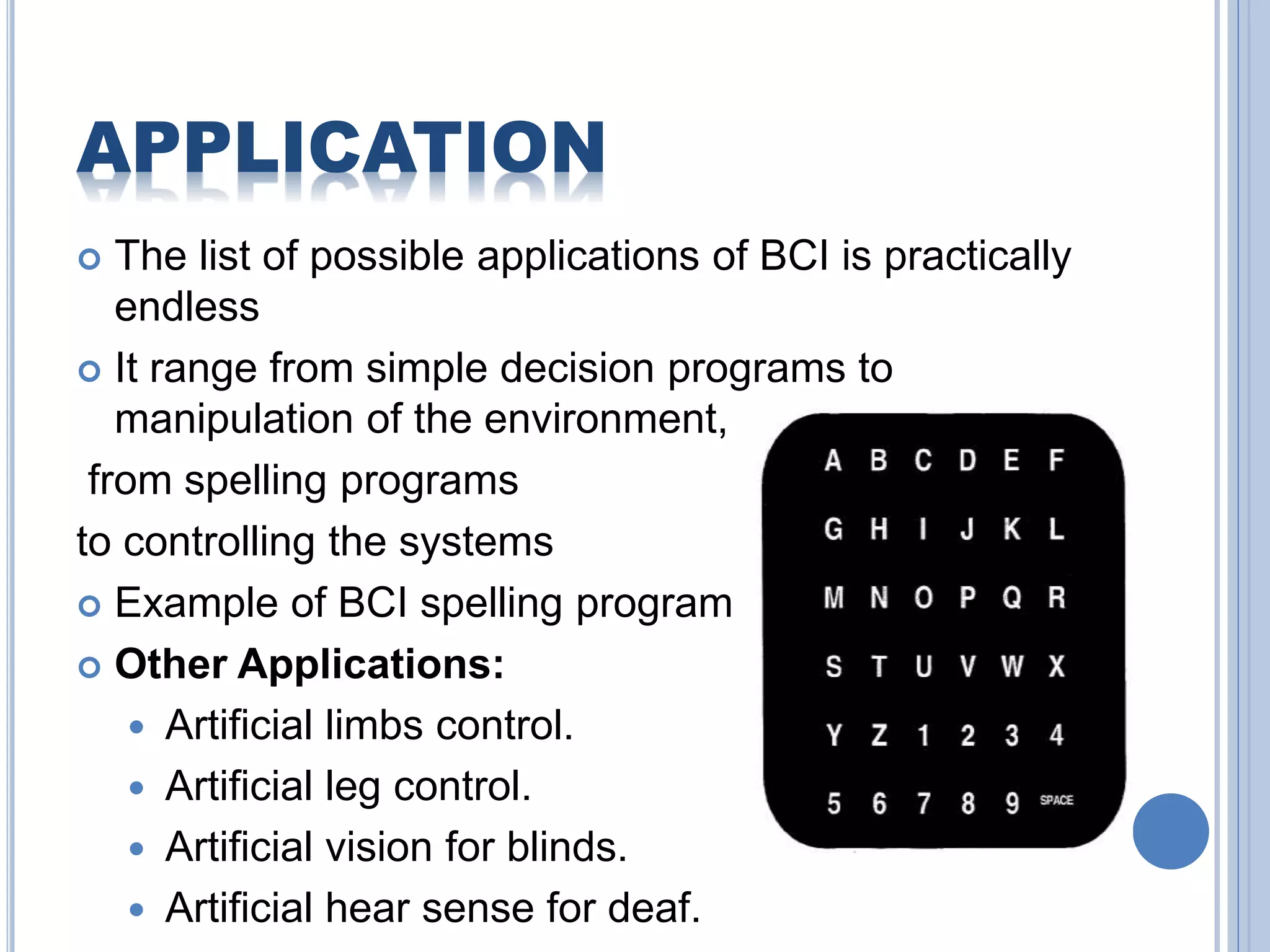
 Example of BCI spelling program 
 Other Applications: 
 Artificial limbs control. 
 Artificial leg control. 
 Artificial vision for blinds. 
 Artificial hear sense for deaf.
Brain computer interface

Brain computer interface

  • 1.
    K. S. RANGASAMYCOLLEGE OF TECHNOLOGY BRAIN COMPUTER INTERFACE Presented by Jai Dersheni S
  • 2.
    AGENDA  Introductionto BCI  Brain Waves Basics  Stages of BCI  Data Acquisition methods  Pre-processing Techniques  Feature extraction and classification  Applications
  • 3.
    INTRODUCTION OF BCI A communication channel connecting the brain to a computer or another electronic device. Two basic requirements are  Features that are useful to distinguish several kinds of brain state  Methods for the detection and classification of such features implemented in real time.
  • 4.
    BRAINWAVE FREQUENCY Frequency band Frequency Physiological role Beta (  ) 12-30 Hz Working/alert Alpha (  ) 8-12 Hz Relaxing Theta (  ) 4- 8 Hz Ideal , meditation Delta (  ) 1-4 Hz Deep sleep with dream sub - Delta < 1Hz Deep sleep without dream
  • 5.
  • 6.
  • 7.
    DATA ACQUISITION METHODS EEG, ElectroEncephaloGraphy :  recording the electrical field generated by action potentials of neurons using small metal electrodes. MEG, magneto encephalography :  directly measures the cortical magnetic fields produced by electric current  fMRI, functional Magnetic Resonance Imaging :  provides information on brain metabolism using BOLD (Blood Oxygen Level Dependent).
  • 8.
    EEG •Consists ofa electrode cap of simple covering the cortex of the brain on the scalp. •Requires neither professional training nor the personnel to apply it
  • 9.
    ARTIFACTS The signalscoming from electrodes connected to the brain range from 0Hz and upwards. Quality vary due to artifacts. Artifacts: Brain signals are contaminated by artifacts. These artifacts range from bioelectrical potentials produced by movement of body parts like,eyes, tongue, arms,fluctuation in skin resistance (sweating).
  • 10.
  • 11.
    PRE-PROCESSING TECHNIQUES(ARTIFACT REMOVAL) At first using ICA algorithm extract Independent components (ICs) separated then GA select the best and related ICs among the whole ICs. ICs are represented as a binary string of d elements, in which a 0 in the string indicates that the corresponding IC is to be omitted, and a 1 that it is to be included.
  • 12.
  • 13.
    FEATURE EXTRACTION •It is the process of selecting appropriate features from the input data • It can be done using autoregressive moving average (ARMA) model • The notation ARMA(p, q) refers to the model with  p autoregressive terms  q moving average terms.  This model contains the AR(p) and MA(q) models,  AR frequency analysis which gives higher resolution than fast Fourier transform (FFT)
  • 14.
  • 15.
    FEATURE CLASSIFICATION It is the process of identifying the opt input feature for system command generation  It acquiring the commands from the user thought.  It can be achieved by Linear Vector Quantization (LVQ) • By this the correlation of the extracted feature to the sample data signal is typically done implicitly by classifying the feature vector using Neural Network
  • 16.
  • 17.
    APPLICATION  Thelist of possible applications of BCI is practically endless  It range from simple decision programs to manipulation of the environment, from spelling programs to controlling the systems  Example of BCI spelling program  Other Applications:  Artificial limbs control.  Artificial leg control.  Artificial vision for blinds.  Artificial hear sense for deaf.