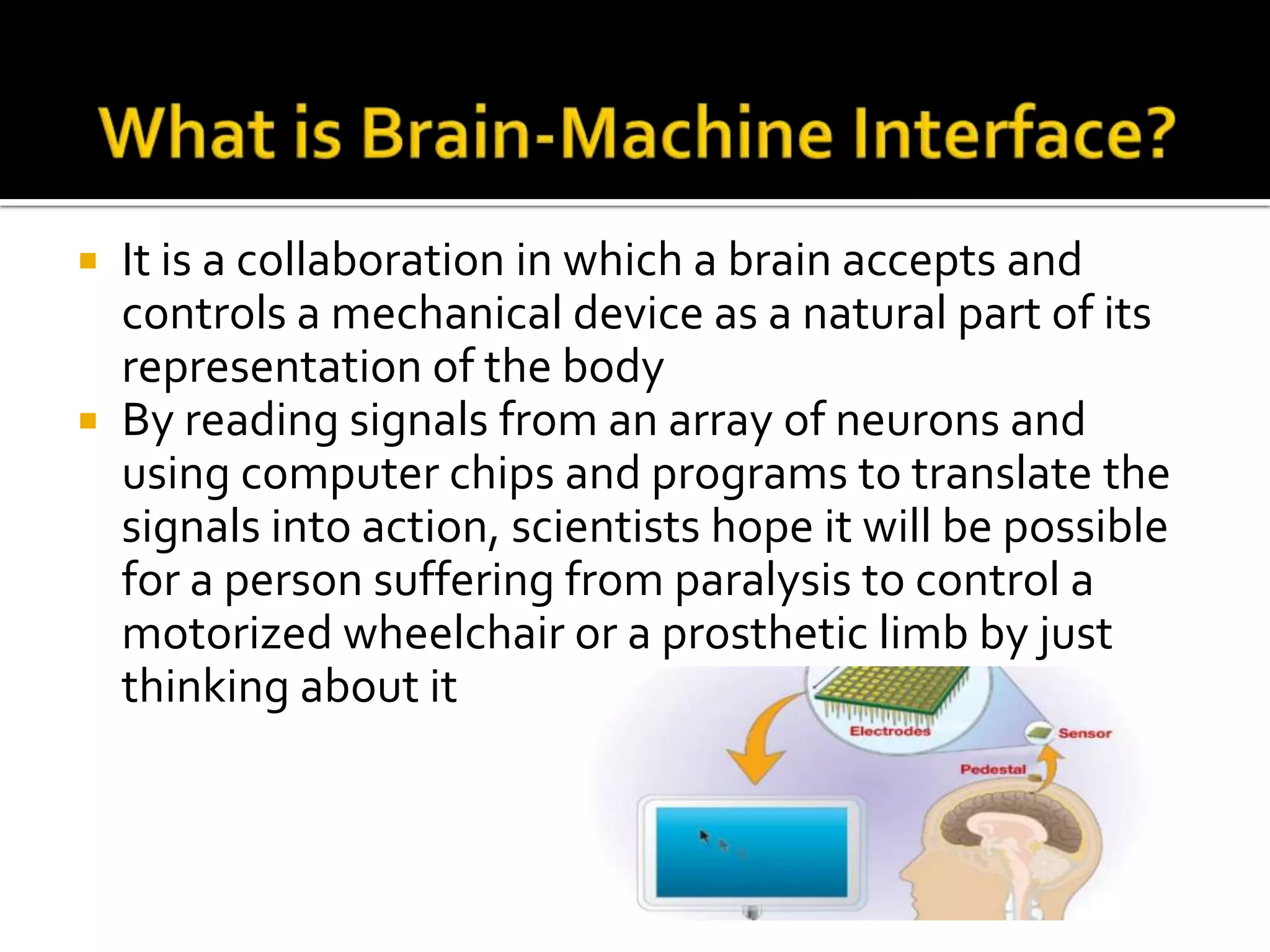
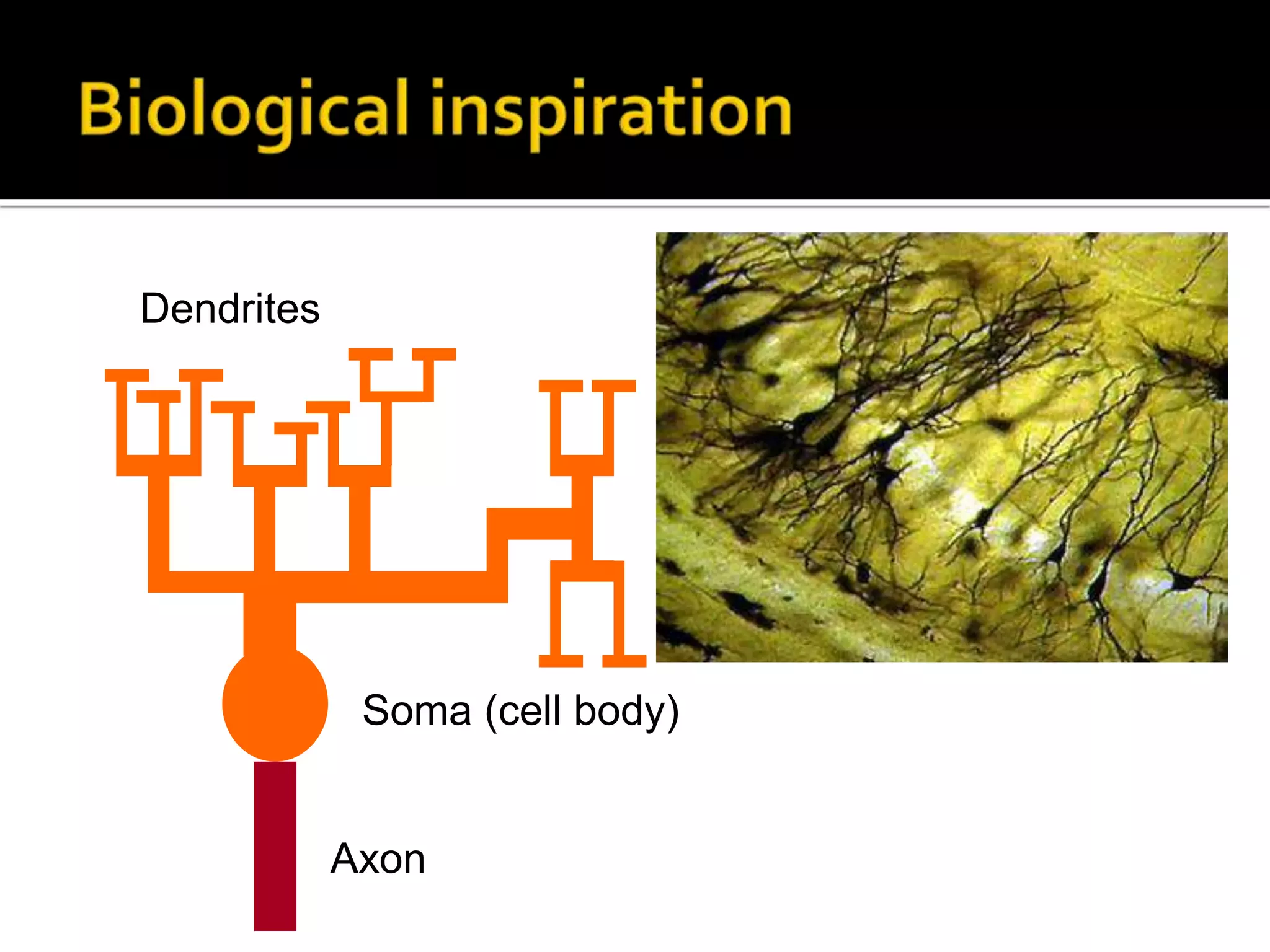
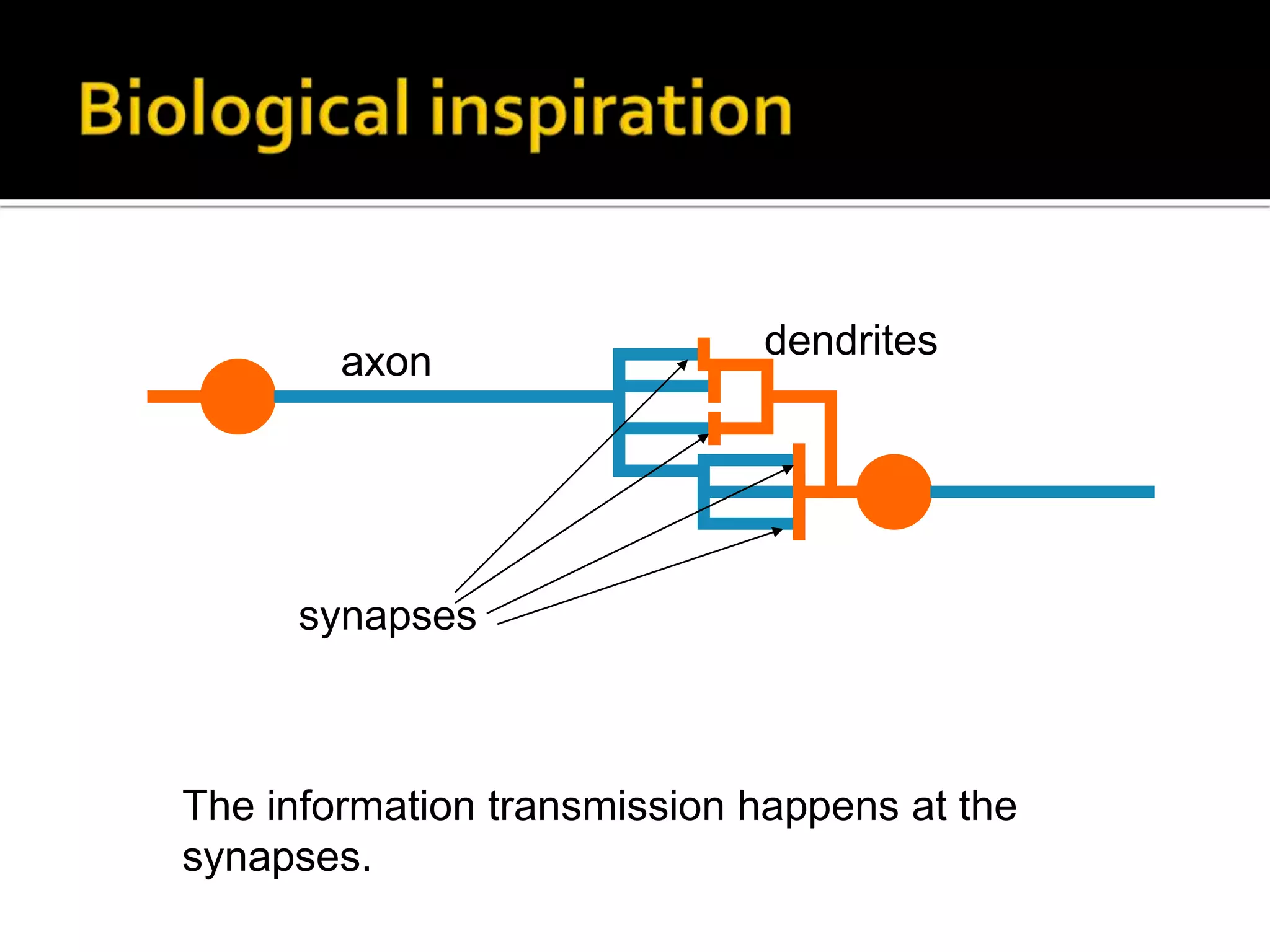
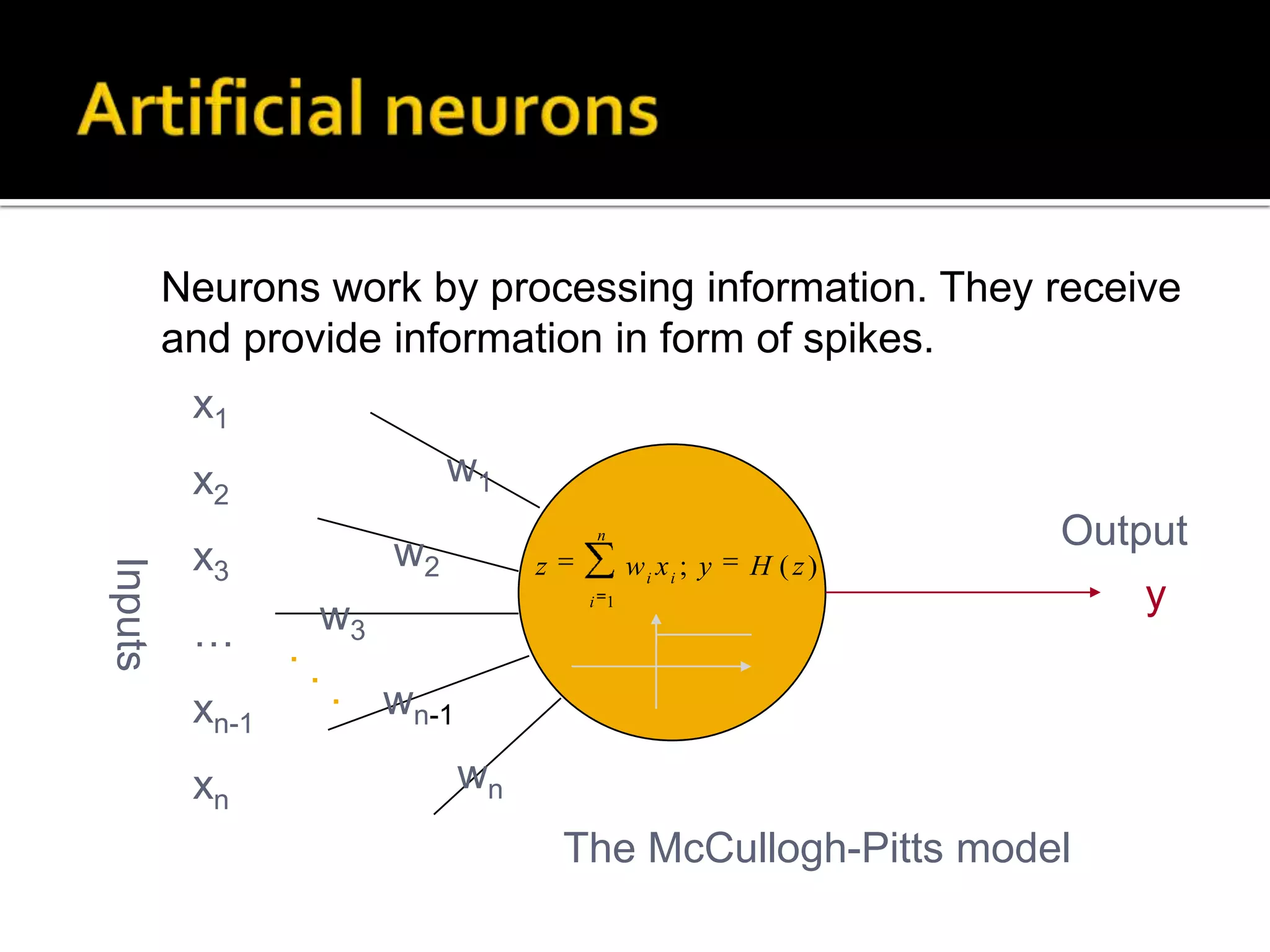
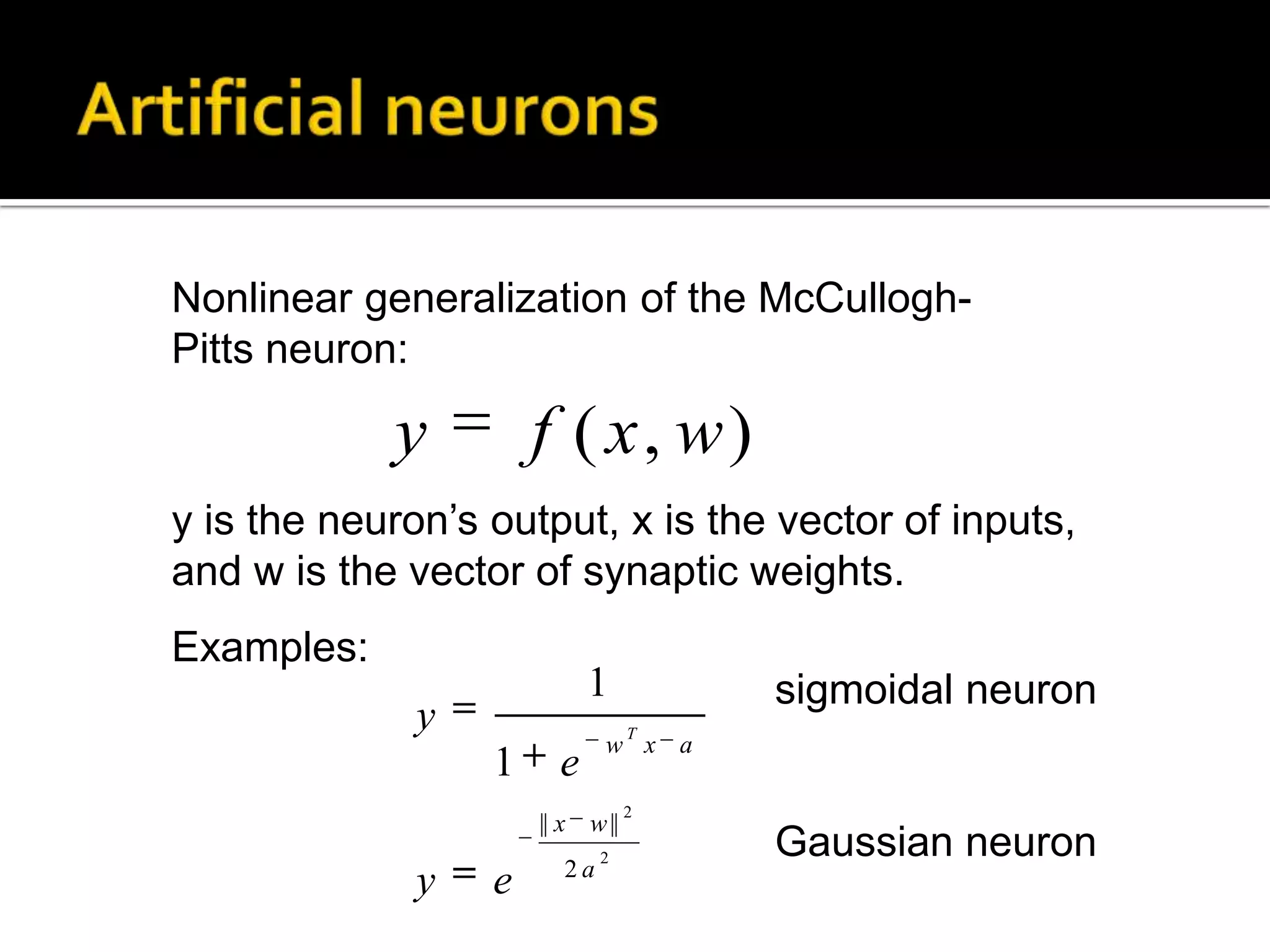
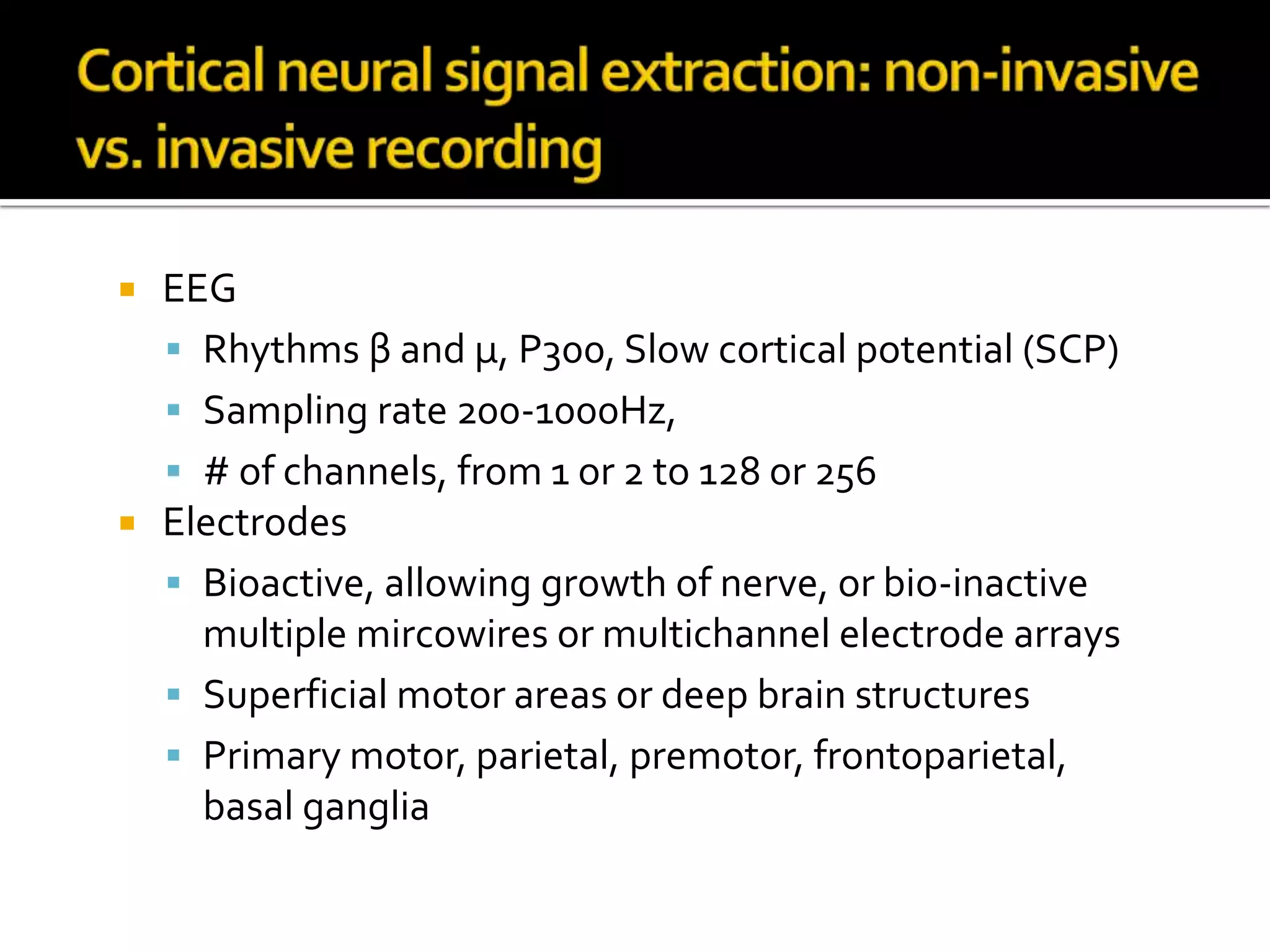
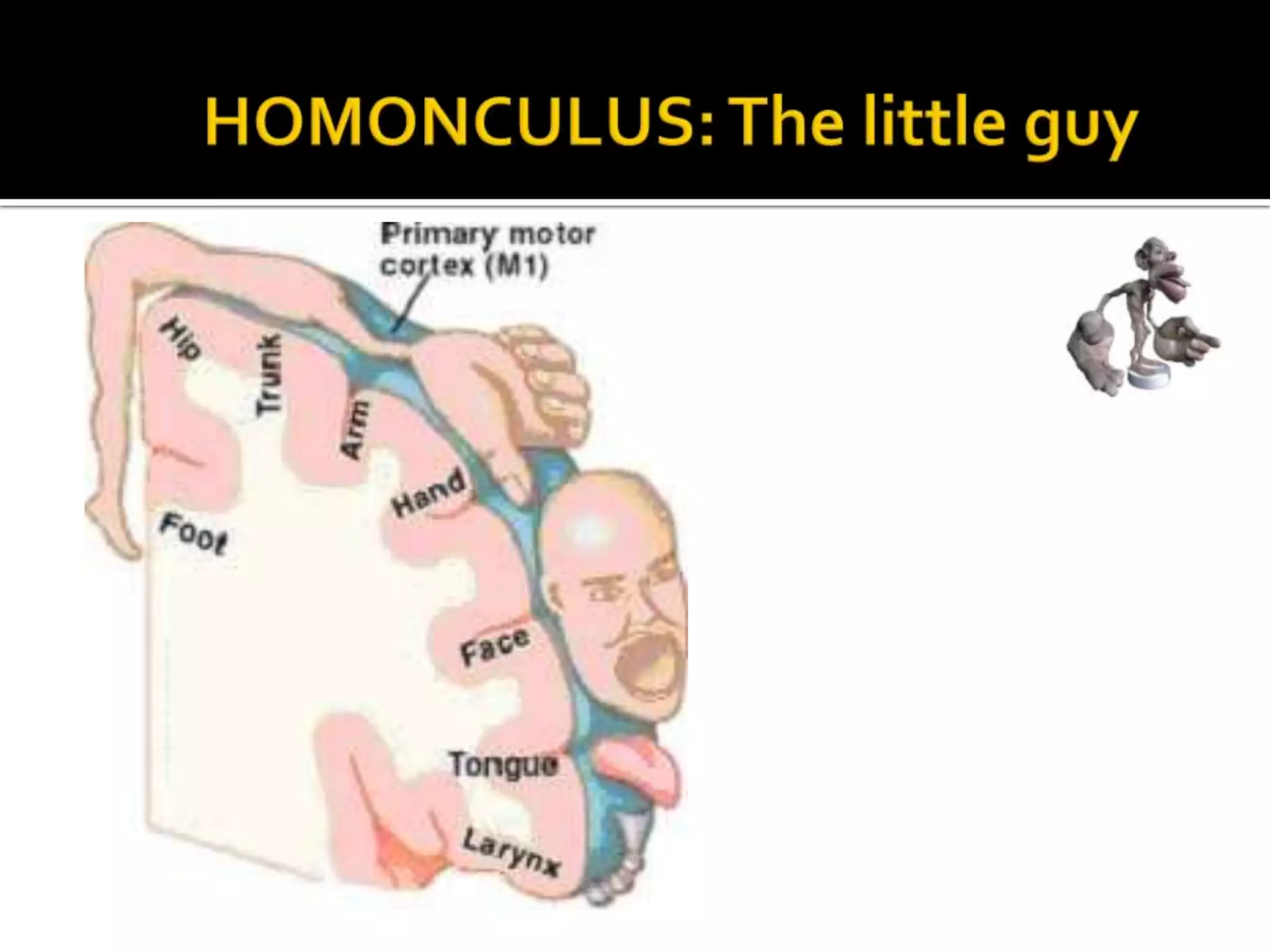
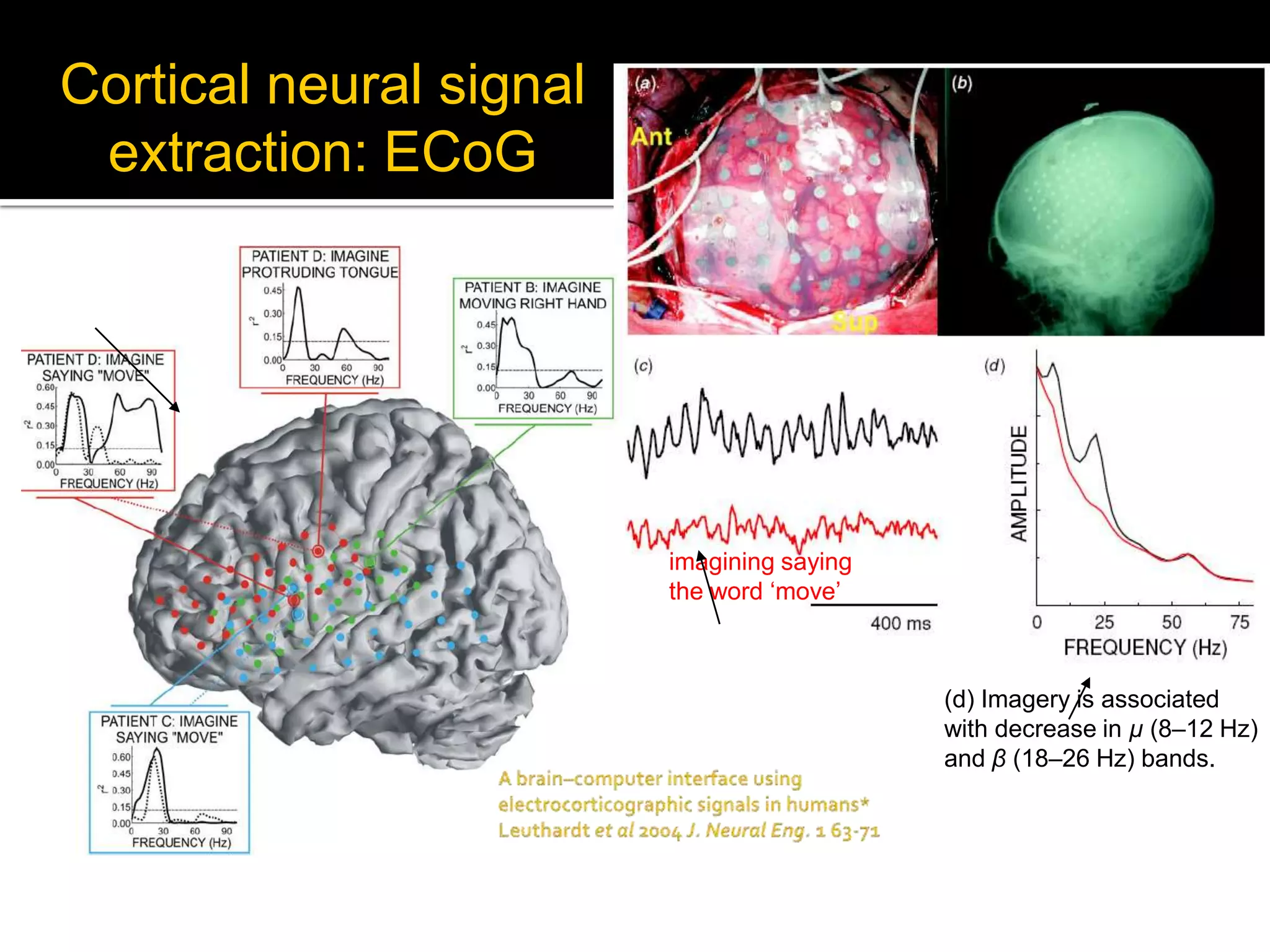
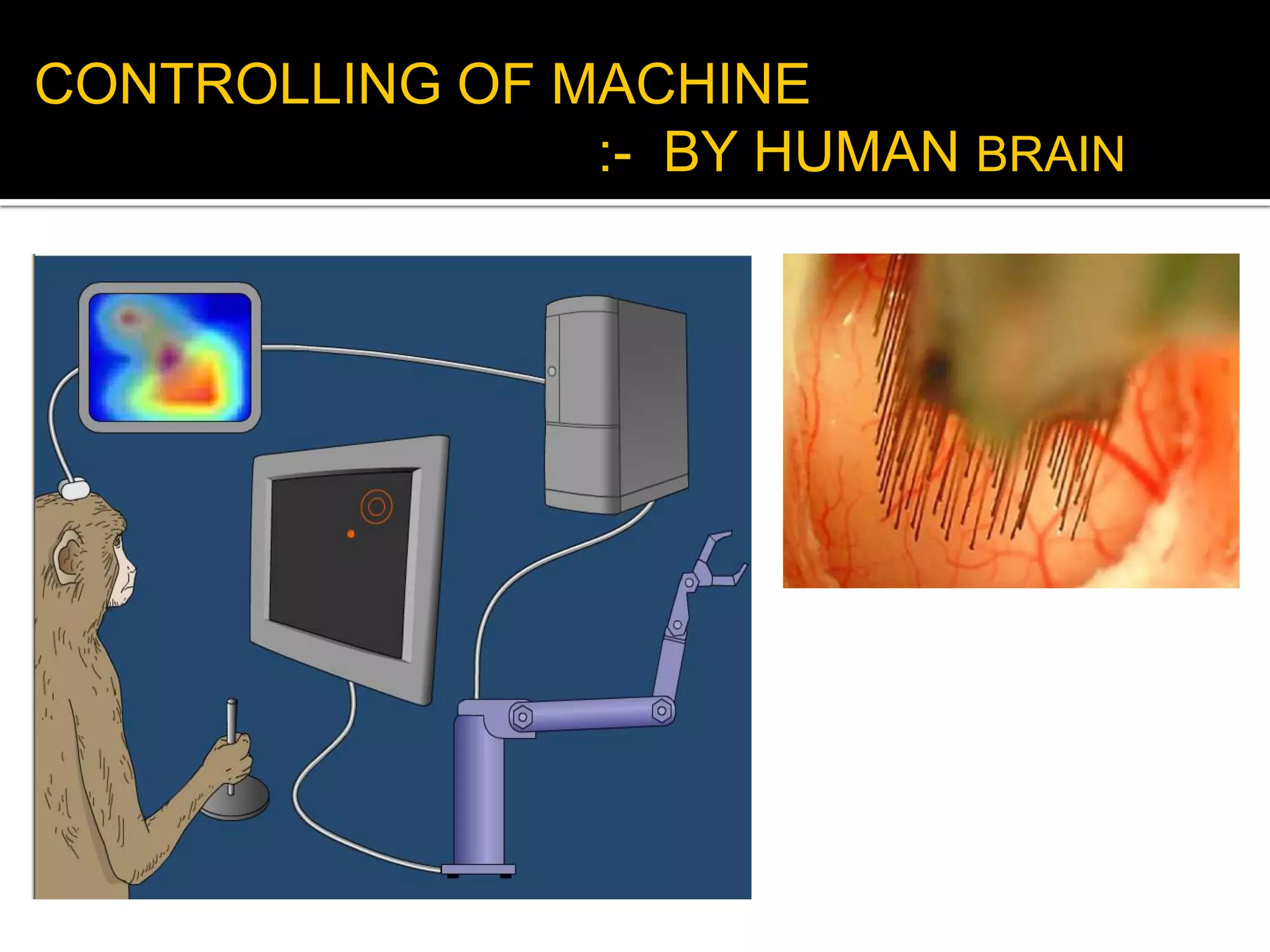
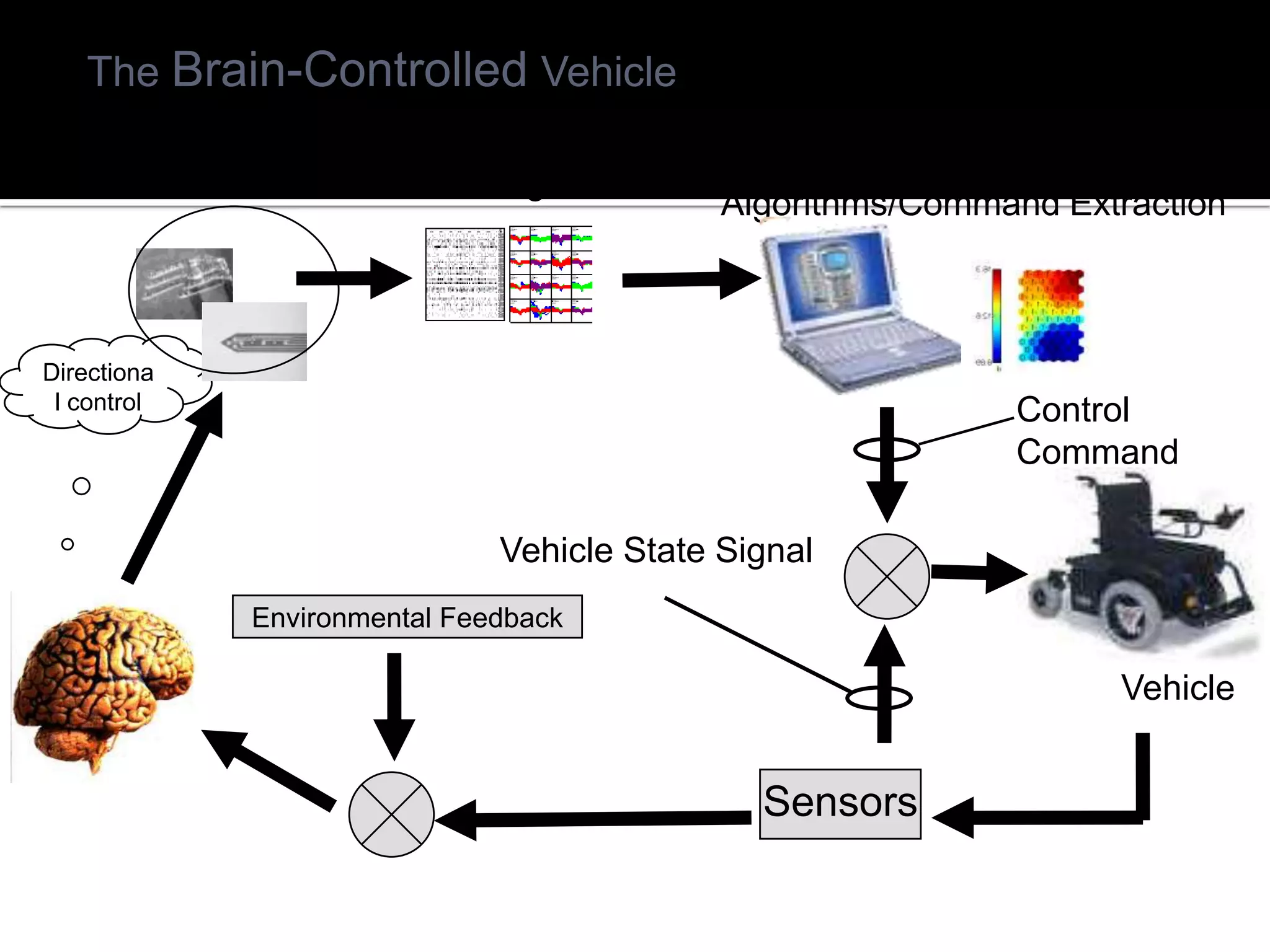
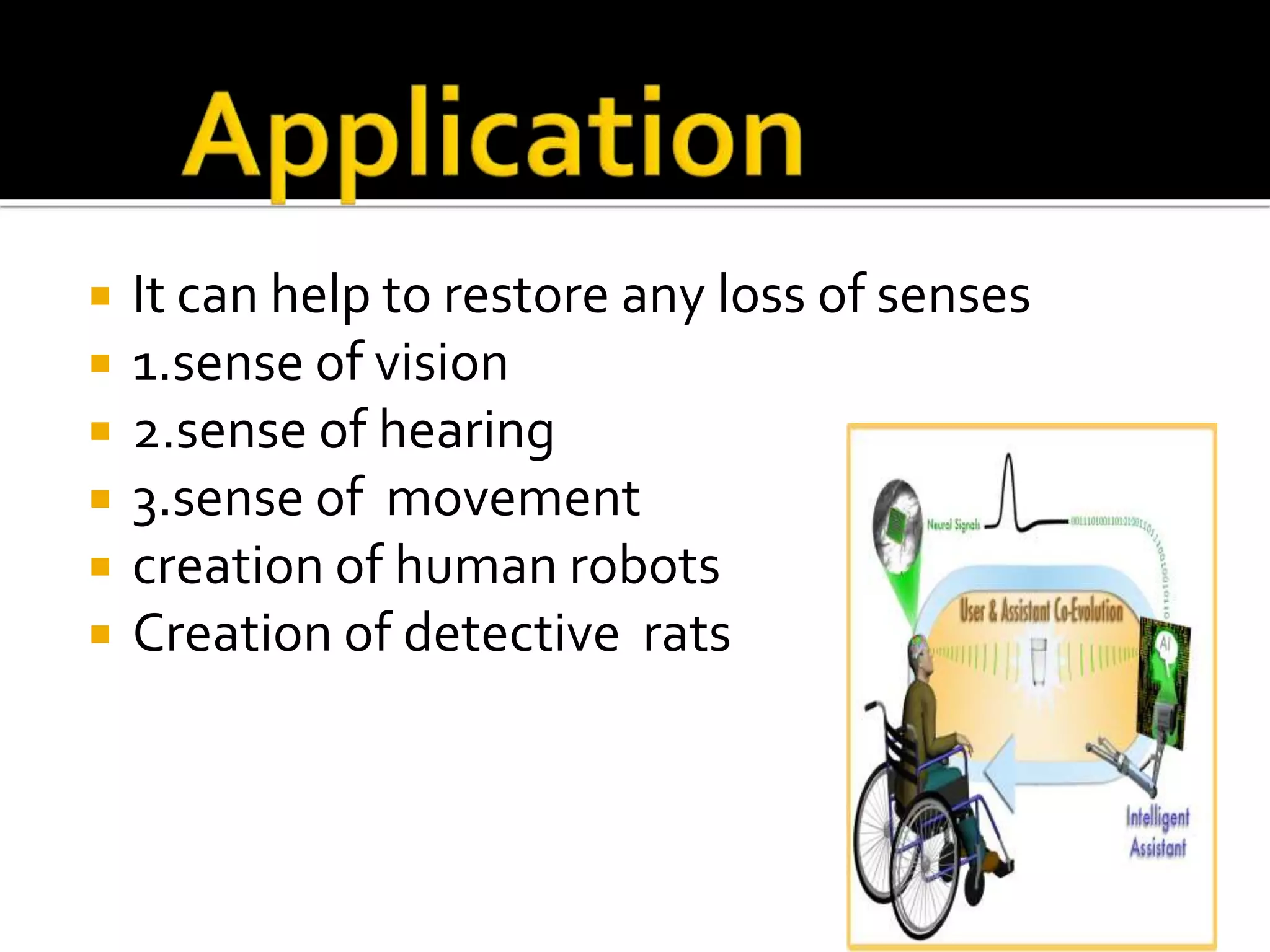
Brain-machine interfaces allow a person's brain to communicate directly with an external device by reading neural signals and translating them into actions. Scientists hope this will allow people with paralysis to control things like motorized wheelchairs or prosthetic limbs using only their thoughts. The BrainGate system is an example of this technology, using a 100 electrode array implanted on the motor cortex to read neural signals and control an external device. Artificial neural networks can model biological neurons and synapses to process and interpret neural signals. Non-invasive methods like EEG have lower resolution than invasive methods like ECoG but avoid surgery. Significant progress has been made in using brain-machine interfaces to restore motor function and develop assistive technologies.