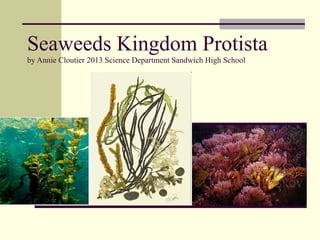
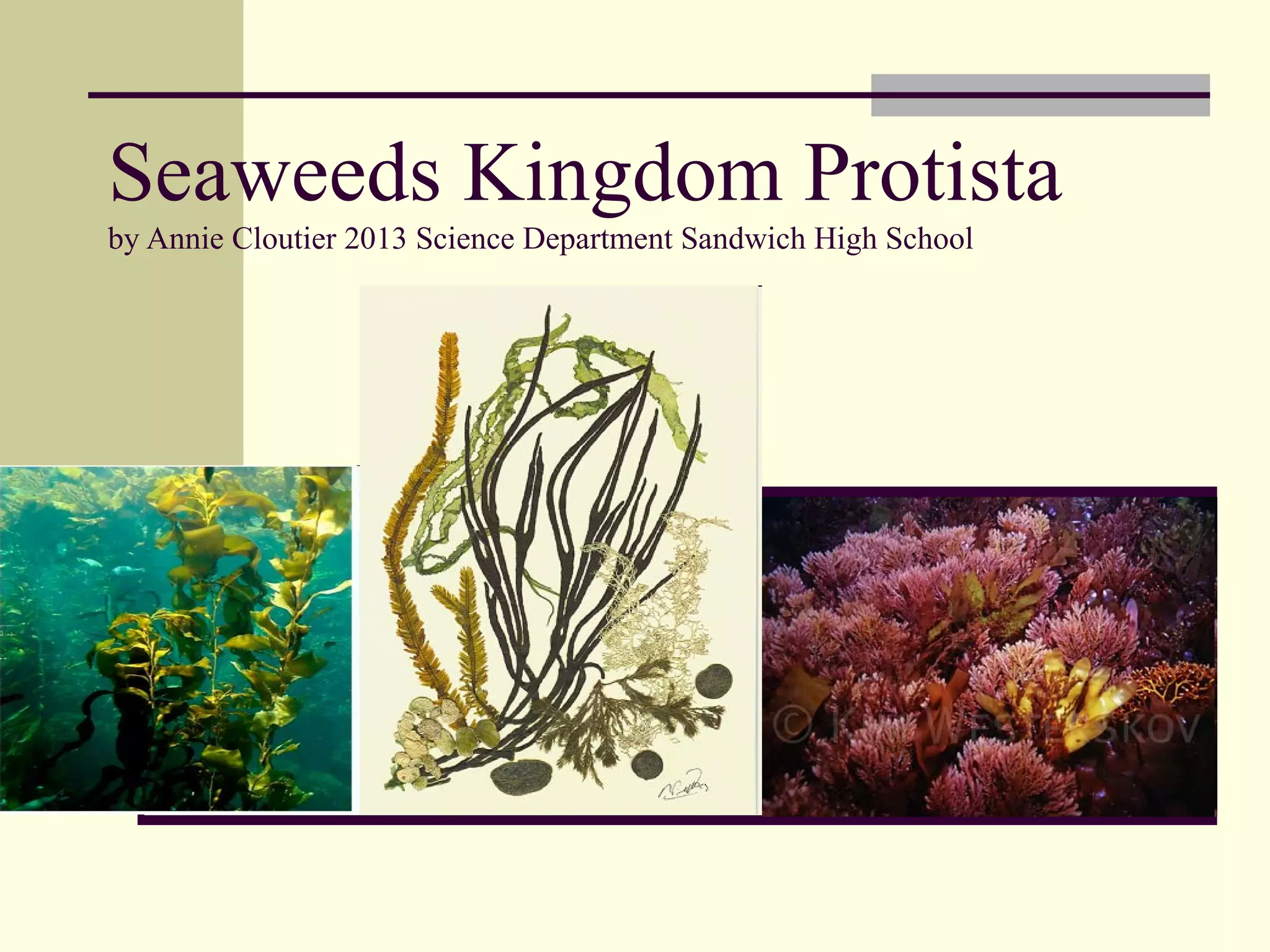
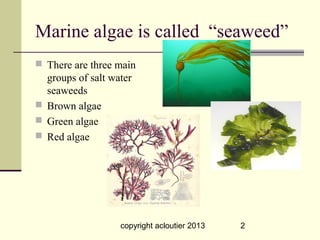
Seaweeds Kingdom Protista
by Annie Cloutier 2013 Science Department Sandwich High School
Marine algae is called “seaweed”
 There are three main
  groups of salt water
  seaweeds
 Brown algae
 Green algae
 Red algae


                   copyright acloutier 2013   2
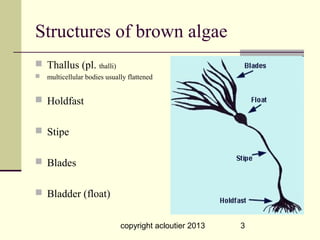
Structures of brown algae
 Thallus (pl. thalli)
   multicellular bodies usually flattened


 Holdfast


 Stipe


 Blades


 Bladder (float)


                              copyright acloutier 2013   3
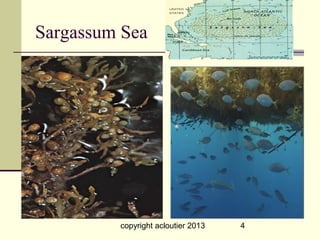
Sargassum Sea


         copyright acloutier 2013   4
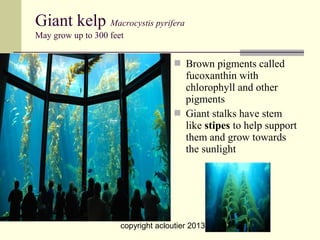
Giant kelp Macrocystis pyrifera
May grow up to 300 feet


                                      Brown pigments called
                                       fucoxanthin with
                                       chlorophyll and other
                                       pigments
                                      Giant stalks have stem
                                       like stipes to help support
                                       them and grow towards
                                       the sunlight


                      copyright acloutier 2013      5
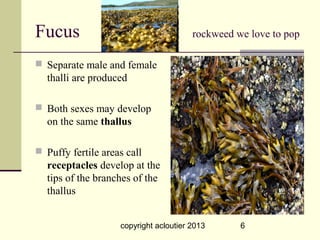
Fucus                                   rockweed we love to pop

 Separate male and female
  thalli are produced

 Both sexes may develop
  on the same thallus

 Puffy fertile areas call
  receptacles develop at the
  tips of the branches of the
  thallus


                    copyright acloutier 2013      6
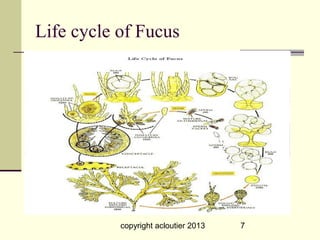
Life cycle of Fucus


           copyright acloutier 2013   7
Gametangia …..                       (algae reproductive structures


 Within every receptacle are dotted pores (visible
  to the naked eye) that open into special spherical
  hollow chambers called conceptacles
 Within a conceptacle gametangia (cell structures
  where gametes are produced) form
 Eight eggs are formed in the oogonium (female
  gametangium)
 Meiosis happens (the process of two successive nuclear divisions
   through which segregation of genes occurs and a single diploid (2n) cell
   becomes four haploid (n) cells )


                         copyright acloutier 2013                 8
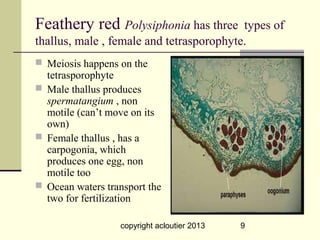
Feathery red Polysiphonia has three       types of
thallus, male , female and tetrasporophyte.
 Meiosis happens on the
  tetrasporophyte
 Male thallus produces
  spermatangium , non
  motile (can’t move on its
  own)
 Female thallus , has a
  carpogonia, which
  produces one egg, non
  motile too
 Ocean waters transport the
  two for fertilization

                  copyright acloutier 2013   9
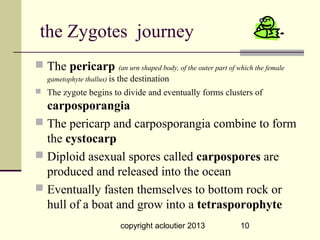
the Zygotes journey
 The pericarp               (an urn shaped body, of the outer part of which the female
   gametophyte thallus) is   the destination
 The zygote begins to divide and eventually forms clusters of
  carposporangia
 The pericarp and carposporangia combine to form
  the cystocarp
 Diploid asexual spores called carpospores are
  produced and released into the ocean
 Eventually fasten themselves to bottom rock or
  hull of a boat and grow into a tetrasporophyte
                              copyright acloutier 2013                 10
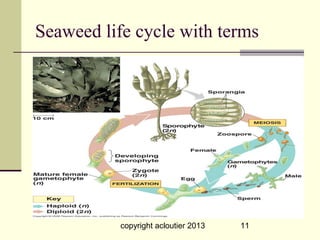
Seaweed life cycle with terms


           copyright acloutier 2013   11
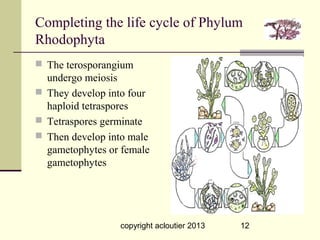
Completing the life cycle of Phylum
Rhodophyta
 The terosporangium
  undergo meiosis
 They develop into four
  haploid tetraspores
 Tetraspores germinate
 Then develop into male
  gametophytes or female
  gametophytes


                 copyright acloutier 2013   12
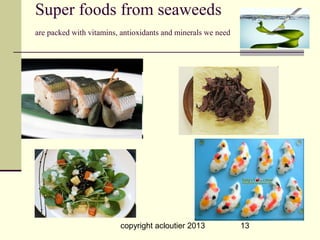
Super foods from seaweeds
are packed with vitamins, antioxidants and minerals we need


                         copyright acloutier 2013             13
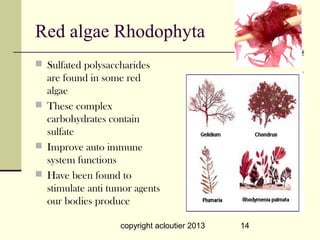
Red algae Rhodophyta
 Sulfated polysaccharides
  are found in some red
  algae
 These complex
  carbohydrates contain
  sulfate
 Improve auto immune
  system functions
 Have been found to
  stimulate anti tumor agents
  our bodies produce

                   copyright acloutier 2013   14
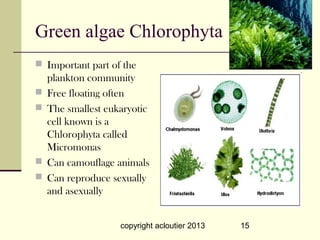
Green algae Chlorophyta
 Important part of the
    plankton community
   Free floating often
   The smallest eukaryotic
    cell known is a
    Chlorophyta called
    Micromonas
   Can camouflage animals
   Can reproduce sexually
    and asexually


                    copyright acloutier 2013   15
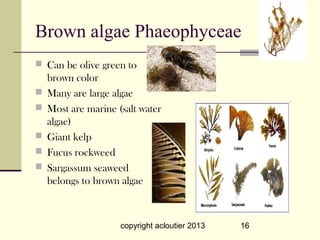
Brown algae Phaeophyceae
 Can be olive green to
    brown color
   Many are large algae
   Most are marine (salt water
    algae)
   Giant kelp
   Fucus rockweed
   Sargassum seaweed
    belongs to brown algae


                     copyright acloutier 2013   16
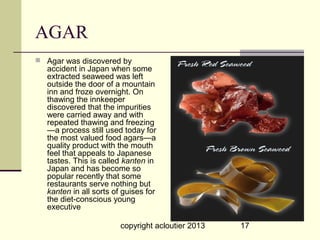
AGAR
 Agar was discovered by
  accident in Japan when some
  extracted seaweed was left
  outside the door of a mountain
  inn and froze overnight. On
  thawing the innkeeper
  discovered that the impurities
  were carried away and with
  repeated thawing and freezing
  —a process still used today for
  the most valued food agars—a
  quality product with the mouth
  feel that appeals to Japanese
  tastes. This is called kanten in
  Japan and has become so
  popular recently that some
  restaurants serve nothing but
  kanten in all sorts of guises for
  the diet-conscious young
  executive

                        copyright acloutier 2013   17
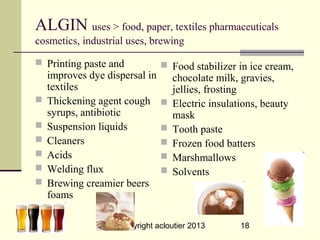
ALGIN uses > food, paper, textiles pharmaceuticals
cosmetics, industrial uses, brewing

 Printing paste and             Food stabilizer in ice cream,
    improves dye dispersal in       chocolate milk, gravies,
    textiles                        jellies, frosting
   Thickening agent cough         Electric insulations, beauty
    syrups, antibiotic              mask
   Suspension liquids             Tooth paste
   Cleaners                       Frozen food batters
   Acids                          Marshmallows
   Welding flux                   Solvents
   Brewing creamier beers
    foams

                    copyright acloutier 2013        18
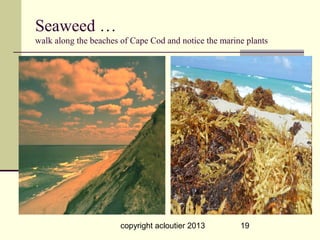
Seaweed …
walk along the beaches of Cape Cod and notice the marine plants


                       copyright acloutier 2013        19

Seaweeds kingdom protista

  • 1.
    Seaweeds Kingdom Protista byAnnie Cloutier 2013 Science Department Sandwich High School
  • 2.
    Marine algae iscalled “seaweed”  There are three main groups of salt water seaweeds  Brown algae  Green algae  Red algae copyright acloutier 2013 2
  • 3.
    Structures of brownalgae  Thallus (pl. thalli)  multicellular bodies usually flattened  Holdfast  Stipe  Blades  Bladder (float) copyright acloutier 2013 3
  • 4.
    Sargassum Sea copyright acloutier 2013 4
  • 5.
    Giant kelp Macrocystispyrifera May grow up to 300 feet  Brown pigments called fucoxanthin with chlorophyll and other pigments  Giant stalks have stem like stipes to help support them and grow towards the sunlight copyright acloutier 2013 5
  • 6.
    Fucus rockweed we love to pop  Separate male and female thalli are produced  Both sexes may develop on the same thallus  Puffy fertile areas call receptacles develop at the tips of the branches of the thallus copyright acloutier 2013 6
  • 7.
    Life cycle ofFucus copyright acloutier 2013 7
  • 8.
    Gametangia ….. (algae reproductive structures  Within every receptacle are dotted pores (visible to the naked eye) that open into special spherical hollow chambers called conceptacles  Within a conceptacle gametangia (cell structures where gametes are produced) form  Eight eggs are formed in the oogonium (female gametangium)  Meiosis happens (the process of two successive nuclear divisions through which segregation of genes occurs and a single diploid (2n) cell becomes four haploid (n) cells ) copyright acloutier 2013 8
  • 9.
    Feathery red Polysiphoniahas three types of thallus, male , female and tetrasporophyte.  Meiosis happens on the tetrasporophyte  Male thallus produces spermatangium , non motile (can’t move on its own)  Female thallus , has a carpogonia, which produces one egg, non motile too  Ocean waters transport the two for fertilization copyright acloutier 2013 9
  • 10.
    the Zygotes journey The pericarp (an urn shaped body, of the outer part of which the female gametophyte thallus) is the destination  The zygote begins to divide and eventually forms clusters of carposporangia  The pericarp and carposporangia combine to form the cystocarp  Diploid asexual spores called carpospores are produced and released into the ocean  Eventually fasten themselves to bottom rock or hull of a boat and grow into a tetrasporophyte copyright acloutier 2013 10
  • 11.
    Seaweed life cyclewith terms copyright acloutier 2013 11
  • 12.
    Completing the lifecycle of Phylum Rhodophyta  The terosporangium undergo meiosis  They develop into four haploid tetraspores  Tetraspores germinate  Then develop into male gametophytes or female gametophytes copyright acloutier 2013 12
  • 13.
    Super foods fromseaweeds are packed with vitamins, antioxidants and minerals we need copyright acloutier 2013 13
  • 14.
    Red algae Rhodophyta Sulfated polysaccharides are found in some red algae  These complex carbohydrates contain sulfate  Improve auto immune system functions  Have been found to stimulate anti tumor agents our bodies produce copyright acloutier 2013 14
  • 15.
    Green algae Chlorophyta Important part of the plankton community  Free floating often  The smallest eukaryotic cell known is a Chlorophyta called Micromonas  Can camouflage animals  Can reproduce sexually and asexually copyright acloutier 2013 15
  • 16.
    Brown algae Phaeophyceae Can be olive green to brown color  Many are large algae  Most are marine (salt water algae)  Giant kelp  Fucus rockweed  Sargassum seaweed belongs to brown algae copyright acloutier 2013 16
  • 17.
    AGAR  Agar wasdiscovered by accident in Japan when some extracted seaweed was left outside the door of a mountain inn and froze overnight. On thawing the innkeeper discovered that the impurities were carried away and with repeated thawing and freezing —a process still used today for the most valued food agars—a quality product with the mouth feel that appeals to Japanese tastes. This is called kanten in Japan and has become so popular recently that some restaurants serve nothing but kanten in all sorts of guises for the diet-conscious young executive copyright acloutier 2013 17
  • 18.
    ALGIN uses >food, paper, textiles pharmaceuticals cosmetics, industrial uses, brewing  Printing paste and  Food stabilizer in ice cream, improves dye dispersal in chocolate milk, gravies, textiles jellies, frosting  Thickening agent cough  Electric insulations, beauty syrups, antibiotic mask  Suspension liquids  Tooth paste  Cleaners  Frozen food batters  Acids  Marshmallows  Welding flux  Solvents  Brewing creamier beers foams copyright acloutier 2013 18
  • 19.
    Seaweed … walk alongthe beaches of Cape Cod and notice the marine plants copyright acloutier 2013 19