Hydrocolloids and its
application in coating

NARESH KUMAR MEHTA
PhD SCHOLAR
A hydrocolloid is defined as a colloid system wherein
the colloid particles are dispersed in water.

Hydrocolloids are high molecular weight hydrophilic
biopolymer used as functional ingredient in the foods
One of most extensively used additive in the food industry
Sources of hydrocolloids
Basically it is a polysaccharide
• Plants- starch (Tapioca, Barley, rice )
• Sea weeds (carageenan)
• Microbes (xanthan gum)
• Plant exudates (gum, gum Arabic)
• Modified biopolymer made by chemical
treatment of cellulose
Hydrocolloids as additive in food Industry
•Starch
•Agar
•Pectin
•Alginates
•Carrageenan
•Guar gum
•Gum Arabic
•Xanthan gum
•Cellulose derivatives-CMC
properties
• Have neutral taste and utilized in small quantities
• edible and Non toxic
• They provides an unctuous body to fat reduced products
• Biocompatibility, non polluting, low cost

• Enhance the bulk of the product while improving many functional
properties
• Barrier properties
starch
Source-corn, wheat, barley, potato and
tapioca
It is polymer of amylose and amylopectin
(25:75)

Gelatinization temperature is

55-75 ⁰C

Use Of Starch- Sausage, battered And
Breaded Products, noodles
Pectin
•It is polymer of galacturonic acid
•Main source –peels of apple (15%) and citrus fruits (30%)
•It is good gelling and solidifying agent
•Uses-jem and jellies
Sodium Alginate
•Sodium alginate is an anionic polysaccharide
•extracted principally from the giant kelp Macrocystis pyrifera as alginic
acid and neutralized to the sodium salt.
• It is soluble in hot or cold water and gives somewhat hazy solutions of
neutral pH.
Guar Gum
Guar gum is a nonionic
source- endosperm of legume Cyamopsis tetragonolobus
It gives neutral pH Solution in cold water

Xanthan Gum
•Xanthan gum is an anionic polysaccharide derived from the fermentation
of the plant bacteria Xanthomonas compestris
•It is soluble in hot or cold water and gives visually hazy, neutral pH
solutions
Carrageenan
•Carrageenan is an anionic polysaccharide
•extracted principally from the red seaweed Chondrus crispus
•Carrageenan is available in sodium, potassium, magnesium,calcium
and mixed cation forms
•Carrageenan solutions are typically clear, and of alkaline ph

Gum Arabic (Acacia)
• Gum arabic is an anionic polysaccharide collected as the

dried exudate from The acacia tree (Acacia senegal)
• it is soluble in hot or cold water and gives clear solutions of
neutral to acidic pH.
Hydrocolloids as additives
Polysaccharides and proteins are food hydrocolloids with an
important role in the structure, stability and functional
properties of several processed foods.

Protein carbohydrate interactions determine the functional
properties in foods where proteins are the major ingredients,
such as meat and fish processed products.
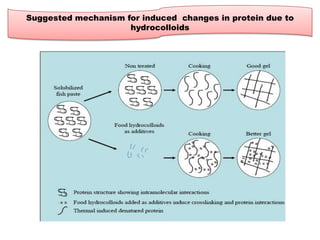
•Fish Protein solublised by salt and water forms a
continuous matrix
•Some additive can be entrapped within this matrix filling
the gel and exerting their functional effect in restructured
products by
1. Influencing the formation of continuous surimi gel
matrix during thermal inducing gelation
2. Modifying the viscosity, mobility and other properties
of the liquid phase
3. Influencing the appearance and texture of the gel i.e.
particle size distribution, rheological properties and
relative volume fraction of the gel.
Suggested mechanism for induced changes in protein due to
hydrocolloids
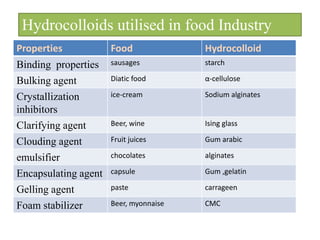
Hydrocolloids utilised in food Industry
Properties

Food

Hydrocolloid

Binding properties

sausages

starch

Bulking agent
Crystallization
inhibitors
Clarifying agent
Clouding agent
emulsifier
Encapsulating agent
Gelling agent
Foam stabilizer

Diatic food

α-cellulose

ice-cream

Sodium alginates

Beer, wine

Ising glass

Fruit juices

Gum arabic

chocolates

alginates

capsule

Gum ,gelatin

paste

carrageen

Beer, myonnaise

CMC
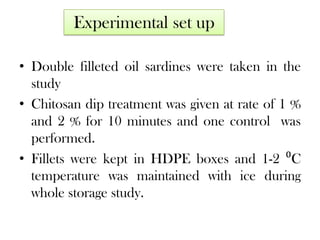
Experimental set up
• Double filleted oil sardines were taken in the
study
• Chitosan dip treatment was given at rate of 1 %
and 2 % for 10 minutes and one control was
performed.
• Fillets were kept in HDPE boxes and 1-2 ⁰C
temperature was maintained with ice during
whole storage study.
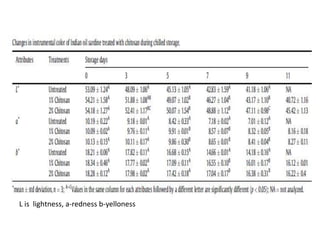
L is lightness, a-redness b-yelloness
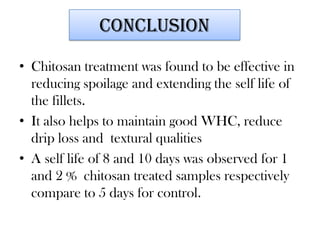
conclusion
• Chitosan treatment was found to be effective in
reducing spoilage and extending the self life of
the fillets.
• It also helps to maintain good WHC, reduce
drip loss and textural qualities
• A self life of 8 and 10 days was observed for 1
and 2 % chitosan treated samples respectively
compare to 5 days for control.
Hydrocolloid for meat and fish

Hydrocolloid for meat and fish

  • 1.
    Hydrocolloids and its applicationin coating NARESH KUMAR MEHTA PhD SCHOLAR
  • 2.
    A hydrocolloid isdefined as a colloid system wherein the colloid particles are dispersed in water. Hydrocolloids are high molecular weight hydrophilic biopolymer used as functional ingredient in the foods One of most extensively used additive in the food industry
  • 3.
    Sources of hydrocolloids Basicallyit is a polysaccharide • Plants- starch (Tapioca, Barley, rice ) • Sea weeds (carageenan) • Microbes (xanthan gum) • Plant exudates (gum, gum Arabic) • Modified biopolymer made by chemical treatment of cellulose
  • 4.
    Hydrocolloids as additivein food Industry •Starch •Agar •Pectin •Alginates •Carrageenan •Guar gum •Gum Arabic •Xanthan gum •Cellulose derivatives-CMC
  • 5.
    properties • Have neutraltaste and utilized in small quantities • edible and Non toxic • They provides an unctuous body to fat reduced products • Biocompatibility, non polluting, low cost • Enhance the bulk of the product while improving many functional properties • Barrier properties
  • 6.
    starch Source-corn, wheat, barley,potato and tapioca It is polymer of amylose and amylopectin (25:75) Gelatinization temperature is 55-75 ⁰C Use Of Starch- Sausage, battered And Breaded Products, noodles
  • 7.
    Pectin •It is polymerof galacturonic acid •Main source –peels of apple (15%) and citrus fruits (30%) •It is good gelling and solidifying agent •Uses-jem and jellies Sodium Alginate •Sodium alginate is an anionic polysaccharide •extracted principally from the giant kelp Macrocystis pyrifera as alginic acid and neutralized to the sodium salt. • It is soluble in hot or cold water and gives somewhat hazy solutions of neutral pH.
  • 8.
    Guar Gum Guar gumis a nonionic source- endosperm of legume Cyamopsis tetragonolobus It gives neutral pH Solution in cold water Xanthan Gum •Xanthan gum is an anionic polysaccharide derived from the fermentation of the plant bacteria Xanthomonas compestris •It is soluble in hot or cold water and gives visually hazy, neutral pH solutions
  • 9.
    Carrageenan •Carrageenan is ananionic polysaccharide •extracted principally from the red seaweed Chondrus crispus •Carrageenan is available in sodium, potassium, magnesium,calcium and mixed cation forms •Carrageenan solutions are typically clear, and of alkaline ph Gum Arabic (Acacia) • Gum arabic is an anionic polysaccharide collected as the dried exudate from The acacia tree (Acacia senegal) • it is soluble in hot or cold water and gives clear solutions of neutral to acidic pH.
  • 10.
    Hydrocolloids as additives Polysaccharidesand proteins are food hydrocolloids with an important role in the structure, stability and functional properties of several processed foods. Protein carbohydrate interactions determine the functional properties in foods where proteins are the major ingredients, such as meat and fish processed products.
  • 11.
    •Fish Protein solublisedby salt and water forms a continuous matrix •Some additive can be entrapped within this matrix filling the gel and exerting their functional effect in restructured products by 1. Influencing the formation of continuous surimi gel matrix during thermal inducing gelation 2. Modifying the viscosity, mobility and other properties of the liquid phase 3. Influencing the appearance and texture of the gel i.e. particle size distribution, rheological properties and relative volume fraction of the gel.
  • 12.
    Suggested mechanism forinduced changes in protein due to hydrocolloids
  • 13.
    Hydrocolloids utilised infood Industry Properties Food Hydrocolloid Binding properties sausages starch Bulking agent Crystallization inhibitors Clarifying agent Clouding agent emulsifier Encapsulating agent Gelling agent Foam stabilizer Diatic food α-cellulose ice-cream Sodium alginates Beer, wine Ising glass Fruit juices Gum arabic chocolates alginates capsule Gum ,gelatin paste carrageen Beer, myonnaise CMC
  • 15.
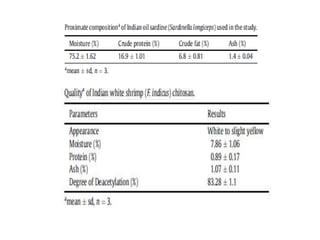
    Experimental set up •Double filleted oil sardines were taken in the study • Chitosan dip treatment was given at rate of 1 % and 2 % for 10 minutes and one control was performed. • Fillets were kept in HDPE boxes and 1-2 ⁰C temperature was maintained with ice during whole storage study.
  • 20.
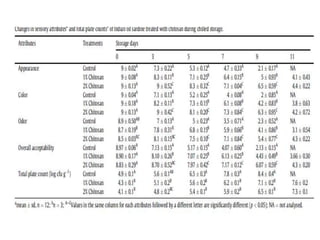
    L is lightness,a-redness b-yelloness
  • 21.
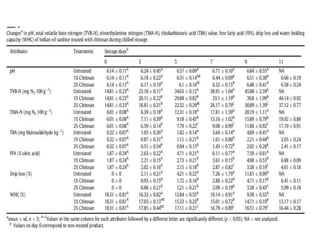
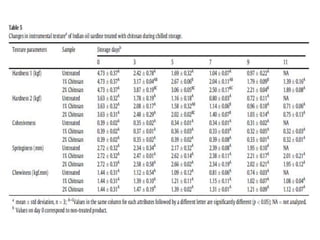
    conclusion • Chitosan treatmentwas found to be effective in reducing spoilage and extending the self life of the fillets. • It also helps to maintain good WHC, reduce drip loss and textural qualities • A self life of 8 and 10 days was observed for 1 and 2 % chitosan treated samples respectively compare to 5 days for control.

Editor's Notes

  • #3 A colloid is a substance microscopically dispersed evenly throughout another substance.A colloidal system consists of two separate phases: a dispersed phase (or internal phase) and a continuous phase (or dispersion medium). A colloidal system may be solid, liquid, or gaseous.