





Embed presentation
Downloaded 33 times


The document provides an in-depth analysis of errors in analytical chemistry, detailing concepts such as error, accuracy, precision, sources of error, and methods to minimize them. It emphasizes the distinction between determinate and indeterminate errors and discusses various statistical methods, including the Q test, for handling data rejection. Additionally, the document outlines the significance of significant figures and rounding of figures in reporting analytical results.


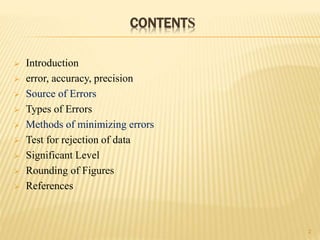
Introduction to errors in pharmaceutical analytical chemistry and contents covered in the presentation.
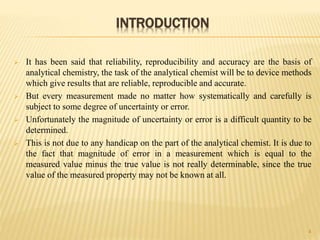
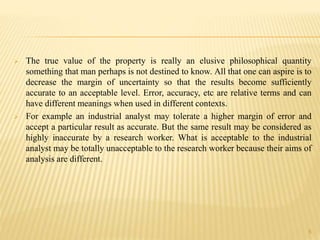
The significance of reliability, reproducibility, and accuracy, and the elusive nature of true measurement values.
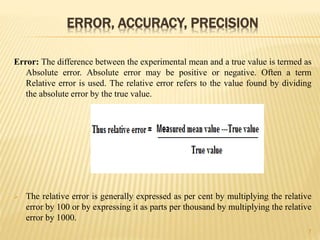
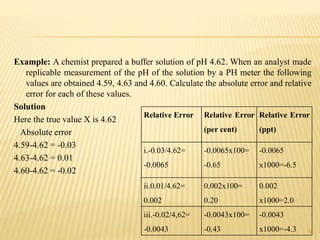
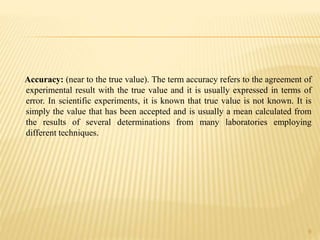
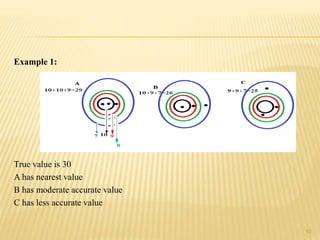
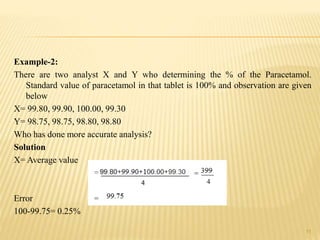
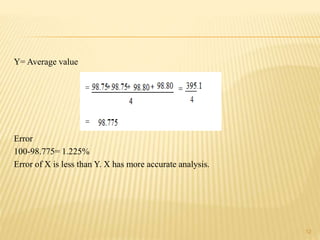
Detailed definitions and examples of error types including absolute, relative error, and illustrations of accuracy in measurements.
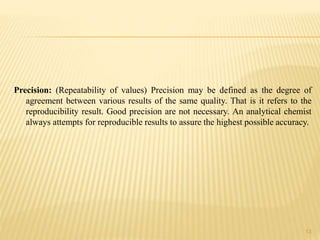
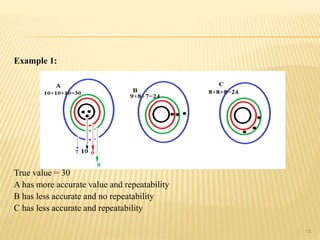
Definition of precision as repeatability and examples demonstrating varying levels of accuracy and repeatability among measurements.
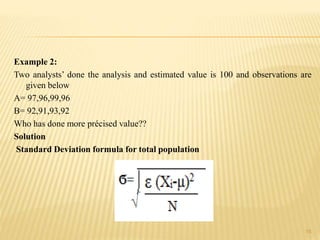
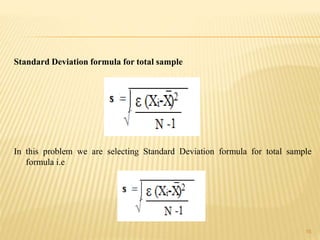
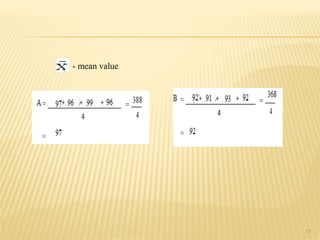
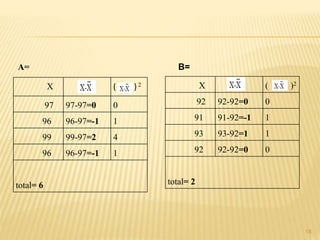
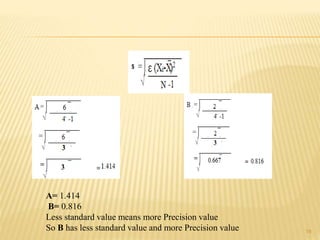
Methods to calculate standard deviation to evaluate precision among different sets of measurements.
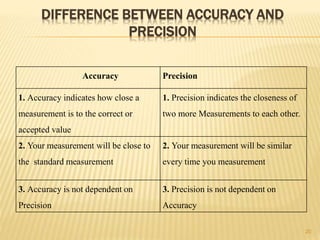
Comparison of accuracy and precision with definitions and their interdependent relationships.
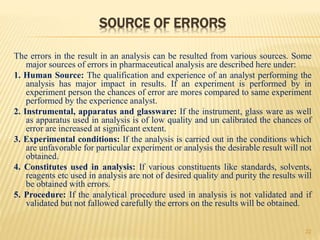
Various sources of analytical errors in pharmaceutical analysis including human, instrumental, and procedural errors.
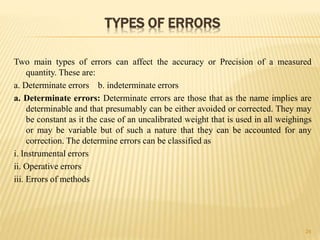
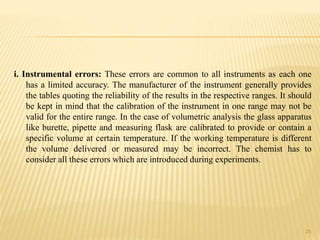
Classification of errors into determinate and indeterminate errors, along with examples of their implications in measurements.
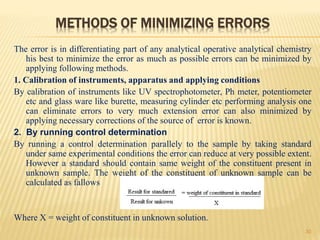
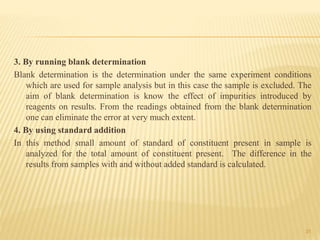
Strategies to minimize errors including calibration, control determinations, and methods such as standard addition.
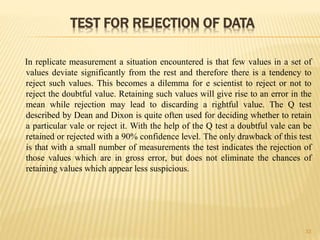
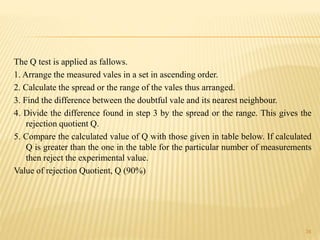
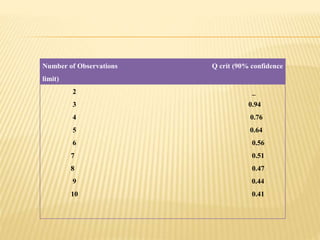
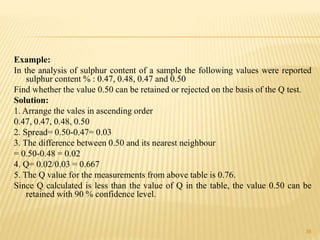
Criteria for rejecting doubtful measurement data using the Q test for confidence levels.
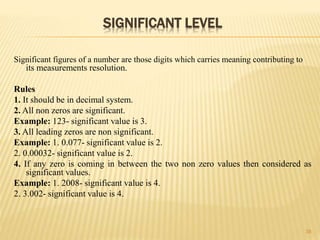
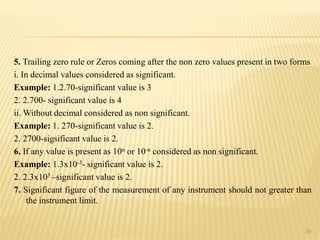
Rules governing significant figures in measurements and their importance in maintaining measurement resolution.
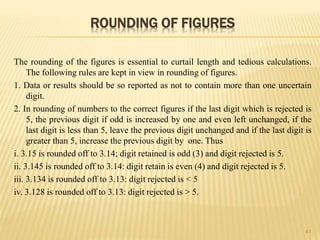
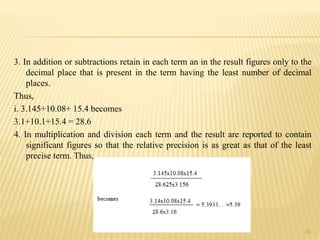
Guidelines on rounding figures in calculations to maintain appropriate precision and accuracy.
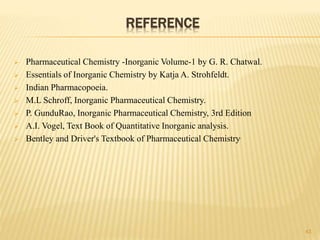
List of essential references related to pharmaceutical inorganic chemistry for further reading.
Closing remarks on the topic presented, reinforcing the importance of understanding errors in analytical chemistry.