CVS - Miscellaneous
CSBR.Prasad, MD.,
DEC-2014-CSBRP
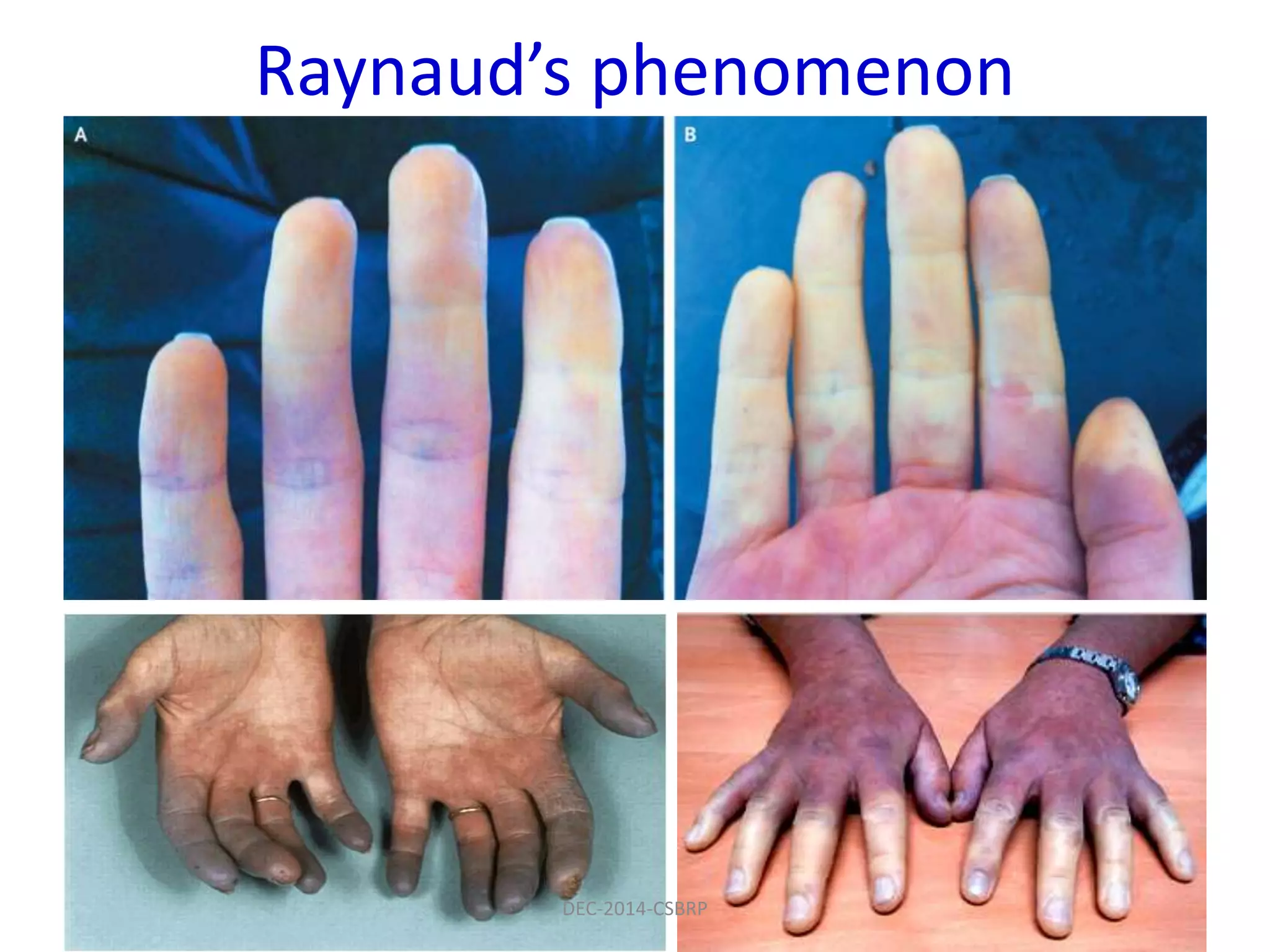
Raynaud’s phenomenon (RP)
• Paroxysmal exaggerated vasoconstriction of
digital arteries and arterioles
• Results in cyanosis and pallor
• Sometimes may affect: Nose, ear and lips
• Types:
– Primary RP
• Response to cold / emotional stress
• CF: Atrophic changes may develop in the course of time
– Secondary RP
• SLE, Scleroderma, Buerger’s disease
DEC-2014-CSBRP
Raynaud’s phenomenon
DEC-2014-CSBRP
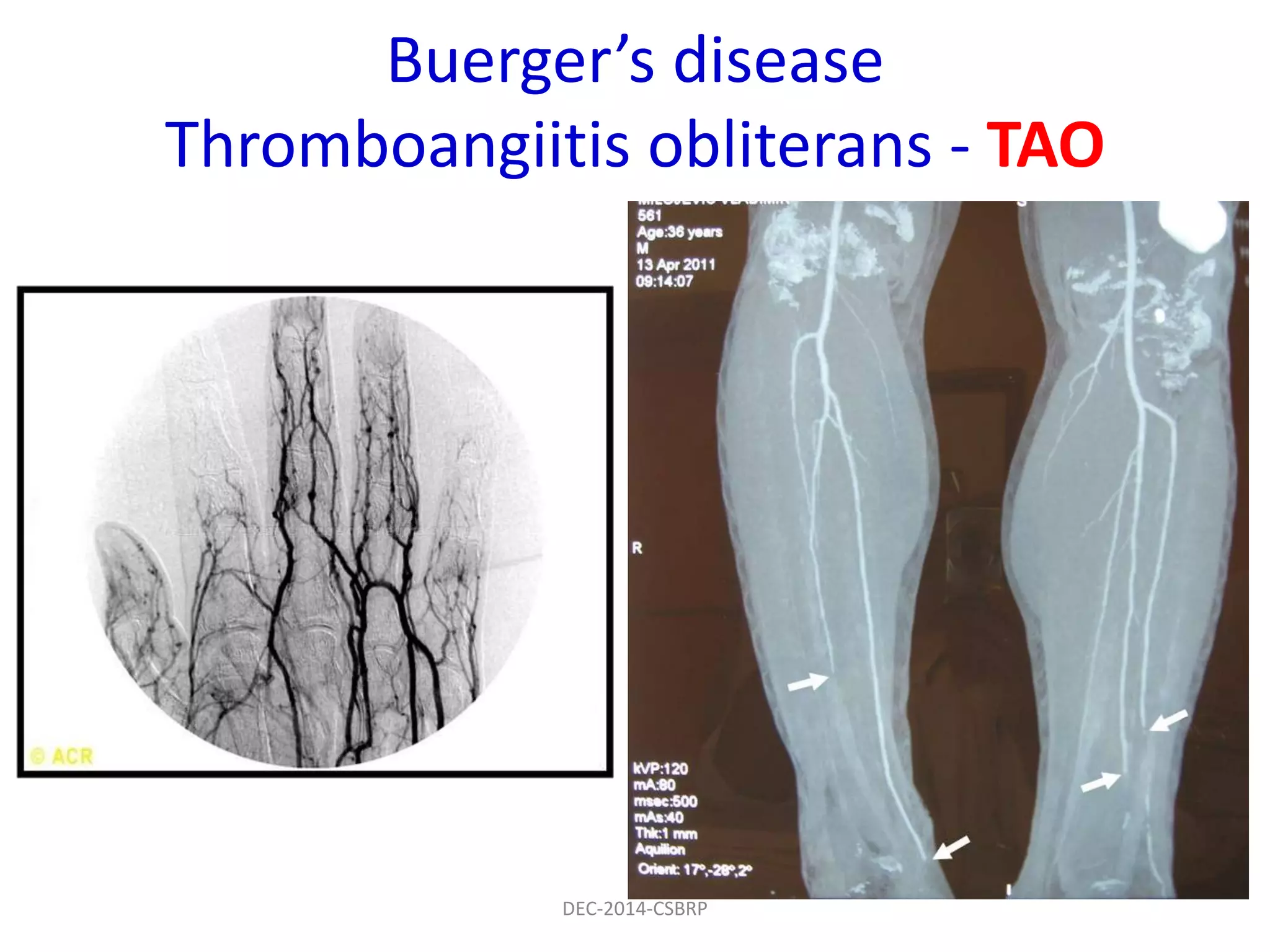
Buerger’s disease
Thromboangiitis obliterans - TAO
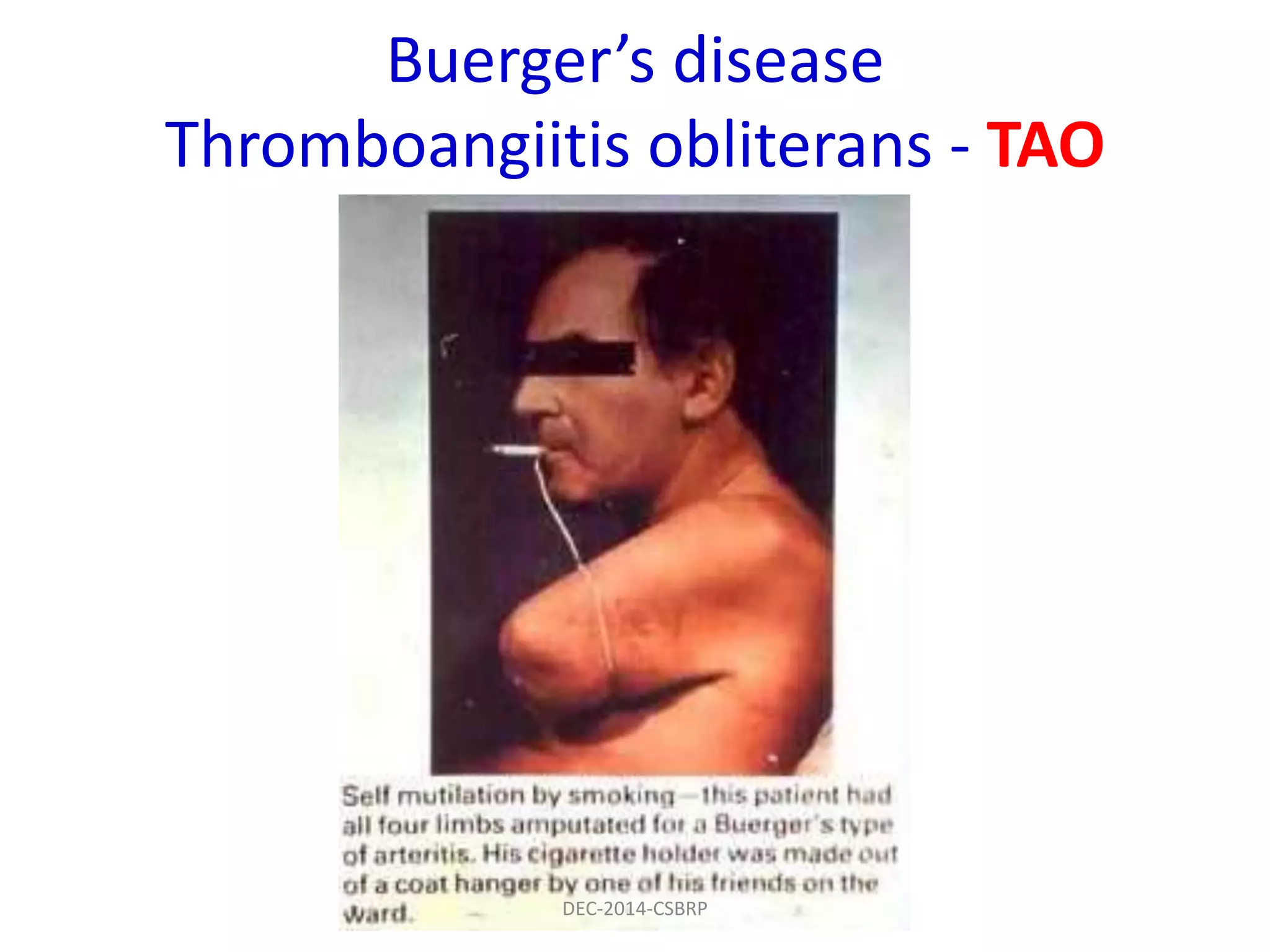
• Def: It’s segmental, thrombosing arteritis
affecting small & medium sized vessels of acute
or chronic nature
• Men <40yrs
• Smokers
• Arteries: Tibial, femoral, peroneal & popleteal
• Upper limb involvement – 70%
• More common in Asians than in Western
countries
DEC-2014-CSBRP
Buerger’s disease
Thromboangiitis obliterans - TAO
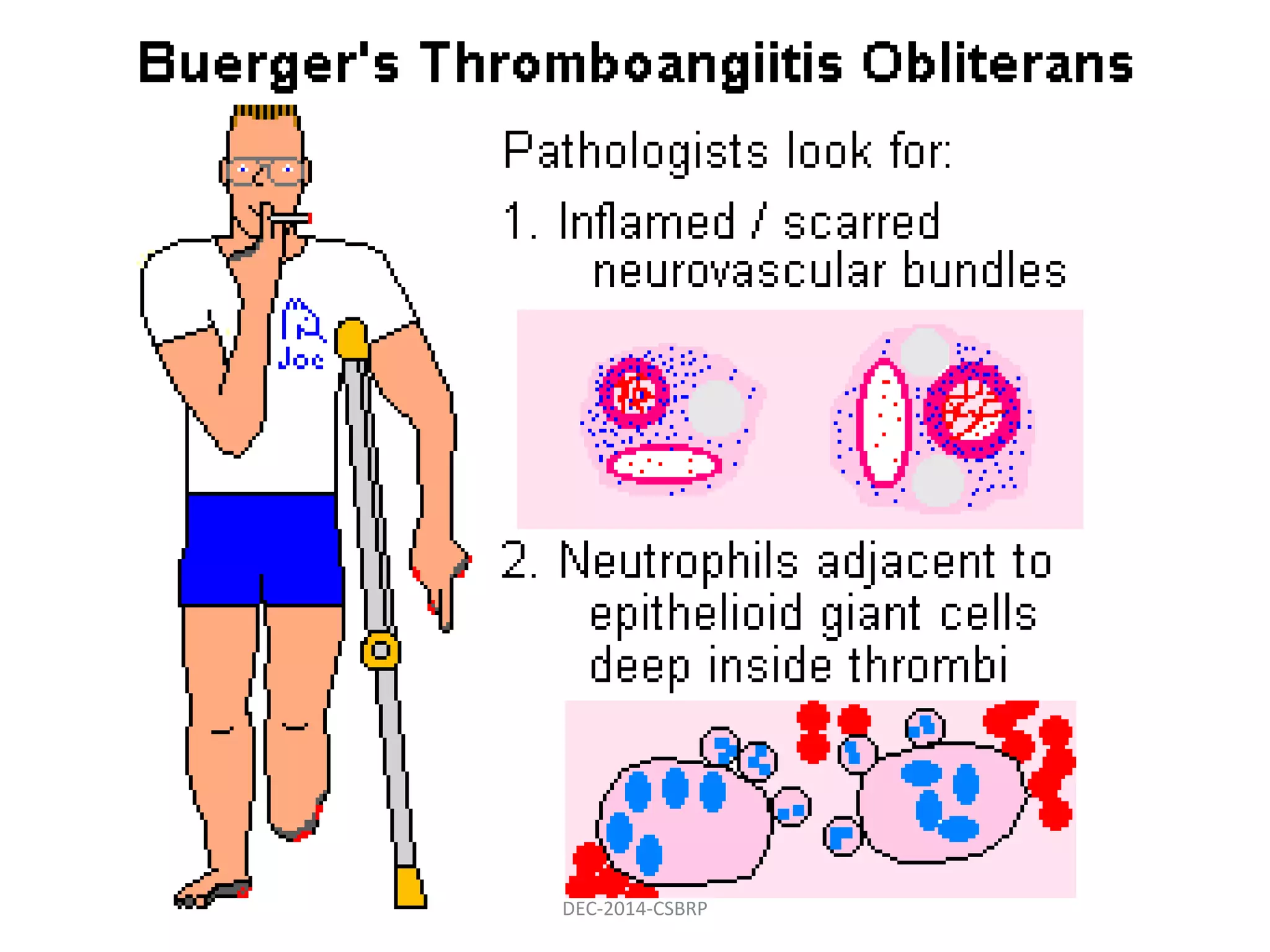
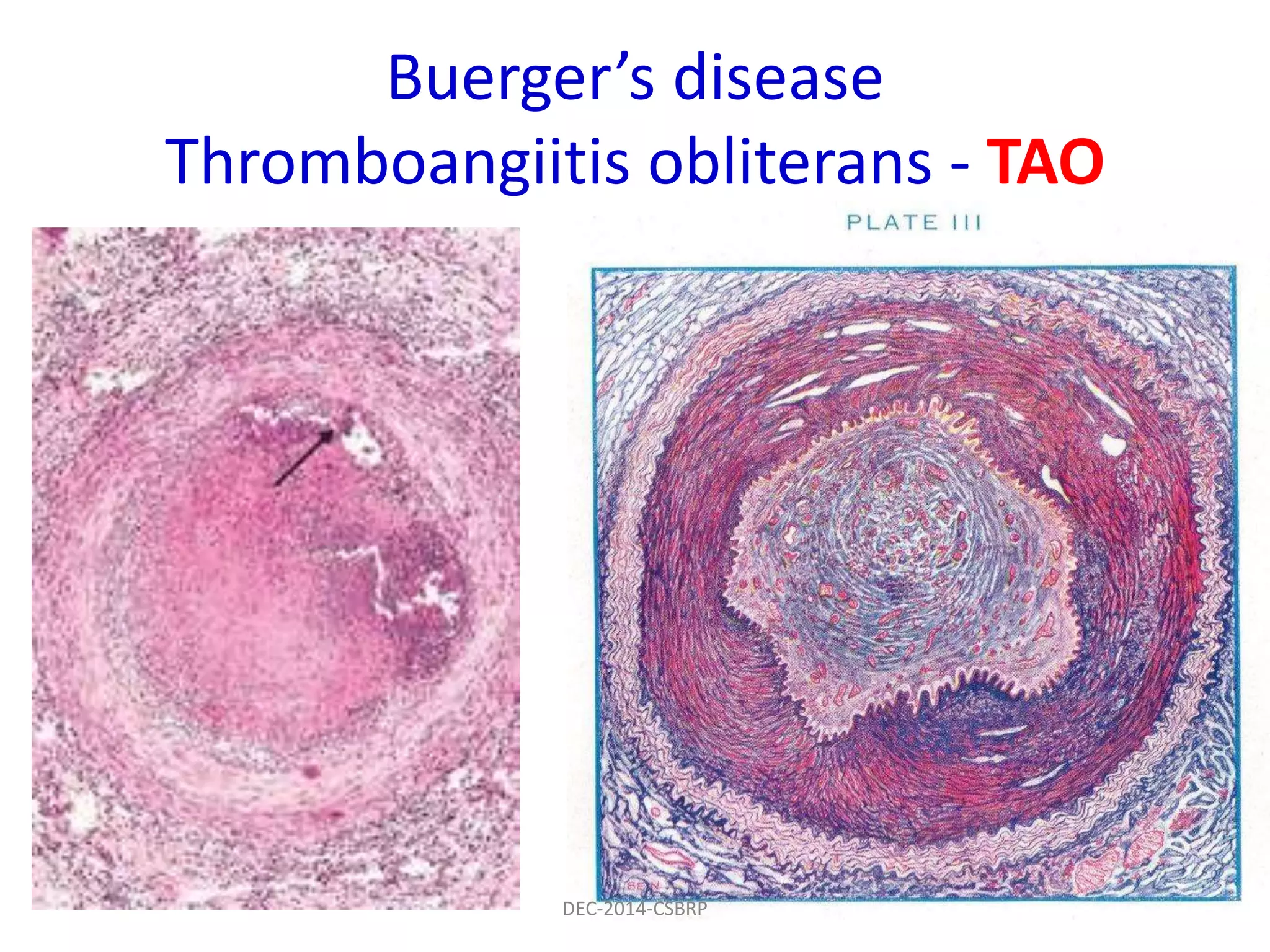
Morphology:
• Thrombosis
• Initially: Neutrophil exudate in all the layers –
microabscesses
• Later: lymphocytes and macrophages,
occasionally giant cells
• Musculature of the media and elastic laminae
are preserved
DEC-2014-CSBRP
DEC-2014-CSBRP
Buerger’s disease
Thromboangiitis obliterans - TAO
DEC-2014-CSBRP
Buerger’s disease
Thromboangiitis obliterans - TAO
Clinical features:
• Intermittent claudication
– In the instep
– Less commonly in the calf
– Rarely in the upper limbs
• Later: pain comes on at night and is relieved by walking / hanging
the leg over the side of bed
• Pulse may be absent in the small vessels like Dorsalis pedis and
Radial
• Raynaud’s phenomenon
– 50% of patients develop this when the hands are exposed to
cold
• Migratory superficial thrombophlebitis
• Gangrene DEC-2014-CSBRP
Buerger’s disease
Thromboangiitis obliterans - TAO
DEC-2014-CSBRP
Buerger’s disease
Thromboangiitis obliterans - TAO
DEC-2014-CSBRP
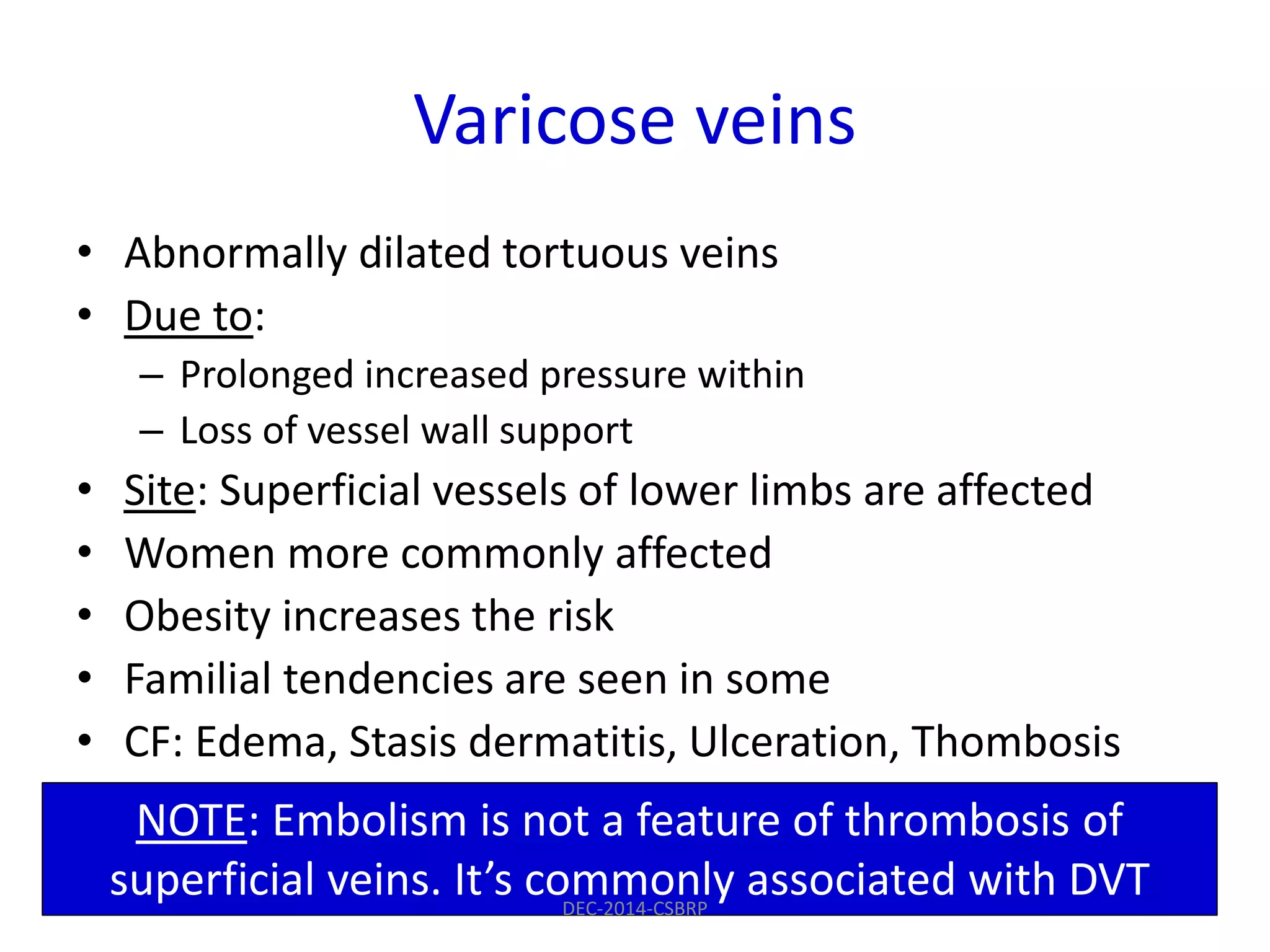
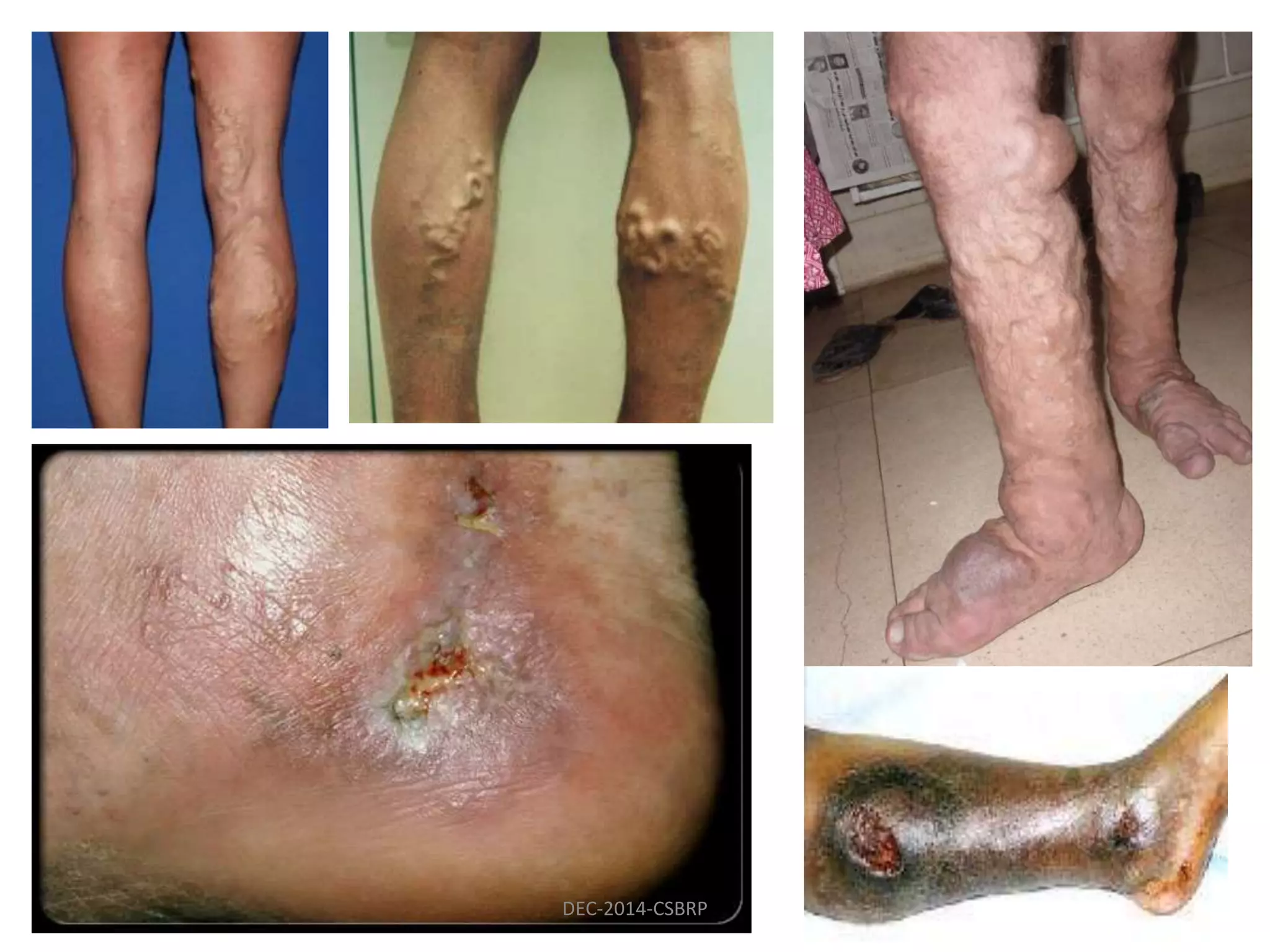
Varicose veins
• Abnormally dilated tortuous veins
• Due to:
– Prolonged increased pressure within
– Loss of vessel wall support
• Site: Superficial vessels of lower limbs are affected
• Women more commonly affected
• Obesity increases the risk
• Familial tendencies are seen in some
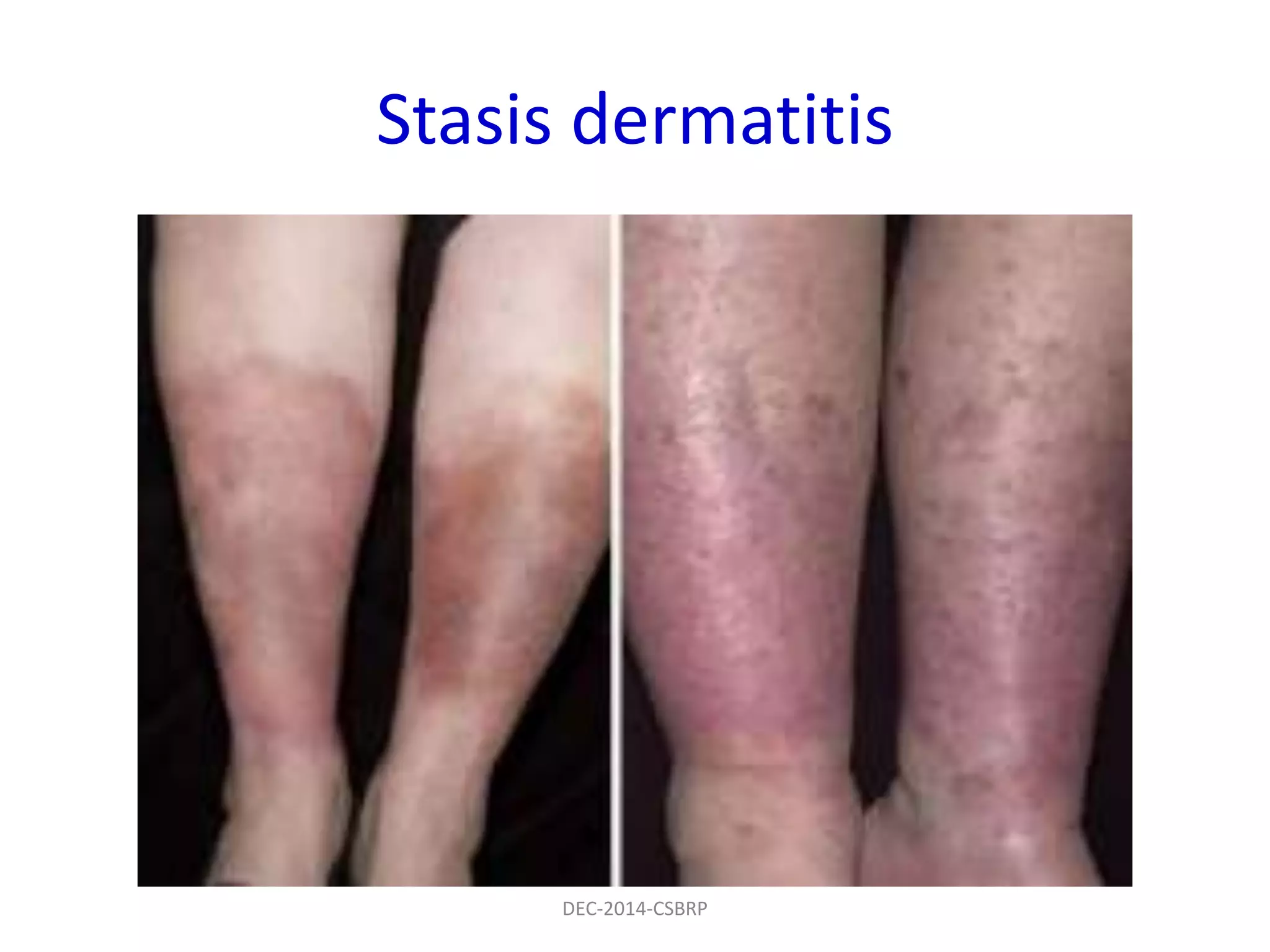
• CF: Edema, Stasis dermatitis, Ulceration, Thombosis
NOTE: Embolism is not a feature of thrombosis of
superficial veins. It’s commonly associated with DVTDEC-2014-CSBRP
DEC-2014-CSBRP
Stasis dermatitis
DEC-2014-CSBRP
Varicose veins
• Other sites for varocosities:
– Esophageal varices (due to PHT)
– Hemorrhoides (due to PHT, Pregnancy,
Constipation)
– Varicocele
• Complication: Bleeding
DEC-2014-CSBRP
Esophageal
varices in PHT
DEC-2014-CSBRP
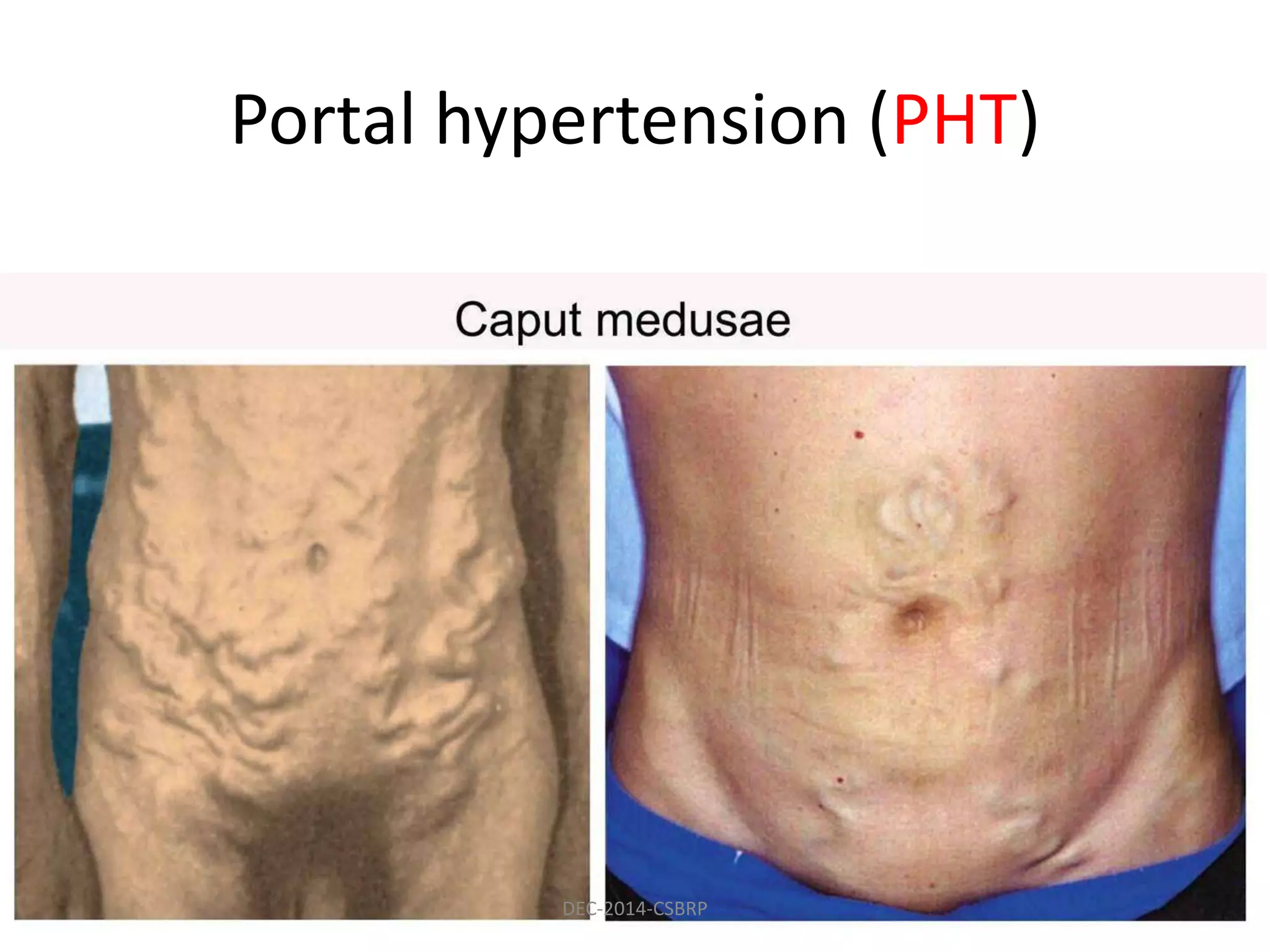
Portal hypertension (PHT)
DEC-2014-CSBRP
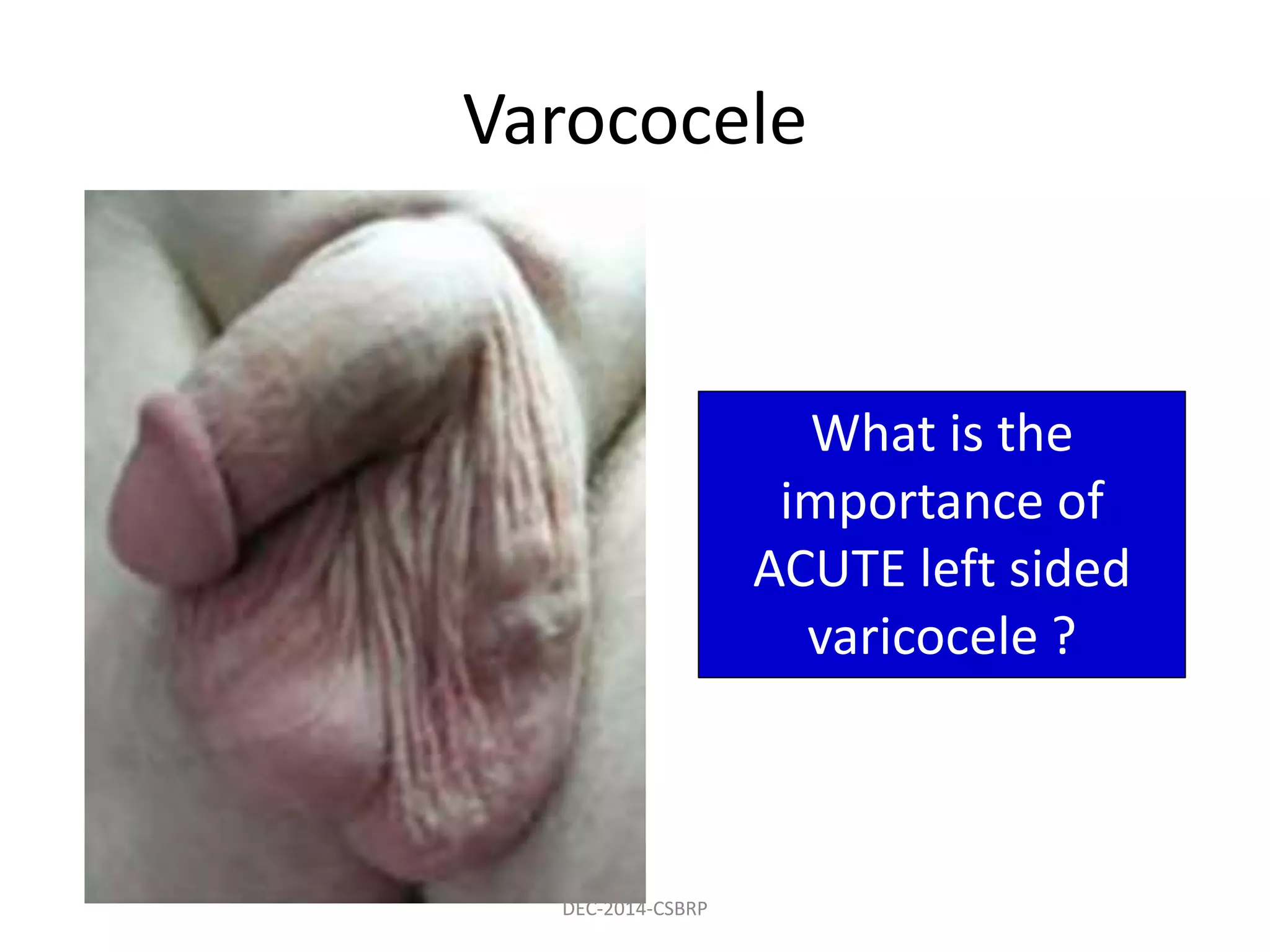
Varococele
What is the
importance of
ACUTE left sided
varicocele ?
DEC-2014-CSBRP
Thrombophlebitis & Phlebothrombosis
• Interchangeable terms
• Components:
– Venous thrombosis and
– Inflammation
• Sites:
– Deep veins of legs
– Periprostatic plexus in male
– Pelvic venous plexus in female
– Large veins of skull & dural sinuses
DEC-2014-CSBRP
Thrombophlebitis & Phlebothrombosis
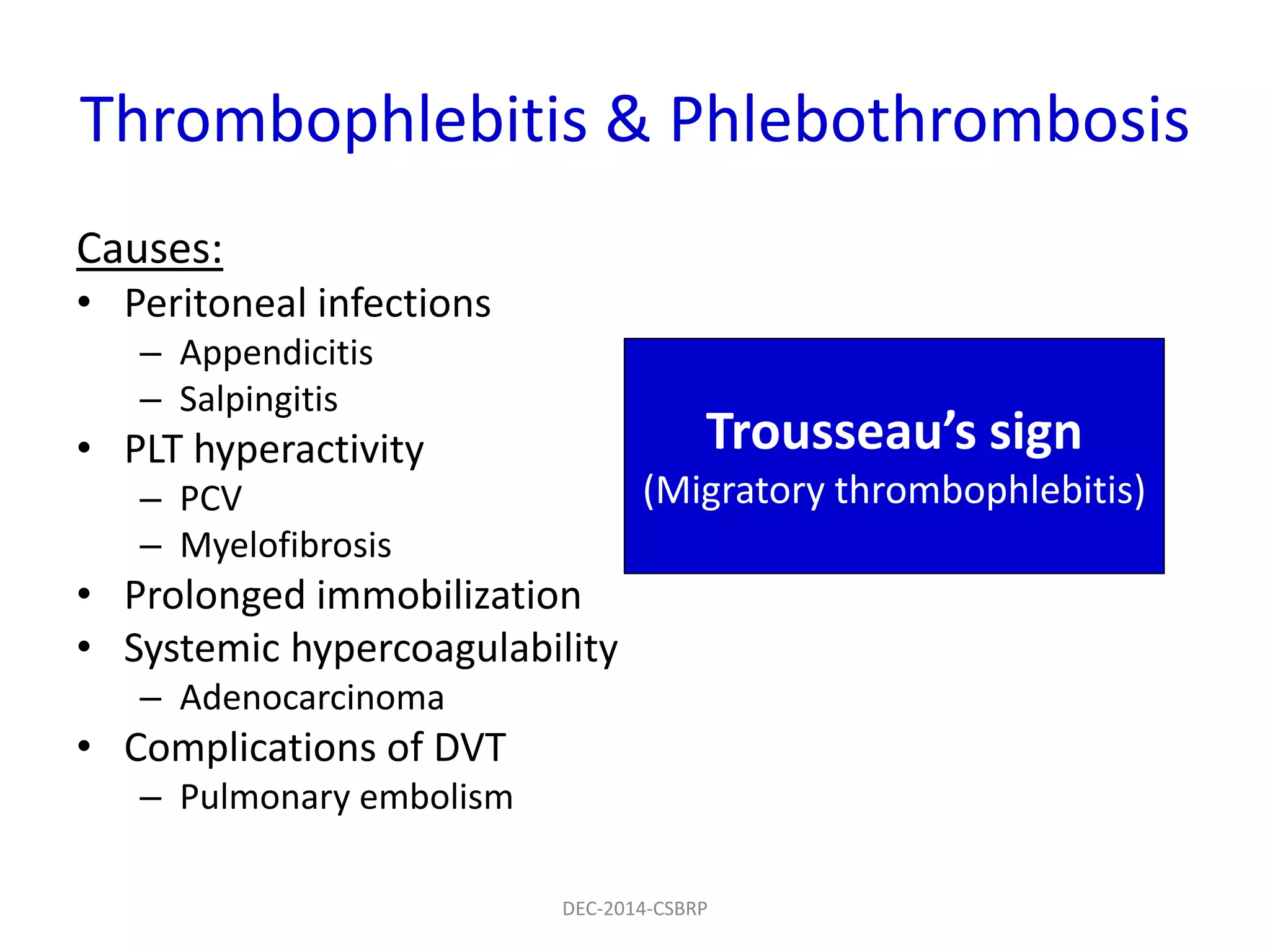
Causes:
• Peritoneal infections
– Appendicitis
– Salpingitis
• PLT hyperactivity
– PCV
– Myelofibrosis
• Prolonged immobilization
• Systemic hypercoagulability
– Adenocarcinoma
• Complications of DVT
– Pulmonary embolism
Trousseau’s sign
(Migratory thrombophlebitis)
DEC-2014-CSBRP
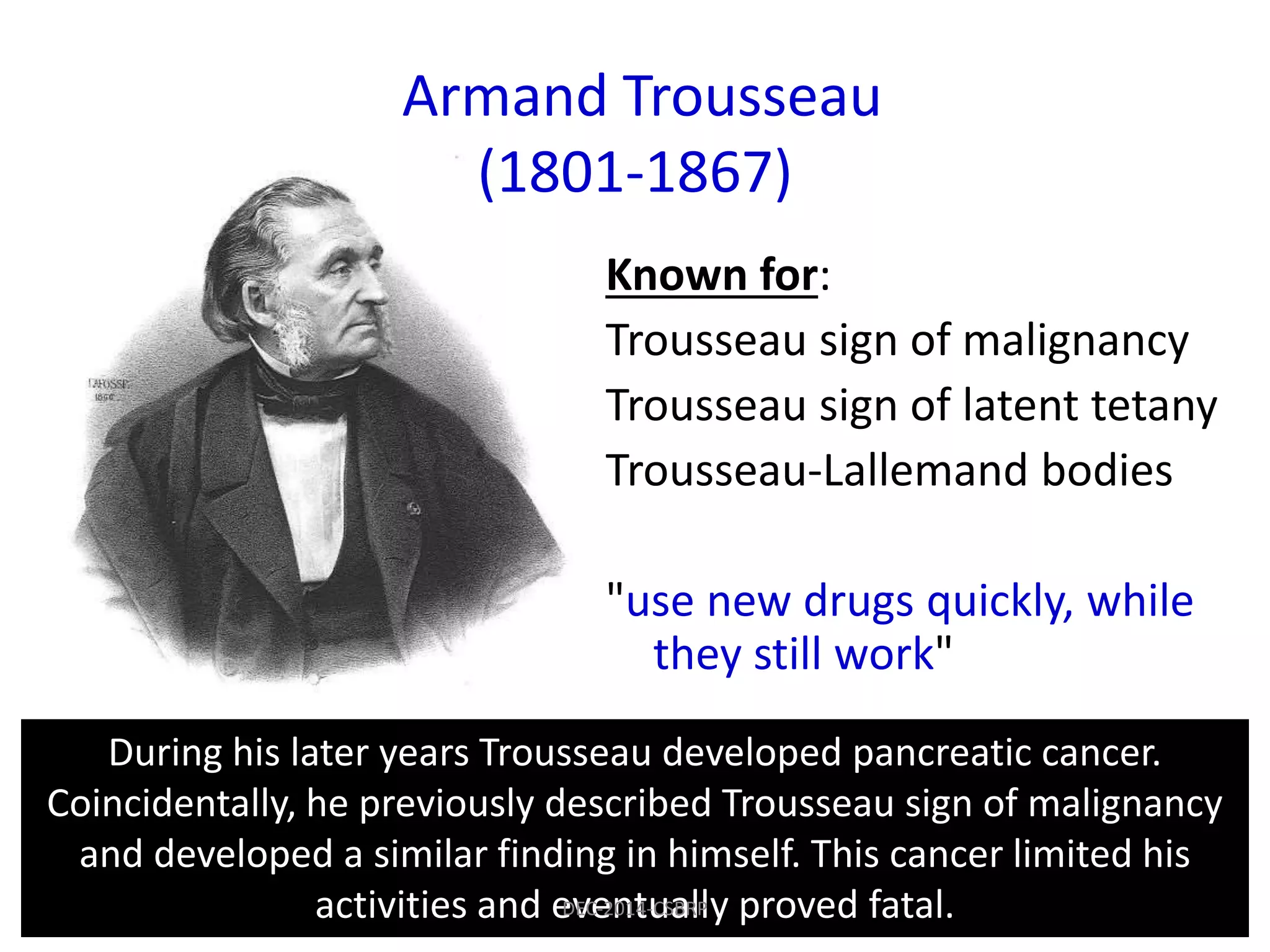
Known for:
Trousseau sign of malignancy
Trousseau sign of latent tetany
Trousseau-Lallemand bodies
"use new drugs quickly, while
they still work"
During his later years Trousseau developed pancreatic cancer.
Coincidentally, he previously described Trousseau sign of malignancy
and developed a similar finding in himself. This cancer limited his
activities and eventually proved fatal.
Armand Trousseau
(1801-1867)
DEC-2014-CSBRP
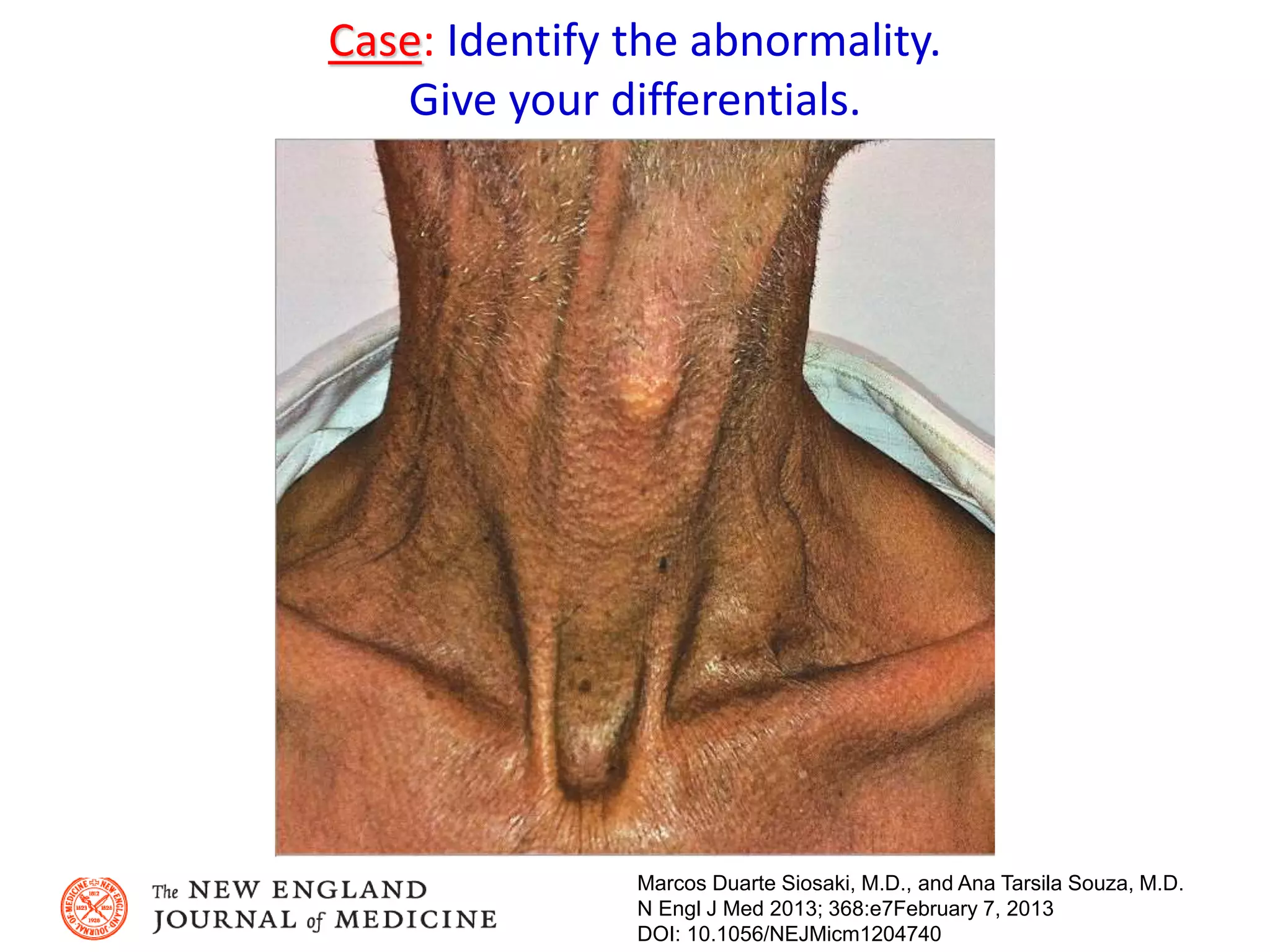
Case: Identify the abnormality.
Give your differentials.
Marcos Duarte Siosaki, M.D., and Ana Tarsila Souza, M.D.
N Engl J Med 2013; 368:e7February 7, 2013
DOI: 10.1056/NEJMicm1204740
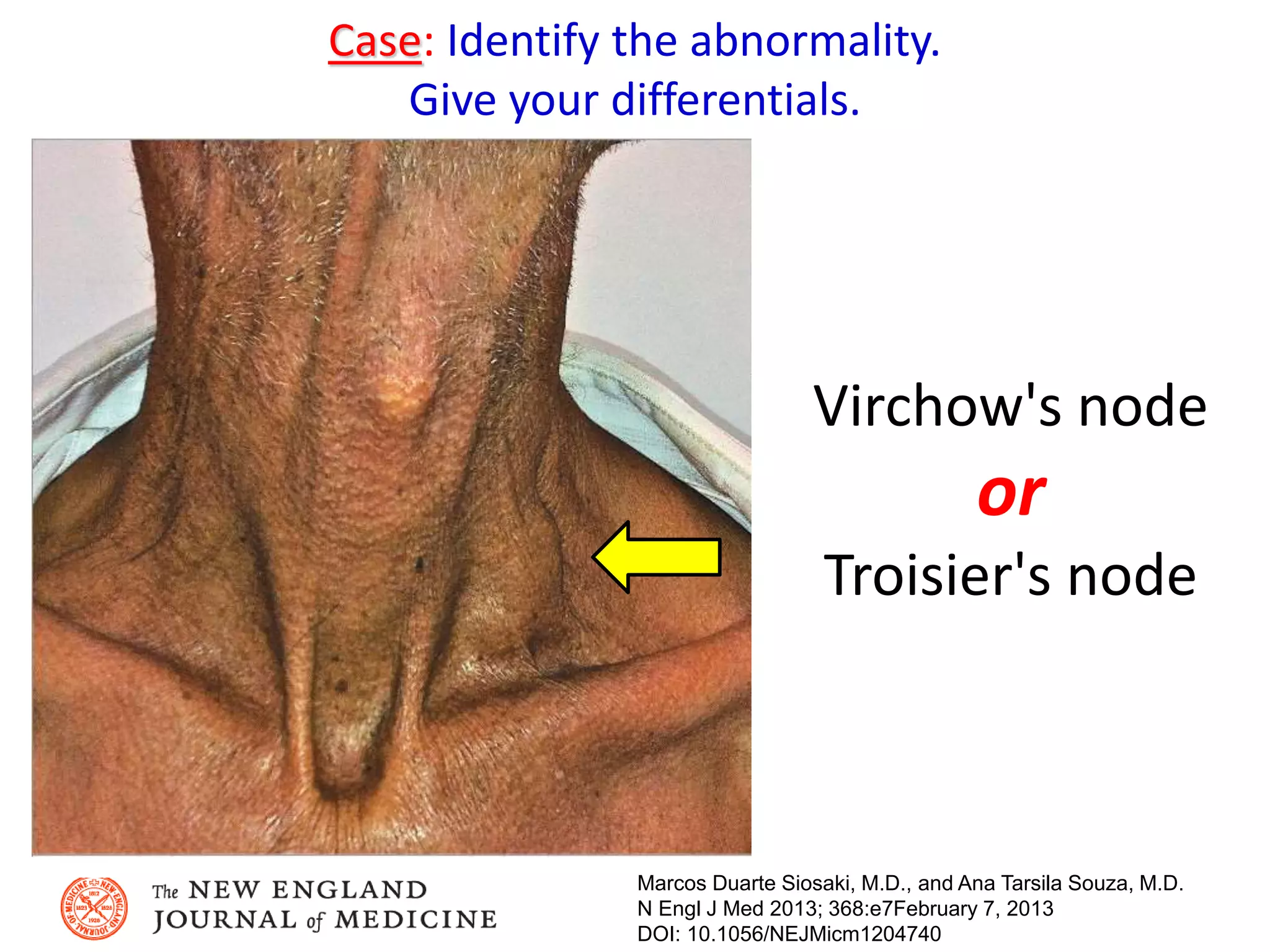
Case: Identify the abnormality.
Give your differentials.
Marcos Duarte Siosaki, M.D., and Ana Tarsila Souza, M.D.
N Engl J Med 2013; 368:e7February 7, 2013
DOI: 10.1056/NEJMicm1204740
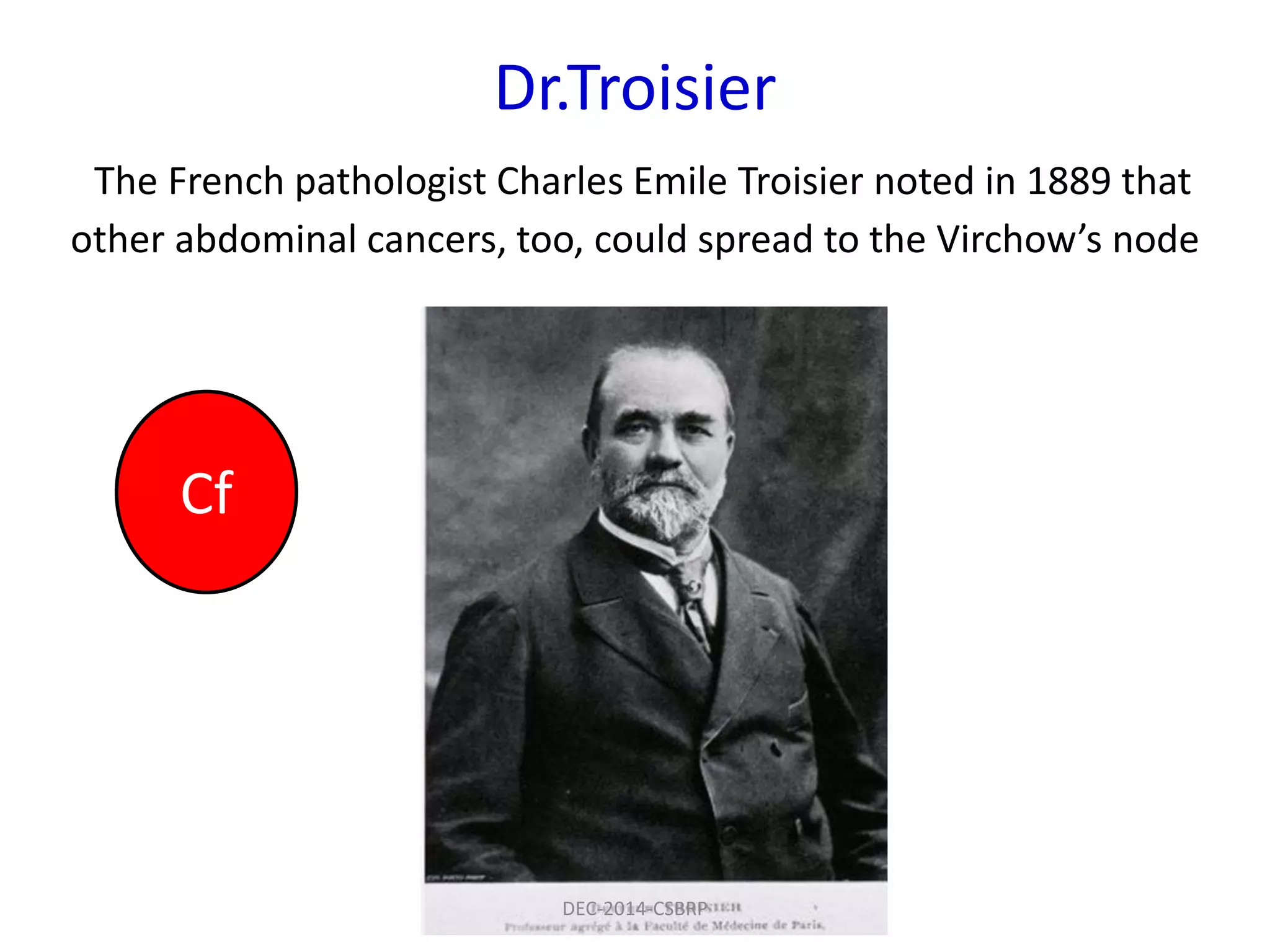
Virchow's node
or
Troisier's node
Dr.Troisier
The French pathologist Charles Emile Troisier noted in 1889 that
other abdominal cancers, too, could spread to the Virchow’s node
Cf
DEC-2014-CSBRP
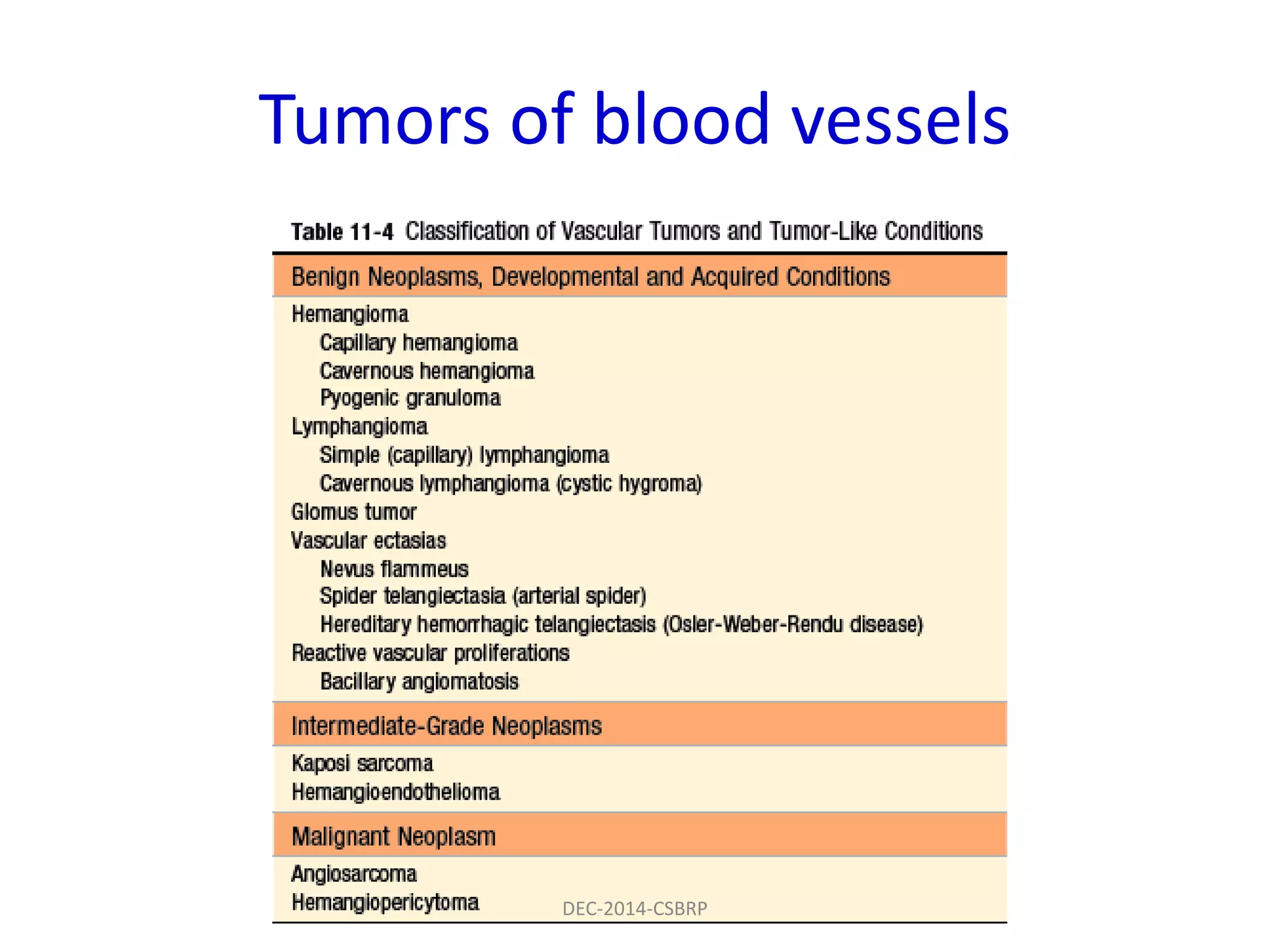
Tumors of blood vessels
DEC-2014-CSBRP
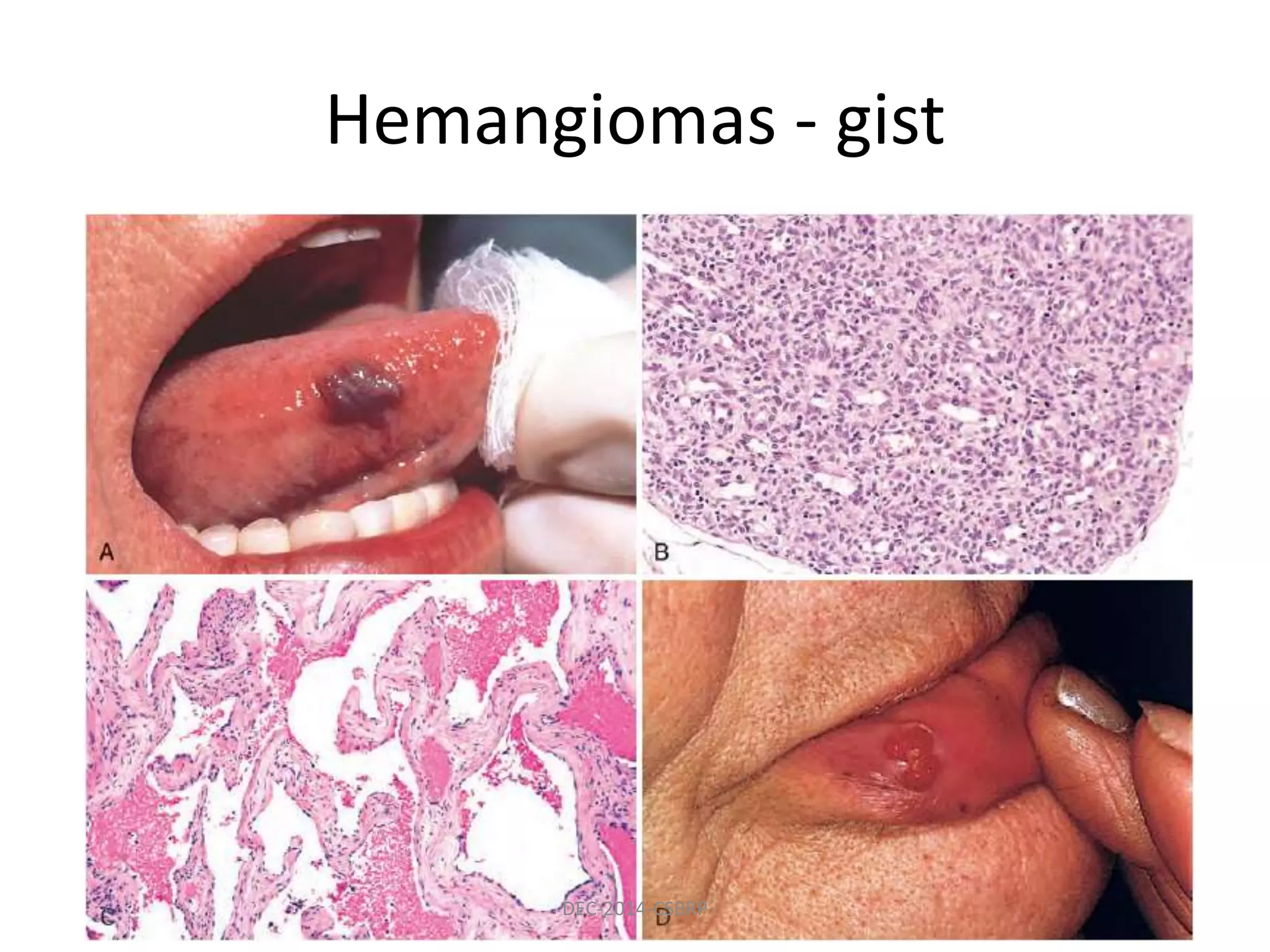
Hemangiomas
• Very common tumors
• Increased number of blood vessels filled with
blood
• Many of the capillary lesions seen in infancy
may regress spontaneously as the child grows
(by the age of 7years)
• Some hemangiomas involve large portions of
the body – Angiomatosis
DEC-2014-CSBRP
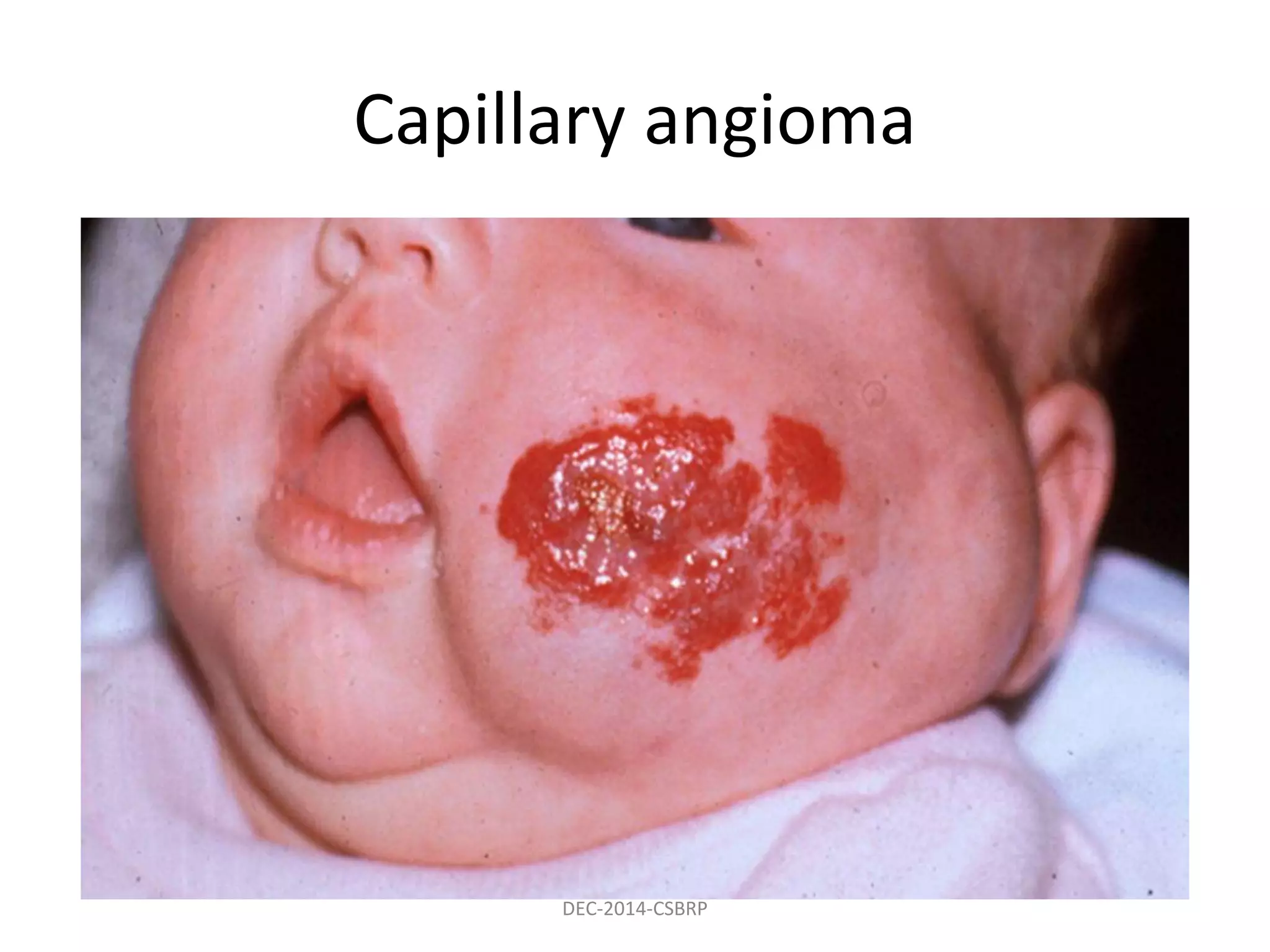
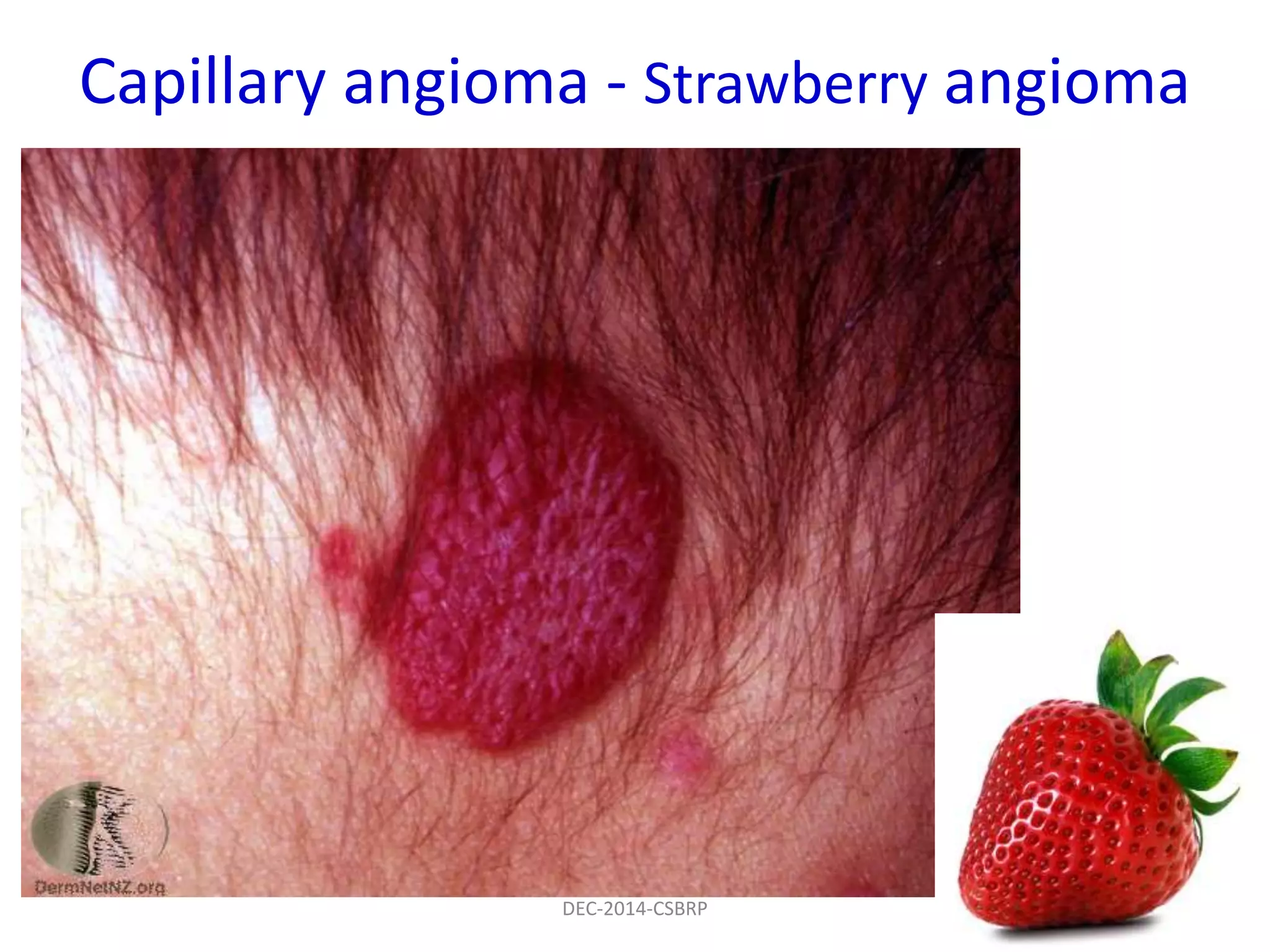
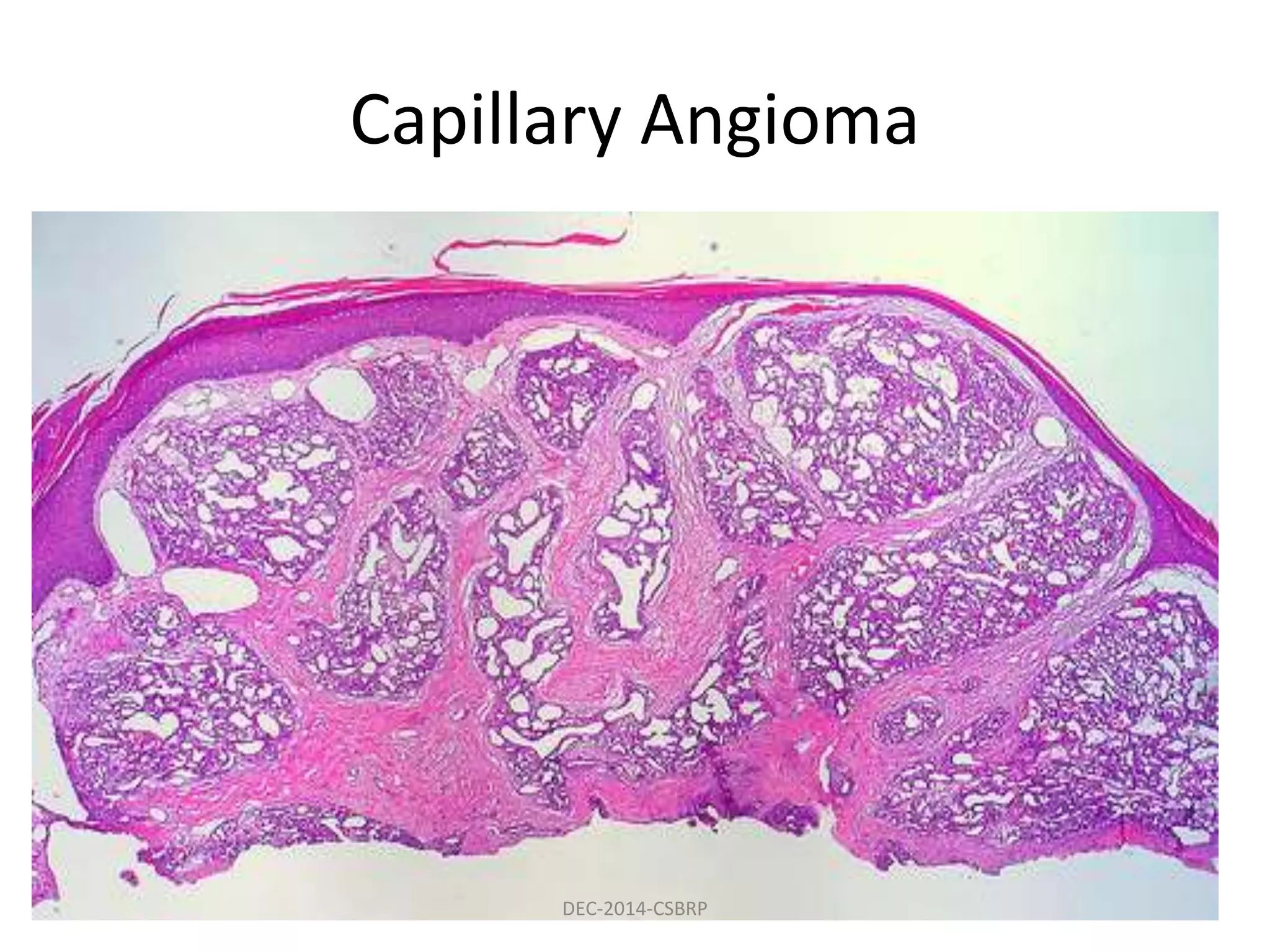
Capilalry Hemangioma
• Sites: Skin, subcutis, oral cavity, liver, spleen,
kidney
• Strawberry angioma – new borns
Morphology:
• Bright red to blue
• Closely packed thin walled blood vessels
• Lined by flat endothelium
• Scant connective tissue
• Hemorrhages, thrombosis, hemosiderin laden MØ
DEC-2014-CSBRP
Capillary angioma
DEC-2014-CSBRP
Capillary angioma - Strawberry angioma
DEC-2014-CSBRP
Capillary Angioma
DEC-2014-CSBRP
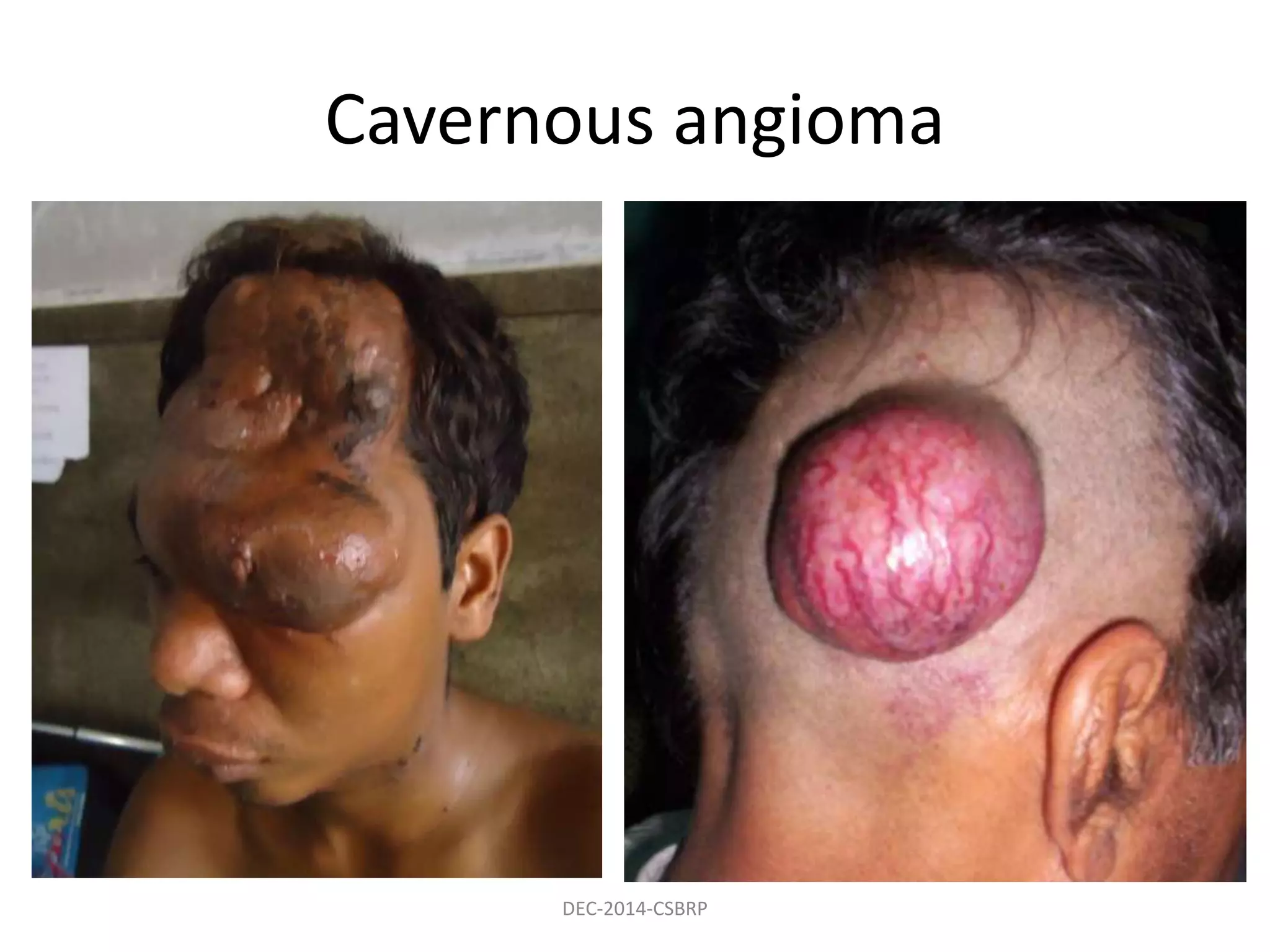
Cavernous angioma
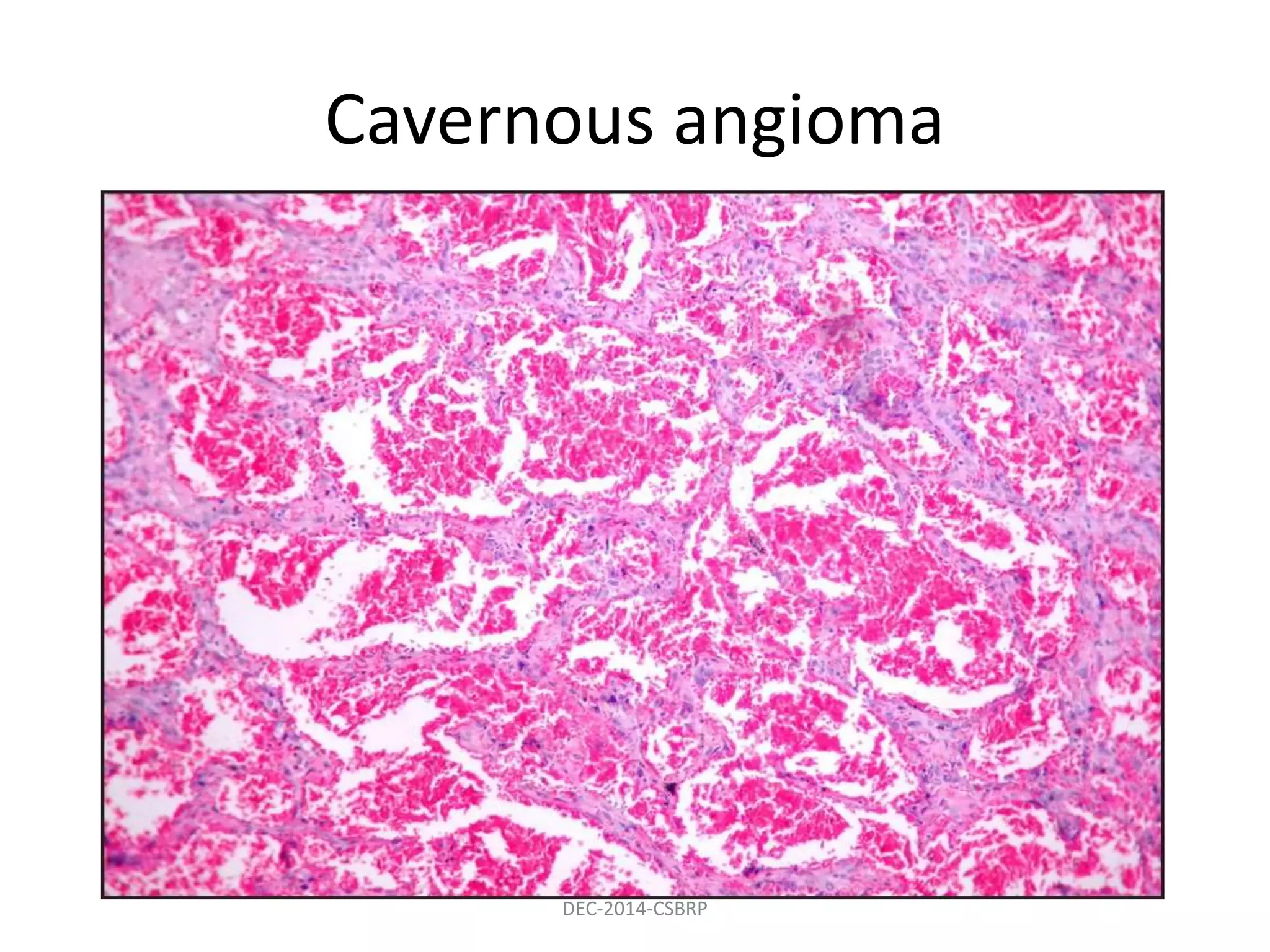
• Large dilated vascular channels
• Less well circumscribed
• Frequently involve deep structures
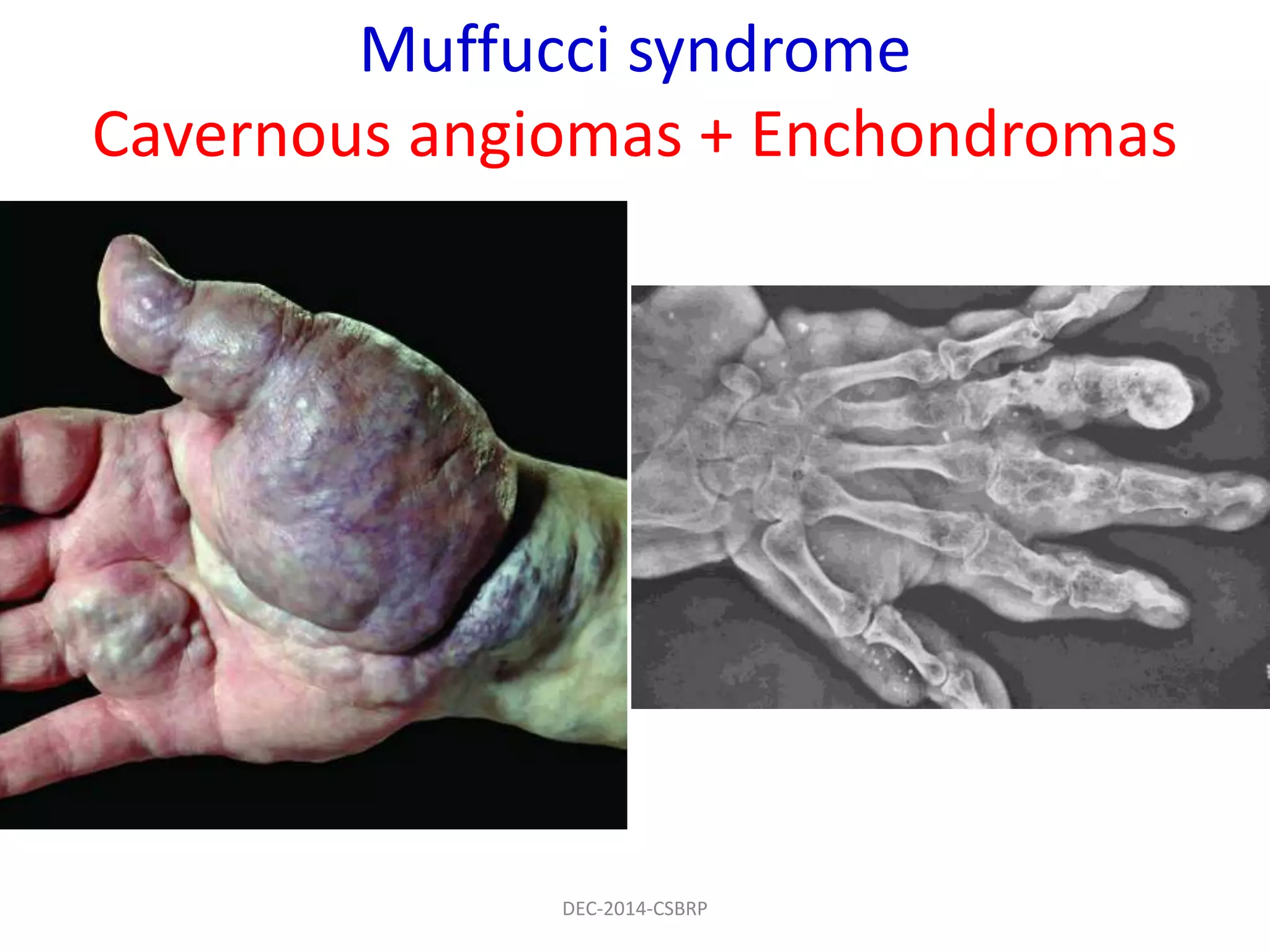
• May be a part of VHL, Muffucci syndromes
Morphology:
• Red blue soft spongy masses
• Large intercommunicating vascular channels
• Modest connective tissue stroma
• Thrombosis and calcification
DEC-2014-CSBRP
Cavernous angioma
DEC-2014-CSBRP
Muffucci syndrome
Cavernous angiomas + Enchondromas
DEC-2014-CSBRP
Cavernous angioma
DEC-2014-CSBRP
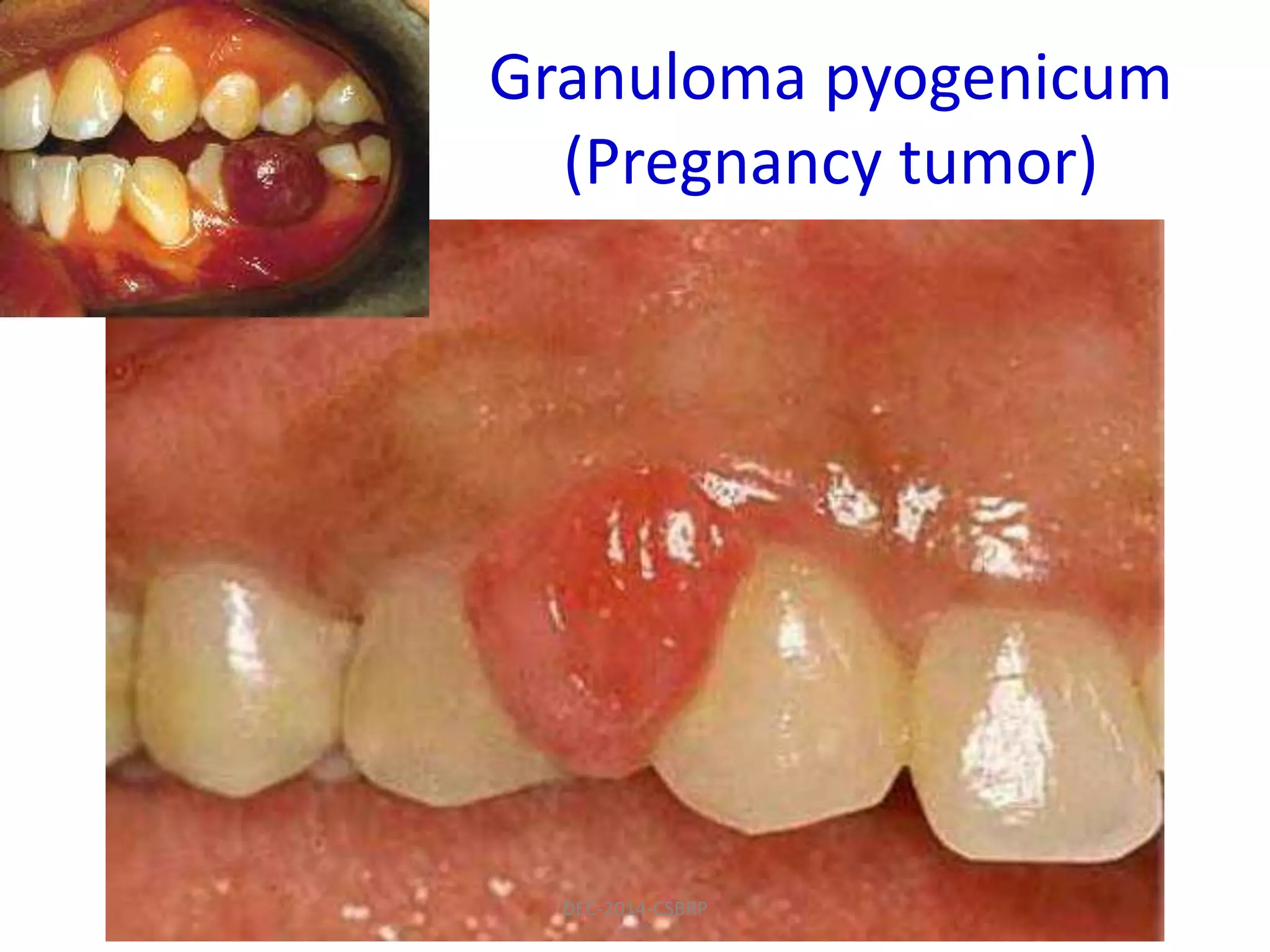
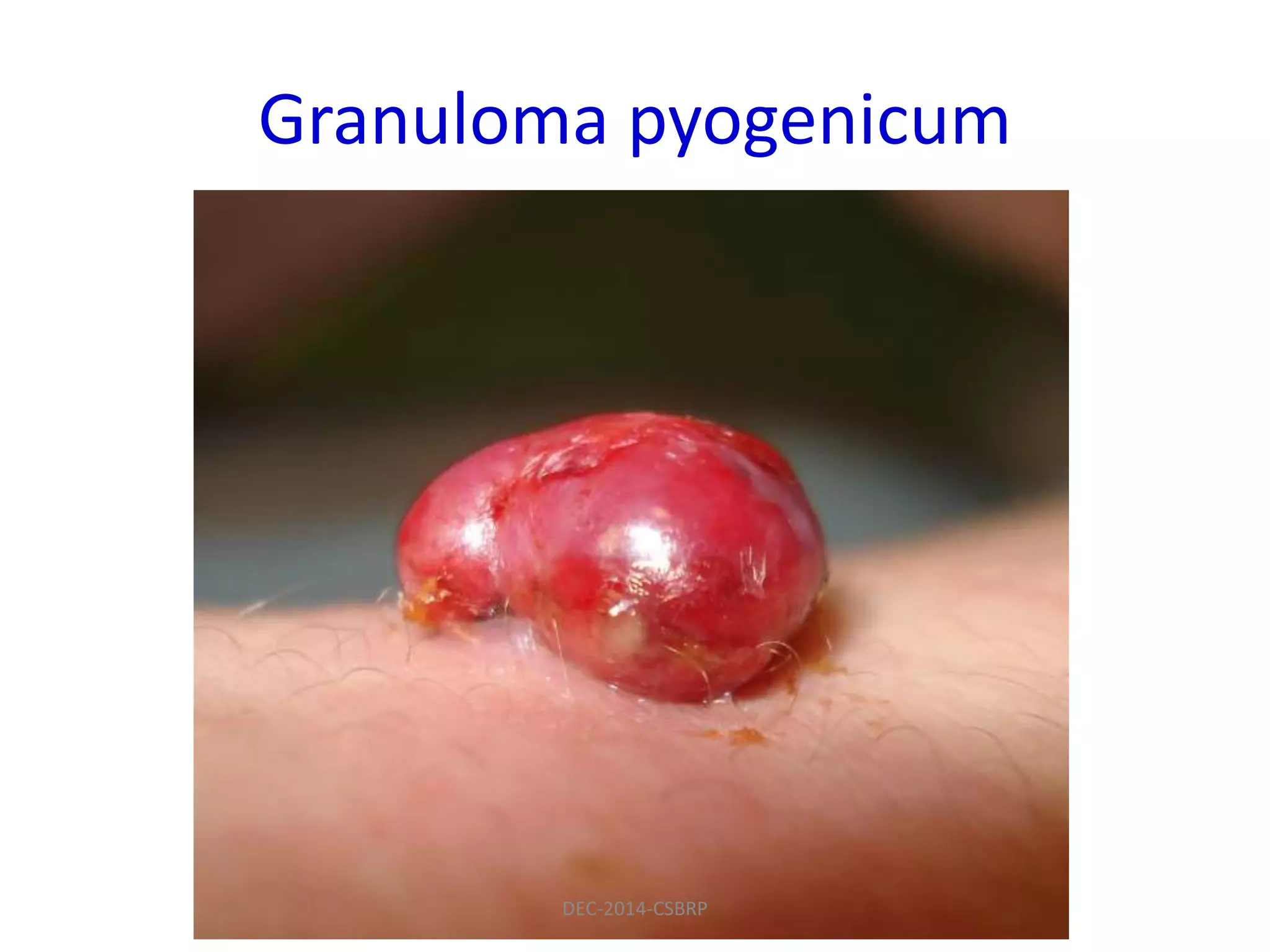
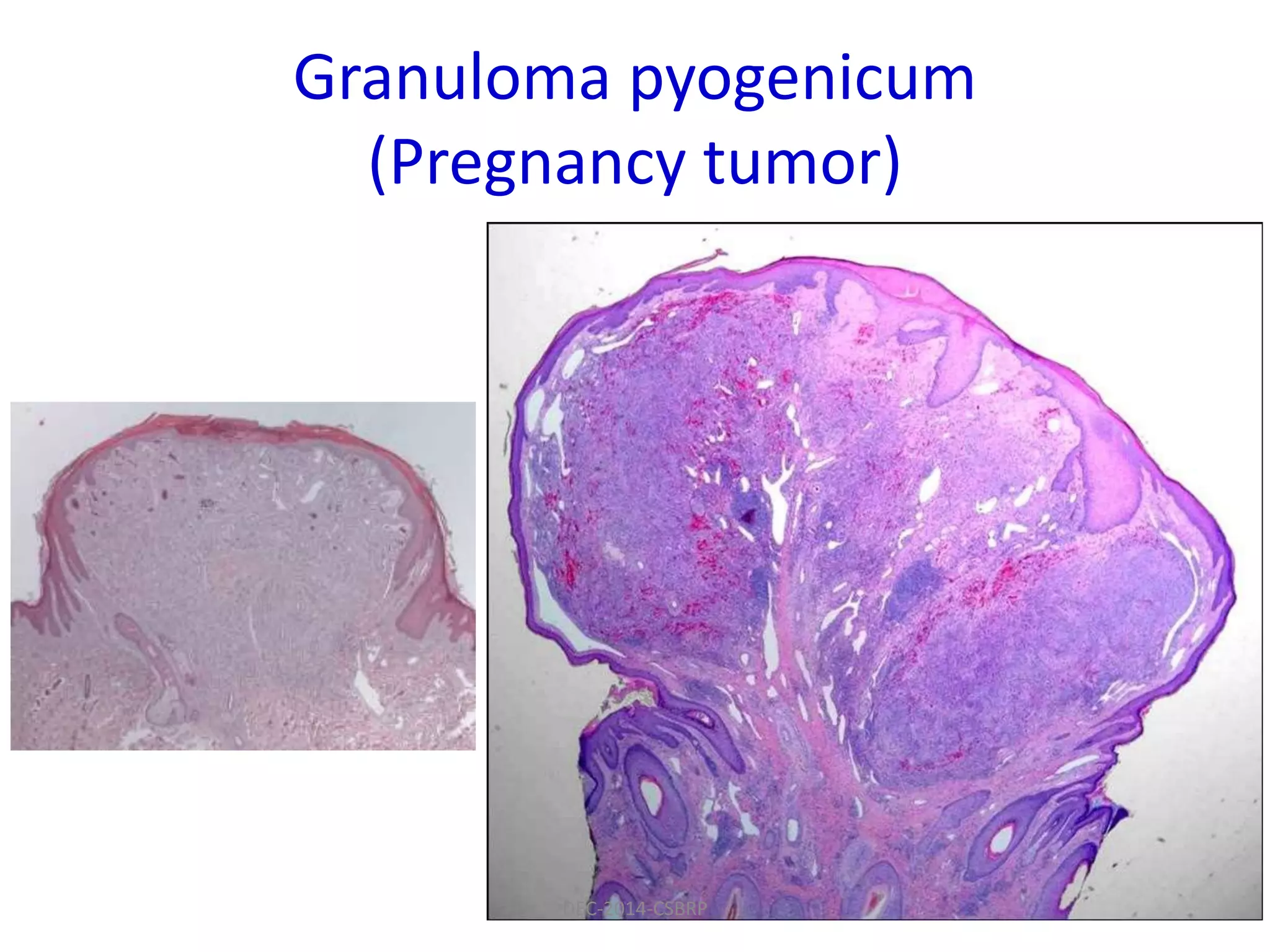
Granuloma pyogenicum
(Pregnancy tumor)
• A form of capillary angioma
• Rapidly growing
• Pedunculated red nodule
• Skin, gingiva, oral mucosa
• “Bleeds on touch”
• Capillaries arranged in lobular fashion
• Finger like epidermal projections at the
margins
DEC-2014-CSBRP
Granuloma pyogenicum
(Pregnancy tumor)
DEC-2014-CSBRP
Granuloma pyogenicum
DEC-2014-CSBRP
Granuloma pyogenicum
(Pregnancy tumor)
DEC-2014-CSBRP
Hemangiomas - gist
DEC-2014-CSBRP
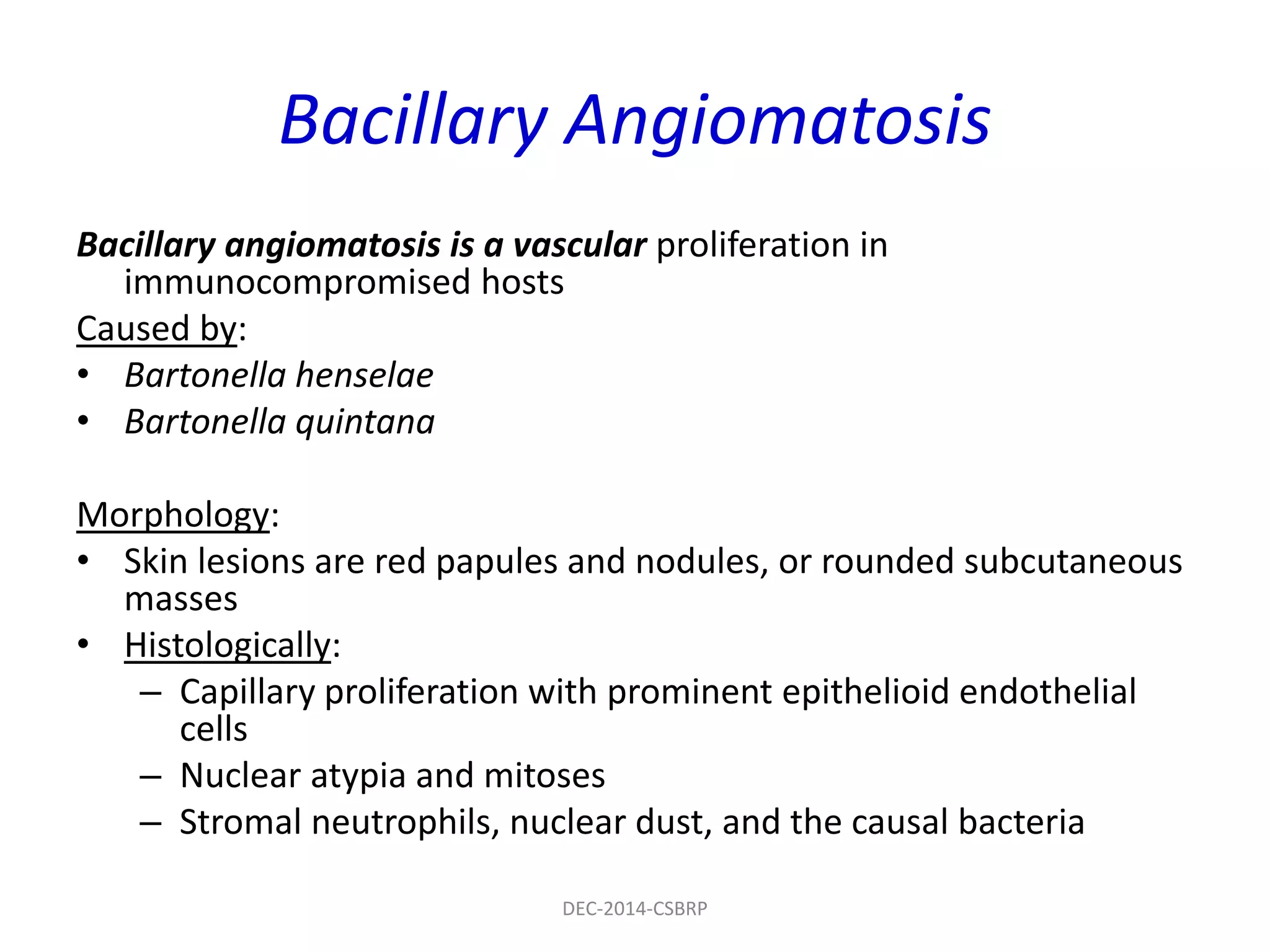
Bacillary Angiomatosis
Bacillary angiomatosis is a vascular proliferation in
immunocompromised hosts
Caused by:
• Bartonella henselae
• Bartonella quintana
Morphology:
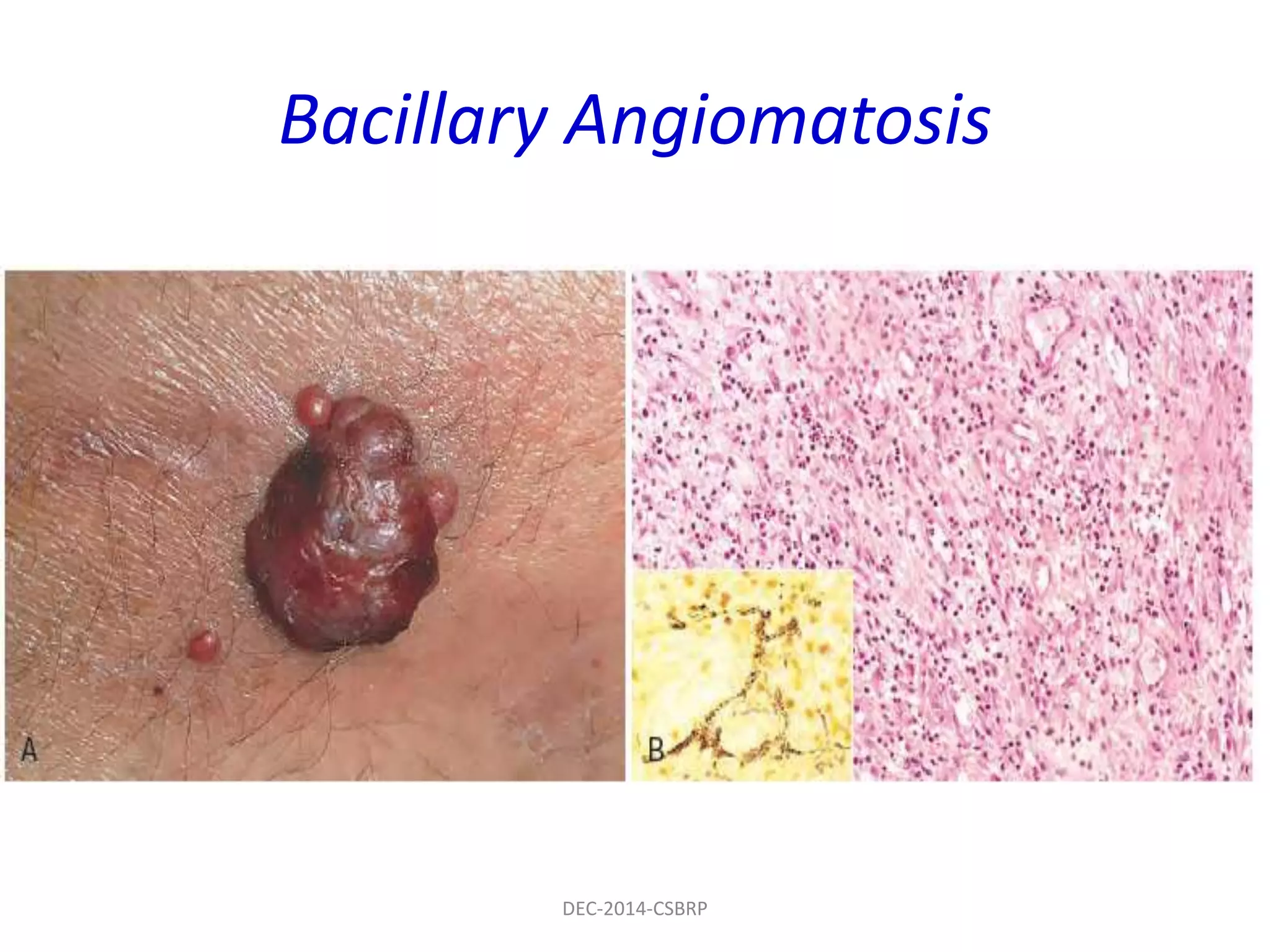
• Skin lesions are red papules and nodules, or rounded subcutaneous
masses
• Histologically:
– Capillary proliferation with prominent epithelioid endothelial
cells
– Nuclear atypia and mitoses
– Stromal neutrophils, nuclear dust, and the causal bacteria
DEC-2014-CSBRP
Bacillary Angiomatosis
DEC-2014-CSBRP
Kaposi sarcoma (KS)
Forms of KS:
• Chronic KS (Classic)
• Lymphadenopathic KS
• Transplant associated KS
• AIDS associated KS
Pathogenesis:
• HHV8 (KSHV)
• Latent infection in endothelial cells > [p53
inhibitors + Cyclin-D equivalent + viral G protein
which induces VEGF] > Cellular proliferation
DEC-2014-CSBRP
Kaposi sarcoma (KS)
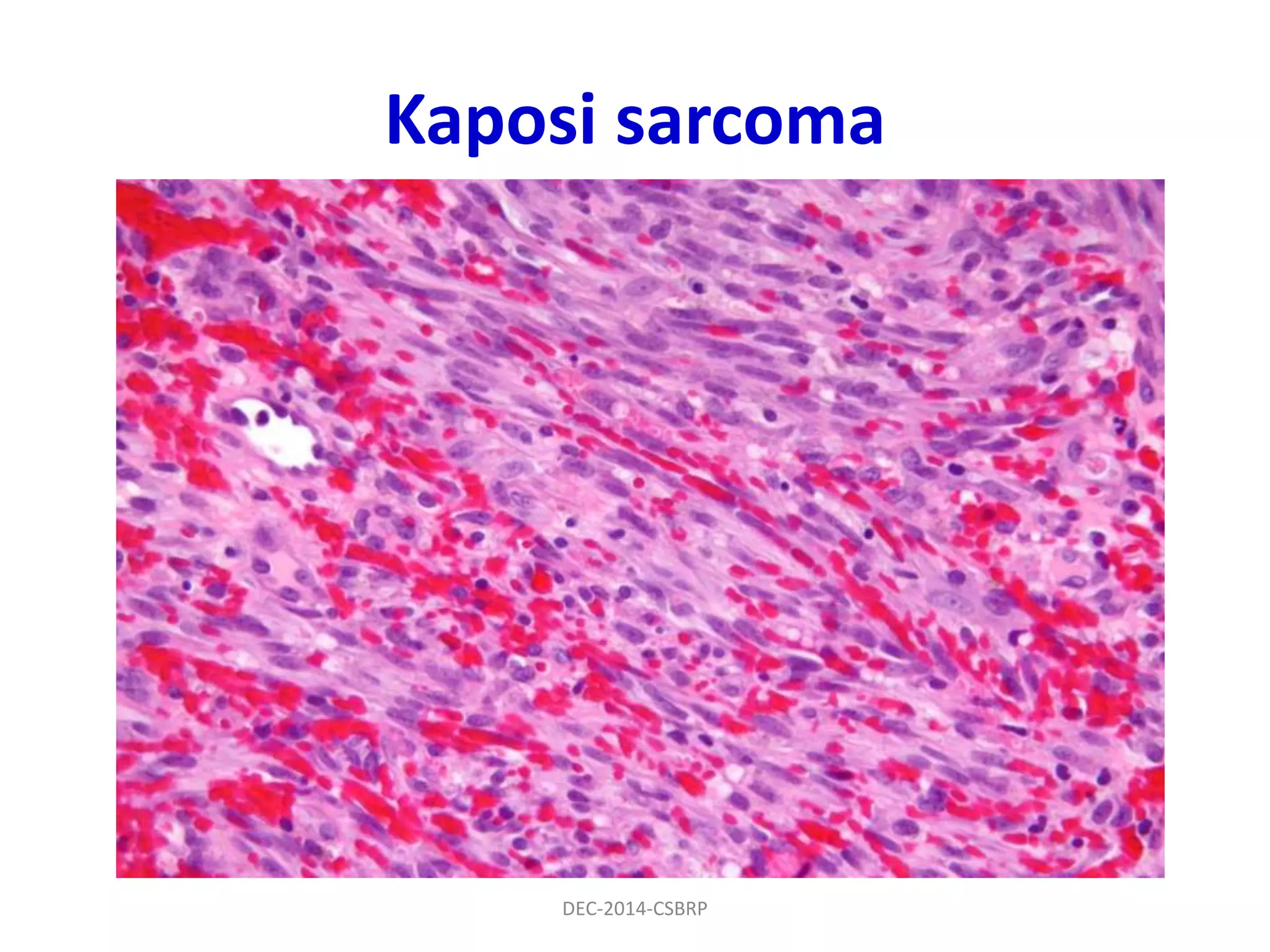
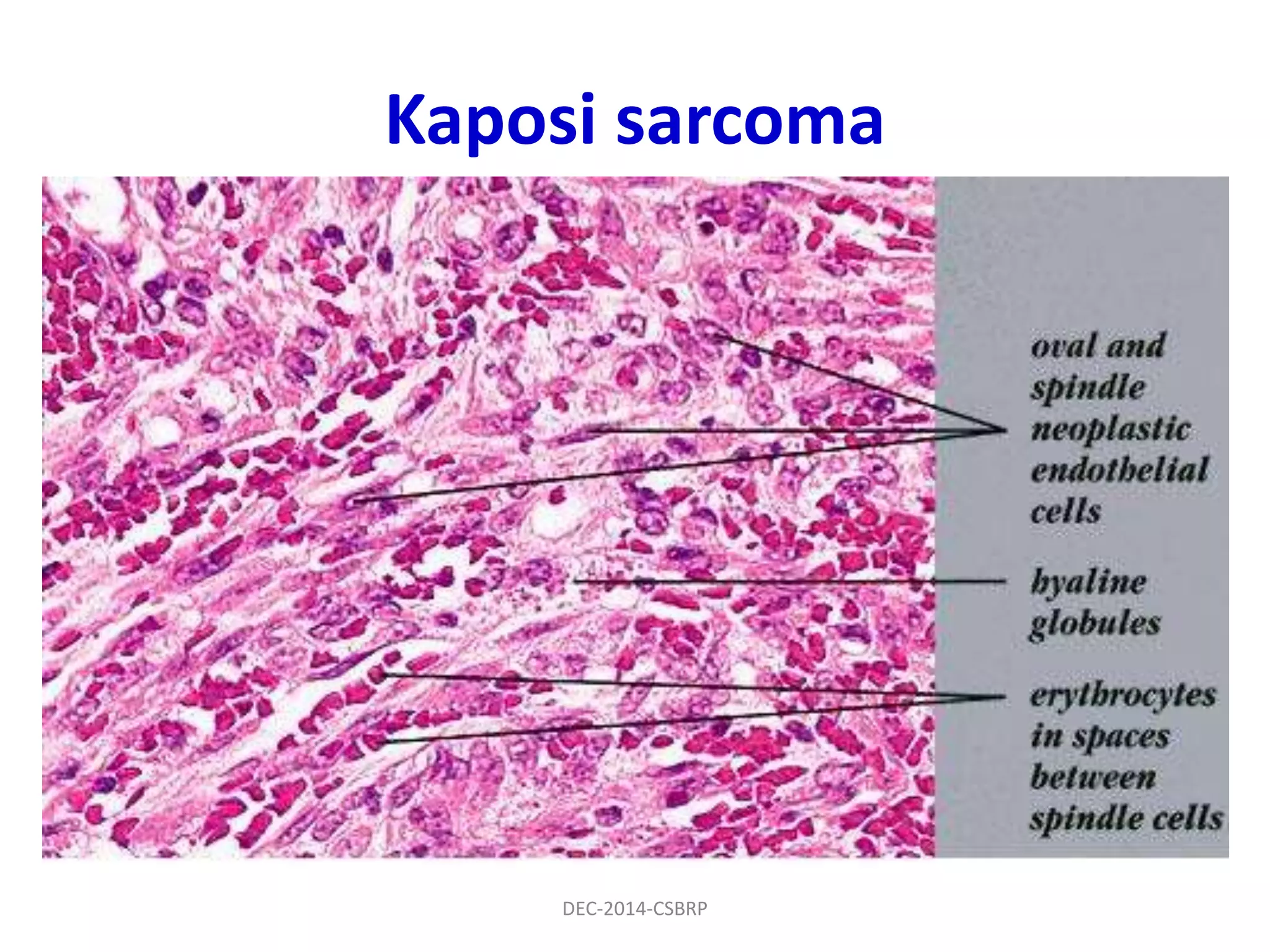
Morphology:
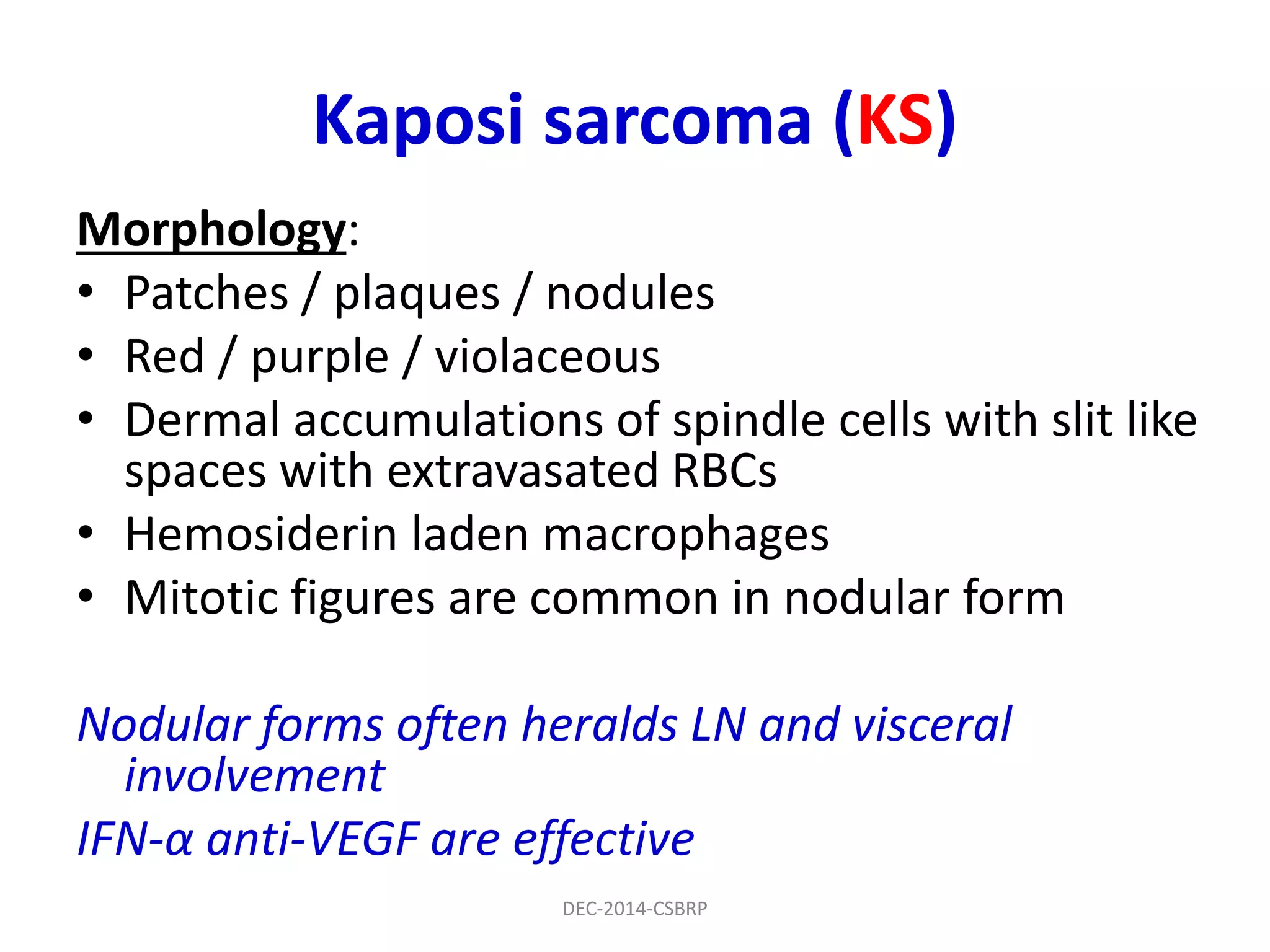
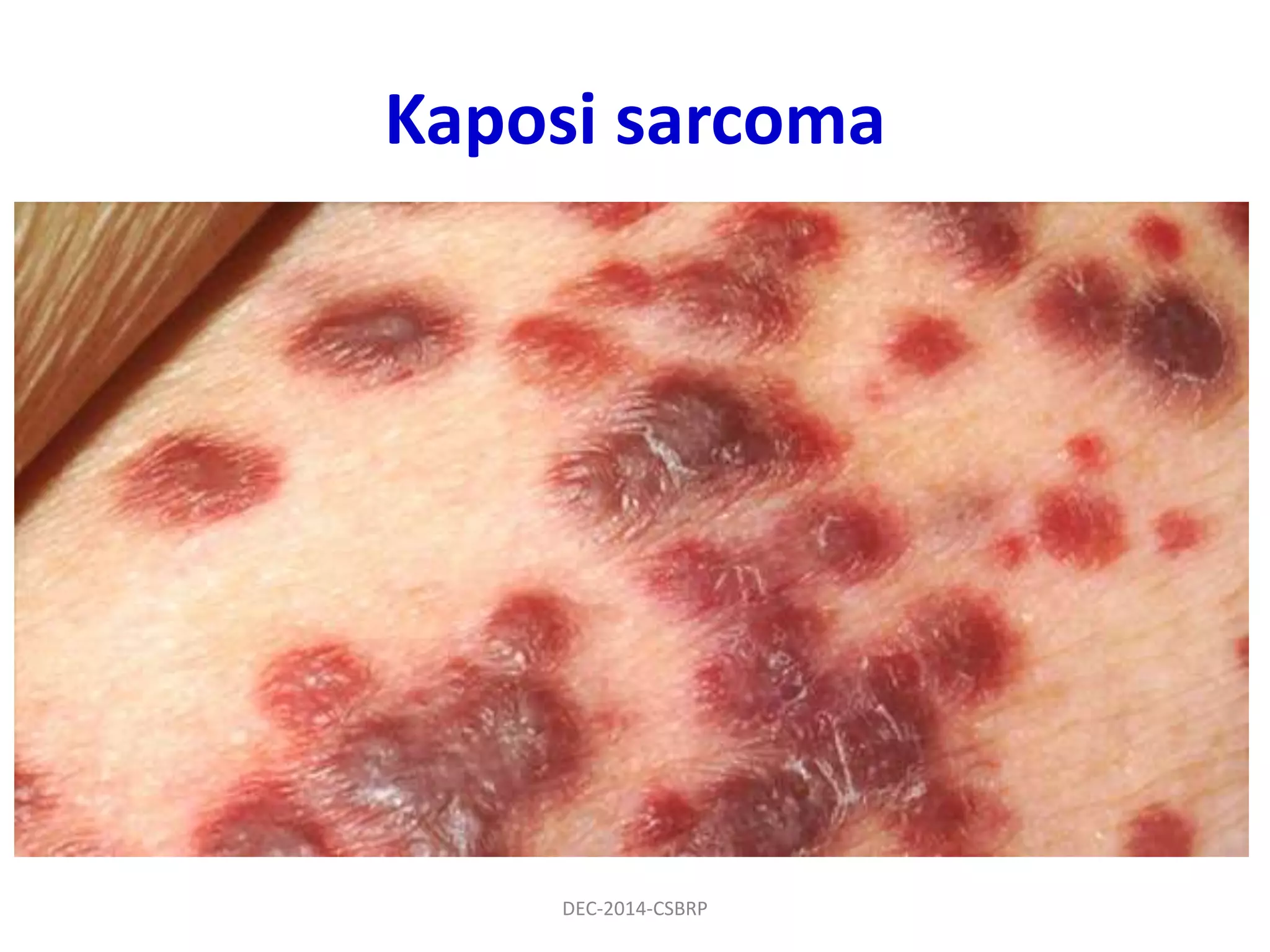
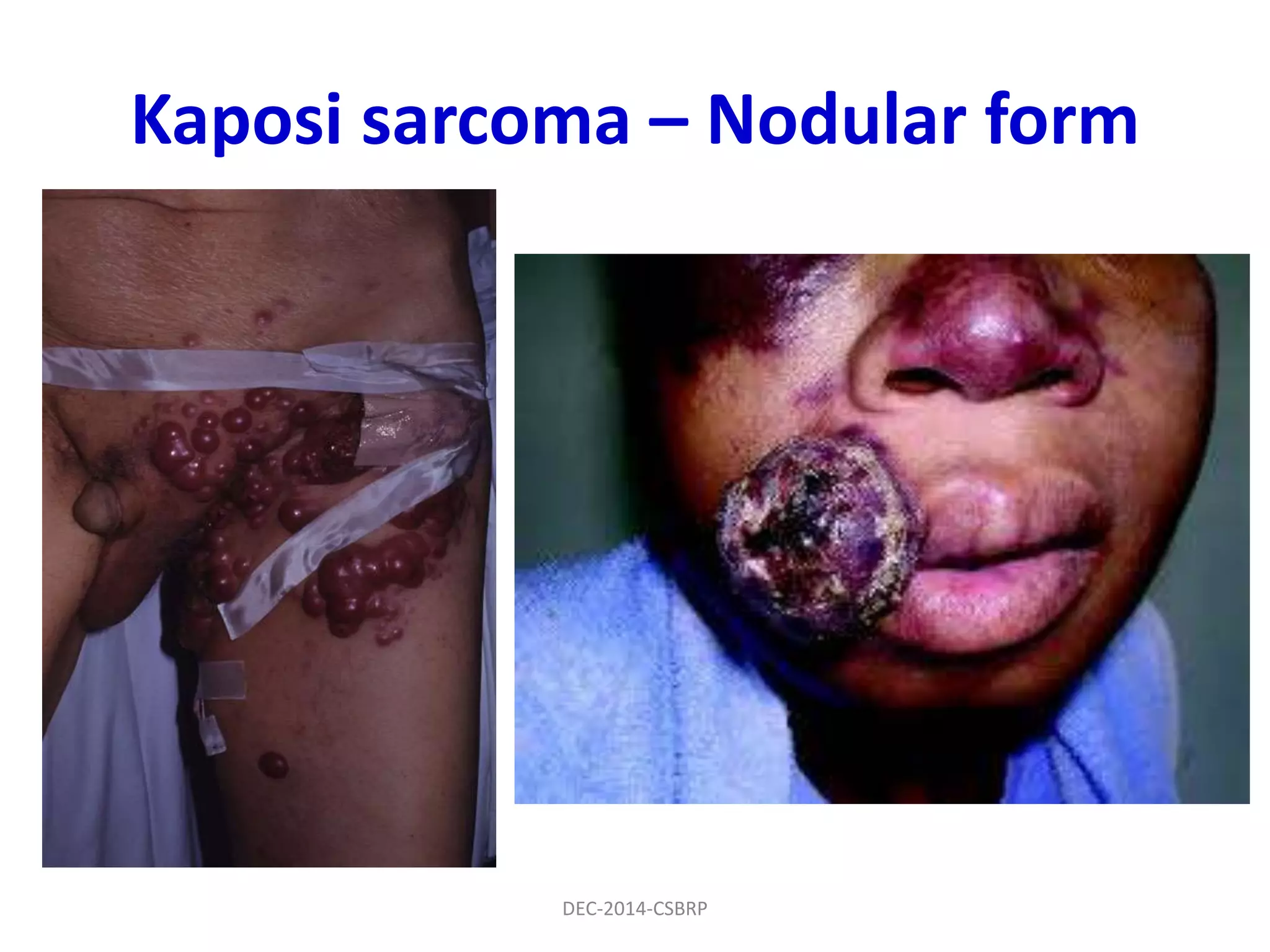
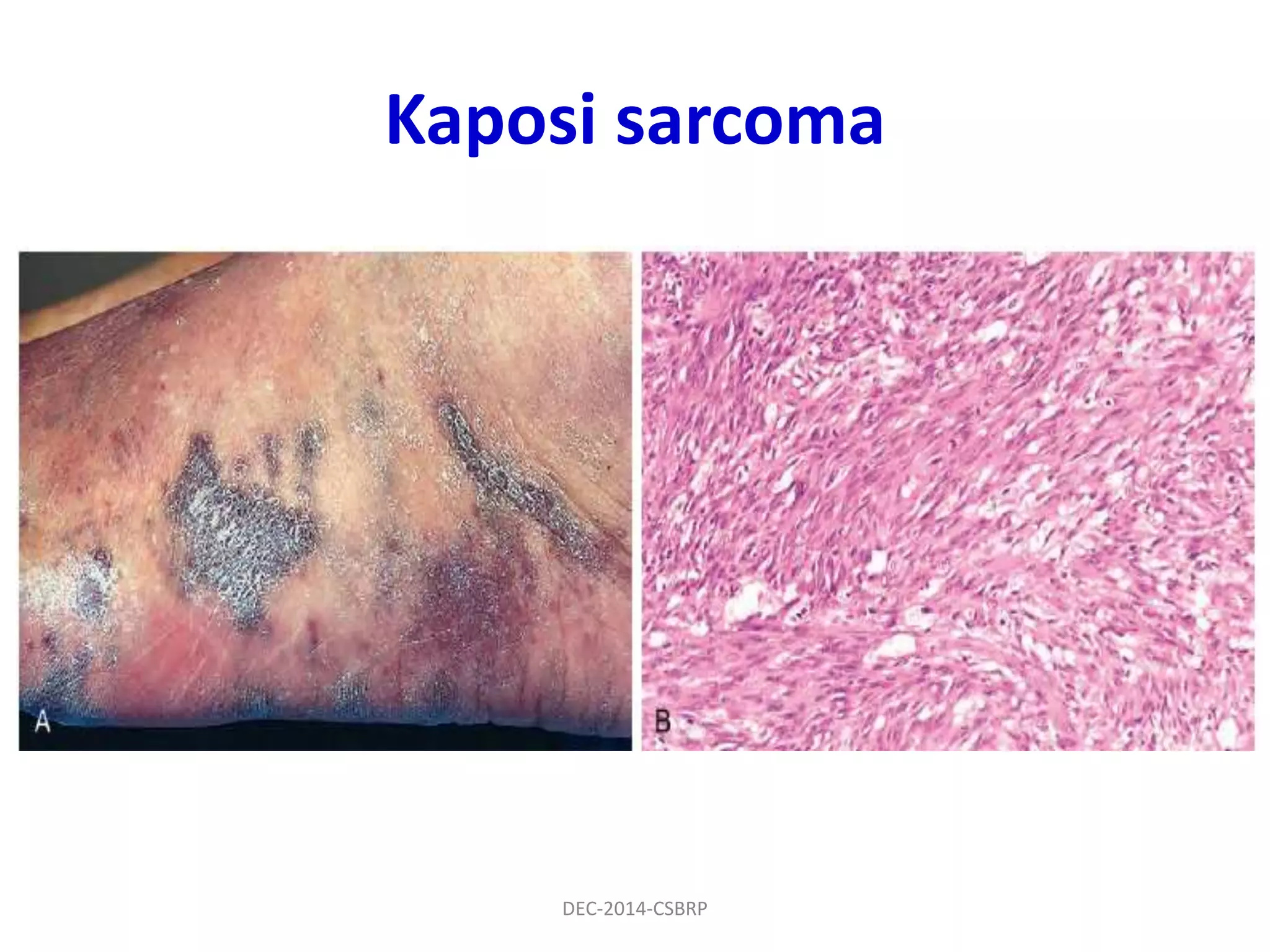
• Patches / plaques / nodules
• Red / purple / violaceous
• Dermal accumulations of spindle cells with slit like
spaces with extravasated RBCs
• Hemosiderin laden macrophages
• Mitotic figures are common in nodular form
Nodular forms often heralds LN and visceral
involvement
IFN-α anti-VEGF are effective
DEC-2014-CSBRP
Kaposi sarcoma
DEC-2014-CSBRP
Kaposi sarcoma – Nodular form
DEC-2014-CSBRP
Kaposi sarcoma
DEC-2014-CSBRP
Kaposi sarcoma
DEC-2014-CSBRP
Kaposi sarcoma
DEC-2014-CSBRP
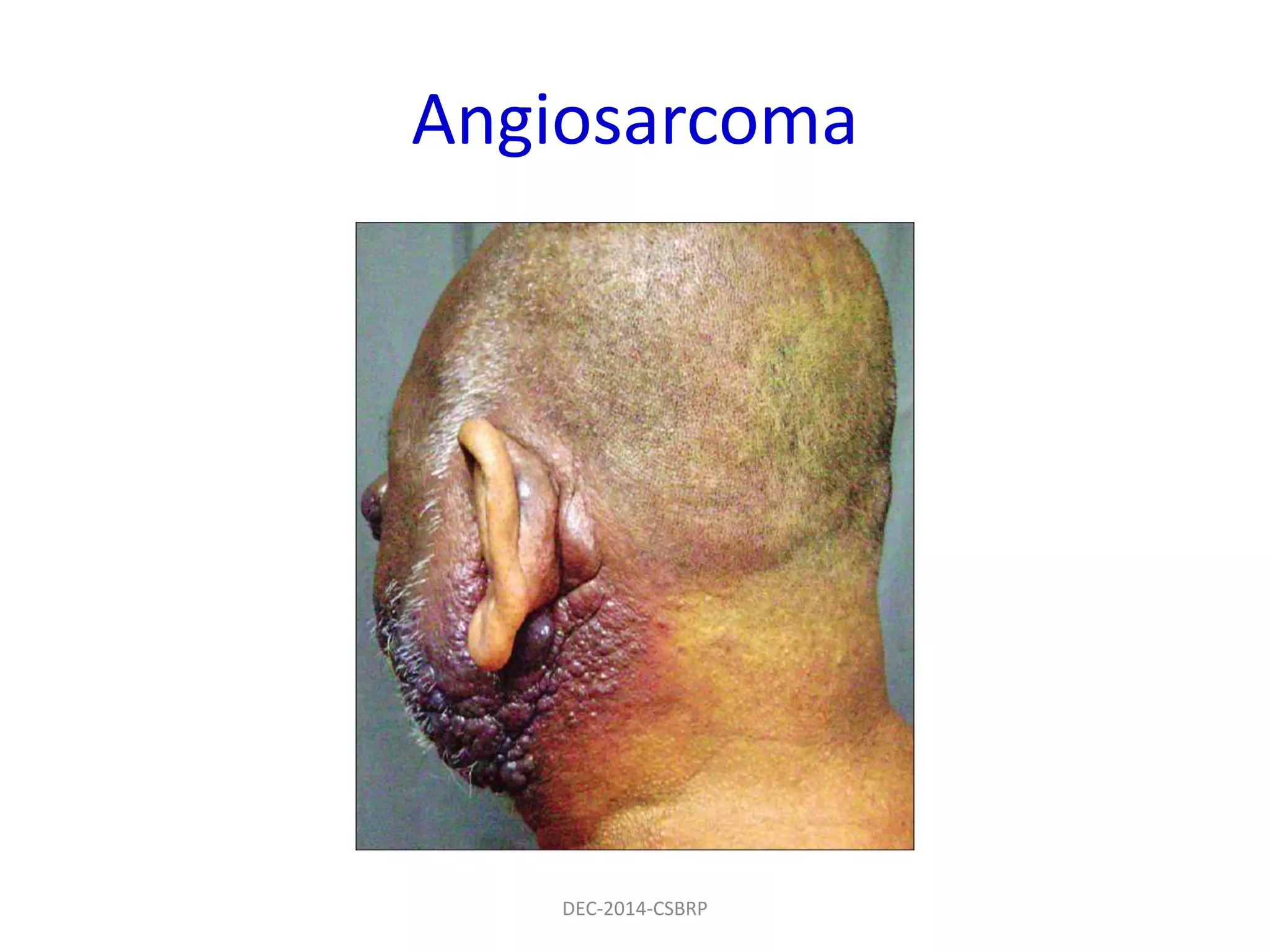
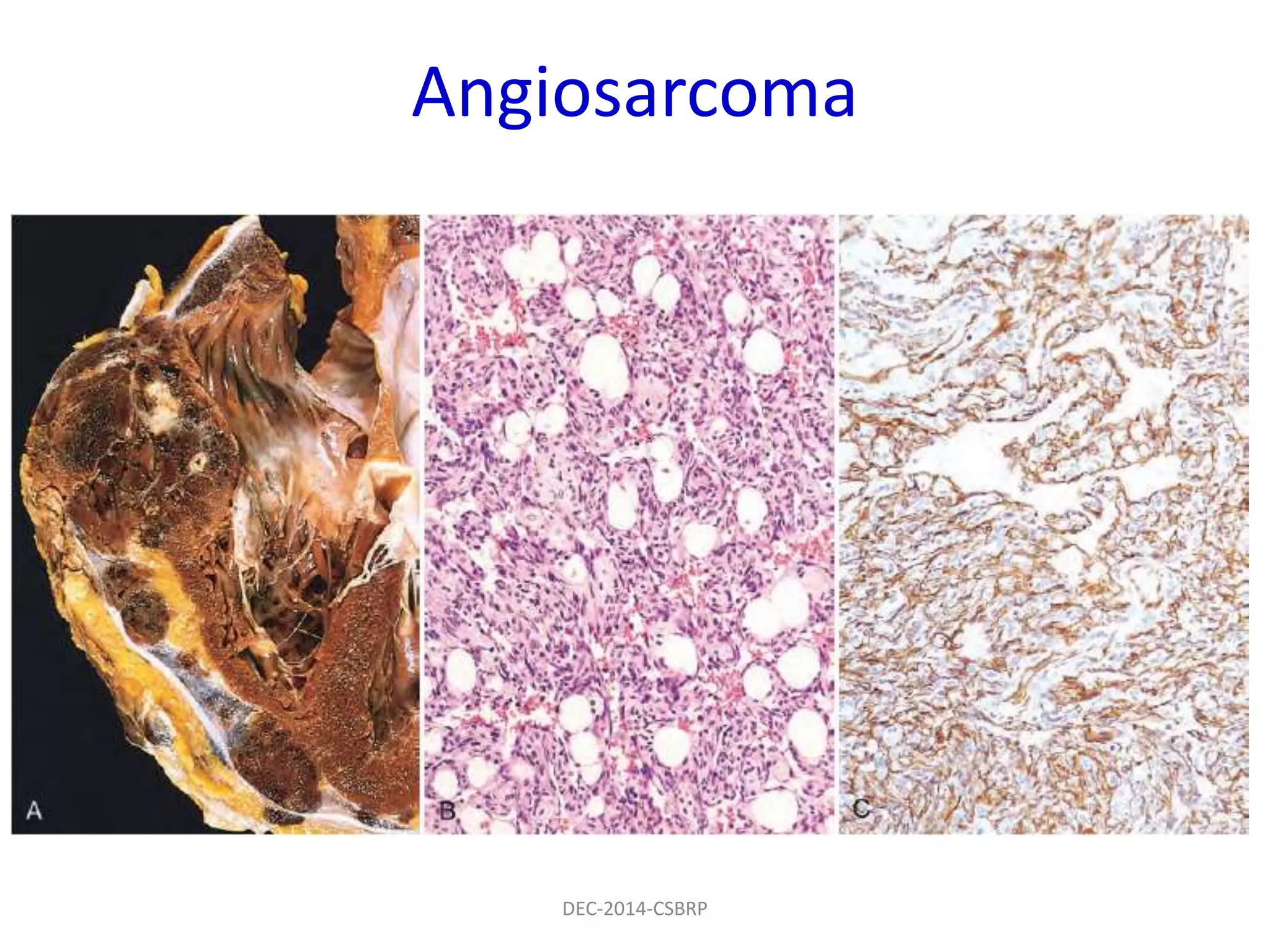
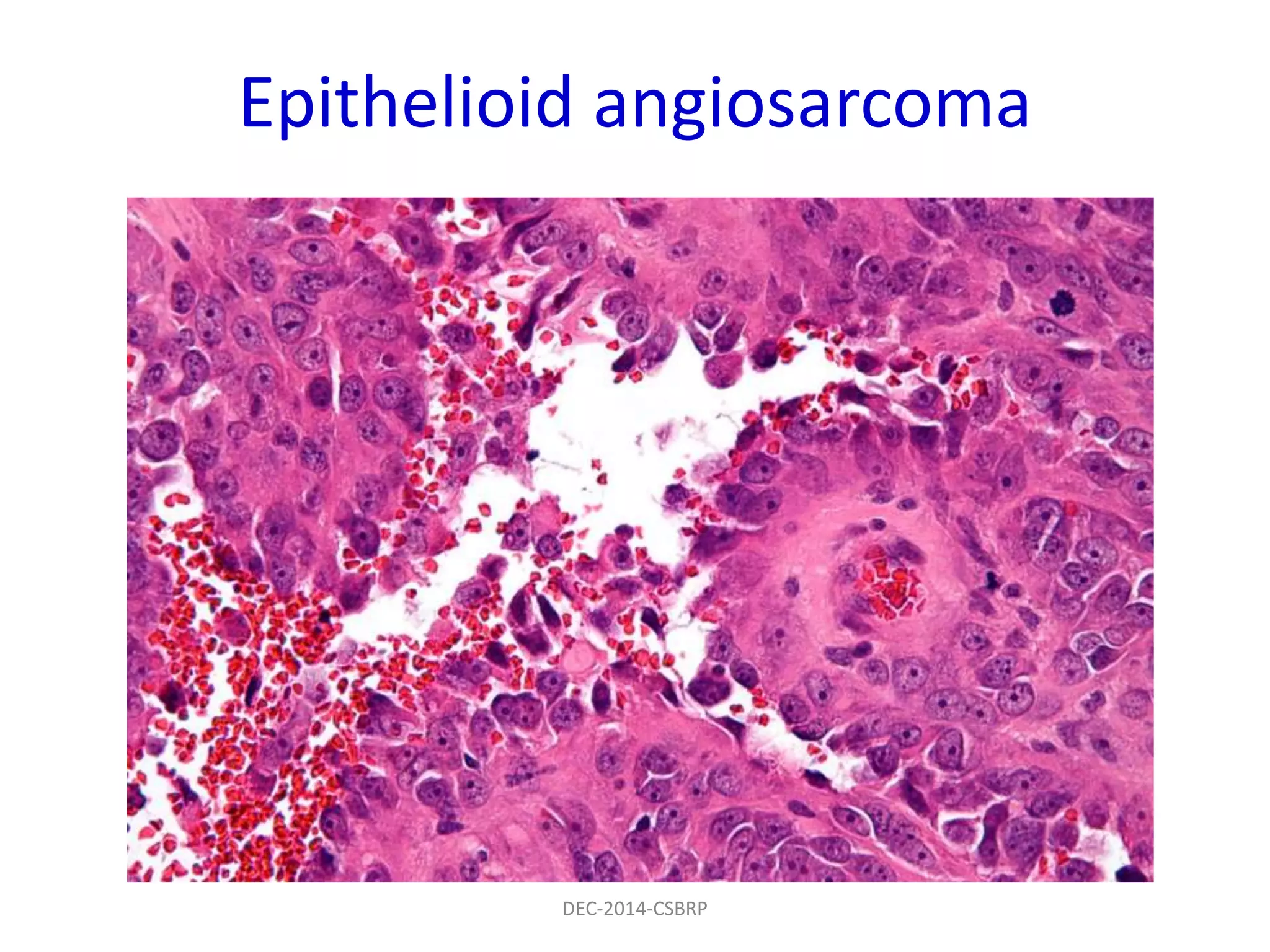
Angiosarcoma
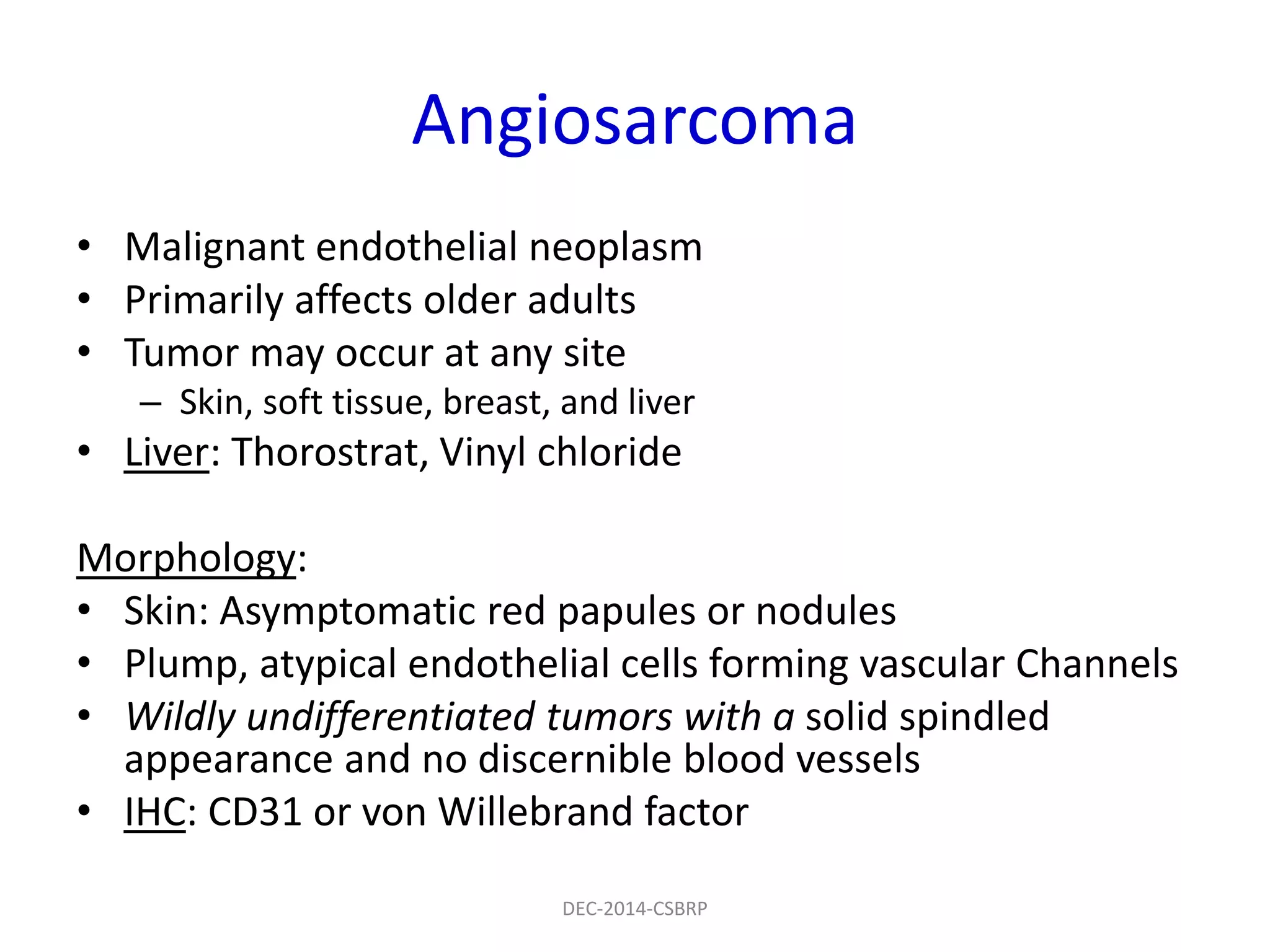
• Malignant endothelial neoplasm
• Primarily affects older adults
• Tumor may occur at any site
– Skin, soft tissue, breast, and liver
• Liver: Thorostrat, Vinyl chloride
Morphology:
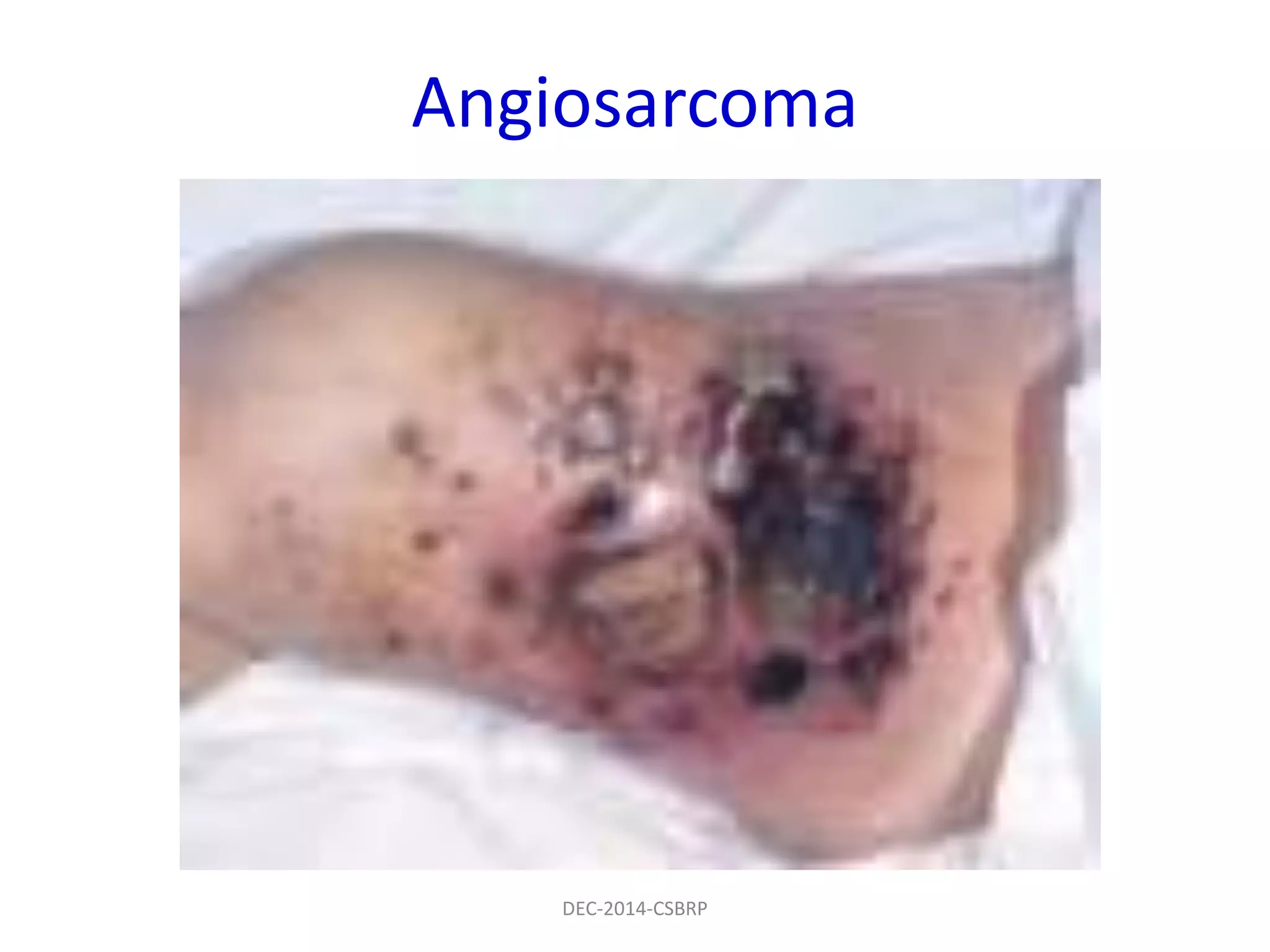
• Skin: Asymptomatic red papules or nodules
• Plump, atypical endothelial cells forming vascular Channels
• Wildly undifferentiated tumors with a solid spindled
appearance and no discernible blood vessels
• IHC: CD31 or von Willebrand factor
DEC-2014-CSBRP
Angiosarcoma
DEC-2014-CSBRP
Angiosarcoma
DEC-2014-CSBRP
Angiosarcoma
DEC-2014-CSBRP
Epithelioid angiosarcoma
DEC-2014-CSBRP
E N D
DEC-2014-CSBRP

Cvs misc-1-csbrp