Schilling test
Dr.CSBR.Prasad, M.D.,
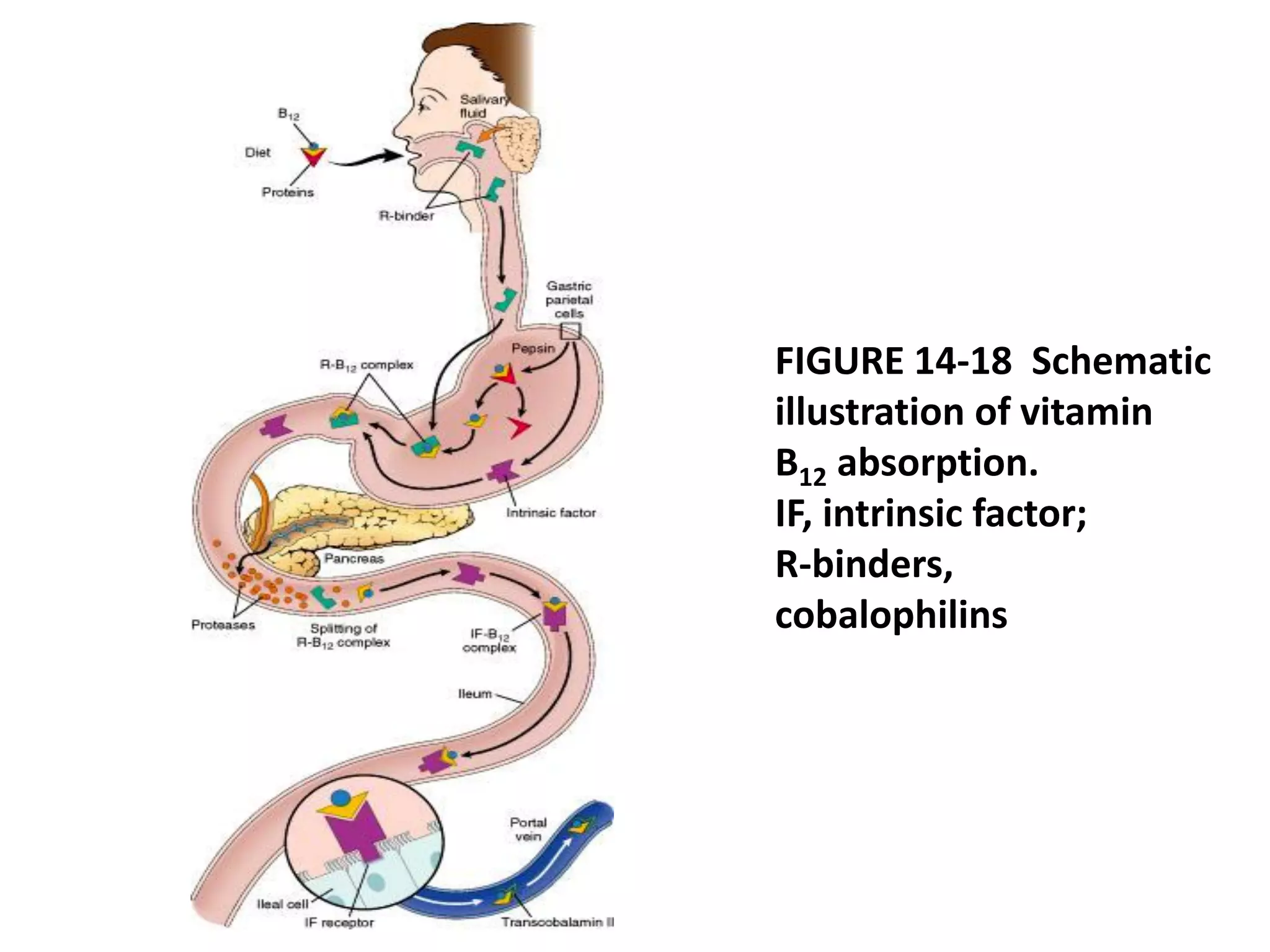
FIGURE 14-18 Schematic
illustration of vitamin
B12 absorption.
IF, intrinsic factor;
R-binders,
cobalophilins
Schilling test
Investigation used for patients with vitamin B12
  deficiency
• The purpose of the test is to determine
  whether the patient has pernicious anemia
• The Schilling test has multiple stages
Stage 1: oral vitamin B12 plus
         intramuscular vitamin B12
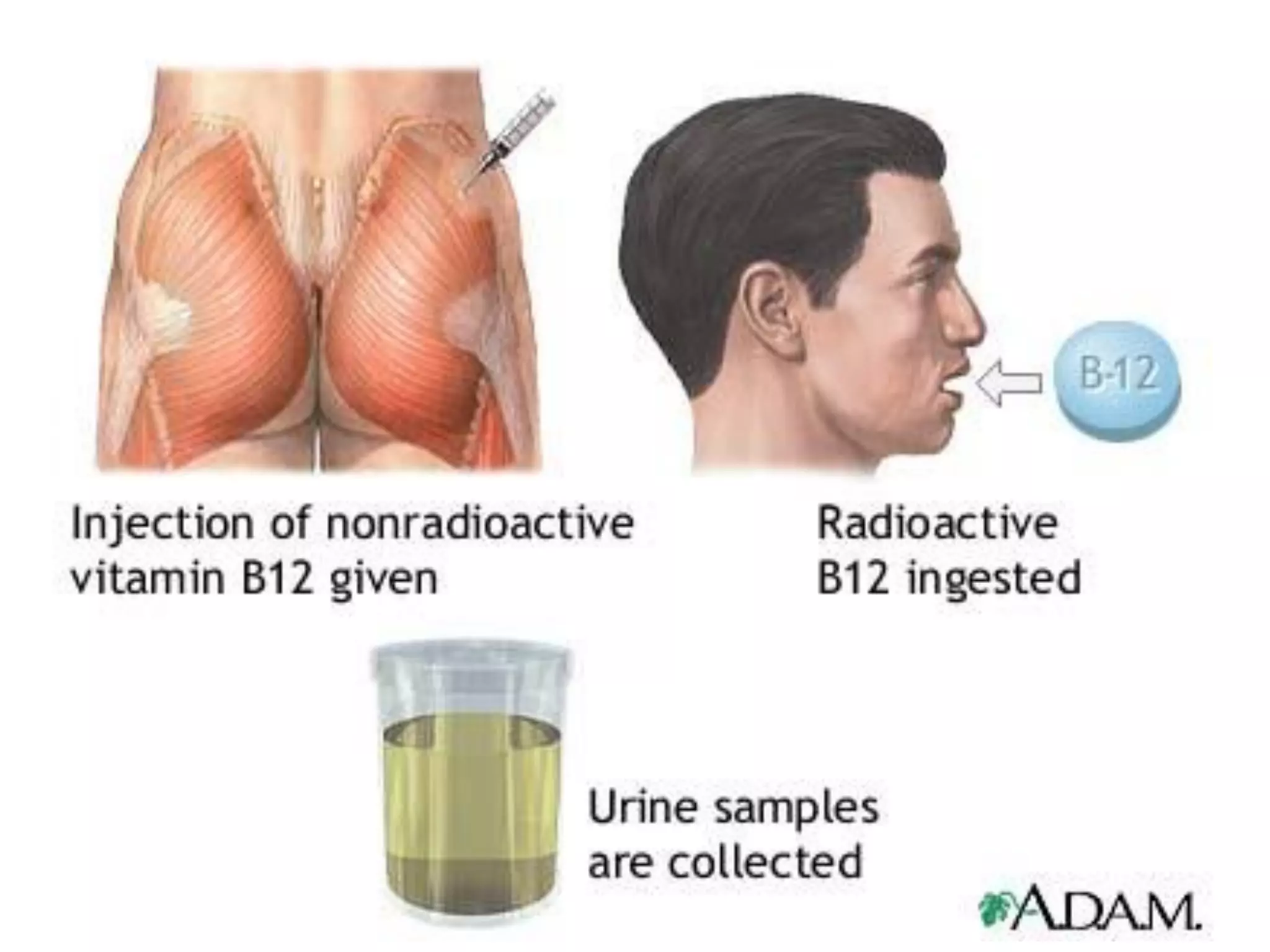
• Oral dose: patient is given radiolabeled Vit B12
   – The most commonly used radiolabels are 57Co and 58Co
• An intramuscular injection of unlabeled vitamin B12 is
  given an hour later
• The patient's urine is then collected over the next 24
  hours to assess the absorption
• A normal result shows at least 10% of the radiolabeled
  vitamin B12 in the urine over the first 24 hours
• In patients with impaired absorption, less than 10% of
  the radiolabeled vitamin B12 is detected
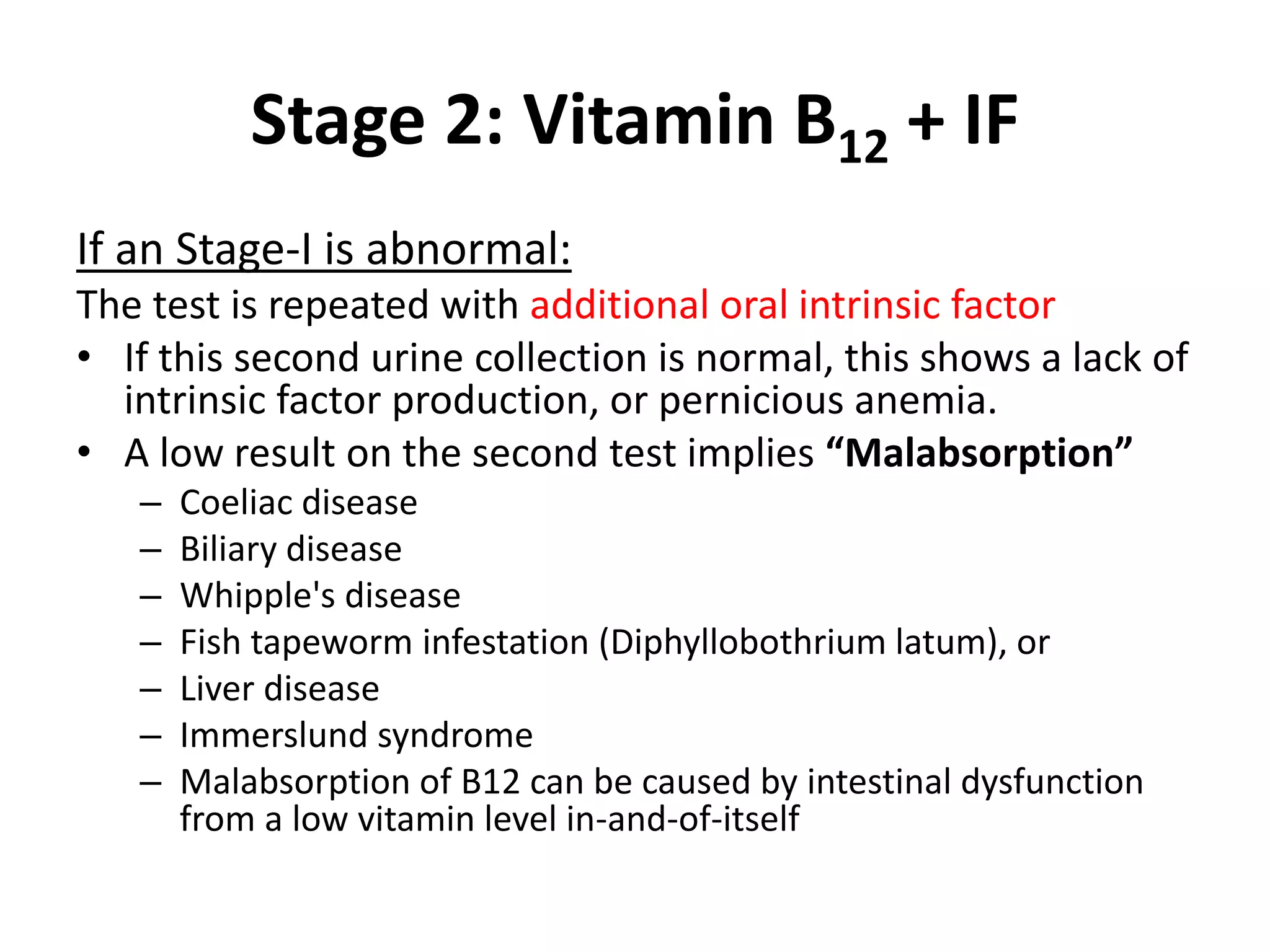
Stage 2: Vitamin B12 + IF
If an Stage-I is abnormal:
The test is repeated with additional oral intrinsic factor
• If this second urine collection is normal, this shows a lack of
  intrinsic factor production, or pernicious anemia.
• A low result on the second test implies “Malabsorption”
   –   Coeliac disease
   –   Biliary disease
   –   Whipple's disease
   –   Fish tapeworm infestation (Diphyllobothrium latum), or
   –   Liver disease
   –   Immerslund syndrome
   –   Malabsorption of B12 can be caused by intestinal dysfunction
       from a low vitamin level in-and-of-itself
Stage 3: vitamin B12 and antibiotics
• This stage is useful for identifying patients
  with bacterial overgrowth syndrome.
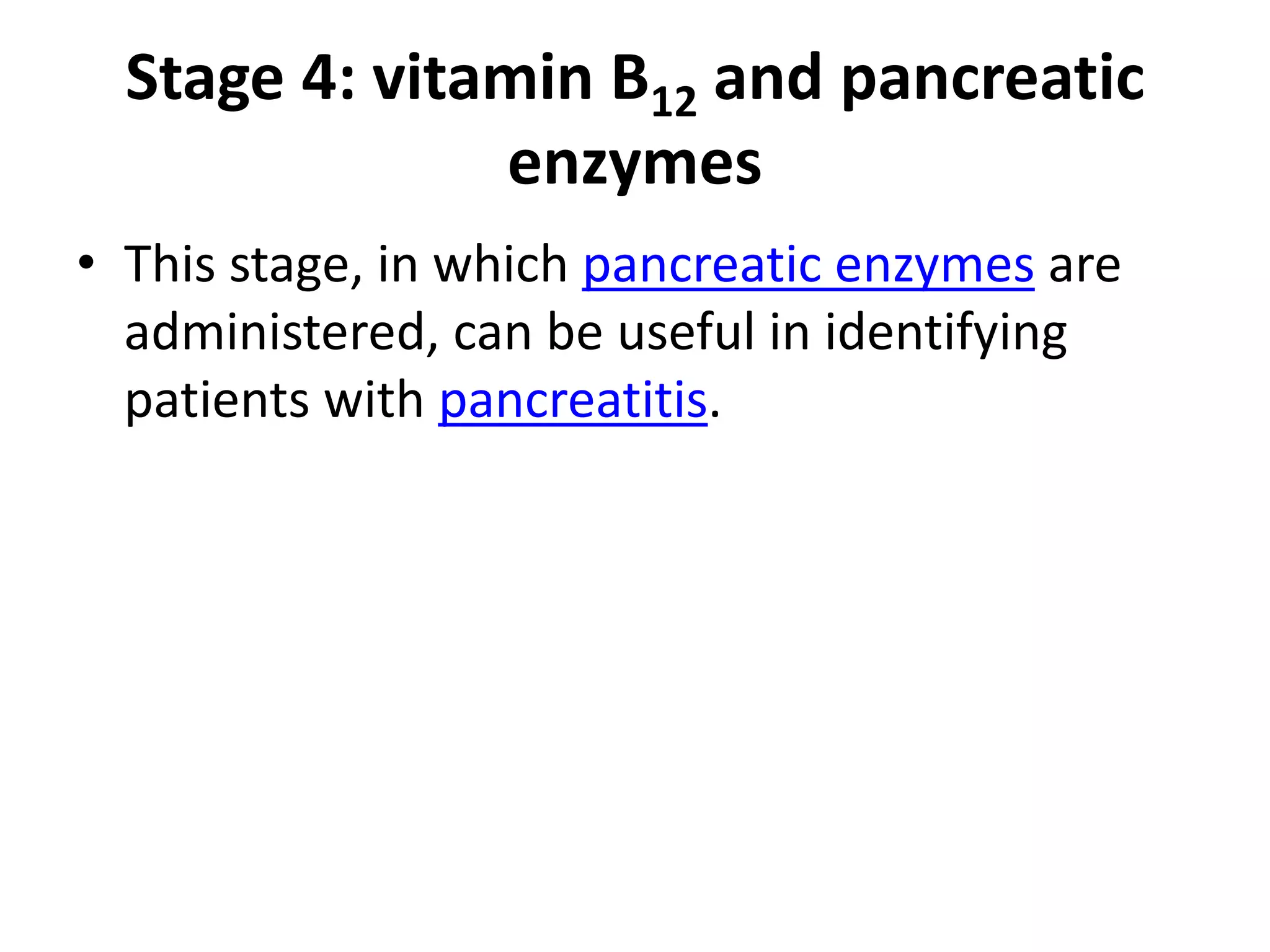
Stage 4: vitamin B12 and pancreatic
               enzymes
• This stage, in which pancreatic enzymes are
  administered, can be useful in identifying
  patients with pancreatitis.
Combined stage 1 and stage 2
• In some versions of the Schilling's test, B12 can
  be given both with and without intrinsic factor
  at the same time, using different cobalt
  radioisotopes 57Co and 58Co, which have
  different radiation signatures, in order to
  differentiate the two forms of B12.
• This allows for only a single radioactive urine
  collection
DDs for
Microcytic Hypochromic Anemia
DD for microcytic hypochromicanemia
Diagnosis of Microcytic Anemia
Tests             Iron Deficiency Inflammation Thalassemia            Sideroblastic
                                                                      Anemia
Smear             Micro/hypo         Normal            Micro/hypo     Variable
                                     micro/hypo        with targeting
SI                <30                <50               Normal to high Normal to high
TIBC              >360               <300              Normal         Normal
Percent           <10                10–20             30–80          30–80
saturation
Ferritin ( g/L)   <15                30–200            50–300         50–300
Hemoglobin        Normal             Normal            Abnormal       Normal
pattern
Note: SI, serum iron; TIBC, total iron-binding capacity.
Anemia of Chronic Disease
Impaired red cell production associated with
  chronic diseases
• Reduction in the proliferation of erythroid
  progenitors and
• Impaired iron utilization

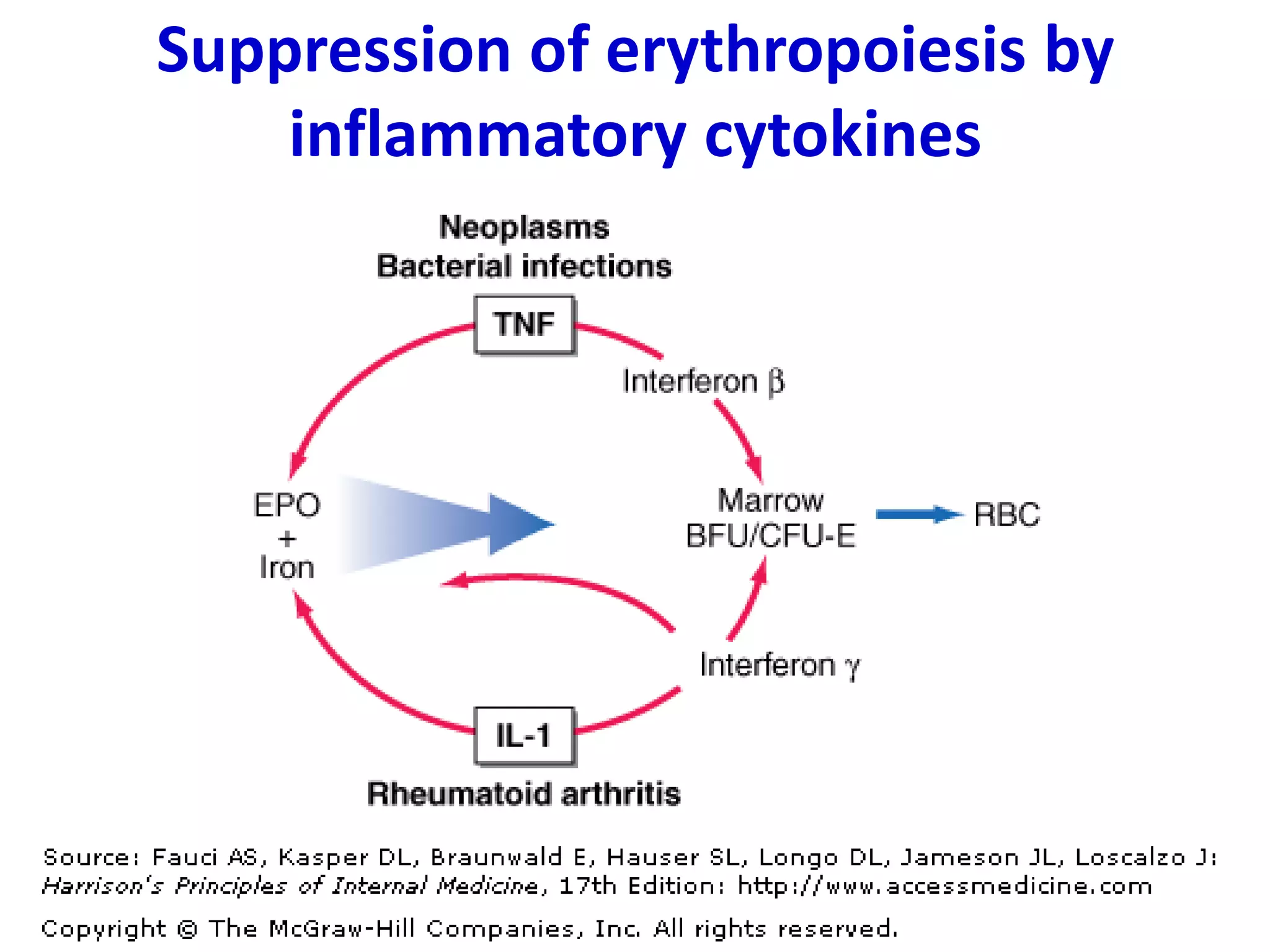
It’s due to the production of inflammatory
   cytokines
Anemia of Chronic Disease
This form of anemia can be grouped into three
  categories:
1. Chronic microbial infections
2. Chronic immune disorders
3. Neoplasms
Inflammatory cytokines
•   TNF
•   IL-1
•   IL-6
•   IF-gamma
•   IF-beta
Effects of chronic inflammation
• Incresed production of IL-6
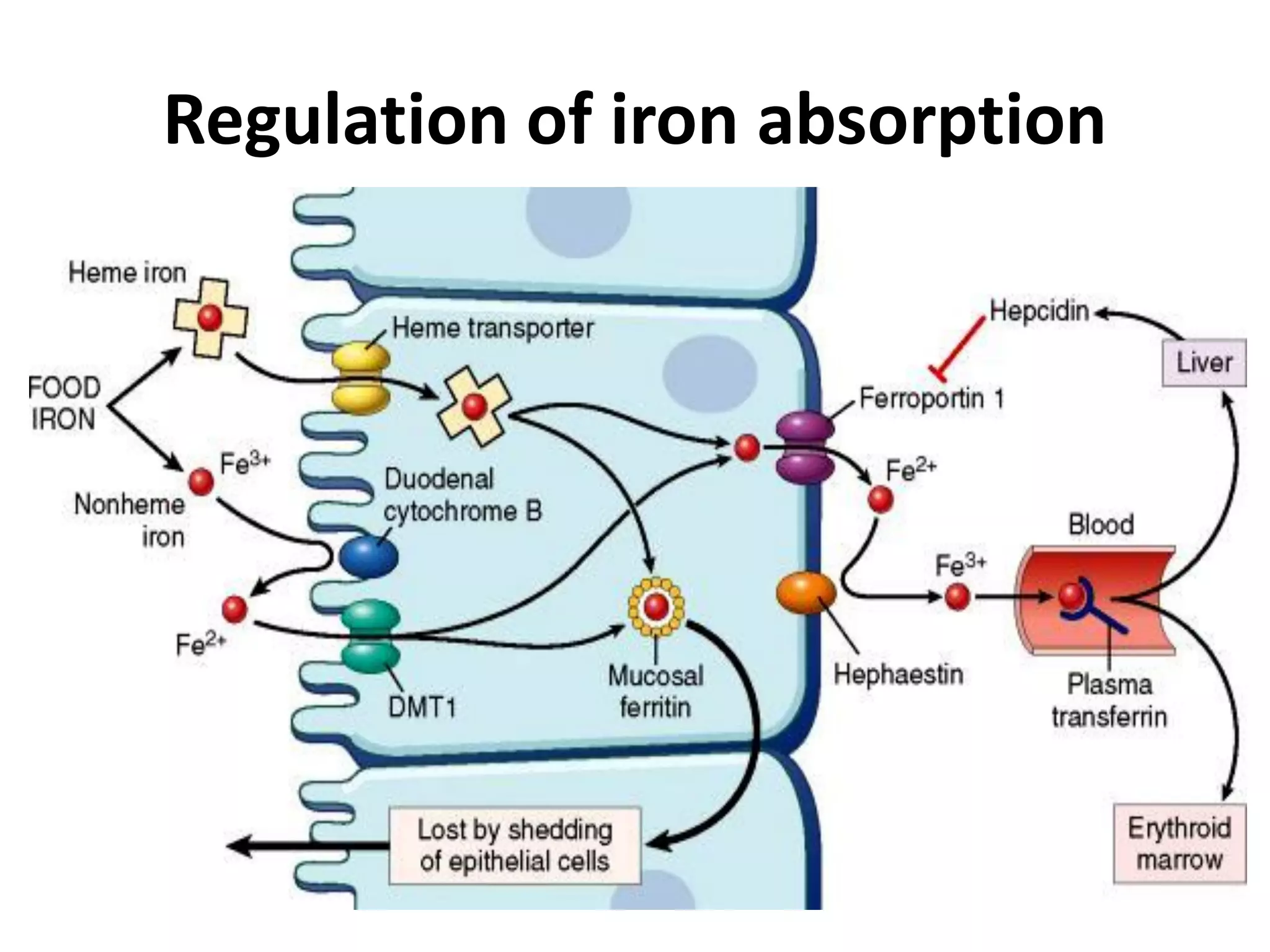
• IL-6 stimulate the hepatic production of
  hepcidin
• Hepcidin inhibits :
  – Ferriportin function in macrophages
  – EPO production
Regulation of iron absorption
Suppression of erythropoiesis by
    inflammatory cytokines
Main lab findings
• Low serum iron,
• Reduced total iron-binding capacity, and
• Abundant stored iron in tissue macrophages
What might be the reason for iron sequestration
       in the setting of inflammation?
• The best guess is that it serves to enhance the
  body's ability to fend off certain types of
  infection, particularly those caused by
  bacteria (such as H. influenzae) that require
  iron for pathogenicity
• In this regard it is interesting to consider that
  hepcidin is structurally related to defensins, a
  family of peptides that have intrinsic
  antibacterial activity
DD from Iron deficiency anemia
The presence of :
  – increased storage iron in marrow macrophages,
  – a high serum ferritin level, and
  – a reduced total iron-binding capacity


readily rule out iron deficiency as the cause of
  anemia.
END
Dr.CSBR.Prasad, M.D.,
Associate Professor of Pathology,
Sri Devaraj Urs Medical College,
         Kolar-563101,
           Karnataka,
             INDIA.
   csbrprasad@reiffmail.com

Vit b12-schilling

  • 1.
  • 2.
    FIGURE 14-18 Schematic illustrationof vitamin B12 absorption. IF, intrinsic factor; R-binders, cobalophilins
  • 3.
    Schilling test Investigation usedfor patients with vitamin B12 deficiency • The purpose of the test is to determine whether the patient has pernicious anemia • The Schilling test has multiple stages
  • 4.
    Stage 1: oralvitamin B12 plus intramuscular vitamin B12 • Oral dose: patient is given radiolabeled Vit B12 – The most commonly used radiolabels are 57Co and 58Co • An intramuscular injection of unlabeled vitamin B12 is given an hour later • The patient's urine is then collected over the next 24 hours to assess the absorption • A normal result shows at least 10% of the radiolabeled vitamin B12 in the urine over the first 24 hours • In patients with impaired absorption, less than 10% of the radiolabeled vitamin B12 is detected
  • 7.
    Stage 2: VitaminB12 + IF If an Stage-I is abnormal: The test is repeated with additional oral intrinsic factor • If this second urine collection is normal, this shows a lack of intrinsic factor production, or pernicious anemia. • A low result on the second test implies “Malabsorption” – Coeliac disease – Biliary disease – Whipple's disease – Fish tapeworm infestation (Diphyllobothrium latum), or – Liver disease – Immerslund syndrome – Malabsorption of B12 can be caused by intestinal dysfunction from a low vitamin level in-and-of-itself
  • 8.
    Stage 3: vitaminB12 and antibiotics • This stage is useful for identifying patients with bacterial overgrowth syndrome.
  • 9.
    Stage 4: vitaminB12 and pancreatic enzymes • This stage, in which pancreatic enzymes are administered, can be useful in identifying patients with pancreatitis.
  • 10.
    Combined stage 1and stage 2 • In some versions of the Schilling's test, B12 can be given both with and without intrinsic factor at the same time, using different cobalt radioisotopes 57Co and 58Co, which have different radiation signatures, in order to differentiate the two forms of B12. • This allows for only a single radioactive urine collection
  • 12.
  • 13.
    DD for microcytichypochromicanemia Diagnosis of Microcytic Anemia Tests Iron Deficiency Inflammation Thalassemia Sideroblastic Anemia Smear Micro/hypo Normal Micro/hypo Variable micro/hypo with targeting SI <30 <50 Normal to high Normal to high TIBC >360 <300 Normal Normal Percent <10 10–20 30–80 30–80 saturation Ferritin ( g/L) <15 30–200 50–300 50–300 Hemoglobin Normal Normal Abnormal Normal pattern Note: SI, serum iron; TIBC, total iron-binding capacity.
  • 14.
  • 15.
    Anemia of ChronicDisease Impaired red cell production associated with chronic diseases • Reduction in the proliferation of erythroid progenitors and • Impaired iron utilization It’s due to the production of inflammatory cytokines
  • 16.
    Anemia of ChronicDisease This form of anemia can be grouped into three categories: 1. Chronic microbial infections 2. Chronic immune disorders 3. Neoplasms
  • 17.
    Inflammatory cytokines • TNF • IL-1 • IL-6 • IF-gamma • IF-beta
  • 18.
    Effects of chronicinflammation • Incresed production of IL-6 • IL-6 stimulate the hepatic production of hepcidin • Hepcidin inhibits : – Ferriportin function in macrophages – EPO production
  • 19.
  • 20.
  • 21.
    Suppression of erythropoiesisby inflammatory cytokines
  • 22.
    Main lab findings •Low serum iron, • Reduced total iron-binding capacity, and • Abundant stored iron in tissue macrophages
  • 23.
    What might bethe reason for iron sequestration in the setting of inflammation? • The best guess is that it serves to enhance the body's ability to fend off certain types of infection, particularly those caused by bacteria (such as H. influenzae) that require iron for pathogenicity • In this regard it is interesting to consider that hepcidin is structurally related to defensins, a family of peptides that have intrinsic antibacterial activity
  • 24.
    DD from Irondeficiency anemia The presence of : – increased storage iron in marrow macrophages, – a high serum ferritin level, and – a reduced total iron-binding capacity readily rule out iron deficiency as the cause of anemia.
  • 25.
  • 26.
    Dr.CSBR.Prasad, M.D., Associate Professorof Pathology, Sri Devaraj Urs Medical College, Kolar-563101, Karnataka, INDIA. csbrprasad@reiffmail.com