



CE
                                             R FA
                                      N TE
                                     I
                              T ER
                          P U INES
                O MT MACH
            C        EE
       INMANS
                 M

     A
 R R E HU
B HE
 W


                                                      By:Pranav Kulkarni
                                                      College: C.B.I.T (Hyd)
                                                      0209-5040
BRAIN COMPUTER INTERFACE
 Brain computer interface sometimes called as Brain Neural interface is
  a direct communication link between the functioning human brain
  and the outside world


 BCI uses brain activity to command,control,actuate and communicate
  with the world directly through brain integration with peripheral
  devices and systems
WHAT'S THE MAIN PRINCIPLE ??
 Main principle behind this interface is the
  bio-electrical activity of nerves and
  muscles


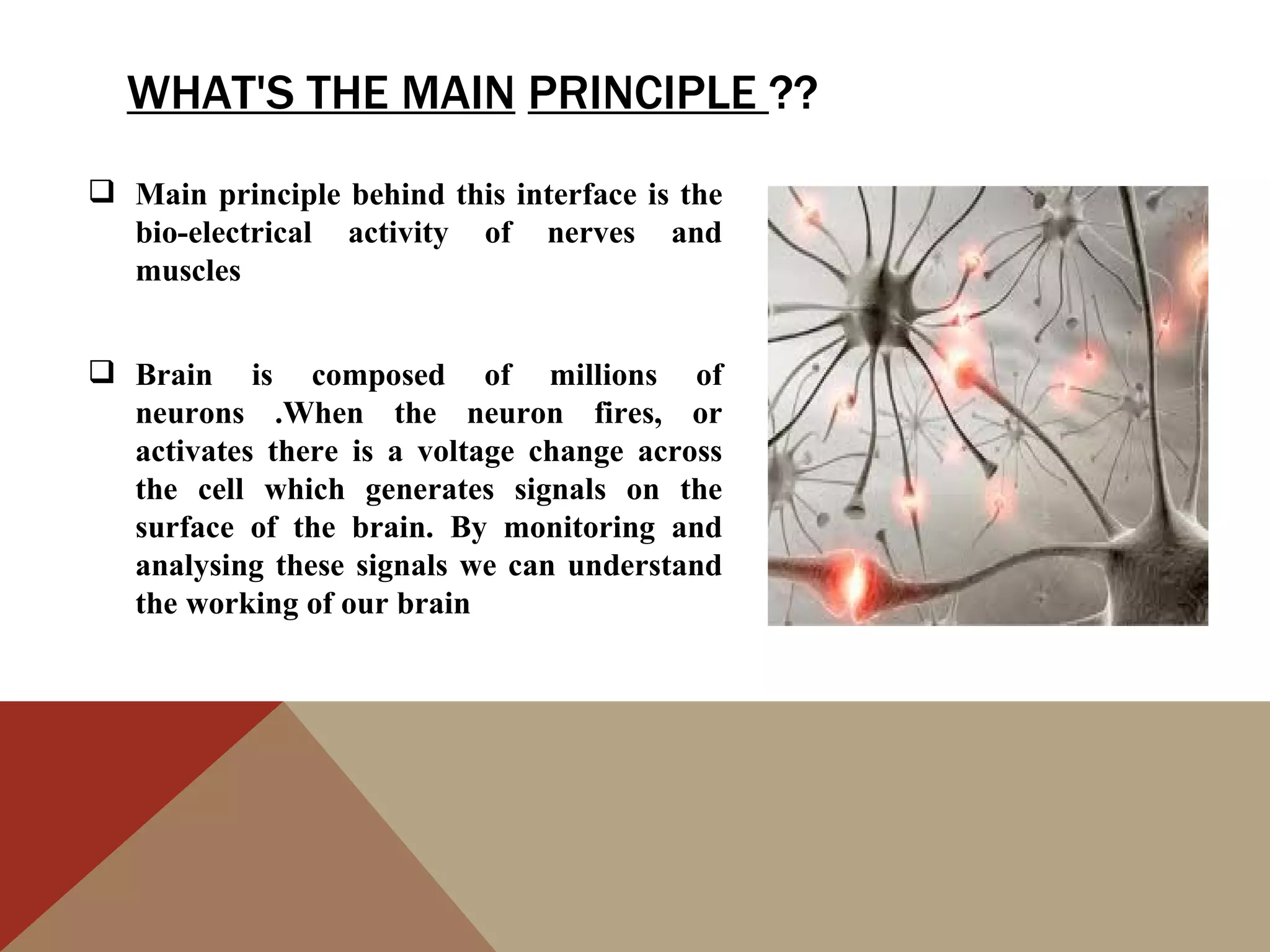
 Brain is composed of millions of
  neurons .When the neuron fires, or
  activates there is a voltage change across
  the cell which generates signals on the
  surface of the brain. By monitoring and
  analysing these signals we can understand
  the working of our brain
BRAIN COMPUTER INTERFACE ARCHITECTURE
ELECTROENCEPHALOGRAPHY(EEG)
 EEG is a recording of the electrical activity of the brain directly from
  the scalp produced by the firing of neurons within the brain


 No EEG signal pattern is duplicated for any 2 distinct actions


 Pain less test


 Used to confirm brain death
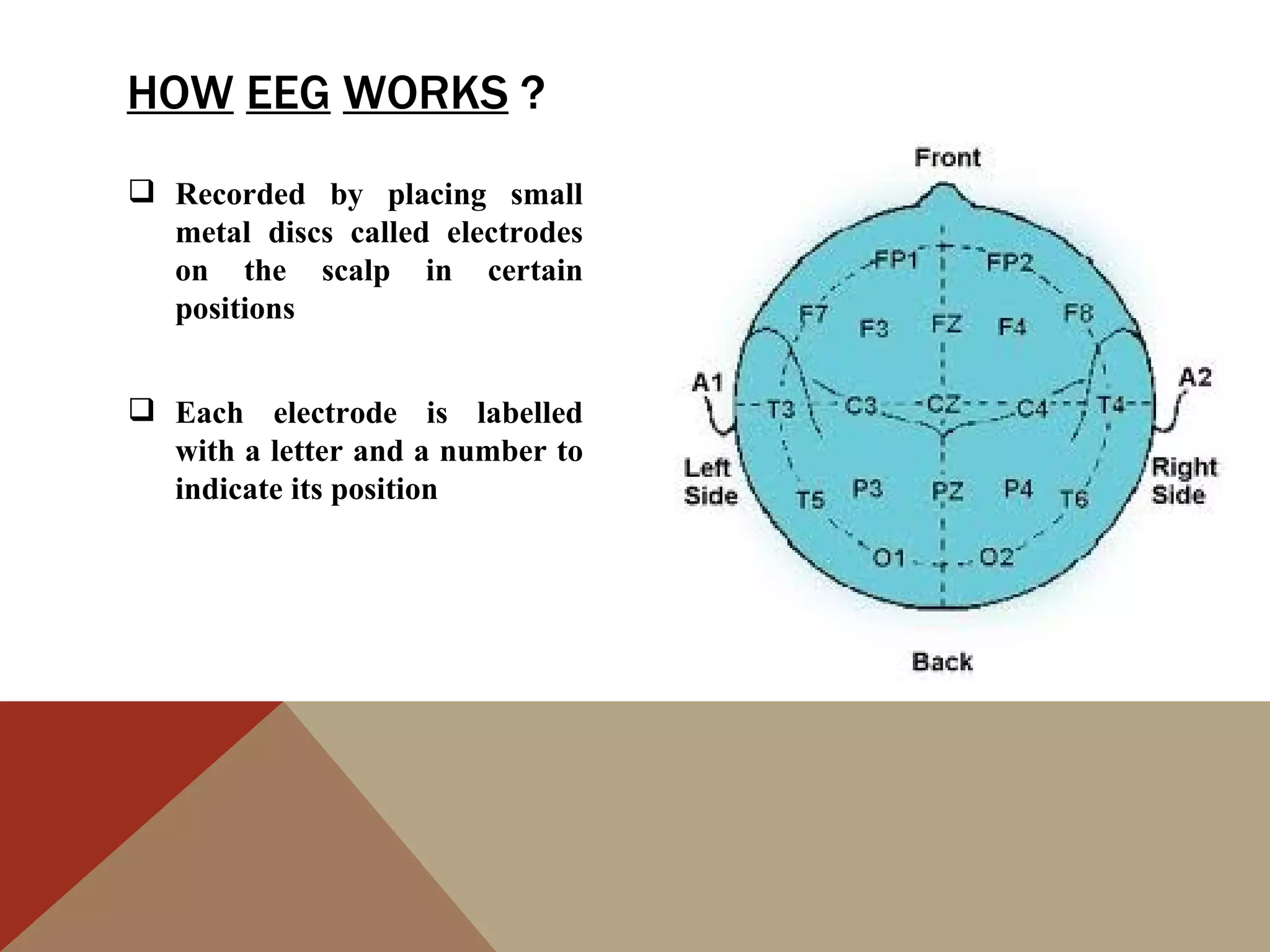
HOW EEG WORKS ?
 Recorded by placing small
  metal discs called electrodes
  on the scalp in certain
  positions


 Each electrode is labelled
  with a letter and a number to
  indicate its position
HOW IS THE SIGNAL PRODUCED?
 EEG machines use differential amplifiers to produce each channel for
  trace of activity


 EEG signal itself is in the waveform so it is required that an adc be
  employed to produce the signal as a series of numeric values each
  representing voltage values of each channel at a certain time instance
STRUCTURE OF BRAIN-COMPUTER
INTERFACE
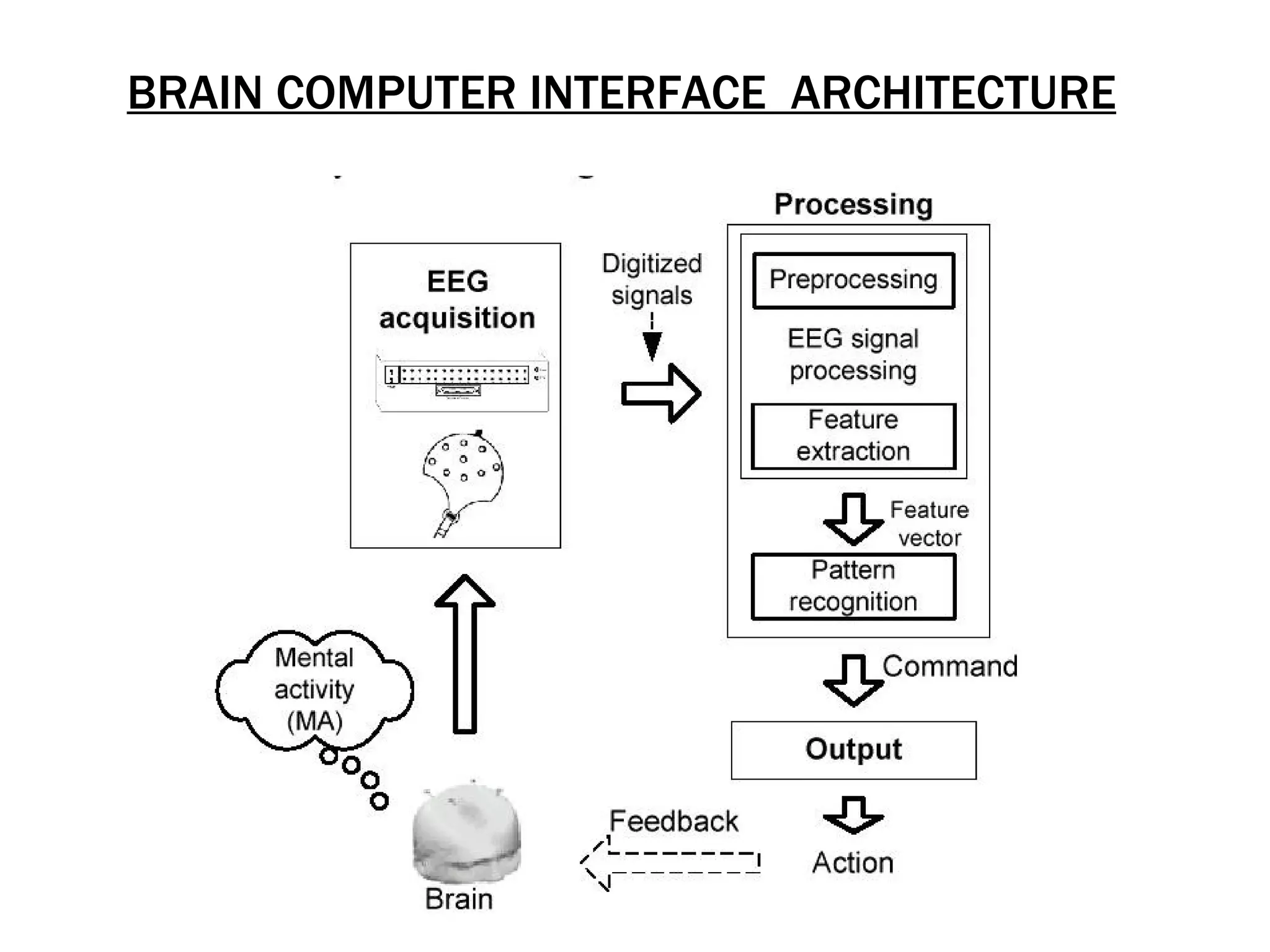
The common structure of a Brain-Computer Interface is the following:

Signal Acquisition: the EEG signals are obtained from the brain through
 invasive or non-invasive methods (for example, electrodes).

Signal Pre-Processing: once the signals are acquired, it is necessary to
clean them.

Signal Classification: once the signals are cleaned, they will be processed
and classified to find out which kind of mental task the subject is
performing.

Computer Interaction: once the signals are classified, they will be used by
an appropriate algorithm for the development of a certain application.
COMPONENTS OF A BCI
 IMPLANT DEVICE
 SIGNAL PROCESSING DEVICE
     Spike Detection
     Signal analysis
     Multi-channel Acquisition Systems
 EXTERNAL DEVICE
 FEEDBACK SECTION
CLASSIFICATION OF BCIS
 INVASIVE BCIs


 PARTIALLY INVASIVE BCIs


 NON-INVASIVE BCIs
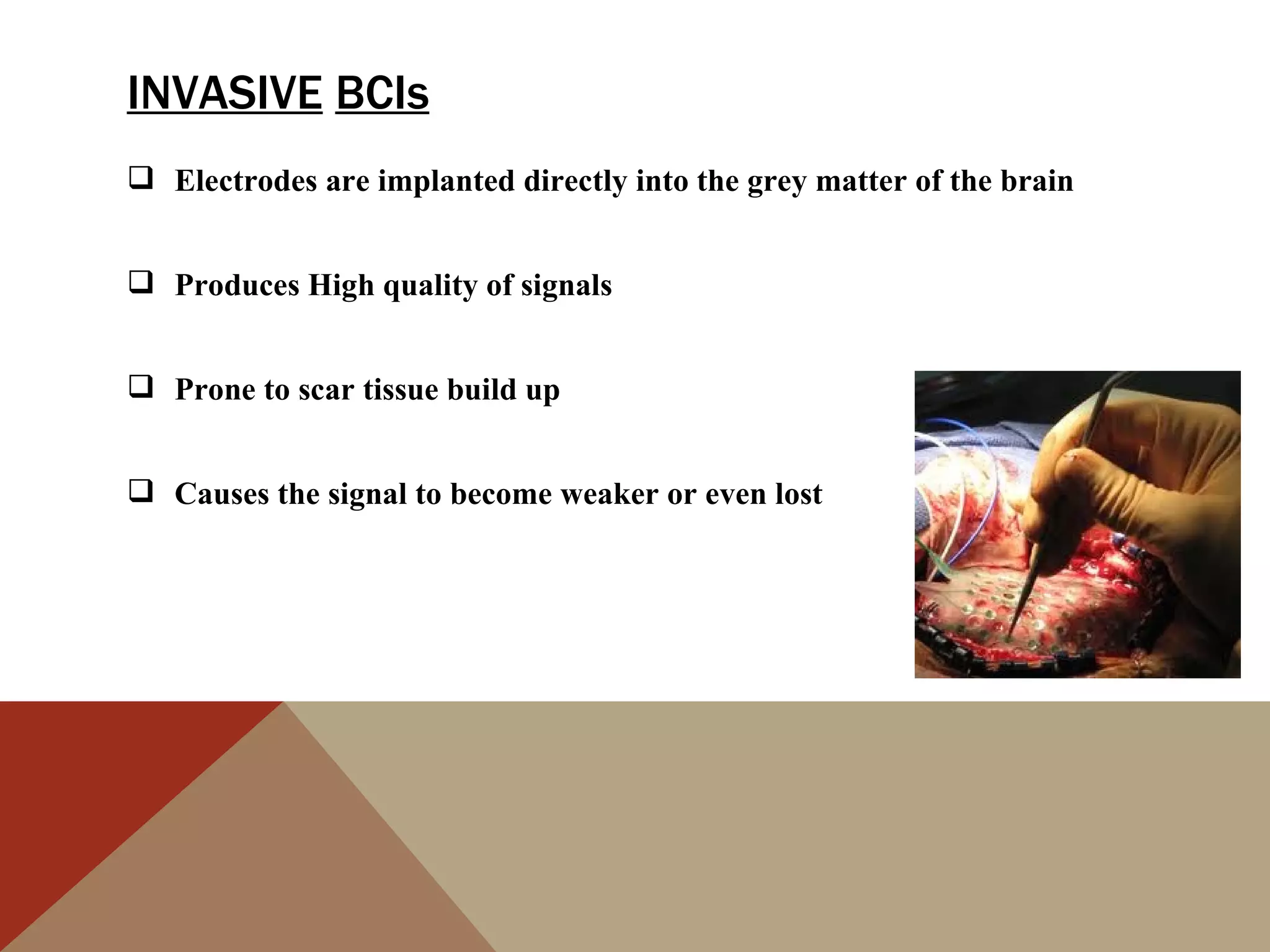
INVASIVE BCIs
 Electrodes are implanted directly into the grey matter of the brain


 Produces High quality of signals


 Prone to scar tissue build up


 Causes the signal to become weaker or even lost
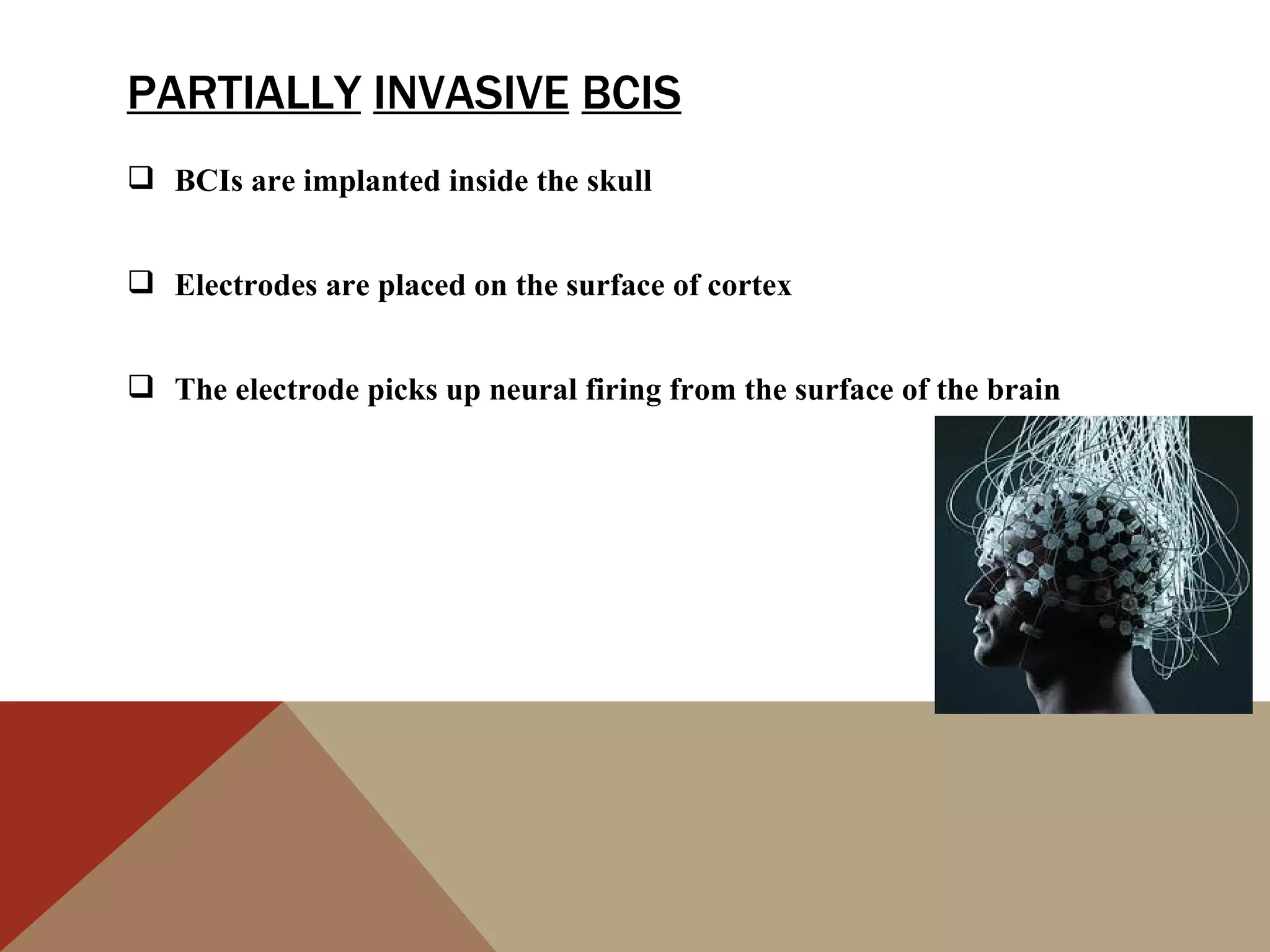
PARTIALLY INVASIVE BCIS
 BCIs are implanted inside the skull


 Electrodes are placed on the surface of cortex


 The electrode picks up neural firing from the surface of the brain
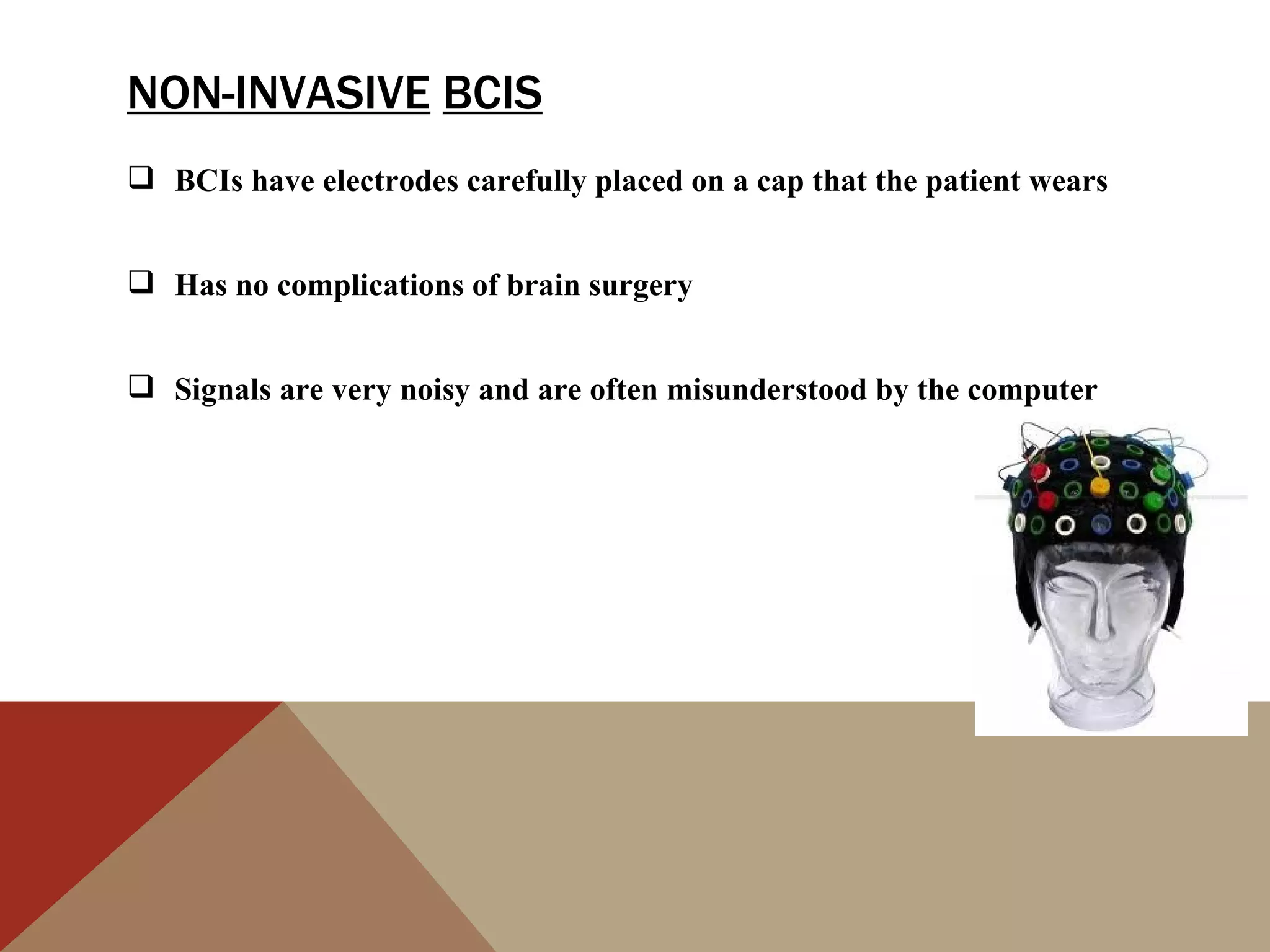
NON-INVASIVE BCIS
 BCIs have electrodes carefully placed on a cap that the patient wears


 Has no complications of brain surgery


 Signals are very noisy and are often misunderstood by the computer
EXISTING BCI SYSTEMS
 The Brain Response Interface
 P3 Character Recognition
 ERS/ERD Cursor Control
 A steady state visual evoked potential BCI
 Mu rhythm Cursor control
 Thought Translation Device
 An Implanted BCI
PROS                              CONS
Can help people with             The brain is incredibly
inabilities to control wheel      complex
chairs or other devices with      The signals are weak and
brain activity                    are prone to interference
To develop better sensing        Surgery to brain might be
system                            risky and cause brain death
BCIs       are      linguistic   There are chemical
independent and can be used       reactions involved in brain
any where across the world        which BCIdevices cannot pick
This has provided new area       up
of work for scientists and        The equipment is less than
researchers around the world      portable
THE BIG CHALLENGES
 Getting the right codes for the desired action


 Avoiding brain damage


 Virus attacks


 Animal rights


 Extensive training required
APPLICATIONS
 Patients with conditions causing severe communication disorders
 Military uses
 Bioengineering applications
 Control of Brain-operated wheel-chair
 Multimedia and Virtual Reality applications
 Artificial vision
FUTURE SCOPE
 Wireless implants in brain
 Injectable implants
 Better interpretation of waves
 Decode non-motor brain signals
 Brain-to-Brain communication
CONCLUSION
Since the BCI enables people to communicate and control appliances with
just the use of brain signals it opens many gates for disabled people. The
possible future applications are numerous. Even though this field of
science has grown vastly in last few years we are still a few steps away
from the scene where people drive brain-operated wheelchairs on the
streets. New technologies need to be developed and people in the
neuroscience field need also to take into account other brain imaging
techniques, such as MEG and fMRI, to develop the future BCI. As time
passes BCI might be a part of our every day lives.
QUERIES ?
Brain computer interface

Brain computer interface

  • 1.
    CE R FA N TE I T ER P U INES O MT MACH C EE INMANS M A R R E HU B HE W By:Pranav Kulkarni College: C.B.I.T (Hyd) 0209-5040
  • 2.
    BRAIN COMPUTER INTERFACE Brain computer interface sometimes called as Brain Neural interface is a direct communication link between the functioning human brain and the outside world  BCI uses brain activity to command,control,actuate and communicate with the world directly through brain integration with peripheral devices and systems
  • 3.
    WHAT'S THE MAINPRINCIPLE ??  Main principle behind this interface is the bio-electrical activity of nerves and muscles  Brain is composed of millions of neurons .When the neuron fires, or activates there is a voltage change across the cell which generates signals on the surface of the brain. By monitoring and analysing these signals we can understand the working of our brain
  • 4.
  • 5.
    ELECTROENCEPHALOGRAPHY(EEG)  EEG isa recording of the electrical activity of the brain directly from the scalp produced by the firing of neurons within the brain  No EEG signal pattern is duplicated for any 2 distinct actions  Pain less test  Used to confirm brain death
  • 6.
    HOW EEG WORKS?  Recorded by placing small metal discs called electrodes on the scalp in certain positions  Each electrode is labelled with a letter and a number to indicate its position
  • 7.
    HOW IS THESIGNAL PRODUCED?  EEG machines use differential amplifiers to produce each channel for trace of activity  EEG signal itself is in the waveform so it is required that an adc be employed to produce the signal as a series of numeric values each representing voltage values of each channel at a certain time instance
  • 8.
    STRUCTURE OF BRAIN-COMPUTER INTERFACE Thecommon structure of a Brain-Computer Interface is the following: Signal Acquisition: the EEG signals are obtained from the brain through invasive or non-invasive methods (for example, electrodes). Signal Pre-Processing: once the signals are acquired, it is necessary to clean them. Signal Classification: once the signals are cleaned, they will be processed and classified to find out which kind of mental task the subject is performing. Computer Interaction: once the signals are classified, they will be used by an appropriate algorithm for the development of a certain application.
  • 9.
    COMPONENTS OF ABCI  IMPLANT DEVICE  SIGNAL PROCESSING DEVICE  Spike Detection  Signal analysis  Multi-channel Acquisition Systems  EXTERNAL DEVICE  FEEDBACK SECTION
  • 10.
    CLASSIFICATION OF BCIS INVASIVE BCIs  PARTIALLY INVASIVE BCIs  NON-INVASIVE BCIs
  • 11.
    INVASIVE BCIs  Electrodesare implanted directly into the grey matter of the brain  Produces High quality of signals  Prone to scar tissue build up  Causes the signal to become weaker or even lost
  • 12.
    PARTIALLY INVASIVE BCIS BCIs are implanted inside the skull  Electrodes are placed on the surface of cortex  The electrode picks up neural firing from the surface of the brain
  • 13.
    NON-INVASIVE BCIS  BCIshave electrodes carefully placed on a cap that the patient wears  Has no complications of brain surgery  Signals are very noisy and are often misunderstood by the computer
  • 14.
    EXISTING BCI SYSTEMS The Brain Response Interface  P3 Character Recognition  ERS/ERD Cursor Control  A steady state visual evoked potential BCI  Mu rhythm Cursor control  Thought Translation Device  An Implanted BCI
  • 15.
    PROS CONS Can help people with The brain is incredibly inabilities to control wheel complex chairs or other devices with The signals are weak and brain activity are prone to interference To develop better sensing Surgery to brain might be system risky and cause brain death BCIs are linguistic There are chemical independent and can be used reactions involved in brain any where across the world which BCIdevices cannot pick This has provided new area up of work for scientists and The equipment is less than researchers around the world portable
  • 16.
    THE BIG CHALLENGES Getting the right codes for the desired action  Avoiding brain damage  Virus attacks  Animal rights  Extensive training required
  • 17.
    APPLICATIONS  Patients withconditions causing severe communication disorders  Military uses  Bioengineering applications  Control of Brain-operated wheel-chair  Multimedia and Virtual Reality applications  Artificial vision
  • 18.
    FUTURE SCOPE  Wirelessimplants in brain  Injectable implants  Better interpretation of waves  Decode non-motor brain signals  Brain-to-Brain communication
  • 19.
    CONCLUSION Since the BCIenables people to communicate and control appliances with just the use of brain signals it opens many gates for disabled people. The possible future applications are numerous. Even though this field of science has grown vastly in last few years we are still a few steps away from the scene where people drive brain-operated wheelchairs on the streets. New technologies need to be developed and people in the neuroscience field need also to take into account other brain imaging techniques, such as MEG and fMRI, to develop the future BCI. As time passes BCI might be a part of our every day lives.
  • 20.