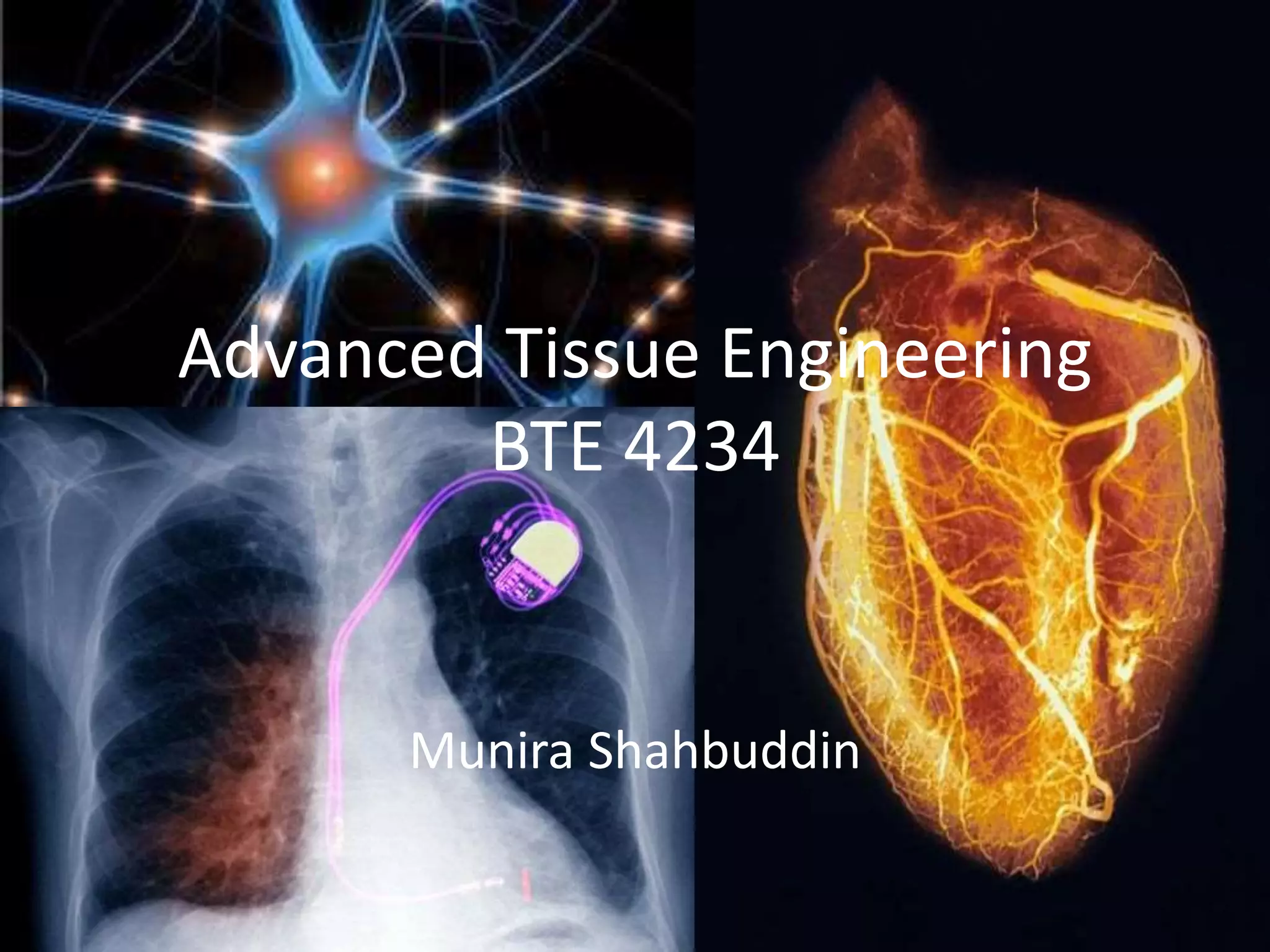
Advanced Tissue Engineering
BTE 4234
Munira Shahbuddin
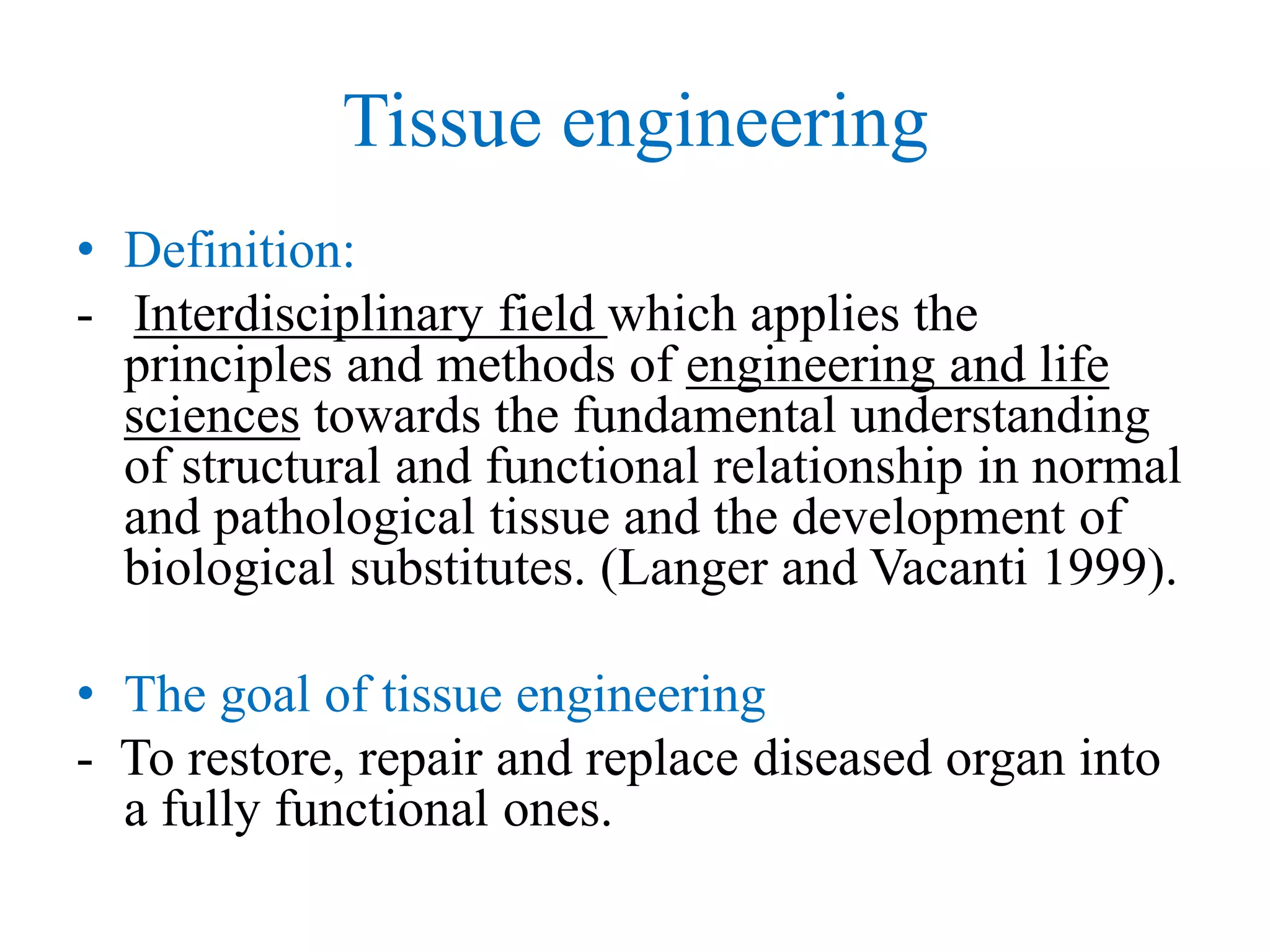
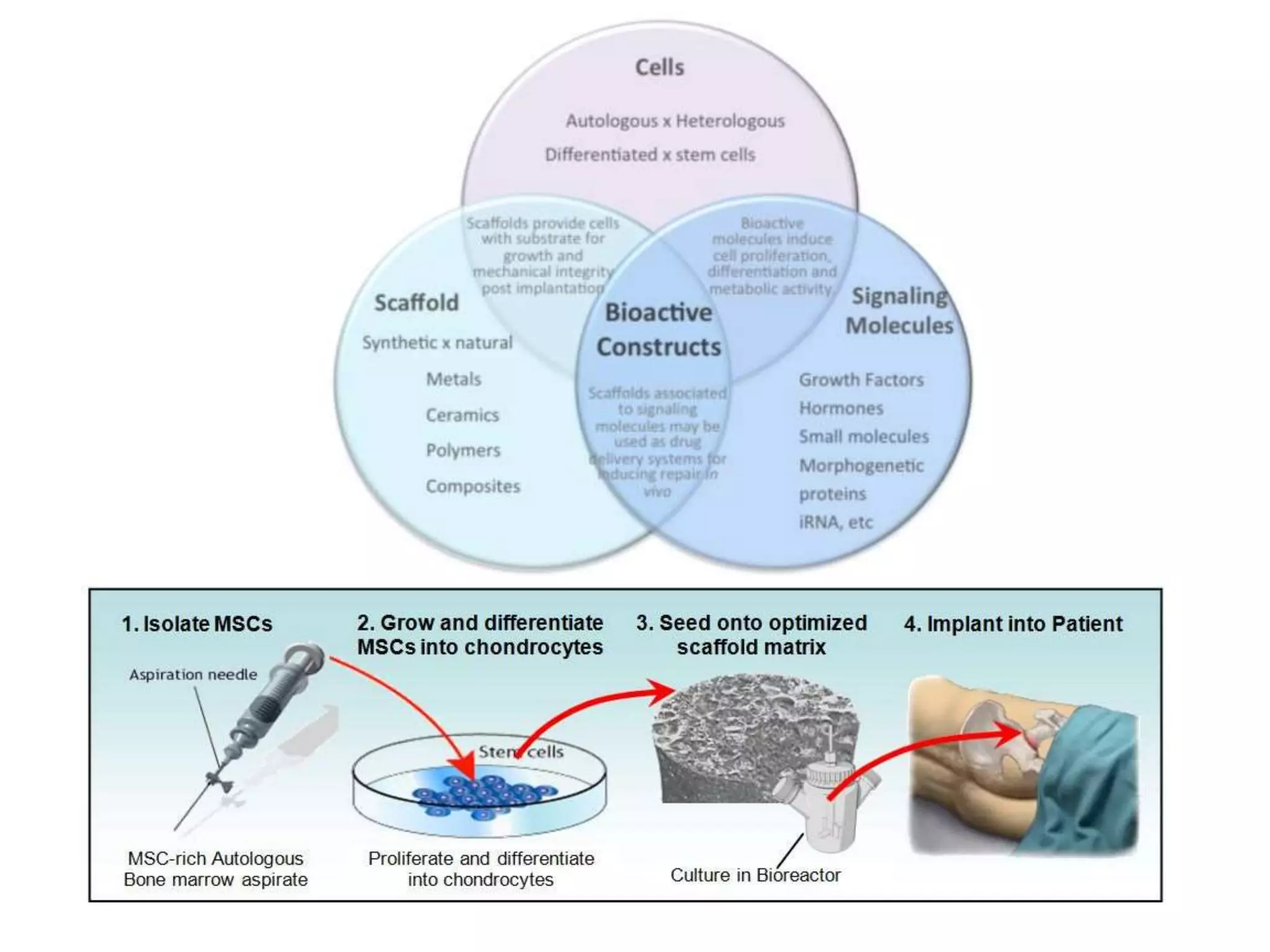
Tissue engineering
• Definition:
- Interdisciplinary field which applies the
principles and methods of engineering and life
sciences towards the fundamental understanding
of structural and functional relationship in normal
and pathological tissue and the development of
biological substitutes. (Langer and Vacanti 1999).
• The goal of tissue engineering
- To restore, repair and replace diseased organ into
a fully functional ones.
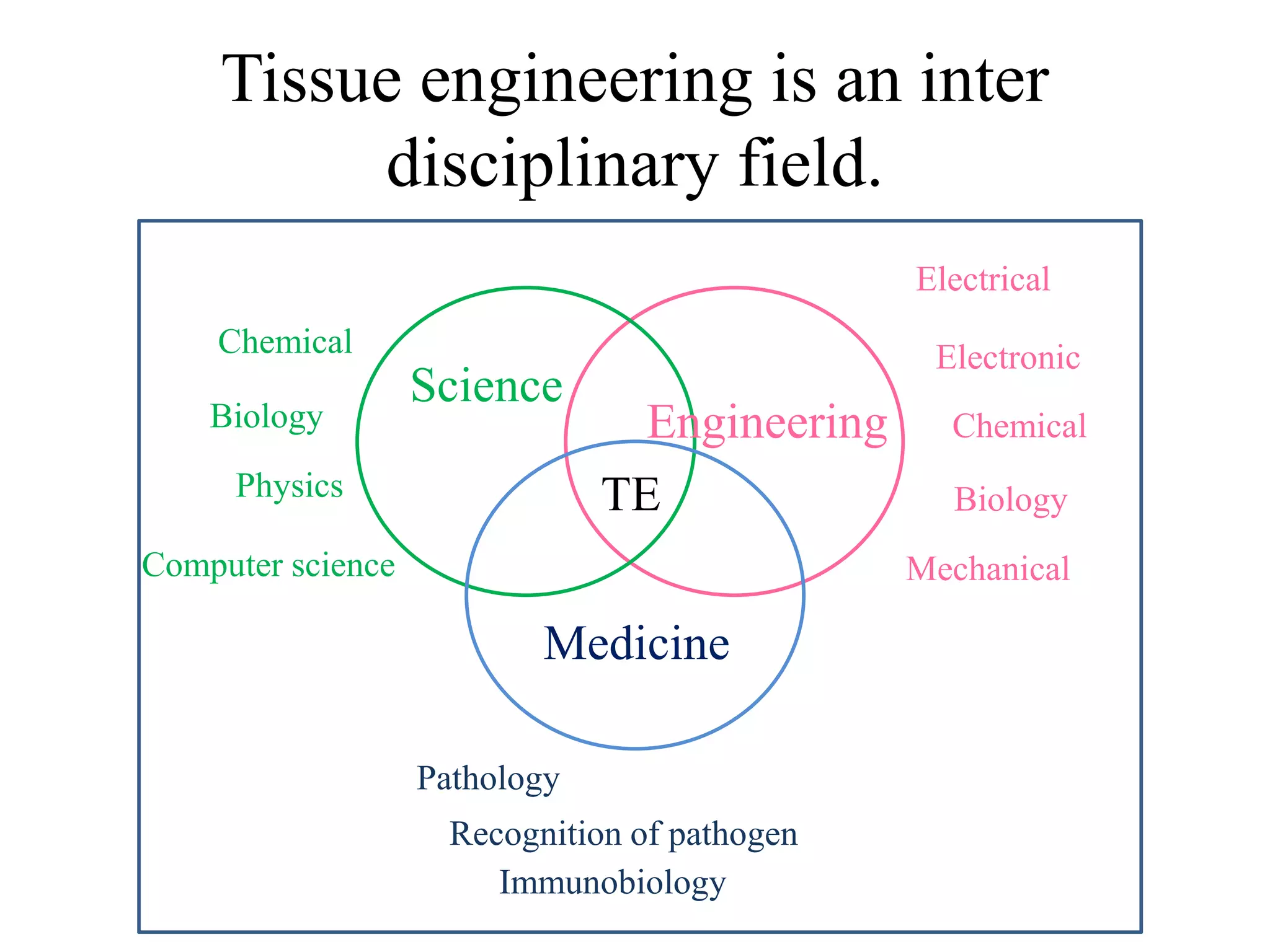
Tissue engineering is an inter
disciplinary field.
Science
Engineering
Medicine
Electrical
Electronic
Chemical
Biology
Mechanical
Pathology
Recognition of pathogen
Immunobiology
Chemical
Biology
Physics TE
Computer science
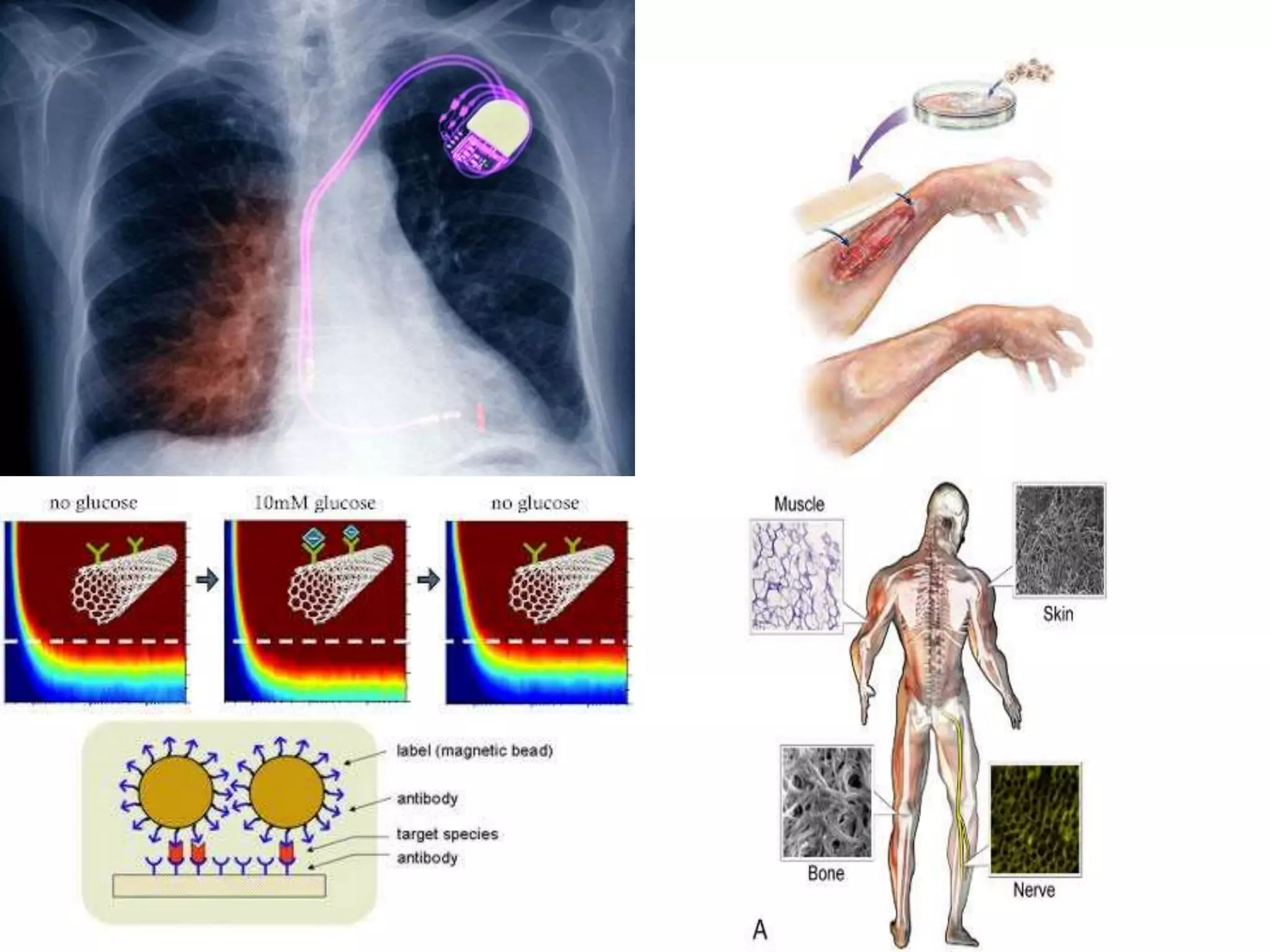
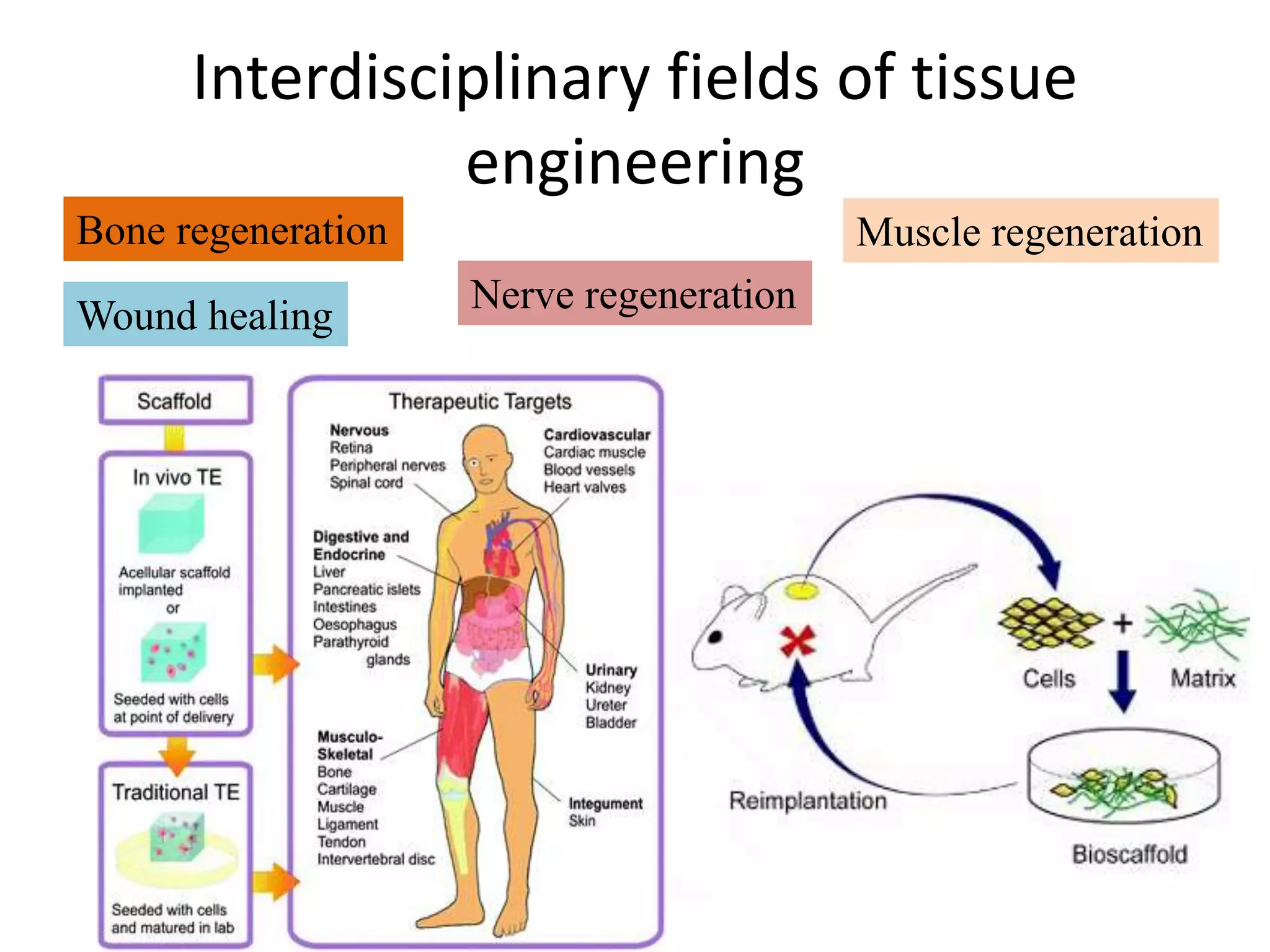
Interdisciplinary fields of tissue
engineering
Bone regeneration
Wound healing
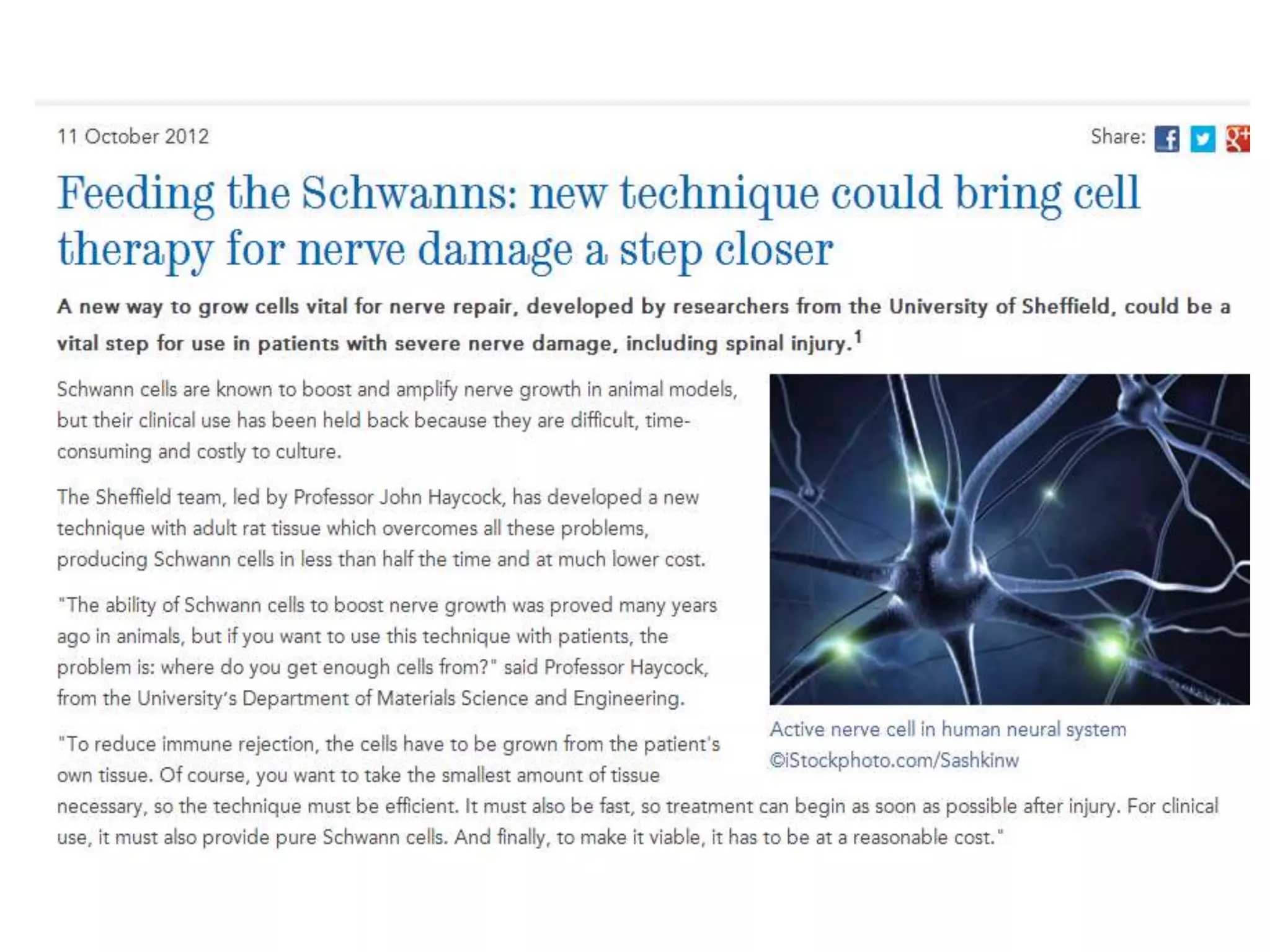
Nerve regeneration
Muscle regeneration
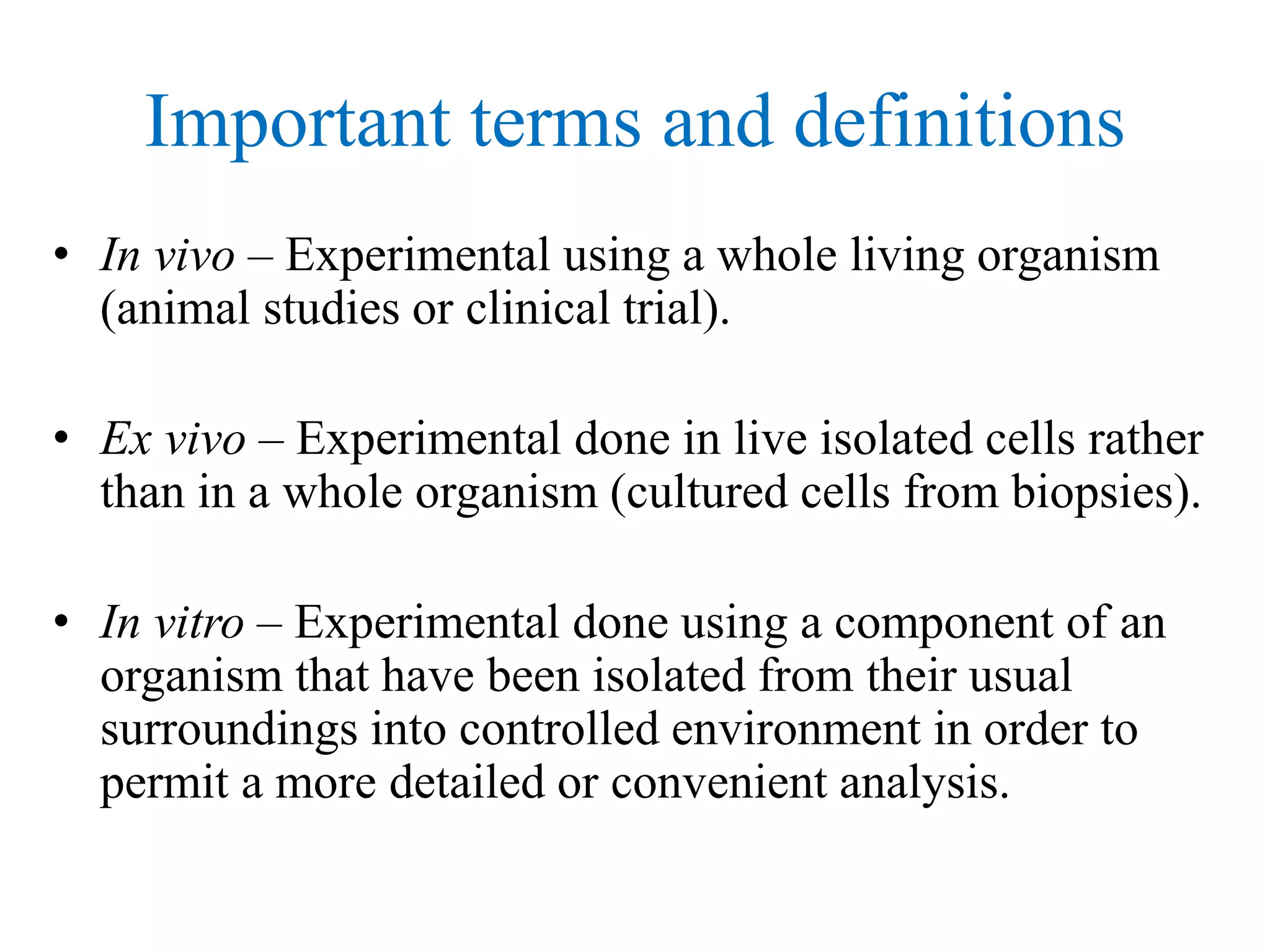
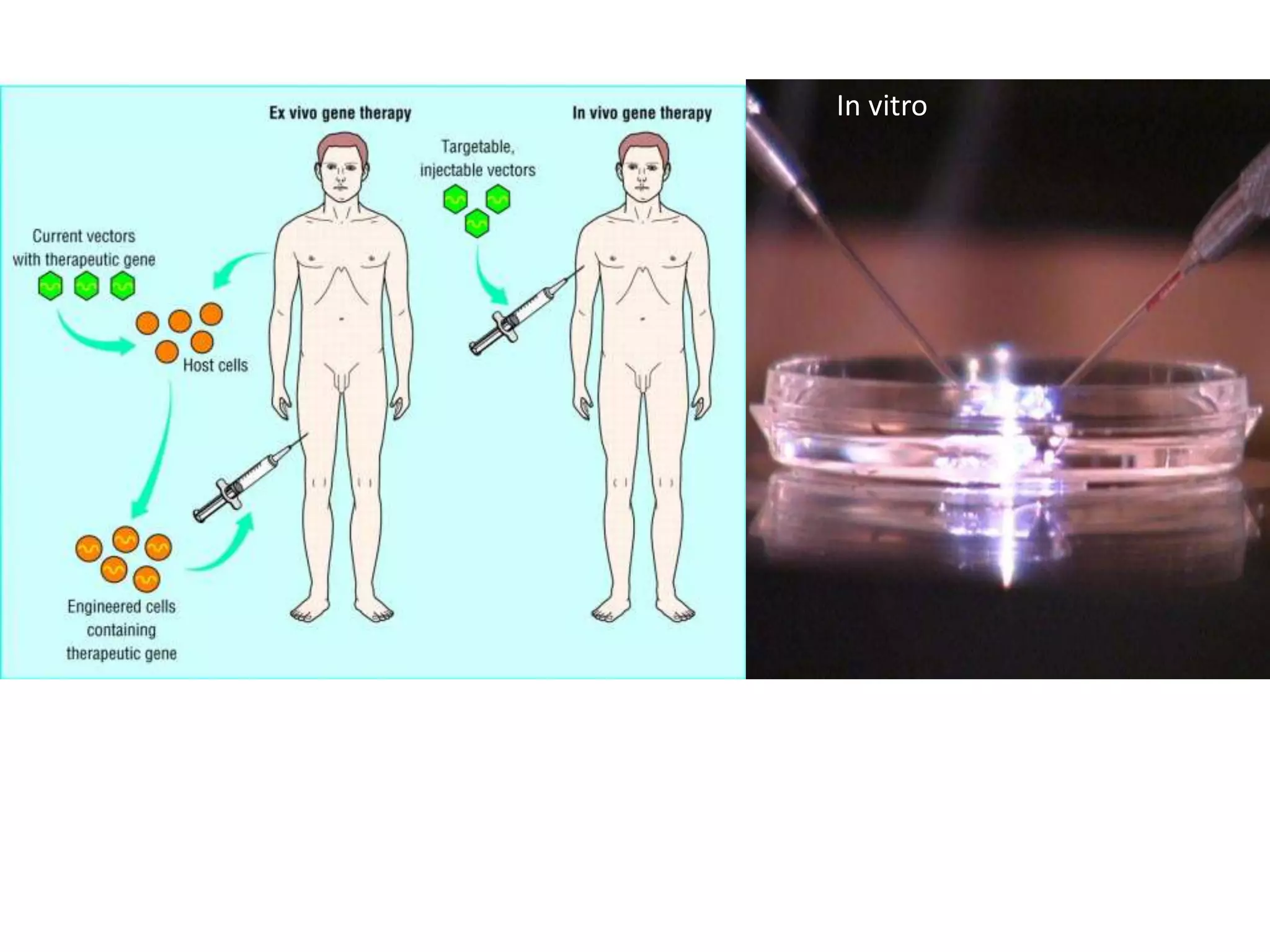
Important terms and definitions
• In vivo – Experimental using a whole living organism
(animal studies or clinical trial).
• Ex vivo – Experimental done in live isolated cells rather
than in a whole organism (cultured cells from biopsies).
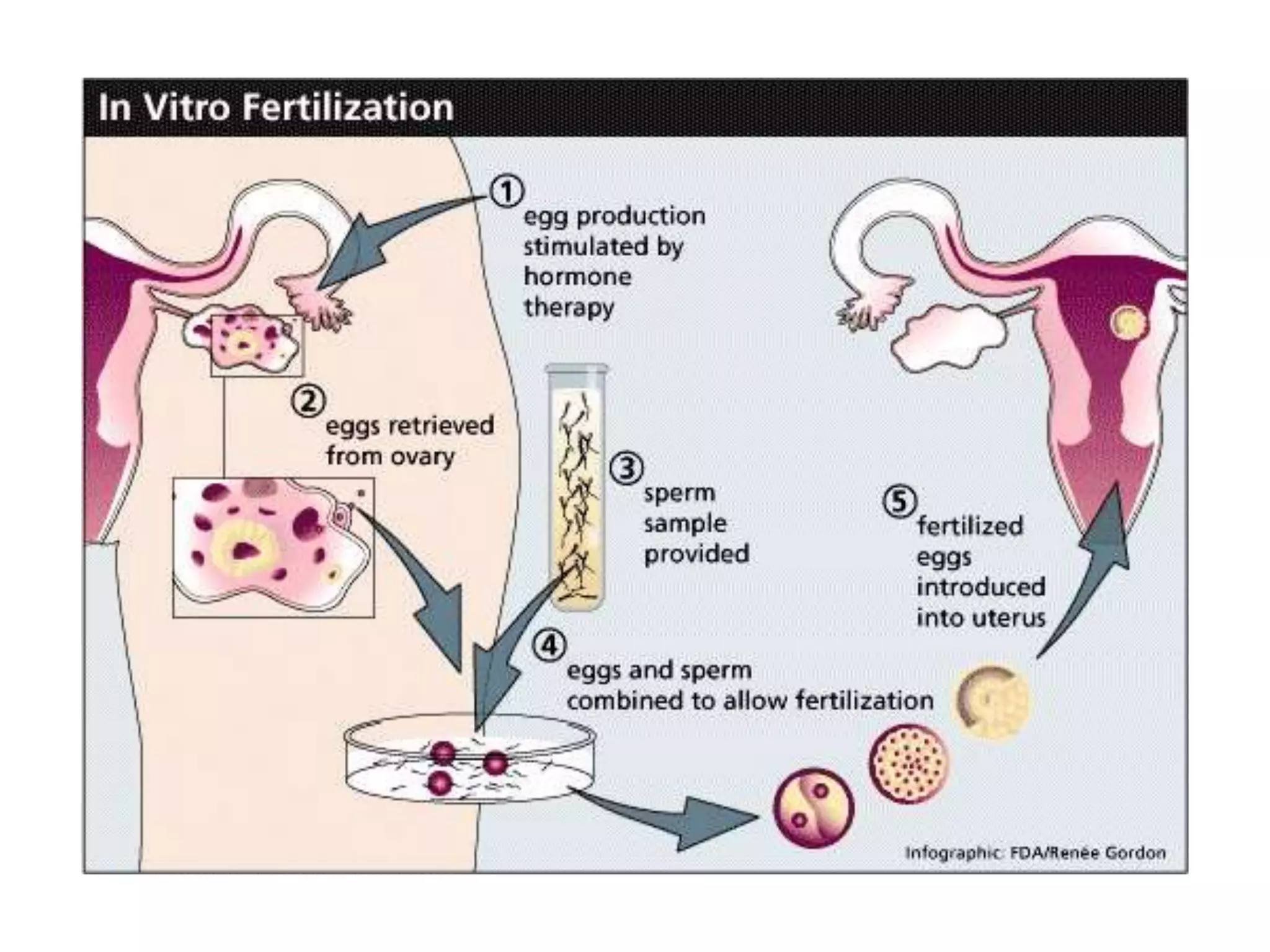
• In vitro – Experimental done using a component of an
organism that have been isolated from their usual
surroundings into controlled environment in order to
permit a more detailed or convenient analysis.
In vitro
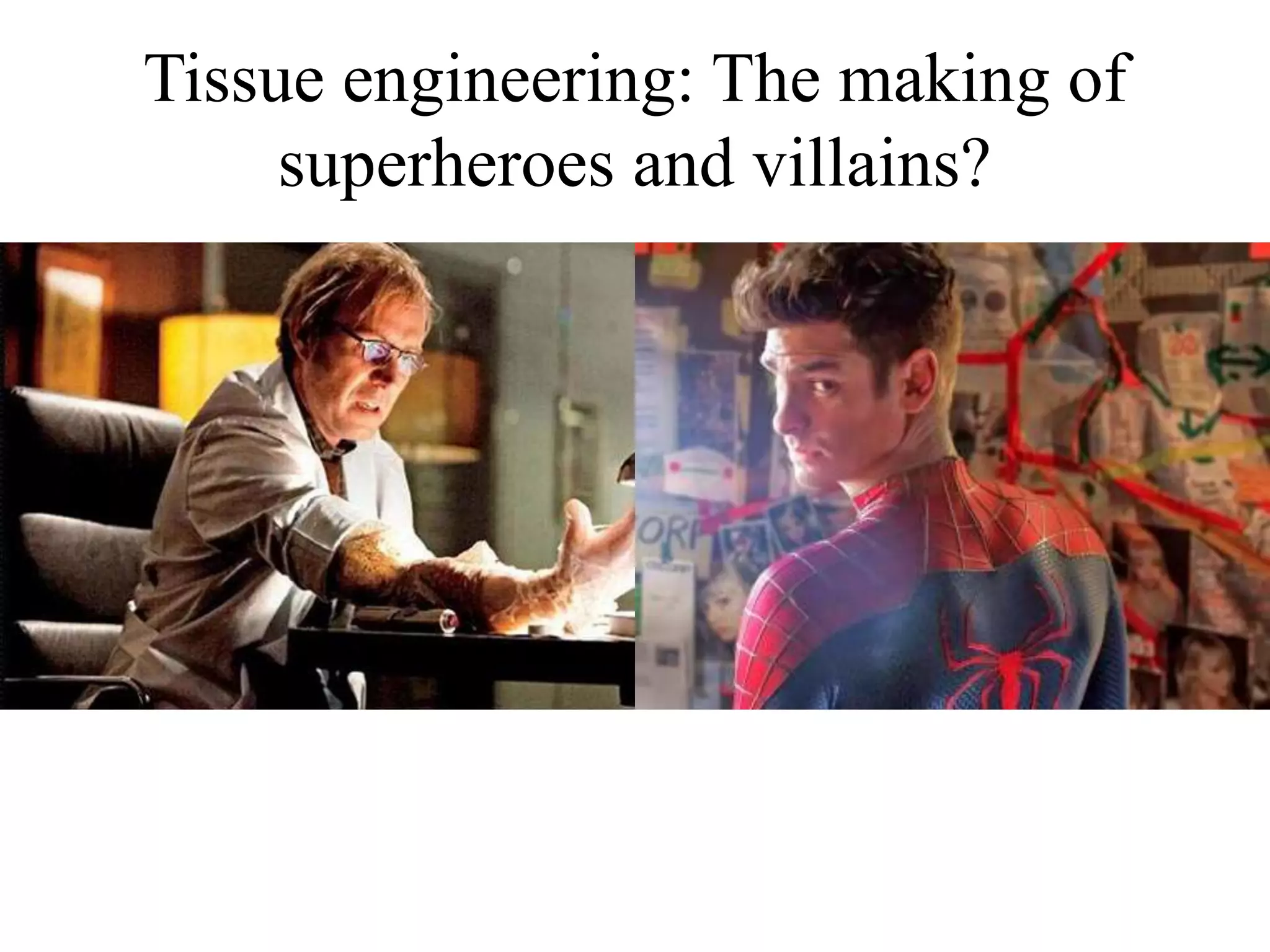
Tissue engineering: The making of
superheroes and villains?
How much of these are getting into
reality?
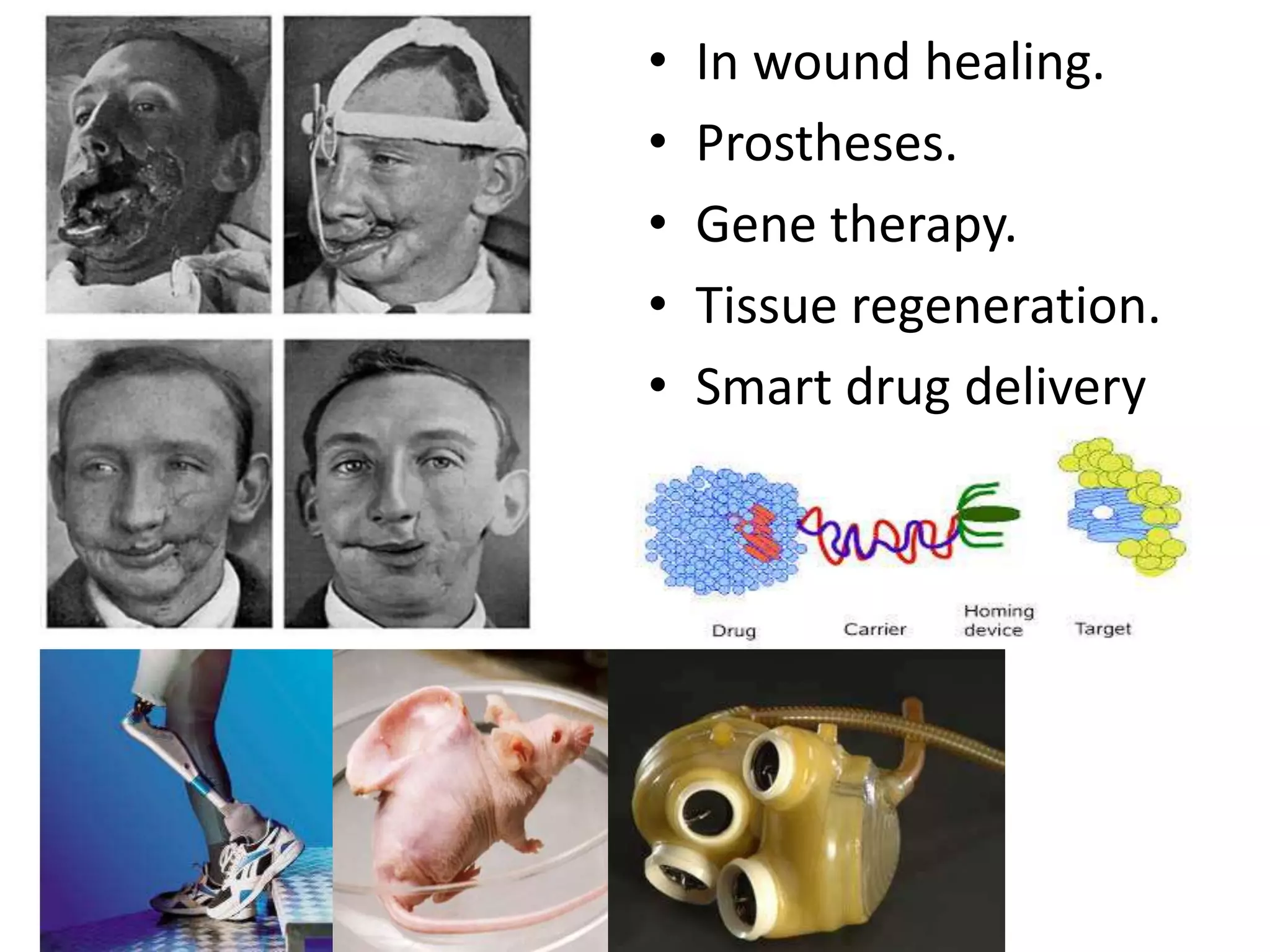
• In wound healing.
• Prostheses.
• Gene therapy.
• Tissue regeneration.
• Smart drug delivery
system
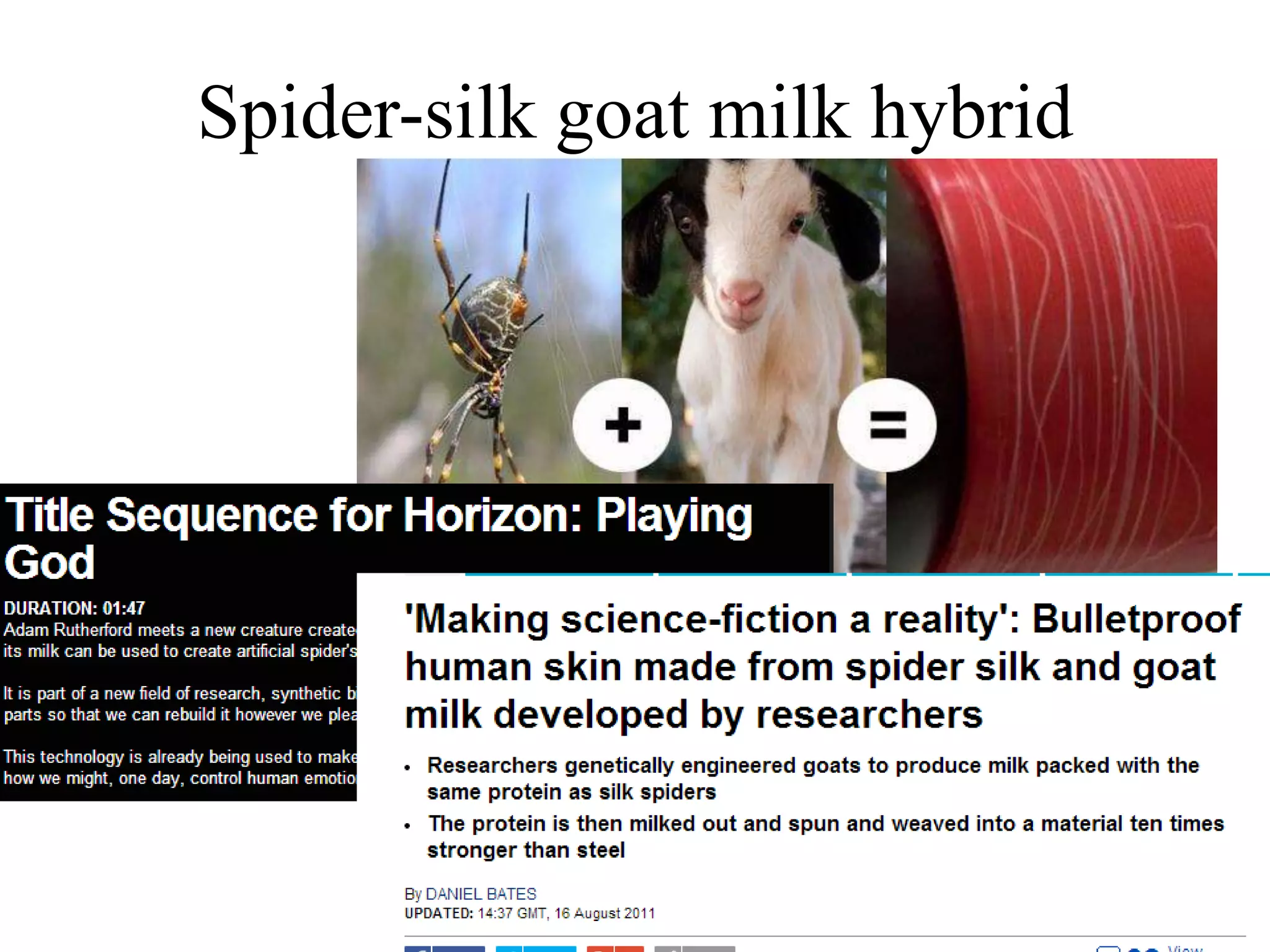
Spider-silk goat milk hybrid
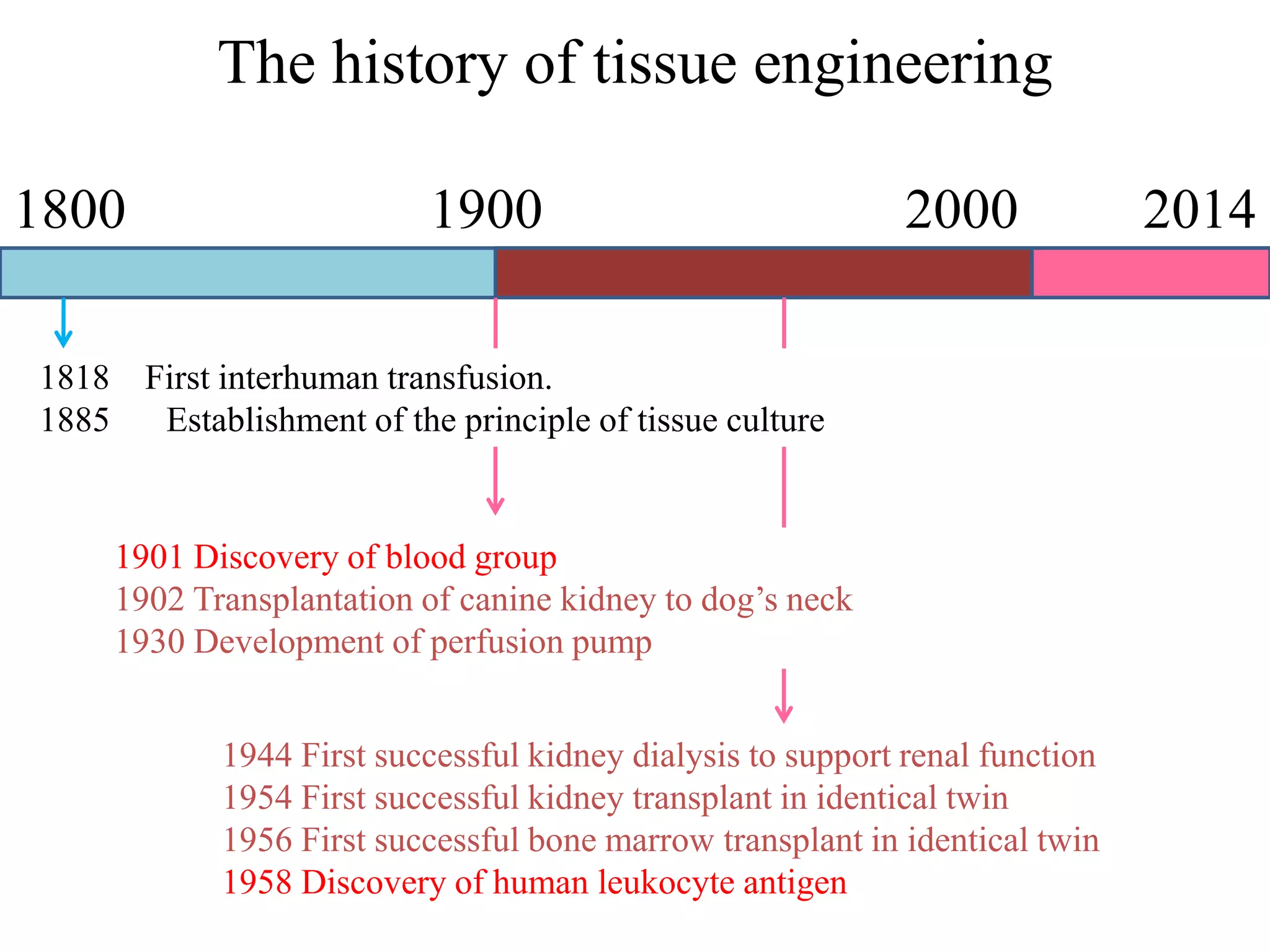
The history of tissue engineering
1800 1900 2000 2014
1901 Discovery of blood group
1902 Transplantation of canine kidney to dog’s neck
1930 Development of perfusion pump
1944 First successful kidney dialysis to support renal function
1954 First successful kidney transplant in identical twin
1956 First successful bone marrow transplant in identical twin
1958 Discovery of human leukocyte antigen
1818 First interhuman transfusion.
1885 Establishment of the principle of tissue culture
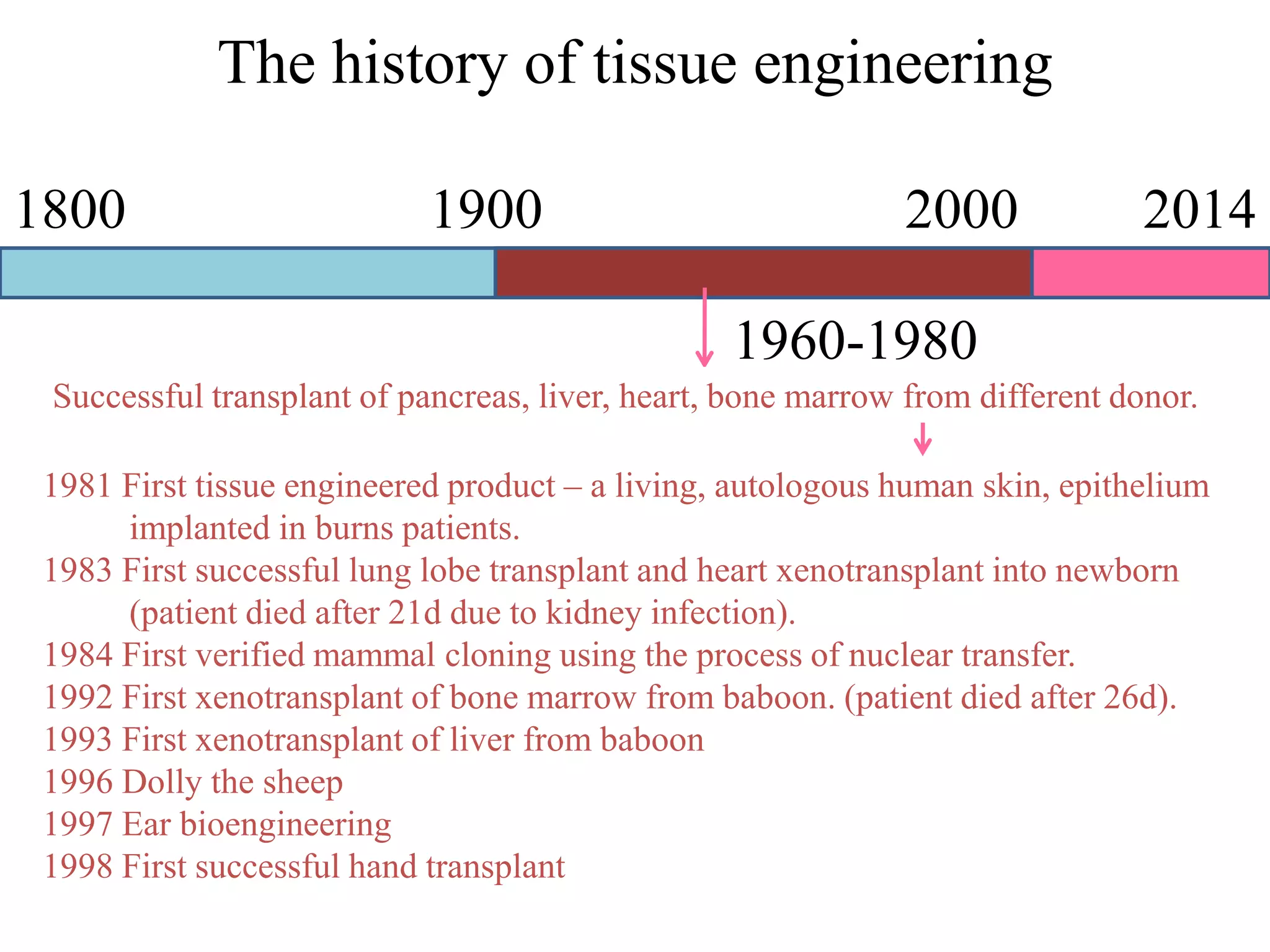
The history of tissue engineering
1800 1900 2000 2014
1960-1980
Successful transplant of pancreas, liver, heart, bone marrow from different donor.
1981 First tissue engineered product – a living, autologous human skin, epithelium
implanted in burns patients.
1983 First successful lung lobe transplant and heart xenotransplant into newborn
(patient died after 21d due to kidney infection).
1984 First verified mammal cloning using the process of nuclear transfer.
1992 First xenotransplant of bone marrow from baboon. (patient died after 26d).
1993 First xenotransplant of liver from baboon
1996 Dolly the sheep
1997 Ear bioengineering
1998 First successful hand transplant
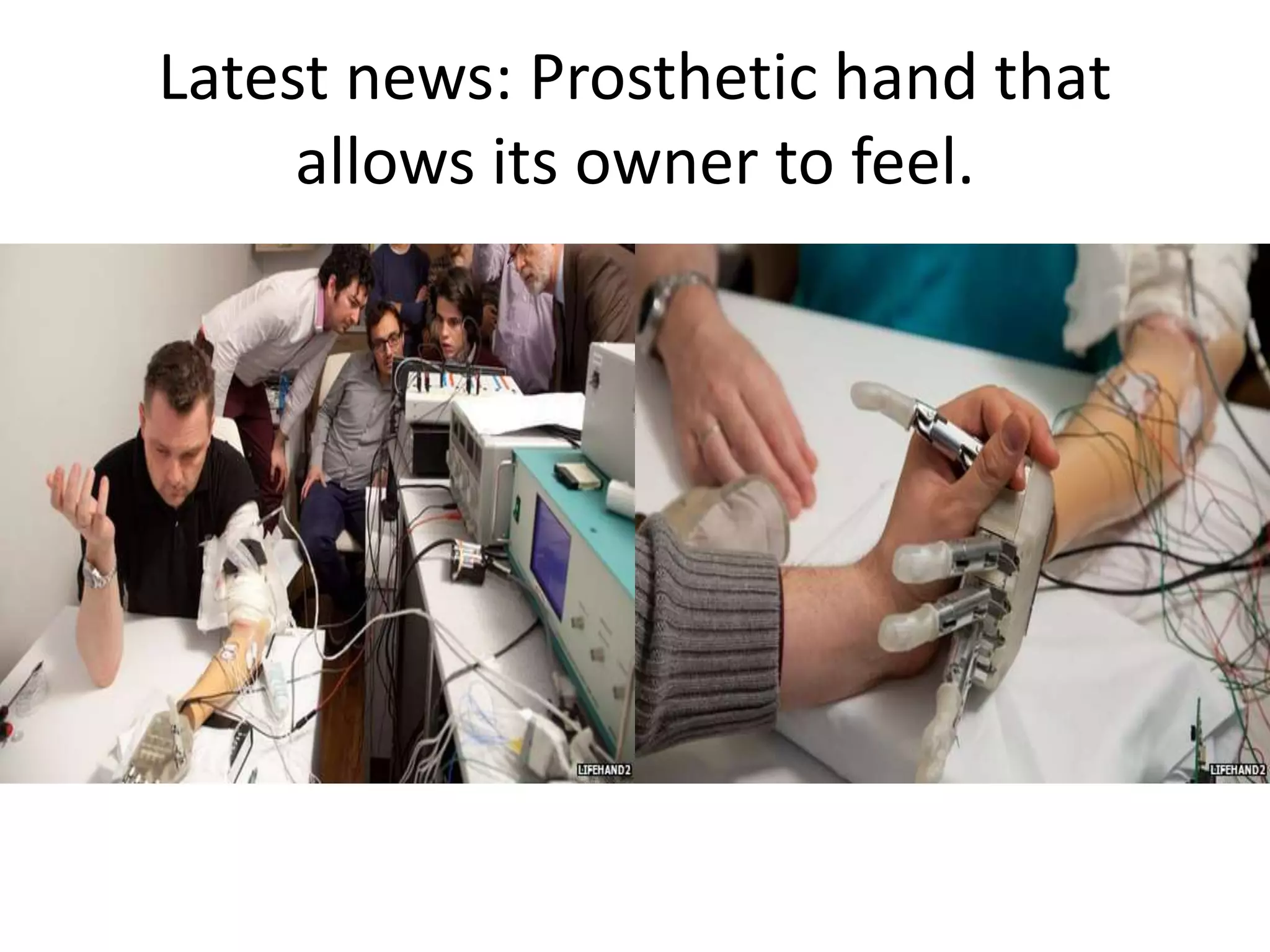
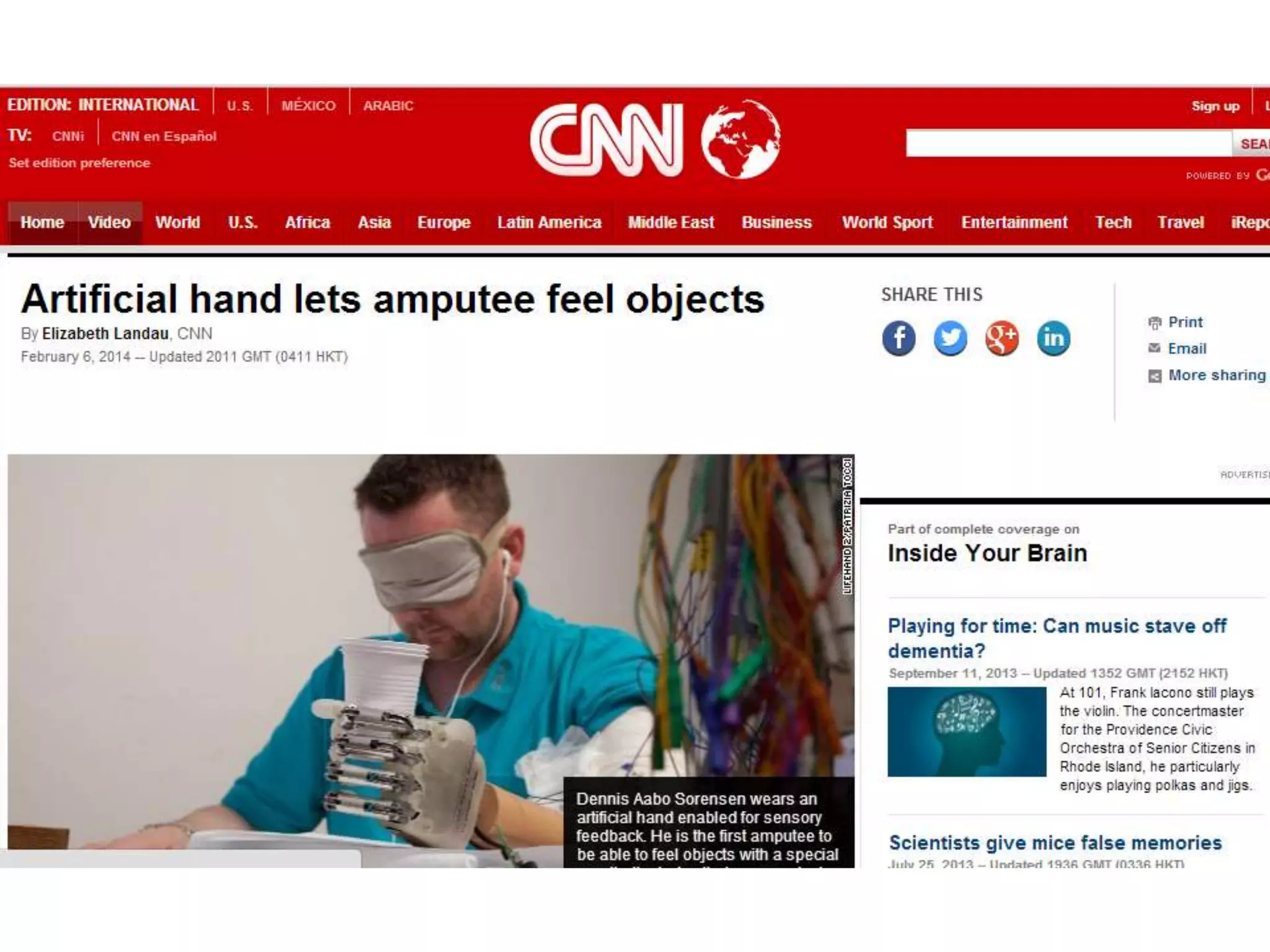
Latest news: Prosthetic hand that
allows its owner to feel.
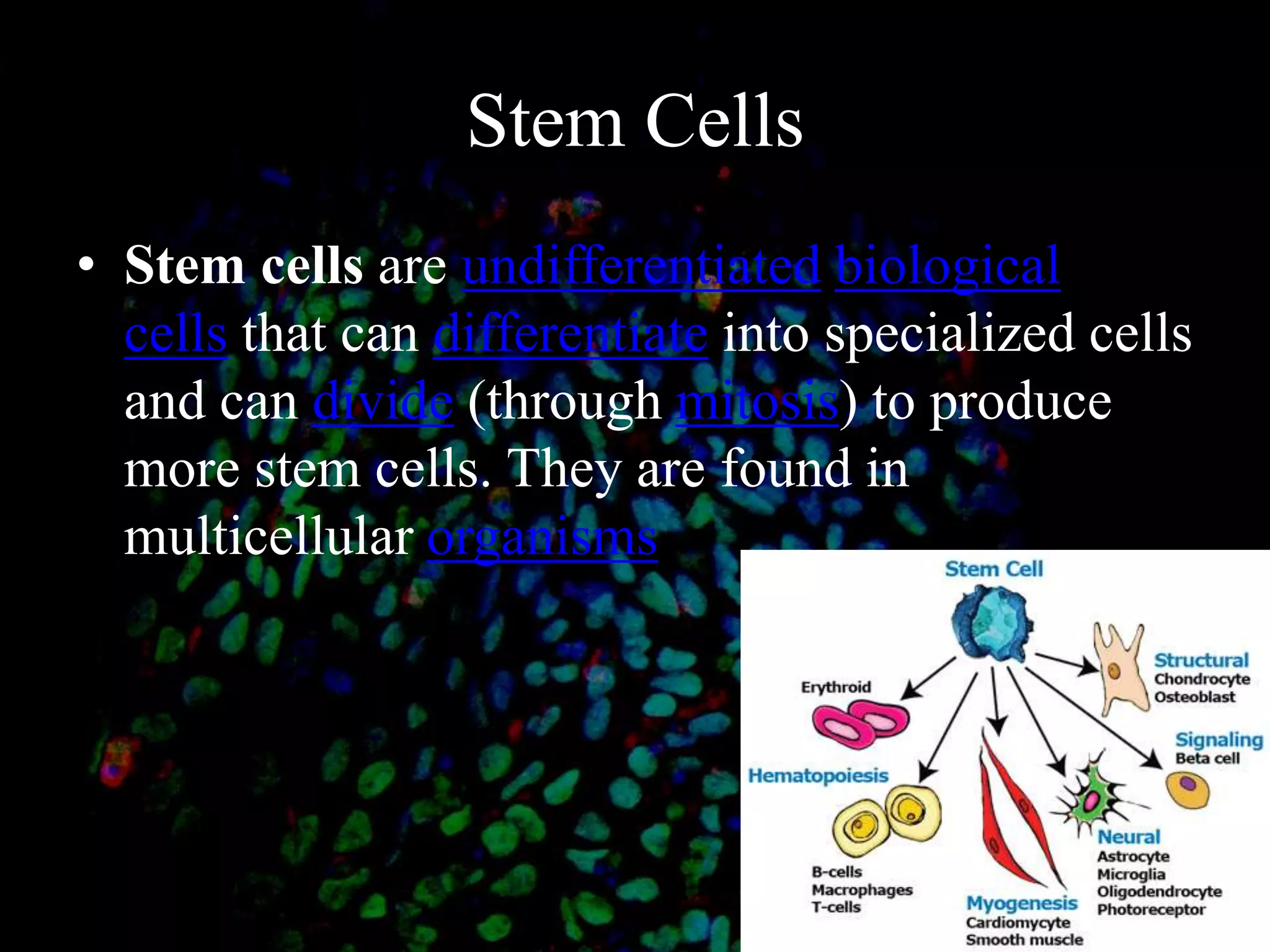
Stem Cells
• Stem cells are undifferentiated biological
cells that can differentiate into specialized cells
and can divide (through mitosis) to produce
more stem cells. They are found in
multicellular organisms
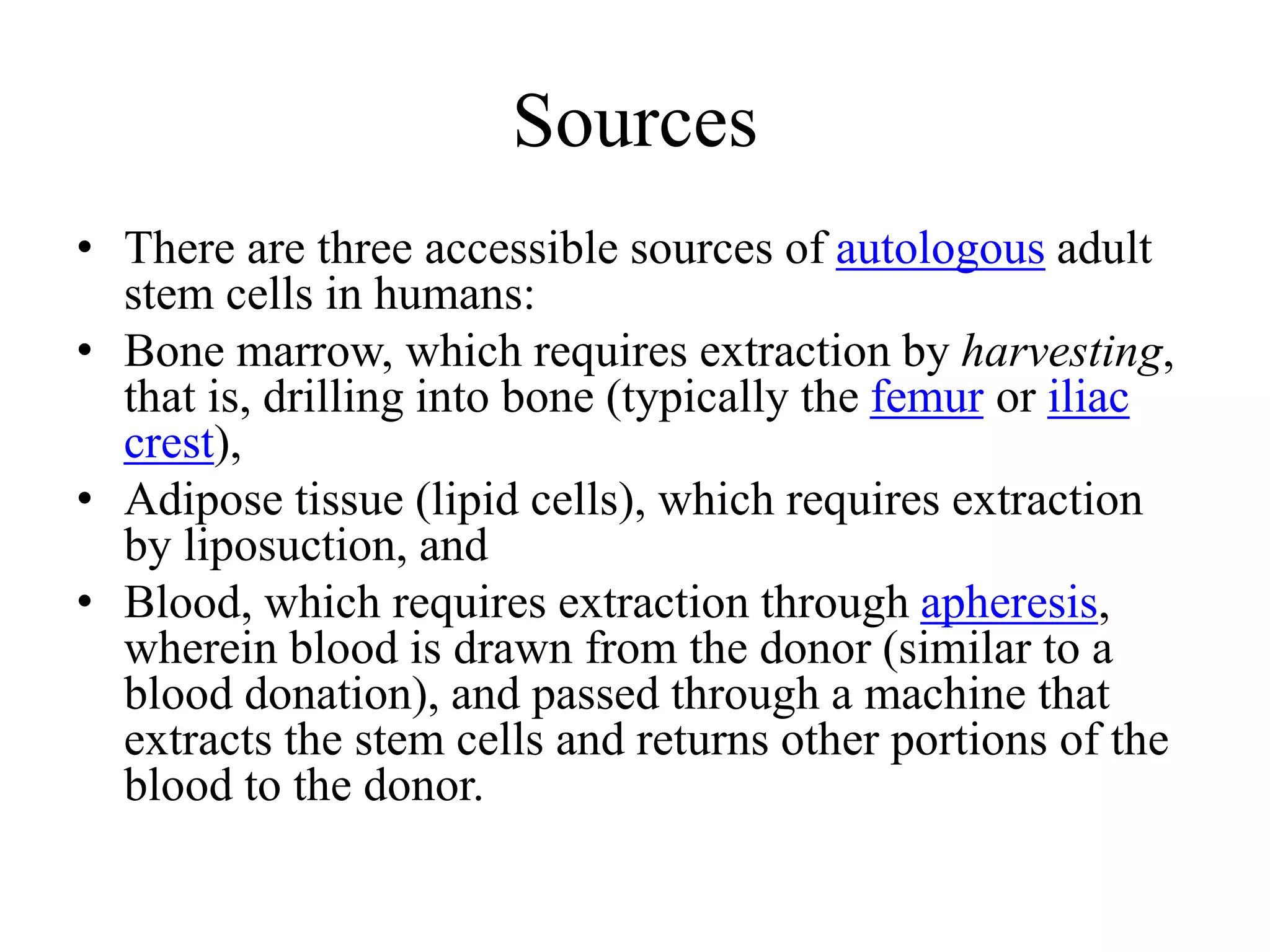
Sources
• There are three accessible sources of autologous adult
stem cells in humans:
• Bone marrow, which requires extraction by harvesting,
that is, drilling into bone (typically the femur or iliac
crest),
• Adipose tissue (lipid cells), which requires extraction
by liposuction, and
• Blood, which requires extraction through apheresis,
wherein blood is drawn from the donor (similar to a
blood donation), and passed through a machine that
extracts the stem cells and returns other portions of the
blood to the donor.
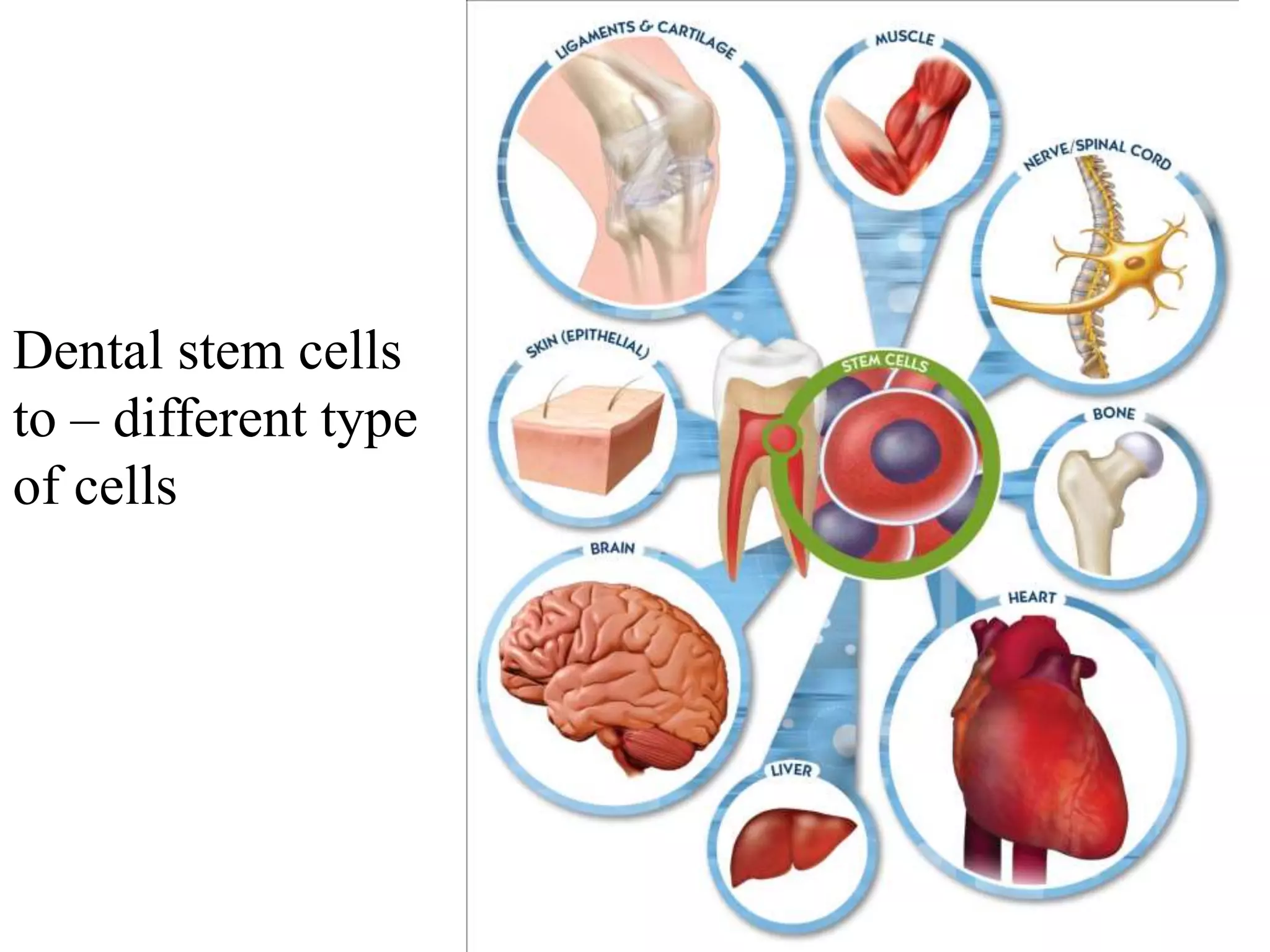
Dental stem cells
to – different type
of cells
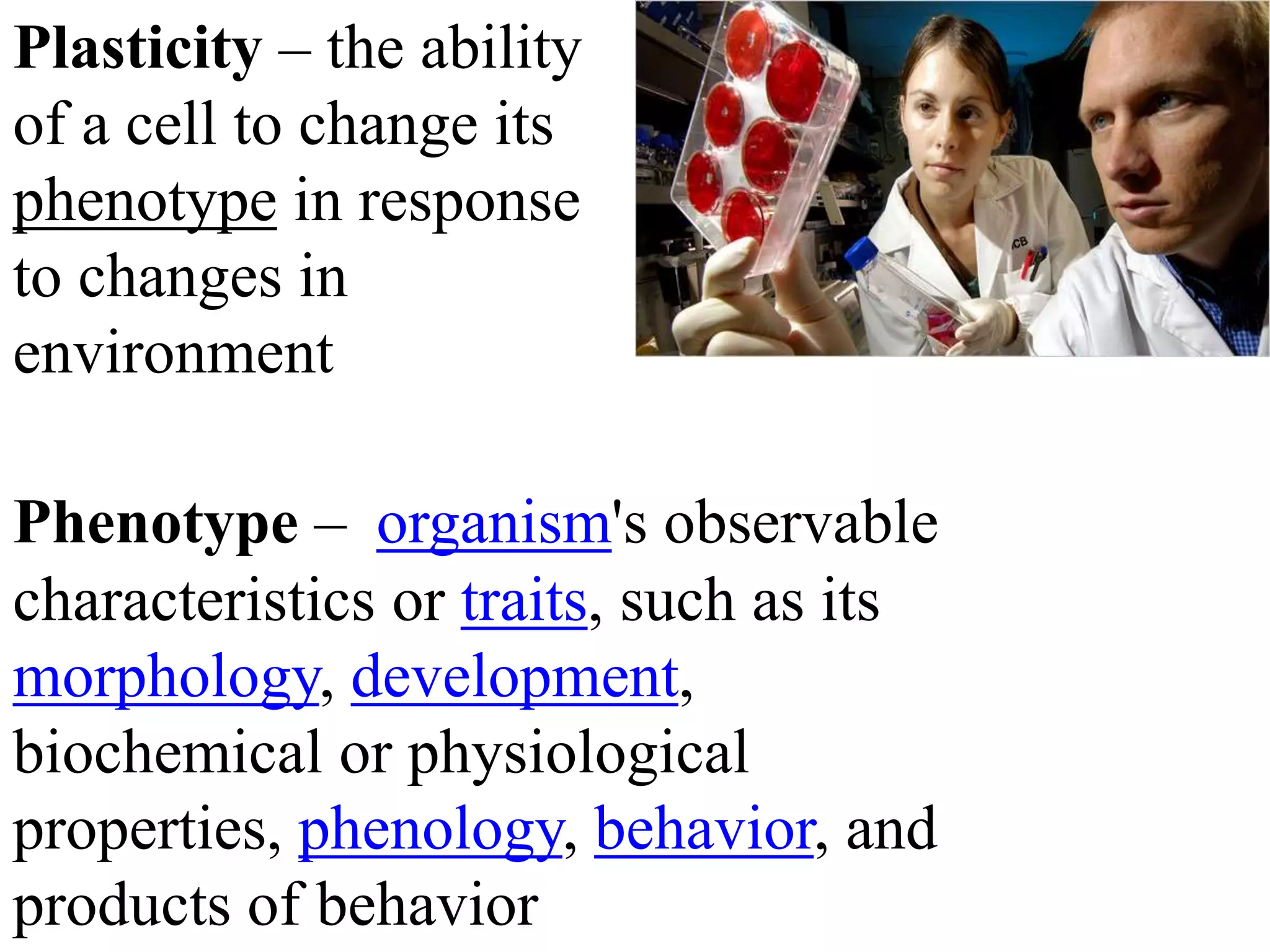
Plasticity – the ability
of a cell to change its
phenotype in response
to changes in
environment
Phenotype – organism's observable
characteristics or traits, such as its
morphology, development,
biochemical or physiological
properties, phenology, behavior, and
products of behavior
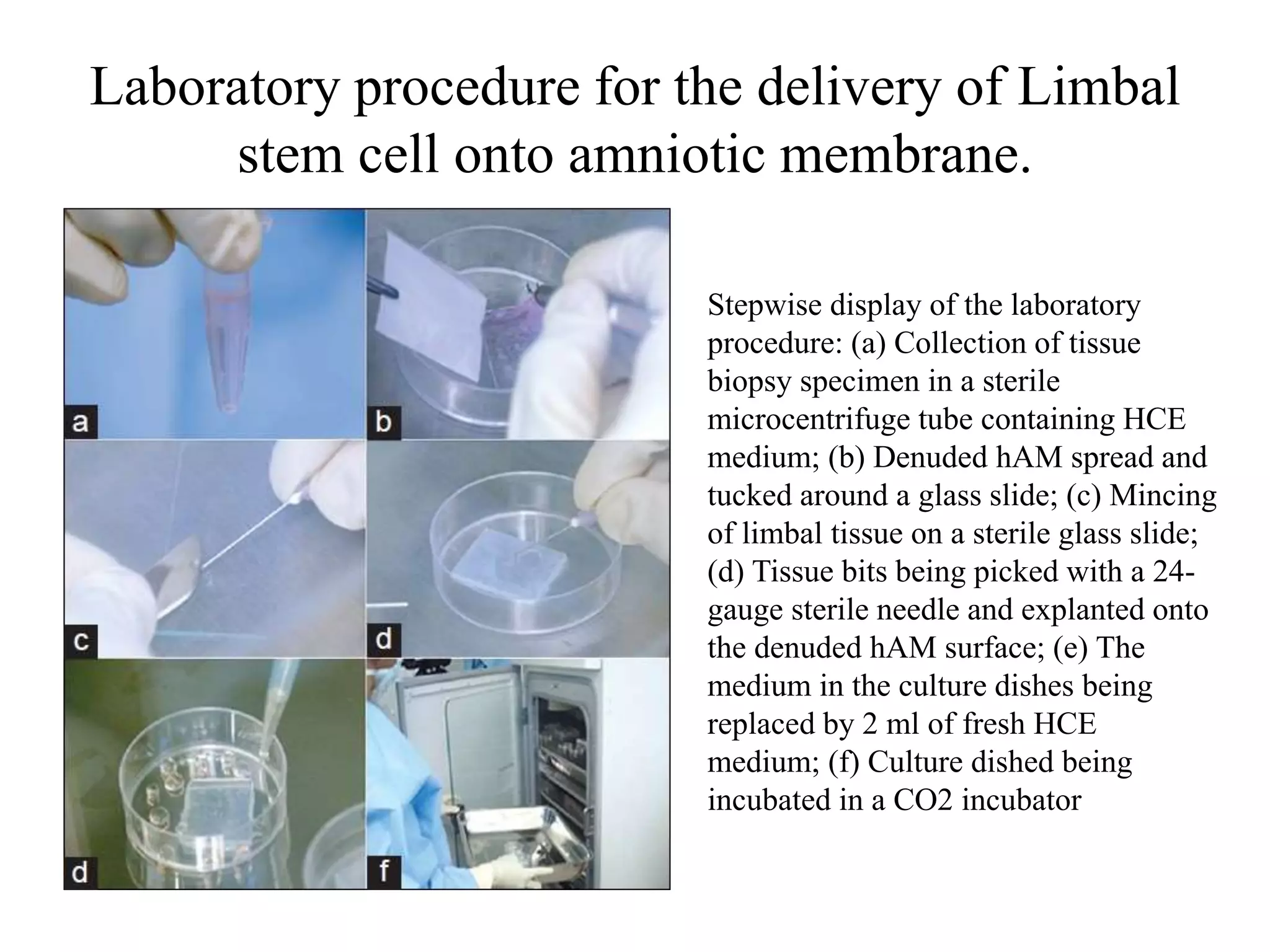
Laboratory procedure for the delivery of Limbal
stem cell onto amniotic membrane.
Stepwise display of the laboratory
procedure: (a) Collection of tissue
biopsy specimen in a sterile
microcentrifuge tube containing HCE
medium; (b) Denuded hAM spread and
tucked around a glass slide; (c) Mincing
of limbal tissue on a sterile glass slide;
(d) Tissue bits being picked with a 24-
gauge sterile needle and explanted onto
the denuded hAM surface; (e) The
medium in the culture dishes being
replaced by 2 ml of fresh HCE
medium; (f) Culture dished being
incubated in a CO2 incubator
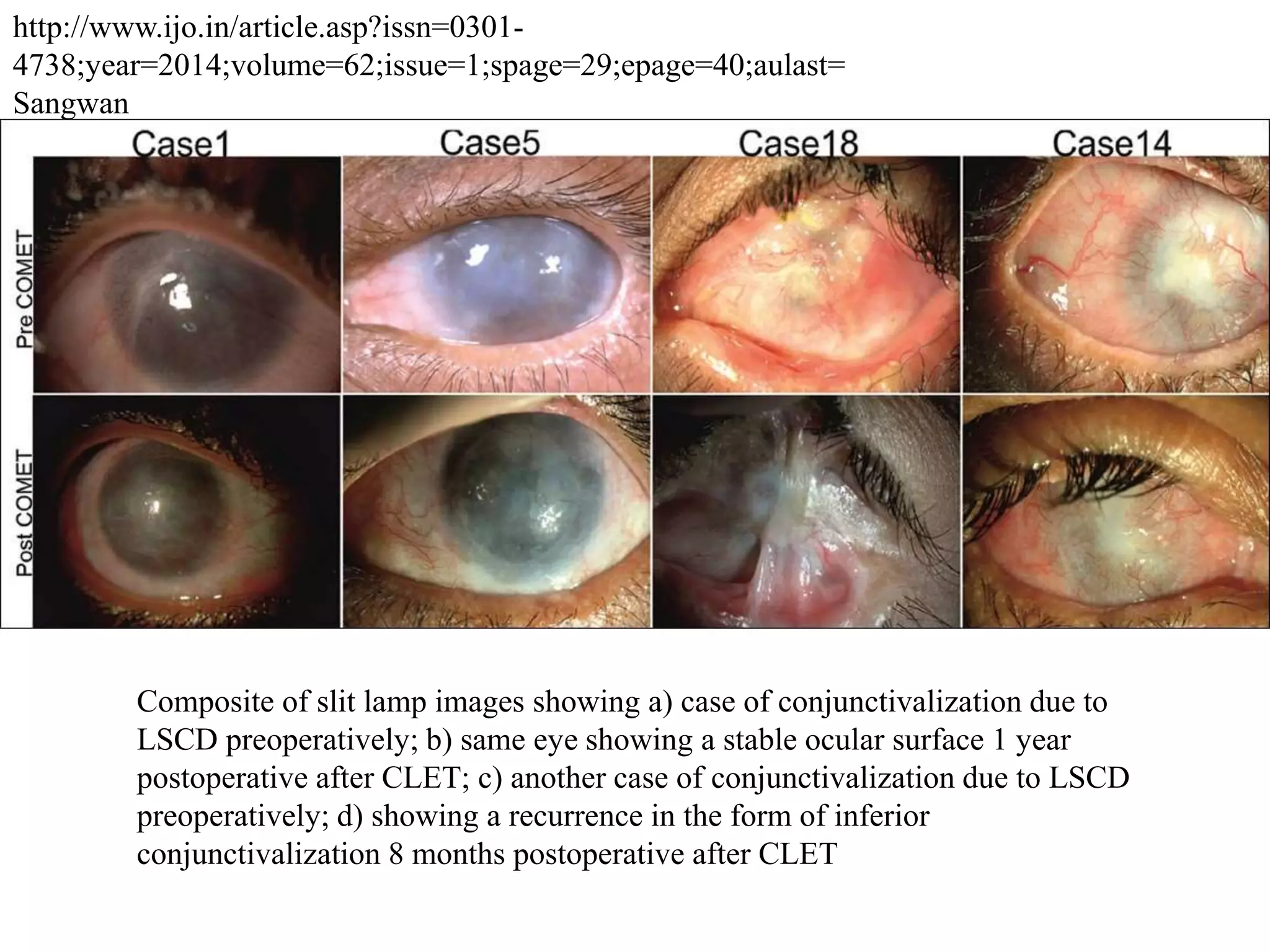
Composite of slit lamp images showing a) case of conjunctivalization due to
LSCD preoperatively; b) same eye showing a stable ocular surface 1 year
postoperative after CLET; c) another case of conjunctivalization due to LSCD
preoperatively; d) showing a recurrence in the form of inferior
conjunctivalization 8 months postoperative after CLET
http://www.ijo.in/article.asp?issn=0301-
4738;year=2014;volume=62;issue=1;spage=29;epage=40;aulast=
Sangwan
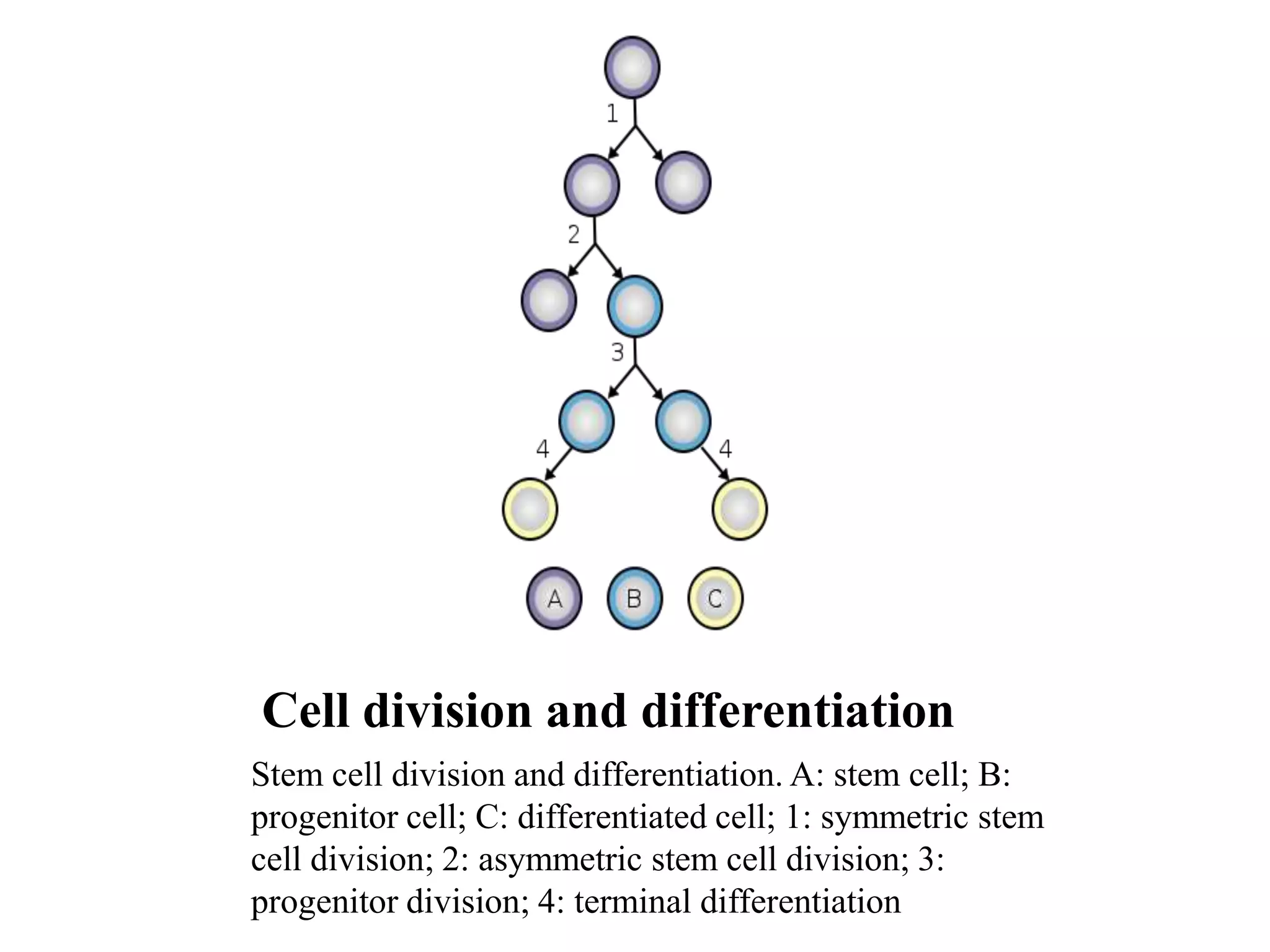
Cell division and differentiation
Stem cell division and differentiation. A: stem cell; B:
progenitor cell; C: differentiated cell; 1: symmetric stem
cell division; 2: asymmetric stem cell division; 3:
progenitor division; 4: terminal differentiation
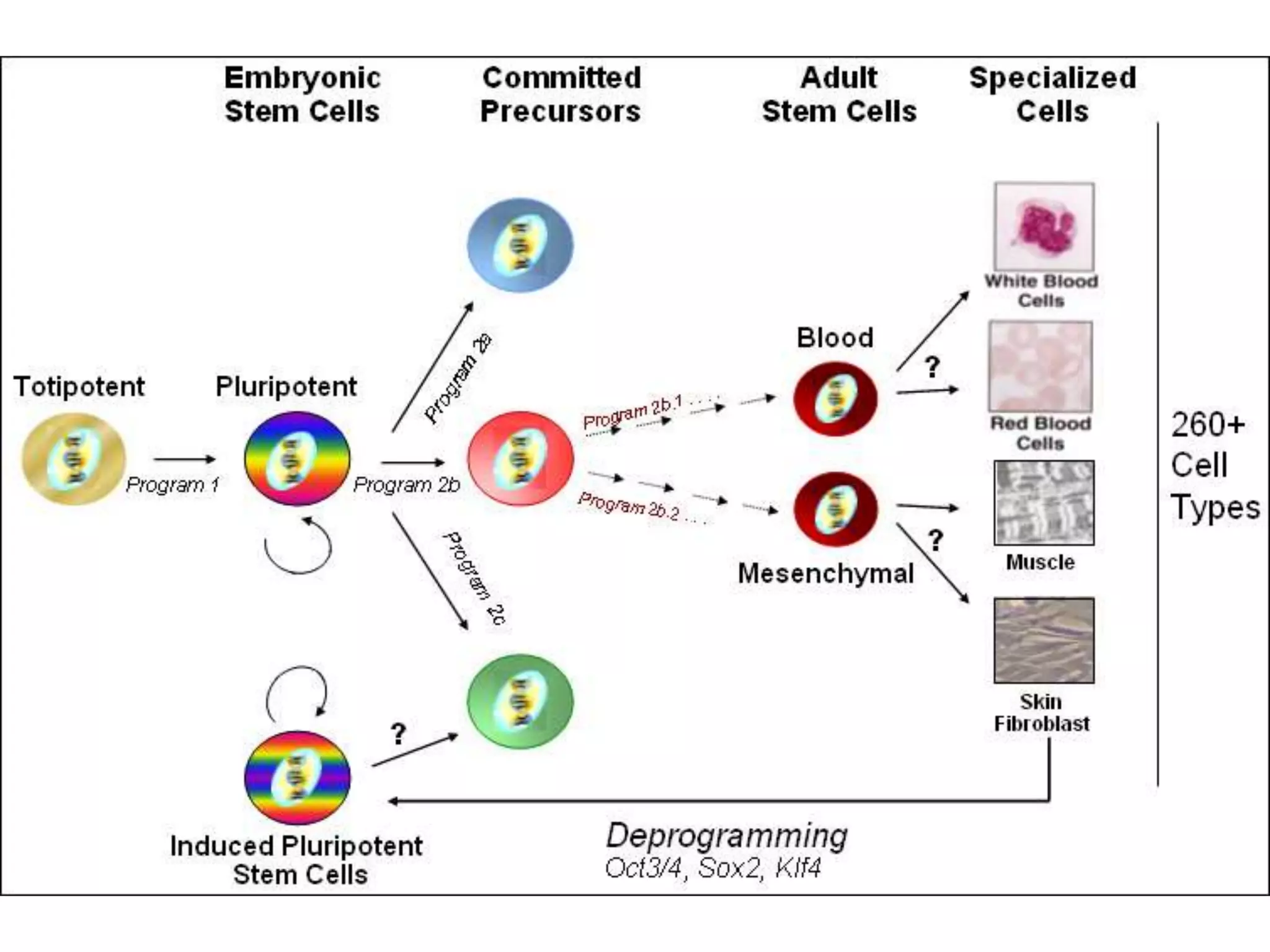
Cell potencies
• Potency specifies the differentiation potential (the potential to differentiate into
different cell types) of the stem cell.[4]
• Totipotent (a.k.a. omnipotent) stem cells can differentiate into embryonic and
extraembryonic cell types. Such cells can construct a complete, viable
organism.[4] These cells are produced from the fusion of an egg and sperm cell.
Cells produced by the first few divisions of the fertilized egg are also totipotent.[5]
• Pluripotent stem cells are the descendants of totipotent cells and can differentiate
into nearly all cells,[4] i.e. cells derived from any of the three germ layers.[6]
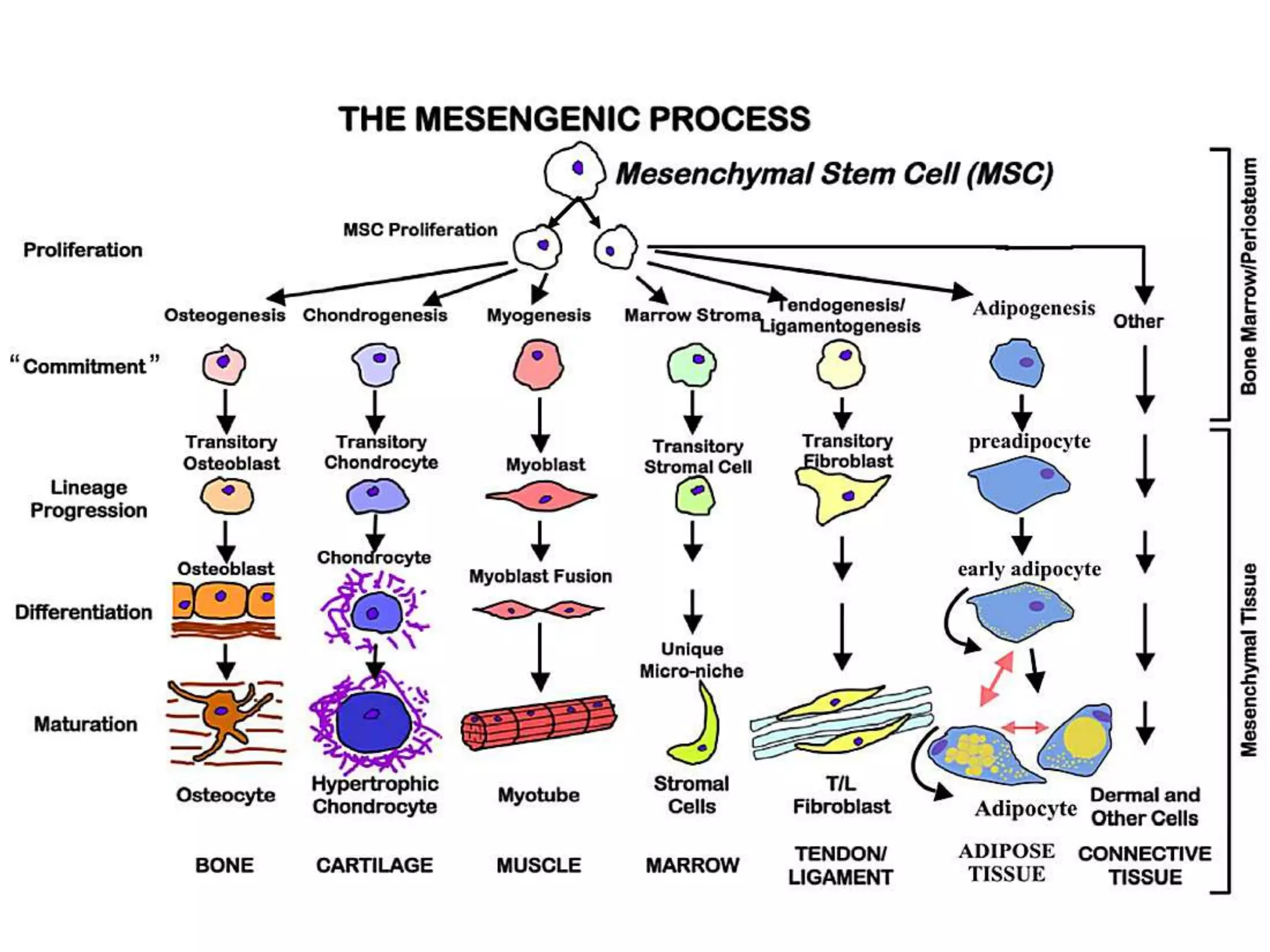
• Multipotent stem cells can differentiate into a number of cell types, but only those
of a closely related family of cells.[4]
• Oligopotent stem cells can differentiate into only a few cell types, such as lymphoid
or myeloid stem cells.[4]
• Unipotent cells can produce only one cell type, their own,[4] but have the property
of self-renewal, which distinguishes them from non-stem cells (e.g. progenitor
cells, muscle stem cells).
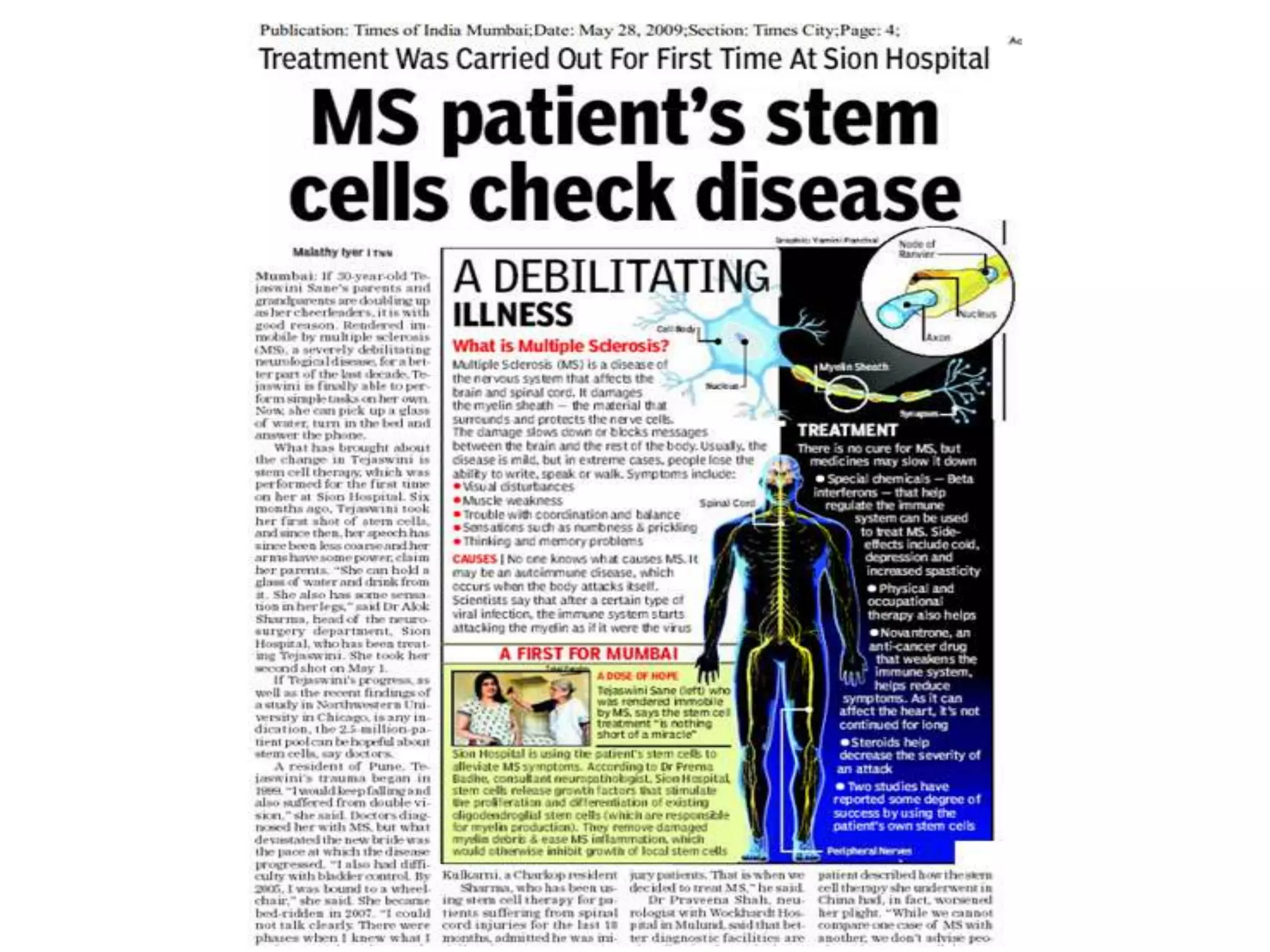
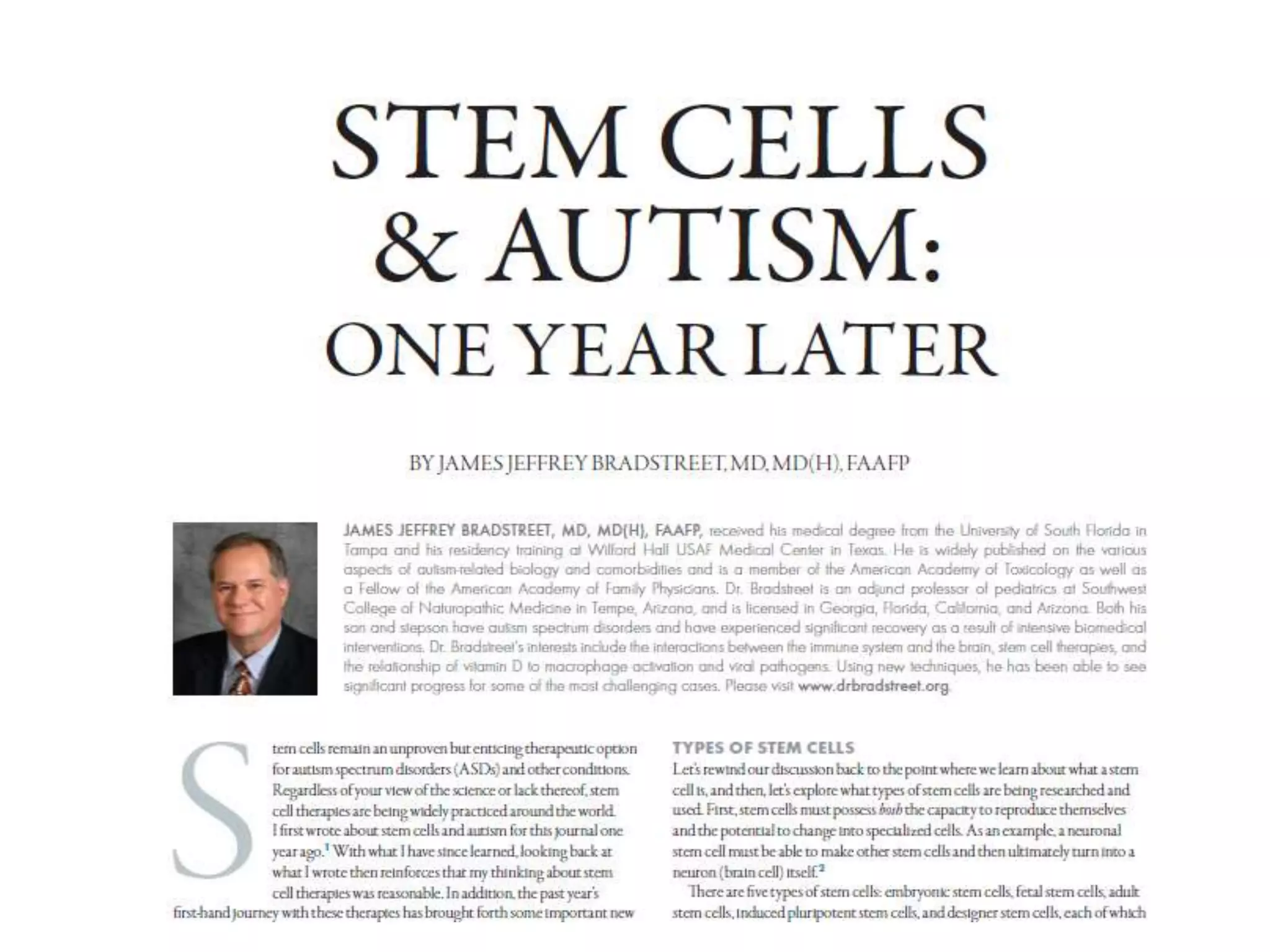
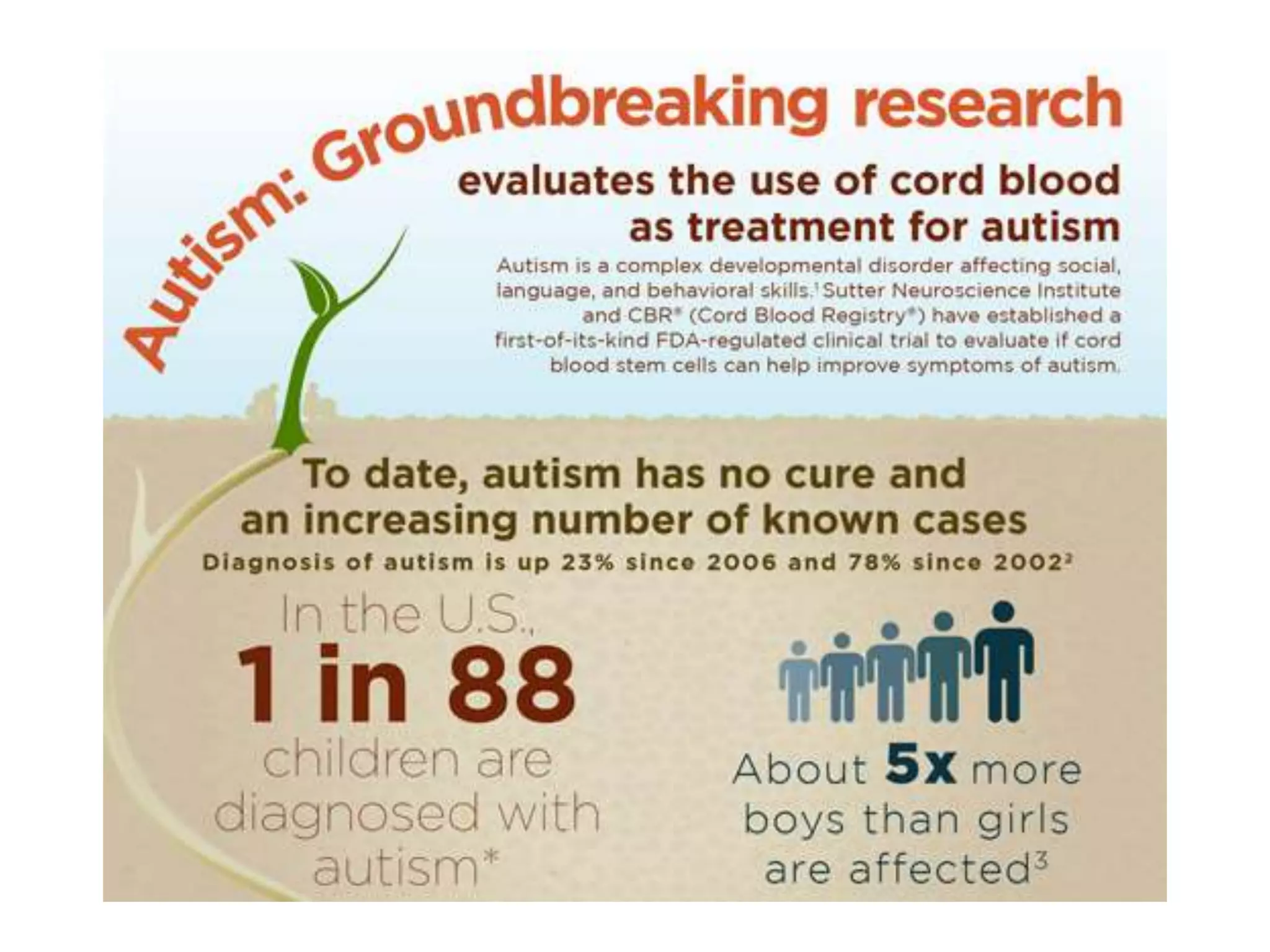
Stem cell therapy
Is it good?
Disadvantageous
1. Requirement of immunosuppressant
- Removal of patient’s previous cells require radiation therapy
or because patient’s immune system may target the stem
cells.
2. Pluripotency
- Difficulties to obtain specific cell type
3. Tumor formation
- Some stem cells form tumor after transplantation. ES – linked
to tumor
4. Hepatotoxicity – Liver damaged, drug induced liver damaged.
Important:
1. Definition of tissue
engineering.
2. Terms, in vivo, in vitro
and ex vivo
3. Example: Areas and
specialization of tissue
engineering and
regeneration.
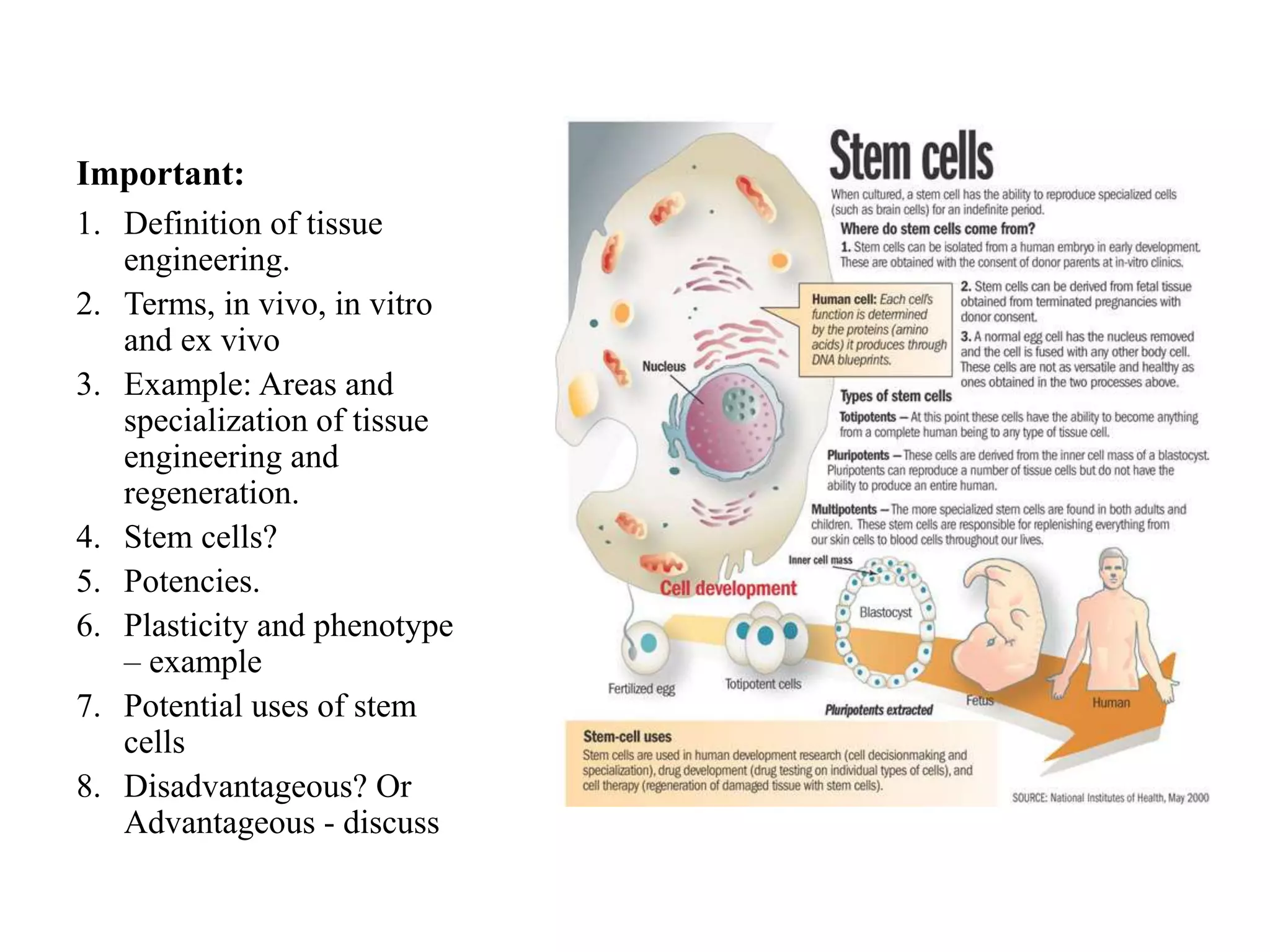
4. Stem cells?
5. Potencies.
6. Plasticity and phenotype
– example
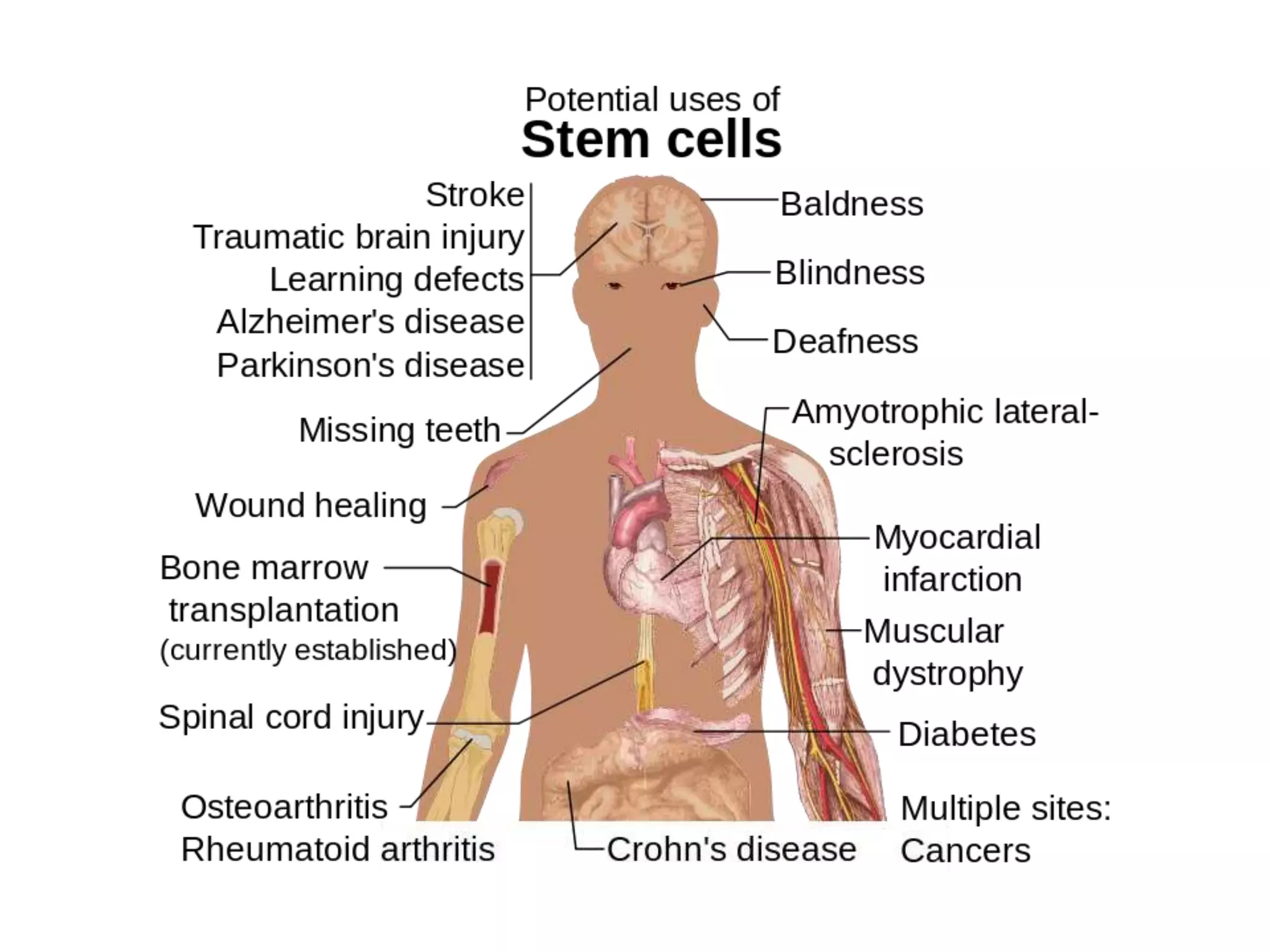
7. Potential uses of stem
cells
8. Disadvantageous? Or
Advantageous - discuss

Tissue engineering 101

  • 1.
    Advanced Tissue Engineering BTE4234 Munira Shahbuddin
  • 2.
    Tissue engineering • Definition: -Interdisciplinary field which applies the principles and methods of engineering and life sciences towards the fundamental understanding of structural and functional relationship in normal and pathological tissue and the development of biological substitutes. (Langer and Vacanti 1999). • The goal of tissue engineering - To restore, repair and replace diseased organ into a fully functional ones.
  • 3.
    Tissue engineering isan inter disciplinary field. Science Engineering Medicine Electrical Electronic Chemical Biology Mechanical Pathology Recognition of pathogen Immunobiology Chemical Biology Physics TE Computer science
  • 6.
    Interdisciplinary fields oftissue engineering Bone regeneration Wound healing Nerve regeneration Muscle regeneration
  • 7.
    Important terms anddefinitions • In vivo – Experimental using a whole living organism (animal studies or clinical trial). • Ex vivo – Experimental done in live isolated cells rather than in a whole organism (cultured cells from biopsies). • In vitro – Experimental done using a component of an organism that have been isolated from their usual surroundings into controlled environment in order to permit a more detailed or convenient analysis.
  • 8.
  • 10.
    Tissue engineering: Themaking of superheroes and villains?
  • 11.
    How much ofthese are getting into reality?
  • 12.
    • In woundhealing. • Prostheses. • Gene therapy. • Tissue regeneration. • Smart drug delivery system
  • 13.
  • 14.
    The history oftissue engineering 1800 1900 2000 2014 1901 Discovery of blood group 1902 Transplantation of canine kidney to dog’s neck 1930 Development of perfusion pump 1944 First successful kidney dialysis to support renal function 1954 First successful kidney transplant in identical twin 1956 First successful bone marrow transplant in identical twin 1958 Discovery of human leukocyte antigen 1818 First interhuman transfusion. 1885 Establishment of the principle of tissue culture
  • 15.
    The history oftissue engineering 1800 1900 2000 2014 1960-1980 Successful transplant of pancreas, liver, heart, bone marrow from different donor. 1981 First tissue engineered product – a living, autologous human skin, epithelium implanted in burns patients. 1983 First successful lung lobe transplant and heart xenotransplant into newborn (patient died after 21d due to kidney infection). 1984 First verified mammal cloning using the process of nuclear transfer. 1992 First xenotransplant of bone marrow from baboon. (patient died after 26d). 1993 First xenotransplant of liver from baboon 1996 Dolly the sheep 1997 Ear bioengineering 1998 First successful hand transplant
  • 16.
    Latest news: Prosthetichand that allows its owner to feel.
  • 18.
    Stem Cells • Stemcells are undifferentiated biological cells that can differentiate into specialized cells and can divide (through mitosis) to produce more stem cells. They are found in multicellular organisms
  • 19.
    Sources • There arethree accessible sources of autologous adult stem cells in humans: • Bone marrow, which requires extraction by harvesting, that is, drilling into bone (typically the femur or iliac crest), • Adipose tissue (lipid cells), which requires extraction by liposuction, and • Blood, which requires extraction through apheresis, wherein blood is drawn from the donor (similar to a blood donation), and passed through a machine that extracts the stem cells and returns other portions of the blood to the donor.
  • 20.
    Dental stem cells to– different type of cells
  • 21.
    Plasticity – theability of a cell to change its phenotype in response to changes in environment Phenotype – organism's observable characteristics or traits, such as its morphology, development, biochemical or physiological properties, phenology, behavior, and products of behavior
  • 24.
    Laboratory procedure forthe delivery of Limbal stem cell onto amniotic membrane. Stepwise display of the laboratory procedure: (a) Collection of tissue biopsy specimen in a sterile microcentrifuge tube containing HCE medium; (b) Denuded hAM spread and tucked around a glass slide; (c) Mincing of limbal tissue on a sterile glass slide; (d) Tissue bits being picked with a 24- gauge sterile needle and explanted onto the denuded hAM surface; (e) The medium in the culture dishes being replaced by 2 ml of fresh HCE medium; (f) Culture dished being incubated in a CO2 incubator
  • 25.
    Composite of slitlamp images showing a) case of conjunctivalization due to LSCD preoperatively; b) same eye showing a stable ocular surface 1 year postoperative after CLET; c) another case of conjunctivalization due to LSCD preoperatively; d) showing a recurrence in the form of inferior conjunctivalization 8 months postoperative after CLET http://www.ijo.in/article.asp?issn=0301- 4738;year=2014;volume=62;issue=1;spage=29;epage=40;aulast= Sangwan
  • 27.
    Cell division anddifferentiation Stem cell division and differentiation. A: stem cell; B: progenitor cell; C: differentiated cell; 1: symmetric stem cell division; 2: asymmetric stem cell division; 3: progenitor division; 4: terminal differentiation
  • 28.
    Cell potencies • Potencyspecifies the differentiation potential (the potential to differentiate into different cell types) of the stem cell.[4] • Totipotent (a.k.a. omnipotent) stem cells can differentiate into embryonic and extraembryonic cell types. Such cells can construct a complete, viable organism.[4] These cells are produced from the fusion of an egg and sperm cell. Cells produced by the first few divisions of the fertilized egg are also totipotent.[5] • Pluripotent stem cells are the descendants of totipotent cells and can differentiate into nearly all cells,[4] i.e. cells derived from any of the three germ layers.[6] • Multipotent stem cells can differentiate into a number of cell types, but only those of a closely related family of cells.[4] • Oligopotent stem cells can differentiate into only a few cell types, such as lymphoid or myeloid stem cells.[4] • Unipotent cells can produce only one cell type, their own,[4] but have the property of self-renewal, which distinguishes them from non-stem cells (e.g. progenitor cells, muscle stem cells).
  • 31.
  • 36.
    Disadvantageous 1. Requirement ofimmunosuppressant - Removal of patient’s previous cells require radiation therapy or because patient’s immune system may target the stem cells. 2. Pluripotency - Difficulties to obtain specific cell type 3. Tumor formation - Some stem cells form tumor after transplantation. ES – linked to tumor 4. Hepatotoxicity – Liver damaged, drug induced liver damaged.
  • 37.
    Important: 1. Definition oftissue engineering. 2. Terms, in vivo, in vitro and ex vivo 3. Example: Areas and specialization of tissue engineering and regeneration. 4. Stem cells? 5. Potencies. 6. Plasticity and phenotype – example 7. Potential uses of stem cells 8. Disadvantageous? Or Advantageous - discuss