STEM CELL CULTURE
By
KAUSHAL KUMAR SAHU
Assistant Professor (Ad Hoc)
Department of Biotechnology
Govt. Digvijay Autonomous P. G. College
Raj-Nandgaon ( C. G. )
Content
 Introduction
 History
 Stem cell characteristic
 Stem Cell Differentiation
 Kinds of stem cell
 Embryonic stem cell
 Stem cell application
 Technical challenges
 Conclusions
 References
Introduction
 Cell culture is the process by which prokaryotic,
eukaryotic or plant cells are grown under controlled
conditions. But in practice it refers to the culturing of
cells derived from animal cells.
 Roux in 1885 for the first time maintained embryonic
chick cells in a cell culture.
 Cell culture was first successfully undertaken by Ross
Harrison in 1907.
5/15/2020
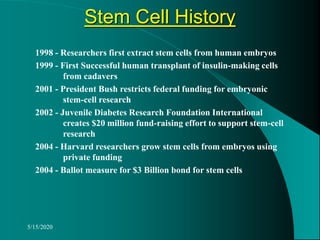
1998 - Researchers first extract stem cells from human embryos
1999 - First Successful human transplant of insulin-making cells
from cadavers
2001 - President Bush restricts federal funding for embryonic
stem-cell research
2002 - Juvenile Diabetes Research Foundation International
creates $20 million fund-raising effort to support stem-cell
research
2004 - Harvard researchers grow stem cells from embryos using
private funding
2004 - Ballot measure for $3 Billion bond for stem cells
Stem Cell History
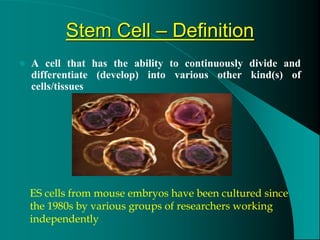
Stem Cell – Definition
 A cell that has the ability to continuously divide and
differentiate (develop) into various other kind(s) of
cells/tissues
ES cells from mouse embryos have been cultured since
the 1980s by various groups of researchers working
independently
5/15/2020
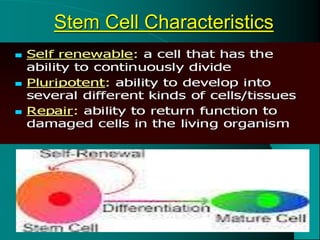
Stem Cell Characteristics
5/15/2020 Dr. Hariom Yadav
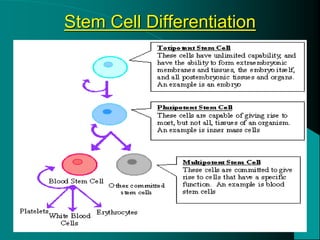
Stem Cell Differentiation
5/15/2020
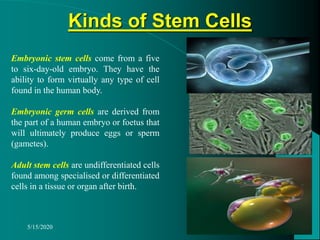
Kinds of Stem Cells
Embryonic stem cells come from a five
to six-day-old embryo. They have the
ability to form virtually any type of cell
found in the human body.
Embryonic germ cells are derived from
the part of a human embryo or foetus that
will ultimately produce eggs or sperm
(gametes).
Adult stem cells are undifferentiated cells
found among specialised or differentiated
cells in a tissue or organ after birth.
Embryonic stem cell
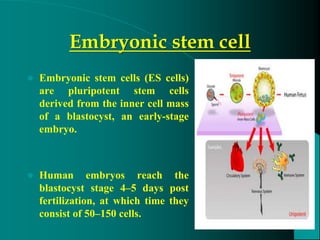
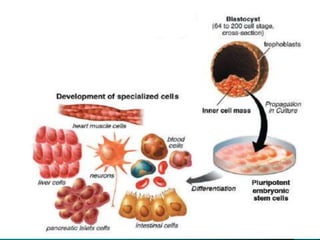
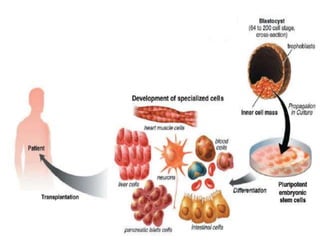
 Embryonic stem cells (ES cells)
are pluripotent stem cells
derived from the inner cell mass
of a blastocyst, an early-stage
embryo.
 Human embryos reach the
blastocyst stage 4–5 days post
fertilization, at which time they
consist of 50–150 cells.
How are embryonic stem cells grown in the
laboratory?
 Growing cells in the laboratory is known as cell culture.
 Human embryonic stem cells are isolated by transferring the inner cell
mass into a plastic laboratory culture dish that contains a nutrient broth
known as culture medium.
 The inner surface of the culture dish is typically coated with mouse
embryonic skin cells that have been treated so they will not divide. This
coating layer of cells is called a feeder layer.
Continue….
The reason for having the mouse cells in the bottom of the culture dish is to
give the inner cell mass cells a sticky surface to which they can attach. In
addition, these feeder cells release nutrients into the culture medium.
Over the course of several days, the ESC proliferate and begin to crowd the
culture dish.
Cells are removed gently and plated into several fresh culture dishes. The
process of replating the cells is repeated many times and for manymonths,
and is called subculturing. Each cycle of subculturing the cells is referred to
as a passage.
5/15/2020
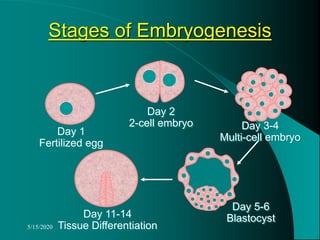
Stages of Embryogenesis
Day 1
Fertilized egg
Day 2
2-cell embryo Day 3-4
Multi-cell embryo
Day 5-6
BlastocystDay 11-14
Tissue Differentiation
5/15/2020
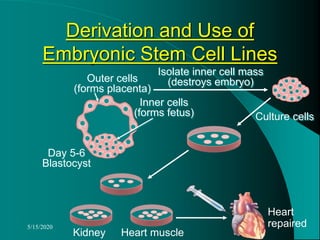
Derivation and Use of
Embryonic Stem Cell Lines
Isolate inner cell mass
(destroys embryo)
Heart muscleKidney
Day 5-6
Blastocyst
Inner cells
(forms fetus)
Outer cells
(forms placenta)
Heart
repaired
Culture cells
5/15/2020 Dr. Hariom Yadav
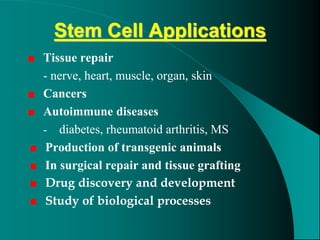
Stem Cell Applications
Tissue repair
- nerve, heart, muscle, organ, skin
Cancers
Autoimmune diseases
- diabetes, rheumatoid arthritis, MS
Production of transgenic animals
In surgical repair and tissue grafting
Drug discovery and development
Study of biological processes
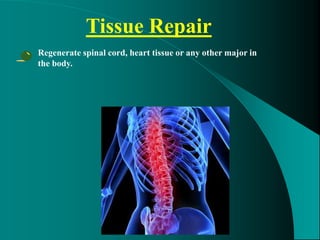
Tissue Repair
• Regenerate spinal cord, heart tissue or any other major in
the body.
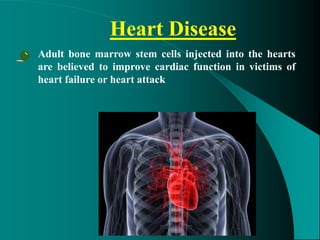
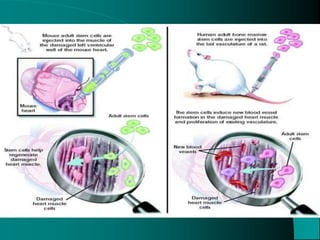
Heart Disease
• Adult bone marrow stem cells injected into the hearts
are believed to improve cardiac function in victims of
heart failure or heart attack
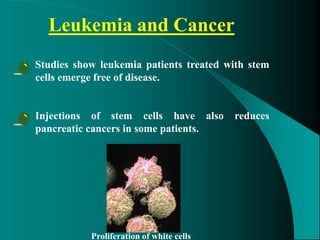
Leukemia and Cancer
• Studies show leukemia patients treated with stem
cells emerge free of disease.
Injections of stem cells have also reduces
pancreatic cancers in some patients.
Proliferation of white cells
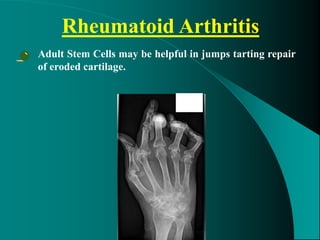
Rheumatoid Arthritis
• Adult Stem Cells may be helpful in jumps tarting repair
of eroded cartilage.
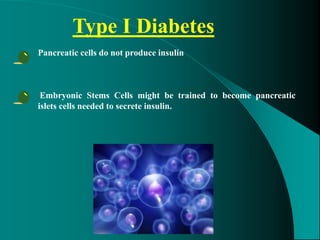
Type I Diabetes
• Pancreatic cells do not produce insulin
Embryonic Stems Cells might be trained to become pancreatic
islets cells needed to secrete insulin.
Technical Challenges
 Recently, abnormalities in chromosome number and
structure were found in three human ESC lines.
 Stem cell development or proliferation must be
controlled once placed into patients.
 Possibility of rejection of stem cell transplants as
foreign tissues is very high.
 Contamination by viruses, bacteria, fungi, and
Mycoplasma possible.
 The use of mouse “feeder” cells to grow ESC could
result in problems due to xenotransplantation.
Why is Stem Cell Research So Important
to All of Us?
Stem cells can replace diseased or damaged cells
Stem cells allow us to study development and genetics
Stem cells can be used to test different substances (drugs and
chemicals)
Conclusion
 Stem cells are biological cells found in all
multicellular organisms, that can divide (through
mitosis) and differentiate into diverse specialized.
 In adult organisms, stem cells and progenitor cells
act as a repair system for the body, replenishing
adult tissues.
References
 CULTURE OF ANIMAL CELLS 5TH EDITION : BY R. IAN
FRESHNEY.
 BIOTECHNOLOGY : U. STAYANARAYAN REPRINT 2009

Stem cell culture

  • 1.
    STEM CELL CULTURE By KAUSHALKUMAR SAHU Assistant Professor (Ad Hoc) Department of Biotechnology Govt. Digvijay Autonomous P. G. College Raj-Nandgaon ( C. G. )
  • 2.
    Content  Introduction  History Stem cell characteristic  Stem Cell Differentiation  Kinds of stem cell  Embryonic stem cell  Stem cell application  Technical challenges  Conclusions  References
  • 3.
    Introduction  Cell cultureis the process by which prokaryotic, eukaryotic or plant cells are grown under controlled conditions. But in practice it refers to the culturing of cells derived from animal cells.  Roux in 1885 for the first time maintained embryonic chick cells in a cell culture.  Cell culture was first successfully undertaken by Ross Harrison in 1907.
  • 4.
    5/15/2020 1998 - Researchersfirst extract stem cells from human embryos 1999 - First Successful human transplant of insulin-making cells from cadavers 2001 - President Bush restricts federal funding for embryonic stem-cell research 2002 - Juvenile Diabetes Research Foundation International creates $20 million fund-raising effort to support stem-cell research 2004 - Harvard researchers grow stem cells from embryos using private funding 2004 - Ballot measure for $3 Billion bond for stem cells Stem Cell History
  • 5.
    Stem Cell –Definition  A cell that has the ability to continuously divide and differentiate (develop) into various other kind(s) of cells/tissues ES cells from mouse embryos have been cultured since the 1980s by various groups of researchers working independently
  • 6.
  • 7.
    5/15/2020 Dr. HariomYadav Stem Cell Differentiation
  • 8.
    5/15/2020 Kinds of StemCells Embryonic stem cells come from a five to six-day-old embryo. They have the ability to form virtually any type of cell found in the human body. Embryonic germ cells are derived from the part of a human embryo or foetus that will ultimately produce eggs or sperm (gametes). Adult stem cells are undifferentiated cells found among specialised or differentiated cells in a tissue or organ after birth.
  • 9.
    Embryonic stem cell Embryonic stem cells (ES cells) are pluripotent stem cells derived from the inner cell mass of a blastocyst, an early-stage embryo.  Human embryos reach the blastocyst stage 4–5 days post fertilization, at which time they consist of 50–150 cells.
  • 10.
    How are embryonicstem cells grown in the laboratory?  Growing cells in the laboratory is known as cell culture.  Human embryonic stem cells are isolated by transferring the inner cell mass into a plastic laboratory culture dish that contains a nutrient broth known as culture medium.  The inner surface of the culture dish is typically coated with mouse embryonic skin cells that have been treated so they will not divide. This coating layer of cells is called a feeder layer.
  • 11.
    Continue…. The reason forhaving the mouse cells in the bottom of the culture dish is to give the inner cell mass cells a sticky surface to which they can attach. In addition, these feeder cells release nutrients into the culture medium. Over the course of several days, the ESC proliferate and begin to crowd the culture dish. Cells are removed gently and plated into several fresh culture dishes. The process of replating the cells is repeated many times and for manymonths, and is called subculturing. Each cycle of subculturing the cells is referred to as a passage.
  • 12.
    5/15/2020 Stages of Embryogenesis Day1 Fertilized egg Day 2 2-cell embryo Day 3-4 Multi-cell embryo Day 5-6 BlastocystDay 11-14 Tissue Differentiation
  • 13.
    5/15/2020 Derivation and Useof Embryonic Stem Cell Lines Isolate inner cell mass (destroys embryo) Heart muscleKidney Day 5-6 Blastocyst Inner cells (forms fetus) Outer cells (forms placenta) Heart repaired Culture cells
  • 14.
  • 15.
  • 16.
    Stem Cell Applications Tissuerepair - nerve, heart, muscle, organ, skin Cancers Autoimmune diseases - diabetes, rheumatoid arthritis, MS Production of transgenic animals In surgical repair and tissue grafting Drug discovery and development Study of biological processes
  • 17.
    Tissue Repair • Regeneratespinal cord, heart tissue or any other major in the body.
  • 18.
    Heart Disease • Adultbone marrow stem cells injected into the hearts are believed to improve cardiac function in victims of heart failure or heart attack
  • 20.
    Leukemia and Cancer •Studies show leukemia patients treated with stem cells emerge free of disease. Injections of stem cells have also reduces pancreatic cancers in some patients. Proliferation of white cells
  • 21.
    Rheumatoid Arthritis • AdultStem Cells may be helpful in jumps tarting repair of eroded cartilage.
  • 22.
    Type I Diabetes •Pancreatic cells do not produce insulin Embryonic Stems Cells might be trained to become pancreatic islets cells needed to secrete insulin.
  • 23.
    Technical Challenges  Recently,abnormalities in chromosome number and structure were found in three human ESC lines.  Stem cell development or proliferation must be controlled once placed into patients.  Possibility of rejection of stem cell transplants as foreign tissues is very high.  Contamination by viruses, bacteria, fungi, and Mycoplasma possible.  The use of mouse “feeder” cells to grow ESC could result in problems due to xenotransplantation.
  • 24.
    Why is StemCell Research So Important to All of Us? Stem cells can replace diseased or damaged cells Stem cells allow us to study development and genetics Stem cells can be used to test different substances (drugs and chemicals)
  • 25.
    Conclusion  Stem cellsare biological cells found in all multicellular organisms, that can divide (through mitosis) and differentiate into diverse specialized.  In adult organisms, stem cells and progenitor cells act as a repair system for the body, replenishing adult tissues.
  • 26.
    References  CULTURE OFANIMAL CELLS 5TH EDITION : BY R. IAN FRESHNEY.  BIOTECHNOLOGY : U. STAYANARAYAN REPRINT 2009